
Jump to Recipe
There’s a particular comfort in a meal that comes together in a single pan, its aroma filling the kitchen. This kind of food feels like a secret, passed down through generations. It speaks of a place where the sea meets the land, creating something greater than the sum of its parts.
This celebrated dish from Puglia embodies that wisdom. Whether you know it by one name or another, each reflects a deep regional pride. Every family has their own cherished version, a small variation that makes it theirs.
Historically, the abundance of shellfish in this recipe was a subtle sign of a family’s standing. Today, it’s a beloved comfort food for everyone. The principle remains unchanged: all raw ingredients are layered with care.
The magic happens in the oven. Steady heat coaxes the flavors from each component, uniting them. It creates a golden, crusty top that gives way to tender, savory layers beneath.
This guide will walk you through more than just a list of steps. You’ll understand the balance that makes this dish so special. We will focus on the practical details that ensure success in a home kitchen, honoring tradition while achieving a perfect result.
Key Takeaways
- This is a classic one-pan casserole from the Puglia region of Italy.
- The dish is built by layering raw ingredients, which cook together.
- It represents a harmonious blend of coastal and land-based flavors.
- Family recipes vary, often based on seasonal availability.
- Proper layering and patient baking are crucial for the signature texture.
- The cooking liquid from the seafood is essential for flavor and moisture.
- The final result should have a crisp top and tender, unified layers inside.
Authentic Roots and Regional Significance
To understand this layered casserole is to understand the history of Bari itself. It emerged from the city’s fishing communities, where the day’s catch met the land’s produce.
This practical approach created a complete meal using one pot. The steady heat of a wood-fired oven did all the work.
A Brief History of a Bari Classic
The dish’s ingredients once spoke volumes about a family’s standing. A generous amount of shellfish indicated greater wealth.
More modest households used fewer mussels, stretching them with more potatoes and rice. Both versions, however, respected the same essential layering technique.
This method was a clever solution for busy home cooks. Raw components went into the pan in a specific order.
Cultural Traditions Behind the Dish
Even the name sparks friendly debate locally. Some insist on one order for the key components, while others prefer another.
Seasonal flexibility is also a hallmark. Some cooks add zucchini, but strictly in summer when it’s at its peak.
Certain elements are non-negotiable for authenticity. Pecorino Romano cheese provides a sharp, salty depth.
Cherry tomatoes contribute acidity and moisture. Onion and garlic build a sweet, aromatic foundation.
The final golden crust is a sign of perfect cooking time. It gives way to tender, unified layers beneath.
Mastering the Layers: tiella barese rice potatoes mussels Technique
Success in creating this classic casserole hinges on thoughtful preparation and strategic layering. Each component must be ready before assembly begins. This ensures everything cooks evenly and flavors meld perfectly.
Step-by-Step Ingredient Preparation
Begin with the shellfish, which requires careful handling. Use a sharp knife to open them raw, preserving their natural liquid. This briny water becomes the cooking liquid that seasons the entire dish.
For the starchy component, choose yellow-fleshed varieties and slice them uniformly. A mandoline helps create consistent 1/4-inch slices. Even thickness ensures proper cooking from bottom to top.
The grain should be rinsed to remove excess surface starch. This prevents gumminess and allows each kernel to cook distinctly. Select varieties known for their absorption qualities.
| Ingredient | Preparation Method | Purpose |
|---|---|---|
| Shellfish | Open raw, collect liquid | Provides seafood flavor base |
| Starchy vegetable | Uniform 1/4-inch slices | Ensures even cooking |
| Grain | Rinse before use | Prevents clumping |
| Aromatics | Coarse chop, remove germ | Builds flavor foundation |
| Cheese | Grate finely | Adds salty richness throughout |
Secrets for Building Flavorful Layers
The foundation begins with aromatics placed directly on the pan’s surface. They caramelize slightly during cooking, releasing sweetness into every layer. This creates a flavorful base for subsequent ingredients.
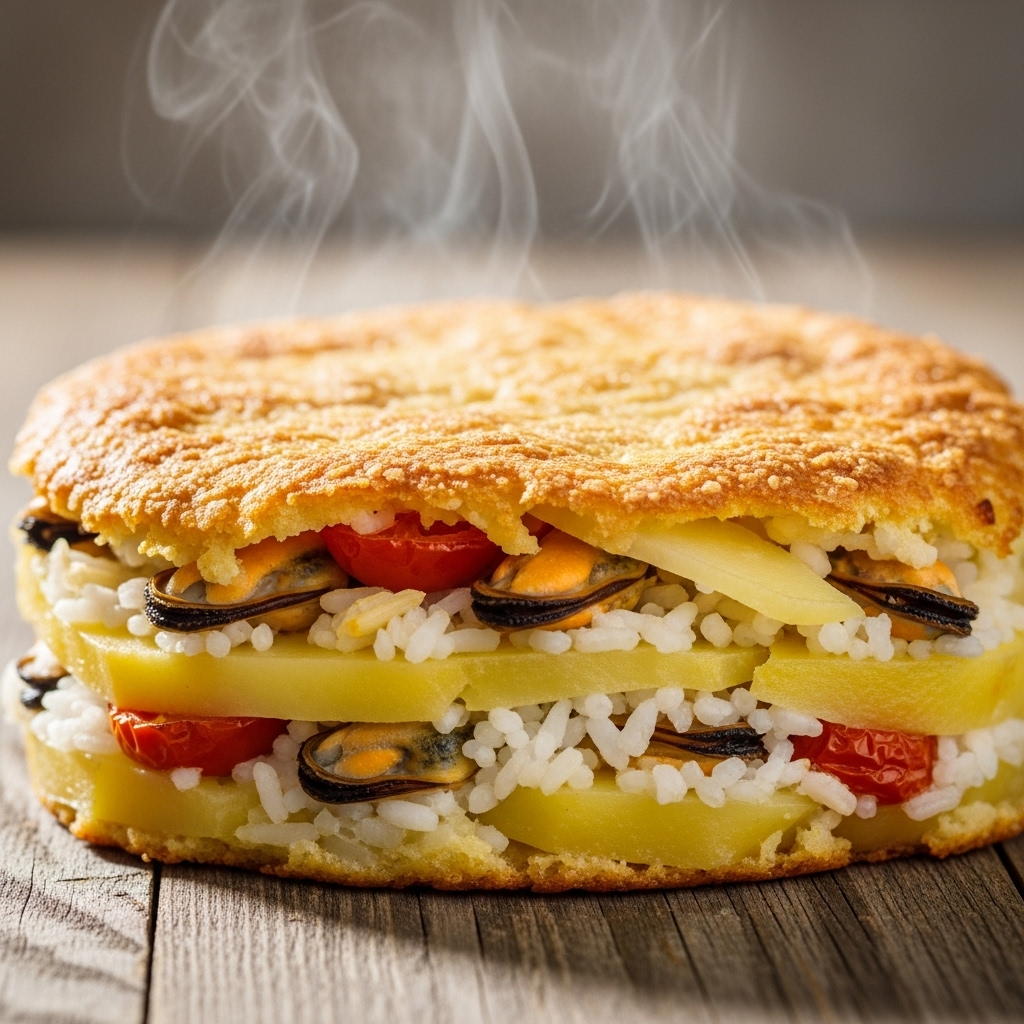
Arrange the shellfish on their half shells with the meat facing upward. This positioning protects them from overcooking. The grain gets sprinkled evenly to fill gaps and absorb liquid.
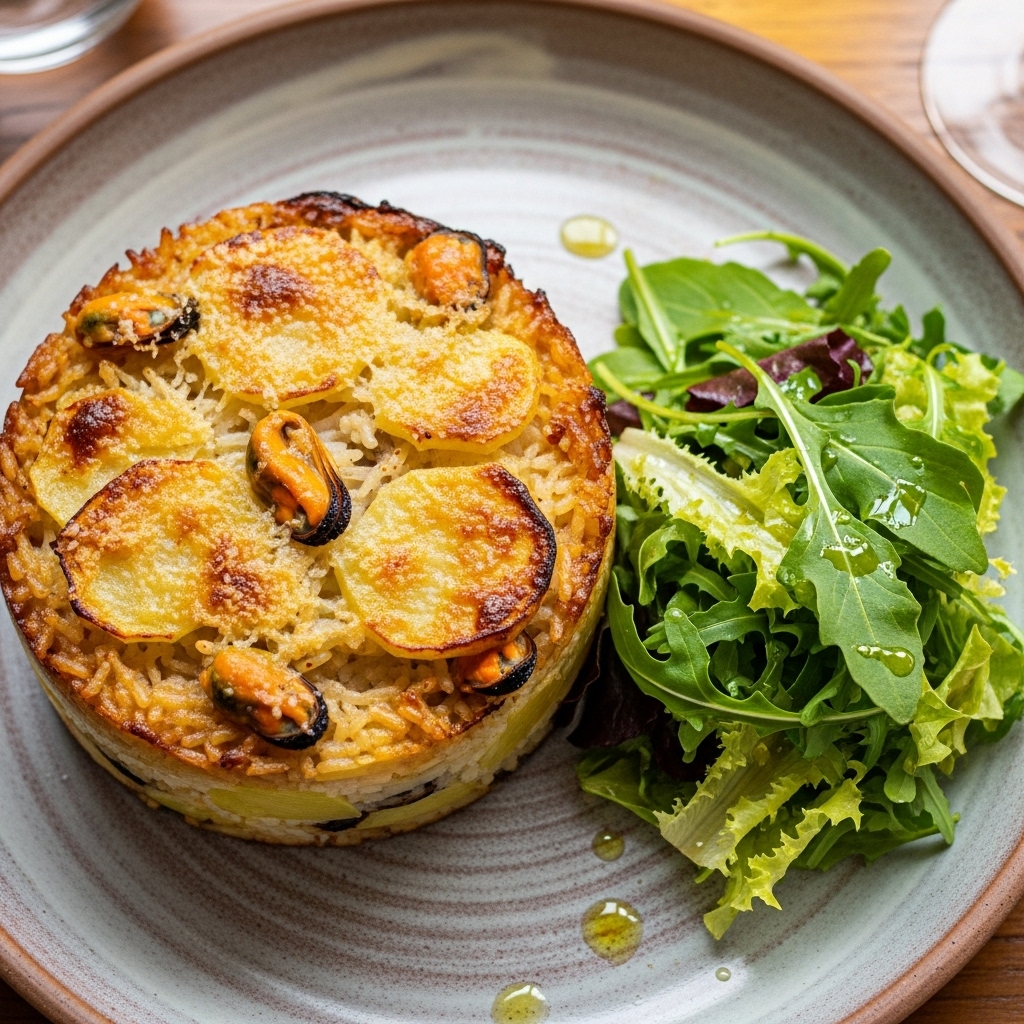
Season between each application with a light hand. Use olive oil for richness and fresh herbs for brightness. The final layer of sliced vegetable protects everything beneath while developing a golden crust.
Simple Cooking Methods and Practical Tips
Mastering the oven and stovetop methods ensures each component cooks perfectly while developing complex flavors. The right approach transforms simple layers into a cohesive dish.
Optimizing Oven and Stovetop Techniques
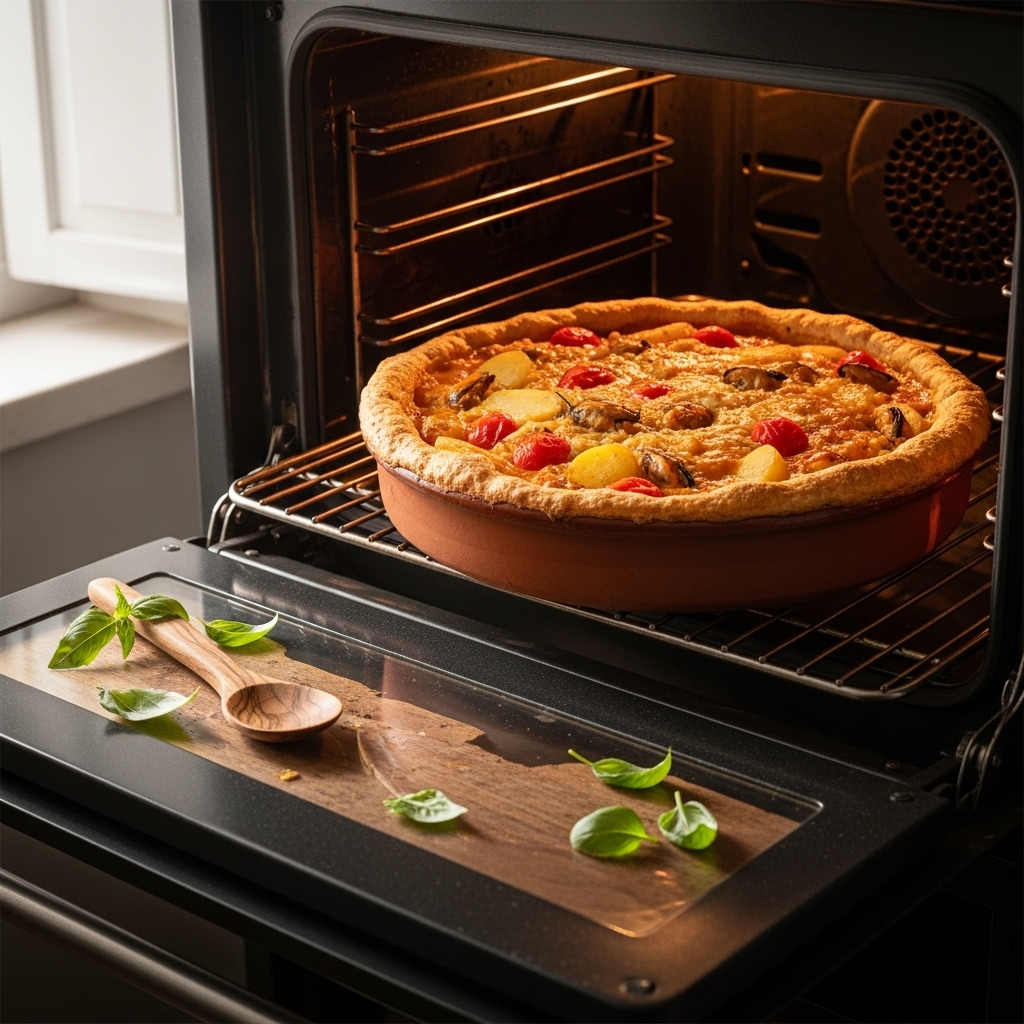
Begin with an 11-inch baking dish for proper layering. A terracotta pan distributes heat evenly but requires a heat diffuser on the stovetop. Drizzle generous olive oil on the bottom to prevent sticking.
Start cooking on the stovetop for about 10 minutes. This jumpstarts the process by bringing water to a simmer. Then transfer to a preheated oven at 400°F or 430°F.
| Cooking Phase | Time (Minutes) | Key Purpose |
|---|---|---|
| Stovetop Pre-heat | 10 | Jumpstart liquid absorption |
| Covered Baking | 40-45 | Steam-cook interior layers |
| Final Browning | 5 | Create golden crust |
| Resting Period | 10 | Harmonize flavors |
Cover the pan tightly with foil for the first 40-45 minutes of baking time. This traps steam to cook the interior gently. The top layer should form a nice crust.
If the surface needs more color, use the broiler for 5 minutes. Let the dish rest covered with a cloth for 10 minutes after cooking. This allows flavors to blend while the terracotta retains warmth.
Savoring the Experience: Bringing Bari to Your Table
Serving this dish is about sharing more than just a meal; it’s sharing a piece of Apulian tradition. Let it rest for ten minutes after baking. This allows the layers to settle and flavors to harmonize.
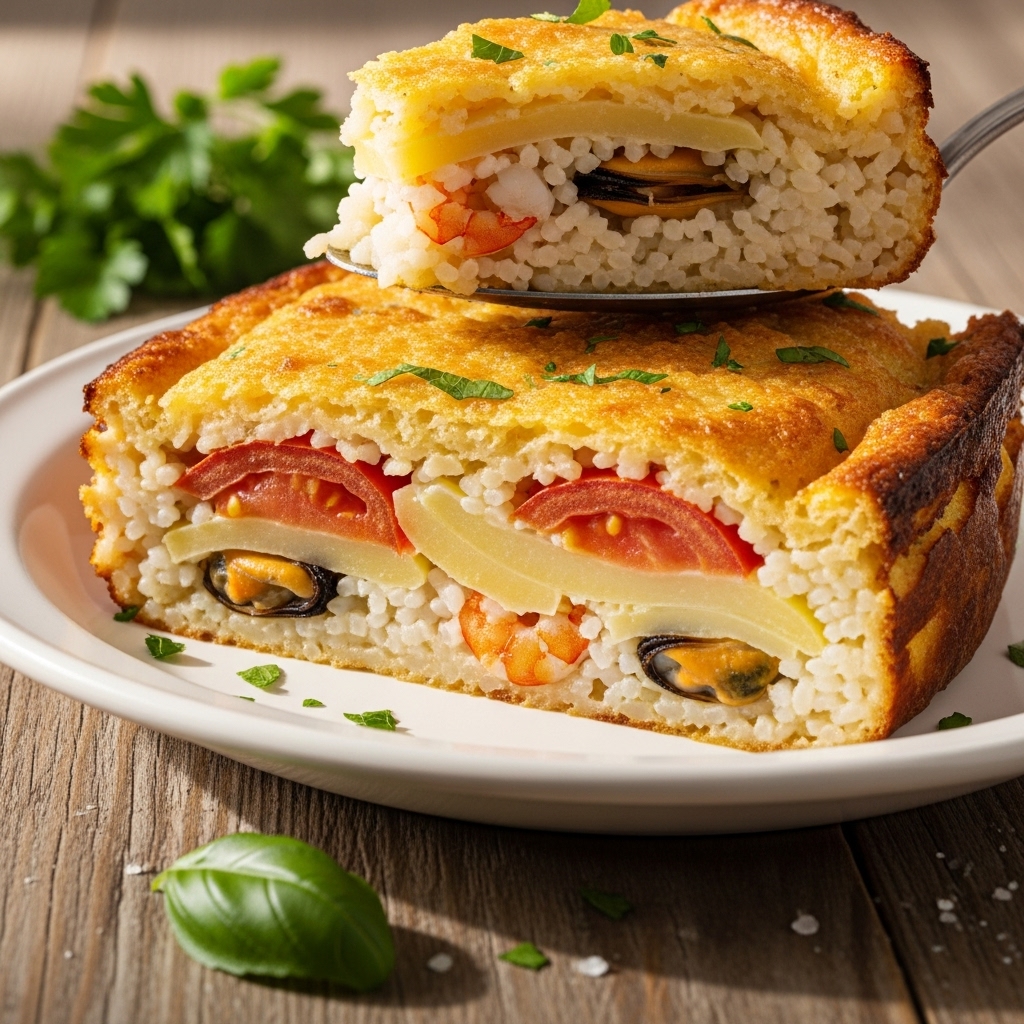
Cut generous portions that reveal the beautiful strata. The golden crust gives way to tender, unified layers beneath. Each component maintains its character while contributing to the whole.
Store leftovers in an airtight container for one day. The flavors deepen overnight. Reheat gently to preserve the delicate textures.
Remember that every cook in Bari has their own version. Feel free to adapt based on seasonal ingredients. The core relationship between the key components creates the magic. For another authentic Italian experience, try this Ligurian pistachio pesto that showcases regional versatility.
Your first attempt teaches you about your oven and ingredients. With practice, you’ll develop your own signature version of this cherished dish.
Tiella Barese (Bari-style Seafood Casserole)
Ingredients
Method
- First, add the chopped onion and garlic.
- Next, place the shellfish in a single layer, with their meat facing upwards.
- Sprinkle a layer of rice over the shellfish.
- Add a layer of sliced potatoes, followed by a few halved cherry tomatoes.
- Drizzle olive oil, season with salt, pepper, and herbs.
- Repeat these layers until all ingredients are used, ending with a layer of sliced potatoes on top.
Notes
- Shellfish: Mussels and clams are the most traditional, but you can use any shellfish available.
- Cheese: Pecorino Romano is ideal for its sharp and salty taste, but you can substitute with Parmigiano-Reggiano for a milder version.
- Vegetable Options: Zucchini can be added in the summer when in season.
- Storage: Leftovers can be stored in an airtight container for up to one day. Reheat gently to preserve texture.