
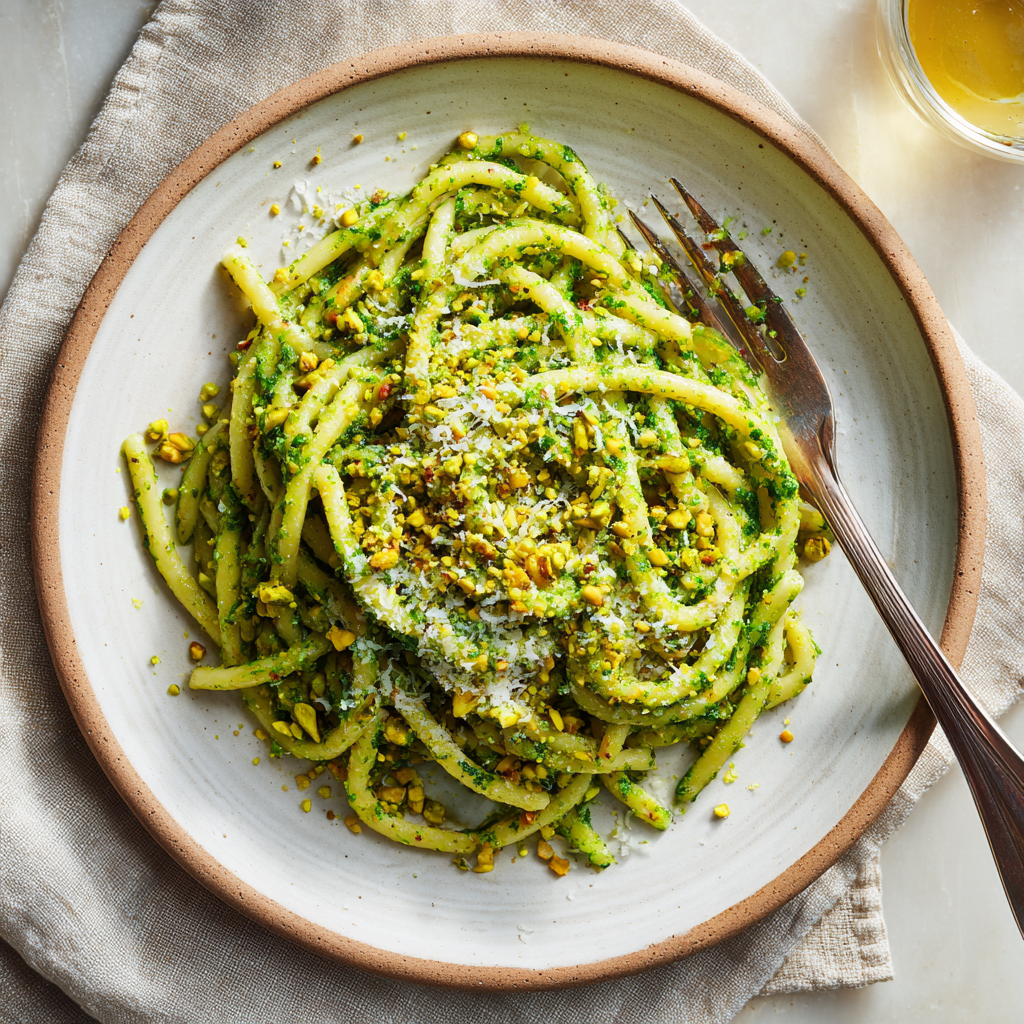
Jump to Recipe
I grew up with basil-scented terraces and a wooden mortar on the table, so this pesto di pistacchi ligurian recipe carries memory as much as flavor. The first press of garlic and the bright snap of fresh pistachios bring me back to our family kitchen.
I share a clear, hands-on approach you can follow tonight. I describe when to use a mortar pestle for fragrance and when a processor saves time without losing color.
You’ll learn simple cues: how much pecorino romano to add, how to stream extra virgin olive for silkiness, and why a splash of starchy pasta water makes the sauce cling. I also call out small safety checks — sniff your pistachios and warm them briefly if needed — and note that this post may contain affiliate links for tools I trust.
Key Takeaways
- This personal method blends tradition with practical steps you can use tonight.
- Use a light hand on basil and garlic to keep the sauce bright.
- Choose crisp pistachios and quality olive oil for the best flavor.
- Mortar and pestle add ritual; a processor saves time without doom.
- Store under an oil seal or freeze in cubes for quick meals.
Why Pistachio Pesto Belongs at the Ligurian Table
Walking the paths above Vernazza and Corniglia, you smell basil on the wind. That scent tells you why a bright green sauce belongs on these plates.
In Liguria, pesto alla genovese sets the standard, but the region welcomes excellent produce. Folding pistachio flavor into the local mindset feels natural. Sicily’s nuts bring buttery depth while basil leaves keep the sauce lively.
Roots, influence, and a home-cook twist
Pecorino adds the salty lift pistachios need, and a careful pour of extra virgin olive oil keeps texture silky. Choose pasta shapes like trofie or testaroli so the sauce clings without overpowering the noodles.
- Honor basil: keep leaves fresh and cool.
- Use oil sparingly to carry flavor, not drown it.
- Let nuts add structure and subtle sweetness.
| Characteristic | Classic Basil Version | Pistachio Variation |
|---|---|---|
| Main herb | Basil leaves (aromatic) | Basil leaves plus ground pistachios |
| Cheese | Pecorino or Parmesan | Pecorino for salty balance |
| Best use | Trofie, testaroli, simple pasta | Twisty pasta, grilled fish, bread spreads |
Ingredients That Make This Pistachio Pesto Sing
I shop with a clear goal: vibrant leaves, crunchy pistachios, and olive oil that tastes like summer. Good choices shorten cook time and lift flavor.
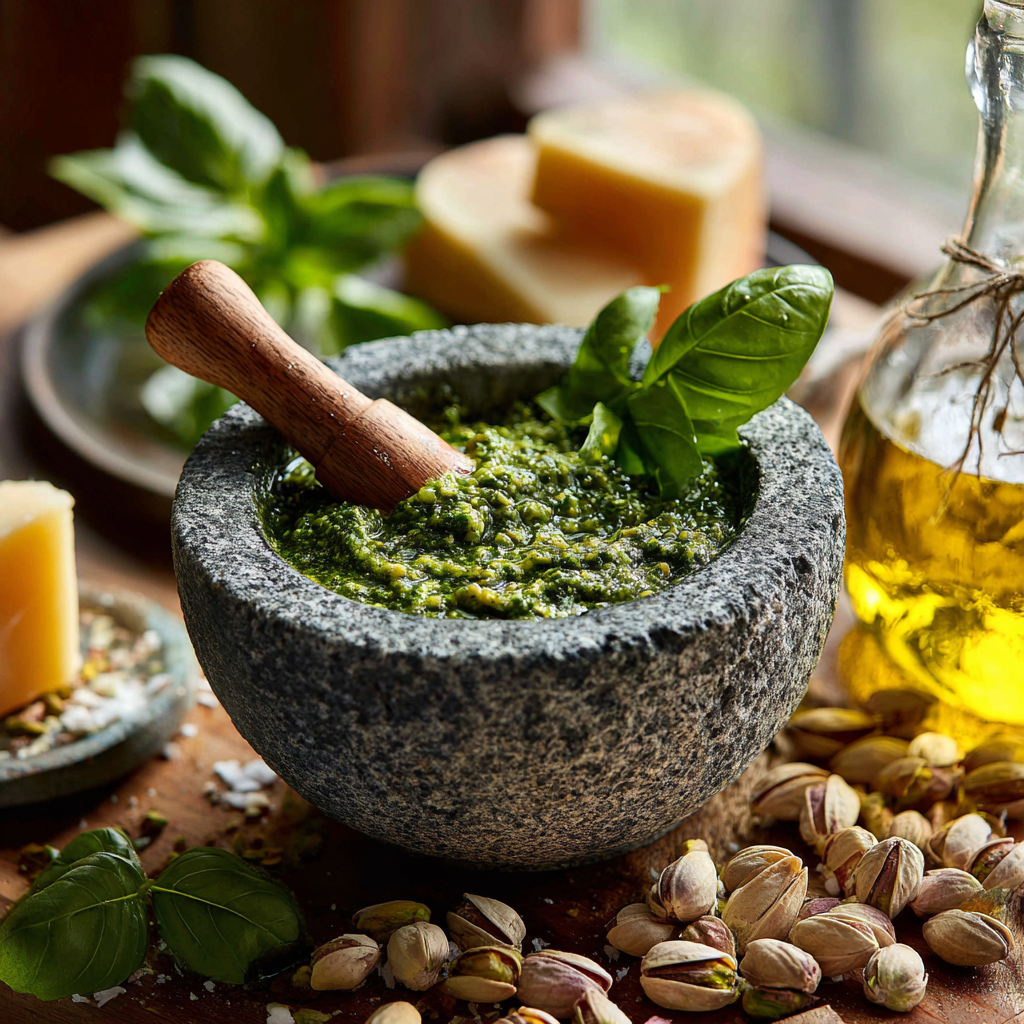
Core items and what each does
Use fresh basil leaves only; stems add bitterness. Unsalted pistachios or pistachio nuts give a buttery, crisp body. One small clove of garlic keeps the sauce bright—blanch for 10 seconds if you want it mild.
- Pecorino Romano cheese adds sharp salt and umami; Parmesan is a milder swap.
- Extra-virgin olive oil carries aroma and creates silk; plan roughly a half cup and add to reach the right texture.
- Salt and freshly ground pepper—start light and adjust after the cheese goes in.
- Lemon zest or a splash of juice preserves color and lifts the top notes.
- If nuts seem stale, warm them briefly in a low oven to restore snap.
As a baseline amount, I use about 1/2 cup pistachios, 4 packed cups basil, 1/2 cup grated Pecorino Romano cheese, and 1/2 cup extra virgin olive oil. For more tips, see my pistachio pesto tips.
Tools You’ll Need to Make Pesto Like a Pro
When I pull out the mortar, the kitchen feels like a small workshop where flavor gets made by hand. That choice affects aroma, texture, and the time you spend at the counter.
I favor a heavy mortar and a smooth pestle when I want the most fragrance and a rustic bite. Working by hand limits heat and keeps green bright.
For speed, a food processor or blender helps. Pulse in short bursts, 15–20 seconds max, and scrape the bowl so basil does not darken. Add oil slowly to form a stable emulsion.
- Keep a flexible spatula nearby to push down leaves and nuts.
- Chill your bowl or pause between pulses to prevent heat buildup.
- Use a fine grater for cheese and a digital scale for repeatable results.
| Method | Best for | Key tool | Notes |
|---|---|---|---|
| Mortar & pestle | Max aroma, rustic texture | Heavy mortar, smooth pestle | Slow, hands-on; limits heat |
| Food processor | Quick batches, even texture | Processor bowl, sharp blades | Pulse short, scrape often, add oil gradually |
| Blender | Very smooth, fast | High-speed blender, chilled bowl | Short bursts, avoid overheating |
Final tip: when time is tight, I reach for the processor. When I want ritual and perfume, I take the mortar and work slowly.
Step-by-Step: How to Make Pesto di Pistacchi
Start with clean hands and a chilled bowl; the first steps set the tone for color and aroma. Measure ingredients so you can work quickly and avoid heat that dulls basil and nuts.
Mortar and pestle method for a rustic, fragrant sauce
Crush one small clove of garlic with a pinch of salt into a paste. Add pistachios and pound until you have a mealy texture.
Work in packed basil leaves a few handfuls at a time. Use circular motions with the pestle to coax out bright oils without bruising.
Drizzle olive oil slowly, forming a glossy, cohesive sauce. Fold in grated pecorino last to keep the color vivid. Taste and add salt in small increments.
Food processor method with controlled pulses and a steady EVOO stream
Pulse pistachios, garlic, and salt into coarse crumbs. Add basil and pulse in short bursts to keep the bowl cool.
With the motor running, stream extra virgin olive until the mixture looks creamy but still shows tiny nut flecks. Stop and scrape the bowl so nothing sticks.
Stir in cheese by hand to protect the green and control salt. Make sure the texture stays lively rather than totally smooth.
Make sure to balance texture: creamy yet nubbly
- Tiny nut bits give bite and help the sauce cling to pasta.
- Toss hot pasta with a few spoonfuls of sauce, then add starchy cooking water to form a silky emulsion.
- Adjust with a squeeze of lemon or an extra spoon of oil if the mix feels tight.
Pro Tips for Vibrant Color, Balanced Flavor, and Silky Texture
Little choices in timing and temperature make the green pop and the flavor sing. I focus on steps that protect color and build texture without fuss.
Keep basil cool and add cheese last
Pulse in short bursts, pausing between 15–20 second cycles so leaves never heat. Add pecorino romano at the end and fold it in by hand to keep the sauce airy and bright.
Choose top oil and fresh nuts
Use a fruity, peppery extra virgin olive oil. A quality bottle lifts aroma and ties basil and pistachio notes together. Buy fresh, unsalted pistachios; if they seem flat, warm them briefly to re-crisp.
Adjust texture with water, oil, and lemon
When the mix is thick, loosen with a spoon or two of starchy pasta water—the starch emulsifies and gives sheen. For more silk, whisk in an extra teaspoon of oil before serving. A little lemon zest brightens; add drops of juice only if needed.
| Problem | Quick fix | Why it works |
|---|---|---|
| Dull green color | Short pulses, chilled leaves | Prevents heat and oxidation |
| Too thick sauce | Add 1–2 tbsp pasta water | Starch creates a smooth emulsion |
| Flat nut flavor | Warm nuts 2–3 minutes at low heat | Restores crispness and sweetness |
| Sharp garlic | Blanch clove 10 seconds then cool | Mutes bite while keeping aroma |
How to Serve Pistachio Pesto Like a Ligurian
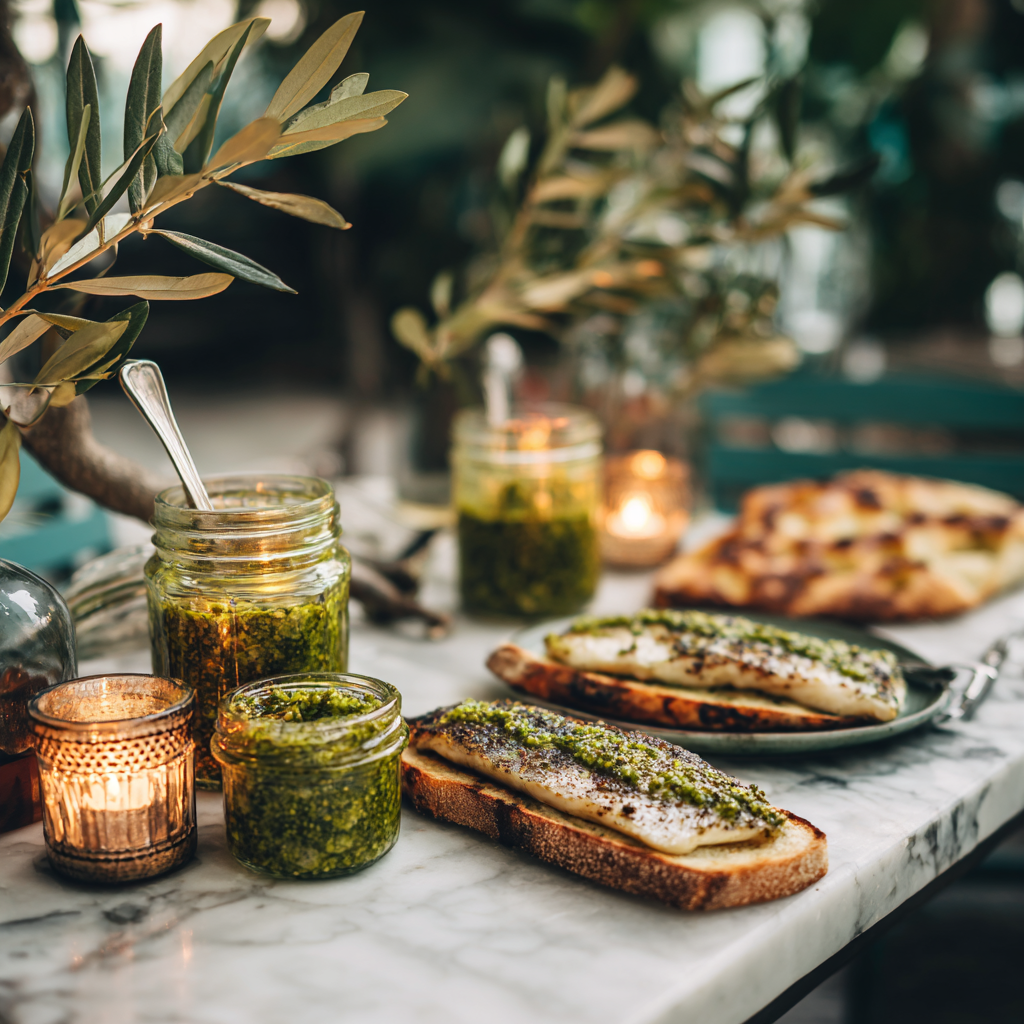
Serve this green sauce warm with simple pasta for an honest, homey meal. Toss hot trofie or tender slices of testaroli with two to three tablespoons of the sauce. Add a splash of pasta cooking water and turn until the sauce clings and shines.
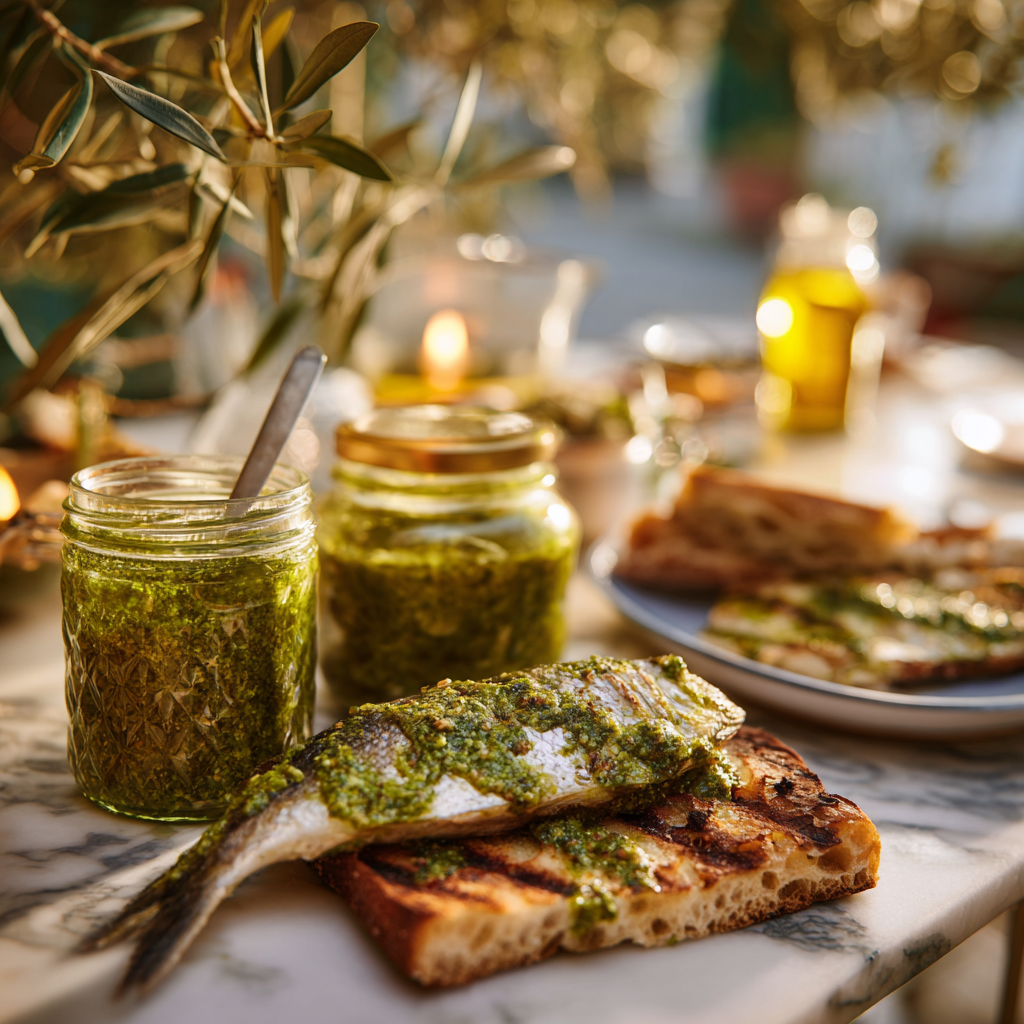
The mix is versatile beyond pasta. Spread it on warm focaccia, then add ribbons of fresh mozzarella or stracciatella for a picnic-style sandwich. Spoon it over seared tuna, scallops, or steamed clams to pair nutty notes with briny seafood.
Swirl a spoon into minestrone or a white bean soup just before serving so basil stays bright. For salads, whisk a bit into a lemony vinaigrette to lift tomatoes and greens.
- Finish plates with crushed pistachios and a light shower of pecorino romano cheese for contrast and crunch.
- Drizzle extra virgin olive oil at the end for gloss; add a pinch of chili flakes if you like heat.
- Offer a bowl of classic basil pesto alongside the pistachio version so guests can taste the tradition and the twist.
| Use | Why it works | Finishing touch |
|---|---|---|
| Pasta (trofie, testaroli) | Sauce clings when emulsified with pasta water | Crushed pistachios, pecorino romano |
| Focaccia or sandwiches | Nuts add richness and oil keeps bread moist | Fresh mozzarella or stracciatella |
| Seafood | Nutty sweetness balances brine | Light olive oil drizzle |
| Soups & salads | Adds depth without overpowering broth or greens | Squeeze of lemon, grated garlic for lovers |
Smart Swaps and Dietary Variations
A few small swaps let you serve this sauce to almost any guest. I test each change so texture, color, and buoyant mouthfeel survive the swap.
Vegan and dairy-free options
Skip cheese and stir in nutritional yeast plus a squeeze of lemon to add savory tang. If you need body, add an extra tablespoon of virgin olive oil and a spoon of hot pasta water to emulsify.
Nut-free and herb swaps
- Nut-free: use hulled pumpkin seeds; they puree creamy and keep the green bright.
- Herbs: if basil is low, blend half basil with parsley or a few mint leaves to keep freshness.
- Low-salt: cut back on cheese or choose a low-sodium pecorino alternative and boost lemon zest instead of extra salt.
| Need | Swap | Adjustment |
|---|---|---|
| Nut-free | Hulled pumpkin seeds | Use same weight; roast 2 min if flat |
| Vegan | Nutritional yeast or plant Parmesan | Add lemon & 1/2 tsp extra salt to taste |
| Dairy-free texture | Extra virgin olive oil + pasta water | Emulsify slowly for body |
Storage, Freezing, and Food Safety
Treat storage like a small ritual. Protect the bright green and nutty notes with a thin oil seal and clean containers. I keep jars tidy and label each one with the date so nothing lingers too long.
Quick fridge and freezer tips
Spoon the sauce into a clean bowl or jar, smooth the surface, and pour a thin layer of olive oil on top to slow oxidation. In the fridge, quality is best within 1–2 days; basil fades fast, so plan for short time windows.
- For freezer prep, portion into ice-cube trays. Freeze solid, then move cubes to a zip bag—this saves weeknight work for pasta and spreads.
- Leave a small headspace in jars and cap with oil before freezing so expansion won’t crack lids.
- To use frozen portions, thaw gently in a pan over low heat and whisk in a spoon of extra virgin olive or a splash of starchy pasta water until glossy.
- If a darker top forms in the fridge, scrape it off; the bright layer beneath is fine to eat.
- Keep utensils dry and clean. Water speeds oxidation and dulls flavor. If you stored without cheese, stir it in after thawing for fresher taste.
| Storage | Best for | Amount to keep | How long |
|---|---|---|---|
| Refrigerator (oil-sealed) | Immediate use | Small jar or bowl | 1–2 days |
| Freezer (ice cubes) | Portioning for meals | 1–2 tbsp cubes | Up to 6 months |
| Small jars (frozen) | Batches for family meals | Leave headspace, thin oil top | Up to 6 months |
One last note: this post may contain affiliate links to storage containers I trust. Those links help you portion neatly and keep the sauce safe until dinner.
Conclusion
Keep it simple: cool basil, cheese added at the end, and a spoon of pasta water turn a bowl of pistachio pesto into pure comfort. With good ingredients and a light hand, this recipe brings basil pesto’s soul and pistachio’s buttery glow together.
Make sure to pulse gently, stream olive oil slowly, and finish with pecorino romano for balance. If garlic feels bold, blanch it; if flavor needs lift, add a touch of lemon.
Serve with trofie or testaroli, or spread on warm focaccia. Store under an oil seal or freeze in cubes so you’re always minutes from great food.
I hope this becomes a weeknight standby and a dinner-party favorite. If you try it, tell me how you served it — and for more on pairing with pasta, see my pasta perfection.
Pesto di Pistacchi (Ligurian Pistachio Pesto)
Ingredients
Method
- Crush the garlic with a pinch of salt until it forms a paste.
- Add pistachios and pound until crumbly.
- Add basil leaves a handful at a time, grinding in circular motions until a thick green paste forms.
- Drizzle olive oil slowly while mixing to create a silky sauce.
- Stir in grated Pecorino Romano cheese at the end.
- Taste and adjust with salt, pepper, or a drop of lemon juice if needed.
- Pulse pistachios, garlic, and salt until coarsely ground.
- Add basil and pulse in short bursts to avoid heating.
- With the motor running, stream in olive oil slowly until creamy.
- Stir in grated cheese by hand to keep color bright.
- Adjust consistency with a spoon of pasta cooking water if too thick.
Notes
- Use only fresh basil leaves; stems make the pesto bitter.
- Add cheese after blending to keep color bright and flavor balanced.
- For a vegan version, replace cheese with nutritional yeast and a touch of lemon juice.
- To store, cover with a thin layer of olive oil and refrigerate for up to 2 days, or freeze in ice-cube trays for up to 6 months.
- Ideal pairings: trofie, testaroli, linguine, focaccia, grilled seafood, or fresh mozzarella sandwiches.