
Jump to Recipe
There’s a certain kind of satisfaction that comes from a simple, savory dish you can hold in your hand. It’s the kind of food that feels both rustic and deeply comforting, born from generations of Italian home cooking.
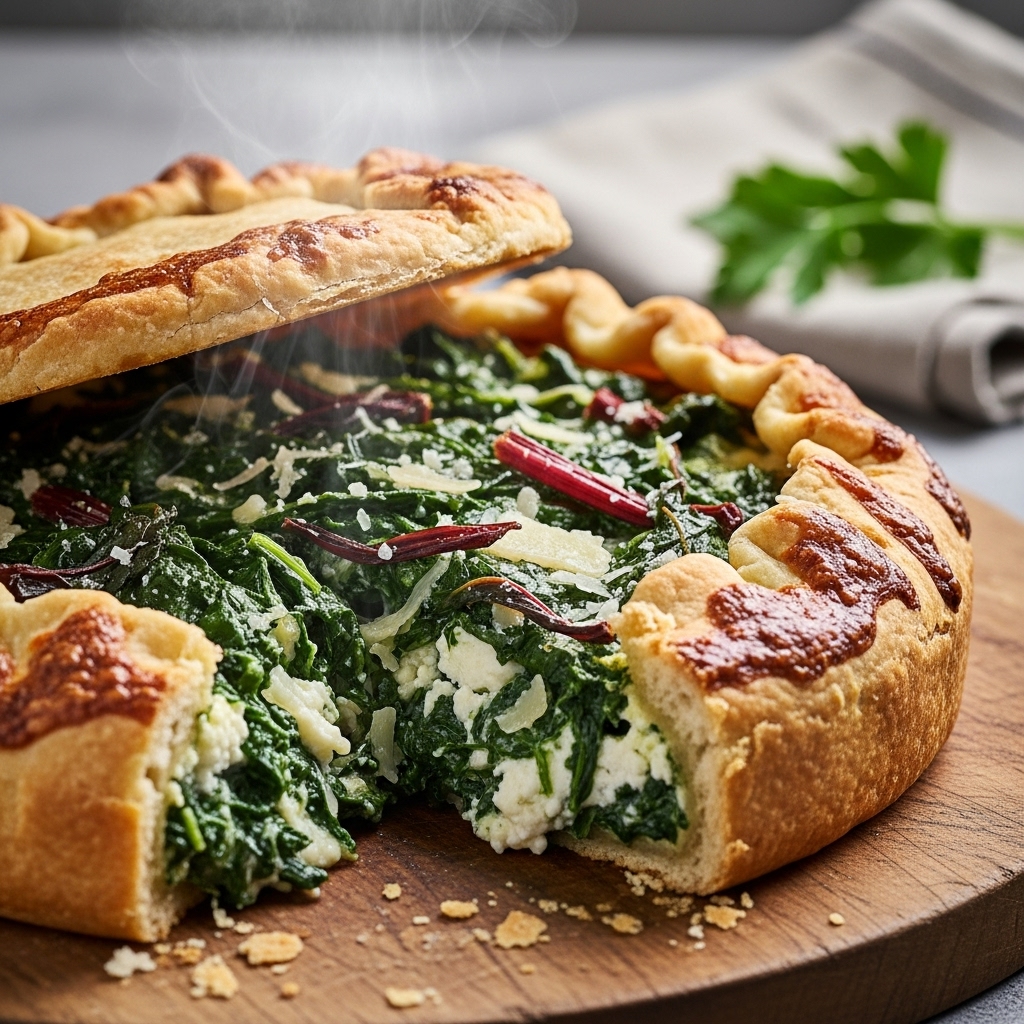
This particular specialty from Reggio Emilia is a masterclass in practicality. A thin, crisp pastry encases a hearty filling of seasonal greens, onions, and rich cheese. You’ll find it everywhere in its homeland, from bakery counters to picnic blankets in the hills.
Its beauty lies in its versatility. It’s substantial enough for a quick lunch yet portable enough for an adventure. This recipe comes directly from the tradition of Felina, a village where this food is a part of daily life, not a restaurant novelty.
While the erbazzone looks humble, it represents a living culinary history. It’s a testament to the Italian knack for turning accessible ingredients into something timeless and deeply satisfying. Making this pie connects your kitchen to that enduring tradition.
We’ll walk through the authentic method, from preparing the perfect filling—which can start with a technique like sautéing greens with garlic—to achieving the characteristic thin crust. You’ll learn how to create a dish that honors its origins while fitting seamlessly into your modern cooking routine.
Key Takeaways
- This is a traditional savory pie from the Emilia-Romagna region of Italy.
- It features a thin pastry crust filled with greens, cheese, and often pancetta.
- The dish is highly portable, making it ideal for lunches, snacks, or picnics.
- Its origins are practical, designed to nourish workers during the harvest season.
- This recipe focuses on authentic techniques using accessible ingredients.
- The result is a satisfying, timeless food with deep cultural roots.
Rediscovering the Roots of Italian Herbaceous Delights
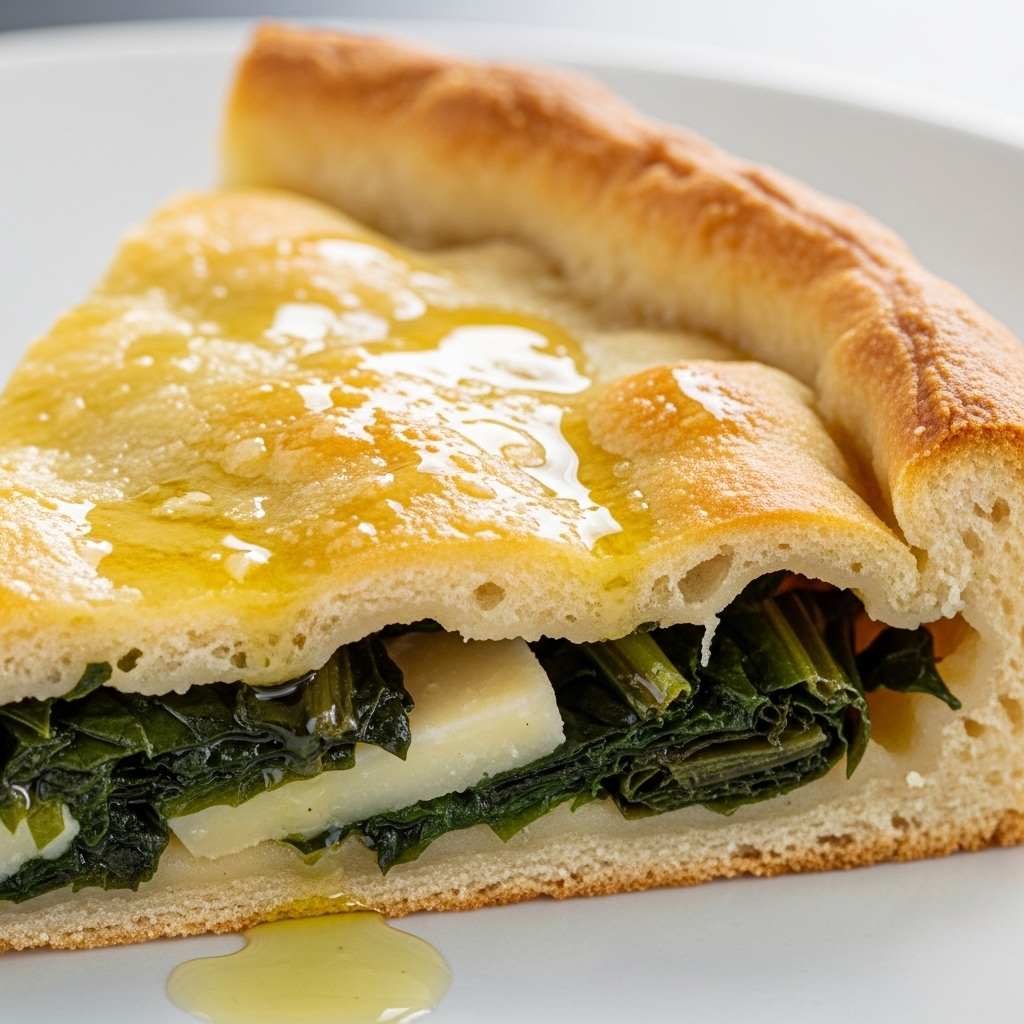
The story of this savory pie begins not in a grand kitchen, but in the fields and forests of medieval Italy. It was born from necessity, a creation of peasant families who foraged wild herbs and greens to make filling, nourishing meals.
Tracing the Historical Journey from Peasant Origins
Its earliest name, “scarpazzone,” came from “scarpa,” the white stalk of chard. This was a key ingredient when leafier greens were scarce. Over time, as other greens became common, the name evolved to “erbazzone,” from the Italian “erbe.”
This shift shows how the dish adapted with available ingredients. What began as an oral tradition was later recorded. The first printed recipes appeared in Emilia-Romagna cookbooks during the 18th and 19th centuries.
Traditionally, families made this food during the chard harvest from late June to All Saints’ Day. Outside that window, they used any edible greens they could find. This flexibility was key to its survival.
Living Traditions in Reggio Emilia
This dish is not a relic. It remains a vibrant part of daily life in Reggio Emilia. You find it in bakery windows each morning and on trattoria tables at lunch.
It is packed for picnics and carried on hikes. Its ongoing presence is a sign of genuine culinary continuity. The dish endures because it is practical and deeply satisfying.
This significance is being formally recognized. There is consideration for UNESCO Intangible Cultural Heritage status in 2026. This would place it alongside other great Italian food traditions, honoring its enduring legacy.
Mastering the Art of Erbazzone Reggiano Spinach Pie
The foundation of this savory dish lies in two key elements: a simple, sturdy pastry and a flavorful, well-balanced filling. Getting these components right ensures the final product is both authentic and satisfying to make.
Selecting Quality Ingredients and Perfect Dough
We start with the pastry, or fuiada. Tradition calls for lard, which creates a wonderfully flaky crust. For a modern twist, olive oil works beautifully.
The basic dough requires just flour, water, your chosen fat, and a pinch of salt. Mix them in a bowl until a pliable ball forms. Knead it briefly to develop structure.
Let the dough rest. This relaxes the gluten, making it easier to roll thin without tearing. You will need two sheets: one for the base and one for the top.
For the filling, Swiss chard is classic. Use both the leaves and stalks for zero waste. Spinach is a fine alternative, offering a milder flavor. Quality Parmigiano Reggiano cheese is non-negotiable for its savory depth.
Sauté onions until they are soft and sweet. A little garlic can be added, though some families skip it. Diced pancetta folded in provides a rich, savory note.
Step-by-Step Techniques for an Authentic Fill
Begin by wilting the greens in boiling water. Drain them thoroughly and chop finely. This crucial step removes excess liquid, preventing a soggy crust.
Combine the greens in a bowl with the sautéed onions, a generous amount of grated cheese, and the pancetta. Season well with salt. The mixture should be moist but not wet.
Roll your first dough sheet to fit a baking pan. Spread the filling evenly, leaving a clear border around the edges. Cover everything with the second sheet of pastry.
Press or crimp the edges firmly to seal the filling inside. For a golden, flavorful finish, brush the top with olive oil or dot with small pieces of pancetta.
The goal is a filling that sets without drying and a crust that turns golden and crisp. This careful assembly results in a slice that holds together perfectly, much like a well-made ravioli di ricotta e spinaci.
Innovative Twists and Regional Variations
Regional variations of this traditional dish reveal how Italian cooking adapts to local ingredients and lifestyles. These adaptations aren’t deviations from tradition but rather extensions of it, showing how communities make recipes their own.
Mountain-Style Adaptations and Open-Faced Versions
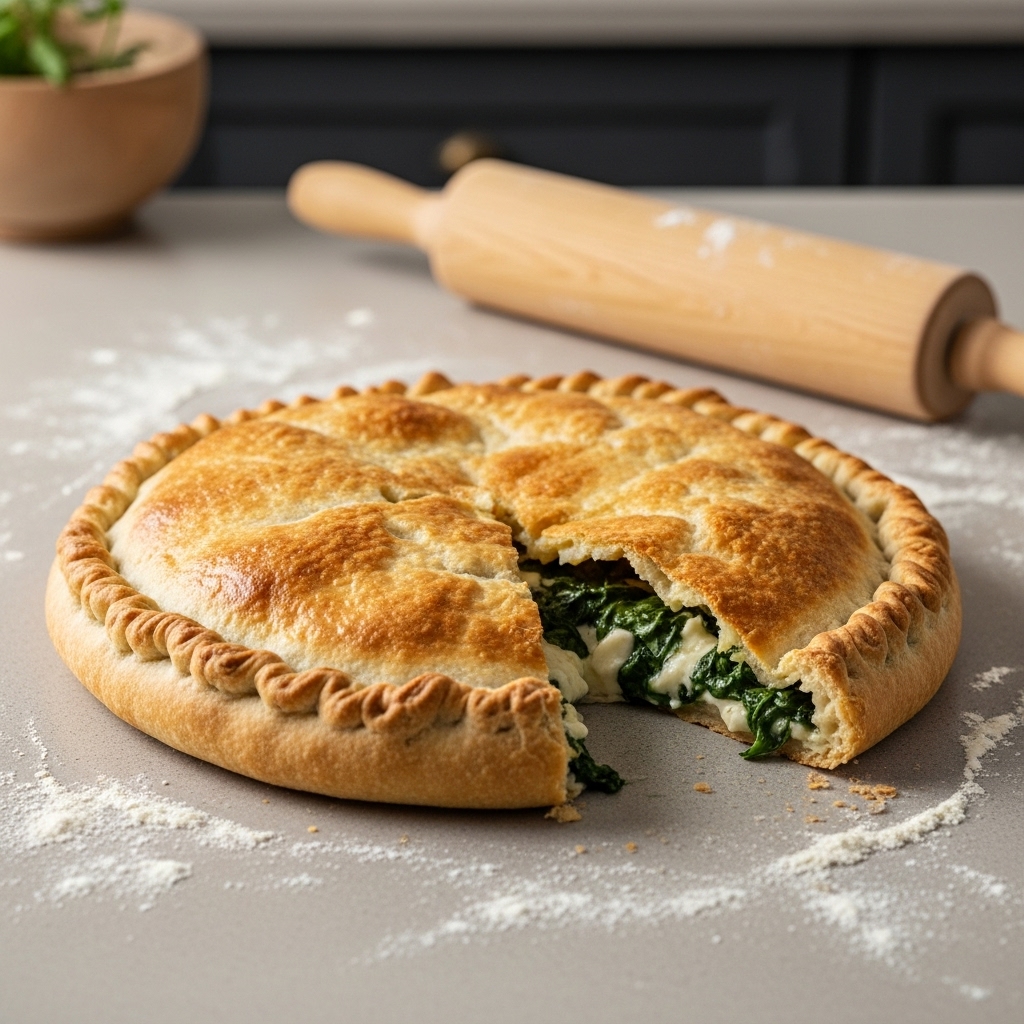
In the Apennine towns of Castelnovo ne’ Monti, Carpineti, and Felina, a heartier version developed. Mountain laborers who worked in lowland rice paddies brought back an ingenious addition: cooked rice mixed into the filling.
This rice makes the dish more substantial, stretching the greens further. It provides extra texture that holds up well during long workdays or hikes. The mountain style is also open-faced, baked without a top pastry layer.
This open version bakes faster and offers a different experience. The exposed filling caramelizes slightly during baking. To adapt your recipe, simply fold cooled cooked rice into your filling mixture. Then skip the second dough sheet.
Exploring Vegetarian Options and Ingredient Substitutions
This dish adapts beautifully to vegetarian preferences. Simply omit the pancetta from your filling. Choose cheese made with vegetable rennet instead of animal rennet.
If chard is unavailable, spinach works perfectly. You can also use turnip greens, beet greens, or safe wild herbs. The filling’s moisture may vary depending on your greens choice.
For the dough, olive oil works well instead of traditional lard. It creates a lighter crust that still has great texture. Onion and garlic amounts can be adjusted to personal taste.
The open-faced version may need a few less minutes in the oven. Watch for golden edges and a set filling. These variations honor the dish’s practical, adaptable nature.
Savoring a Culinary Legacy
The final transformation happens in the oven’s steady heat, where your careful preparation becomes a finished dish. Watch for the crust to turn golden at the edges and the top to firm up completely. The right oven temperature ensures the filling cooks through without the pastry burning.
When properly baked, your creation will release cleanly from the sheet. The filling holds together without leaking excess liquid. This versatile food works wonderfully warm from the oven or at room temperature for lunch or picnics.
Once cooled, it keeps well for days. The flavors continue to develop as the seasonings meld. Many prefer it at room temperature where the texture shines.
The erbazzone endures because it genuinely works in real life. It represents practical nourishment that traveled across generations. Making this pie connects your kitchen to that ongoing story of transforming simple greens and dough into something truly satisfying.
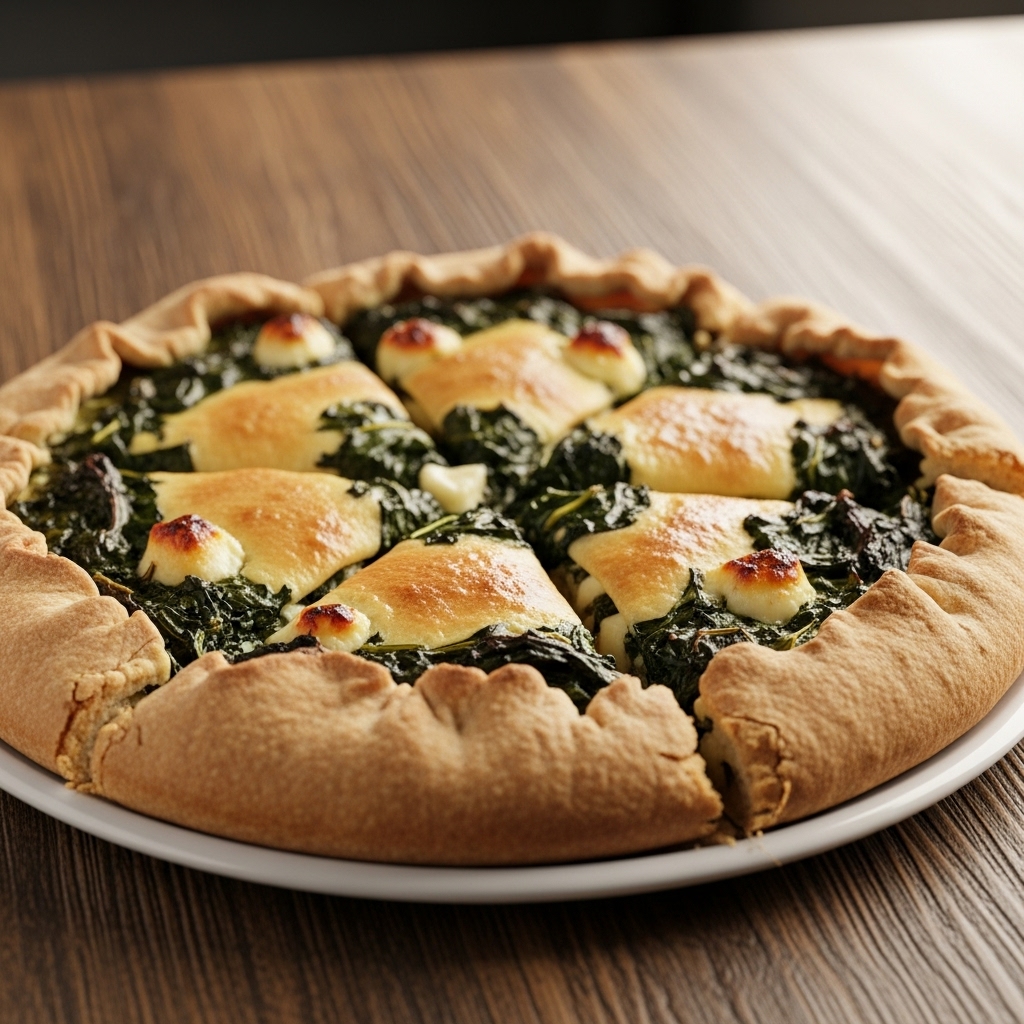
Erbazzone Reggiano (Spinach and Greens Savory Pie)
Ingredients
Method
- In a bowl, combine the flour, olive oil (or lard), water, and 1/2 tsp salt.
- Mix until a dough ball forms, then knead briefly to develop structure.
- Let the dough rest for 30 minutes to relax the gluten.
- Wilt the greens in boiling water for a few minutes, drain thoroughly, and chop finely.
- Sauté the onion in olive oil until soft and sweet. Add garlic (if using) and cook for 1 minute.
- Add diced pancetta (if using) and cook until slightly crispy.
- Mix the wilted greens, sautéed onions, pancetta, Parmigiano Reggiano cheese, and salt. The filling should be moist but not watery.
- Roll out the dough into two thin sheets.
- Line a baking pan with the first sheet of dough, then spread the filling evenly over the base.
- Cover with the second sheet of dough and crimp the edges to seal.
- Brush the top with olive oil and dot with small pieces of pancetta (if using).
- Preheat the oven to 375°F (190°C).
- Bake the pie for 35-40 minutes or until the crust is golden and the filling is set.
- Let it cool slightly before slicing. Serve warm or at room temperature.
Notes
- If you don’t have Swiss chard, spinach works as a great substitute.
- For a vegetarian version, simply omit the pancetta.
- The open-faced mountain-style variation uses rice in the filling and bakes without a top pastry sheet.