
Jump to Recipe
There’s a particular comfort found in the sizzle of a pan and the gentle scent of softening onions that fills a kitchen. It’s a feeling of preparing something truly nourishing, a simple yet profound pleasure in Italian home cooking.
This iconic preparation, known as fegato alla veneziana, holds a special place. It transforms calf liver into something tender and balanced. The magic lies in the partnership with slowly caramelized onions. Their natural sweetness perfectly offsets the rich, earthy notes of the main ingredient.
Many people hesitate with organ meats, often due to past experiences with tough, overcooked versions. Proper technique is everything. The goal is a quick sear to preserve a delicate texture, avoiding the strong mineral taste that can develop.
In Venice, this is a celebrated classic. Locals often point to historic spots as serving the definitive version, a testament to its cultural significance. Our aim is to bring that same careful balance into your kitchen.
This approach isn’t complicated, but it requires attention. Fresh ingredients and control over heat are key. The actual cooking happens fast, making preparation the most important step. Think of it as an accessible entry into a beloved regional tradition.
Key Takeaways
- This Venetian-style liver dish is a classic of Italian cuisine, beloved for its balanced flavors.
- Thinly sliced calf liver is paired with a generous amount of sweet, caramelized onions.
- Proper cooking technique is crucial to avoid a tough texture and strong mineral taste.
- The dish is a quick-cooking meal once the onions are properly prepared.
- It serves as an excellent and approachable introduction to cooking with organ meats.
- Using high-quality, fresh ingredients is essential for the best results.
- This recipe aims to replicate the authentic harmony found in traditional Venetian cooking.
Discover the Authentic Techniques Behind fegato alla veneziana liver recipe
The foundation of this classic dish rests on two simple but crucial pillars: quality ingredients and precise technique. Getting these elements right transforms what could be ordinary into something truly special.
Gathering Fresh Ingredients and Essential Tools
Start with equal weights of calf liver and onions—about one pound each. This balance creates the signature harmony between rich meat and sweet allium flavors. Freshness matters tremendously with organ meats.
Seek out the highest quality calf liver available. If using frozen, thaw it slowly in the refrigerator overnight. For onions, white varieties or Vidalia work beautifully. Their natural sweetness complements the dish perfectly.
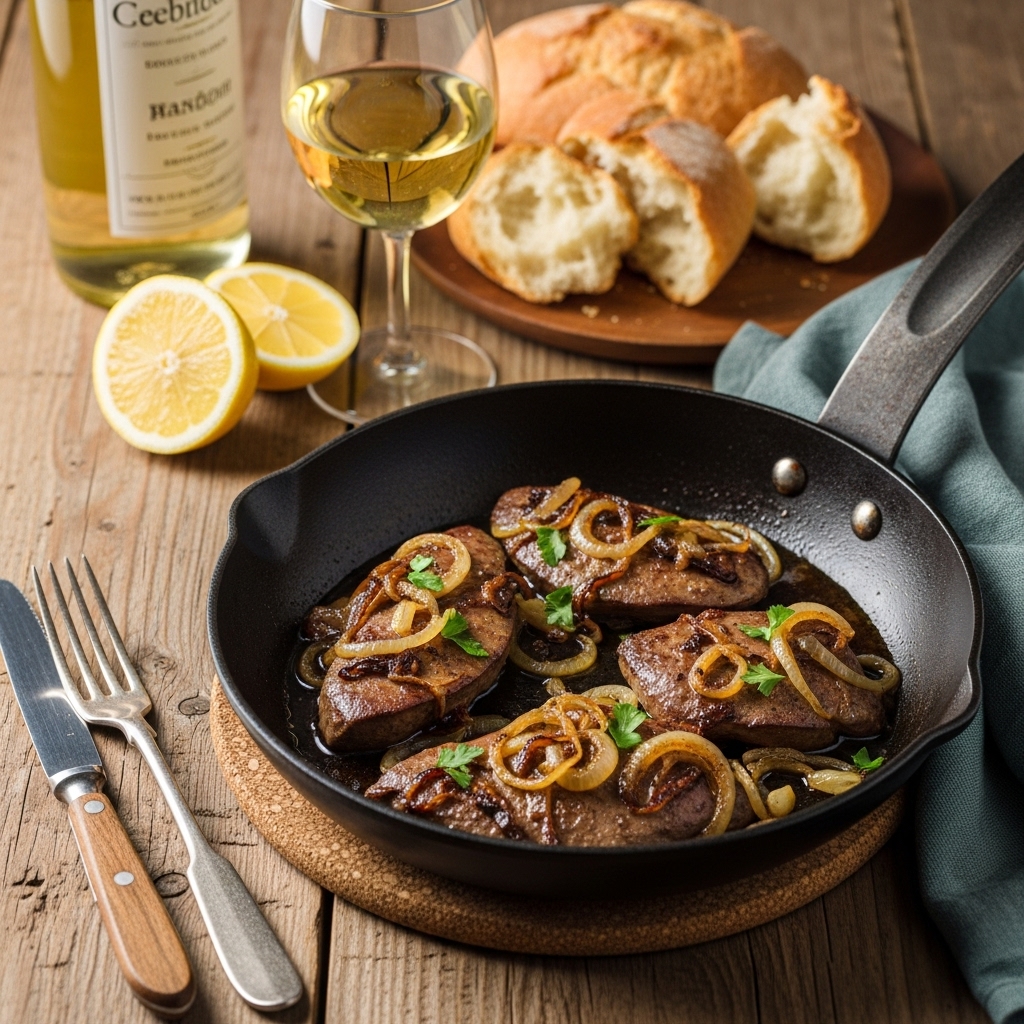
You’ll need both butter and olive oil for cooking. The combination prevents burning while adding rich flavor. Have fresh parsley, salt, and pepper ready. A wide skillet provides the surface area needed for proper searing.
Secrets to Trimming and Slicing Calf Liver for Tender Results
Proper preparation begins with trimming. Remove any membrane or skin from the edges of the liver slices. This prevents curling and ensures even cooking.
Cut the meat into thin strips rather than chunks. This approach allows for quicker cooking and better integration with the onions. The strips stay more tender and absorb flavors more completely.
Your prep work determines the final outcome. Well-trimmed, thinly sliced liver combined with properly chosen ingredients sets the stage for success. This careful preparation leads to the quick, high-heat cooking that keeps the meat pink and tender inside.
For detailed guidance on executing this Venetian classic, explore our comprehensive fegato alla veneziana preparation that walks through each step with precision.
Tracing Venetian Heritage and Flavorful Traditions
The story of this Venetian classic begins long before modern kitchens, with ancient Roman cooks who understood a fundamental principle of flavor. They knew the earthy, mineral-rich character of organ meats needed a sweet counterpoint. While Romans used figs, Venetians perfected the use of slowly cooked onions.
In the local dialect, the dish is known as figà àea Venessiana. It evolved over centuries from a practical method for preparing organ meats into a celebrated tradition. This journey reflects the resourcefulness of Venetian home cooking.
Cultural Roots and the Evolution of Venetian Liver Dishes
Originally, cooks used vinegar instead of wine. This was a smart way to use wine that had soured. The bold flavor also helped mask any imperfections in the meat before reliable refrigeration.
A highly regarded recipe from the 1800s uses lemon juice. This shows the core idea is balance, not a specific ingredient. The goal was always to create harmony between strong flavors.
Balancing Sweet Onions with Robust Liver Flavors
The philosophy behind liver onions is straightforward. Generous amounts of caramelized onions provide a crucial sweetness. This mellows the robust character of the main ingredient.
A splash of something acidic—wine, vinegar, or lemon—is then essential. It cuts through the sweetness to create a balanced whole. Different family recipes have variations, but they all aim for this perfect equilibrium.
These aren’t just random changes. They are thoughtful approaches to the same goal. The classic preparation, fegato alla veneziana, represents generations of refinement. It’s a testament to the enduring power of a well-balanced dish.
Step-by-Step Guide to Crafting Your Venetian-Style Liver and Onions
This stage of cooking is a study in contrasts: slow, patient wilting followed by a rapid, high-heat sear. Getting this rhythm right is the secret to the dish’s signature balance.
Sautéing Techniques: From Caramelized Onions to Perfectly Seared Liver
Begin by melting butter with a touch of olive oil in a wide skillet over medium-low heat. Add your thinly sliced onions. The goal is to cook them slowly for about 15 minutes until they are very soft and almost creamy.
Regulate the heat carefully to prevent browning. A splash of water or white wine helps them wilt without coloring. Once the onions are translucent and sweet, push them to the skillet’s edges.
Increase the heat to medium-high. Add a bit more oil to the center of the pan. Now, add your prepared calf strips. Sear them quickly over lively heat, moving them just until they lose their raw red color but remain pink inside. This takes only a minute or two.
Combine the onions and meat thoroughly. Add a generous handful of chopped parsley, season with salt and pepper, and cook for just another minute before removing everything to a warm plate.
Enhancing the Dish with White Wine, Butter, and Olive Oil
The final flourish happens in the empty skillet. Immediately pour a good splash of white wine into the hot pan. Use a wooden spoon to scrape up all the flavorful browned bits stuck to the bottom.
Let the wine simmer and reduce until it becomes a syrupy, glossy sauce. This quick step is crucial. It concentrates flavor and adds a bright acidity that ties the whole dish together.
Pour this simple pan sauce over the plated liver and onions. The combination of fat from the butter and oil, the sweetness from the onions, and the sharpness from the reduced wine creates the authentic, harmonious taste of this Venetian classic.
- Use a wide skillet to prevent crowding, which leads to steaming instead of searing.
- Thinly sliced strips cook so fast there’s little risk of burning the onions during the sear.
- Total cooking time for the main ingredient should not exceed five minutes for ideal tenderness.
Final Touches: Serving Suggestions and Flavor Adjustments for a Memorable Meal
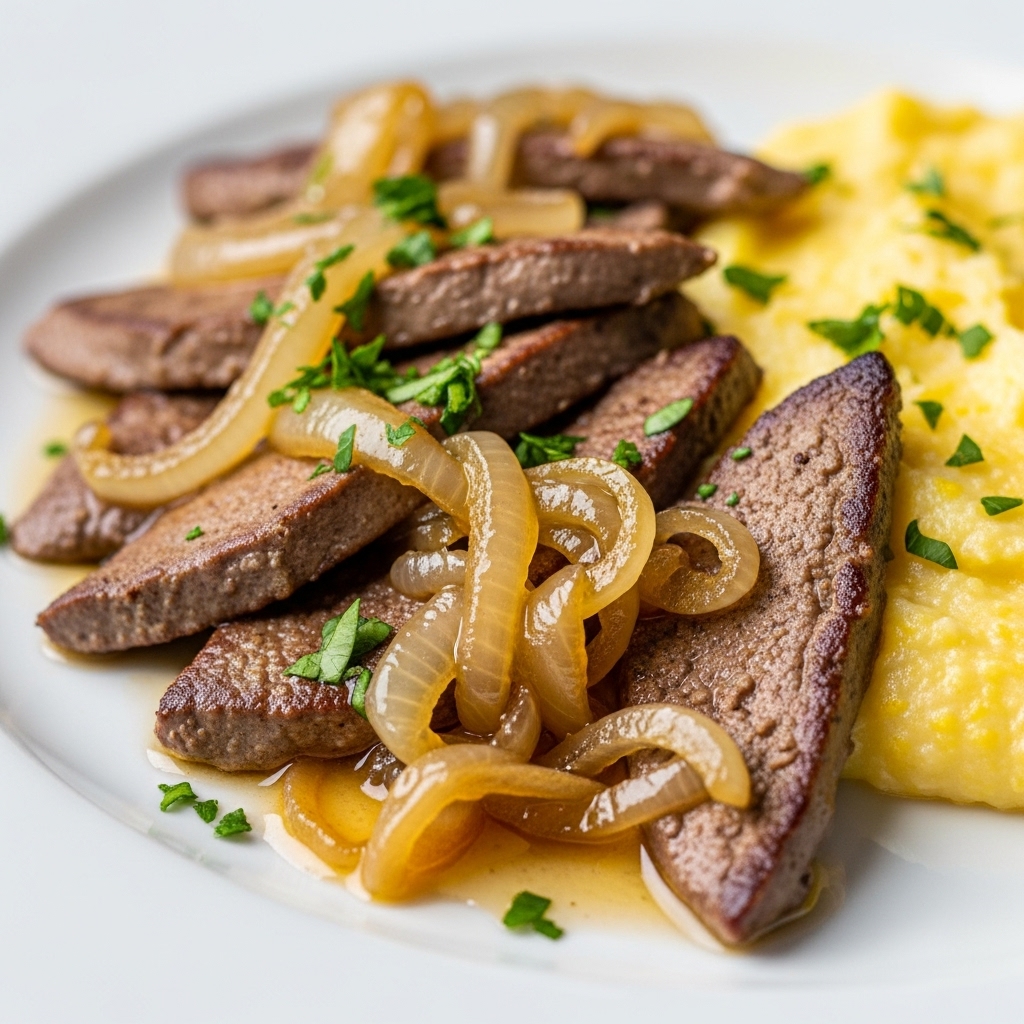
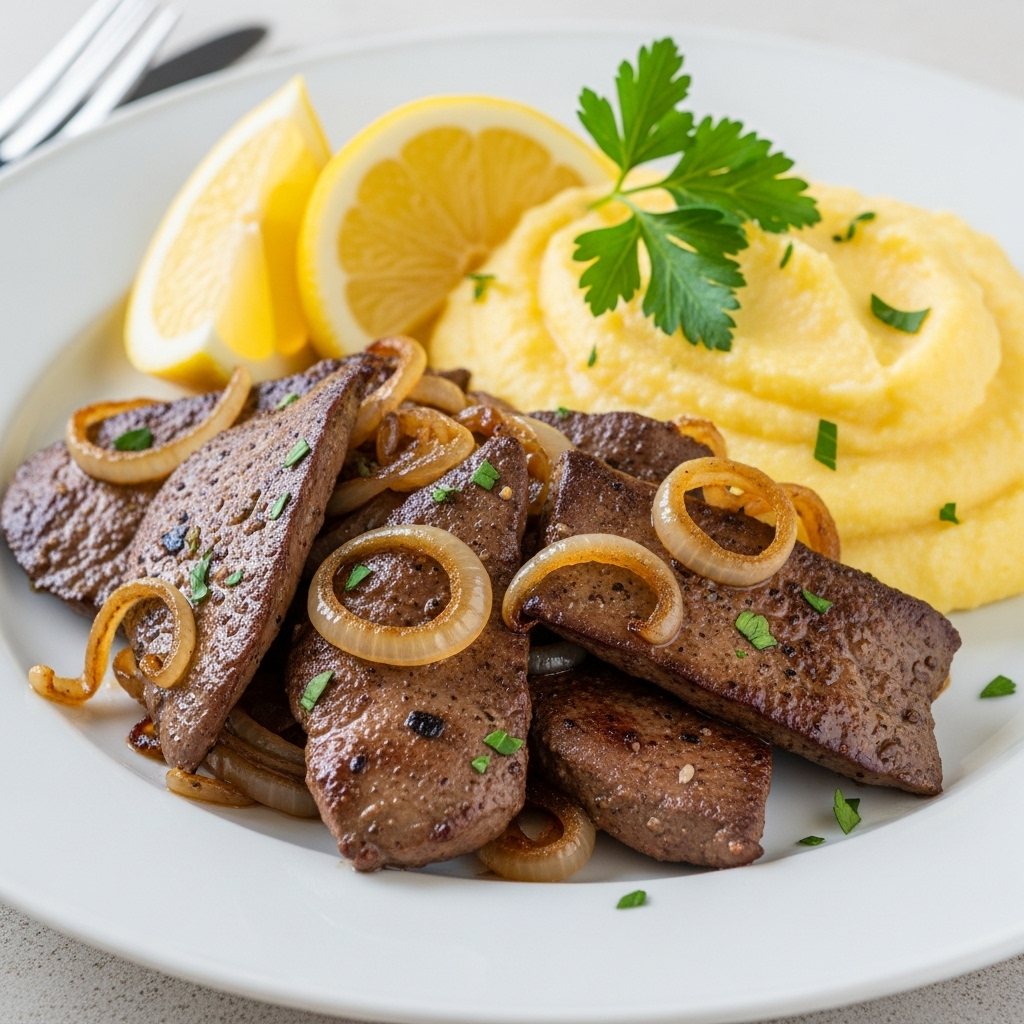
A perfectly cooked skillet of liver and onions deserves the right partner. The classic choice is soft polenta. It creates a creamy base that soaks up the rich, buttery juices beautifully.
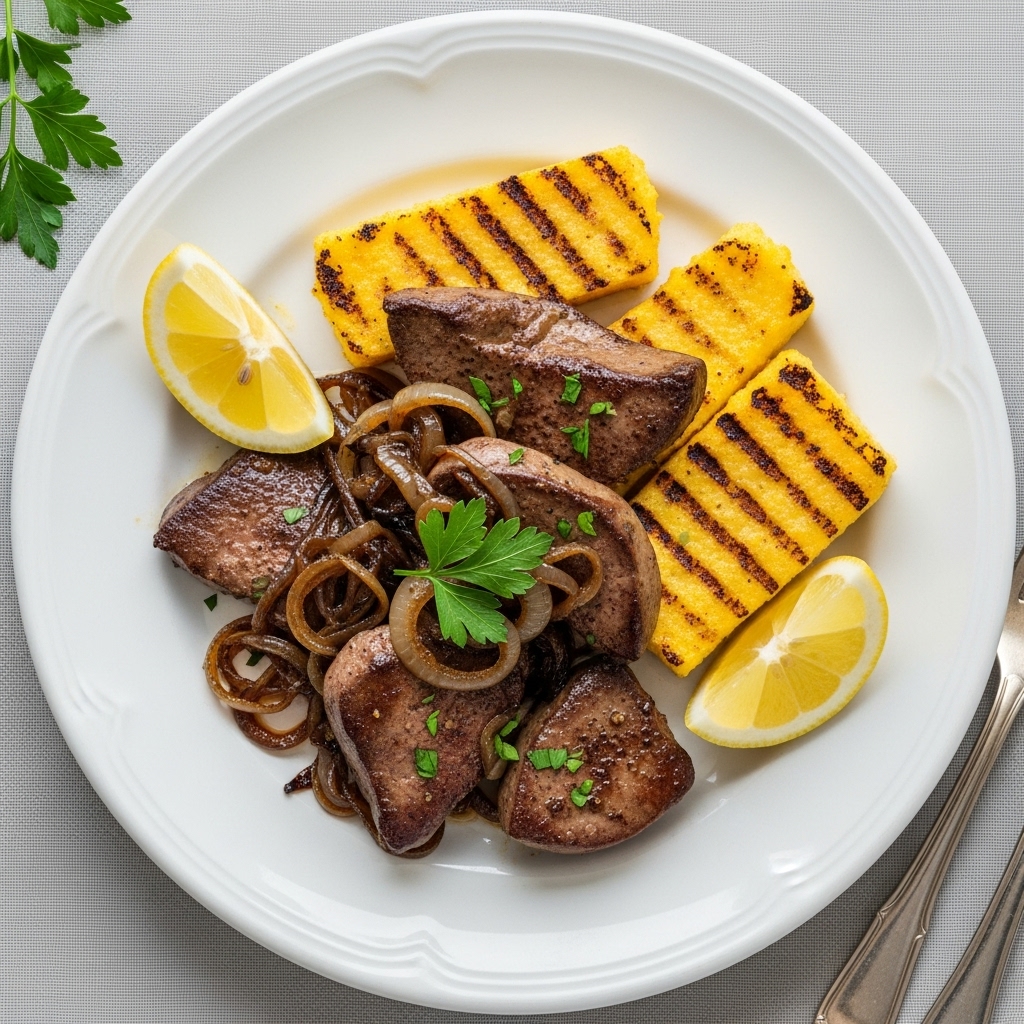
For a textural twist, grill pre-cooked polenta pieces until crisp. Steamed potatoes or crusty bread also work well. These sides make the meal complete.
Fresh parsley and lemon wedges are essential final touches. The lemon lets everyone adjust the acidity to their taste. A quick squeeze can balance the onions’ sweetness if needed.
Serve immediately for the best texture. If the flavors need a tweak, a little vinegar or a pat of butter can perfect the balance. For a complete walkthrough, our detailed guide to this Venetian classic ensures success.
Fegato alla Veneziana (Venetian-Style Liver with Onions)
Ingredients
Method
- Trim any membrane or skin from the calf liver. Slice it into thin strips for quick cooking and tender results.
- Thinly slice the onions into half-moon shapes. Heat butter and olive oil in a wide skillet over medium-low heat. Add the onions and cook gently for 15 minutes, stirring occasionally until they are soft and translucent. Add a splash of water or wine to help them soften without browning.
- Once the onions are caramelized, push them to the sides of the skillet. Increase the heat to medium-high and add more olive oil. Quickly add the liver strips and sear them for about 1-2 minutes, just until they lose their raw red color and stay pink inside.
- Mix the liver with the onions. Add chopped parsley, salt, and pepper to taste. Let it cook for another minute.
- Pour a splash of white wine into the hot skillet to deglaze. Scrape up any browned bits from the bottom of the pan. Let the wine reduce until it becomes a syrupy sauce.
- Plate the liver and onions, pouring the pan sauce over the top. Serve with soft polenta, grilled polenta, crusty bread, or steamed potatoes. Garnish with lemon wedges and fresh parsley if desired.
Notes
- Use high-quality, fresh calf liver for the best results.
- Adjust the amount of wine and seasoning to suit your personal taste.
- Traditionally served with soft polenta, but crusty bread or potatoes also work well.