
Jump to Recipe
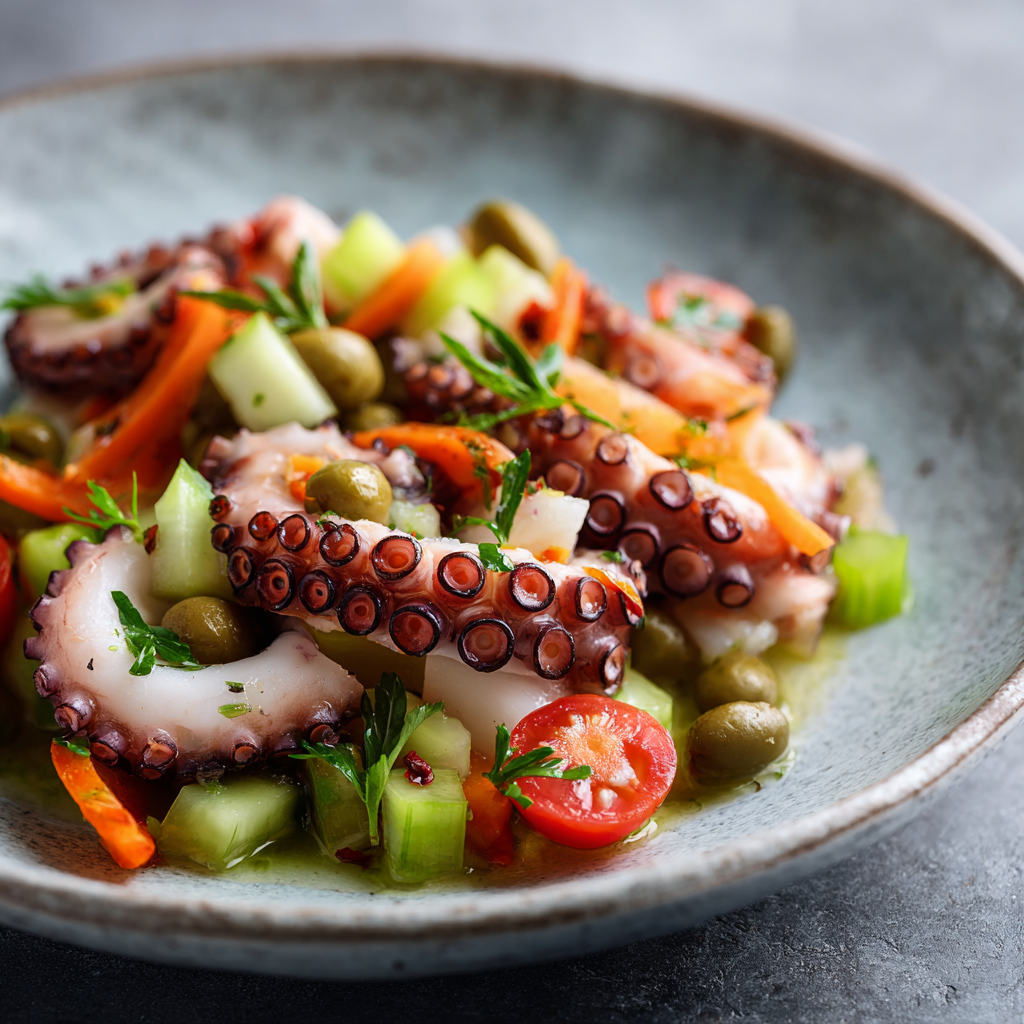
Can a home cook in the U.S. turn a modest ingredient into a bright, reliable antipasto that tastes like Sicily?
I’ll show you a clear, technique-first path to a classic dish you can actually pull off. Octopus is easier to find now, often pre-cooked or frozen in supermarkets, and it rewards simple handling.
The finished dish should sing of lemon, good olive oil, fresh parsley, and a gentle brine. Texture matters: tender with a pleasant chew, never rubbery. There are three realistic starts—pre-cooked, frozen, or fresh—and the method works for each when you cook until fork-tender at the thickest spot.
This is a flexible seafood course that can be an antipasto, part of a spread, or a light meal. Crisp celery, carrots, briny olives and capers keep the octopus the star. For step-by-step timing and doneness cues, see my full recipe guide at insalata di polpo recipe.
Key Takeaways
- Simple, technique-forward approach for home cooks in the U.S.
- Three starting points: pre-cooked, frozen, or fresh—cook to fork-tender.
- Flavor profile: lemon, olive oil, parsley, gentle brininess.
- Watch texture: tender with a pleasant chew, never rubbery.
- Serves as antipasto, part of a spread, or a light main depending on extras.
Why this Sicilian octopus salad works for home cooks right now
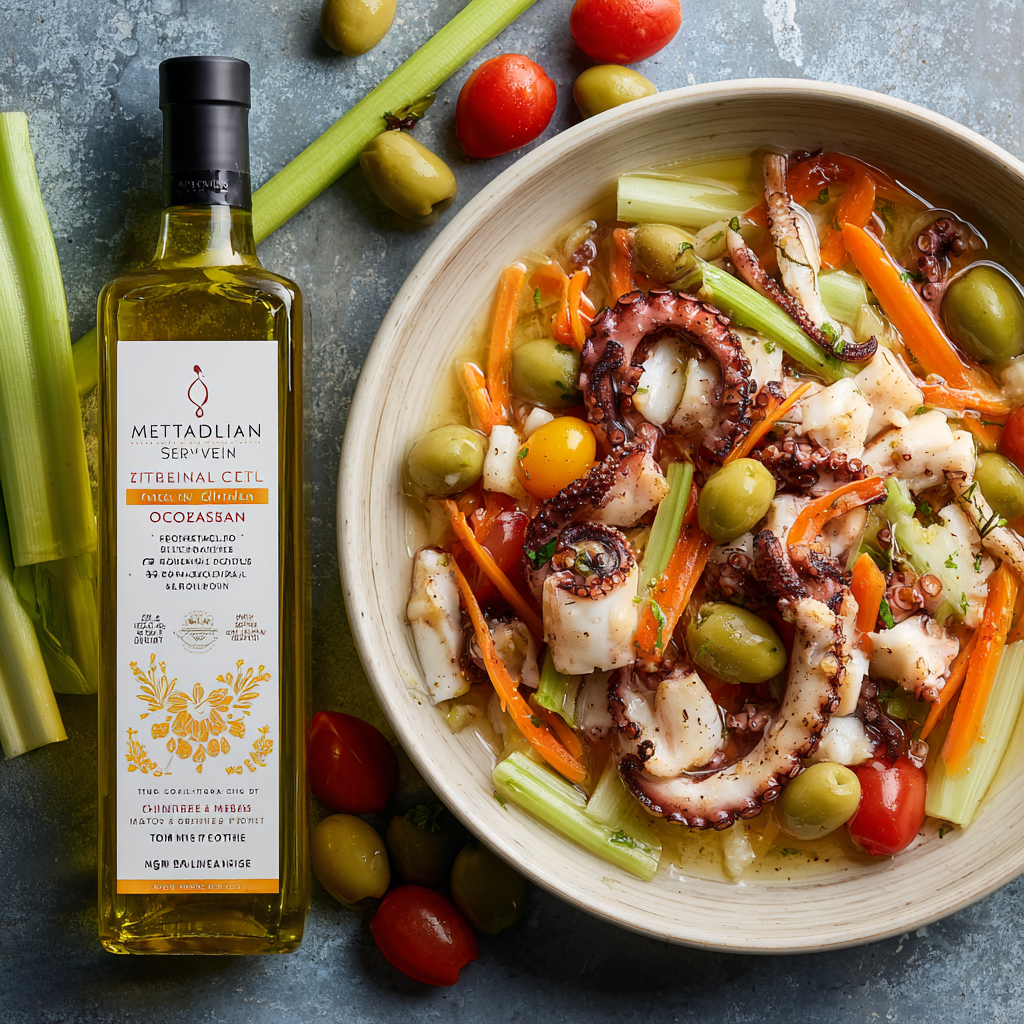
Supermarkets and fish counters have quietly made this classic seafood course an easy weeknight win.
Across the U.S. you’ll see tentacles in the frozen case, at seafood counters, or in imported pre-cooked packs. That wider availability lowers the barrier to trying it at home.
If you buy pre-cooked octopus, the hardest step is done. Chop vegetables and whisk a lemon-olive oil dressing, and the dish comes together in minutes.
- Where to find it: frozen case, seafood counter, or pre-cooked packages.
- Fast prep: pre-cooked makes assembly a short task once mise en place is ready.
- Flavor and texture: think briny, clean, and pleasantly chewy rather than “fishy.”
Serve it as an antipasto before pasta, a light lunch over greens, or as part of a Mediterranean spread with bread and vegetables. The recipe rewards restraint—good olive oil, fresh lemon, and parsley go further than complicated add-ins.
For easy entertaining: cook or buy ahead, let the pieces cool, dress gently, rest for about 30 minutes, and serve at the temperature you prefer. For a full practical recipe and a potato variation, see this octopus and potato recipe.
What “insalata di polpo” means and what makes it feel Sicilian
Insalata polpo is simply the Italian name for what we call an italian octopus salad: cooked tentacles dressed and served cool or at room temperature. Most versions follow a tight formula that emphasizes texture and balance.
Basic formula to follow
The core dressing is olive oil plus lemon juice, minced garlic, and chopped parsley. Use a generous extra-virgin olive for mouthfeel, then add lemon to taste so the dressing never becomes sour or watery.
Sicilian-leaning additions that matter
What makes a version feel more regional are crisp vegetables and briny accents. Add diced celery and carrots for crunch. Toss in green olives and capers for saline lift.
Working with tomatoes and capers
Cherry tomatoes belong halved and folded in at the end. That keeps them from releasing too much liquid. Let the bowl rest briefly so their sweetness softens the brine.
- Capers vs caper berries: both work; caper berries are larger and milder.
- Season in stages: oil first, lemon and juice next, then salt and pepper.
- Tasting checklist: salt lifts, lemon brightens, parsley freshens, garlic stays subtle.
| Ingredient | Role | Tip |
|---|---|---|
| Celery | Crunch | Thin slices for bite-size pieces |
| Green olive / Capers | Brine | Rinse if very salty |
| Cherry tomatoes | Sweetness | Halve and add last |
Shopping for octopus in the US: fresh octopus, frozen octopus, or pre-cooked
Choosing between pre-cooked, frozen, or fresh shapes how long you’ll spend and what prep is left. Pick the path that matches your schedule and comfort level.
Pre-cooked: the fastest path
Pre-cooked seafood saves time. Slice, rinse briefly, drain, and pat dry so the dressing clings and does not dilute. This route gets you to the table in minutes for a weeknight meal.
Frozen: thawing and why it works
Thaw frozen octopus safely in the refrigerator overnight. Gentle simmering from cold water often yields tender results because the slow heat relaxes the muscle fibers.
Fresh: what to ask your fishmonger
If you buy fresh octopus, ask for it cleaned with the beak removed and tell the counter whether you want the head left on or trimmed. That prevents surprises at home and makes slicing easier.
- Workflows: pre-cooked = slice and dress; frozen = thaw then cook; fresh = clean then cook.
- Keep the ingredient list simple: tentacles, celery, lemon, olive oil, parsley, garlic.
| Option | Prep Time | Handling Notes |
|---|---|---|
| Pre-cooked | Minutes | Rinse, drain, pat dry; dress just before serving |
| Frozen | Allow overnight thaw | Thaw in fridge; start in cold water and simmer gently for tenderness |
| Fresh | Plan extra time to clean or ask for cleaning | Request beak removed; confirm head is trimmed if you prefer |
How to cook octopus until tender (without the rubbery bite)
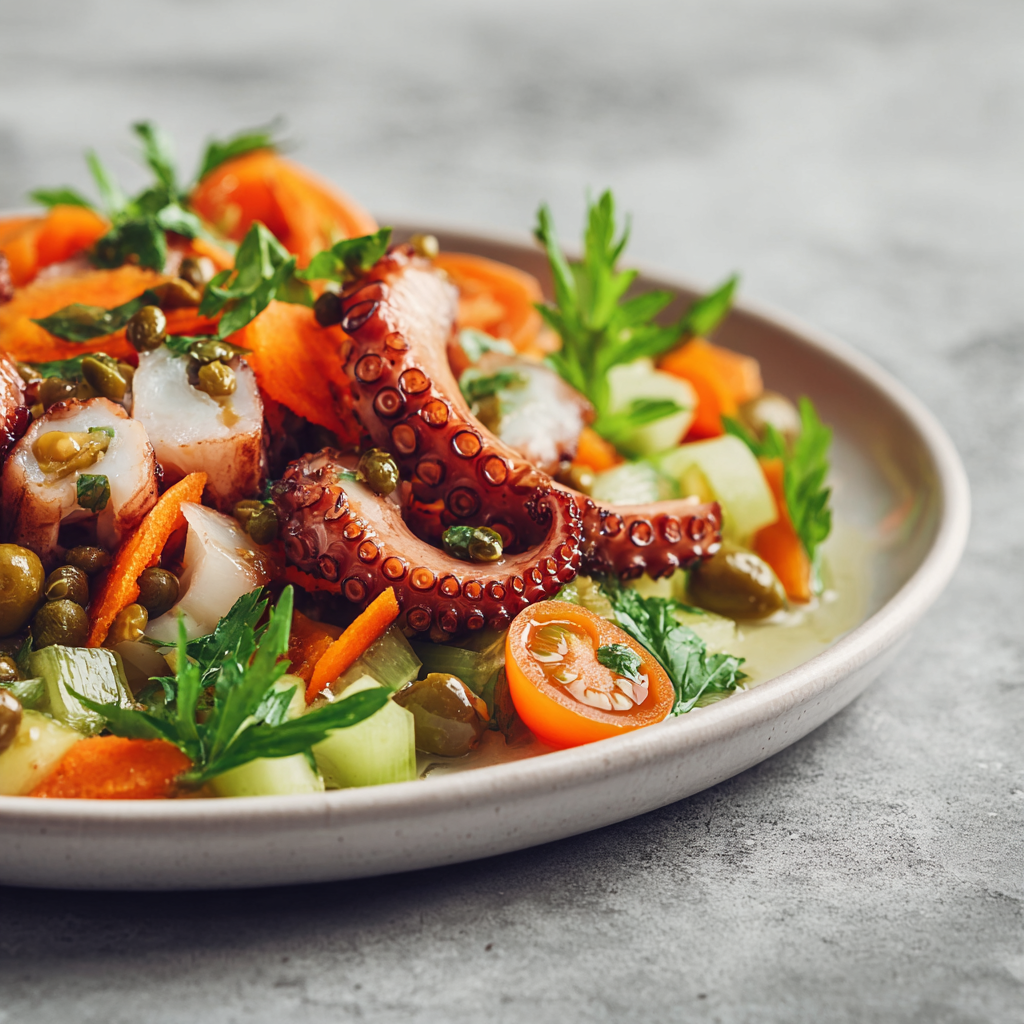
A gentle approach to heat and water is the simplest way to avoid rubbery texture. Use a large pot and start the ingredient in cold water so the muscle fibers relax as the temperature rises.
Large pot, cold start, and gentle heat
Put the tentacles in a large pot and cover with cold water. Slowly bring the water to a simmer and hold a steady, gentle heat rather than a rolling boil.
Timing guide by size
Treat times as ranges, not absolutes. Baby specimens often take around 20 minutes. A typical 2-pound piece usually needs roughly 45 minutes. Very large ones can approach two hours.
Flavoring the cooking water
Season the water with salt and aromatics: quartered onion, celery stalk, carrot, and a bay leaf. For a subtle lift add a splash of wine or a wedge of lemon.
The cork trick and testing doneness
The cork trick is a traditional ritual meant to encourage tenderness. Science is mixed; it won’t harm the process if you enjoy the ritual.
Know it’s done when a fork slides into the thickest part of a tentacle with little resistance. At that moment, stop the heat and let the pieces cool in the cooking water to retain juices.
- Large pot: helps even cooking and prevents crowding.
- Cold water start: promotes gentle, uniform cooking.
- Fork test: trust texture over the clock for tender octopus.
| Size | Typical time (minutes) | Doneness cue |
|---|---|---|
| Baby | ~20 | Fork goes in easily |
| Typical (≈2 lb) | ~45 | Fork-tender at thickest spot |
| Very large | Up to 120 | Slow fork test, then rest in water |
Cooling and cutting: setting up great texture in the finished salad
How you cool and cut the cooked tentacles sets the texture for every forkful. I let the pot rest off the heat and let cool in the cooking water until the pieces reach warm or room temperature. That gentler drop keeps the flesh juicy and prevents the muscle from tightening.
Why I let cool in the pot
Resting in the cooking water slows the temperature change. The pieces stay moist and the bite stays tender. Pull them out too soon and the texture can firm up.
Simple workflow before slicing
- Turn off heat and let cool in the water until warm/room temp.
- Lift pieces, drain briefly, and pat dry so dressing clings.
- Taste one plain piece to confirm tenderness before adding dressing and vegetables.
Three useful cuts and handling the head
Cutting consistently matters more than perfection. For a casual bowl I use bite-size chunks for easy eating. For even dressing coverage I cut small cubes. For a composed look I slice neat tentacle coins about 1/3-inch thick.
If the head is included, slice it into thin strips to match the tentacles’ tenderness so nothing feels bulky in the bowl.
| Cut | Shape | When to use | Tip |
|---|---|---|---|
| Bite-size chunks | Irregular pieces | Casual sharing or mixed bowls | Easy to eat with a fork |
| Small cubes | Uniform cubes ~1/2 inch | Even dressing and balanced bites | Cube thickest parts for uniform texture |
| Tentacle coins | Round slices | Plated or more formal presentation | Slice across the grain for clean rounds |
The lemon-olive oil dressing that makes or breaks octopus salad
A bright lemon-and-olive dressing is the single element that lifts the whole dish. Keep the approach learnable: think in ratios, taste as you go, and use good ingredients.
Ratio mindset
Start generous with extra-virgin olive oil, then add lemon juice slowly until the balance is bright but not sharp. This lets you tailor acidity to the seafood and vegetables rather than following a strict formula.
Aromatics and gentle heat
Finely mince garlic cloves and very finely chop fresh parsley so they melt into the dressing. Season with salt and black pepper before you whisk. For warmth, a small pinch of red pepper flakes lifts the bowl without overt heat.
Emulsify and taste adjust
Whisk the oil and lemon juice until the mixture looks slightly creamy and unified. Taste and adjust seasoning. If it tastes flat, add salt. If it feels heavy, a touch more lemon brightens it. If garlic feels loud, let the dressing rest and taste again.
- Use quality extra-virgin olive oil — its fruitiness shows in a simple dressing.
- Whisk until the oil and lemon juice bind; a fork works fine in a small bowl.
- Taste adjust in small increments; keep the dressing balanced and confident.
| Component | Role | Prep tip |
|---|---|---|
| Extra-virgin olive oil | Body and mouthfeel | Use a fruity, balanced oil |
| Lemon juice | Acidity and lift | Add gradually to avoid sharpness |
| Garlic cloves / parsley | Flavor and freshness | Minced very fine so they blend |
| Salt / black pepper | Seasoning control | Season in stages and taste |
| Red pepper flakes | Subtle heat option | Use a small pinch to lift flavors |
octopus salad sicilian style: assembling the bowl
Build the dish in layers so each texture stays distinct and the seafood remains the star. Start with the cooked, cool pieces on the bottom and add the crisp vegetables next.
Vegetable prep that stays crisp
Thin-slice celery so it gives crunch without crowding each bite. Cut carrots into fine matchsticks or small dice for even texture.
Finely chop red onion so its bite blends into the bowl. Halve cherry tomatoes and add them last to prevent breaking and extra juice.
Optional briny boosters
Add olives and capers sparingly. They bring saline lift, so taste before adding extra salt to the dressing.
If you want larger bursts of brine, use caper berries instead of many small capers.
Pour dressing, toss gently, and coat every piece
Pat pre-cooked pieces dry so the dressing clings. Pour dressing over the bowl, then fold and turn gently so you don’t tear tentacles or crush tomatoes.
Taste once right after mixing to confirm balance. Let the bowl rest briefly; the flavors deepen after a short rest.
| Item | Prep | When to add |
|---|---|---|
| Celery | Thin slices | With vegetables |
| Carrots | Matchsticks or dice | With vegetables |
| Red onion | Finely chopped | With vegetables |
| Cherry tomatoes | Halved | Last |
Marinating time, resting, and serving temperature for the best flavors
Give the bowl thirty minutes and you’ll notice the difference on the first bite. That short pause lets the pieces absorb salt, oil, and lemon so the components feel joined instead of separate.
Why a 30-minute rest changes everything
Thirty minutes is the practical sweet spot. In that time vegetables soften slightly while keeping crunch. The dressing rounds out, and the overall flavors meld into something that tastes composed rather than tossed together.
How long is too long: keeping garlic from taking over
Keep garlic modest in the dressing and hold off on extra cloves until after the rest. If you let it sit more than a day the raw garlic can dominate and freshness fades. A few hours are fine, but avoid going past 24 hours for best quality.
Room temp vs chilled: what tastes best
Seafood salads often sing at cool-room temperature. Cold mutes olive oil and lemon, so remove from the fridge about 20 minutes before serving and taste to taste adjust seasoning and lemon at the table.
| Rest | What happens | When to use |
|---|---|---|
| 30 minutes | Balanced, unified flavors | Everyday service |
| 2–4 hours | Deeper meld, still fresh | Make ahead for guests |
| Over 24 hours | Freshness and garlic weaken | Not recommended |
Serving ideas that feel restaurant-worthy but stay simple
A few small choices turn a home platter into a restaurant-worthy course without fuss. These touches keep the dish approachable while highlighting the bright lemon, oil, and briny accents that matter most.
Plate it on arugula or tender lettuce leaves
Arrange a bed of arugula or young lettuces on each plate and spoon the dressed salad over them. The greens catch extra dressing and make the portion look composed rather than tossed.
Arugula works well because its peppery bite balances rich olive oil and the salty pop from capers or olives.
Lemon wedges on the side for that last-second squeeze
Serve two lemon wedges per plate so diners can add juice to taste. This keeps the main bowl from becoming overly acidic and lets each guest finish their portion how they like it.
- Serve as an antipasto course or scale it up to a light seafood lunch with crusty bread or roasted vegetables.
- If chilled, let the bowl sit 15–20 minutes before plating so the oil loosens and the flavors open up.
- Keep garnishes minimal: chopped parsley and a final drizzle of good olive oil are enough.
| Plating option | Why use it | When to choose |
|---|---|---|
| Arugula bed | Peppery contrast, catches dressing | Composed plates for guests |
| Tender lettuce leaves | Neutral, soft texture | Light lunch or sharing course |
| Simple bowl | Casual serving, easy to pass | Family-style meals |
Variations you’ll actually want to make again
Small changes turn the basic bowl into a heartier or smokier plate you’ll make again. Below are three grounded variations that focus on technique and timing so the result stays tender and balanced.
Insalata di polpo e patate: stretch and soften
Adding boiled potatoes is the most practical way to stretch the bowl into a fuller meal. Potatoes also mellow acidity and the brine, making each bite rounder.
Boil potatoes in salted water until a fork slides in easily. Cool them fully, then cut into wedges or firm chunks so they hold up when tossed with the cooked pieces.
Grilled twist: char after tenderness
Simmer the tentacles until fork-tender, then hit them briefly over very high heat for a quick char. The sear adds crisp edges and a smoky note without changing the interior texture.
Dress while slightly warm so lemon juice and olive oil cling and the flavors absorb. A tiny pinch of red pepper flakes pairs well with that smoke.
Swaps when the main ingredient is hard to find
In U.S. markets you can swap in shrimp for a mild, quick-cooking option, calamari for a similar chew, or lobster and crab for sweeter, richer bites. Remember: swaps change cook time dramatically.
The rule stays the same—achieve tenderness first, then dress and let the bowl rest so flavors meld before serving.
- Best for a fuller meal: add cooled boiled potatoes.
- For charred texture: simmer, then grill for high heat seconds.
- Substitutes: shrimp, calamari, lobster, or crab—adjust cook times accordingly.
| Variation | Key change | Timing note |
|---|---|---|
| Insalata di polpo e patate | Add boiled potatoes | Boil potatoes until fork-tender; cool before tossing |
| Grilled twist | Quick char after simmer | Simmer to tenderness, then 1–2 minutes per side on high heat |
| Swaps | Shrimp, calamari, lobster, crab | Shorter or longer cook times—always test for tenderness |
Storing leftovers and making it ahead without losing freshness
Plan your leftovers with simple steps so the bowl keeps its texture and bright flavors. Make ahead by chilling the cooked, cut octopus and the vegetables separately. Keep them in airtight containers and dress only when you’re ready to serve.
Make-ahead strategy
If you must prepare the dressing early, use a lighter hand with garlic and lemon juice. Store the dressing in the fridge and taste it before you toss; add extra lemon juice, olive oil, or salt in small increments to rebalance.
Keeping texture and balancing flavors next day
Olive oil can firm in cold storage. Let the bowl sit at room temperature for a few minutes so the oil loosens and coats evenly. Keep tomatoes and dressed pieces separate overnight, and slice onions thin to avoid a harsh bite.
- Prep components separately; toss close to serving time.
- If stored, expect stronger flavors—refresh with lemon juice and a pinch of salt.
- Enjoy within about a day for best freshness and a clean seafood flavor.
| Step | Why | Timing |
|---|---|---|
| Chill components separately | Preserves crunch and prevents sogginess | Up to 24 hours |
| Dress at serving | Keeps flavors bright and garlic from dominating | Minutes before plating |
| Room-temp rest | Releases firmed olive oil and evens flavors | 5–20 minutes |
Bring a taste of Sicily to your table with one bowl and a good olive oil
Bring the kitchen to the table with one bowl that trusts tender cooking and quality olive oil. Cook the octopus gently in a large pot until fork-tender, cool it in the cooking water, then cut it evenly.
Dress simply with good olive oil, lemon, minced parsley, and a bit of salt. Let the bowl rest for about 30 minutes so flavors meld and textures settle.
If you’re new, start with pre-cooked pieces — success comes fast and builds confidence in a few minutes of prep. Keep briny elements and crisp vegetables balanced and taste at the end before adding more lemon or salt.
Make it once and it becomes an easy warm-weather staple for casual entertaining.
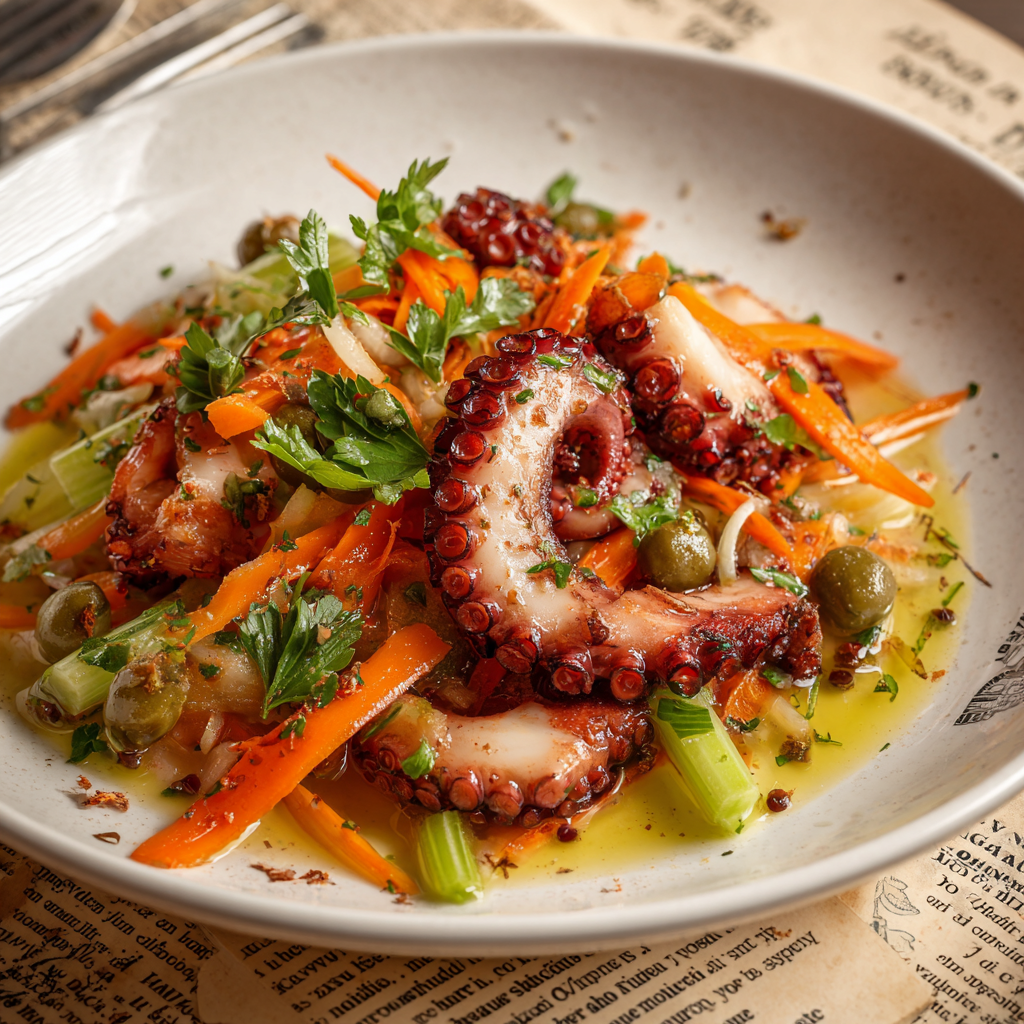
Insalata di Polpo (Sicilian Octopus Salad)
Ingredients
Method
- If using pre-cooked octopus, simply rinse, drain, and pat dry.
- If using frozen octopus, thaw overnight in the fridge and simmer gently in cold water until fork-tender (approx. 45 minutes for a 2-pound piece).
- If using fresh, ask your fishmonger to clean it, removing the beak and eyes. Simmer it gently until fork-tender.
- In a small bowl, whisk together extra virgin olive oil, lemon juice, minced garlic, salt, and pepper. Taste and adjust the balance of acidity by adding more lemon juice if needed.
- Thinly slice celery, dice or make matchsticks from carrots, and halve the cherry tomatoes. Set aside.
- Once the octopus is cooked and cooled, cut it into bite-sized pieces or small cubes. Place the pieces in a large mixing bowl.
- Add the prepared vegetables (celery, carrots, tomatoes) along with olives and capers.
- Pour the dressing over the octopus and vegetables. Gently toss the salad so the dressing evenly coats everything.
- Let the salad rest for about 30 minutes before serving to allow the flavors to meld together. Serve at room temperature or slightly chilled.
Notes
- Adjust the dressing to your taste. If you prefer more acidity, add extra lemon juice.
- Fresh octopus may require additional cleaning. Be sure to ask your fishmonger for the right preparation.
- You can make this dish ahead of time, but avoid letting it sit for too long, as the garlic flavor may become overpowering after 24 hours.