
Jump to Recipe
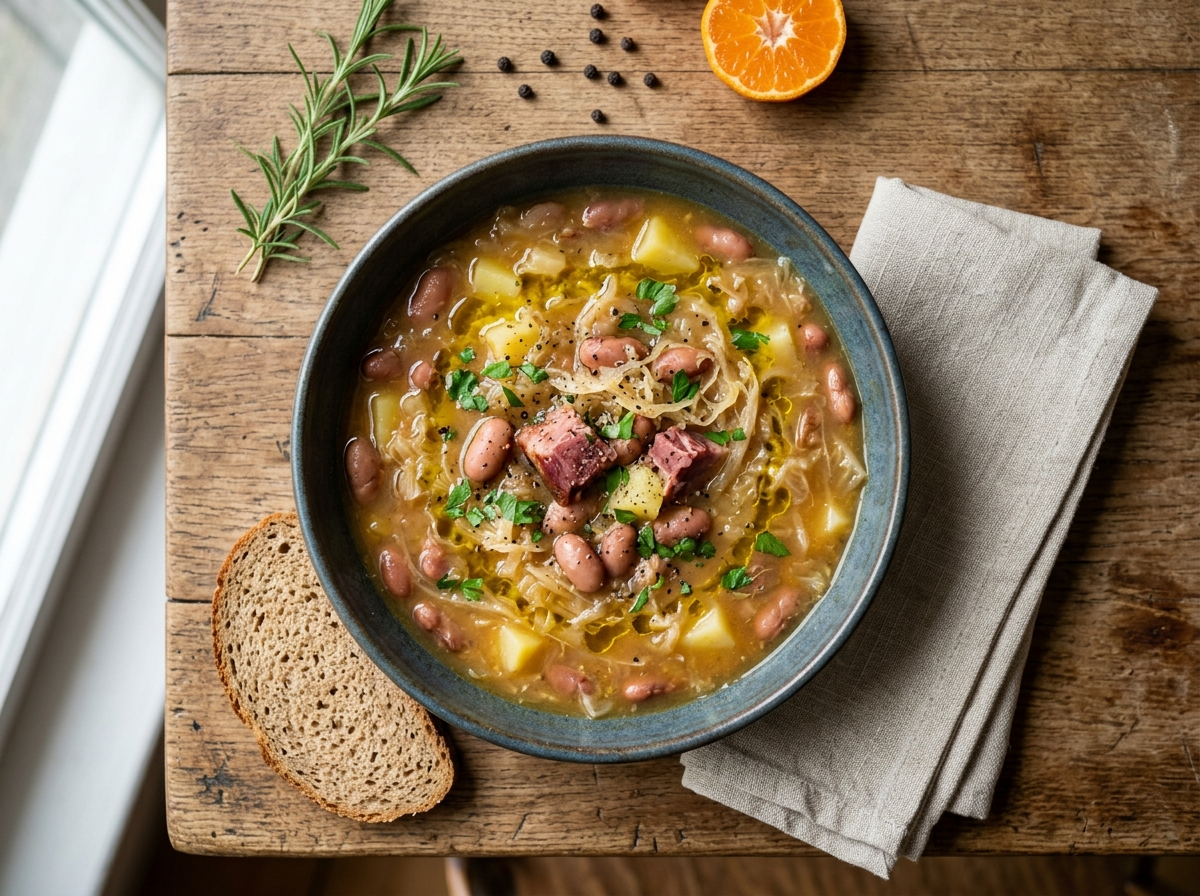
Jota is the defining winter soup of Friuli-Venezia Giulia, the region where Italy meets Slovenia and Austria. It’s built on three working-class pantry staples: fermented cabbage, dried beans, and smoked pork. The result is thick, sour, and deeply savory.
Every family in Trieste and the Carso plateau has a version. Some use ribs, some use cotechino, some add barley. This one stays close to the classic: borlotti beans cooked from dried, sauerkraut that holds its bite, and a smoked pork hock for body.
It takes patience, not skill, much like other slow-simmered Italian bean soups that reward a long, unhurried cook. The beans need a long simmer, and the soup improves if it sits overnight. Plan accordingly and the effort on the day of serving is minimal.
Why You’ll Love This Recipe
- Deeply savory broth from smoked pork and fermented cabbage
- Beans and potato make it genuinely filling without pasta
- Tastes better the next day, ideal for batch cooking
- Straightforward technique with mostly pantry ingredients
Ingredient Notes
- Dried borlotti beans: Soak overnight for even cooking. Canned borlotti work in a pinch, but add them in the last 30 minutes only or they’ll turn to mush.
- Sauerkraut: Use a good-quality refrigerated sauerkraut, not shelf-stable. Rinse it lightly if you want less sharpness, but keep some brine for the sour note that defines jota.
- Smoked pork hock: One hock gives the broth a smoky backbone and shredded meat. Substitute with smoked ribs or a piece of smoked pancetta if a hock is hard to find.
- Potato: A starchy potato like Russet or Maris Piper is best. It breaks down slightly as it cooks, helping to thicken the soup naturally.
- Caraway or cumin seeds: Traditional recipes use caraway, which echoes the Central European influence. Ground cumin is a fine swap; use half the quantity.
- Lard or olive oil: Lard is traditional for the soffritto and adds a rounded pork flavor. Olive oil works well and keeps the soup lighter.
Friuli Jota Soup: Sauerkraut, Bean, and Smoked Pork Stew from Northeast Italy
Ingredients
Method
- Drain the soaked borlotti beans and place them in a large pot with the smoked pork hock. Cover with 2 liters of cold water and bring to a boil over high heat.
- Skim off any foam that rises to the surface in the first 5 minutes. Reduce heat to a low simmer, partially cover, and cook for 60 to 80 minutes until beans are fully tender but still holding their shape.
- Lift the hock out onto a board. When cool enough to handle, pull the meat from the bone in chunks and discard the skin and bone. Set the meat aside. Reserve the cooking liquid.
- In a separate large pot or Dutch oven, heat the lard or olive oil over medium heat. Add the onion and cook for 6 to 8 minutes, stirring occasionally, until soft and pale golden.
- Add the garlic and caraway seeds. Cook for 1 minute until fragrant.
- Add the sauerkraut to the pot. Stir and cook for 4 to 5 minutes until it starts to lose its raw edge and takes on a little color at the bottom of the pot.
- Add the cooked beans, shredded pork meat, potato cubes, bay leaves, and black pepper. Pour in the reserved bean and pork cooking liquid. Add water if needed to cover everything by at least 3 cm.
- Bring to a simmer over medium heat, then reduce to low. Cook uncovered for 30 minutes until the potato is soft and beginning to break down at the edges.
- Remove the bay leaves. Use the back of a spoon to crush several potato chunks and a ladleful of beans directly in the pot. Stir well to thicken the broth.
- Taste and add salt carefully, keeping in mind the smoked pork already carries salt. Simmer for a further 5 minutes.
- Let the soup rest off the heat for 15 to 20 minutes before serving. Ladle into deep bowls, drizzle with olive oil, and scatter with parsley if using.
Notes

Tips for Success
- Soak dried beans for at least 12 hours and change the water once to cut cooking time and reduce bitterness.
- Brown the sauerkraut briefly in fat before adding liquid to mellow the sharpness and build a slightly caramelized base.
- Simmer the pork hock whole, then pull the meat off the bone and return it to the pot for better texture than chopping it raw.
- Mash or blend a ladleful of cooked beans and stir it back in to thicken the broth without any flour.
- Let the finished jota rest off the heat for 20 minutes before serving so the flavors settle and the broth thickens further.
Variations
- Add 80 g pearled barley with the beans for the Carso-style version with extra body.
- Use smoked cotechino sausage instead of hock for a richer, fattier Trieste trattoria version.
- Make it vegetarian by replacing pork with smoked paprika, a Parmesan rind, and extra caraway.
Storage and Reheating
Store cooled jota in an airtight container in the fridge for up to 4 days. The soup thickens considerably as it sits, so add a splash of water or light stock when reheating.
To reheat, warm gently over medium-low heat, stirring occasionally, until it reaches a full simmer. Avoid high heat, which can cause the beans to break apart.
Jota freezes well for up to 3 months. Freeze in portion-sized containers and thaw overnight in the fridge before reheating.
Serving Suggestions
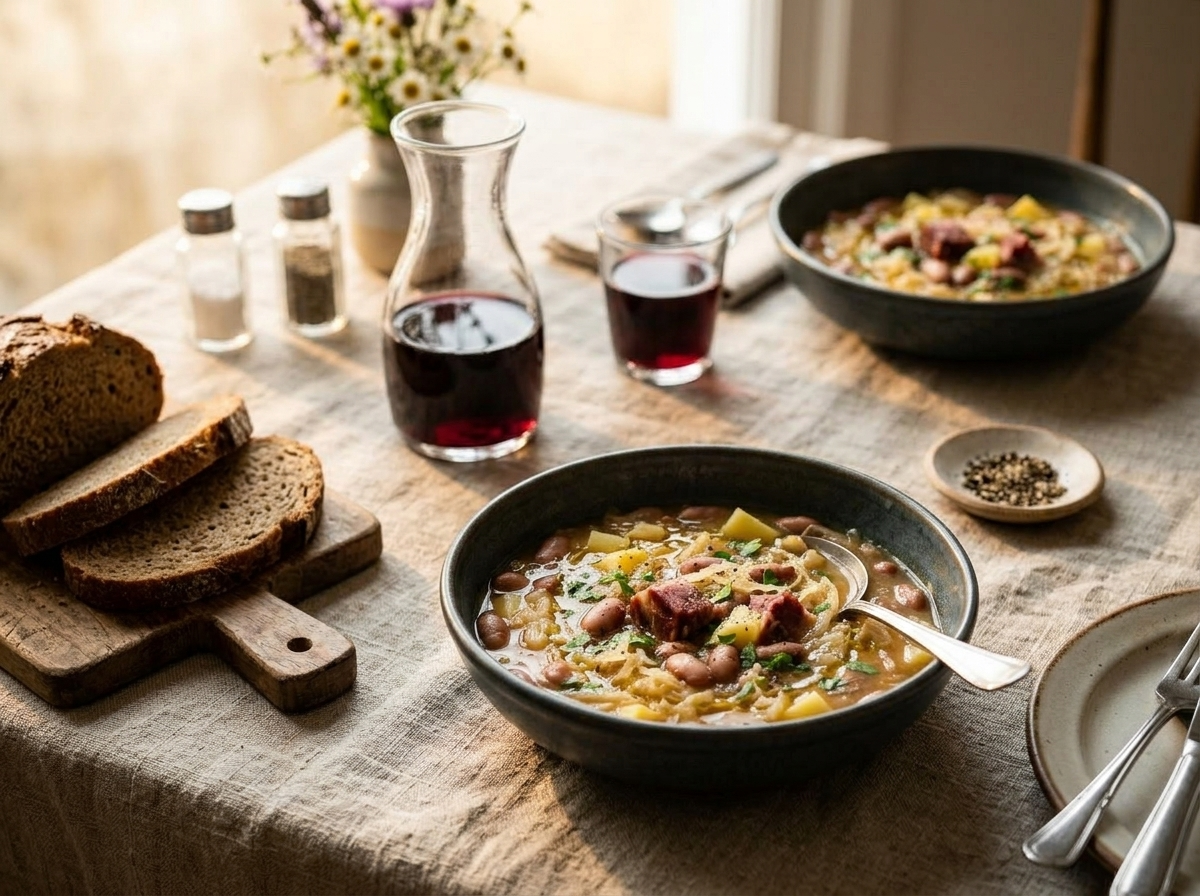
Serve jota in deep bowls with a drizzle of good olive oil and a pinch of freshly cracked black pepper. A slice of dense rye bread or pane di segale on the side is the traditional Friulian pairing, and it holds up to the thick broth without going soggy.
For a more substantial meal, add a soft-boiled egg or a few slices of cured pork on the side. In Trieste, a glass of Terrano, the sharp local red wine, is the standard pour alongside jota.
FAQ
Why does my jota taste too sour?
The sourness comes from the sauerkraut brine. Rinse the sauerkraut under cold water before adding it to the pot to dial back the acidity. You can also balance it by simmering a small peeled potato in the broth and removing it before serving.
Can I use canned beans instead of dried borlotti in jota?
Yes, two 400 g cans of borlotti or cannellini beans work. Add them in the final 30 minutes of cooking so they don’t disintegrate. The broth will be slightly less starchy, so mash a spoonful of beans to compensate.
Can I make jota soup ahead and freeze it?
Jota freezes well for up to 3 months in airtight containers. The texture actually improves after freezing because the beans absorb more of the broth. Thaw overnight in the fridge and reheat slowly with a little added water.
What bread or side dish goes best with Friulian jota?
Rye bread or a sturdy sourdough is the traditional choice in Friuli because the crumb is dense enough to scoop without falling apart. A simple plate of pickled vegetables or a bowl of Italian squash and sage soup also pairs well with the smoky, sour broth.
What is the difference between Friuli jota and Slovenian jota?
Both are sauerkraut-and-bean soups with smoked pork, and the recipe crosses the border almost unchanged. The Slovenian version often uses more sour cream and less potato, while the Friulian-Triestine version tends to be thicker and relies on mashed beans rather than cream for body.
Is jota soup gluten free?
The base recipe contains no wheat or gluten-containing ingredients, so it is naturally gluten free. Check the label on your smoked pork hock or cured meat, as some processed products contain gluten-based fillers or flavorings.