
Jump to Recipe
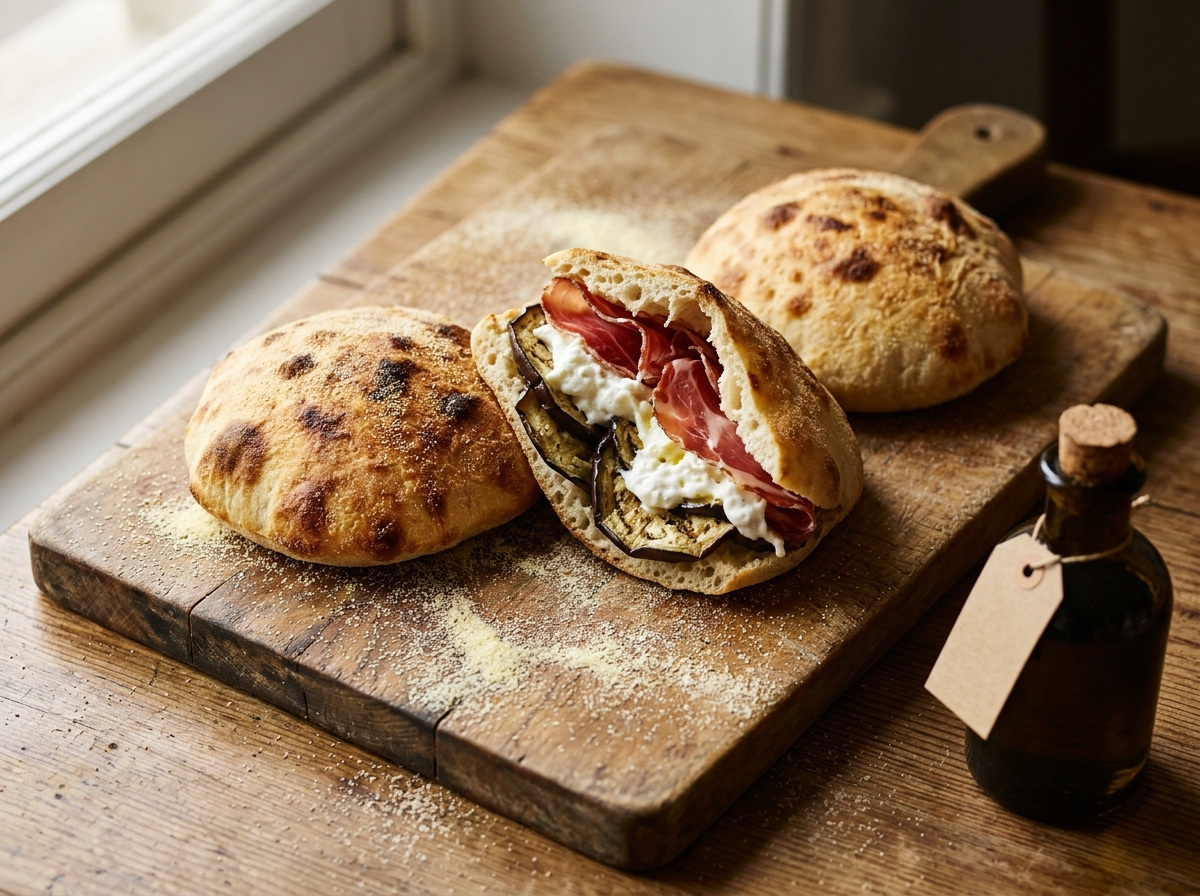
Puccia is the street food of Salento, the heel of Italy’s boot. You buy one freshly baked, split it while it’s still warm, and stuff it however you like. The roll itself is the point, not just the vessel.
The dough is a simple white bread dough made with durum wheat semolina or ’00’ flour, a small amount of olive oil, and a straightforward yeast leavening — the same high-heat logic that gives baked calzone its blistered crust applies here too. What makes puccia different from a generic roll is the high-heat bake, which gives it a thin blistered crust and a chewy, open crumb that holds fillings without going soggy.
At home I use a combination of ’00’ flour and fine semolina. The semolina adds a slight bite and keeps the crust from being too soft. A single rise is enough if your kitchen is warm. Two hours at room temperature gives you a noticeably better texture.
For the filling, I give a classic combination of capocollo, burrata, and grilled eggplant below. Use that as a starting point, then adjust to what’s in your kitchen.
Why You’ll Love This Recipe
- Authentic Salentino street food made with pantry staples
- Thin blistered crust holds fillings without getting soggy
- Dough comes together in under 20 minutes of hands-on work
- Filling is flexible: cured meats, cheese, or grilled vegetables
Ingredient Notes
- 00 flour: Standard ’00’ flour gives a tender crumb. You can swap up to half with fine semola rimacinata (re-milled durum semolina) for a firmer, slightly golden roll.
- fine semola rimacinata: Adds a light bite and a pale golden color to the crust. If unavailable, use all ’00’ flour and the rolls will still work.
- instant dried yeast: Instant yeast goes straight into the flour. If using active dry yeast, dissolve it in the warm water first and let it sit for 5 minutes before adding.
- extra virgin olive oil: A Pugliese olive oil with a grassy, slightly bitter finish is traditional here. Any good-quality extra virgin will do.
- capocollo: Cured pork neck from Puglia or Calabria is the most common filling. Mortadella, local sausage, or bresaola are all used in Salento too.
- burrata or fresh fior di latte: Burrata is the richest choice and the most traditional for puccia in Lecce. Fresh mozzarella works well if burrata isn’t available.
- grilled eggplant (optional): Thin slices grilled with olive oil and a pinch of salt are a classic vegetable filling alongside cheese. Roasted peppers or sundried tomatoes also work.
Puccia Salentina: The Stuffed Bread Roll From Puglia
Ingredients
Method
- Combine the '00' flour and semola rimacinata in a large bowl or the bowl of a stand mixer. Add the instant yeast and stir to distribute evenly.
- Pour in the warm water and olive oil. Mix until a shaggy dough forms, then add the salt.
- Knead by hand on a lightly floured surface for 8-10 minutes, or with a dough hook on medium speed for 6-7 minutes, until the dough is smooth, slightly tacky, and pulls away cleanly from the bowl.
- Shape into a ball, place in a lightly oiled bowl, cover with plastic wrap or a damp cloth, and leave to rise at room temperature for 1.5 to 2 hours until doubled in size.
- Turn the risen dough onto a lightly floured surface. Divide it into 6 equal pieces, about 110 g each.
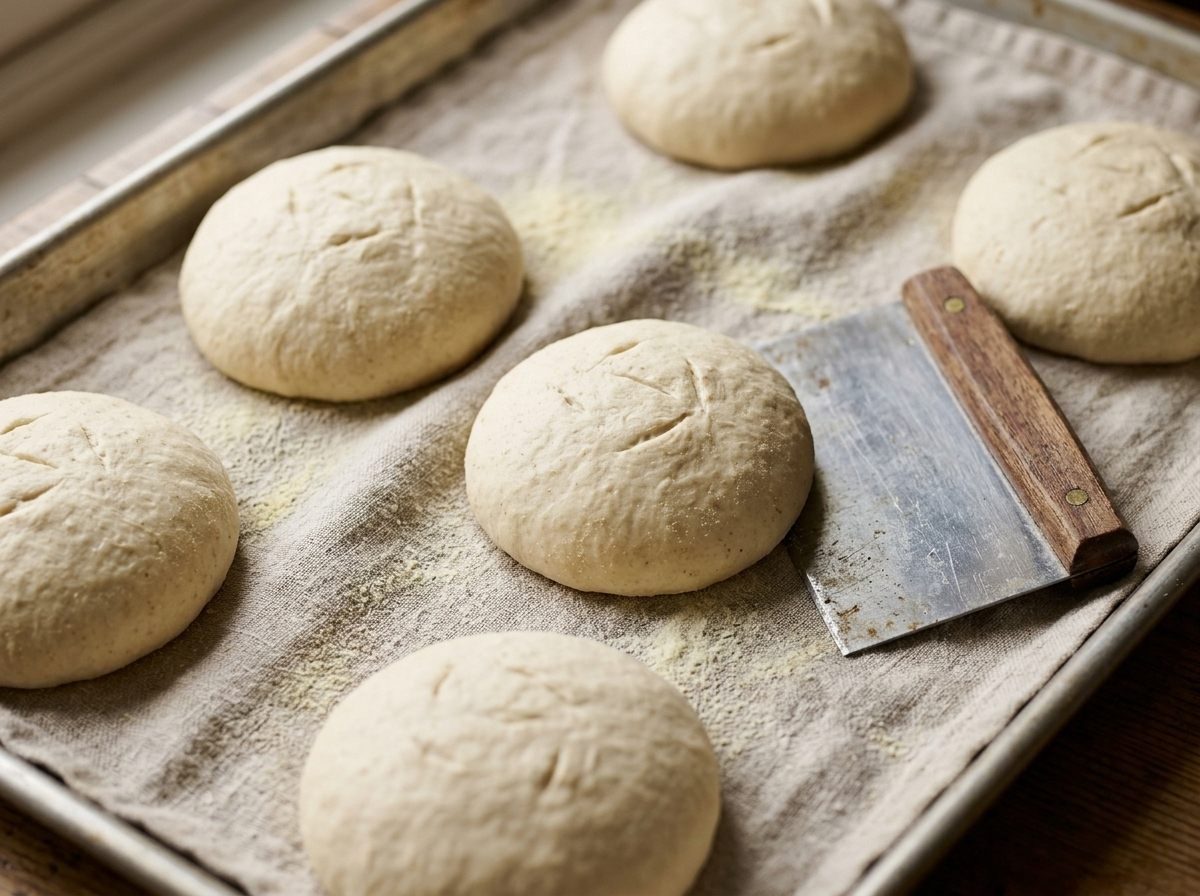
- Shape each piece into a tight round by folding the edges under and rolling on the work surface to build tension. Flatten each round gently to about 1.5 cm thick.
- Place on a lightly floured baking tray or parchment-lined sheet pan. Cover loosely with a cloth and rest for 20-30 minutes while the oven heats.
- Heat the oven to 220 C / 430 F with a baking stone or inverted sheet pan on the middle rack. Allow at least 30 minutes for the oven to reach full temperature.
- Score the top of each roll once with a sharp knife or lame.
- Slide the rolls onto the hot baking surface. Bake for 18-20 minutes until the crust is pale gold with dark blistered spots and the rolls sound hollow when tapped on the base.
- Transfer to a wire rack and rest for at least 5 minutes before splitting.
- Split each warm puccia horizontally with a bread knife, keeping the halves attached at the back like a hinge.
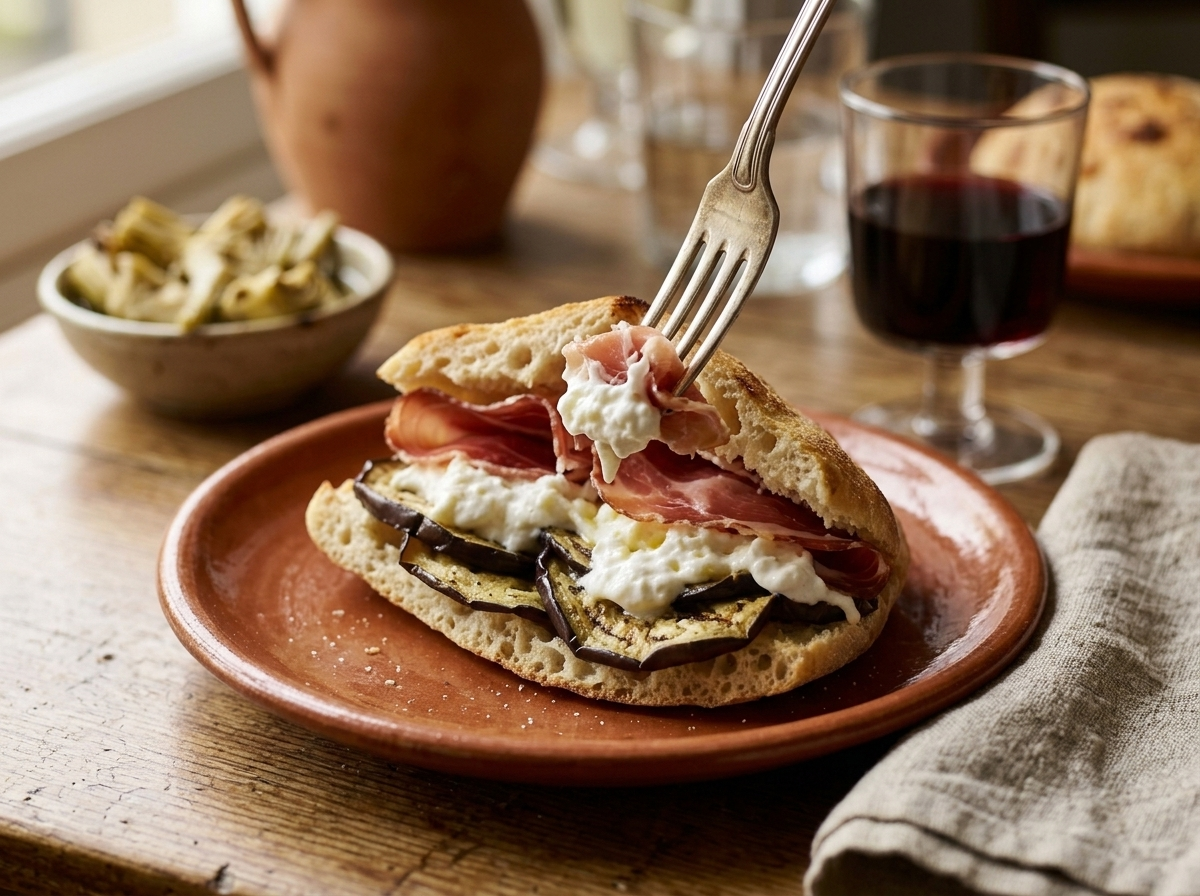
- Layer in the capocollo slices, then add torn burrata and grilled eggplant if using.
- Drizzle with a little olive oil, add a pinch of black pepper, and serve immediately while the bread is still warm.
Notes
Tips for Success
- Use water at 35-38 C (95-100 F) – too hot kills the yeast, too cold slows the rise significantly.
- Let the dough rise until visibly doubled, not just by the clock – room temperature affects timing.
- Shape rolls by folding the dough under itself tightly to build surface tension, then press gently to flatten slightly.
- Bake on a preheated baking stone or inverted sheet pan for a crispier bottom crust.
- Open the puccia while it’s still warm so the steam escapes and the crumb doesn’t turn gummy under the filling.
Variations
- Vegetarian puccia: fill with grilled zucchini, roasted peppers, fior di latte, and a drizzle of olive oil.
- Puccia con le olive: knead 80 g of pitted black olives into the dough before the first rise for a Salentino classic.
- Puccia al tonno: flaked tuna packed in olive oil, capers, sliced tomato, and a few drops of lemon juice.
Storage and Reheating
Baked puccia rolls keep at room temperature in a paper bag for up to 1 day. After that the crust softens significantly and the crumb starts to dry out.
For longer storage, freeze the baked, unfilled rolls in a zip-lock bag for up to 1 month. Reheat directly from frozen in a 200 C (390 F) oven for 8-10 minutes until the crust crisps up again.
Do not refrigerate filled puccia. Burrata and fresh mozzarella weep in the fridge and make the crumb soggy within a few hours. Assemble fillings just before eating.
Serving Suggestions
The classic Salentino way is to split the roll warm, layer in cured meat, add a torn piece of burrata, and eat it standing up. That’s the whole point of puccia as street food.
For a sit-down meal, serve two half-portions alongside a simple tomato and cucumber salad dressed with olive oil and oregano. A glass of Primitivo or Negroamaro from Puglia fits the food better than most other wines.
If you’re setting out a spread, put out the baked rolls with a board of capocollo, mortadella, provolone piccante, marinated artichokes, and sundried tomatoes — much like a layered Italian antipasto spread — and let everyone build their own.
FAQ
Why is my puccia salentina flat and dense instead of puffy?
The most common reason is under-proofing. The dough needs to fully double before baking – in a cool kitchen that can take 2.5 to 3 hours. Also check that your oven is fully preheated to 220 C before the rolls go in.
Can I use whole wheat flour instead of ’00’ for puccia?
You can swap up to 30% of the ’00’ flour with whole wheat flour without major issues. Going higher makes the dough heavier and the crust denser, which works against the light, blistered texture puccia is known for.
Can I freeze puccia dough before baking?
Yes. Shape the rolls, place them on a floured tray, freeze until solid, then transfer to a bag. When ready to bake, thaw overnight in the fridge, let them proof at room temperature for 1-1.5 hours, then bake as normal.
What is the difference between puccia salentina and pitta bread?
Puccia is a yeasted white or semolina roll with a chewy crumb and a thin blistered crust, made specifically in the Salento area of Puglia. Pitta bread is thinner, puffs into a pocket from steam, and has a softer crust – they look similar but the texture and use are different.
Is puccia salentina suitable for a dairy-free diet?
The bread dough itself contains no dairy – just flour, water, yeast, olive oil, and salt. The traditional fillings like burrata or fior di latte contain dairy, so choose dairy-free fillings like capocollo, grilled vegetables, and olive oil if you need to avoid it.
How do I know when the puccia rolls are fully baked?
The crust should be pale gold with dark brown blisters, and the bottom should sound hollow when tapped. An internal temperature of 90-93 C (195-200 F) on an instant-read thermometer confirms they’re baked through.