
Jump to Recipe
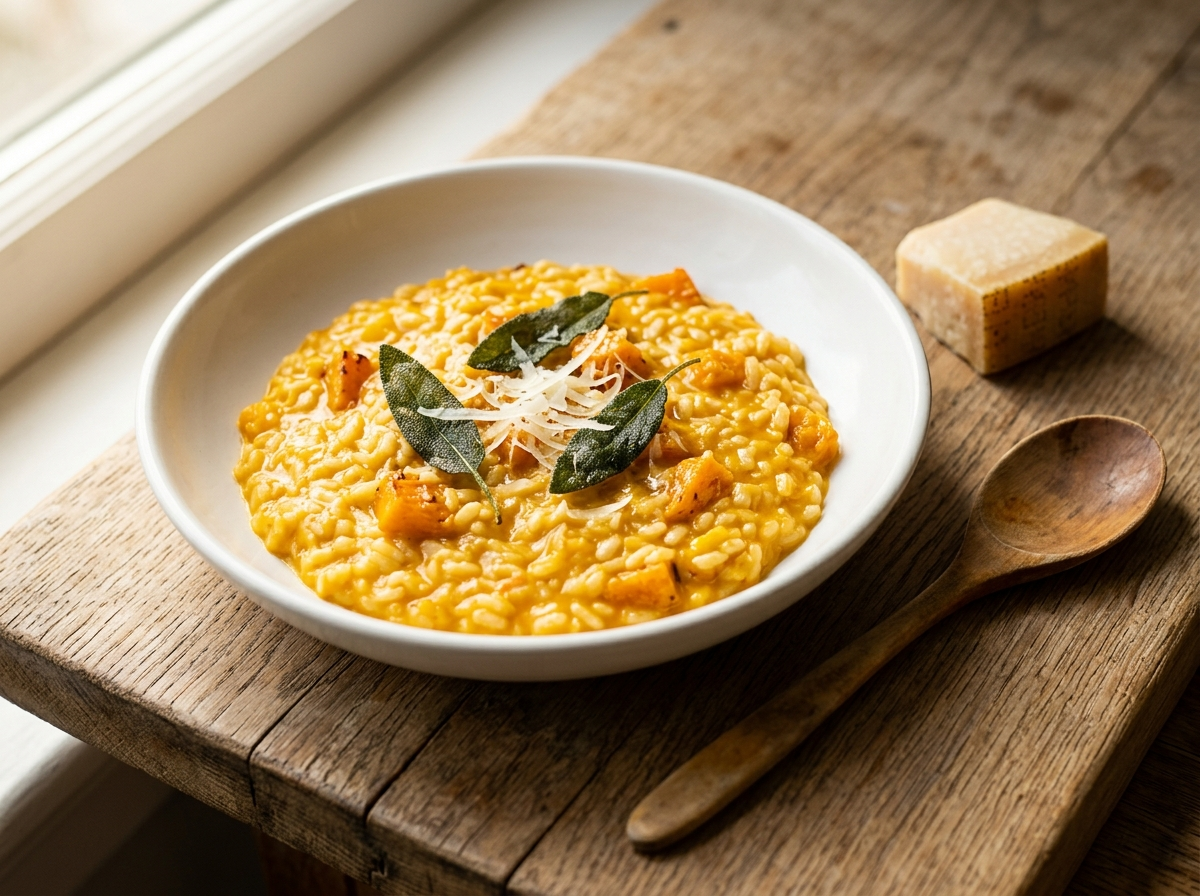
Risotto alla zucca is one of those dishes that looks impressive but follows a straightforward rhythm once you’ve done it once. The key is in the squash prep: roast it separately so the moisture cooks off and the natural sugars concentrate before the rice ever sees it.
This is a Northern Italian recipe, most associated with Lombardy and the Veneto, where pumpkin has been folded into risotto since at least the 17th century. The version here uses butternut squash, which is consistent year-round and has a clean, nutty flavor that holds up well against Parmigiano Reggiano.
The technique is standard risotto: a soffritto of shallot and butter, white wine to deglaze, hot stock added ladle by ladle, and a final mantecatura – that vigorous stir of cold butter and cheese off the heat – to create a loose, flowing consistency.
Don’t rush the stirring. The starch release is what makes risotto silky, and that happens gradually.
Why You’ll Love This Recipe
- One-pot technique with clear, repeatable steps every time
- Roasted squash adds concentrated sweetness without extra sugar
- Ready in 40 minutes from prep to table on a weeknight
- Naturally vegetarian and satisfying as a standalone main
Ingredient Notes
- Butternut squash: Butternut works better here than sugar pumpkin because it’s denser and less watery. Kabocha squash is an excellent substitute and roasts even drier.
- Arborio rice: Arborio is the standard, but Carnaroli gives a slightly firmer bite and is more forgiving if you get distracted. Don’t rinse the rice – you need the surface starch.
- Dry white wine: A crisp Pinot Grigio or unoaked Chardonnay works well. If you’d rather skip the wine, add an extra ladle of stock and a small squeeze of lemon juice at the end.
- Vegetable stock: Homemade is best, but a low-sodium store-bought stock is fine. Keep it hot in a saucepan next to the risotto pan so you never add cold liquid.
- Parmigiano Reggiano: Grate it fresh from the block just before the mantecatura. Pre-grated cheese has anti-caking agents that prevent it from melting smoothly into the rice.
- Fresh sage: Fry the sage leaves in butter until crisp for a garnish, or chop and stir them into the soffritto for a more integrated flavor. Dried sage works in a pinch – use half the amount.
Risotto alla Zucca (Italian Pumpkin Risotto)
Ingredients
Method
- Heat the oven to 200 C / 390 F. Toss the squash cubes with olive oil, salt, and pepper on a rimmed baking sheet and spread in a single layer.
- Roast for 25 to 30 minutes, turning once halfway, until the edges are golden and the flesh is tender when pierced with a fork. Set aside.
- Transfer two-thirds of the roasted squash to a bowl and roughly mash with a fork into a coarse puree. Keep the remaining cubes whole for texture.
- Melt 30 g of butter in a wide, heavy-bottomed pan over medium heat. Add the shallots and cook for 4 to 5 minutes, stirring, until soft and pale - not colored.
- Add the garlic and the 4 chopped sage leaves. Cook for 1 minute until fragrant.
- Add the Arborio rice and stir continuously for 2 minutes until each grain looks slightly translucent at the edges and smells faintly nutty.
- Pour in the white wine and stir constantly until it has fully absorbed into the rice, about 1 to 2 minutes.
- Add the mashed squash puree and stir to combine with the rice.
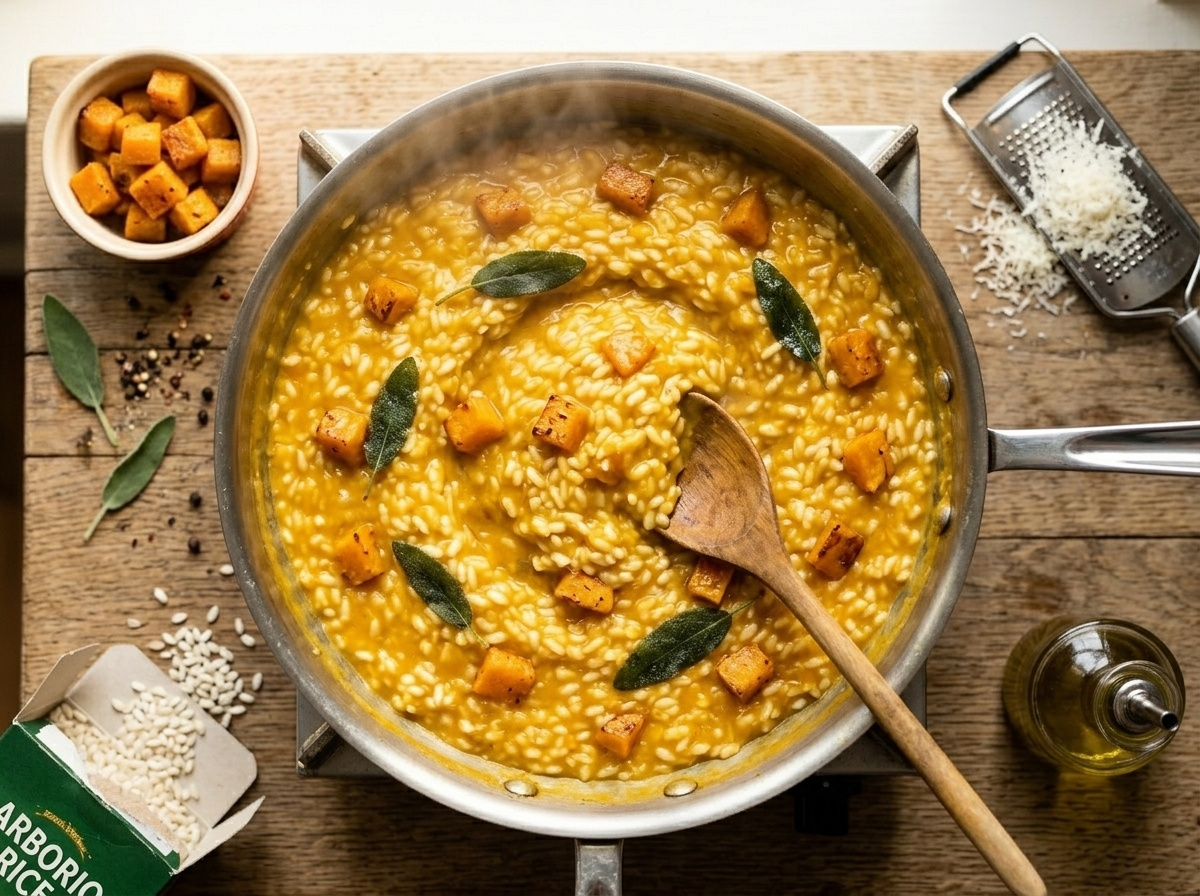
- Add hot stock one ladle (about 120 ml) at a time, stirring frequently and letting each addition absorb before adding the next. This process takes 18 to 20 minutes.
- After about 15 minutes, taste the rice - it should be almost tender with a slight bite. Fold in the whole roasted squash cubes and continue adding stock until the rice is just cooked through.
- Remove the pan from the heat. Add the remaining 30 g of cold butter and the grated Parmigiano Reggiano.
- Stir vigorously for 60 to 90 seconds until the butter and cheese are fully incorporated and the risotto has a loose, flowing consistency - it should ripple slowly when you shake the pan.
- Season with salt and pepper. Cover and rest for 1 minute while you fry the whole sage leaves.
- In a small pan, melt a knob of butter over medium-high heat and fry the whole sage leaves for 30 to 45 seconds per side until crisp and dark green. Drain on paper towel.
- Spoon the risotto into warm shallow bowls. Top with crispy sage leaves, extra Parmigiano, and a light grind of black pepper. Serve immediately.
Notes
Tips for Success
- Roast squash cubes at 200 C / 390 F until the edges caramelize before adding to the rice.
- Keep stock at a gentle simmer throughout; cold stock slows the starch release and extends cook time.
- Add wine to the hot rice and stir until fully absorbed before starting on the stock.
- Remove the pan from heat before the mantecatura – cold butter and Parmigiano must melt from residual heat only.
- Aim for ‘all’onda’ consistency: the risotto should flow slowly like a wave when you shake the pan.
Variations
- Add 80 g crumbled gorgonzola at mantecatura for a sharp, salty contrast to the sweet squash.
- Stir in 100 g cooked Italian sausage, crumbled and browned, with the soffritto for a heartier version.
- Replace half the squash with roasted chestnuts for a nuttier, earthier fall variation.
Storage and Reheating
Store leftover risotto alla zucca in an airtight container in the refrigerator for up to 2 days. It will thicken considerably as it cools – that’s normal.
To reheat, add 2 to 3 tablespoons of hot water or stock per portion in a saucepan over medium-low heat, stirring constantly until it loosens back to a flowing consistency. Microwave reheating works but tends to dry the edges before the center is hot, so add liquid and stir halfway through.
Risotto alla zucca doesn’t freeze well. The rice grains turn grainy and the emulsion breaks on thawing. If you have leftovers beyond 2 days, press them into patties and pan-fry in butter to make arancini-style cakes.
Serving Suggestions
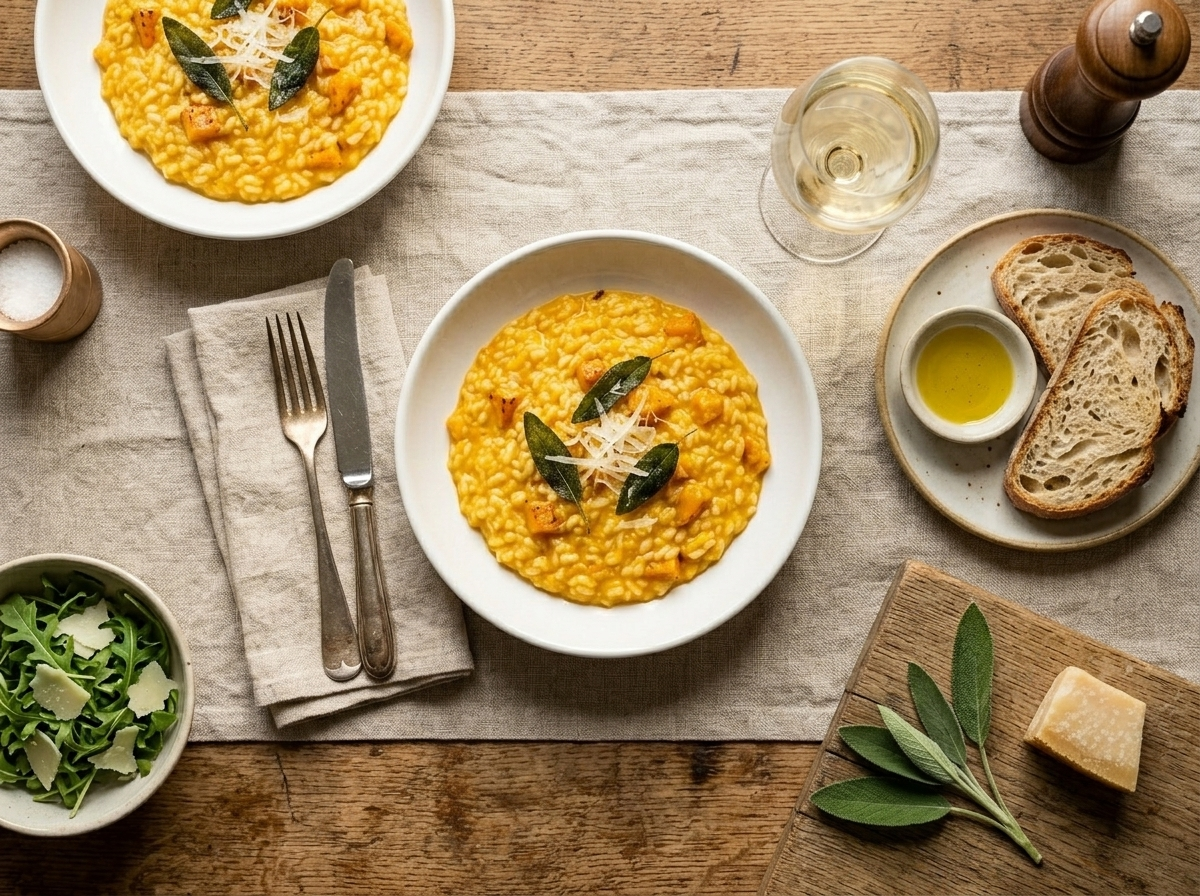
Risotto alla zucca works as a standalone primo in an Italian meal, served before a simple secondi like pan-roasted chicken thighs or grilled sausages. Portion it into warm, shallow bowls so it spreads naturally rather than sitting in a mound.
Finish each plate with a few crispy fried sage leaves, a thin shaving of Parmigiano Reggiano, and a light grind of black pepper. A small drizzle of good olive oil over the top adds a clean, grassy note that lifts the sweetness of the squash.
For a full autumn dinner, pair it with a glass of lightly oaked Soave Classico or a Pinot Grigio from the Veneto. Both have enough acidity to cut through the richness without overpowering the delicate squash flavor.
FAQ
Why does my risotto alla zucca turn out gluey instead of creamy?
Gluey texture usually means the heat was too high or you added too much stock at once. Add stock one ladle at a time and keep the heat at a moderate simmer, not a rolling boil. Also, over-stirring after the mantecatura can overwork the starch.
Can I use canned pumpkin puree instead of fresh butternut squash?
You can stir in about 200 g of unsweetened pumpkin puree with the first ladle of stock, but the flavor will be flatter and the texture less distinct. Roasting fresh squash gives you caramelized edges and a firmer bite that puree can’t replicate.
Can I make the squash component of risotto alla zucca ahead of time?
Yes – roast and cube the butternut squash up to 2 days ahead and store it covered in the fridge. The risotto itself should be cooked and eaten fresh; it doesn’t hold well once the rice is fully cooked.
What cheese works if I don’t have Parmigiano Reggiano for this risotto?
Grana Padano is the closest substitute and costs less. Pecorino Romano works but adds a sharper, saltier note that can compete with the squash – use about two-thirds of the stated amount.
Is risotto alla zucca gluten-free?
Yes, provided your stock is gluten-free. Arborio rice and all other ingredients in this recipe contain no gluten. Always check store-bought stock labels, as some contain wheat-based flavor additives.
What’s the difference between risotto alla zucca and risotto ai funghi?
Risotto alla zucca uses pumpkin or butternut squash as the base flavor, giving a sweet, orange-hued dish. Risotto ai funghi is built on porcini or mixed mushrooms, producing a darker, earthier, more savory result. Both use the same Arborio-and-mantecatura technique.