
Jump to Recipe
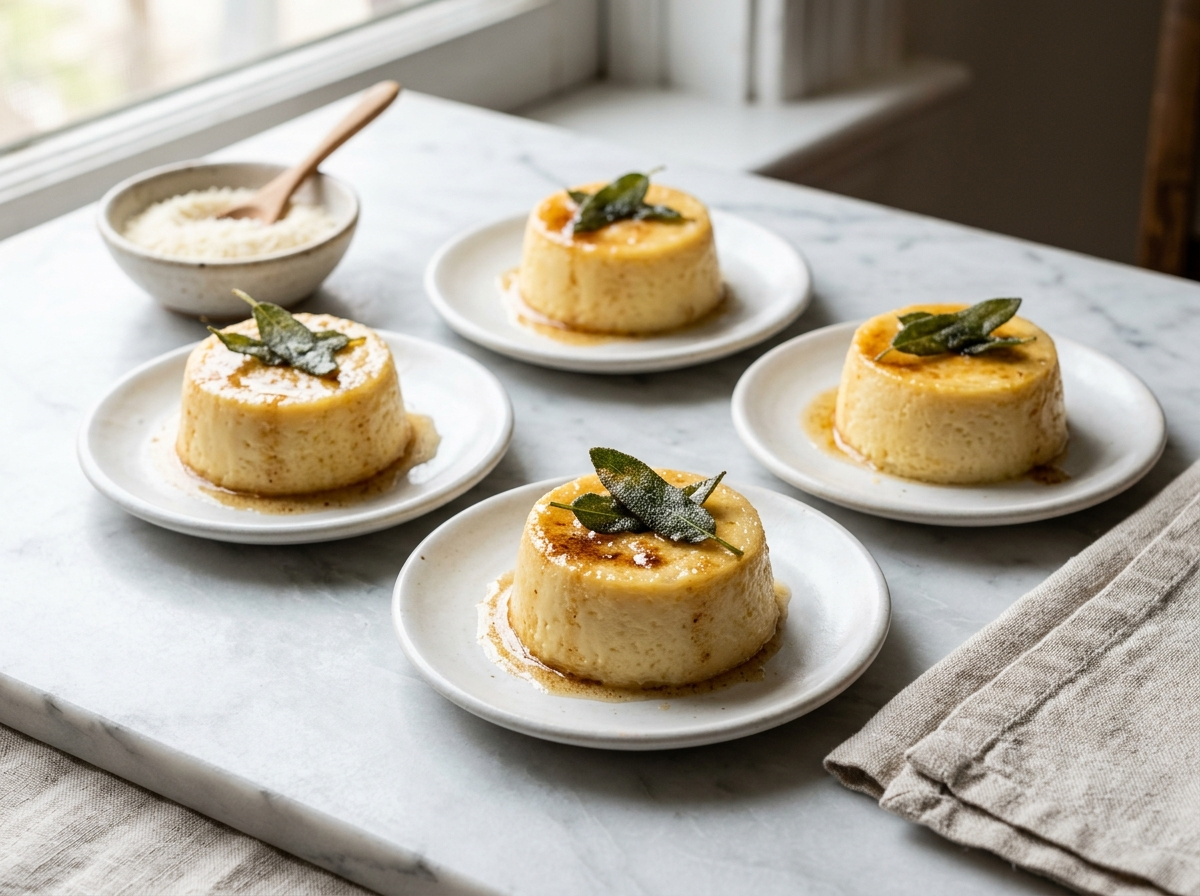
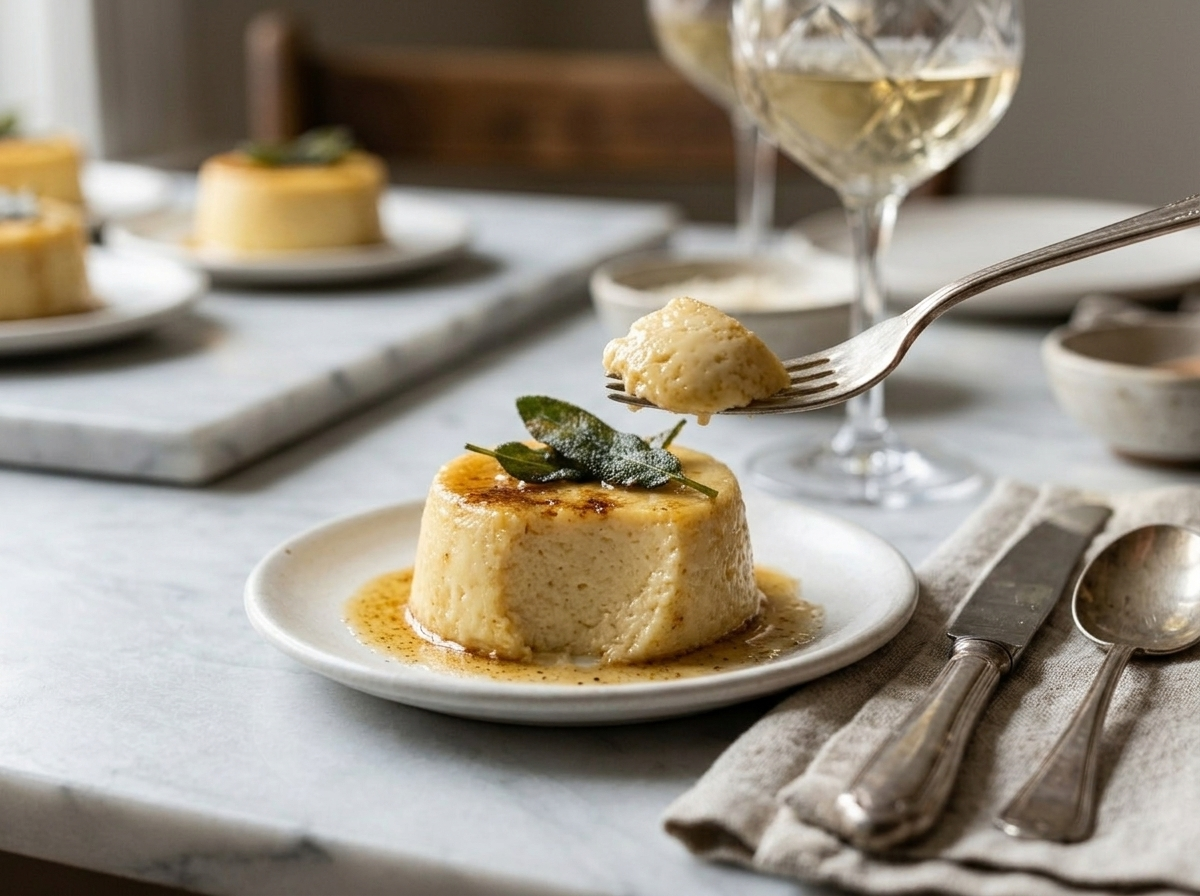
Flan di parmigiano is a savory baked custard from northern Italy, especially popular in Emilia-Romagna where Parmigiano-Reggiano is made. The texture sits somewhere between a quiche filling and a French flan – firm enough to unmold cleanly, soft enough to cut with a spoon.
The ingredient list is short: eggs, heavy cream, and a generous amount of finely grated aged Parmesan. The technique is what matters. A water bath (bagnomaria) keeps the heat gentle and even, which prevents the eggs from curdling and gives you that clean, glossy interior.
It works as a starter, a light main with a salad, or a side dish next to braised greens from Emilia-Romagna or roasted mushrooms. You can make it a few hours ahead and reheat it gently – it holds its shape well once chilled.
Why You’ll Love This Recipe
- Only 4 core ingredients, no complicated technique
- Unmolds cleanly for a restaurant-style presentation
- Make-ahead friendly – tastes better slightly rested
- Pairs with both light salads and rich braised sauces
Ingredient Notes
- Parmigiano-Reggiano: Use aged Parmigiano-Reggiano (24 months or older) for the sharpest, most defined flavor. Grana Padano works as a budget substitute but gives a milder result.
- Heavy cream: Use cream with at least 35% fat content. Lower-fat alternatives like half-and-half will produce a looser set that may not unmold cleanly.
- Eggs: Use large eggs at room temperature so they blend smoothly into the warm cream without scrambling. Cold eggs straight from the fridge can cause uneven cooking.
- Butter (for greasing): Butter the ramekins well and dust lightly with grated Parmesan instead of flour for a clean unmold and extra flavor on the outside of the flan.
- Nutmeg: A small pinch of freshly grated nutmeg adds warmth and is traditional in northern Italian custards. Pre-ground nutmeg is fine but use it sparingly.
Flan di Parmigiano (Italian Parmesan Flan)
Ingredients
Method
- Heat the oven to 160 C / 320 F. Butter 4 ramekins (150 ml each) generously, then dust the insides with finely grated Parmesan, tipping out any excess.
- Place the ramekins in a deep baking or roasting pan large enough to hold them without touching. Set aside.
- Bring a kettle of water to a boil for the water bath.
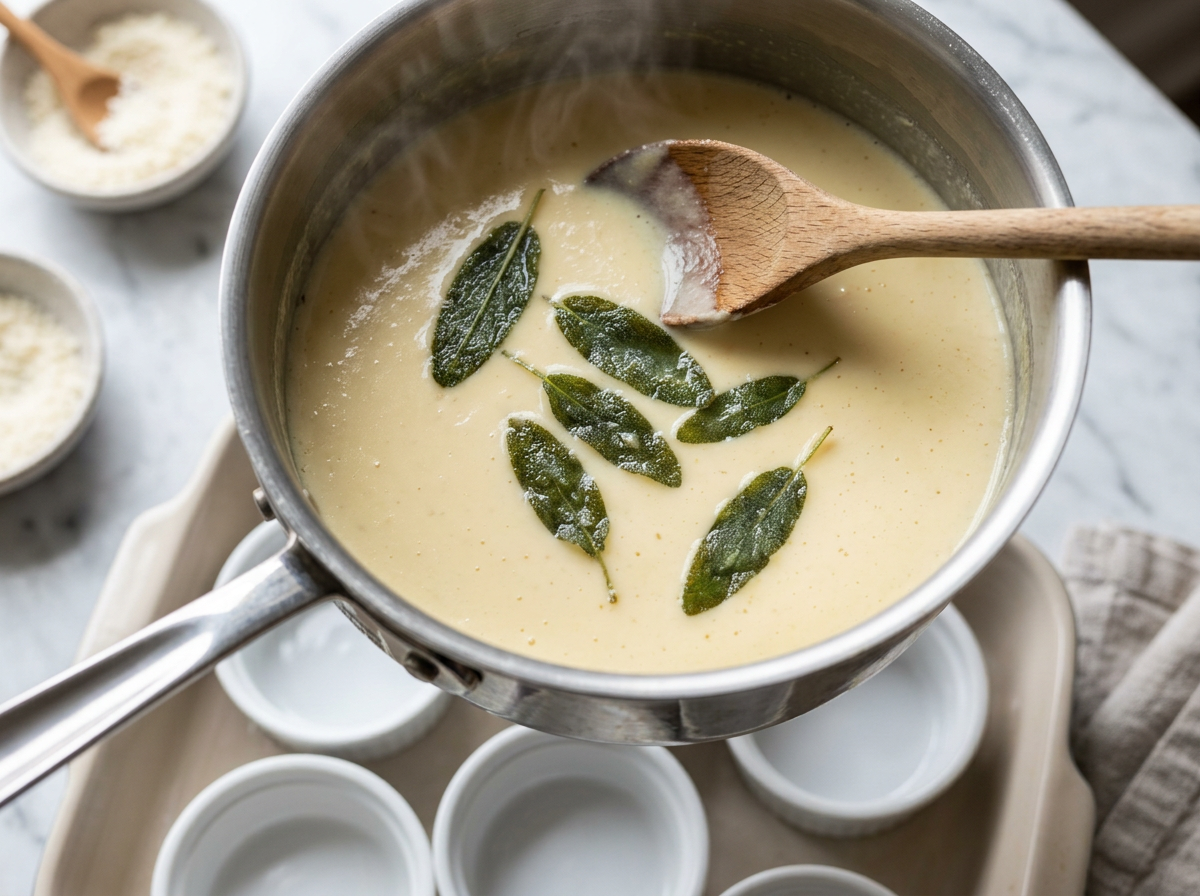
- Pour the cream into a small saucepan and set over medium-low heat. Warm until just steaming, around 80 C / 175 F. Do not let it boil.
- Remove from heat and stir in the grated Parmigiano-Reggiano until fully melted and the mixture is smooth.
- In a bowl, whisk the 3 whole eggs and 2 egg yolks together until combined.
- Pour the warm Parmesan cream slowly into the eggs while whisking constantly. This is the temper step - pouring too fast will scramble the eggs.
- Add the nutmeg, white pepper, and a small pinch of salt. Taste the mixture - it should be well-seasoned. Remember it will taste slightly less salty once set.
- Strain the custard through a fine-mesh sieve into a jug. This removes any cooked egg threads and gives a smoother texture.
- Pour the custard evenly into the prepared ramekins, filling each about three-quarters full.
- Pull out the oven rack slightly, place the baking pan on it, and pour the boiling water into the pan until it reaches halfway up the sides of the ramekins. Slide the rack back in carefully.
- Bake for 30 to 35 minutes, until the custard is just set at the edges but has a slight jiggle in the center when gently shaken. The surface should be pale and barely colored.
- Remove the ramekins from the water bath and rest on a wire rack for 5 minutes before serving or unmolding.
- Melt 30 g butter in a small skillet over medium heat. Once it foams and turns golden and nutty-smelling, add the sage leaves and fry for 30 seconds until crisp.
- Drizzle over the unmolded or in-ramekin flan just before serving.
- To unmold, run a thin knife around the inside edge of each ramekin, place a warm plate face-down on top, and invert firmly in one motion. The flan should release cleanly.
- Serve immediately with brown butter and sage, mushroom cream sauce, or a simple tomato passata.
Notes
Tips for Success
- Grate the Parmesan on the finest setting so it melts fully into the cream without leaving grainy pockets.
- Heat the cream until just steaming before adding the cheese – this helps it dissolve evenly and avoids clumping.
- Strain the custard mixture through a fine-mesh sieve before pouring into ramekins to remove any cooked egg strands.
- Fill the baking dish with hot water until it reaches halfway up the ramekins before placing it in the oven.
- Test doneness by gently shaking a ramekin – the center should jiggle slightly like set gelatin, not slosh like liquid.
Variations
- Add 30 g finely chopped truffle or truffle paste to the cream for a richer, earthy version.
- Stir in 2 tablespoons of finely chopped fresh sage fried in butter for a herbed Parmesan flan.
- Replace half the Parmigiano with aged Pecorino Romano for a sharper, slightly saltier custard.
Storage and Reheating
Store cooled flan di parmigiano in the ramekins, covered with plastic wrap, in the refrigerator for up to 3 days. The texture firms up further when cold, which actually makes unmolding cleaner.
To reheat, place the ramekins in a shallow pan of hot water and warm in a 150 C / 300 F oven for 10 to 12 minutes. Avoid the microwave – it will make the custard rubbery and cause the edges to weep.
Freezing is not recommended. The egg and cream custard separates on thawing and loses its smooth texture.
Serving Suggestions
Serve flan di parmigiano unmolded onto a warm plate with a drizzle of brown butter and a few crispy sage leaves on top. A spoonful of mushroom cream sauce or a light truffle-scented jus alongside turns it into a proper starter.
For a lighter meal, plate it next to bitter greens like radicchio or Belgian endive dressed with a sharp vinaigrette. The acidity cuts through the richness of the custard and keeps the plate balanced.
As a side dish, it pairs well with braised beef, osso buco, or roasted chicken. Italians in Emilia-Romagna sometimes serve it alongside a simple tomato passata to bring a little brightness to the plate.
FAQ
Why did my flan di parmigiano come out with holes or a spongy texture?
Holes and a spongy texture mean the oven was too hot or the water bath ran dry, causing the eggs to overcook and steam. Keep the oven at 160 C / 320 F and check the water level halfway through baking.
Can I use Grana Padano instead of Parmigiano-Reggiano in this flan?
Yes, Grana Padano works and costs less, but the flavor will be milder and slightly less complex. If you use it, add an extra 10 to 15 g to compensate for the lower intensity.
Can I make flan di parmigiano the night before and unmold it the next day?
Yes, and it actually holds its shape better after a night in the fridge. Run a thin knife around the edge, place a warm plate on top, and invert firmly – it should release cleanly.
What sauce goes well with flan di parmigiano when serving it as a starter?
A light mushroom cream sauce or a warm tomato passata with a little butter are the most classic pairings. Brown butter with crispy sage is the quickest option and takes about 3 minutes to make.
Is flan di parmigiano gluten-free?
Yes, the custard itself contains no flour or gluten-containing ingredients. Just make sure you grease the ramekins with butter and dust with Parmesan rather than breadcrumbs if you need it to stay gluten-free.
What is the difference between flan di parmigiano and a French savoury flan?
A French savory flan typically uses a pastry shell and a lighter custard with less cheese. Flan di parmigiano is shell-free, richer, and relies entirely on the Parmesan for its structure and flavor – it’s closer to a baked custard than a tart.