Jump to Recipe
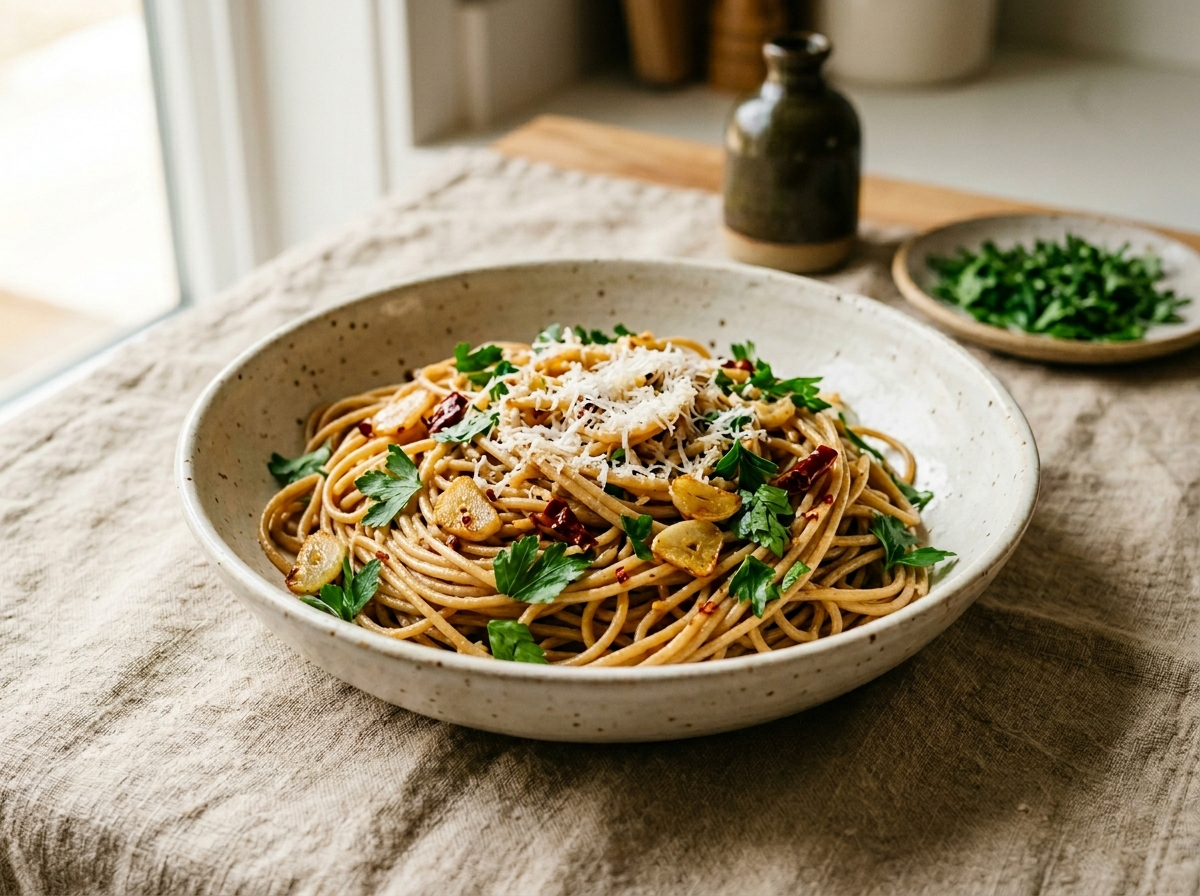
Whole wheat spaghetti follows the same logic as its refined cousin: good pasta, a confident hand with olive oil, and a sauce built in minutes from things already in your pantry.
The nutty, slightly earthy flavor of whole wheat works well here because aglio e olio – garlic, oil, chili, parsley – has enough character to meet it. The two reinforce each other rather than compete.
This is a 30-minute weeknight pasta. The sauce comes together in the time the spaghetti takes to cook, so timing is genuinely simple. No cream, no canned tomatoes, no long simmer required.
I add a splash of starchy pasta water to the pan. That single step binds the oil and garlic into a loose, glossy coating rather than a greasy pool at the bottom of the bowl.
Why You’ll Love This Recipe
- Nutty whole wheat pairs naturally with bold garlic-chili oil
- Sauce builds in one pan while pasta cooks
- Five core ingredients, all pantry staples
- Higher fiber than white pasta without sacrificing texture
Ingredient Notes
- Whole wheat spaghetti: Choose a pasta with 100% whole durum wheat semolina for the best bite. Cheaper blends go mushy fast, so check the ingredients label.
- Extra virgin olive oil: Use a grassy, mid-weight oil here – this is the sauce, not a finishing drizzle. A fruity Sicilian or Puglian variety works well.
- Garlic: Slice it thin rather than mince it. Thin slices toast evenly to pale gold without burning and give a milder, sweeter flavor than chopped garlic.
- Dried red chili flakes: Calabrian chili flakes are traditional and give a clean heat. Standard crushed red pepper flakes work fine as a substitute.
- Flat-leaf parsley: Add it off the heat so it stays vivid green and fresh-tasting. Curly parsley is a workable substitute but has a less pronounced flavor.
- Pasta cooking water: Save at least 200 ml before you drain. The starch it carries emulsifies the oil into a light coating that clings to the noodles.
- Parmigiano Reggiano or Pecorino Romano: Optional but recommended. Pecorino gives a sharper, saltier edge that contrasts well with the earthy wheat. Leave it out to keep the dish dairy-free and vegan.
Whole Wheat Spaghetti Italian Style with Garlic, Olive Oil, and Parsley
Ingredients
Method
- Bring a large pot of water to a rolling boil. Add salt until the water tastes noticeably seasoned.
- Add the whole wheat spaghetti and cook for 2 minutes less than the package direction, stirring occasionally so the noodles don't clump.
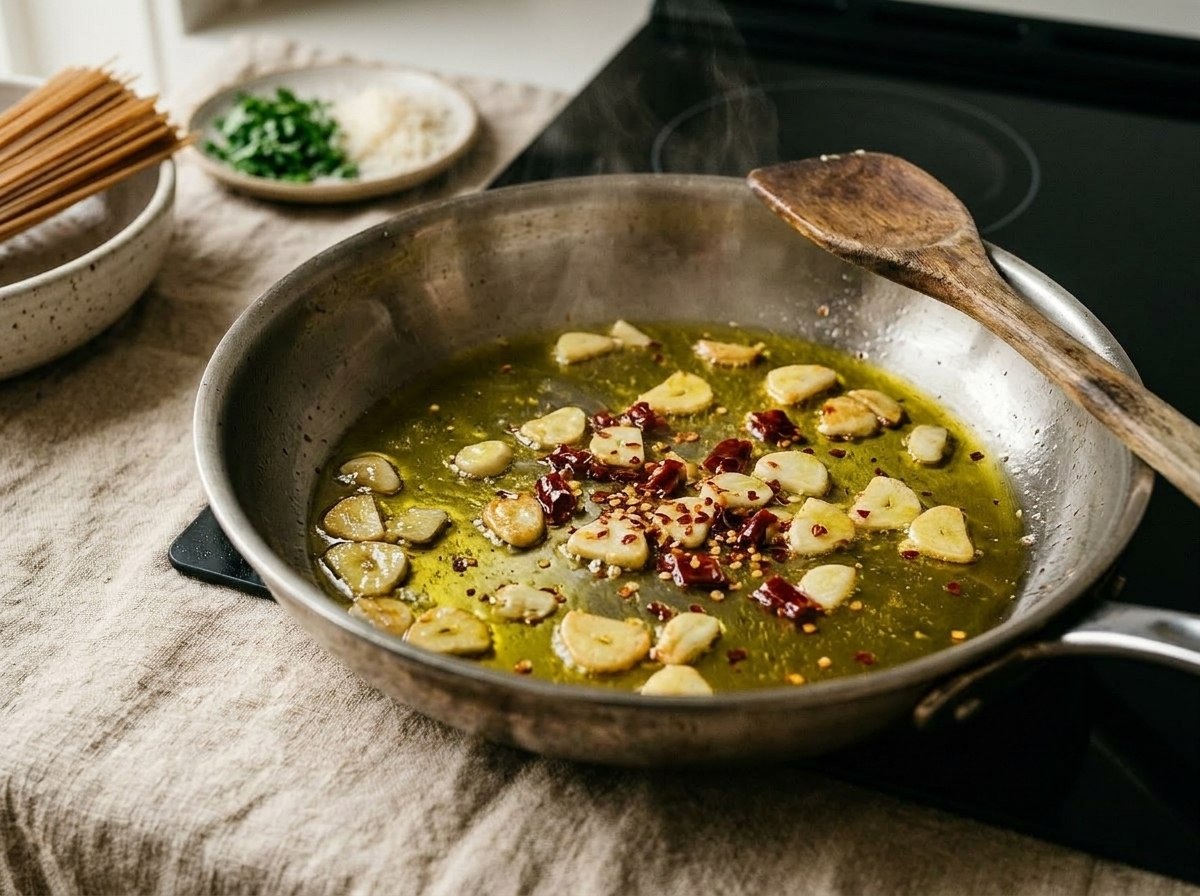
- While the pasta cooks, pour the olive oil into a wide skillet over medium-low heat. Add the sliced garlic in a single layer.
- Cook the garlic gently for 3 to 4 minutes, stirring once, until the edges turn pale gold. Watch it closely - it goes from golden to burnt quickly.
- Add the chili flakes to the oil and stir for 30 seconds until fragrant. Remove the pan from the heat immediately.
- Scoop out 200 ml of pasta water and set it aside, then drain the spaghetti.
- Return the skillet to medium heat. Add 100 ml of the pasta water to the garlic oil and stir - it will sizzle and start to emulsify.
- Add the drained spaghetti to the pan. Toss well using tongs, adding more pasta water a splash at a time until the sauce loosely coats every strand and there is no oil pooling at the bottom.
- Remove from the heat. Add the chopped parsley and toss once more until evenly distributed and the parsley stays bright green.
- Divide into warm bowls. Top with grated Pecorino Romano and a pinch of extra chili flakes if you like.
Notes
Tips for Success
- Salt the pasta water until it tastes noticeably seasoned, roughly 10 g salt per liter of water.
- Cook the garlic over medium-low heat and pull it off the moment it turns pale gold, not brown.
- Undercook the spaghetti by 90 seconds, then finish it in the pan with pasta water so it absorbs the sauce.
- Add pasta water in two stages: first to stop the garlic cooking, then again when you add the spaghetti to adjust consistency.
- Toss vigorously off the heat for 30 seconds before plating so the starch water and oil bind into a cohesive coating.
Variations
- Add 4 anchovy fillets to the oil with the garlic for a savory, umami-rich version called pasta alla puttanesca base.
- Stir in 80 g baby spinach or wilted cavolo nero with the parsley for added greens and color.
- Finish with 2 tbsp toasted breadcrumbs fried in olive oil for a Sicilian-style crunch instead of cheese.
Storage and Reheating
Store leftover spaghetti in an airtight container in the fridge for up to 2 days. The whole wheat noodles hold their texture better than refined pasta when cold.
To reheat, add the pasta to a wide skillet with 2 tbsp water and a small drizzle of olive oil over medium heat. Toss for 2 to 3 minutes until warmed through. Microwaving works in a pinch but softens the noodles.
This dish does not freeze well. The garlic oil separates and the pasta becomes waterlogged on thawing.
Serving Suggestions
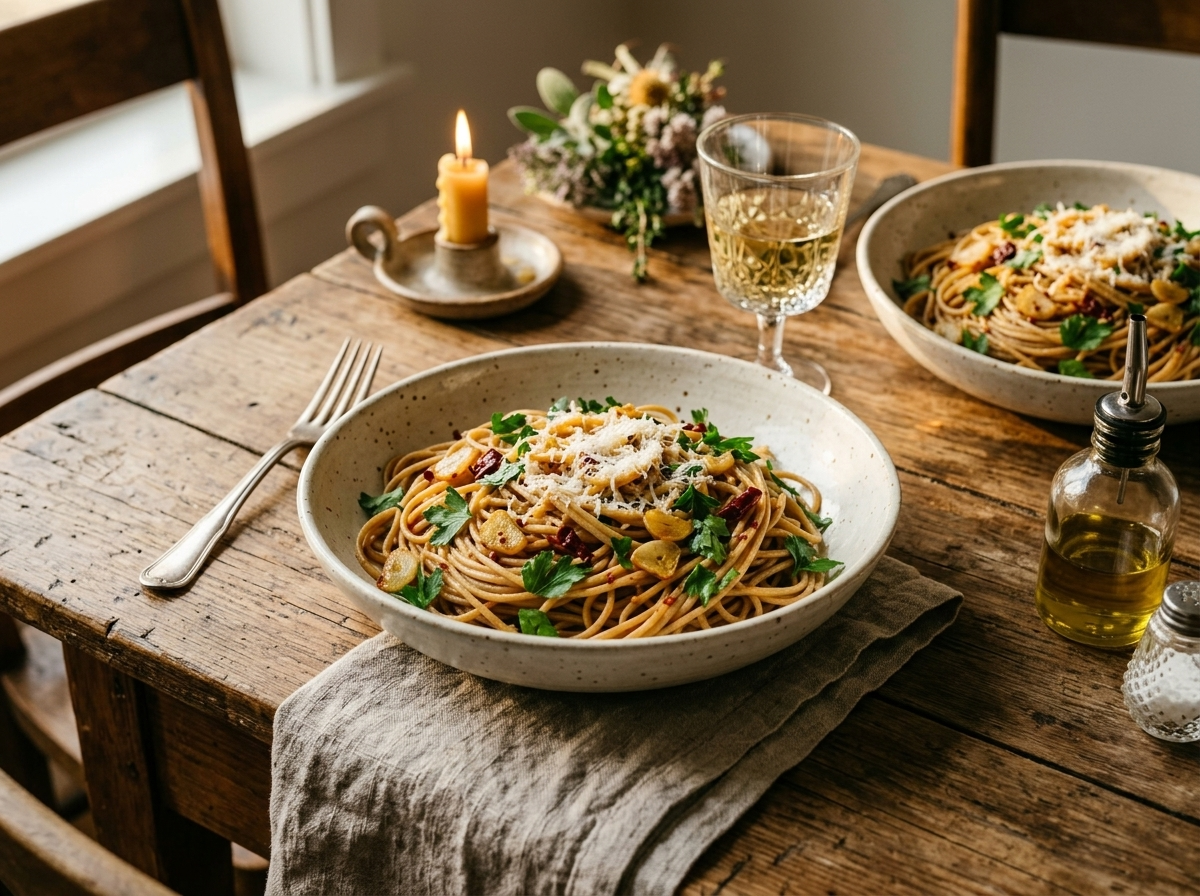
Serve straight from the pan into warm bowls with a grating of Pecorino Romano and a few extra chili flakes on top. A drizzle of raw olive oil at the table adds a clean finish.
A simple green salad dressed with lemon and olive oil works alongside it without competing. Roasted cherry tomatoes or a side of sauteed broccolini also pair well with the garlic-oil base, as does a classic roasted tomato soup to start.
For a fuller dinner, start with a slice of bruschetta rubbed with garlic, or a light Italian lentil soup. A glass of dry white wine, like a Vermentino or Pinot Grigio, cuts through the richness of the oil.
FAQ
Why does my whole wheat spaghetti turn out mushy instead of al dente?
Whole wheat pasta overcooks faster than white pasta, so start checking it 2 minutes before the package time. Pull it when it still has a faint resistance at the center and finish cooking it in the pan with pasta water.
Can I use whole wheat linguine instead of spaghetti for this recipe?
Yes, linguine works well and holds the garlic oil sauce in a similar way. The cook time may differ by 1 to 2 minutes, so check the package and taste as you go.
Is this whole wheat spaghetti recipe vegan?
It is vegan as written if you skip the optional cheese. The base of pasta, olive oil, garlic, chili, and parsley contains no animal products.
Can I make the garlic oil base ahead and store it for the week?
You can prepare the garlic oil up to 3 days ahead and keep it in a sealed jar in the fridge. Warm it gently in the pan before adding your cooked pasta.
How do I know when the garlic is cooked correctly in the olive oil?
The slices should be pale gold at the edges and just starting to turn translucent at the center, which takes about 3 to 4 minutes over medium-low heat. If they brown fully or smell bitter, the oil will taste harsh, so start over.
What is the difference between Italian aglio e olio and this whole wheat version?
Traditional aglio e olio uses white spaghetti, so the flavor is cleaner and more neutral, much like the clean baselines found in a vegan Italian pasta recipe. The whole wheat version has a nuttier, slightly bitter baseline that pairs especially well with the chili and parsley.