
Jump to Recipe
Bomboloni alla crema are Italian fried doughnuts, soft with a slight chew, filled after frying with a thick vanilla pastry cream. The dough fries in oil held at 175 C / 347 F, much like the golden pizza fritta technique, until the shells turn deep gold, about 2 minutes per side.
They started as a Tuscan bakery treat, but you’ll find them behind glass counters from Florence to Rome now, usually next to the espresso machine. The dough itself is a basic enriched yeast dough, nothing fussy about it.
The part people get wrong is oil temperature. Too hot and the outside browns before the center cooks through, leaving a raw, doughy middle. Too cool and the dough soaks up oil and turns heavy instead of light.
Make the pastry cream while the dough proofs so both finish around the same time. Fill the doughnuts close to serving, the shells stay crisper that way.
Why You’ll Love This Recipe
- Fried shells stay light when the oil holds steady at 175 C / 347 F
- Pastry cream can be made a day ahead to save time
- One dough recipe, easy to swap fillings for variety
- Warm and fresh, closer to a bakery counter than anything from a box
Ingredient Notes
- active dry yeast: Fresh yeast works too, use 20 g crumbled into the warm milk instead of the dry packet.
- whole milk: Whole milk gives the dough and the cream richness. Low-fat works in a pinch but the crumb turns drier.
- cornstarch: Cornstarch keeps the pastry cream glossy and stable. Potato starch is a fine 1:1 swap if that’s what you have.
- neutral oil: Sunflower or peanut oil handles the frying temperature cleanly without adding flavor. Skip olive oil, it smokes too soon.
- vanilla bean: Split vanilla bean gives visible flecks and a rounder flavor. Two teaspoons of good vanilla extract works if that’s easier.
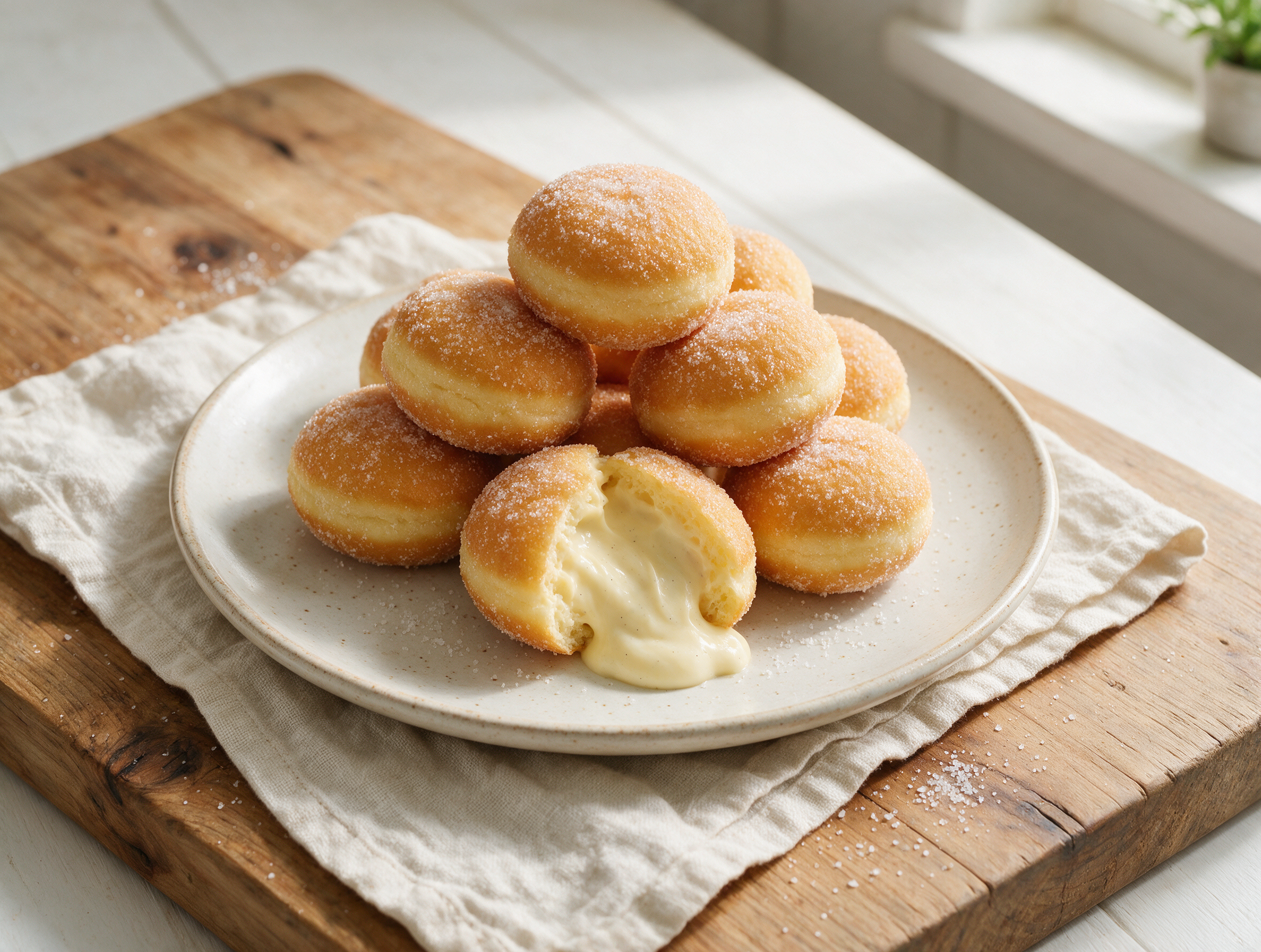
Soft Fried Bomboloni alla Crema with Vanilla Cream
Ingredients
Method
- Warm the milk to 43 C / 110 F. Sprinkle in the yeast with a pinch of sugar and let it sit 10 minutes until foamy on top.
- In the stand mixer bowl, combine flour, sugar, salt, and lemon zest. Add the yeast mixture, eggs, and yolks. Mix on low with the dough hook for 3 minutes until shaggy.
- Add the softened butter a piece at a time, then increase to medium speed and knead 8 to 10 minutes until the dough is smooth, elastic, and pulls cleanly from the bowl sides.
- Transfer to a lightly oiled bowl, cover, and proof at 24 C / 75 F for 60 to 75 minutes until doubled.
- Turn the dough onto a floured surface and divide into 16 pieces, about 55 to 60 g each. Roll each into a smooth ball.
- Space the balls 5 cm apart on a parchment-lined sheet pan, cover loosely, and proof 30 minutes until visibly puffy.
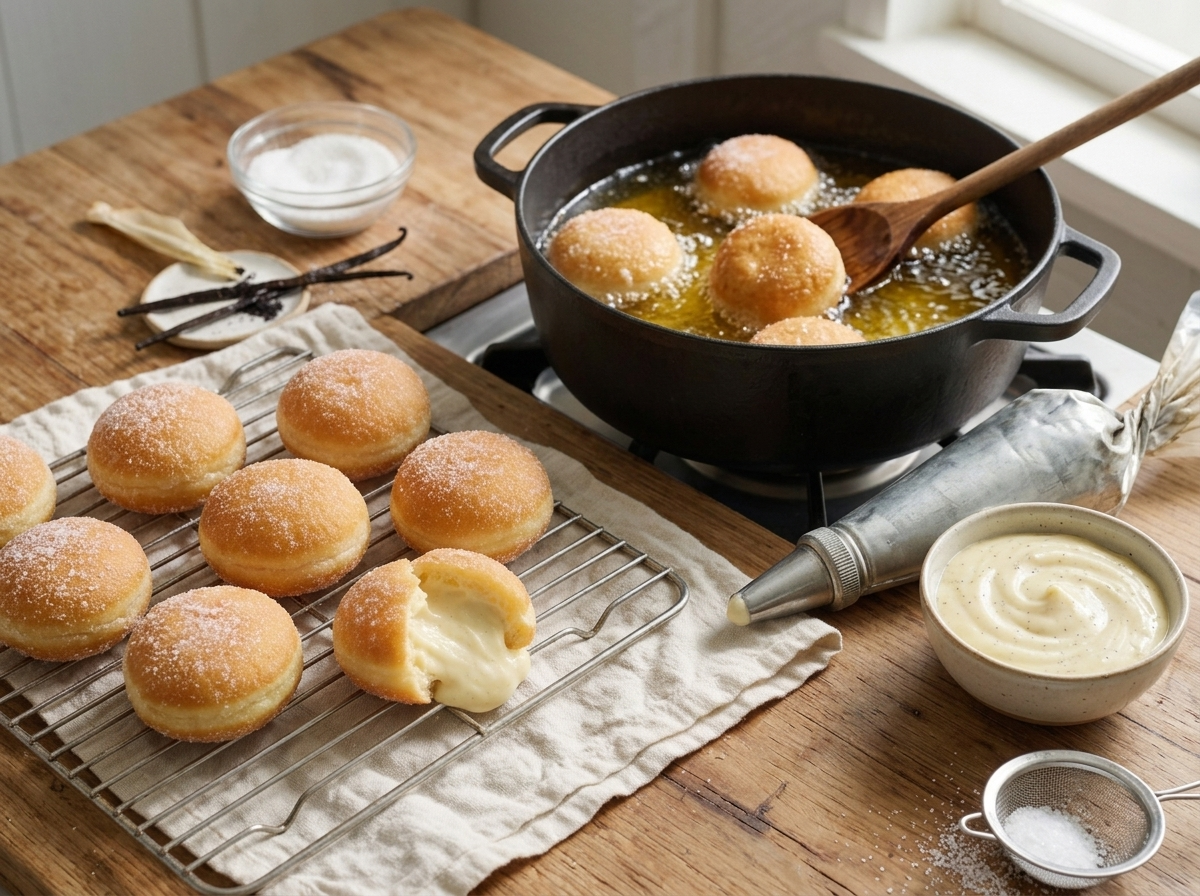
- Heat the oil in a 26 cm / 10-inch deep pot or dutch oven to 175 C / 347 F, checking with a thermometer before frying.
- Fry in batches of 3 to 4 so the oil temperature holds steady. Cook 2 minutes per side until deep gold and cooked through. If the outside browns too fast, lower the heat slightly, it means the oil crept above 175 C / 347 F.
- Lift out with a slotted spoon, drain briefly on a rack, then toss warm in granulated sugar while the surface is still tacky enough for it to stick.
- Heat the milk with the vanilla bean in a 2-quart / 2L saucepan until steaming, not boiling.
- Whisk the egg yolks and sugar until pale, then whisk in the cornstarch and salt until smooth.
- Pour the hot milk slowly into the yolk mixture, whisking constantly, then return everything to the saucepan.
- Cook over medium-low heat, whisking constantly, for 4 to 5 minutes until thick enough to hold a ribbon trail off the whisk. Remove the vanilla pod, press plastic wrap onto the surface, and chill at least 2 hours.
- Whisk the chilled pastry cream smooth again and transfer it to a piping bag fitted with a small round tip.
- Poke a hole in the side of each cooled bombolone with the tip and pipe in cream until you feel the dough expand slightly.
- Serve the same day, dusted with a little extra sugar if you like.
Notes
- Dough should feel tacky but not sticky, add flour a tablespoon at a time if needed.
- Oil that's too hot browns the outside before the center cooks, keep it at 175 C / 347 F.
- Pipe the cream in right before serving for the crispest exterior.
- Discard oil after two frying sessions, reused oil turns the shells dark and bitter.
Tips for Success
- Proof the dough until doubled and pillowy, about 60 to 75 minutes at 24 C / 75 F room temperature.
- Check the oil with a thermometer before frying, 175 C / 347 F keeps the crumb light without soaking up oil, similar to the precise heat needed for Venetian cod fritters.
- Fry only 3 to 4 bomboloni at a time so the oil temperature doesn’t drop and the shells stay even.
- Cool the bomboloni fully before piping, warm dough melts the pastry cream and leaves it runny.
- Press plastic wrap directly onto the pastry cream before chilling to stop a skin from forming.
Variations
- Swap the vanilla crema for Nutella or apricot jam, piping it the same way through a small hole in the side.
- Add orange zest to the dough instead of lemon for a warmer, slightly floral edge to the crumb.
- Bake at 190 C / 375 F for 12 to 14 minutes instead of frying for a lighter, less oily version.
Storage and Reheating
Bomboloni alla crema taste best within a few hours of frying and filling, the shell is at its crispest then and the cream hasn’t softened it. Reheating a filled doughnut ruins the texture, the outside turns soggy and the cream can separate, so I don’t recommend it.
For make-ahead, fry the shells and let them cool completely, then store unfilled in an airtight container at room temperature for 1 day. Make the pastry cream up to 2 days ahead and keep it covered in the fridge with plastic pressed onto the surface.
Fill the shells just before serving, and toss them in sugar again if the coating has gone patchy. Unfilled fried shells also freeze well for up to 1 month, thaw at room temperature before filling.
Serving Suggestions
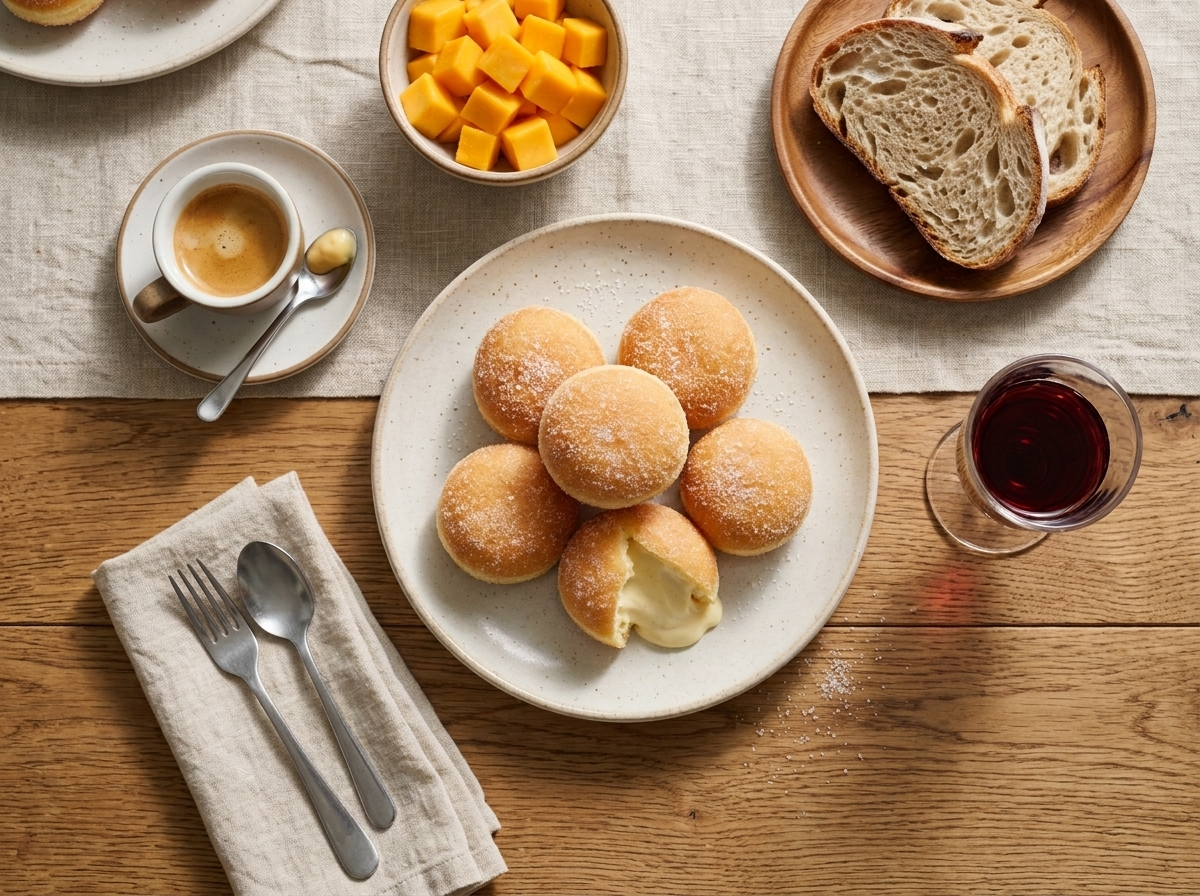
Bomboloni alla crema belong next to a small, strong espresso or a cappuccino, the classic Italian bar breakfast pairing. A short glass of cold milk works for anyone skipping coffee.
Set them out on a plain plate or a paper-lined basket, still slightly warm, with extra sugar on the side for dusting. They’re best eaten with your hands, standing at a counter the way you would in an Italian pasticceria.
For a Carnevale-style spread, add a second filling like apricot jam or Nutella alongside the vanilla cream so people can pick.
FAQ
Why are my bomboloni greasy instead of light and puffed?
Greasy bomboloni almost always mean the oil was too cool when they went in, the same principle that keeps Roman fried artichokes crisp. Below 170 C / 338 F, the dough soaks up oil instead of setting a crust fast. Use a thermometer, hold the oil at 175 C / 347 F, and fry in small batches so the temperature doesn’t drop when the dough hits the pot.
Can I use custard powder instead of cornstarch for the crema pasticcera?
Yes, custard powder works, it already contains cornstarch plus a bit of coloring and vanilla flavoring. Use the same 40 g amount and reduce the added vanilla slightly since custard powder brings some on its own. The texture comes out just as thick and glossy.
Can I make the pastry cream for bomboloni alla crema a day ahead?
Yes, and it’s actually easier that way. Cook the crema pasticcera, press plastic wrap directly onto the surface, and refrigerate up to 2 days. Whisk it smooth again before piping since chilled pastry cream firms up and needs loosening slightly.
What goes well with bomboloni alla crema besides espresso?
A cappuccino or a short glass of cold milk both work well alongside bomboloni alla crema. Fresh berries on the side cut through the richness of the fried dough and cream. For an afternoon version, a small glass of chilled Moscato d’Asti pairs nicely too.
Is bomboloni alla crema dairy free or gluten free?
No, this recipe uses milk, butter, eggs, and wheat flour throughout the dough and the cream, so it’s not dairy free or gluten free as written. Swapping to a gluten-free flour blend and plant-based milk and butter can work, but the dough will be more delicate to fry.
What’s the difference between bomboloni and beignets?
Bomboloni are a yeasted dough, fried and typically filled after cooking with pastry cream, jam, or chocolate. Beignets use a similar fried approach but are usually left unfilled and simply dusted heavily with powdered sugar. Bomboloni also tend to be rounder and slightly denser than the airy, square-cut beignet.