
Jump to Recipe
Risotto al Barolo is a Piedmontese rice dish where Carnaroli rice simmers in beef stock and Barolo wine until it turns a deep garnet color, then gets finished with butter and Parmigiano for a texture that spreads slowly across the plate.
This is Langhe cooking at its base: Nebbiolo grapes, a patient stovetop technique, and rice that can hold structure through a long cook, the same patience behind a dish like risotto alle fragole. Barolo itself is expensive, so I often use a younger, cheaper Nebbiolo or Barbera for the pot and save the good bottle for the table.
The one place this goes wrong is the wine. Dump it all in at the start and most of the color and tannin cook off before the rice even absorbs the stock. I split it in two additions instead, one early, one near the end, so the risotto keeps its ruby tint.
Good stock matters more than people think. A weak, watery stock leaves you with pale, thin-tasting rice no matter how much butter you whisk in at the end.
Why You’ll Love This Recipe
- Deep ruby color from a two-stage wine addition
- Silky mantecatura finish with butter and Parmigiano
- Uses affordable Nebbiolo for cooking, saves Barolo for drinking
- One pot, stovetop technique with no baking required
Ingredient Notes
- Carnaroli rice: Holds its bite through a long simmer better than most short-grain rice. Arborio works as a substitute but turns softer faster.
- Barolo wine: A young Nebbiolo or Barbera works fine for the pot and costs less. Save an actual Barolo for the glass.
- Beef stock: Use a well-seasoned homemade or low-sodium store stock. Swap in vegetable stock for a lighter, meat-free version.
- Parmigiano Reggiano: Grate it fresh right before use. Pre-grated cheese doesn’t melt into the mantecatura the same way.
- Butter: Unsalted butter, split between the soffritto and the finishing stir, gives you control over final seasoning.
- Shallot: A finely minced yellow onion works as a substitute if you don’t have shallot on hand.
- Bone marrow (optional): A traditional Piedmontese addition that adds richness and shine. Skip it without changing the core dish.
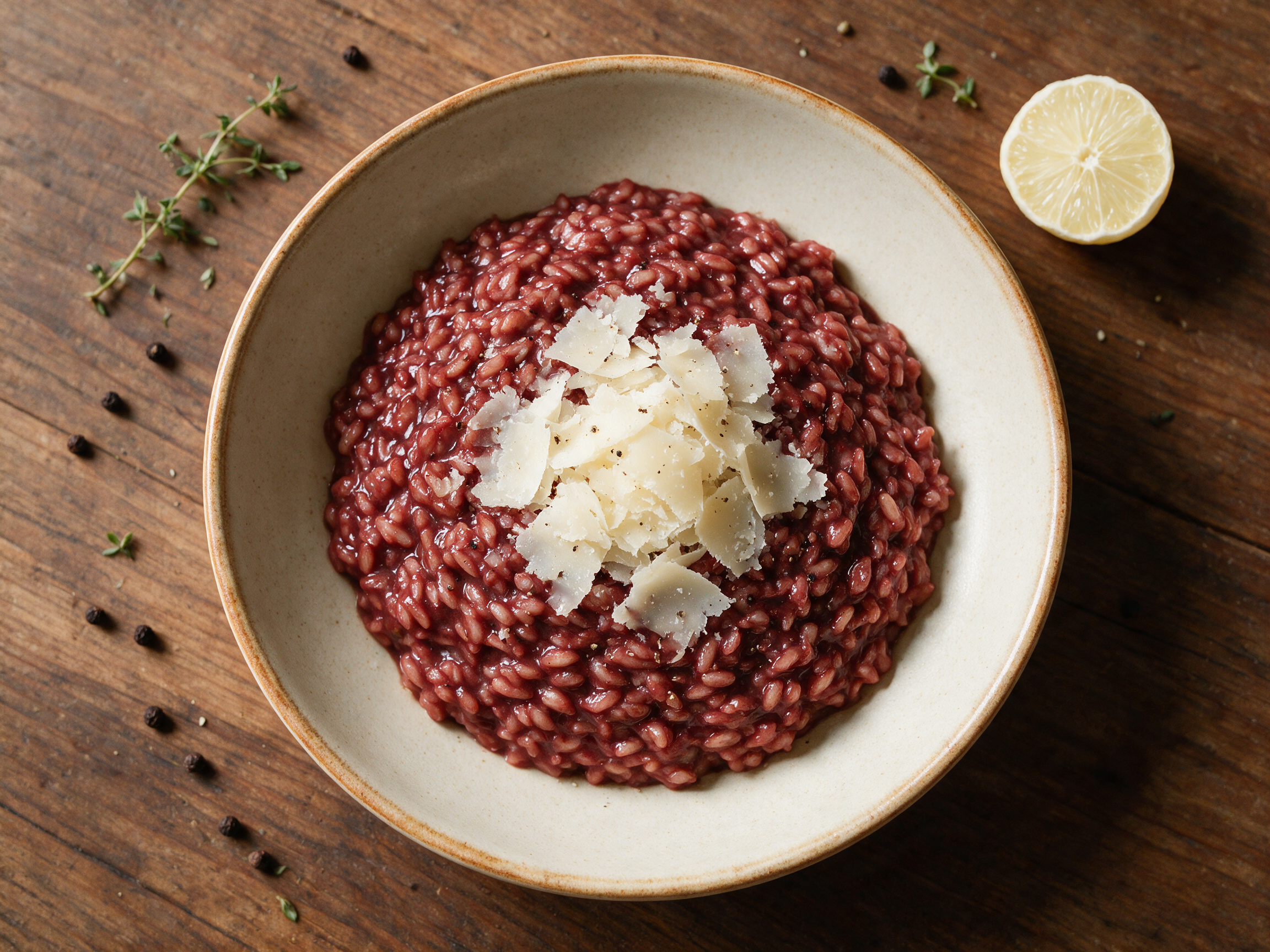
Risotto al Barolo with Butter and Parmigiano Finish
Ingredients
Method
- Pour the beef stock into a 3-quart / 2.8 L saucepan and bring to a bare simmer over low heat. Keep it there through the whole cook, with a ladle nearby.
- Melt half the butter (45 g) with the olive oil in a 28 cm / 11-inch heavy-bottomed saucepan over medium heat. Add the shallot and cook 3 to 4 minutes, stirring, until soft and translucent but not browned.
- Add the rice and stir constantly for 2 minutes, until the grains look glassy at the edges and smell lightly toasted.
- Pour in 200 ml of the Barolo and stir until it's fully absorbed, scraping up any browned bits from the bottom of the pan.
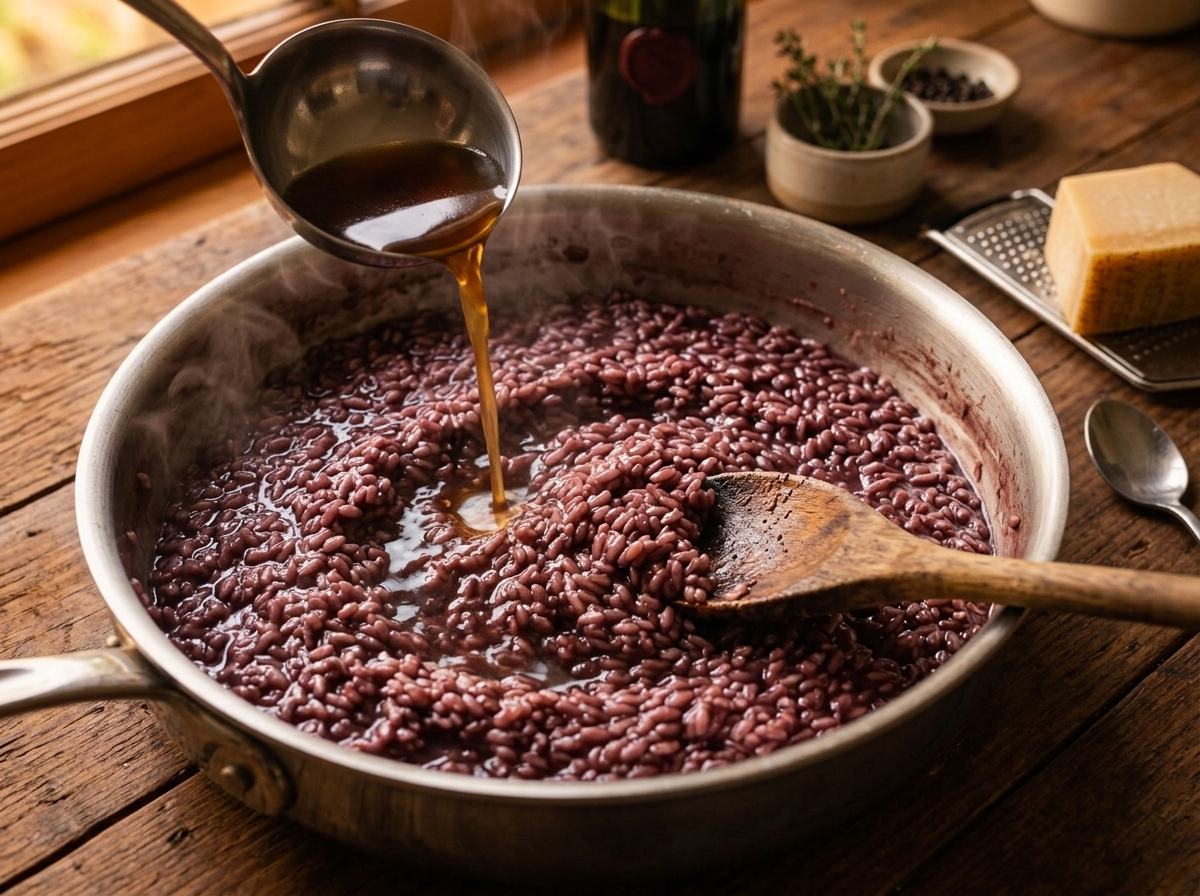
- Start adding the hot stock one ladle at a time, stirring often and waiting until each ladle is mostly absorbed before adding the next. Keep the pot at a steady simmer.
- After about 14 minutes, stir in the remaining 80 ml Barolo. This late addition is what keeps the risotto's color deep and ruby instead of pale pink.
- Continue adding stock and stirring until the rice is al dente, 17 to 19 minutes total from the first stock addition. Taste at 16 minutes and again at 18, the grain should have a firm bite at the center with no chalky crunch.
- Remove the pan from the heat. Beat in the remaining 45 g butter and the grated Parmigiano vigorously with a wooden spoon until the risotto turns creamy and coats the spoon.
- If using bone marrow, stir it in now off the heat until it melts into the rice and adds a glossy sheen.
- Cover and let the risotto rest for 2 minutes off the heat, then season with salt and pepper. Serve right away in shallow bowls, it should spread slowly into a wave when you tilt the plate.
Notes
- Season the stock well before you start, you can't fix bland risotto at the end.
- Keep 60 ml extra stock or hot water on hand in case the risotto tightens up before serving.
- Grate Parmigiano fresh, pre-grated cheese won't melt into the mantecatura properly.
- Don't skip the 2 minute rest off heat before serving, it lets the starch relax.
Tips for Success
- Keep the stock at a bare simmer the whole time so ladling it into the rice doesn’t drop the pot’s temperature.
- Toast the rice for a full 2 minutes before adding wine, until edges look glassy, so grains hold their shape, the same groundwork used for a silky gorgonzola risotto.
- Add the Barolo in two stages, not all at once, to keep the risotto’s ruby color and tannic edge.
- Beat the mantecatura off the heat with the pan still warm, not over the burner, or the butter will split.
- Taste the rice at 16 minutes and again at 18, since Carnaroli can go from al dente to mushy fast.
Variations
- Swap beef stock for vegetable stock and skip the bone marrow for a lighter version that keeps the wine’s color.
- Stir in 40 g softened bone marrow with the butter for the traditional Piedmontese richness found in old-school trattorias.
- Use Barbaresco or a young Nebbiolo instead of Barolo for a similar color and lower price per bottle.
Storage and Reheating
Risotto al Barolo keeps for 2 to 3 days in the fridge in an airtight container. The rice firms up as it cools, that’s normal starch behavior, not spoilage.
Reheat gently in a saucepan over low heat with a splash of stock or water, stirring often for 4 to 5 minutes until the rice loosens back to a creamy consistency. A microwave works too, in 30 second bursts with a spoonful of water stirred in between.
Freezing isn’t ideal here. The rice’s starch structure breaks down after thawing and the texture turns grainy no matter how much stock you add back. If you’re planning ahead, par-cook the rice and finish it fresh instead of freezing a completed batch.
Serving Suggestions
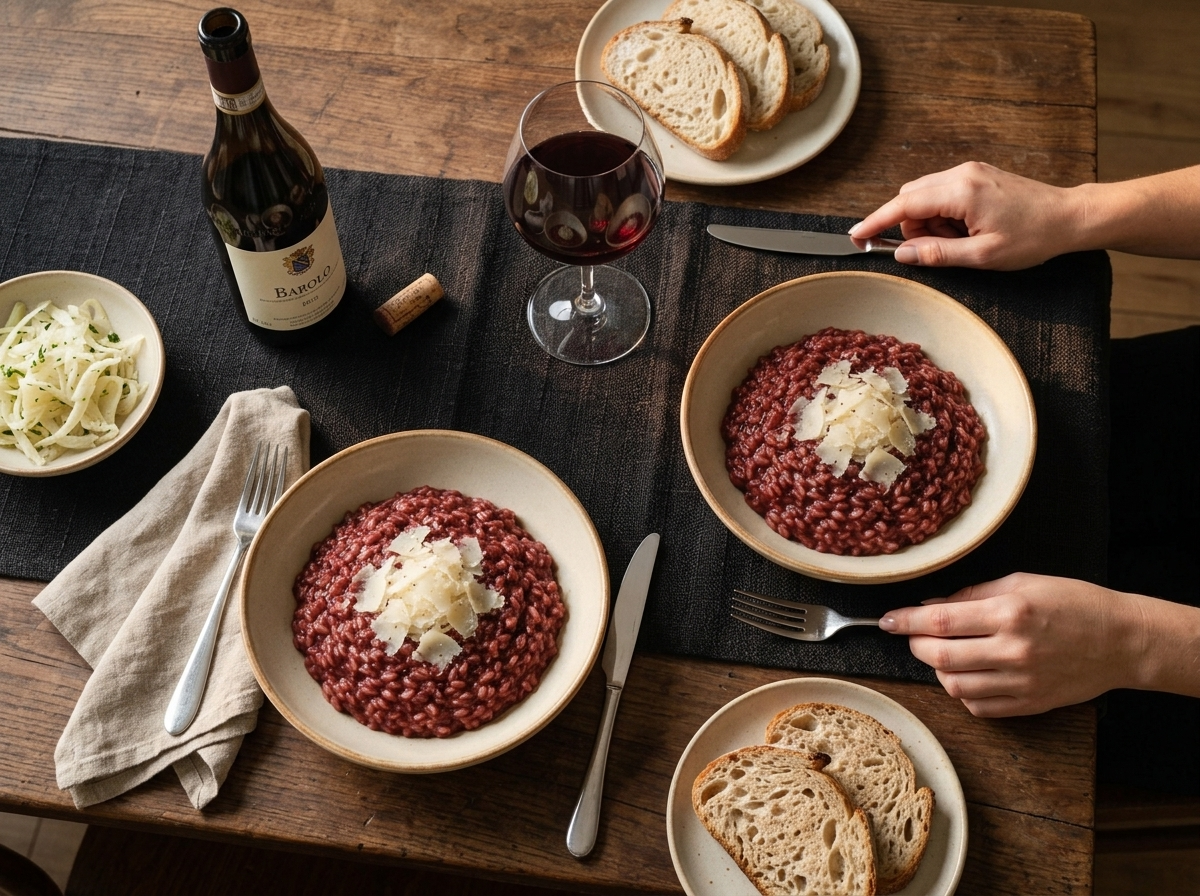
Risotto al Barolo works as a primo on its own, in small bowls before a simple secondo. Brasato al Barolo, the same wine used to braise beef, is the classic Piedmontese pairing since both dishes share the same bottle.
For something lighter, serve it alongside sauteed spinach or a plain green salad with a sharp vinaigrette to cut the richness of the butter and Parmigiano.
Pour the same Barolo, or a Barbaresco if you want something softer, in the glass next to the bowl. Finish each plate with a few more shavings of Parmigiano and a crack of black pepper.
FAQ
Why is my Risotto al Barolo turning pale instead of deep ruby?
Pale risotto usually means the wine went in too early and cooked off before the rice absorbed it, or you diluted it with too much stock at once. Add the Barolo in two stages, one right after toasting the rice and a second smaller pour around the 14 minute mark, so the color and tannin stay in the pot.
Can I use a cheaper wine instead of actual Barolo in this risotto?
Yes, a young Nebbiolo or Barbera works fine for the pot and costs less than a full bottle of Barolo. You’ll lose a bit of the tannic depth Barolo brings, but the color and body stay close. Save the real Barolo for the glass next to your plate.
Can I make Risotto al Barolo ahead of time?
Yes, though risotto is best made fresh for the first serving. Leftovers keep for 2 to 3 days in the fridge and reheat well in a saucepan over low heat with a splash of stock or water, stirred until creamy again. For a make-ahead version, par-cook the rice about 5 minutes early and finish it with hot stock just before you sit down.
What main course pairs well with Risotto al Barolo?
Braised beef dishes like brasato al Barolo pair naturally, since they share the same wine. A simple dish like pollo al marsala or a plain green salad also works if you want something lighter to balance the risotto’s richness. Pour the same Barolo you cooked with alongside the meal.
Is Risotto al Barolo gluten free?
Yes, Risotto al Barolo is naturally gluten free since it’s built on rice, wine, stock, butter and Parmigiano with no flour or pasta involved. Just check your beef stock’s label, some bouillon cubes add wheat-based fillers or gluten as a thickener.
What’s the difference between Risotto al Barolo and Risotto al Barbaresco?
The difference is mainly the wine. Barbaresco is a lighter, slightly less tannic Nebbiolo from a neighboring zone in Piedmont, so a risotto made with it turns a similar ruby color but tastes a touch softer and less structured than one made with Barolo.