
Jump to Recipe
The Hugo Spritz comes from South Tyrol, the German-speaking Alpine region of northern Italy, where bartender Roland Gruber mixed it up around 2005 as a lighter alternative to the Aperol Spritz. It spread through Austria and northern Italy before the rest of the world caught on.
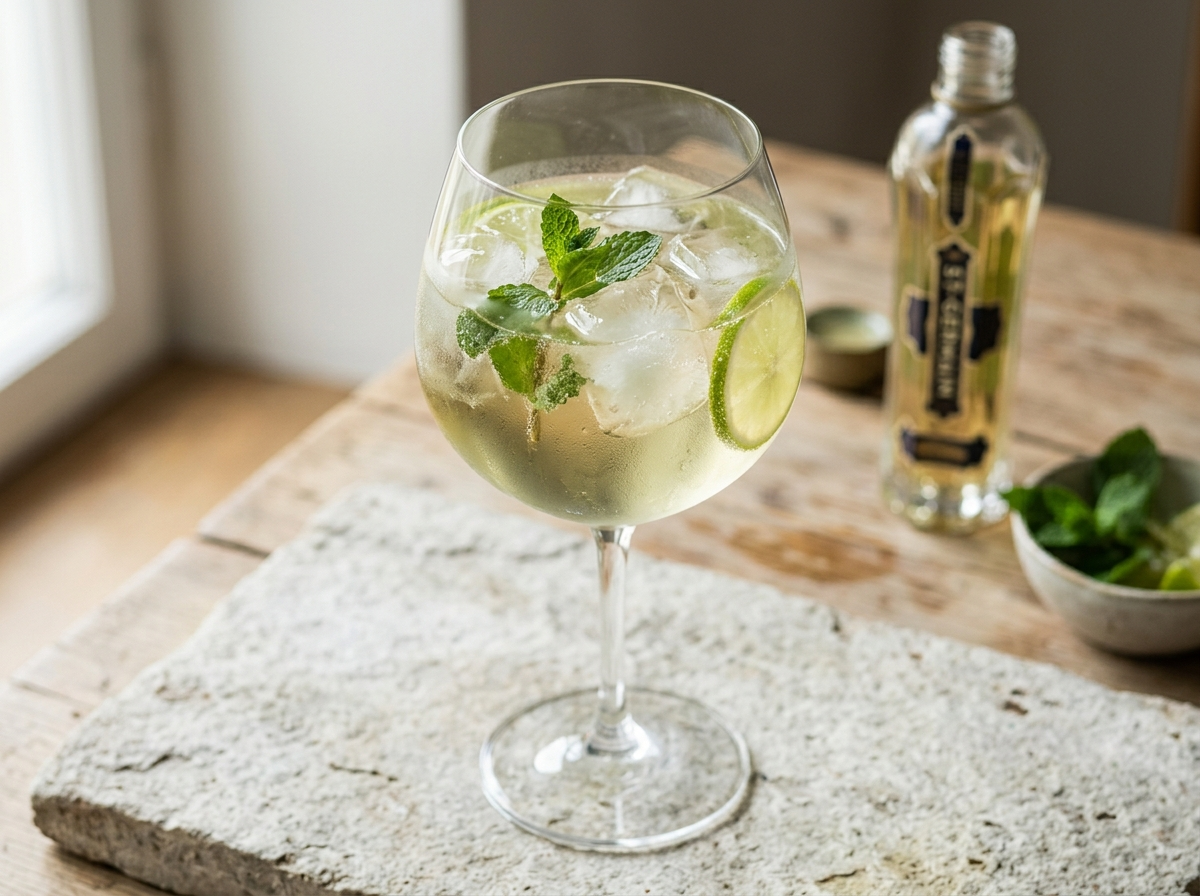
The base is simple: elderflower liqueur, Prosecco, soda water, fresh mint, and a squeeze of lime. No bitters, no orange, nothing complicated. The result is pale and sparkling with a floral note that doesn’t overpower.
It’s a lower-alcohol aperitivo compared to most cocktails, which makes it a good choice for a long afternoon in the sun alongside Italian sparkling wines you’d pour at the same table. The mint is not just a garnish here – it bruised lightly in the glass adds a green, herbal note that you’d miss without it.
Why You’ll Love This Recipe
- Ready in 5 minutes with no bartending skills needed
- Lighter and more floral than an Aperol Spritz
- Easily scaled up to a pitcher for a crowd
- Only five ingredients, all widely available
Ingredient Notes
- Elderflower liqueur (St-Germain or Monin): St-Germain is the most common choice and gives a drier, more complex floral note. Monin elderflower syrup works as a non-alcoholic substitute – use 15 ml and reduce soda water slightly to keep the drink from going too sweet.
- Prosecco DOC: Use a dry (Brut or Extra Dry) Prosecco. Extra Dry is actually slightly sweeter than Brut and works well here because the elderflower already adds some sweetness. Avoid cheap Cava or Champagne – the bubble size and flavor profile differ noticeably.
- Soda water: Plain soda water (unflavored sparkling water) lengthens the drink and softens the alcohol. Don’t skip it or the Hugo becomes too sweet and boozy. San Pellegrino or any standard club soda works fine.
- Fresh mint: Spearmint is the classic choice. Give the leaves a gentle slap between your palms before dropping them in – this releases the oils without tearing the leaves and turning them bitter.
- Lime: Two thin slices or a small wedge squeezed in. Lime cuts through the floral sweetness and keeps the drink tasting fresh. Lemon can substitute in a pinch but changes the flavor profile slightly – more citrus-forward, less clean.
- Ice: Large ice cubes or a single big piece melts slower and keeps the drink cold without diluting it fast. Crushed ice will water it down within a few minutes.
Hugo Spritz
Ingredients
Method
- Fill a large balloon wine glass or wide goblet with 4 to 5 large ice cubes.
- Lightly clap the mint sprigs between your palms to bruise them, then drop them into the glass on top of the ice.
- Add the 2 lime slices to the glass, then squeeze a small amount of juice from a third slice directly into the glass and discard the squeezed piece.
- Pour in the elderflower liqueur (30 ml) over the ice and mint.
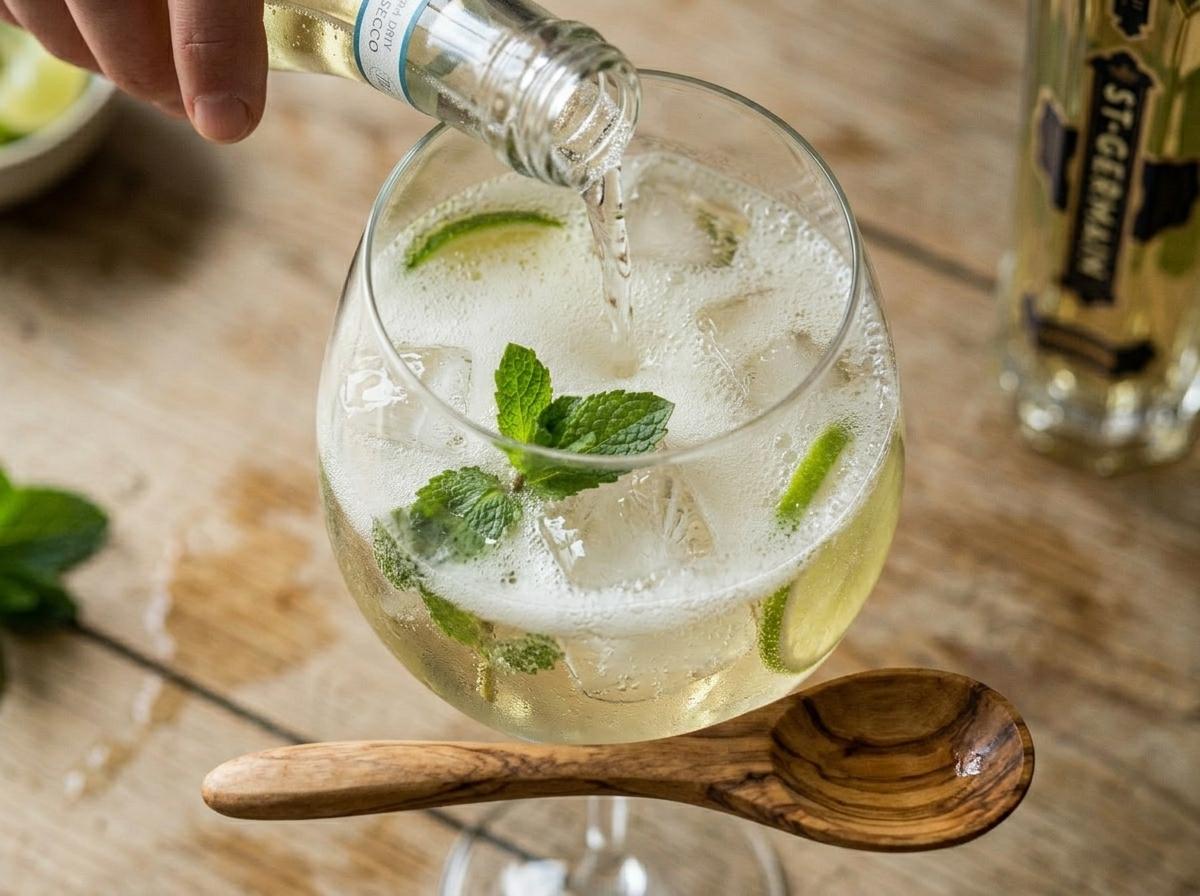
- Slowly pour in the chilled Prosecco (90 ml), tilting the glass slightly and pouring down the side to keep the bubbles intact.
- Top with the chilled soda water (60 ml), again pouring gently down the side of the glass.
- Give the drink one very gentle stir with a bar spoon - just enough to combine, not enough to flatten the carbonation. Serve immediately.
Notes
Tips for Success
- Chill your Prosecco and soda water ahead of time so you don’t dilute the drink with extra ice.
- Add the Prosecco and soda water last and pour slowly down the side of the glass to preserve the bubbles.
- Use a large wine glass or balloon glass rather than a highball – the wide bowl lets the mint aroma reach your nose as you drink.
- Lightly bruise the mint by clapping it between your palms before adding it; this releases flavor without making the drink taste grassy.
- Taste before serving – if it’s too sweet, add a splash more soda water; if it’s too tart, add 5 ml more elderflower liqueur.
Variations
- Rosé Hugo: swap Prosecco for a dry Rosé sparkling wine for a pink, slightly berry-forward version.
- Non-alcoholic Hugo: use elderflower cordial, sparkling water, and a dash of white grape juice instead of Prosecco.
- Frozen Hugo Slushie: blend all ingredients with a full cup of ice until smooth – works well for summer parties.
Storage and Reheating
A Hugo Spritz is a build-in-glass drink and doesn’t store once made – the bubbles go flat within 20 minutes.
If you’re making a batch, combine the elderflower liqueur and lime juice in a pitcher and refrigerate up to 8 hours in advance. Add chilled Prosecco and soda water only when you’re ready to serve.
Leftover Prosecco from an opened bottle keeps its bubbles for about 24 hours in the fridge with a wine stopper. It won’t be as lively but still works for a next-day Hugo.
Serving Suggestions
Serve the Hugo Spritz in a large balloon wine glass or a wide-rimmed goblet. The bigger the glass, the more the mint and elderflower aroma comes through as you sip.
For snacks alongside, it pairs well with salty, light bites: potato chips, bruschetta, prosciutto with melon, crispy fried stuffed olives, or a simple board of soft cheeses and crackers. The floral sweetness of the drink contrasts well with anything salty or lightly savory.
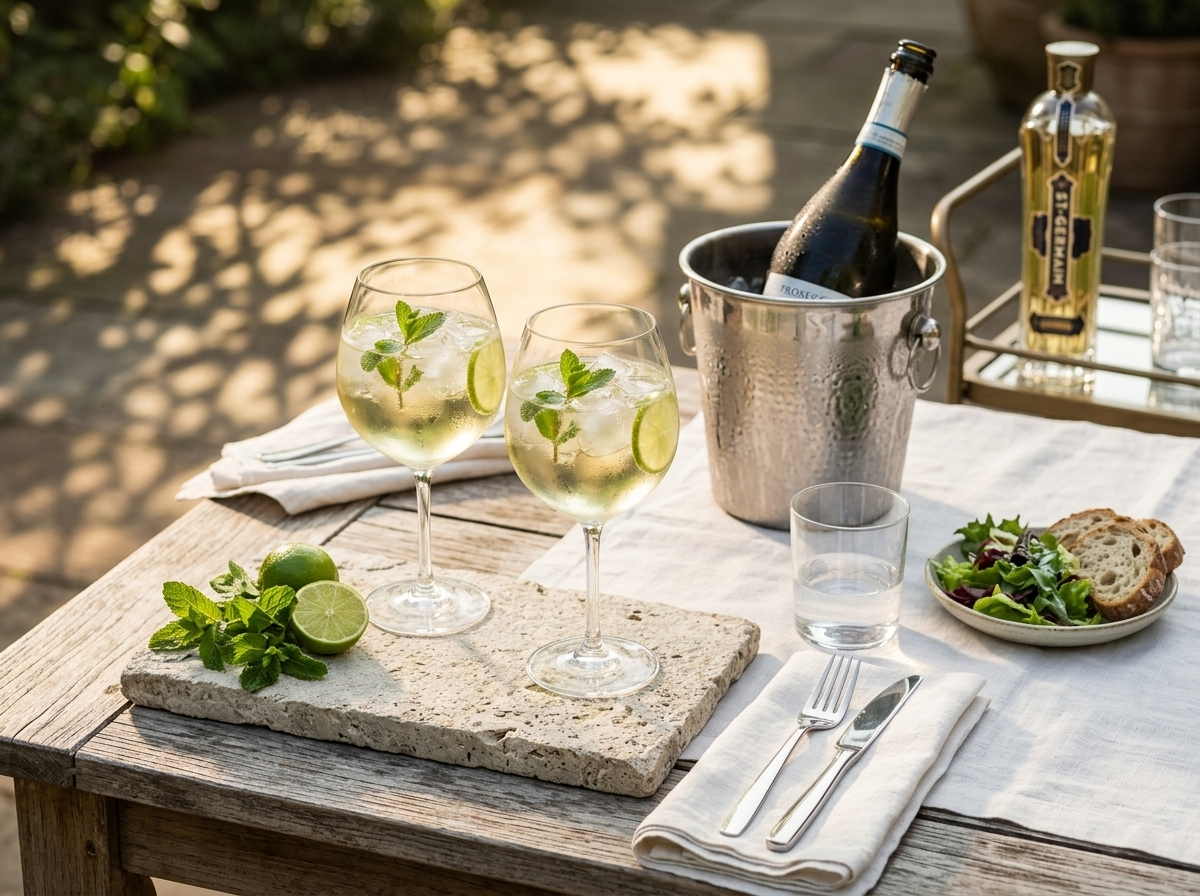
For a casual outdoor gathering, set up a Hugo station with a chilled bottle of Prosecco, a jug of soda water, elderflower liqueur, a bowl of ice, and fresh mint on the side so guests can build their own.
FAQ
Why does my Hugo Spritz taste too sweet?
The elderflower liqueur is doing too much work without enough acidity or fizz to balance it. Add a splash more soda water and squeeze in a little extra lime – that usually fixes it.
Can I use elderflower cordial instead of St-Germain in a Hugo Spritz?
Yes, cordial works as a non-alcoholic swap. Use about 15 ml of cordial instead of 30 ml of liqueur since cordials are sweeter and more concentrated. The drink will be lighter in alcohol but still floral and refreshing.
What’s the difference between a Hugo Spritz and an Aperol Spritz?
The main difference is flavor profile and origin. An Aperol Spritz is bitter-orange and comes from the Veneto region, while a Hugo Spritz is floral-sweet, mint-forward, and originates in South Tyrol — the same Italian alpine region that gave rise to dishes like Trentino apple strudel. The Hugo is generally lighter in alcohol too.
How do I make a pitcher of Hugo Spritz for a party without it going flat?
Mix the elderflower liqueur and lime juice in a pitcher ahead of time and refrigerate it. Add the Prosecco and soda water only when guests arrive and pour straight into ice-filled glasses. Trying to batch the full drink in advance kills the bubbles.
Is a Hugo Spritz gluten-free?
Yes, a standard Hugo Spritz is gluten-free. Prosecco, soda water, elderflower liqueur, lime, and mint contain no gluten. Always check the label on your specific elderflower liqueur brand if you have a serious intolerance.