Jump to Recipe
Have you ever wondered why a simple bowl of peas, cured pork, and good broth can feel so comforting and true to Italy?
This recipe is a straightforward Italian pea soup built on sweet peas, salty pancetta, and a gentle stock. I keep the method clear: crisp the meat, soften the aromatics, add peas, cover with stock or boiling water by about 1–2 cm, simmer briefly, then blend and reheat gently.
Texture is your choice. Blend until silky for a smooth purée or leave a bit rustic for body; both are authentic at home when the flavor base is right. Mint often joins at the end before blending for a clean lift.
Practical pantry note: frozen peas work year-round, and a weakly diluted stock cube will do fine if you support it with good aromatics like onion, celery, and carrot. The key rule is simple—don’t overcook the peas—to protect color and sweetness.
Key Takeaways
- This simple recipe centers on peas, pancetta, and a gentle stock.
- Choose silky or rustic texture—both are authentic if flavors are balanced.
- Cover peas with stock or boiling water by 1–2 cm and simmer briefly.
- Frozen peas and a diluted cube plus fresh aromatics work well.
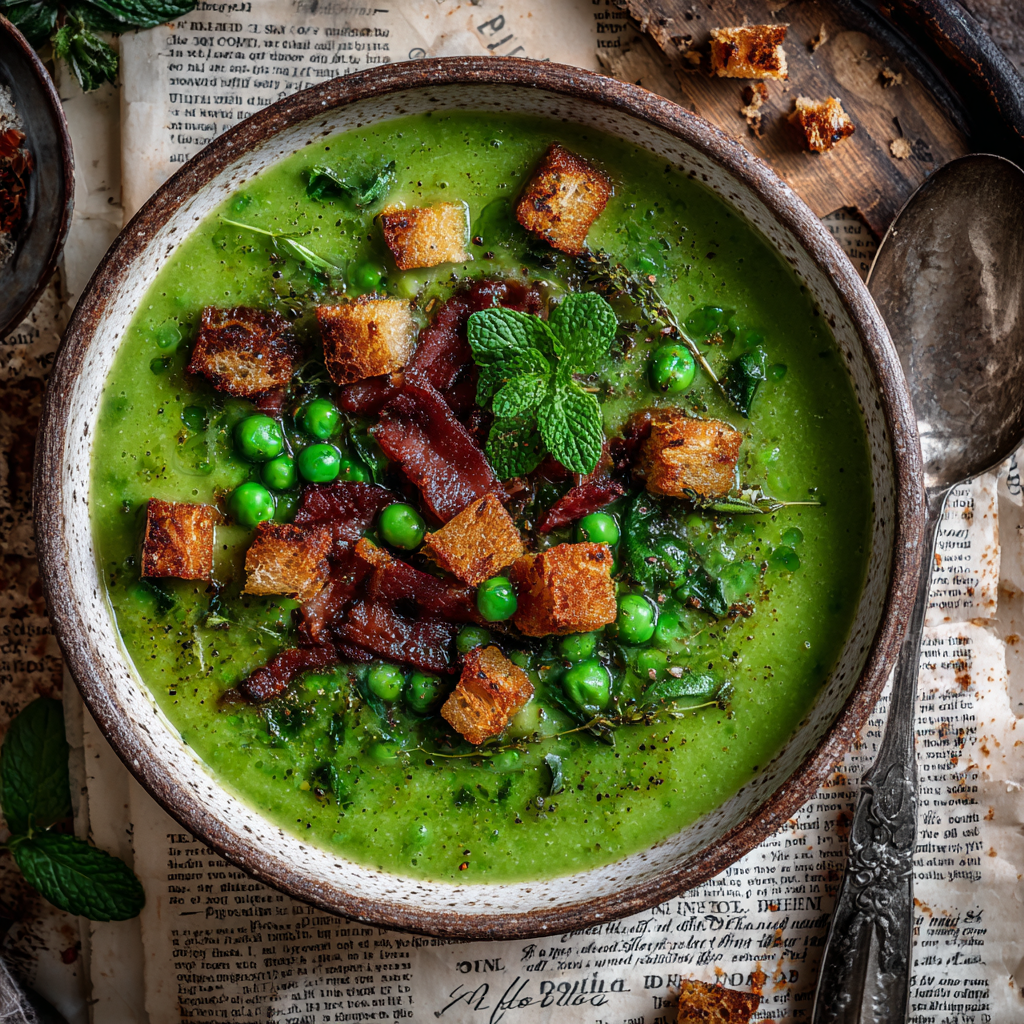
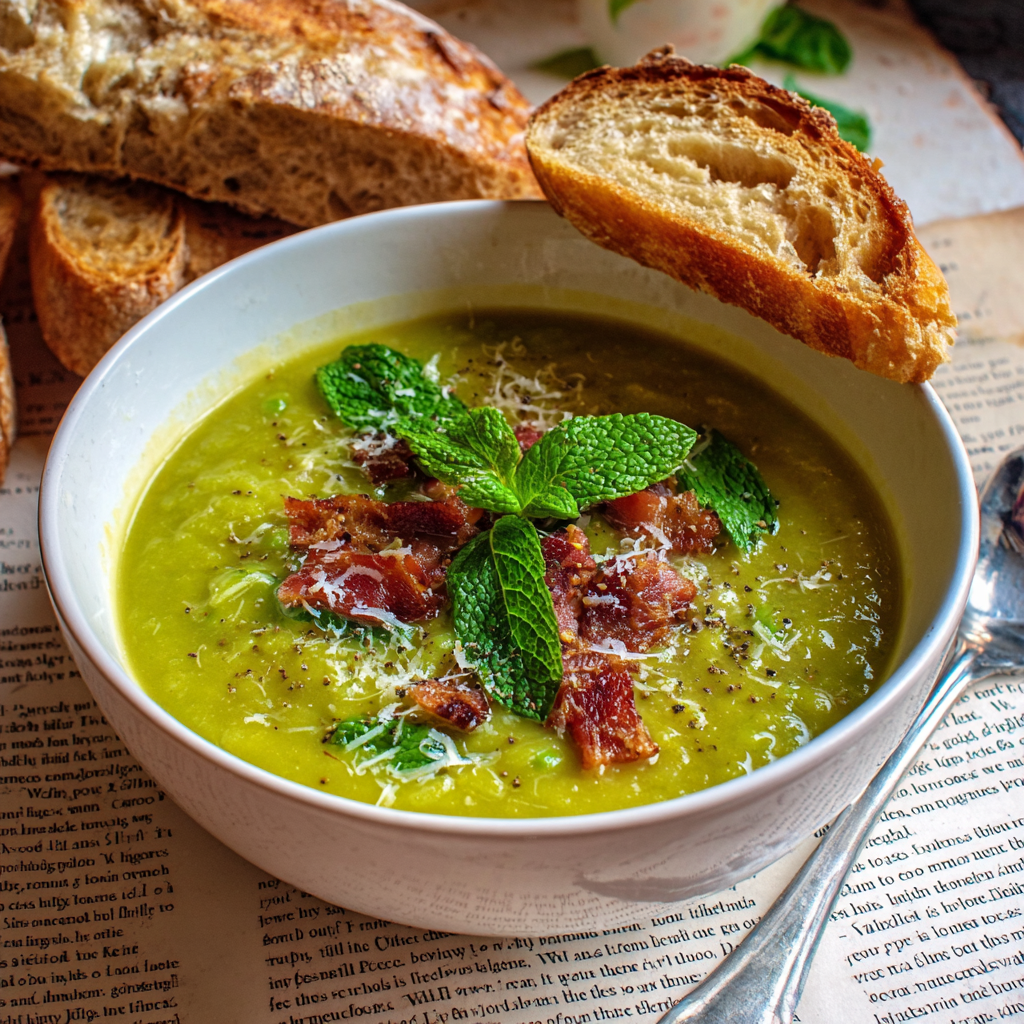
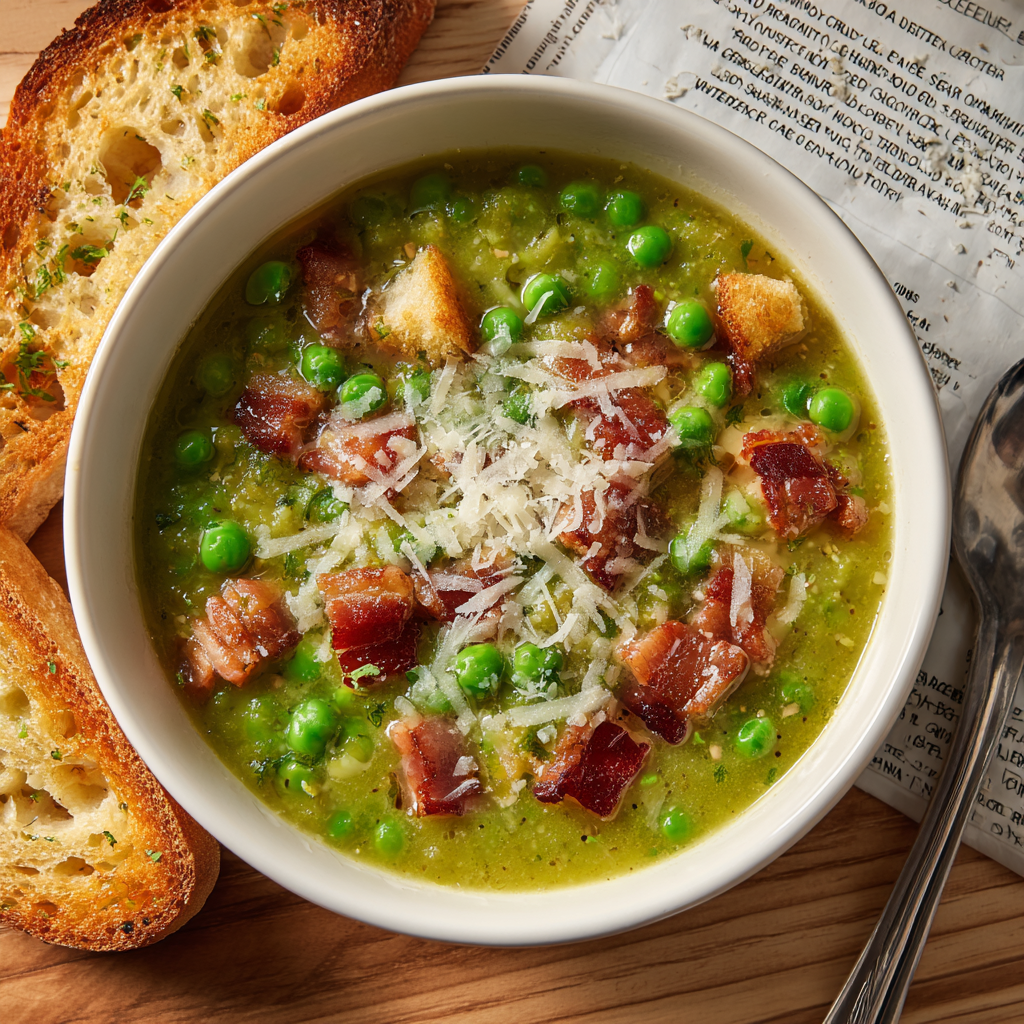
- Finish with mint, crisp pancetta, black pepper, Parmesan, and good bread.
What makes this pea-and-pancetta soup taste genuinely Italian
Taste shows the technique: a soffritto of onion, carrot, and celery with olive oil and small cured pork creates depth before the peas ever touch the pot. That base is the simple, practical heart of many Tuscan bowls.
Tuscan comfort meets the minty English pea soup vibe
In Tuscany we cook peas gently until soft and savory. English-style mint lifts the sweetness. Combine them and you get a soup that feels familiar but follows Italian logic.
Why peas love pancetta: sweetness, salt, and a little fat for body
Peas bring sweetness. Pancetta adds salt and cured aroma. The rendered fat gives body so the bowl feels rounded without cream.
Fresh spring piselli vs frozen peas in the U.S. (and how cook time changes)
Fresh spring piselli are sweet but cook fast. Frozen peas are blanched and frozen quickly, so they stay bright and consistent in the market. If liquid is hot, simmer frozen peas about 5–10 minutes; fresh peas need less time to keep color and flavor.
- Doneness test: taste a pea — tender and sweet, not starchy.
- Keep the soup bright green before blending.
- Call it zuppa piselli when you want the simple Italian name.
| Type | Flavor | Typical cook minutes | Notes |
|---|---|---|---|
| Fresh piselli | Delicate, grassy | 2–4 minutes | Best in spring; watch color |
| Frozen peas | Sweet, consistent | 5–10 minutes | Picked and frozen fast; reliable in U.S. shops |
| Mixed use (piselli pancetta) | Balanced, savory | 5–8 minutes | Pancetta adds fat and salt so less seasoning is needed |
Ingredients that matter most (and smart swaps that still taste right)
Small, intentional choices shape the final bowl. I focus on how each ingredient alters salt, fat, and texture so you can shop confidently in U.S. markets.
Pancetta forms you can actually find
- Diced pancetta: quick-render, even salt. Use for silky body.
- Thin slices cut into strips: crisp nicely and give meaty ribbons.
- Pre-cut lardons: fastest option; brown edges for extra depth.
- Swaps: thick-cut bacon for similar fat/salt, or cooked ham for a leaner finish—reduce added salt if you choose bacon.
Choosing stock
Chicken stock brings richness. Vegetable stock keeps the bowl lighter. If you must, dissolve a stock cube in boiling water but dilute more than expected; start mild and season after blending.
| Choice | Effect | When to use |
|---|---|---|
| Chicken stock | Richer, fuller mouthfeel | When you want body |
| Vegetable stock | Cleaner, lighter taste | Vegetarian or fresher peas |
| Diluted cube + boiling water | Convenient control of salt | Weeknight cook; dilute generously |
Herbs, garlic, and a Tuscan spoon
Add a handful of fresh mint at the end for lift—no more than a small handful so it stays subtle; dried mint works in a pinch. Use one clove of garlic, gently golden, so it aromas without becoming bitter. A single spoonful of tomato paste will deepen color and add a faint savory sweetness without making it tomato-forward.
Finishers that matter
Grate Parmesan for umami, crack black pepper for warmth, and serve with toasted country or day-old rustic bread that can stand up to the soup.
How to cook this zuppa di piselli e pancetta recipe step by step
A reliable pan and a clear plan make this soup straightforward and repeatable. Start by measuring roughly a cup of peas per person if you prefer a thick bowl and keep a kettle of hot water handy to loosen the soup later.
Build the flavor base
Use the same wide pan so you capture browned bits. Sweat onion, carrot, and celery over medium heat until soft and translucent. This vegetable backbone gives the bowl real savory depth even with modest stock.
Crisp the pancetta first
Cook diced pancetta in the pan until fat renders and edges brown, 4–6 minutes. Transfer the crisp pieces to a plate but leave the fond; those browned bits become concentrated flavor for the peas.
Add peas and liquid, then simmer
Stir peas into the fat and vegetables for a minute so they pick up flavor. Pour in stock or boiling water to cover by about 1–2 centimeters. For frozen peas, simmer gently 5–10 minutes once bubbling; fresh peas need much less time—taste at 2–4 minutes.
Blend, reheat, and adjust
Blend to smooth or pulse for a rustic texture, then return the pan to low heat to warm through without boiling. If too thick, add a splash of water; if too thin, simmer a few minutes or stir in another handful of peas.
| Step | Key cue | Minutes |
|---|---|---|
| Crisp meat | Fat renders, edges brown | 4–6 |
| Sweat vegetables | Soft, translucent | 5–8 |
| Simmer peas | Tender, bright green | 2–10 |
Serve it like you mean it: toppings, bread, and cozy variations
A thoughtful finish makes all the difference—toppings, bread, and a quick pan trick lift the whole dish. Keep the ideas simple and practical so you can serve without fuss.
Garlic-and-herb croutons with Parmesan
Toss stale bread cubes with olive oil, dried herbs, grated garlic, and a little parmesan. Use the same pan that held the meat so the croutons pick up fond and flavor.
Toast until golden, then scatter the cheese on hot croutons so it melts and clings. Let them cool uncovered so they stay crisp at serving time.
Classic bowl toppings
Offer a small plate of crispy pancetta, a spoonful of whole peas held back, torn mint, and extra parmesan with cracked black pepper. Each guest can build the bowl they like.
Turn it into a heartier meal with small pasta
For a brodo-style serving, add tiny pasta like ditalini or small shells. Simmer the pasta in the soup liquid; small shapes take only a few minutes, so watch closely and serve right away.
Use vegetable stock for a cleaner finish or chicken stock for more body. If you prefer looser broth, add a splash of boiling water or extra stock before the pasta.
| Serving Style | Best Bread / Pasta | Timing (minutes) |
|---|---|---|
| Thick bowl with croutons | Toasted rustic slices or croutons | 3–5 |
| Brodo-style pasta | Ditalini, small shells, tiny tubes | 6–10 |
| Light, brothy serving | Open-crumb loaf or thin toasted slices | 2–4 |
These serving options let one base yield several easy meals and keep cleanup low by reusing the pan. Small changes make the serving feel intentional and reliably Italian at home.
A bowl worth repeating all year, even when peas aren’t in season
.
Make it once and you’ll see how little changes keep it fresh through the year. Frozen peas make this a dependable bowl when spring produce is scarce, so you can cook with confidence any night.
Cool leftovers quickly, seal them in the fridge, and eat within 2–3 days to protect color and flavor. Reheat gently over low heat, stir often, and add a splash of water if it thickened overnight to avoid scorching.
If you add pasta, plan for timing: pasta softens as it sits. For best texture, cook pasta fresh at serving time or keep it separate and combine on the plate.
The plain soup freezes better than any pasta version; in case you freeze, thaw in the fridge and warm slowly. In case you only have stock cubes or bacon, follow the same steps—small swaps still deliver the core piselli pancetta idea.
Treat this as a flexible template for weeknights and slow weekends. For a related pasta option, try my take on small shells with sausage and peas at pasta with peas to see how the same principles translate to a heartier meal.
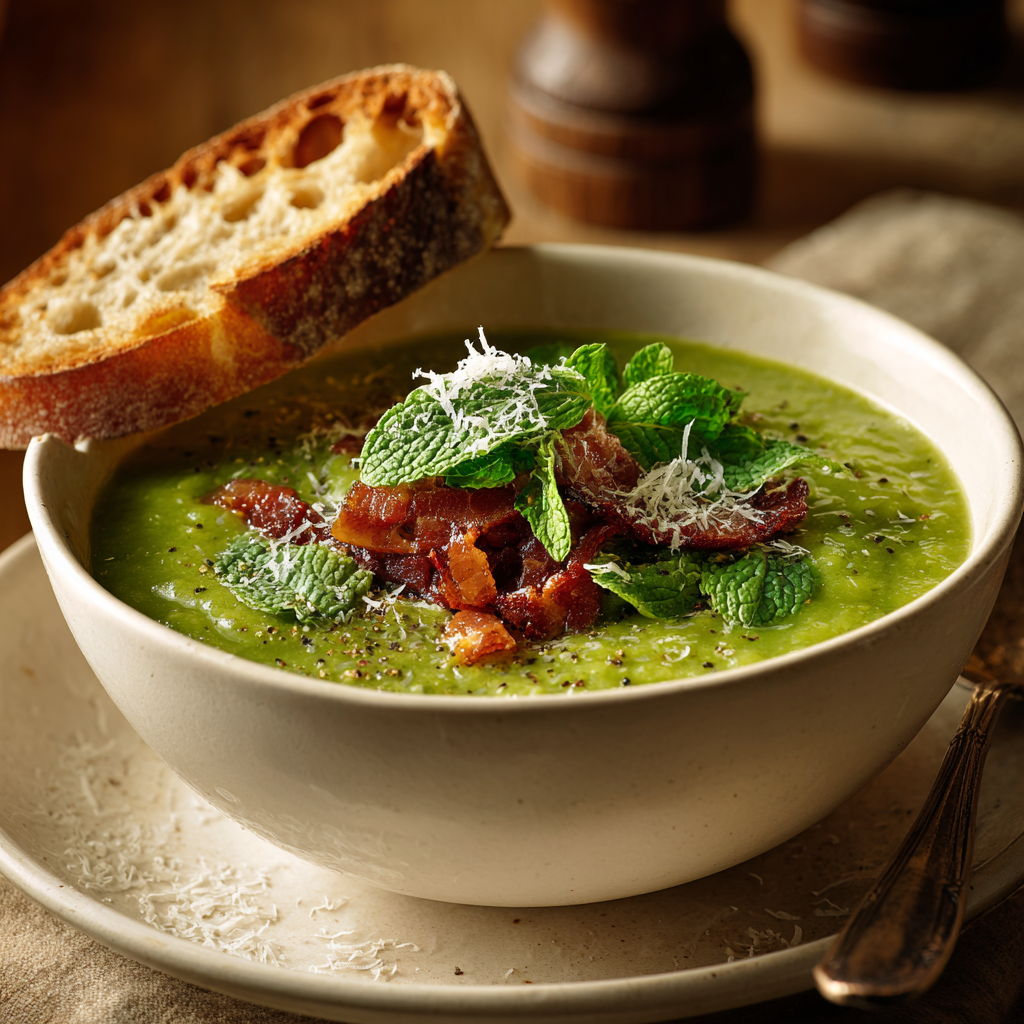
Zuppa di Piselli e Pancetta (Italian Pea Soup with Pancetta)
Ingredients
Method
Notes
- You can use frozen peas for convenience, but fresh spring peas are ideal for the best flavor.
- Adjust the texture to your preference: blend until smooth for a silky soup or leave it chunky for a more rustic feel.
- If using bacon as a substitute for pancetta, reduce the added salt in the recipe.
- The soup freezes well without the pasta, so consider freezing leftovers for future meals.