Jump to Recipe
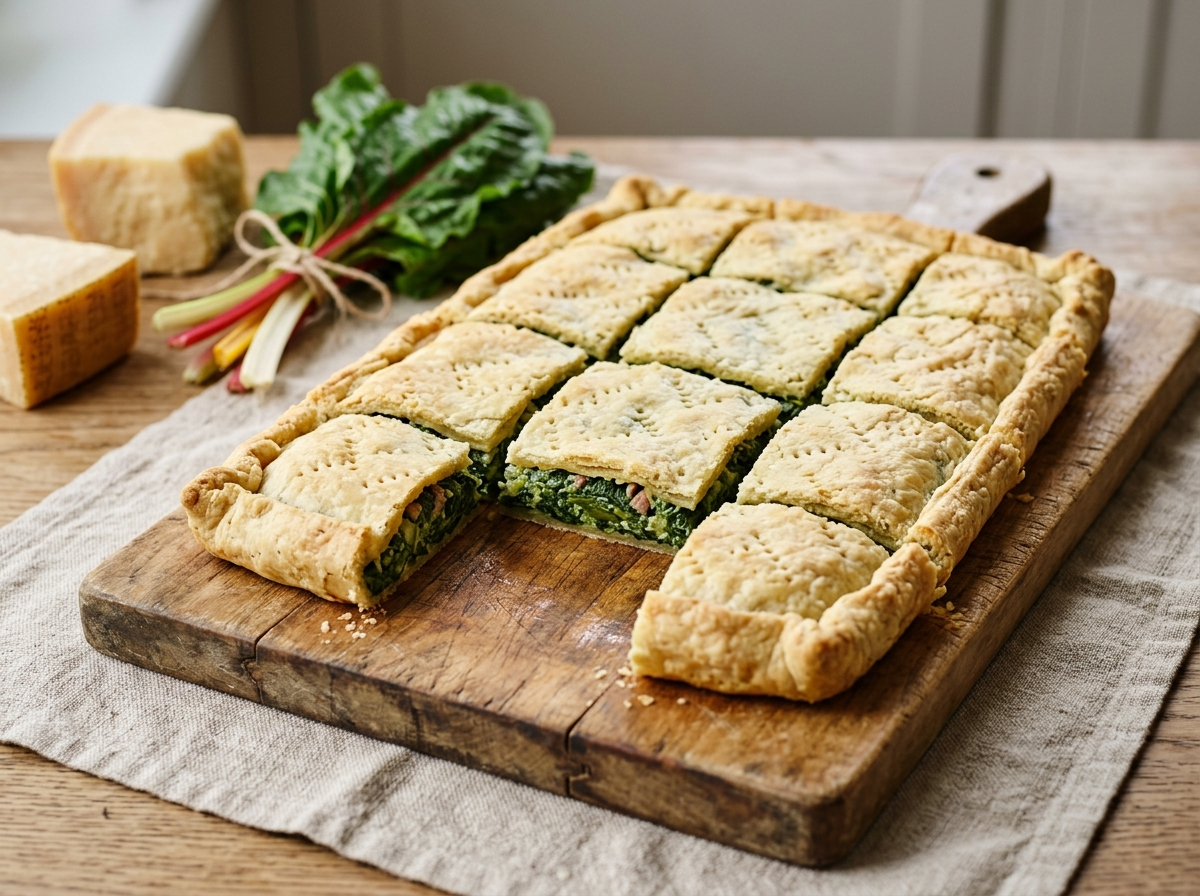
Erbazzone reggiano is a flat, double-crusted savory pie from the province of Reggio Emilia. The crust is made with lard, which keeps it tender without being heavy. The filling is mostly greens, usually a mix of chard and spinach, bound with Parmigiano Reggiano, eggs, and a soffritto of onion and garlic.
This is not a quiche. The filling is drier and denser, squeezed hard after blanching so no extra moisture escapes into the pastry. That step is what stops the bottom crust from going soggy.
Traditionally it was field food, carried to work wrapped in cloth and eaten at room temperature. That practicality still holds. It packs well, slices clean, and improves slightly after it cools.
Why You’ll Love This Recipe
- Holds its shape at room temperature, ideal for packing
- Parmigiano and greens filling is intensely savory without being heavy
- Lard crust stays crisp and short even after cooling
- Filling uses affordable, year-round greens
Ingredient Notes
- Lard (strutto): Traditional and worth using if you can find it. It gives the crust a shorter, crisper texture than butter. Cold unsalted butter works as a substitute but produces a slightly flakier, richer result.
- Swiss chard and spinach: The classic ratio is roughly two parts chard to one part spinach. Frozen spinach works fine here, just thaw it completely and squeeze out every drop of water.
- Parmigiano Reggiano: Use a proper aged Parmigiano, not generic parmesan. Grana Padano is a reasonable budget swap and behaves the same way in the filling.
- Pancetta: Flat pancetta, finely diced, goes into the soffritto. Guanciale also works. For a vegetarian version, skip it and add a small pinch of smoked paprika to keep depth.
- Eggs: Two whole eggs bind the filling. Don’t add more or the texture becomes custard-like rather than firm and sliceable.
- White wine or water for the crust: A splash of dry white wine helps the dough come together and adds a faint acidity. Cold water works just as well.
Erbazzone Reggiano: The Savory Greens Pie from Emilia-Romagna
Ingredients
Method
- Put the flour and salt in a large mixing bowl. Add the cold cubed lard and rub it into the flour with your fingertips until the mixture looks like coarse, uneven breadcrumbs with some pea-sized pieces still visible.
- Add the cold wine (or water) a little at a time, mixing with a fork and then your hands just until the dough comes together. It should be smooth but not sticky. Do not overwork it.
- Shape into a flat disc, wrap in clingfilm, and refrigerate for 30 minutes.
- Bring a large pot of well-salted water to a boil. Add the chard and spinach and blanch for 3 minutes until wilted and vivid green. Drain immediately and spread on a tray to cool slightly.
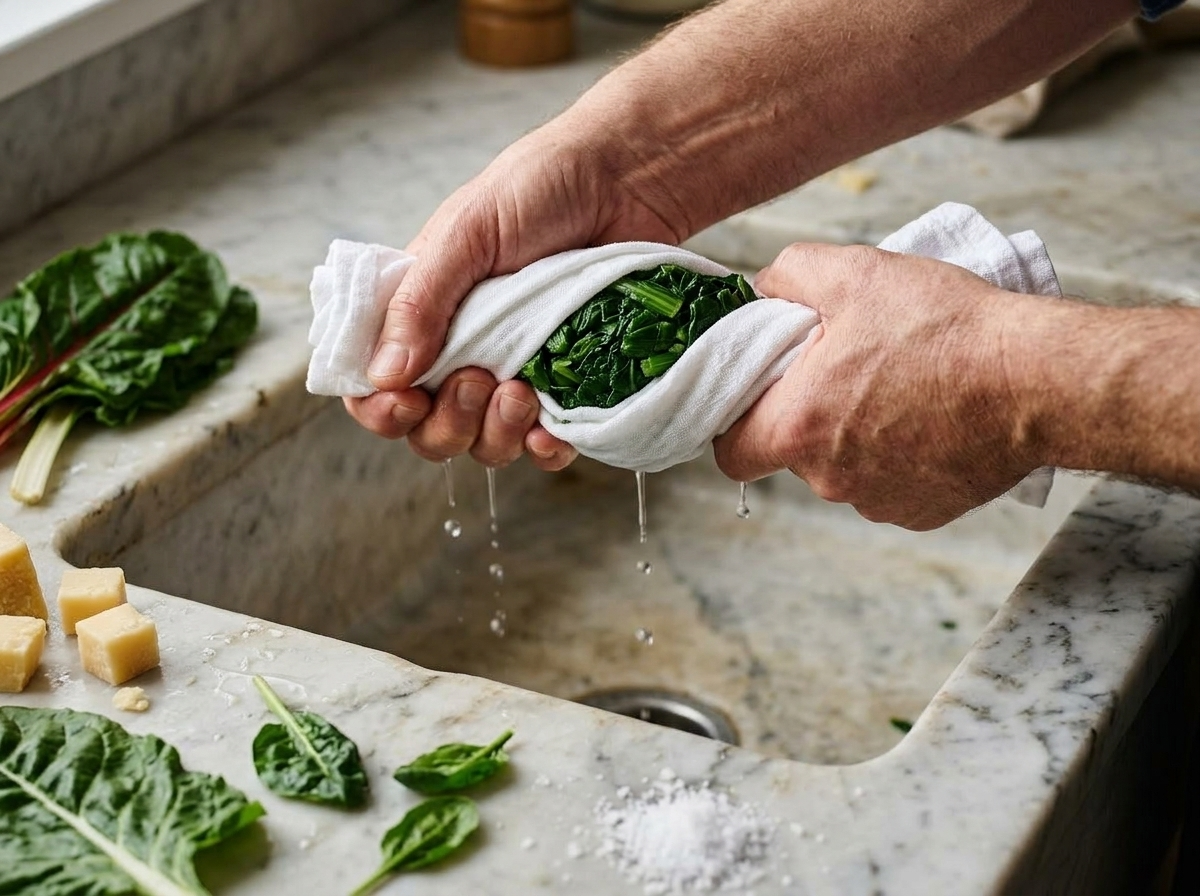
- Once cool enough to handle, gather the greens in a clean kitchen towel and twist and squeeze as hard as you can until virtually no water comes out. Chop the squeezed greens finely with a knife.
- Heat the olive oil in a skillet over medium heat. Add the pancetta and cook for 2 to 3 minutes until the fat renders. Add the onion and cook for 5 minutes until pale and soft, then add the garlic and cook for 1 minute until fragrant.
- Add the chopped greens to the pan, stir to combine with the soffritto, and cook for 2 minutes. Remove from the heat and let cool to room temperature.
- Stir in the beaten eggs, Parmigiano, nutmeg, and black pepper. Taste and add salt carefully, keeping in mind the cheese is already salty. The filling should hold its shape loosely when pressed.
- Heat the oven to 200 C / 390 F. Lightly grease a 30 x 20 cm rectangular baking tin with lard or olive oil.
- Divide the chilled dough into two pieces, one slightly larger than the other. On a lightly floured surface, roll the larger piece into a rectangle about 2 to 3 mm thick, large enough to line the base and sides of the tin with a small overhang.
- Lift the dough into the tin, pressing it gently into the corners without stretching it. Trim any excess leaving about 1 cm overhang.
- Spread the filling evenly over the base, pressing it down lightly to remove air pockets.
- Roll the second piece of dough to the same thickness and lay it over the filling. Press the edges of the top and bottom crusts together firmly, then fold and crimp the edge to seal.
- Prick the top all over with a fork at 2 cm intervals. Brush the surface with melted lard or olive oil.
- Bake in the center of the oven for 35 to 40 minutes until the top crust is pale golden and firm. The edges will be slightly deeper in colour.
- Transfer to a wire rack and cool for at least 15 minutes before cutting into squares or rectangles.
Notes
Tips for Success
- Squeeze blanched greens in a clean towel until your hands ache, then squeeze again. Dry filling is non-negotiable.
- Roll the bottom crust slightly thicker than the top so it holds the filling without softening under the weight.
- Prick the top crust all over with a fork before baking to let steam escape and keep it flat.
- Brush the top with a thin film of lard or olive oil, not egg wash, for an authentic matte finish.
- Let the pie cool on a wire rack for at least 15 minutes before cutting so the filling sets and slices hold their shape.
Variations
- Use all spinach instead of chard for a milder, more uniform green filling with less bitterness.
- Add a handful of ricotta to the filling for a creamier, slightly lighter texture that’s still sliceable.
- Skip pancetta and use a small diced shallot for a fully vegetarian erbazzone that keeps the savory depth.
Storage and Reheating
Erbazzone keeps well at room temperature for the day it’s made. After that, wrap it tightly and refrigerate for up to 3 days. The crust softens slightly overnight but firms back up when reheated.
To reheat, place slices uncovered on a baking sheet in a 180 C / 350 F oven for 8 to 10 minutes. Avoid the microwave if you want the crust to stay short rather than chewy.
For longer storage, freeze individual slices on a tray, then transfer to a freezer bag. Reheat from frozen at 180 C for 15 minutes. The filling holds fine but the crust loses a little of its original crispness.
Serving Suggestions
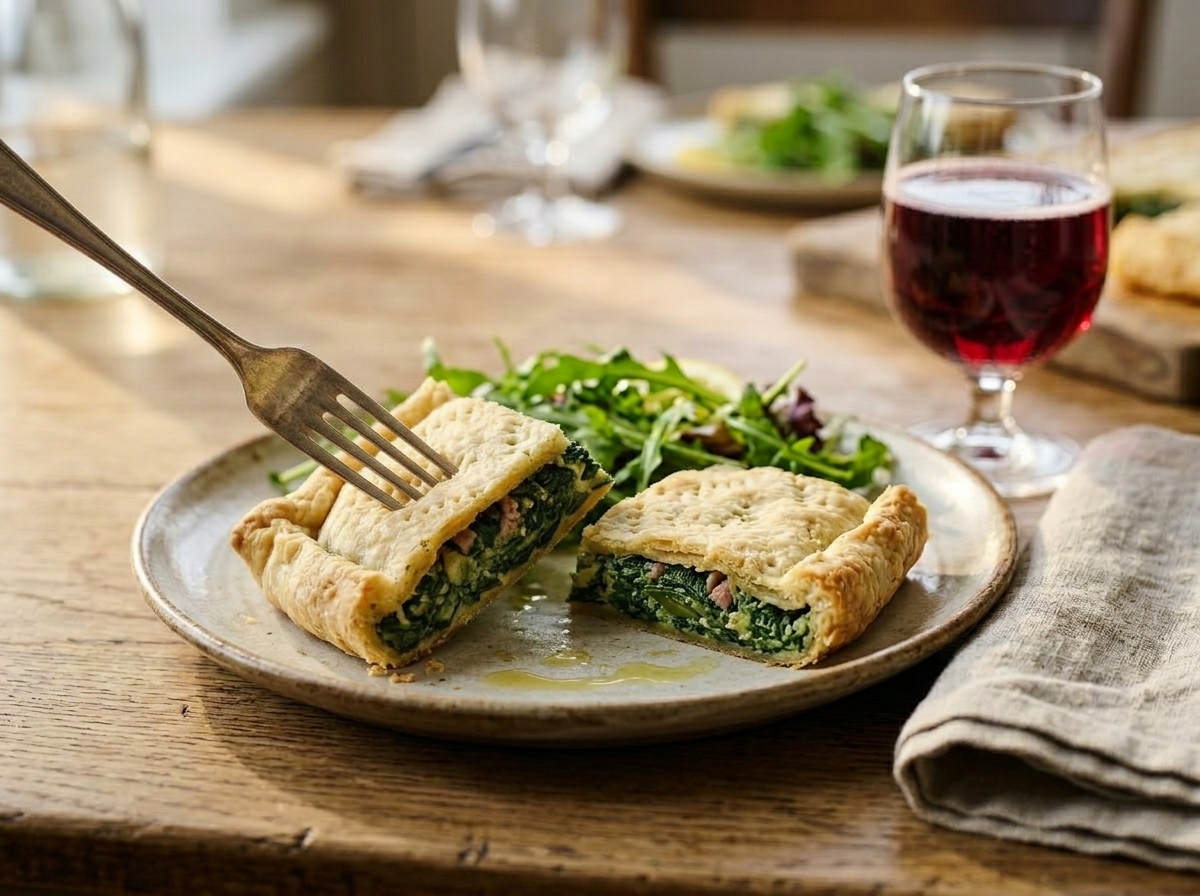
In Reggio Emilia, erbazzone is cut into squares and eaten as a snack, a starter, or a light lunch alongside a glass of Lambrusco sparkling wine. The slight spritz of the wine cuts through the richness of the lard crust cleanly.
For a full meal, serve warm slices with a simple underdressed green salad, nothing that competes with the greens already in the pie. A few pickled vegetables or a spoonful of mostarda on the side also work well.
It also makes a practical addition to an aperitivo spread alongside cured meats and giardiniera, where it holds its shape on a board for a couple of hours without drying out.
FAQ
Why is the bottom crust of my erbazzone soggy?
The greens were not squeezed dry enough before mixing the filling. Blanch the chard and spinach, then wring them as hard as possible in a clean cloth until no more water comes out. Any residual moisture will steam the pastry from the inside during baking.
Can I use butter instead of lard in the erbazzone crust?
Cold unsalted butter works and produces a slightly flakier crust. The texture will be a little less short and crumbly than the lard version, but the flavour is still good. Use the same weight as the lard called for.
How do I know when erbazzone is fully baked?
The top crust should be pale golden and firm to the touch, not soft or springy. The edges will pull slightly from the tin. If you press lightly in the center and it feels set rather than yielding, it’s done.
Can I freeze erbazzone reggiano and how long does it keep?
Freeze it in individual slices for up to 2 months. Reheat from frozen in a 180 C oven for about 15 minutes. The filling stays good but the crust will be slightly less crisp than fresh-baked.
Is erbazzone vegetarian?
The traditional version contains pancetta, so it isn’t. The filling and crust are otherwise meat-free, so leaving the pancetta out makes it fully vegetarian. Add a small extra pinch of salt to compensate for the missing savouriness.
What is the difference between erbazzone and scarpazzone?
They are the same dish. Scarpazzone is the older local dialect name used around Reggio Emilia, while erbazzone is the more widely understood Italian term. The recipe and technique are identical.