
Jump to Recipe
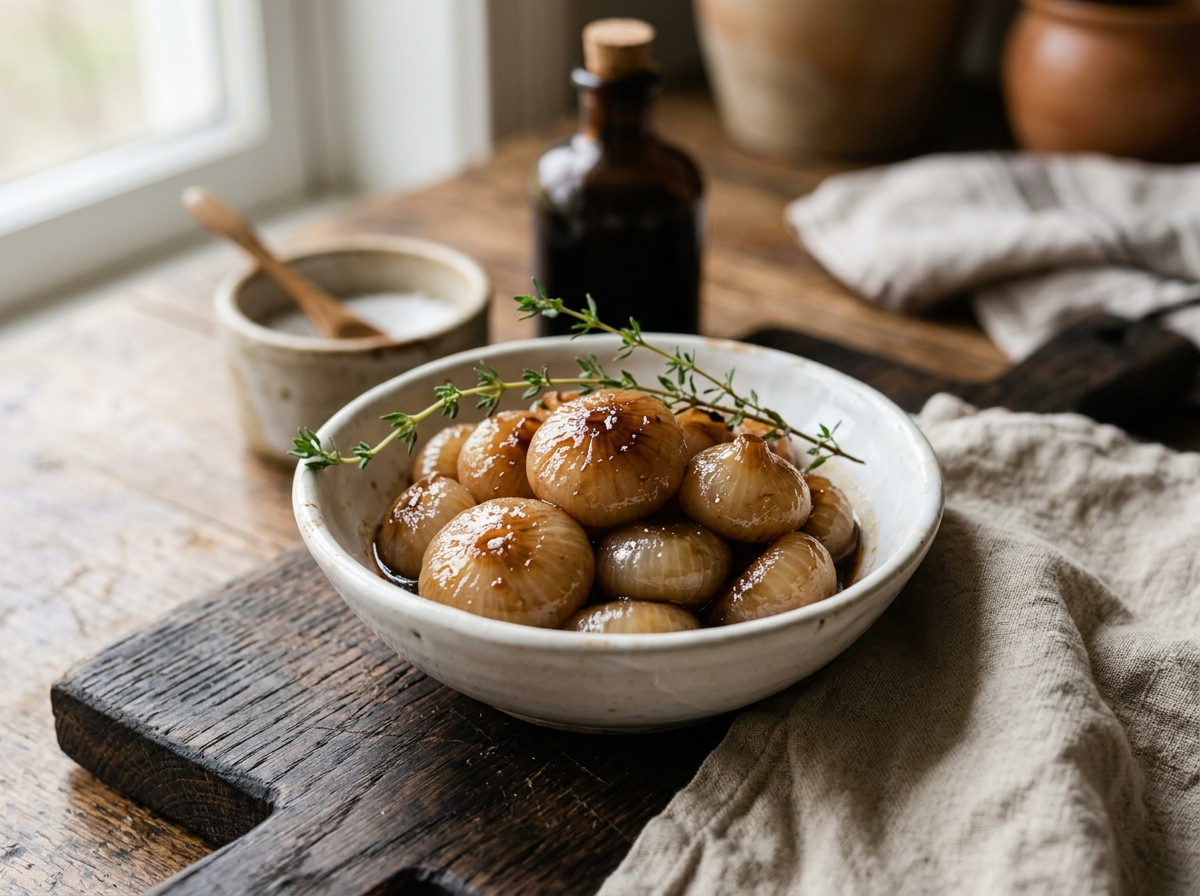
Cipolline in agrodolce is one of those Italian side dishes that looks like it took more effort than it did. Small, flat cipolline onions braise slowly in a reduction of red wine vinegar, sugar, and butter until they turn translucent and coat themselves in a thin, sticky glaze.
The dish comes from the broader Italian tradition of agrodolce – sweet-sour cooking – which shows up in Sicilian caponata, Venetian soused fish, and Roman braised dishes. It’s a flavor principle, not just a recipe.
Cipolline hold their shape during braising in a way pearl onions don’t. That firmness, combined with their natural sweetness, makes them ideal for this treatment. You get a clean contrast: sharp vinegar, gentle sugar, rich butter.
Serve them alongside roasted meats, cured charcuterie, or sharp cheeses. They also keep well, which makes them a practical make-ahead option for a dinner spread.
Why You’ll Love This Recipe
- Four-ingredient glaze that tastes deeply complex
- Holds shape beautifully – no mushy onions here
- Make ahead up to three days and reheat gently
- Pairs with roasts, charcuterie, and aged cheeses
Ingredient Notes
- Cipolline onions: These flat, disc-shaped onions are the key to the dish’s texture. If you can’t find them, small shallots work as a substitute – avoid standard pearl onions, which go soft faster.
- Red wine vinegar: Use a good-quality red wine vinegar with at least 6% acidity. White wine vinegar is a lighter substitute; balsamic makes the dish sweeter and darker, which is a valid variation.
- Sugar: Plain white granulated sugar gives a clean sweetness. Brown sugar adds a mild molasses note, which works well if you’re going for a richer, more autumnal flavor.
- Unsalted butter: Butter emulsifies into the braising liquid to create the glaze. For a dairy-free version, use a neutral olive oil – the glaze will be slightly thinner but still coats the onions well.
- Dry red wine (optional): Adding a small splash of red wine before the vinegar deepens the braising liquid. It’s not traditional in every version, but it adds body to the sauce.
- Fresh thyme or bay leaf: A sprig of thyme or a single bay leaf added to the pan gives a faint herbal background. Remove before serving.
Cipolline in Agrodolce (Italian Sweet and Sour Onions)
Ingredients
Method
- Bring a medium saucepan of water to a boil. Add the cipolline and blanch for 60 seconds exactly.
- Transfer immediately to a bowl of ice water with a slotted spoon. Let them sit for 2 minutes until cool enough to handle.
- Trim the root end of each onion with a paring knife and squeeze gently from the stem end - the skin should slip off cleanly. Pat dry.
- Place a wide 12-inch skillet over medium heat. Add the butter and olive oil and let the butter melt until foamy.
- Add the sugar and stir for about 30 seconds until it dissolves into the fat and just begins to turn a pale gold at the edges.
- Add the peeled cipolline in a single layer. Turn them gently to coat in the butter-sugar mixture. Add thyme and bay leaf if using.
- Pour in the red wine vinegar - it will sizzle. Stir to combine, scraping up any bits from the pan.
- Add the water or broth and the salt. Bring to a gentle simmer, then reduce heat to medium-low.
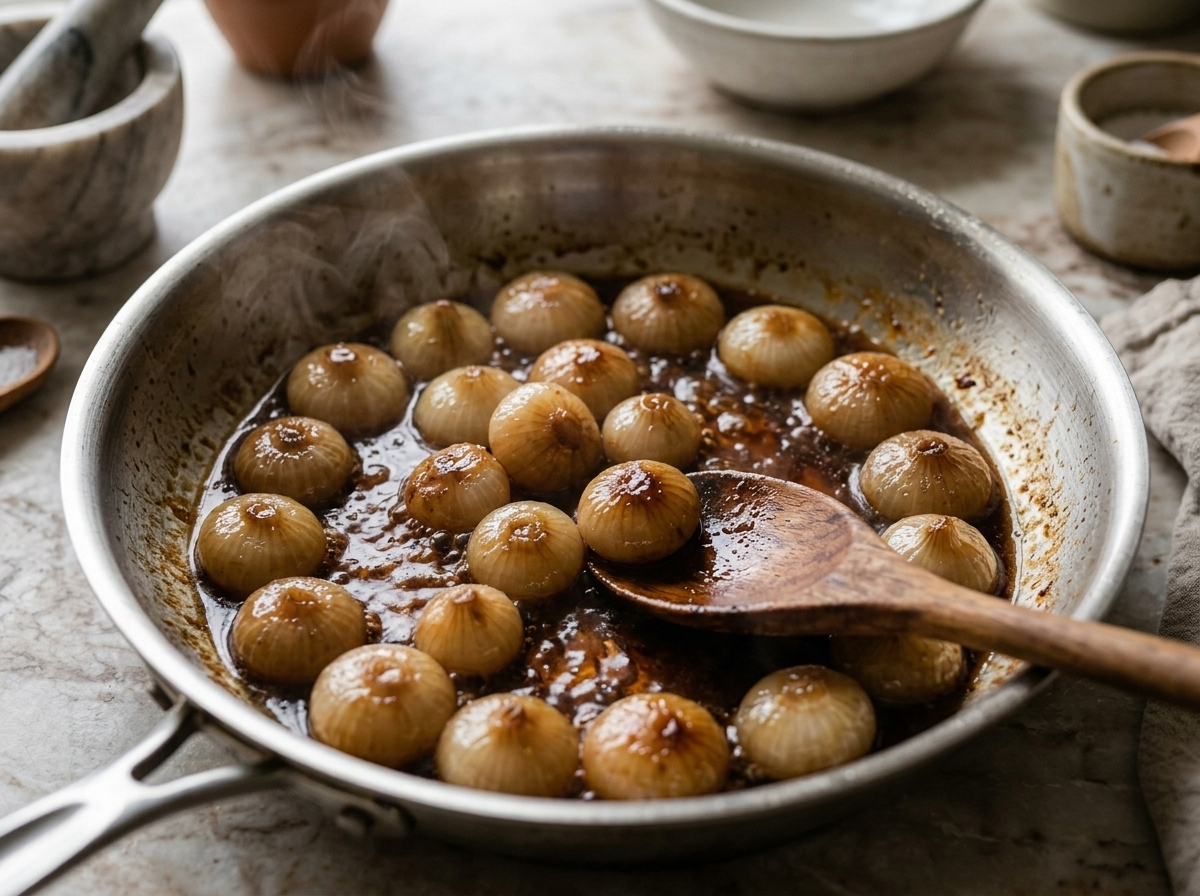
- Braise uncovered for 18 to 22 minutes, turning the onions every 5 minutes, until they are tender when pierced with a knife and the liquid has reduced to a thin, glossy glaze that clings to them.
- Remove the thyme and bay leaf. Taste and adjust salt. Serve warm or at room temperature.
Notes
Tips for Success
- Blanch cipolline in boiling water for 60 seconds then shock in ice water – skins slip off cleanly without tearing the onion.
- Keep the heat at medium-low during the braise so the vinegar reduces slowly and doesn’t turn harsh or bitter.
- Add the sugar before the vinegar so it dissolves directly in the butter first, which helps prevent crystallization.
- Use a wide, shallow pan so the onions sit in a single layer – crowding traps steam and prevents the glaze from forming.
- Finish with a pinch of fine salt just before serving to sharpen all the flavors at once.
Variations
- Add two tablespoons of balsamic vinegar for a richer, deeper glaze with a dark mahogany color.
- Stir in a tablespoon of raisins and a few pine nuts for a Sicilian-style agrodolce with more texture.
- Use white wine vinegar and a strip of lemon zest for a lighter, more delicate version suited to fish dishes.
Storage and Reheating
Store cooled cipolline in an airtight container in the refrigerator for up to 3 days. The glaze thickens as it cools, which is normal.
Reheat gently in a small skillet over low heat with a splash of water to loosen the glaze. Avoid high heat – the sugar in the sauce scorches quickly.
Cipolline in agrodolce also work well served at room temperature as part of an antipasto spread, so you don’t always need to reheat them.
Serving Suggestions
These onions are a natural partner for slow-roasted pork, lamb chops, or a simple roast chicken. The acidity cuts through fat in a way that makes each bite feel lighter.
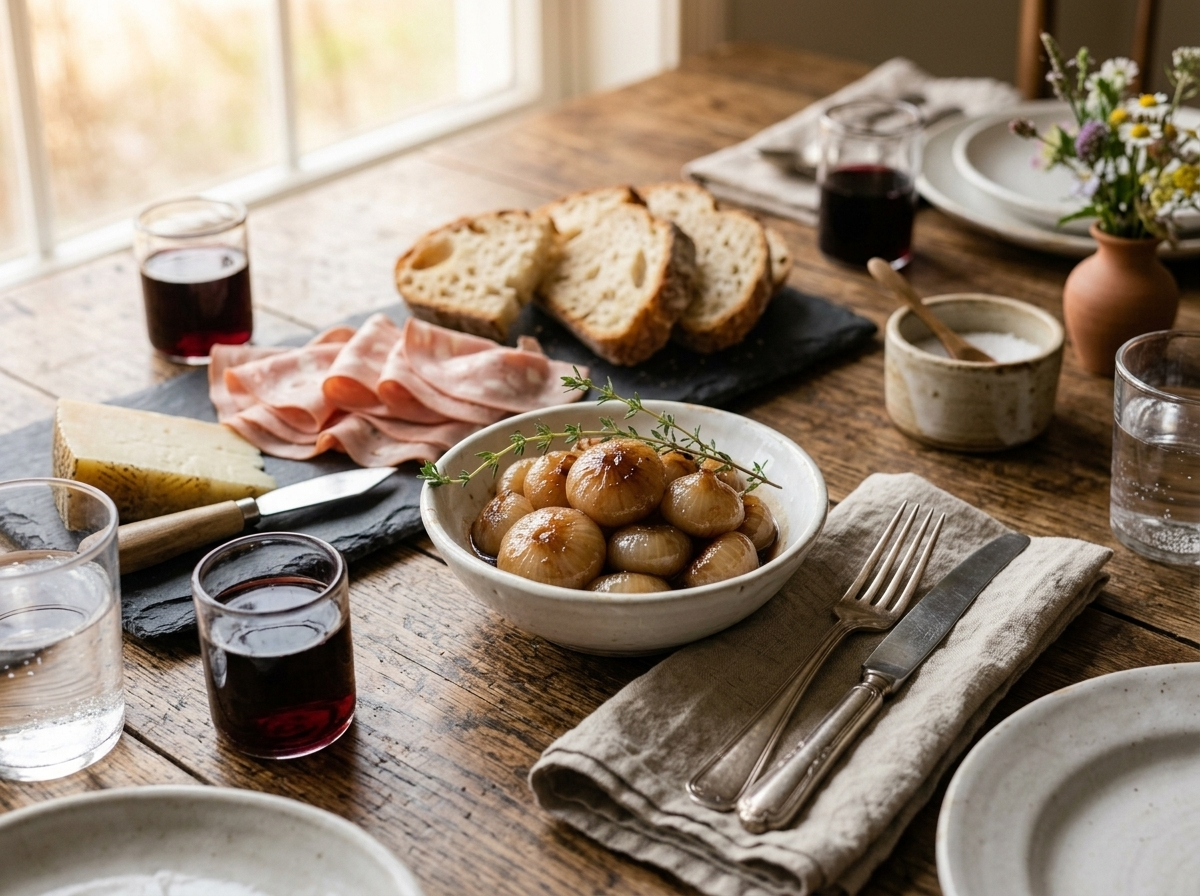
For an antipasto board, arrange them alongside mortadella, coppa, aged pecorino, and crusty bread. They hold their own next to strong flavors without getting lost.
If you have leftovers, chop them roughly and stir into a risotto in the last few minutes of cooking, or use as a topping for bruschetta with ricotta.
FAQ
Why are my cipolline falling apart instead of staying whole during the braise?
The heat is probably too high. Cipolline need a gentle, steady braise at medium-low to hold their shape. High heat causes the outer layers to break down before the center softens evenly.
Can I use balsamic vinegar instead of red wine vinegar in cipolline in agrodolce?
Yes, balsamic works well and gives a darker, sweeter glaze. Use slightly less sugar if you do, since balsamic already carries more natural sweetness than red wine vinegar.
How do I know when the agrodolce glaze on the onions is ready?
The liquid should reduce to a thin syrup that coats the back of a spoon and clings to the onions when you toss them in the pan. If it looks watery, give it another 3 to 5 minutes uncovered.
Can I make cipolline in agrodolce a day ahead for a dinner party?
They’re actually better the next day once the glaze has had time to settle into the onions. Reheat slowly in a skillet with a small splash of water and they’ll come back to life quickly.
What is the difference between cipolline in agrodolce and pickled onions?
Pickled onions are raw and preserved in cold acidic brine, giving them a sharp, crunchy bite. Cipolline in agrodolce are cooked – the acidity is cooked off and balanced with fat and sugar, so the result is mellow, tender, and glossy.
Is cipolline in agrodolce naturally gluten-free and vegan?
The classic recipe is gluten-free. It is not vegan as written because of the butter, but swapping butter for a good extra-virgin olive oil makes it fully plant-based without changing the texture significantly.