Jump to Recipe
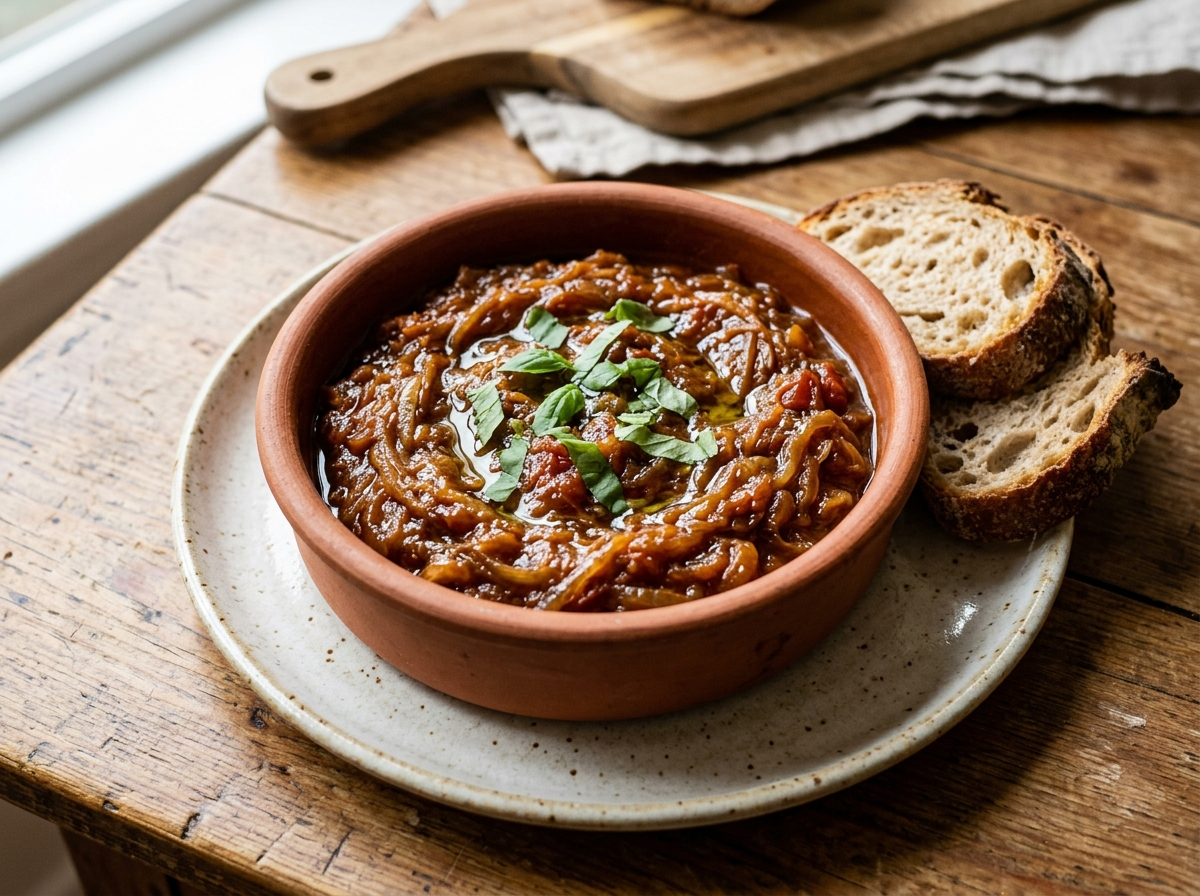
Friggione bolognese is a slow-cooked side dish from Bologna built from just three things: yellow onions, tomatoes, and olive oil. There’s no garlic, no herbs beyond a bit of basil at the end. The onions do all the work, breaking down over close to two hours into something closer to a savory jam than a stew.
The technique matters more than the ingredient list here. Low heat, patience, and a lid that comes off partway through are what turn raw onions into that deep amber color everyone associates with real friggione.
Get the heat wrong and this dish goes bitter fast. High heat browns the onions before they’ve had time to soften, and browned onions in this context taste sharp, not sweet.
This is a make-ahead dish by nature. It keeps for days in the fridge and tastes better on day two, once the flavors have had time to settle.
Why You’ll Love This Recipe
- Just onions, tomatoes, and olive oil, no complicated shopping list
- Tastes better the next day, ideal for cooking ahead
- Works as a side, a topping, or a spread on crostini
- Freezes well for up to 3 months
Ingredient Notes
- Yellow onions: Use sweet yellow or white onions, not red. They break down more evenly and give the mild, sweet base friggione needs.
- Tomatoes: Fresh ripe tomatoes work well in summer. In colder months, whole peeled canned tomatoes, chopped, give a more reliable result.
- Olive oil: Use a decent everyday extra virgin olive oil, not your best bottle. It cooks down with everything else, so flavor won’t stand out on its own.
- Sugar: A small pinch balances the acidity of the tomatoes, especially if they’re not fully ripe. Skip it if your tomatoes are already sweet.
- Basil: A few torn leaves stirred in at the very end keep their aroma. Adding them earlier just cooks the flavor out.
Friggione Bolognese: Slow-Cooked Onions and Tomatoes
Ingredients
Method
- Peel and halve the onions, then slice into thin half-moons, about 3-4 mm thick, keeping the slices even.
- Warm the olive oil in a wide, heavy-bottomed pan over low heat. Add the onions and 1 tsp salt, stirring to coat.
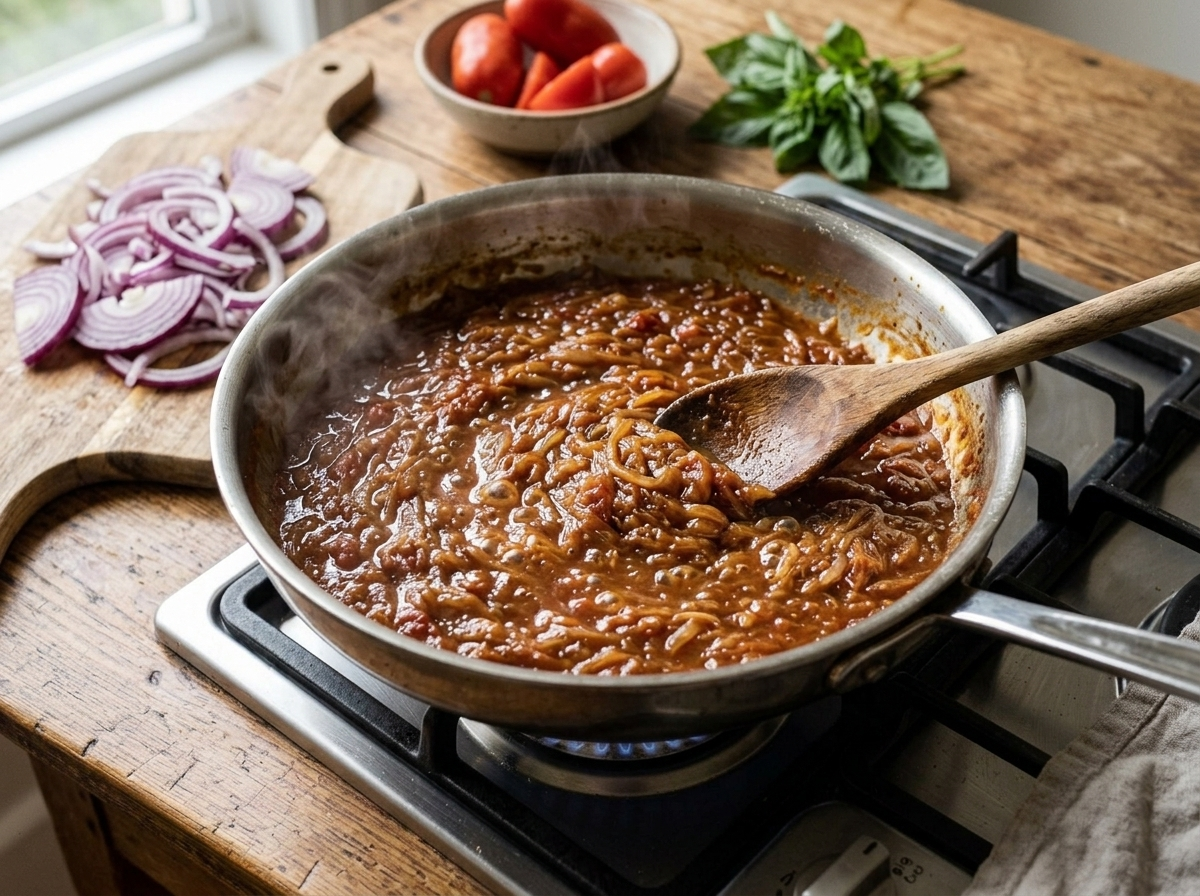
- Cover and cook on low heat for 45-50 minutes, stirring every 10 minutes, until the onions are fully soft and translucent, not browned. If they start to color or stick, lower the heat and add a splash of water.
- Add the chopped tomatoes, sugar, remaining salt, and black pepper. Stir to combine.
- Cook uncovered on low heat for 60-70 minutes, stirring occasionally, until the mixture turns a deep amber-rust color, most of the liquid has reduced, and a thin layer of oil separates at the edges.
- Taste and adjust salt, tear in the basil leaves, and stir through off the heat before serving.
Notes
- Onions should smell sweet, not sharp, by the end of the covered cooking stage.
- Finished friggione should hold its shape on a spoon, not run watery.
- Add a splash of water if the pan looks dry before the onions have softened.
- This dish tastes better after a day in the fridge, plan ahead if you can.
Tips for Success
- Slice onions evenly so they cook at the same rate and melt down together instead of unevenly.
- Keep the heat low the whole time, friggione needs gentle cooking, not a hard simmer.
- Stir every 10 minutes during the covered stage to stop onions from catching on the pan bottom.
- Use ripe, sweet tomatoes in summer or canned whole peeled tomatoes the rest of the year.
- Make a double batch, friggione holds well in the fridge and tastes better the next day.
Variations
- Add a couple of yellow bell peppers with the onions for a version closer to peperonata.
- Stir in a spoon of tomato paste with the chopped tomatoes for deeper color and more concentrated flavor.
- Melt a few anchovy fillets into the oil at the start for a savory, umami-leaning variation.
Storage and Reheating
Store friggione bolognese in an airtight container in the fridge for 4 to 5 days. The flavor actually improves after a day, once the onions and tomatoes have had time to settle together.
Freeze it flat in a freezer bag for up to 3 months. Thaw overnight in the fridge before reheating.
Reheat gently in a skillet over low heat with a splash of water or olive oil, stirring for 5 to 6 minutes until warmed through. A microwave works too, but stir halfway to avoid uneven hot spots.
Serving Suggestions
Friggione bolognese is a classic partner for grilled sausage, pork chops, or bistecca alla bolognese. Spoon it right over the meat while it’s still warm.
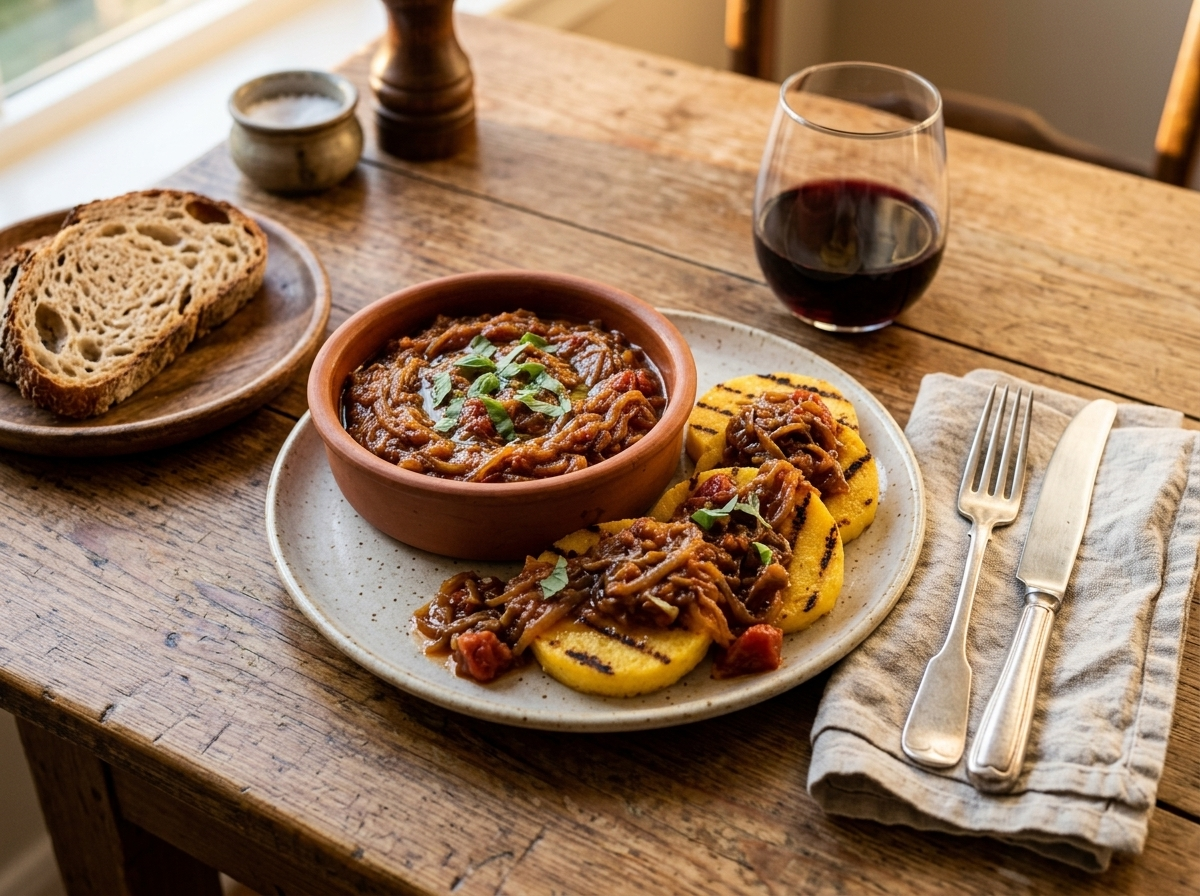
It also works spread on grilled crostini with a shaving of Parmigiano, or stirred through soft polenta for a simple weeknight plate.
For an antipasto spread, set it out with crusty bread, a hard cheese, and a glass of Lambrusco or a light Sangiovese.
FAQ
Why did my friggione bolognese turn bitter and dark instead of sweet?
The heat was likely too high during the covered stage, which browned the onions instead of stewing them gently. Browned onions turn sharp and slightly bitter rather than sweet. Keep the flame low, stir often, and add a splash of water if the pan looks dry or the onions start to color.
Can I use canned tomatoes instead of fresh in friggione bolognese?
Yes, and it’s actually common outside of tomato season. Use whole peeled canned tomatoes, chopped by hand, rather than pre-crushed ones for better texture. Drain off excess liquid first if the tomatoes seem watery, since friggione should reduce down to a thick, jammy consistency.
How long does friggione bolognese keep in the fridge, and can I freeze it?
It keeps 4 to 5 days in an airtight container in the fridge, and the flavor improves after the first day. It also freezes well for up to 3 months in a flat freezer bag. Thaw it overnight in the fridge before reheating gently on the stove.
What goes well with friggione bolognese besides grilled sausage?
Friggione bolognese works well spooned over soft polenta, spread on grilled crostini with Parmigiano, or served alongside a simple omelet. It’s also good on a cheese board with crusty bread and a glass of Lambrusco, since the sweet-savory jam balances hard cheese well.
Is friggione bolognese vegan and gluten-free?
Yes, friggione bolognese is naturally vegan and gluten-free since it’s made from onions, tomatoes, olive oil, and a bit of salt and sugar. Just check what you serve it with, since bread or polenta cakes can bring gluten back into the meal.
What’s the difference between friggione and peperonata?
Friggione is built almost entirely on onions with tomatoes added later, while peperonata leads with bell peppers as the main vegetable. Both are slow-cooked Italian sides with a similar sweet, jammy texture, but the base vegetable and the flavor they produce are different.