Jump to Recipe
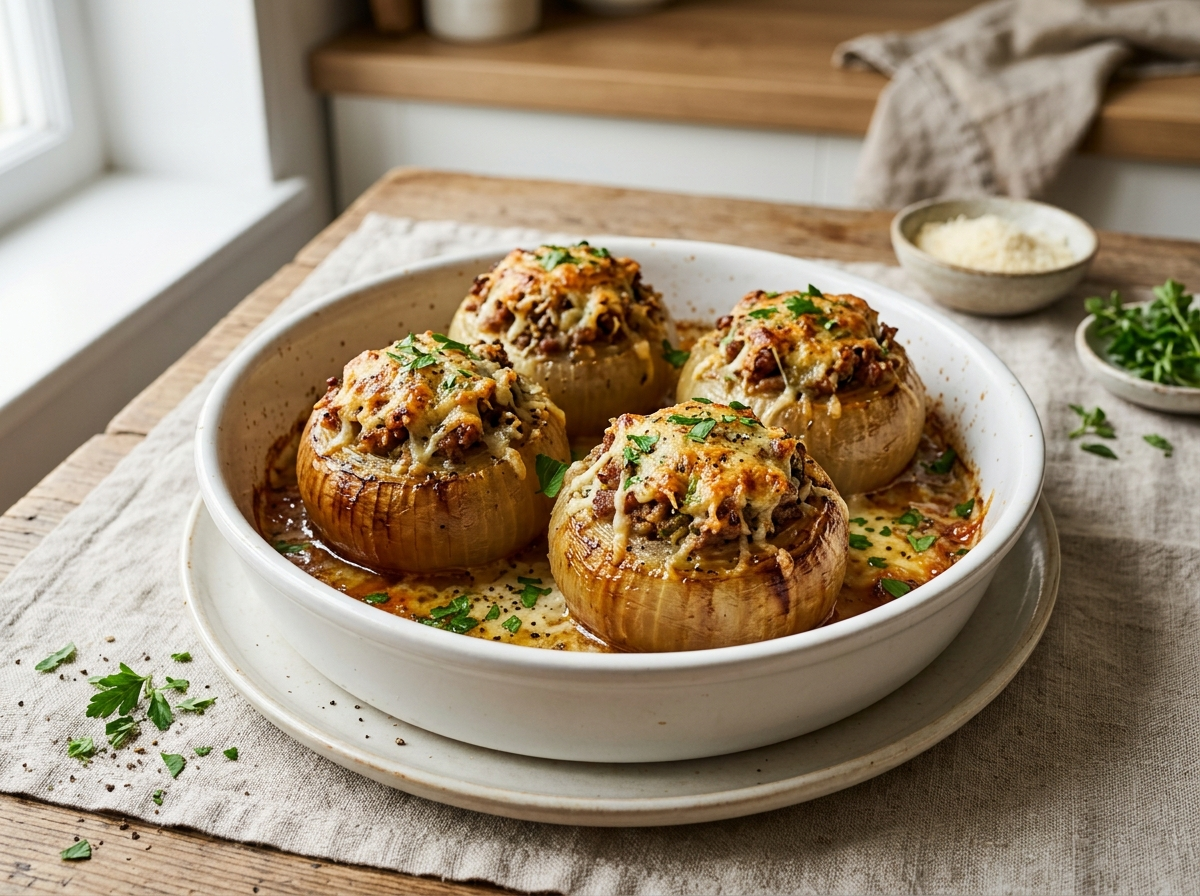
Cipolle ripiene al forno are a classic of Italian home cooking, especially across Piedmont and Emilia-Romagna. Large onions are blanched, hollowed out, stuffed with a mixture of their own flesh, ground meat, bread, and cheese, then baked until the shells are silky and the tops are browned.
This is not a quick weeknight dish, but it is a straightforward one. Most of the work is prep: blanching, scooping, mixing, filling. The oven does the rest.
The filling uses the scooped onion flesh, which keeps the stuffing moist and adds a natural sweetness. You’re not wasting a single part of the vegetable.
Serve them as a substantial starter or a light main alongside a green salad. They hold up beautifully and actually improve if you make them a few hours ahead.
Why You’ll Love This Recipe
- Uses the whole onion – no waste, maximum flavor
- Filling stays moist from the onion flesh itself
- Make ahead and reheat without any quality loss
- Elegant presentation with minimal specialized technique
Ingredient Notes
- Large white or golden onions: Choose onions roughly 250-300 g each so there is enough wall to hold the filling. Red onions work too but turn quite sweet and soft in the oven.
- Ground beef (or a mix of beef and pork): A 50/50 beef-pork mix gives a juicier, more tender filling. You can substitute ground turkey but the result is drier, so add an extra tablespoon of olive oil.
- Stale bread (crumbled or cubed): Stale white bread soaked briefly in milk binds the filling without making it heavy. Breadcrumbs work if you reduce the quantity by about a third.
- Whole milk: Used to soak the bread. Plant-based milk is a neutral substitute here; the small quantity means the difference is undetectable.
- Parmesan (freshly grated): Grana Padano is a budget-friendly swap with almost identical effect. Pre-grated cheese from a bag tends to clump and not melt as cleanly.
- Nutmeg: Freshly grated nutmeg is worth the extra 20 seconds. It rounds the meat filling in a way that pre-ground powder does not.
- Egg: One medium egg binds the filling. If you are making a dairy-free version, it also does some of the work the cheese would otherwise do.
- Dry white wine: A small splash deglazes the pan when cooking the meat and adds depth. Substitute with a few tablespoons of chicken or vegetable stock.
Cipolle Ripiene al Forno (Italian Stuffed Baked Onions)
Ingredients
Method
- Bring a large pot of salted water to a boil. Add the whole, unpeeled onions and blanch for 8 minutes.
- Transfer them immediately to a bowl of cold water and leave for 5 minutes until cool enough to handle.
- Peel the onions, then cut each one in half crosswise through the equator so you have two cups per onion.
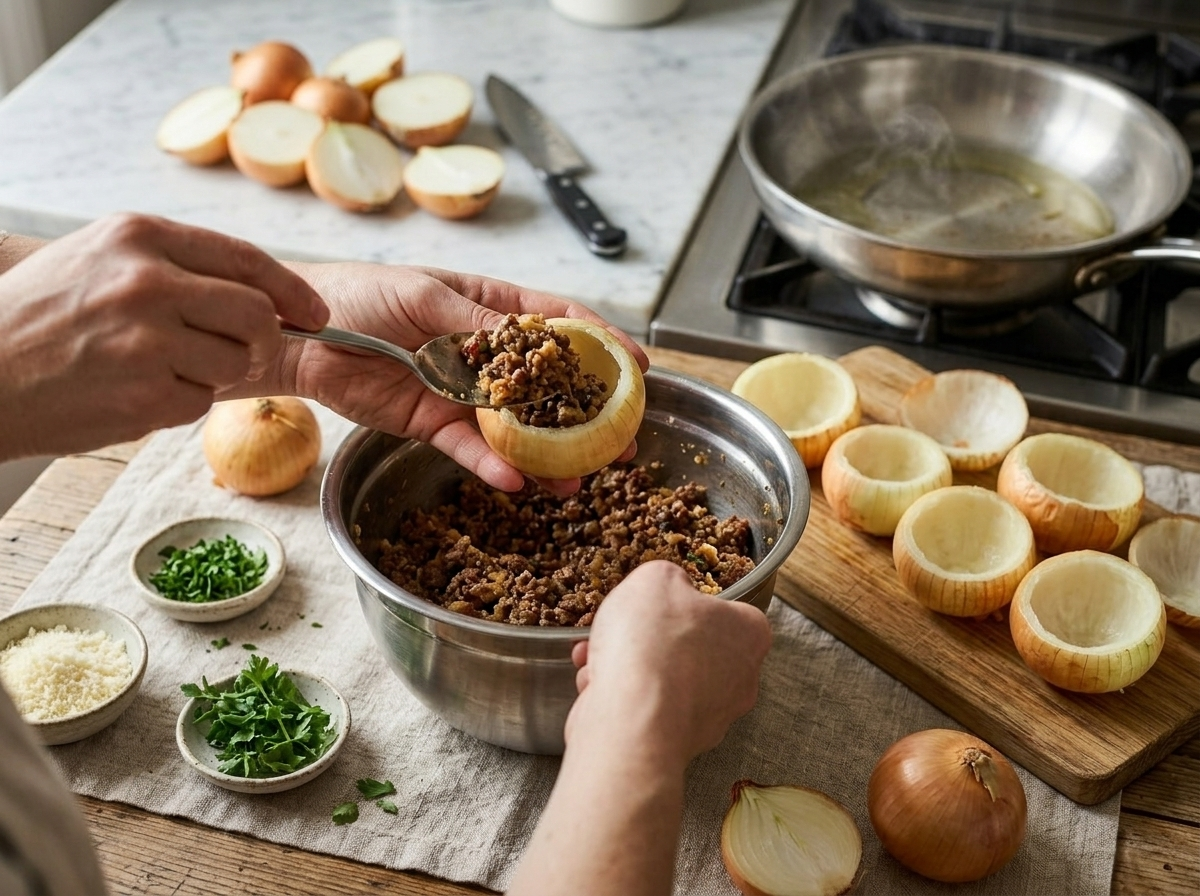
- Using a small melon baller or teaspoon, scoop out the center layers of each half, leaving a shell 2-3 layers thick. Reserve all the scooped flesh. Set the shells in a 9x13 inch baking dish.
- Soak the stale bread in the milk for 5 minutes, then squeeze out the excess moisture and crumble it into a bowl.
- Finely chop the reserved onion flesh. Heat 2 tbsp olive oil in a 10-inch skillet over medium heat, add the chopped onion and garlic, and cook for 6-8 minutes until soft and pale golden.
- Add the ground meat and cook, breaking it up with a wooden spoon, for 5 minutes until no pink remains. Pour in the white wine and let it evaporate for 1 minute. Season lightly with salt and pepper.
- Transfer the meat mixture to a mixing bowl and let it cool for 5 minutes. Add the soaked bread, Parmesan, egg, parsley, nutmeg, remaining salt, and pepper. Mix with a fork until evenly combined.
- Heat the oven to 200 C / 390 F.
- Spoon the filling into each onion shell, pressing it in firmly so it mounds slightly above the rim. Sprinkle the extra 2 tbsp Parmesan over the tops and drizzle with 1 tbsp olive oil.
- Pour 3 tbsp water or white wine into the bottom of the baking dish to prevent scorching.
- Cover the dish tightly with foil and bake for 25 minutes. Remove the foil and bake for a further 15 minutes until the filling is browned on top and the onion shells are completely tender.
- Remove from the oven and rest for 5 minutes before serving. Spoon any pan juices over the onions just before plating.
Notes
Tips for Success
- Blanch onions for exactly 8 minutes so the outer layers soften enough to scoop without tearing.
- Chill the onion shells in cold water immediately after blanching to stop cooking and firm them up.
- Chop the scooped onion flesh finely and cook it with the meat until most moisture evaporates before filling.
- Pack the filling firmly so it doesn’t collapse when sliced, but don’t press so hard you crack the shell.
- Cover the baking dish with foil for the first 25 minutes, then uncover to brown the tops for the final 15 minutes.
Variations
- Vegetarian version: replace the meat with cooked lentils, sauteed mushrooms, and extra Parmesan.
- Sicilian-style: add pine nuts, raisins, and a pinch of cinnamon to the meat filling for a sweet-savory contrast.
- Anchovy and tuna filling: mix canned tuna, capers, breadcrumbs, and a few anchovy fillets for a coastal Italian version.
Storage and Reheating
Cooled stuffed onions keep in an airtight container in the fridge for up to 3 days. The filling firms up a little overnight, which actually makes them easier to slice cleanly.
To reheat, place them in a baking dish with a splash of water or broth at the bottom, cover with foil, and warm at 170 C / 340 F for about 20 minutes. Microwaving works in a pinch but softens the caramelized top.
For freezing, freeze them before baking: fill the raw onion shells, wrap each one individually, and freeze for up to 2 months. Thaw overnight in the fridge and bake as directed, adding 10 minutes to the covered baking time.
Serving Suggestions
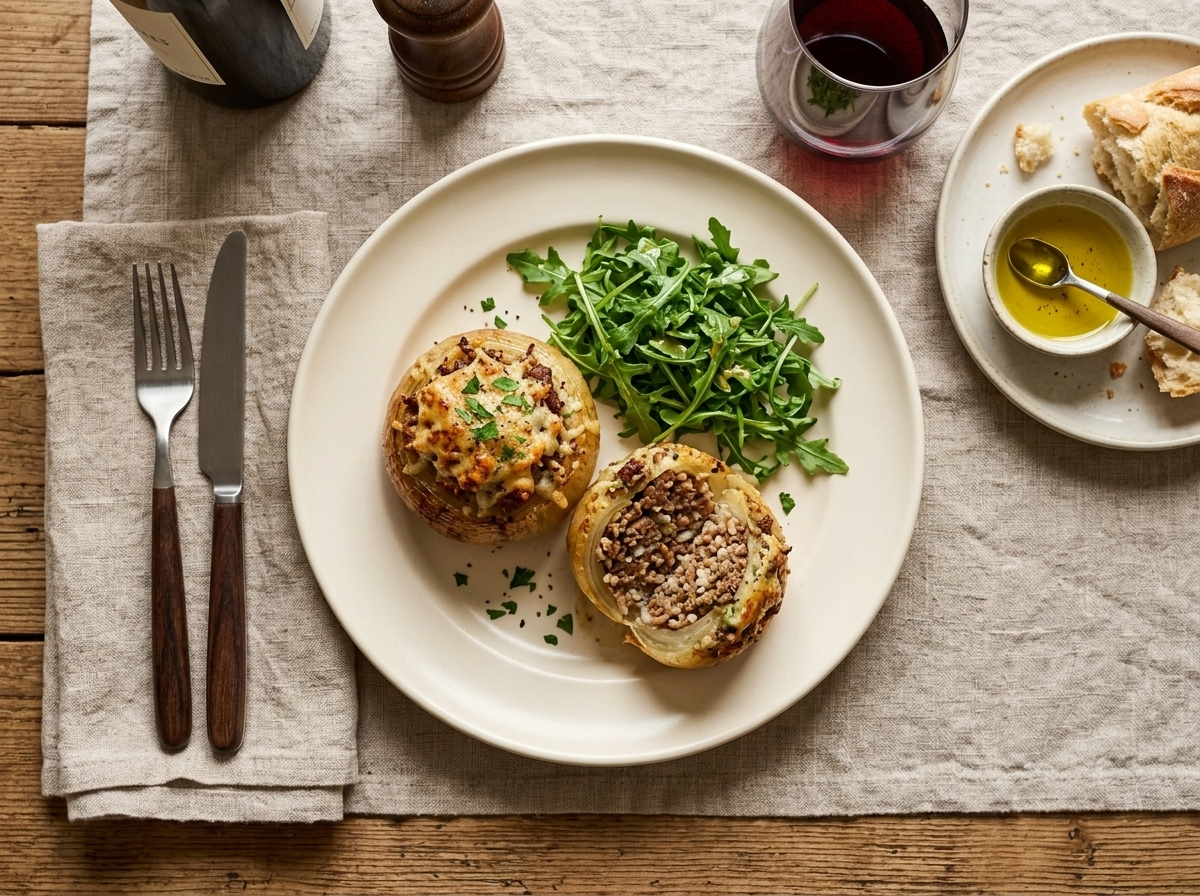
Cipolle ripiene work well as a substantial appetizer before a light pasta like Piedmontese gnocchi with Fontina and cream, or as a main course alongside a bitter green salad dressed simply with olive oil and red wine vinegar. The sweetness of the baked onion asks for something with a bit of acid on the plate.
In Piedmont, they are often served at room temperature as part of an antipasto spread, which makes them practical for gatherings. A small spoonful of good-quality pan juices from the baking dish drizzled over the top adds enough richness without needing a separate sauce.
For a full meal, pair with boiled or roasted potatoes and a glass of Barbera d’Asti or any medium-bodied red with enough acidity to cut through the richness of the meat filling, the way it would alongside thin veal cutlets in lemon butter.
FAQ
Why are my stuffed baked onions falling apart in the oven?
The most common cause is over-blanching, which makes the outer layers too soft to hold the filling during baking. Stick to 8 minutes in boiling water and cool them quickly in ice water to firm up the walls before stuffing.
Can I use red onions instead of white onions for cipolle ripiene?
Yes, red onions work but they become very sweet and quite soft after baking. If you use them, choose firm, dense ones and reduce the blanching time by 1-2 minutes to keep more structure.
Can I stuff and refrigerate the onions the night before baking?
Absolutely. Fill the onion shells, arrange them in the baking dish, cover tightly with foil, and refrigerate overnight. Pull them out 20 minutes before baking so they’re not ice-cold going into the oven.
What does the inside of a properly baked stuffed onion look and feel like?
The onion shell should be completely tender and translucent, almost jammy, while the filling is firm and sliceable with a browned, slightly crunchy top. If the filling still feels wet and loose after 40 minutes, remove the foil and bake 10 more minutes.
Are cipolle ripiene al forno gluten-free?
Not in this version, because the filling includes bread soaked in milk. To make them gluten-free, swap the stale bread for cooked rice or certified gluten-free breadcrumbs and check that your Parmesan is additive-free.
What is the difference between Piedmontese and Roman-style stuffed onions?
Piedmontese cipolle ripiene typically use a meat-based filling with amaretti cookies or breadcrumbs and sometimes a touch of cocoa for depth, while the Roman style — closer in spirit to the bold pantry flavors of anchovy, olive, and caper sauces — leans more toward tuna, capers, and anchovies with no meat at all.