
Jump to Recipe
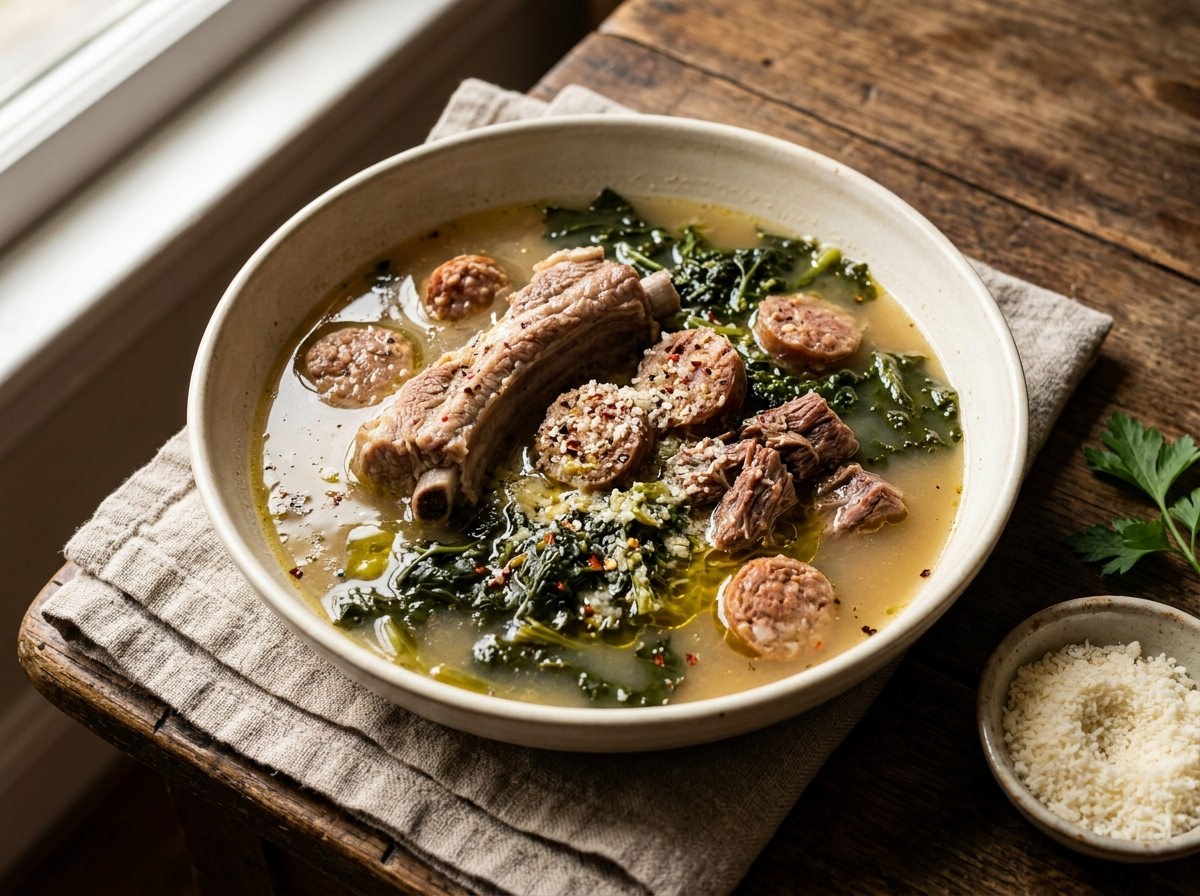
Minestra maritata means ‘married soup’, not because it was served at weddings, but because of the marriage between meat and greens. The two simmer together long enough that neither dominates, and the broth becomes the point.
This is a Campanian winter dish, traditionally made around Christmas and Carnival. Neapolitan families often argue about the greens. Scarola, cicoria, borragine, torzelle – most households use whatever bitter greens the market offers in January.
The meat side is equally flexible. Pork ribs, beef shank, sausage, cotechino, lard-stuffed pork rind – some cooks use all of them, and the slow-cooked pork logic is not unlike Neapolitan ragù with braised pork. I keep this version to three cuts for a weeknight-feasible cook time without losing the layered flavor.
This is not a quick soup. Budget two and a half hours and it will reward you.
Why You’ll Love This Recipe
- Broth deepens in flavor the longer it simmers
- Uses inexpensive cuts that become fork-tender
- Reheats better than almost any other soup
- Scales easily to feed a large winter table
Ingredient Notes
- pork ribs: Bone-in spare ribs give the most gelatin to the broth. You can swap in pork neck bones if ribs are expensive.
- beef shank: Cross-cut shank is ideal for its marrow and collagen. Beef cheek works well as an alternative.
- Neapolitan sausage (salsiccia napoletana): A coarse, fennel-seasoned fresh pork sausage. Any coarse Italian pork sausage is a reasonable substitute.
- scarola (escarole): The most traditional green here. Curly endive or chicory give similar bitterness. Cavolo nero is a fine winter substitute.
- cicoria (dandelion greens): Adds a sharper, more peppery bitterness. You can skip it and double the escarole if unavailable.
- Parmigiano-Reggiano rind: Drop a 5 cm piece of rind into the broth while it simmers. It melts slowly and adds body. Keep rinds in the freezer for exactly this use.
- lard or strutto: Traditional soffritto fat in Neapolitan cooking. Olive oil works fine if you prefer.
Minestra Maritata Napoletana (Neapolitan Wedding Soup)
Ingredients
Method
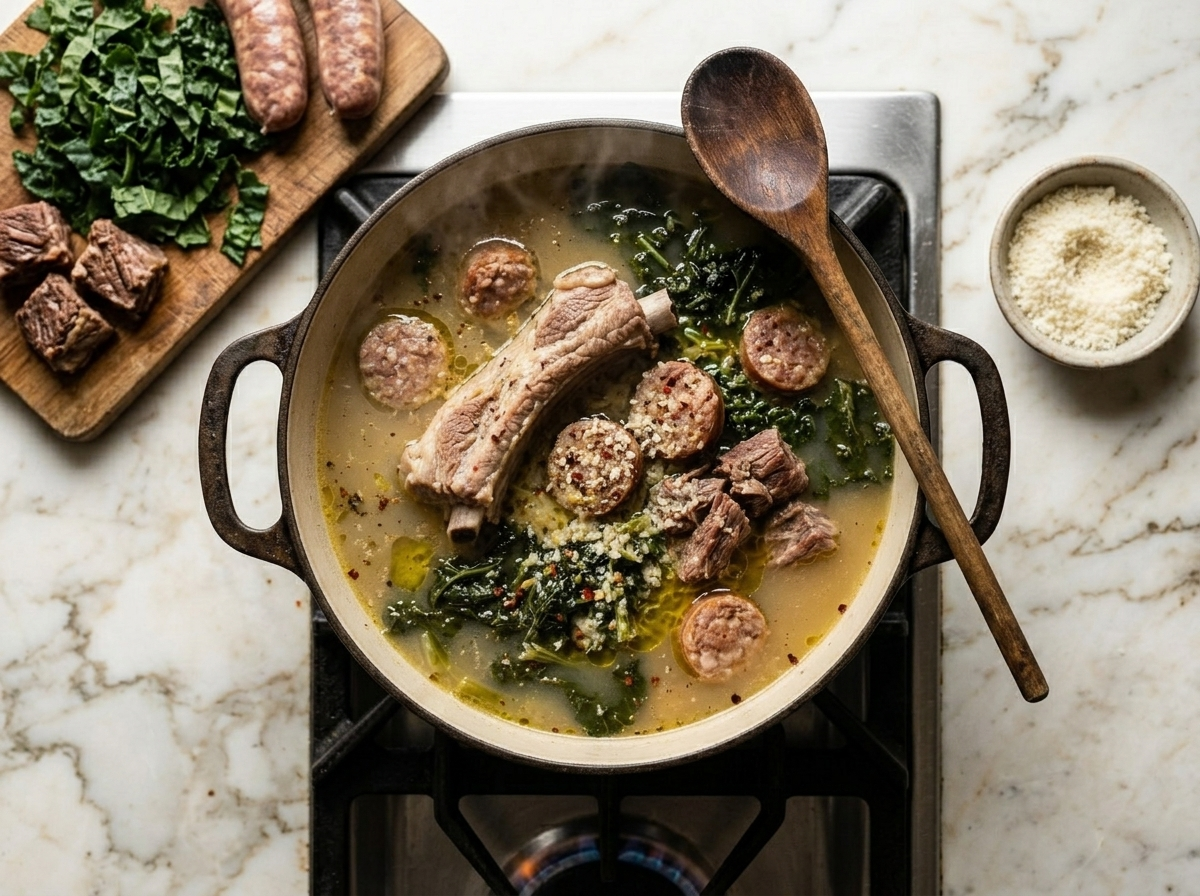
- Heat a drizzle of olive oil in the stockpot over medium-high heat. Add the whole sausages and brown on all sides for about 4 minutes until the casings are golden. Remove and set aside. Do not cook through at this stage.
- Keep any fat in the pot.
- Add the pork ribs, beef shank, and pork skin (if using) to the pot. Pour in 2.5 liters of cold water. The cold start draws impurities out slowly for a cleaner broth.
- Bring to a gentle simmer over medium heat. As soon as grey foam rises to the surface, skim it off with a large spoon. Repeat for 15 to 20 minutes until the foam subsides.
- Add the celery, carrot, onion, bay leaves, peppercorns, and Parmigiano rind. Lower heat to a bare tremble. The surface should barely move.
- Add the browned sausages back to the pot. Simmer uncovered for 1 hour.
- While the broth simmers, bring a separate large pot of salted water to the boil. Blanch the escarole for 4 minutes, then lift out with a slotted spoon and set aside in a colander.
- Blanch the chicory for 3 minutes, then lift out. Blanch the cavolo nero for 5 minutes, then lift out. Gently squeeze excess water from all the greens.
- After 1 hour of simmering, taste the broth and season with sea salt. Continue simmering the meats for a further 30 minutes.
- Lift out the vegetables, bay leaves, peppercorns, and Parmigiano rind with a slotted spoon and discard. Remove the meats to a board. Slice the beef shank off the bone. Cut the sausage into thick rounds. Keep the ribs whole.
- Add the blanched greens to the broth. Return all the meat to the pot. Simmer everything together for 30 minutes until the greens are tender and the broth tastes fully integrated.
- Turn off the heat and rest the soup for 15 minutes. Taste once more for salt. Ladle into deep bowls, making sure each portion has all three meats and a good amount of greens. Finish with a drizzle of olive oil and grated Parmigiano if desired.
Notes
Tips for Success
- Blanch all greens separately in salted water before adding to the broth to control bitterness.
- Skim the grey foam from the broth surface during the first 20 minutes of simmering for a cleaner result.
- Brown the sausage in a dry pan first so it holds together and adds color to the broth.
- Add the blanched greens only in the last 30 minutes so they stay vivid green rather than khaki.
- Rest the finished soup off the heat for 15 minutes before serving so the fat settles and flavors knit together.
Variations
- Add cotechino or zampone in place of sausage for a richer, gelatinous texture traditional at New Year.
- Include pork skin (cotica) rolled around parsley and garlic for extra body and a classic Carnival-era presentation.
- Use only escarole and cavolo nero if torzelle or cicoria are out of season, and increase Parmigiano rind for depth.
Storage and Reheating
Store cooled soup in an airtight container in the fridge for up to 4 days. The broth will gel overnight due to the collagen from the bones, which is normal and a sign of good stock.
Reheat gently on the stovetop over medium-low heat. Add a small splash of water if the broth has thickened too much during storage. Avoid boiling hard, which can make the greens mushy.
This soup freezes well for up to 3 months. Freeze in portions without the greens if possible, then add fresh blanched greens after reheating for best texture.
Serving Suggestions
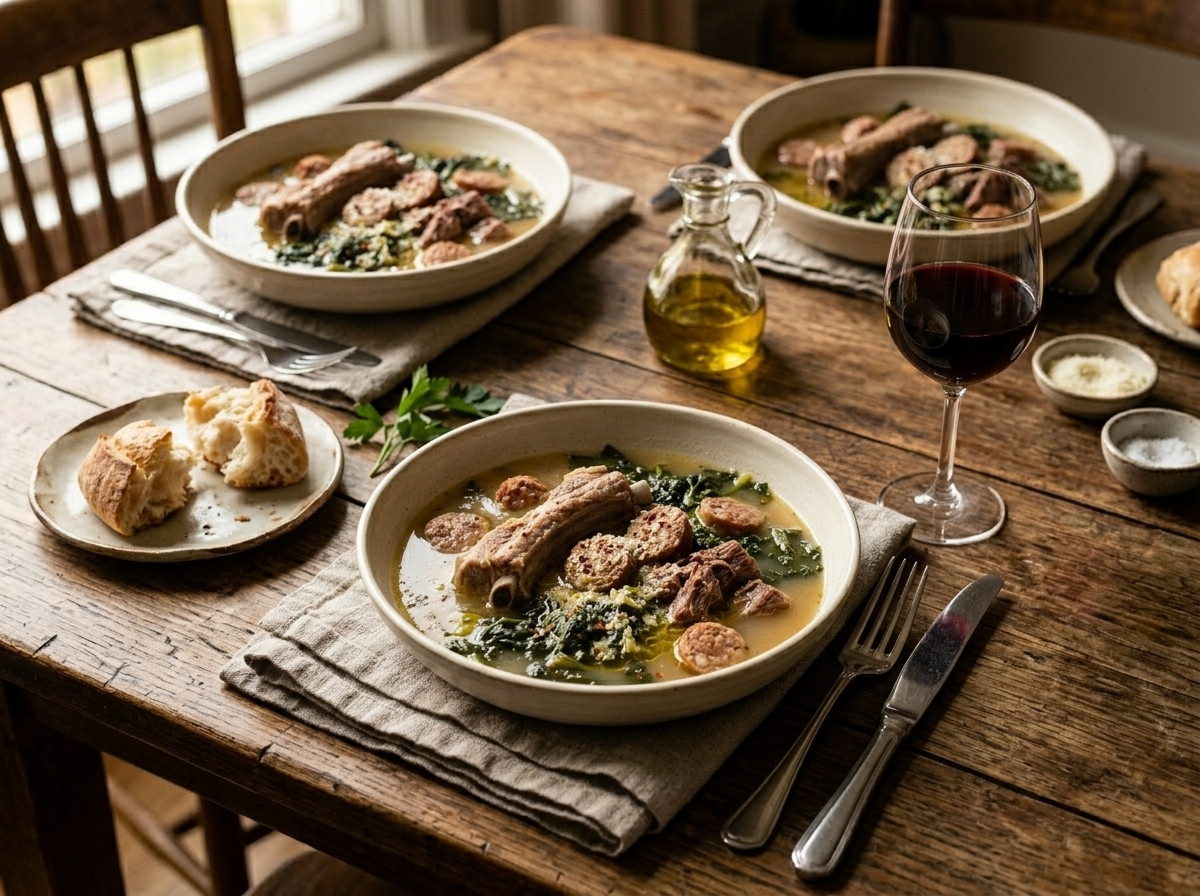
Serve in deep bowls with a piece of each meat type visible. A drizzle of good olive oil and a scattering of grated Parmigiano on top are the standard finish. Crusty Neapolitan pane di casa on the side for soaking the broth is non-negotiable, or serve it alongside a baked Neapolitan calzone if you want something more substantial.
At a traditional Neapolitan table, minestra maritata is a first course (primo) served before a main. The braised meats can be lifted out and served separately as a secondo with mustard or a green sauce.
A glass of Aglianico or Piedirosso – both Campanian reds – pairs naturally with the bitter greens and fatty pork. If you want something lighter, a dry Falanghina cuts through the richness well.
FAQ
Why does my minestra maritata taste too bitter?
The bitterness usually comes from greens that were not blanched long enough before going into the broth. Blanch escarole and chicory for 3 to 5 minutes in well-salted water, then squeeze out the liquid before adding to the soup. This removes harsh compounds while keeping flavor.
Can I use kale instead of escarole in this Neapolitan soup?
Cavolo nero (Tuscan kale) is a reasonable substitute and is actually used in some regional versions, much as bitter greens anchor dishes like Neapolitan sausage and broccoli rabe pizza. Curly kale works in a pinch but is tougher, so blanch it a minute or two longer before adding to the broth.
Can I make minestra maritata the day before serving?
It tastes noticeably better on day two once the broth has had time to absorb flavor from the meat and greens. Cook it fully, cool it uncovered, then refrigerate overnight and reheat gently before serving.
What cut of pork gives minestra maritata the richest broth?
Bone-in pork ribs or pork neck bones give the most gelatin and body to the broth. If you add a piece of pork skin alongside them, the broth will have a slightly silky texture that is harder to achieve with lean cuts.
Is minestra maritata the same as Italian-American wedding soup?
They share a name but are quite different dishes. Minestra maritata napoletana uses large braised meat cuts and bitter greens in a clear broth, while Italian-American wedding soup typically features tiny meatballs, pasta, and spinach. The Neapolitan original has no meatballs and no pasta.
Is minestra maritata gluten-free?
The soup itself contains no flour or pasta, so it is naturally gluten-free. Check the sausage label to confirm it contains no breadcrumb filler, which some brands include.