
Jump to Recipe
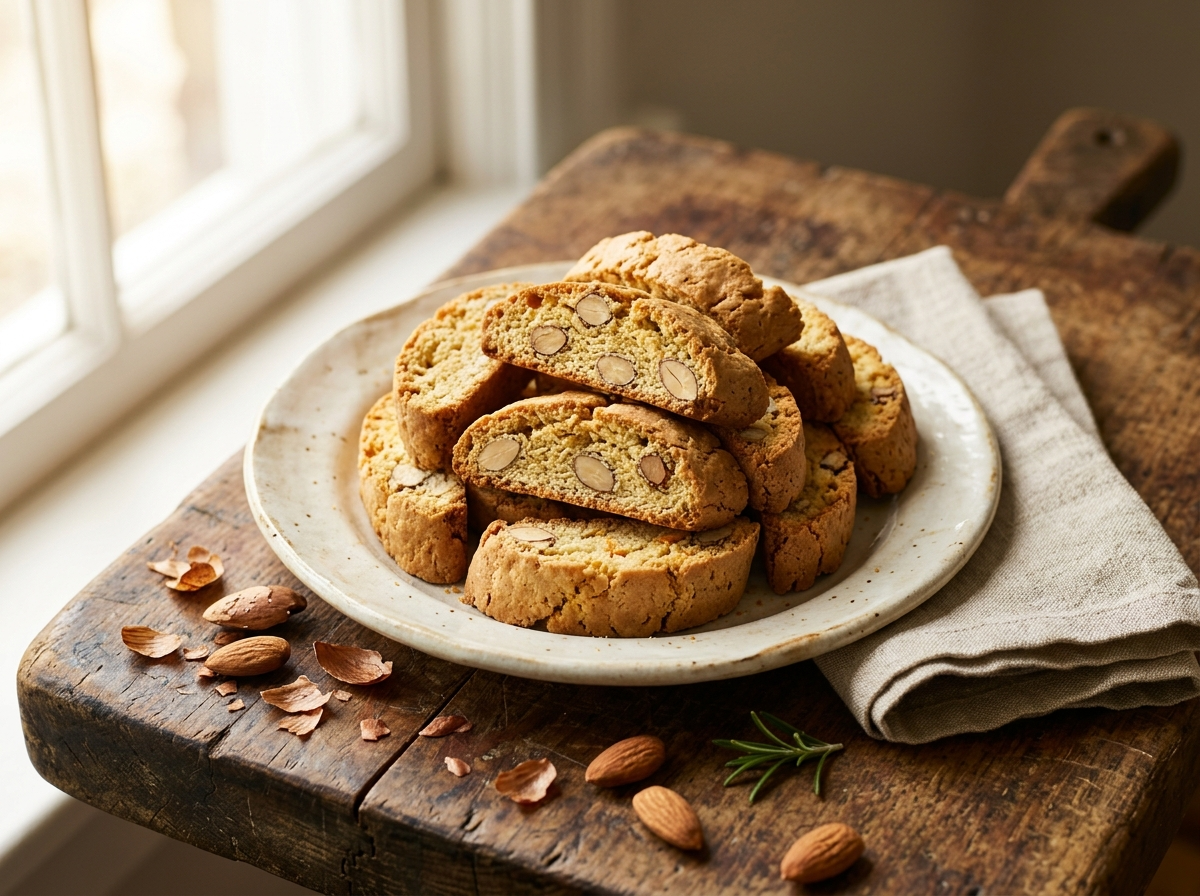
Cantucci are the hard, twice-baked almond cookies from Prato in Tuscany. They’re not chewy. They’re not soft. The whole point is that dry, snappable texture that holds up when you dip them into Vin Santo or a strong espresso.
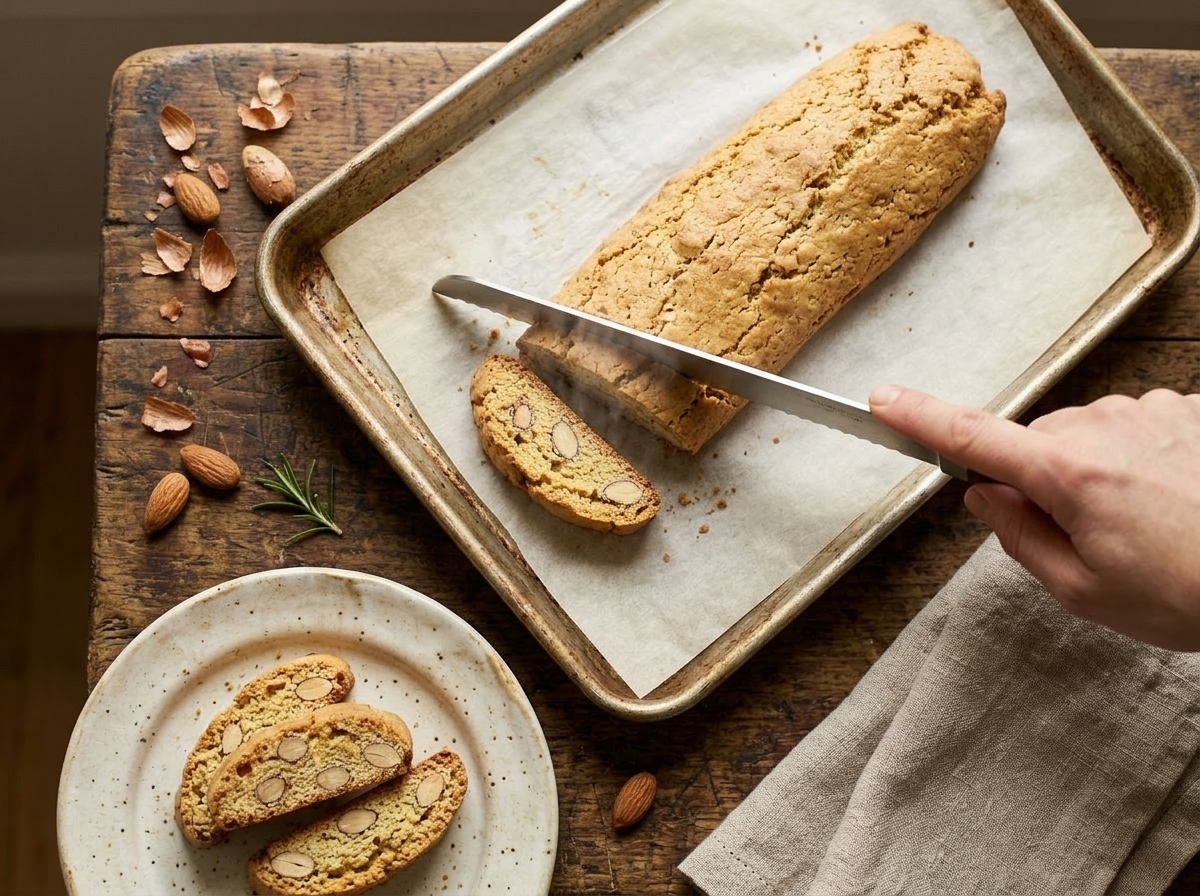
The recipe has very few ingredients, but the technique matters more than the list. You shape the dough into flat logs, bake them once until firm, slice them on the diagonal while still warm, then bake the slices a second time to drive out the moisture.
Whole, skin-on almonds are traditional and give a slightly bitter, roasted note that blanched almonds can’t match. Orange zest brightens the dough without sweetening it further.
These keep for weeks in a tin, which makes them one of the most practical things you can bake. One batch goes a long way.
Why You’ll Love This Recipe
- Keeps up to three weeks, making it ideal for gifting
- Only one bowl and basic pantry ingredients needed
- Double-bake technique is straightforward and forgiving
- Whole almonds add real texture and roasted depth
Ingredient Notes
- 00 flour or plain flour: Italian 00 flour gives a slightly more tender crumb, but plain all-purpose flour works just as well. Do not use self-raising flour as it will puff the loaf unevenly.
- whole skin-on almonds: Skin-on almonds are traditional and add a slightly bitter note that balances the sugar. Blanched almonds work but produce a milder, less interesting biscotto.
- caster sugar: Caster sugar dissolves more easily into the eggs than granulated. If you only have granulated, it’ll still work, just whisk a little longer.
- eggs: Use large eggs at room temperature. The eggs are the only fat and liquid in this dough, so they carry a lot of structural weight.
- orange zest: Zest from one medium orange is enough. Lemon zest works as a substitute and gives a sharper, more citrus-forward note.
- anise seeds or anise extract: Traditional cantucci from Prato include anise. Use half a teaspoon of seeds or a few drops of extract. Leave it out if you dislike the flavor, it’s optional but authentic.
- baking powder: Just a small amount lifts the dough slightly so the logs aren’t too dense to slice cleanly. Do not increase the quantity or the texture becomes cakey.
Cantucci Biscotti Recipe (Tuscan Almond Twice-Baked Cookies)
Ingredients
Method
- Heat the oven to 180 C / 355 F. Line a large baking sheet with parchment paper.
- Whisk the 3 whole eggs and caster sugar in a large bowl for 2 to 3 minutes until the mixture is pale and slightly thickened.
- Add the orange zest and anise seeds (if using) to the egg mixture and stir to combine.
- Sift in the flour, baking powder, and salt. Stir with a wooden spoon until a rough, sticky dough forms.
- Add the whole almonds and mix until they are evenly distributed through the dough.
- Lightly flour your hands. Divide the dough into two equal portions and shape each into a flat log roughly 25 cm / 10 inches long and 4 cm / 1.5 inches wide. Place both logs on the prepared baking sheet with at least 5 cm between them.
- Mix the egg yolk and milk to make an egg wash. Brush the tops and sides of both logs evenly.
- Bake at 180 C / 355 F for 25 to 28 minutes until the logs are golden brown, firm to the touch, and a skewer inserted in the center comes out clean.
- Remove from the oven and let the logs rest on the tray for 10 minutes. Keep the oven on but reduce the temperature to 150 C / 300 F.
- Using a sharp serrated knife, cut each log diagonally into slices about 1.5 cm / 0.5 inch thick with a single firm stroke.
- Lay the slices cut-side down on the baking sheet in a single layer. Bake at 150 C / 300 F for 15 to 18 minutes, turning them over once halfway through, until both cut faces are dry and pale gold.
- Transfer the cantucci to a wire rack and let them cool completely before storing. They will crisp fully as they cool.
Notes
Tips for Success
- Wet your hands lightly before shaping the logs to prevent the sticky dough from tearing.
- Slice the logs at a 45-degree angle while still warm, not hot, to reduce crumbling.
- Space slices cut-side down on the tray so both flat surfaces dry evenly in the second bake.
- Pull the slices from the oven when they look pale gold, not brown, they crisp further as they cool.
- Store only once completely cold, residual warmth creates moisture inside the tin and softens the biscotti.
Variations
- Add 80 g dark chocolate chips and replace orange zest with lemon zest for a chocolate-citrus version.
- Swap almonds for whole pistachios and add half a teaspoon of ground cardamom for a Sicilian-inspired variation.
- Use toasted hazelnuts and a tablespoon of unsweetened cocoa powder in the dough for a darker, nuttier biscotto.
Storage and Reheating
Store cantucci in an airtight tin or glass jar at room temperature. They keep well for up to three weeks and often taste better after a day or two once the texture fully sets.
Do not refrigerate them. The humidity in a fridge softens the crunch quickly and dulls the flavor.
To refresh cantucci that have absorbed any moisture, spread them on a baking sheet and bake at 150 C / 300 F for 8 to 10 minutes. Let them cool completely before storing again.
Serving Suggestions
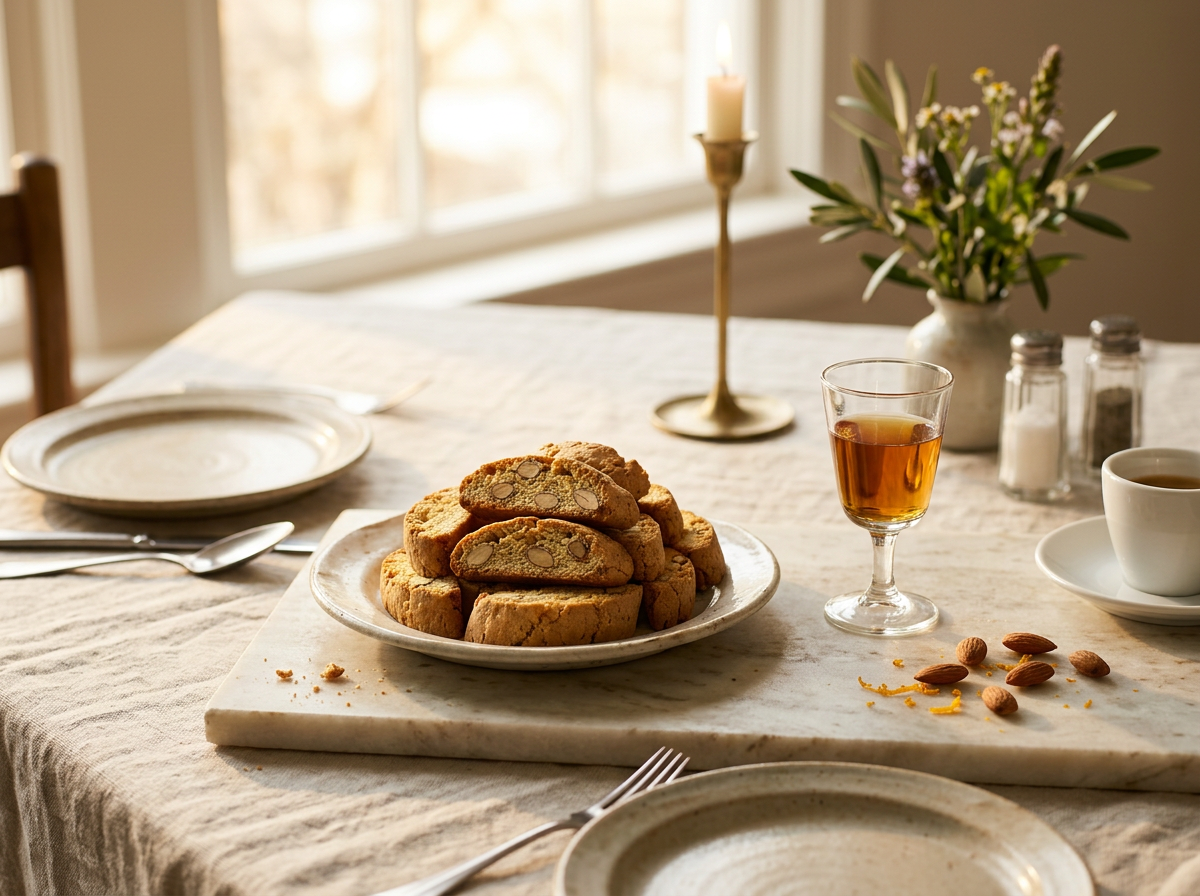
The classic pairing is a small glass of Vin Santo, the amber Tuscan dessert wine. You dip the cantucci briefly, let the wine soak into the cut face for a few seconds, then eat. It’s a simple ritual but a good one.
Strong espresso or a macchiato works just as well for an afternoon break. The bitterness of the coffee cuts through the sweetness of the biscotto in a way that milky coffee doesn’t.
For a composed dessert plate, serve two or three cantucci alongside a small scoop of vanilla gelato or a wedge of aged pecorino and a drizzle of honey, much like the contrast you get on a plate with a light Italian ricotta cheesecake. The contrast between hard cookie and soft cheese is worth trying.
FAQ
Why are my cantucci crumbling when I slice them?
The logs are probably too hot or too cool when you cut them. Slice about 10 minutes after the first bake, when the log is warm but no longer steaming. A sharp serrated knife and a firm, single-stroke cut also help keep slices clean.
Can I use blanched almonds instead of skin-on almonds in cantucci?
Yes, blanched almonds work fine. The texture is identical, but you lose the slightly bitter, roasted flavor that skin-on almonds contribute. Toasting the blanched almonds lightly in a dry pan before adding them to the dough helps compensate.
How do I know when the second bake is done?
The slices should look dry and pale gold on the cut faces, not brown. They’ll still feel slightly soft in the center when warm, which is normal. They firm up to a full crunch as they cool on the tray, so don’t overbake chasing hardness in the oven.
Can I freeze cantucci biscotti after baking?
You can freeze them in a sealed bag for up to two months. Thaw at room temperature for an hour, then refresh in a 150 C / 300 F oven for 8 minutes to restore the crunch. Freezing the unbaked logs before the first bake also works well.
What is the difference between cantucci and biscotti?
Cantucci are the specific almond cookies from Prato in Tuscany, a region whose baking traditions are as distinct as those behind a Trentino apple strudel in the north. Biscotti is simply the Italian word for cookies or twice-baked items, so cantucci are a type of biscotto. Outside Italy, the term biscotti is commonly used to refer specifically to this style of hard, almond-studded cookie.
Are cantucci suitable for a dairy-free diet?
Yes, traditional cantucci contain no butter, milk, or cream. The dough is built entirely on eggs, flour, sugar, almonds, and flavoring, so the recipe is naturally dairy-free as written.