
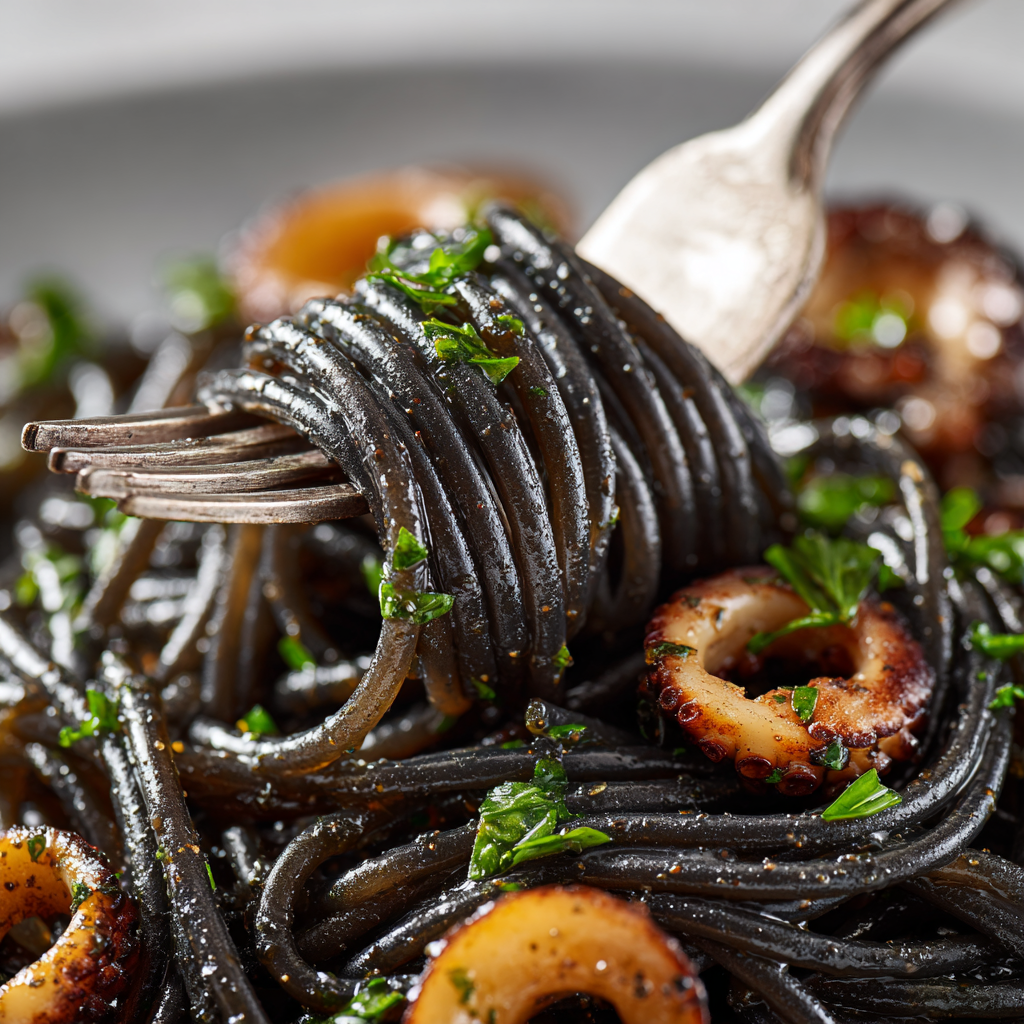
Jump to Recipe
I learned this pasta al nero di seppia recipe standing beside my nonna, watching bright hands turn simple seafood into a dramatic, jet-black dish that everyone asks for at dinner.
The squid ink gives a silky, savory umami and a color that feels theatrical but never pretends—its briny depth lifts long noodles and leaves a clean, luxurious mouth feel.
I usually buy squid and separate ink sachets at a trusted fish counter or Spanish deli, freeze extras, and treat baby squid as my go-to for quick tenderness—about 15 minutes when braised, up to 45 for larger pieces.
In this introduction I’ll be your mentor: clear cues for texture, quick handling tips for stubborn stains, and simple swaps so you can make this at home any weeknight without losing authentic Venetian charm.
Key Takeaways
- Squid ink adds deep umami and a silky finish—use sparingly for balance.
- Buy ink sachets and freeze extras; squid often sells cleaned without the sac.
- Small squid braise in ~15 minutes; larger ones may need up to 45 minutes.
- Choose long noodles and a wide pan so the sauce reduces evenly.
- Simple tweaks—more parsley or a touch of tomato—adapt the flavor for family tastes.
Why this squid ink pasta is our family favorite—and what to expect
When I serve this squid ink dish, the room leans forward—curiosity meets comfort in a midnight-black bowl. It looks dramatic, but the taste is quietly precise.
Squid ink brings a briny, umami note that is never fishy. Any strong smell from the sachet fades during cooking, leaving a clean ocean hint that lifts seafood without masking it.
Texture matters as much as flavor. The ink enriches the sauce so it clings and gives a satin finish in the mouth. Properly cooked squid becomes tender in minutes, not rubbery, when you respect gentle simmering and timing.
- The first thing you’ll notice is the color: glossy, midnight-black that clings to each strand and signals depth without heaviness.
- The balance comes from restraint: a bit of heat, a splash of wine, and just enough ink to tint and season without overwhelming.
- This dish dresses up for guests and feels right for a quiet weeknight dinner; it pairs well with a crisp salad or a glass of dry white.
- If you fall for this flavor, try a sister course like squid ink risotto—the same briny profile shines a different way.
Authentic pasta al nero di seppia (restaurant-quality at home)
Ingredients you’ll need: squid, a few squid ink sachets, olive oil, garlic, peperoncino, parsley, white wine, spaghetti, salt.
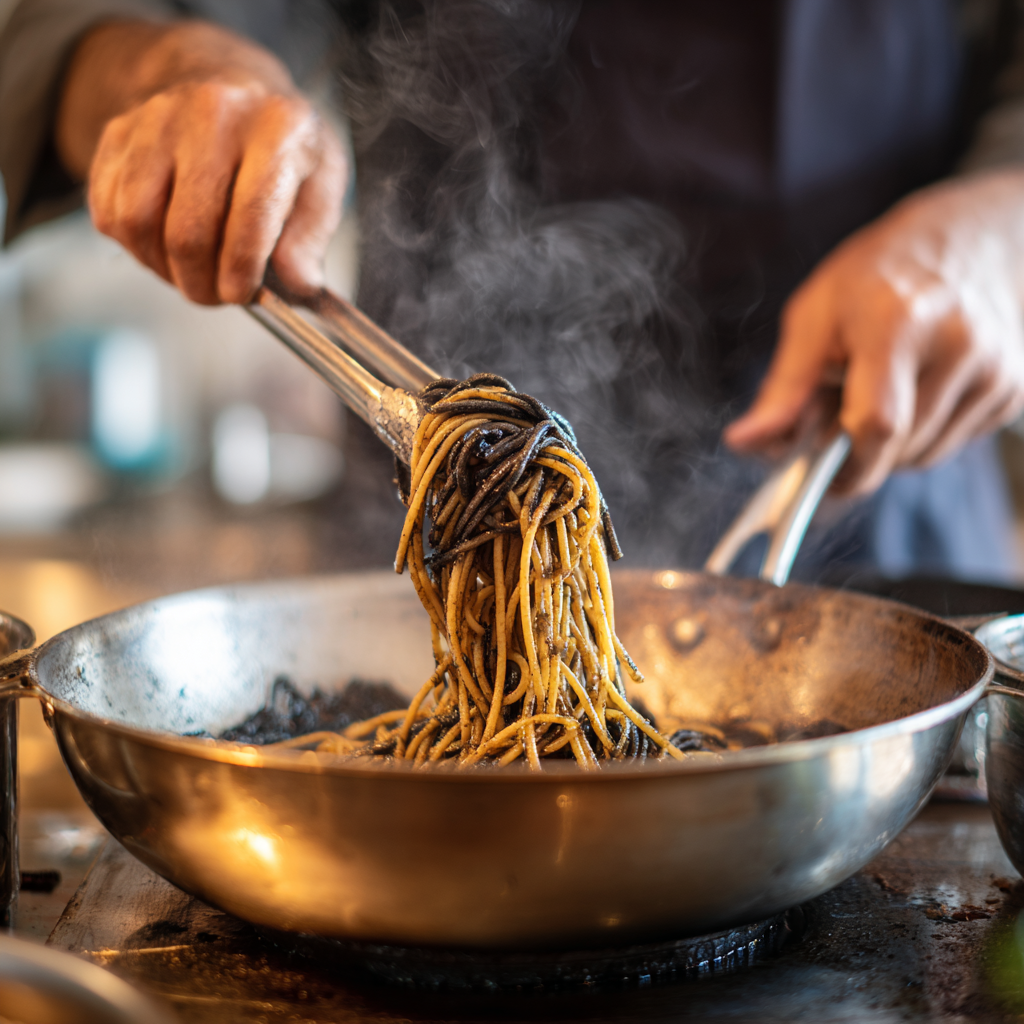
Gear check: a wide pan, a large pot for salted water, tongs, and a ladle for starchy water. These tools make tossing and emulsifying simple.
Step-by-step:
- Prep the squid first: remove any beak and cut small into thin strips and short tentacle lengths so pieces cook evenly.
- Heat olive oil in the wide pan over medium. Add chopped garlic, parsley, and peperoncino; sauté until garlic just turns pale gold.
- Add squid, stir to coat, then splash in white wine and a pinch of salt. Cover and braise gently—about 15 minutes for baby squid, up to 45 minutes for larger pieces—until tender.
- When soft, loosen the ink with a drizzle of water if needed, then add squid ink and simmer until the sauce is glossy and thick enough to coat a spoon.
- Boil spaghetti in well-salted water until just shy of al dente. Transfer pasta to the pan with a ladle of starchy water and toss until the sauce clings.
Timing that matters: taste a piece after the shorter time; tender means soft, not bouncy. Finish the noodles in the sauce so they absorb flavor without overcooking.
Pro tips: snip a corner of each sachet to control flow and avoid drips. Wipe spills immediately—ink stains fast. Store extra sachets in the fridge or freezer; they thaw quickly. In the US, buy ink sachets from Spanish delis or online if your fishmonger omits the sac.
Variations worth trying: stir in a spoon of tomato passata for roundness, or grill tentacles for a smoky garnish. Swap in linguine or tagliatelle when you want a wider strand.
Prefer to make squid ink pasta dough from scratch?
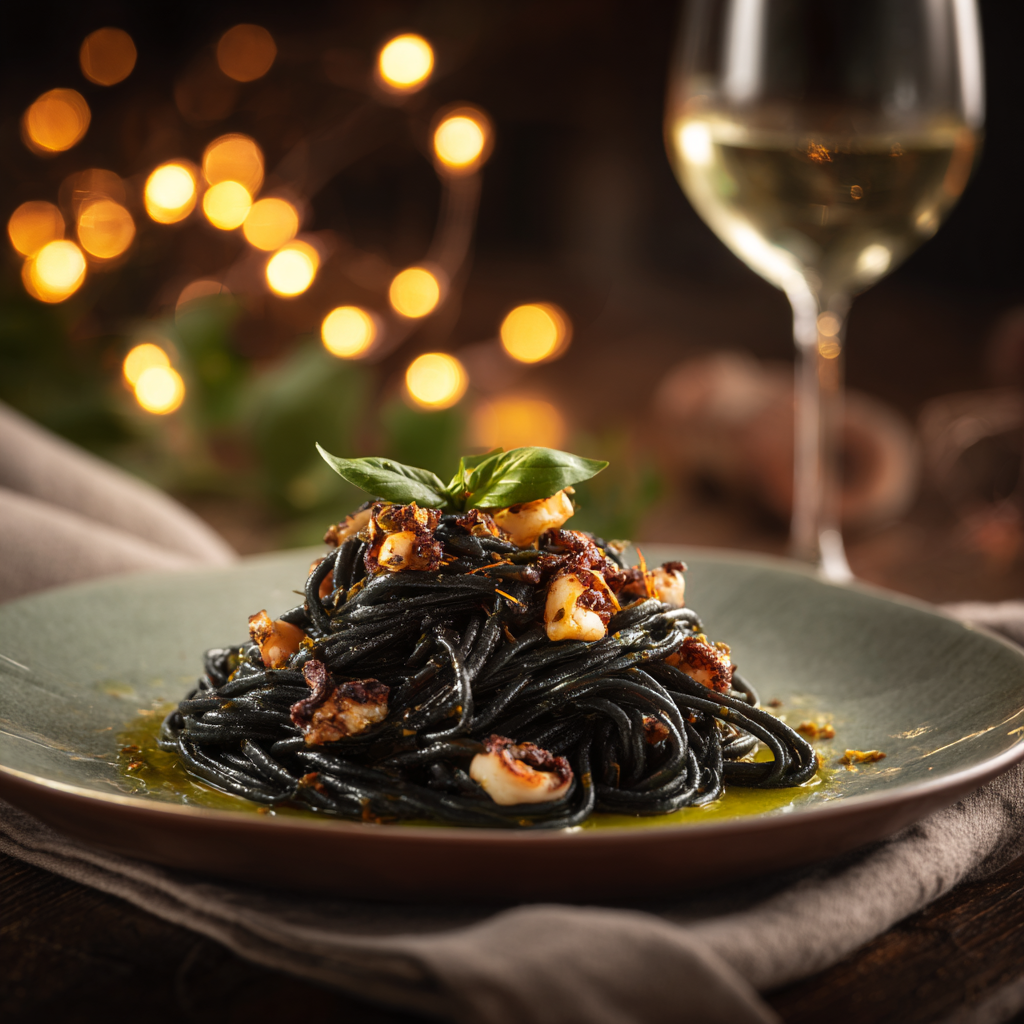
If you like a hands-on approach, making inked dough at home is a joyful, tactile way to connect with this coastal tradition. The formula is simple: flour, large eggs, about a tablespoon of squid ink, a tablespoon of olive oil, and a pinch of salt.
I whisk the eggs and ink first so the color disperses evenly. Then I form a well of flour on a clean surface, pour the mixture into the center, and draw flour in with a fork until a shaggy mass forms.
Simple dough method
Switch to your hands and knead at least five minutes. You want smooth, elastic dough that isn’t sticky. Wrap it and rest for about 30 minutes so the gluten relaxes — this makes rolling easier and gives a tender bite.
- Machine: flatten a quarter of dough and pass from the widest setting down to around #5. Keep sheets lightly dusted.
- By hand: roll to a thin, almost see-through sheet, fold like a loose accordion, and slice into even strips.
- Cook: bring a large pot of salted water to a lively boil. Fresh ink pasta cooks fast — about 3 minutes — so have your sauce warm and ready.
- Finish: move pasta straight from the pot to the pan. A ladle of starchy water helps the sauce emulsify and cling for a silky finish.
- Freeze: lay nests on a tray, freeze, then bag. Drop frozen nests into boiling water and add a minute if needed.
Rolling, cutting, and cooking in minutes
Texture cues matter: the dough should feel springy and slightly tack-free. Sheets should be fairly transparent at setting #5. Cut strips evenly so they cook at the same time.
One last tip: keep a spoon of white wine or a splash of oil on hand to brighten a quick pan sauce. If you prefer visuals, cue a short video before you start — seeing texture and thickness makes the process effortless.
Conclusion
This dish rewards a little patience: tender squid, glossy black ink, and perfectly al dente spaghetti make a memorable dinner.
You now have two clear paths—classic stovetop sauce with squid and a dark, fresh dough that yields striking homemade pasta. Keep tenderness front and center with slow, gentle heat for the squid and a quick boil for fresh strands.
Work neatly with ink: chill sachets, protect surfaces, and finish the pan with a splash of starchy water so the sauce shines. Grill tentacles for a smoky garnish or try a tomato twist for added savor.
Make a bit extra and reheat gently; the flavor deepens. Save this guide and trust your senses—when the sauce is glossy and the bite is right, you’ve nailed it. Buon appetito.
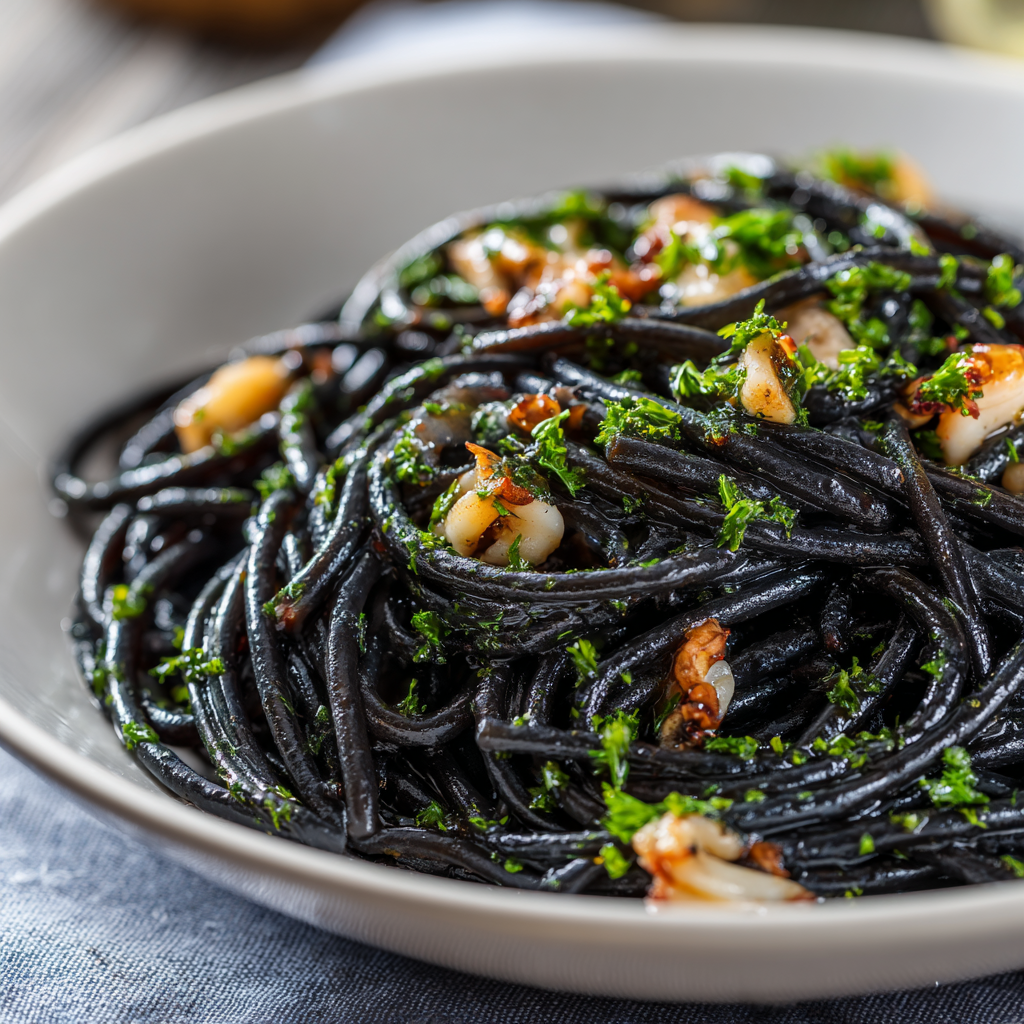
Pasta al Nero di Seppia (Squid Ink Pasta)
Ingredients
Method
- Clean and slice squid into thin strips and short tentacle pieces. Remove the beak if still attached.
- Heat olive oil in a wide pan over medium heat. Add garlic, parsley, and peperoncino. Sauté until the garlic turns pale gold.
- Add squid pieces, stir to coat, and pour in white wine. Add a small pinch of salt. Cover and simmer gently — about 15 minutes for baby squid, up to 45 minutes for larger ones — until tender.
- Loosen ink sachets by snipping a corner. Stir in the ink and a drizzle of water if needed. Simmer until the sauce becomes glossy and thick enough to coat a spoon.
- Cook spaghetti in well-salted boiling water until just shy of al dente.
- Transfer pasta to the pan with the sauce. Add a ladle of starchy pasta water and toss until the sauce clings smoothly to the noodles.
- Taste, adjust salt, and finish with a drizzle of olive oil and fresh parsley. Optional: grill a few tentacles and place on top as garnish.
Notes
- Handle squid ink carefully — it stains easily. Wipe spills right away.
- Small squid are more tender and cook faster.
- If the sauce tastes too strong, balance it with a splash of white wine or a spoonful of tomato passata.
- Use long noodles like spaghetti or linguine so the black sauce coats evenly.
- Leftovers keep for up to 2 days; reheat gently with a splash of water or wine.