
Jump to Recipe
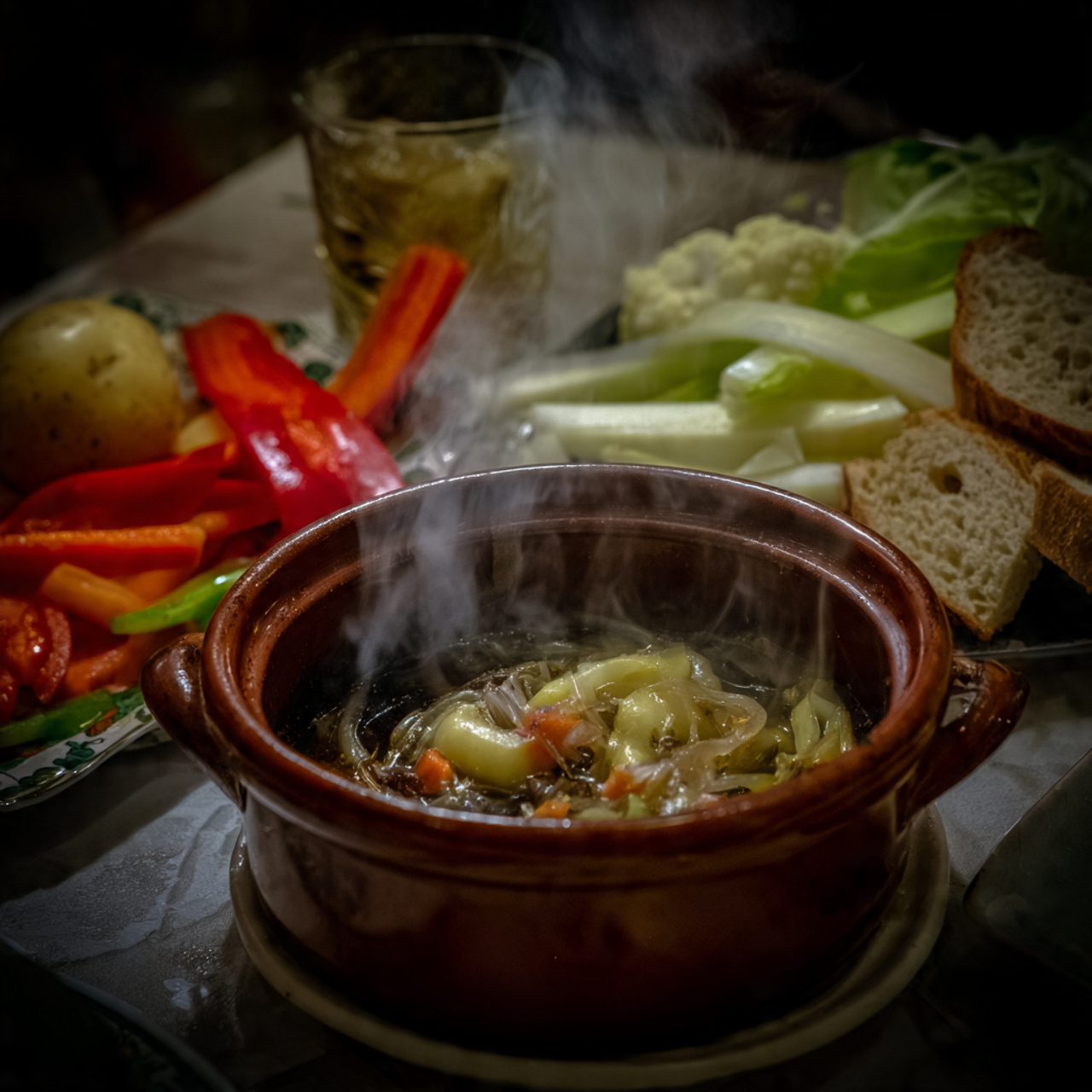
I set a small terracotta pot in the center of our table, the warm steam and gentle garlic scent pulling people close. The sauce glows with olive oil and melted anchovies, and everyone reaches for bread and crisp vegetables like it’s a familiar ritual.
At home in my kitchen I focus on gentle heat so the garlic softens and the anchovies disappear into a silky sauce that tastes of the Piedmont region. Quality ingredients—good anchovies, cold-pressed olive oil—make the difference between harshness and the deep, balanced flavor we love today.
This is a dish meant for sharing: talk, wine, and easy laughter while dipping, not fuss. I’ll guide you through the simplest, most authentic steps to bring that family table feeling to yours.
Key Takeaways
- Use low, gentle heat so garlic sweetens and anchovies melt into the oil.
- Choose high-quality anchovies and extra-virgin olive oil for best flavor.
- Serve communally in a terracotta pot or fondue set for the true experience.
- The name means “hot sauce” in the Piedmontese dialect and is rooted in region tradition.
- Leftovers keep 2–3 days; reheat slowly to preserve texture and taste.
Why this Piedmontese “hot sauce” belongs at your table today
There’s a particular magic when a single warm pot anchors a room and conversation slows to match its gentle rhythm. In my kitchen the dish becomes a shared event: a communal meal where friends and family reach for bread and crunchy vegetables and linger over wine.
What it is and how to enjoy it with people you love
Originating in the harvest gatherings of the Piedmont region, the sauce was never meant to be rushed. Diners spear raw or lightly steamed vegetables, dip into the warm bath, and trade stories between bites. When my husband and I host, we place the pot where everyone can reach it and invite a slow pace.
Flavor profile: bold, savory, and balanced
The taste is salty and deeply savory from good anchovies, rounded by mellow garlic and quality olive oil. With high-grade anchovies the sauce is never aggressively fishy; it gives umami that lifts vegetables and bread. Over the years locals have treated this dish as celebration more than trend—centerpiece, not side.
Try a related twist like bagna cauda pasta when you want the same communal flavor on a weeknight table.
Ingredients that make or break a bagna cauda
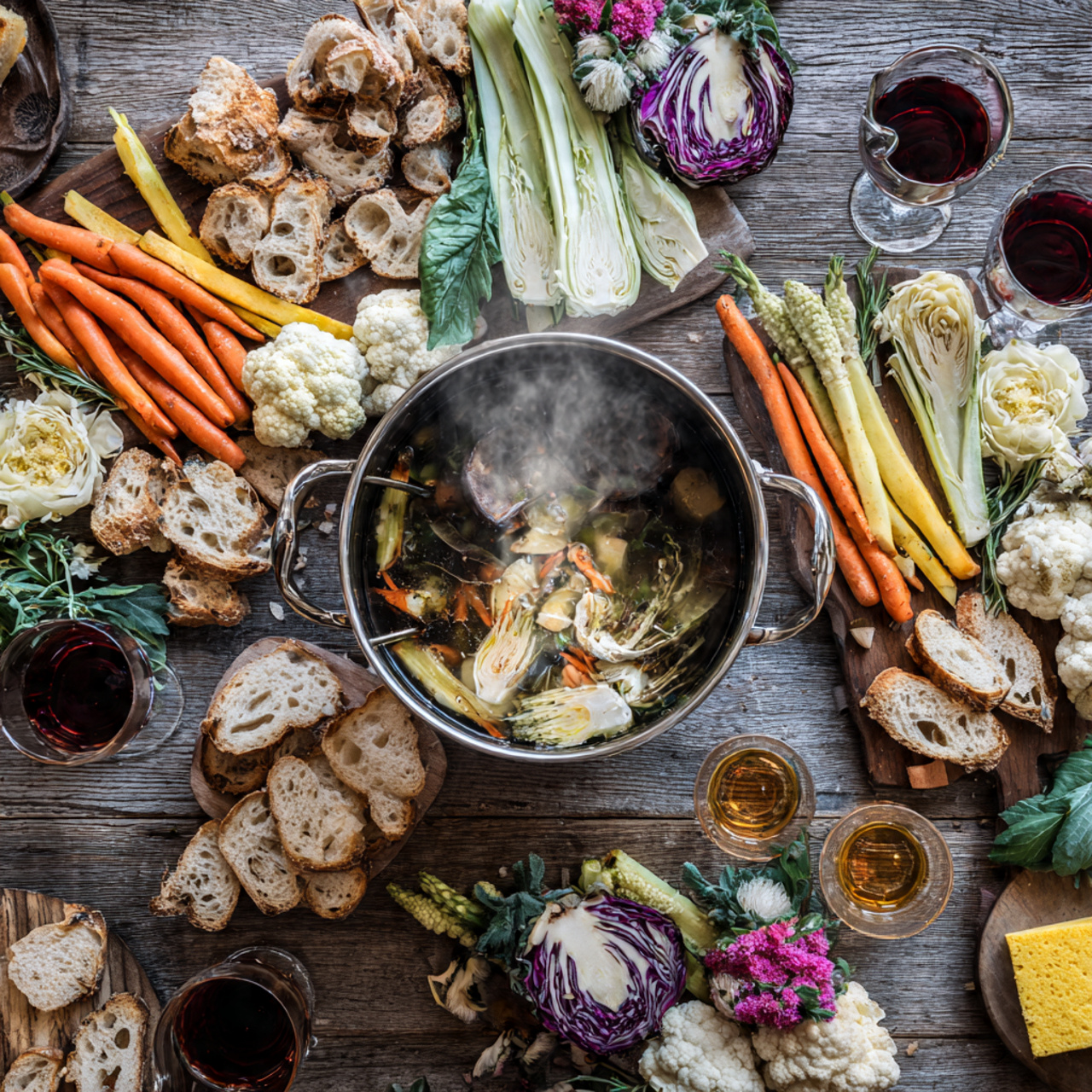
Good ingredients make a simple pot feel like a feast; I start there every time. With only a few parts, each choice matters. Below I cover how I pick and prep the four essentials so your sauce stays balanced and bright.
Oil: extra virgin vs. virgin olive oil
I favor extra virgin olive for fruitiness and structure, but a fresh virgin olive oil will work if it tastes clean. Never use an oil that smells flat or bitter. Start with about a half cup and add more if the sauce tightens while cooking.
Anchovies: salted or jarred
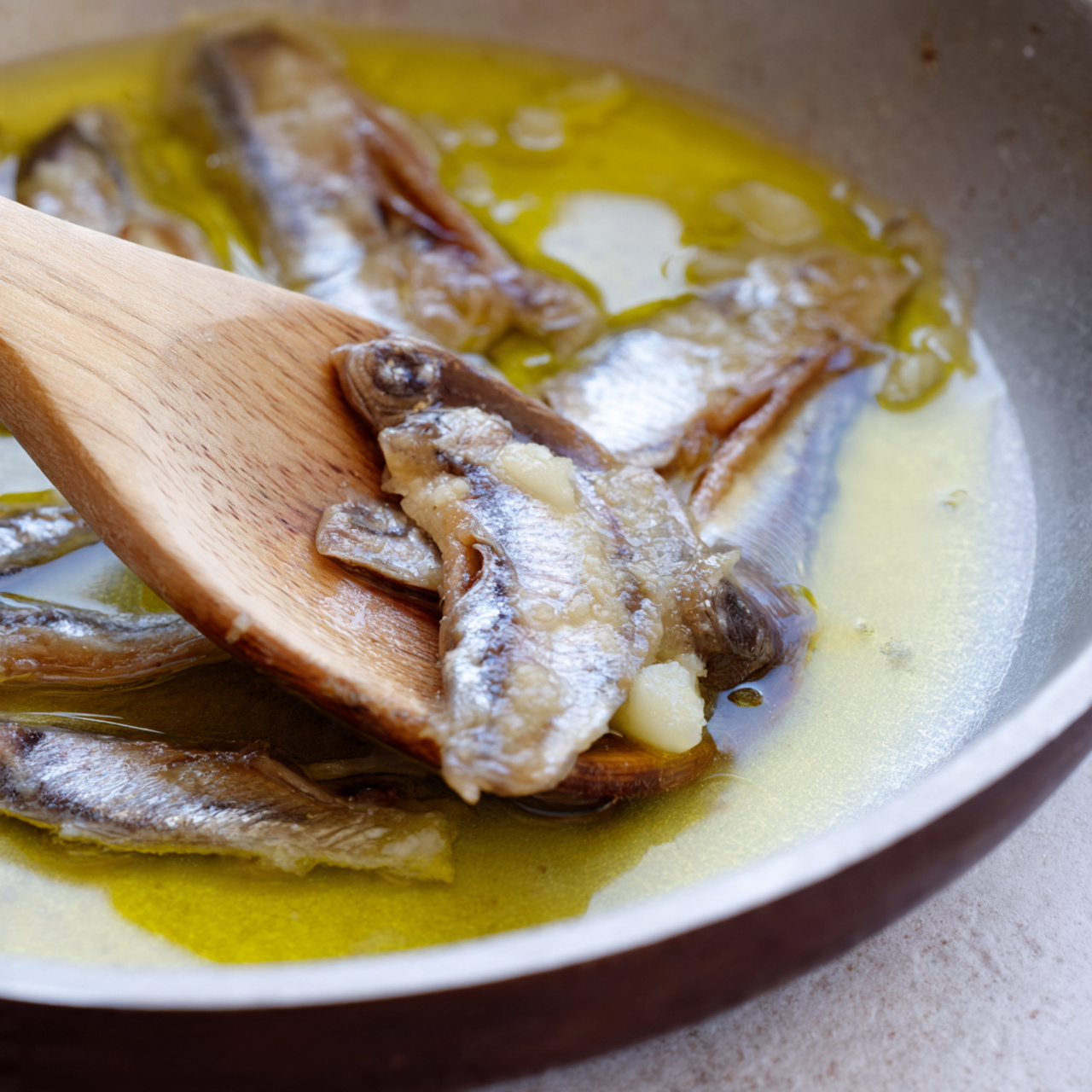
Salted anchovies give unrivaled umami once desalinated. Soak them 10–20 minutes, rinse, then debone. High-quality fillets packed in oil are an excellent shortcut for home cooks.
Garlic per person and handling
The old rule is one head garlic per diner; scale down if you prefer milder flavor. Remove the green bud to avoid bitterness. For sensitivity, simmer cloves in milk or roast heads for a sweeter, softer profile.
Butter and cream: finishers, not fixes
Butter adds silk—use a pat at the end. A splash of cream is a modern tweak some like, but many skip it. Keep heat low and gentle to preserve texture and depth.
| Ingredient | Choice | Prep Tip | Why it matters |
|---|---|---|---|
| Olive oil | Extra virgin or virgin olive oil | Taste first; start with 1/2 cup | Base flavor and mouthfeel |
| Anchovies | Salted or jarred fillets | Desalt 10–20 min or use high-quality fillets | Primary umami |
| Garlic | Raw, milk-poached, or roasted | Remove green bud; roast for sweetness | Drives pungency and aroma |
| Finish fat | Butter or cream (optional) | Add a pat of butter at end; cream sparingly | Smooths and rounds the sauce |
Bagna cauda traditional recipe: step-by-step, low and slow
Start at the burner with cold oil and calm hands; that gentle approach shapes every bite. Place a cold pan on low heat, pour in extra virgin olive or a neutral oil, then add sliced garlic with the green bud removed.
Warm slowly until garlic becomes translucent but not browned. Stir often; moving the cloves prevents hot spots and keeps the flavor clean. This low heat gives time for the garlic to perfume the oil without burning.
- Anchovies: Desalt salted fillets 10–20 minutes, rinse briefly with water or red wine if you like, then add to the pan. Use the back of a spoon to work them until they dissolve into the oil and form a smooth sauce.
- Simmer: Maintain a gentle simmer—no sizzling or frying—so the elements marry. If the mixture tightens, loosen with a splash more oil.
- Finish: Remove from direct heat and stir in a small pat of butter for shine, or add extra oil for a lighter finish. Taste at the end and adjust with time, not haste.
- Pro move: Roast whole heads of garlic until caramel-soft, then squeeze cloves into the pan for a sweeter, milder base.
| Step | Action | Why it matters | Timing guide |
|---|---|---|---|
| Start cold | Cold pan, add oil and sliced garlic | Prevents browning, preserves sweet garlic flavor | 1–3 minutes warming, low heat |
| Anchovies | Desalt, rinse, melt into oil | Builds deep umami without flakes | 2–4 minutes to dissolve |
| Simmer | Keep gentle, no frying | Protects texture and balances taste | 5–10 minutes, watch closely |
| Finish | Add butter or more oil off heat | Smooths and brightens the sauce | 30 seconds to blend |
How to serve it like a local: vegetables, bread, and the warm “bath”
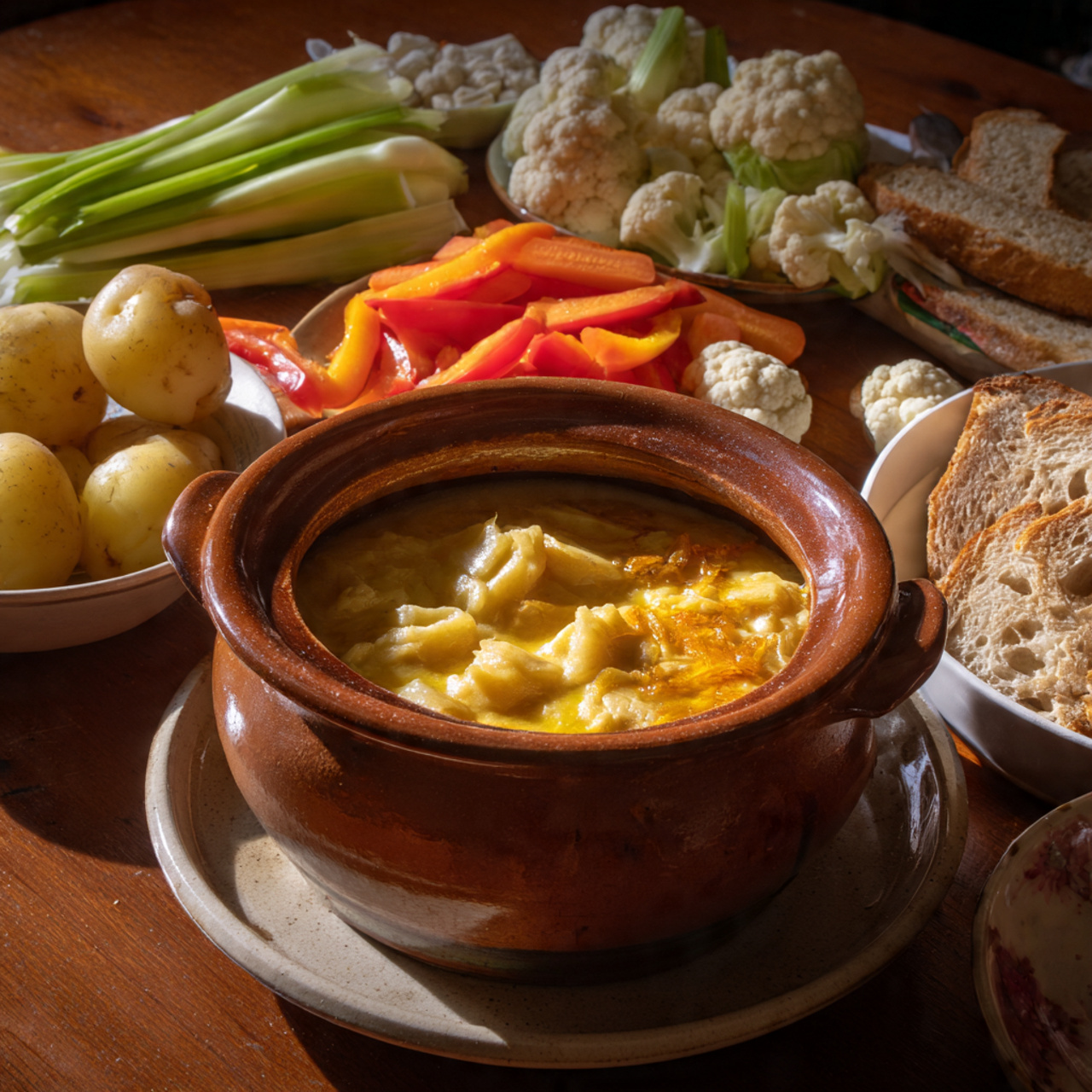
Place the heating pot in the center and let the spread—bread, polenta, vegetables—invite people to lean in. Keep the sauce gently hot in a terracotta fujot, a dian or s-cionfetta, or use a fondue pot that holds steady heat without scorching.
Arrange bright platters of vegetables: fennel, sweet bell peppers, cauliflower florets, carrots, celery, cabbage, and marinated artichokes. Offer boiled potatoes and slices of creamy polenta for those who love a heartier bite.
Choose crusty bread with chew and structure so it soaks up olive oil and the savory bath without falling apart. I give each guest a small plate and napkin, then we all dip from the shared pot for that communal feel. My husband always adds roasted peppers to the spread—simple, lovely, and very Piedmont.
- Keep the pot warm on the table; refill platters as needed.
- Offer small cups of extra oil for guests who want more shine.
- For wine, pour Dolcetto d’Alba for fruit, Barbera for bright acid, or Nebbiolo for structure and spice.
| Vessel | Heat control | Best for | Note |
|---|---|---|---|
| Terracotta fujot | Low, even | Classic table service | Keeps sauce warm without burning |
| Dian / s-cionfetta | Very gentle | Small gatherings | Traditional shape, great for centerpieces |
| Fondue pot | Adjustable | Larger groups | Good heat control, easy to source |
| Small saucepan (with stand) | Monitored | Casual home meal | Use a tea light or low flame to avoid scorching |
Roots, dialect, and tradition: what “bagna càuda” really means
In Piedmont kitchens, a single warm pot once marked the end of harvest work and the start of shared stories. The name comes from the local dialect: “bagna” means sauce and “càuda” means hot. That naming tells us the act of heating and sharing is as important as the taste.
From cucina povera to notarized guidance
The dish traces back to the Middle Ages and grew from cucina povera, when families pooled small stores after harvest. Across the years it endured because it was practical, nourishing, and social rather than trendy.
- In 2005 the Delegazione di Asti of the Italian Academy of Cuisine formalized an authoritative recipe, noting careful technique over show.
- Their directions stress removing the garlic’s green bud, desalting and rinsing anchovies, and keeping the mixture from frying while it simmers.
- Knowing this history helps you cook with purpose and serve with pride; each cook still adds a gentle, respectful touch.
| Aspect | Origin or Action | Why it matters | Practical tip |
|---|---|---|---|
| Dialect | “Bagna” = sauce, “càuda” = hot | Names reveal how heat and sharing define the dish | Serve warm in a communal pot |
| Roots | Middle Ages, cucina povera | Created from necessity after harvest | Use simple, quality ingredients |
| Codification | Asti Delegation, 2005 | Preserved technique and integrity over time | Follow slow cooking and desalting steps |
| Practice | Gentle simmer, remove green bud | Prevents bitterness and preserves texture | Keep heat low and stir often |
Make-ahead, storage, and clever leftovers
Prepare the warm pot earlier in the day and reclaim the evening for people, not the stove. Cooling and storing the sauce properly keeps flavor intact and gives you time to enjoy a relaxed meal with family.
Refrigeration and reheating: keeping the sauce hot without frying
Cool the sauce to room temperature, then seal it in an airtight container and refrigerate for 2–3 days. Freezing is not typical; textures change and the oil can separate.
- Reheat in a small pan over low heat, stirring constantly so oil and solids re-emulsify without sizzling.
- If bubbles race or you hear aggressive crackling, lower the flame—your pan is too hot.
- A pat of butter or a little extra oil can smooth a chilled batch and return it to silky form.
Leftover magic: spesso della bagna with eggs, pasta, and pizza
The concentrated residue at the bottom—spesso della bagna—is a prized part of leftovers. Fold a spoonful into scrambled eggs for a weekend treat.
Leftovers also wake up quickly on pasta: toss hot pasta with spoonfuls of sauce and a splash of cooking water. Brush the mixture onto pizza dough before baking for an easy, flavorful twist.
| Storage | Timeframe | Best reheating | Best reuse |
|---|---|---|---|
| Sealed container, fridge | 2–3 days | Small pan, low heat, stir constantly | Scrambled eggs, pasta |
| Short-term warm | During service | Fondue burner or terracotta with tea light | Keep for dipping vegetables and bread |
| Chilled and tight lid | Do not freeze recommended | Add butter or oil to loosen | Brush on pizza dough, finish roasted vegetables |
Conclusion
When slow heat and quality anchovies meet, the kitchen becomes a living room of flavor. This bagna cauda is about patience, good olive oil, and simple care at the stove.
Choose extra virgin olive or a clean virgin olive oil, pick top salted anchovies or fillets, and measure garlic per your crowd—one head for lovers of boldness, less if you prefer mild. Finish with a pat of butter or a splash of cream only if it suits your table.
Serve with abundant vegetables, crusty bread, polenta, and a bright Barbera or Dolcetto. Keep the sauce gently warm, reheat low and slow, and let the meal turn into the kind of evening we return to again and again.
I can’t wait for you to try it at home; start simple, honor quality ingredients, and enjoy the conversation that follows.
Bagna Càuda
Ingredients
Method
- Place a small pan on the stove cold. Add the olive oil and the sliced garlic.
- Heat on low. Let the garlic soften until translucent but never brown. Stir often.
- If using salted anchovies, soak them 10–20 minutes in cool water, rinse, pat dry, and remove bones. Jarred fillets can go in as is.
- Add the anchovies to the warm garlic oil. Use the back of a spoon to mash them until they dissolve into the oil and form a smooth sauce.
- Keep the heat low. Do not fry or sizzle. Let the mixture gently bubble for 5–10 minutes. Add a splash more oil if it tightens.
- Remove from direct heat and stir in a small pat of butter. Add a splash of cream only if you prefer the creamier modern style.
- Pour the sauce into a terracotta pot, fondue pot, or small vessel that can stay warm with a candle or low flame.
- Dip fresh vegetables, crusty bread, or soft polenta. Keep the sauce warm but never hot enough to fry.
Notes
- Keep the heat gentle from start to finish. High heat ruins the flavor.
- Use the best anchovies you can find. They make the biggest difference.
- If someone is sensitive to garlic, you can simmer the cloves in milk first or roast whole heads for a sweeter flavor.
- Leftovers keep 2–3 days in the fridge. Reheat very slowly so the oil and garlic don’t fry.
- The leftover “spesso” (thicker bits at the bottom) is gold: stir into eggs, pasta, or spread on pizza dough before baking.