
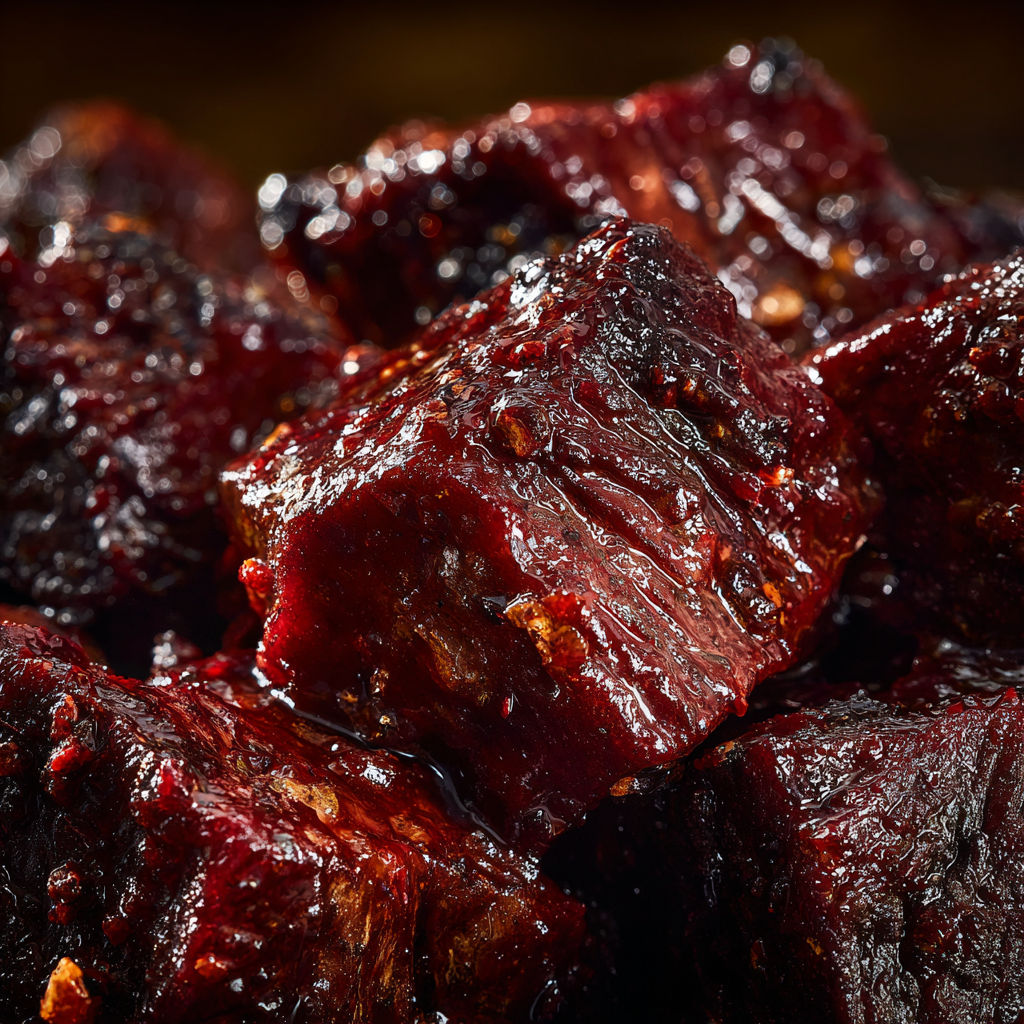
Jump to Recipe
I roll up my sleeves and let the kitchen fill with warm, simple smells—sharp pepper, slow-steamed meat, and a faint trace of red wine that reminds me of long afternoons in a Tuscan home. The stew is patient; it teaches you to watch the pot and trust small, steady changes in the aroma and the bubble of the sauce.
I write as a cook and a friend, offering a clear recipe that honors tradition while helping you choose practical cuts of beef. You’ll learn how ingredients behave over time, when to season for balance, and how gentle cooking keeps the meat tender instead of stringy.
Key Takeaways
- Focus on quality ingredients and steady heat to build flavor.
- Use visual and smell cues—bubble size and aroma—during long cooking.
- Choose cuts like shank, chuck, or short ribs for best texture.
- Pepper and wine are the heart of the sauce; season late for balance.
- Small adjustments shape the final dish and respect its history.
From kiln fires to Chianti: the Tuscan roots of peposo
On the sun-baked hill above Florence, clay pots steamed beside cooling kilns while workers shared bowls of a peppery, wine-scented stew. Impruneta’s terracotta trade shaped both roofs and kitchens; jars, tiles, and vases came from the same hands that fed the town.
Impruneta’s terracotta legacy and Brunelleschi’s Duomo connection
Kiln workers, the fornacini, slid pots of meat into the ovens’ residual heat. They let gentle bubbles do the work for long hours as bricks cooled and tiles cured.
Filippo Brunelleschi sourced terracotta tiles there for the Florence Duomo. He noticed how the stew kept workers going and brought it to the dome crews. That link ties a humble kitchen practice to a Renaissance masterpiece.
Authenticity notes: black pepper, red wine, and how tomato entered some versions
The original backbone was elemental: marbled beef, loads of peppercorns, and Chianti. Early versions did not use tomato — that came later from the Americas.
Today, many modern recipes add garlic or a spoon of tomato puree to round flavors. But the lesson remains: low heat, patience, and respect for black pepper keep the dish true.
| Traditional | Typical Modern | Why it matters |
|---|---|---|
| Terracotta pot | Heavy Dutch oven | Both hold steady heat for slow cooking |
| Beef, peppercorns, red wine | Beef with garlic or tomato puree | Tomato softens acidity; pepper remains central |
| Left in kiln residual heat for hours | Simmered on low stove for 3–4 hours | Time and gentle heat make tough cuts tender |
Peposo dell’impruneta recipe: ingredients, tools, and step-by-step for melt-in-your-mouth beef
A heavy pot on the stove, a splash of red wine, and steady heat are all you need to coax deep flavor from tough meat. Below I list what to gather, why the vessel matters, and the exact cues I watch while cooking.
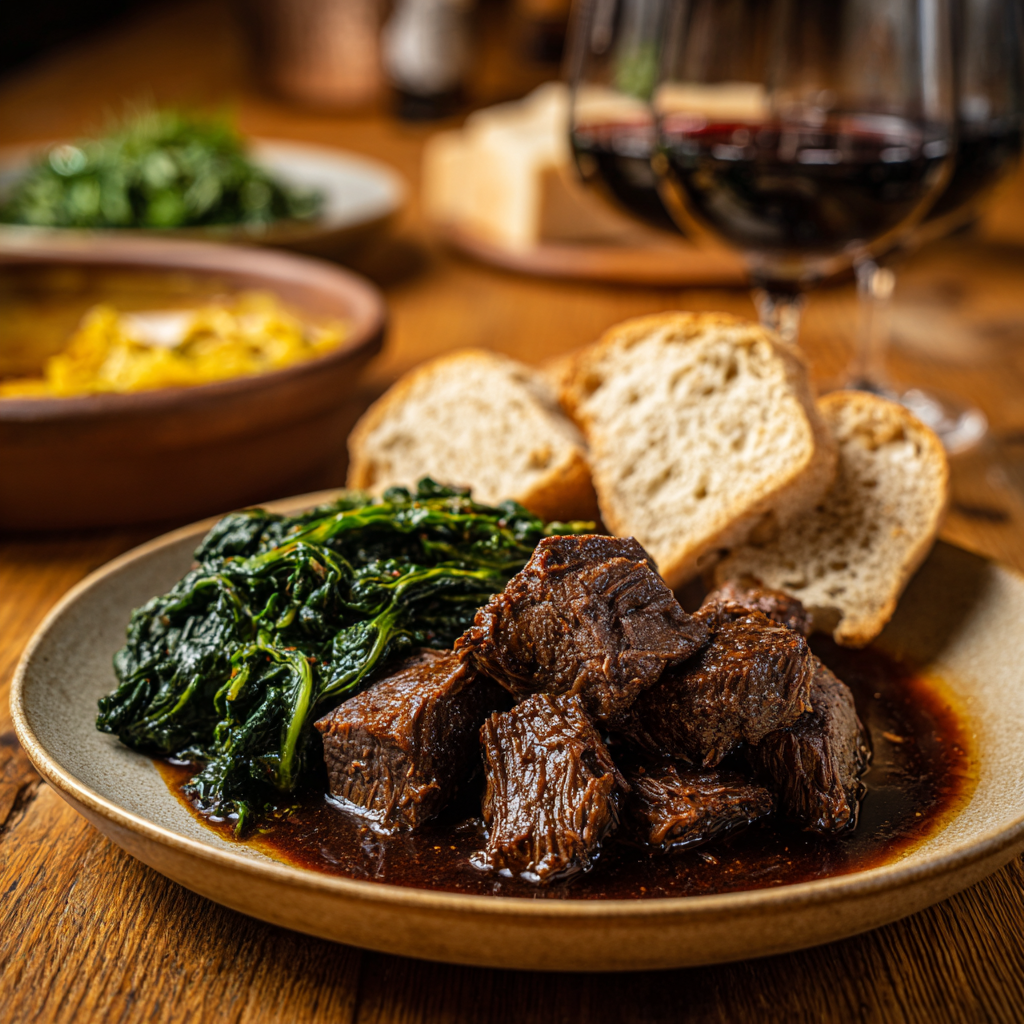
What you’ll need
Choose beef that will reward slow time: shank, chuck, or short ribs cut into even pieces. Stock simple ingredients—fresh peppercorns, a few crushed cloves of garlic, good wine, a pinch of salt, and olive oil if the meat is lean.
Best pot for the job
An enameled cast iron pot reproduces terracotta’s steady heat. It protects the sauce from burning and keeps a gentle simmer. Use a heavy pot that fits stovetop or oven and retains warmth for hours.
Step-by-step method and timing
- Dry the meat and brown in batches over medium heat. Add 2 tablespoons olive oil only if needed to prevent sticking.
- Add crushed peppercorns and garlic, then pour in red wine to nearly cover and scrape the pan to lift browned bits.
- Bring to a lazy simmer, cover, and cook 1 hour. Check after another hour; add a little water if liquid is low and season with salt.
- Aim for about 3 to 3½ hours total. The fork test tells you more than the clock: the fork should glide in easily and the sauce be glossy.
Pro tips and smart swaps
- Shank gives gelatin and body; chuck is forgiving; short ribs add depth—trim fat to your taste.
- If you add tomato, stir in a tablespoon or two after 30 minutes so it blends without dominating.
- Before serving, skim excess fat and reduce uncovered for a few minutes if the sauce needs to cling to the meat.
| Pot Type | How it holds heat | Why it matters |
|---|---|---|
| Terracotta | Slow, even heat retention | Traditional warmth that keeps a low, steady simmer |
| Enamel cast iron | Even heat, resists scorching | Mimics terracotta for home stoves and ovens |
| Thin stainless pan | Fast to heat, cools quickly | Risk of hot spots; not ideal for long, gentle time |
| Dutch oven (heavy) | Stable low simmer | Best all-around choice for even cooking and easy monitoring |
Serve it like a Tuscan: sides, pairing ideas, and make-ahead tips
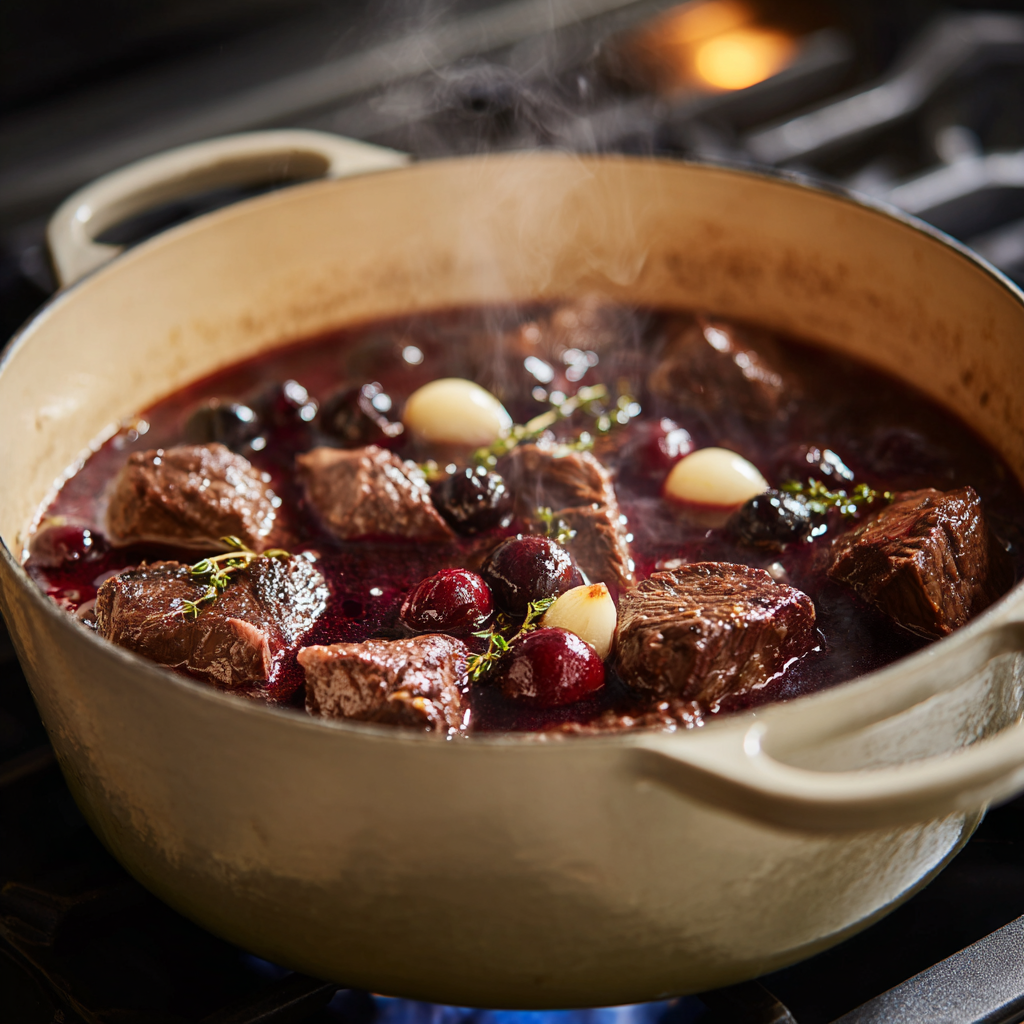
Serve the beef simply and confidently: it wants a soft bed of polenta and honest, crusty bread to finish the plate. I like settings that let the sauce shine and the table feel warm and unpretentious.
Polenta, beans, greens, and what to drink
Spoon the stew over soft polenta so the grains catch every glossy drop. Polenta warms the plate and balances the pepper and wine in the sauce.
Thick slices of saltless Tuscan-style bread work the same way—pile the meat beside the bread so guests can mop up the juices. Offer both if you host; people will appreciate options.
- Keep sides simple: warm cannellini beans tossed with a little oil, garlic, and a pinch of salt make a smooth counterpoint.
- Sautéed greens in a hot pan—cavolo nero or spinach—add color and a light, bitter lift to the rich meat.
- Pour Chianti or another Sangiovese-driven wine. The wine’s acidity refreshes the palate and mirrors the stew’s depth.
Make-ahead and serving notes
Make this ahead to save time. Cool the pot, refrigerate, then lift any solidified fat before reheating gently over low heat for a few minutes.
If the sauce seems thin after reheating, reduce it slowly until it coats the meat and clings to polenta. For a crowd, keep the pot on the lowest heat and ladle as guests arrive—time and low heat only improve the flavor.
| Side | Why it works | Quick tip |
|---|---|---|
| Polenta | Soaks sauce; soft, neutral base | Cook until creamy, keep warm with lid |
| Bread | Absorbs juices; rustic texture | Slice thick, serve at room temperature |
| Cannellini beans | Creamy contrast; simple seasoning | Toss with oil, garlic, and salt |
Conclusion
A quiet pot on low heat can turn simple beef into a dish that feels like home.
At its heart, peposo proves that a few honest ingredients, steady hours, and care make a soulful stew you’ll return to again and again.
Whether you use shank, chuck, or short ribs, keep the pot at a gentle simmer. Taste as the sauce concentrates and let freshly ground pepper and a whisper of tomato guide the balance.
Trust the feel: when a fork slides in easily and the juices look glossy, your cooking has worked. Finish with a drizzle of good olive oil and a final grind of black pepper.
I hope you make this one of your favorite recipes—honoring tradition while cooking with your senses and sharing the warmth at your table.
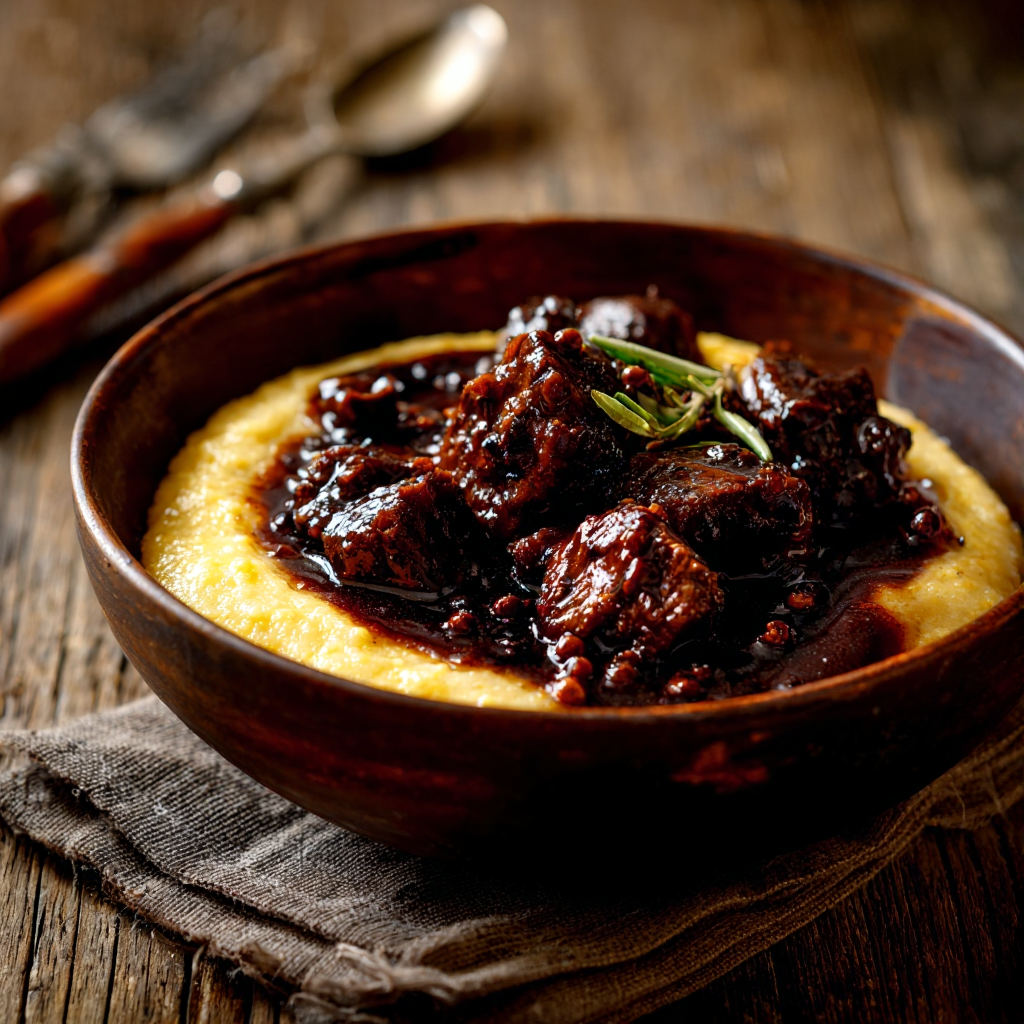
Peposo dell’Impruneta
Ingredients
Method
- Pat the beef pieces dry. This helps them brown instead of steam.
- Heat a heavy Dutch oven over medium heat. Add a little olive oil only if the beef is lean. Brown the meat in batches until well-colored.
- Add the lightly crushed peppercorns and garlic to the pot. Stir for a few seconds to release their aroma.
- Pour in enough red wine to almost cover the meat. Scrape the bottom to lift all the browned bits.
- Bring to a gentle simmer—small, lazy bubbles are perfect. Cover the pot.
- Keep at a low simmer for 1 hour. Check the liquid level after the second hour; add a splash of water if it’s getting low.
- Add salt only after the stew has reduced a bit. If using tomato puree, stir in 1–2 tbsp about 30 minutes into cooking.
- Let the stew go for about 3 to 3½ hours. Use the fork test: it should slide into the beef easily, and the sauce should look glossy.
- If the sauce is thin, remove the lid and simmer uncovered for a few minutes until it clings to the meat.
- Spoon over soft polenta or plate with bread, beans, and greens. Finish with a drizzle of good olive oil and a few grinds of fresh black pepper.
Notes
- Whole peppercorns are key—they give heat without making the sauce muddy or bitter.
- Tough cuts like shank, chuck, or short ribs become buttery soft only with time. Don’t rush the simmer.
- This stew tastes even better the next day. Let it chill, lift off any solid fat, and reheat gently.
- Serve it with simple sides. Peposo shines because of its simplicity—don’t overthink the plate.