
Jump to Recipe
Cavatelli e fagioli is a Southern Italian pasta and bean dish where chewy semolina cavatelli cooks right in a broth of slow-simmered borlotti beans, pancetta, and rosemary until the stew turns thick enough to coat a spoon.
The technique that makes this work is simple: mash a portion of the cooked beans back into the broth, then let the pasta finish cooking directly in that liquid. The starch it releases does the thickening, no flour or cream needed.
I use dried borlotti beans soaked overnight because the texture holds up better than canned, but canned beans get you dinner on the table in half the time if you’re short on it.
The one thing that trips people up is adding the pasta before the beans are actually tender. If you can’t mash a bean against the side of the pot with a spoon, give it another 10 minutes before moving on.
Why You’ll Love This Recipe
- One pot start to finish, minimal cleanup after
- Dried beans and pantry pasta keep the cost low
- Freezes well for lunches through the cold months
- Broth thickens naturally, no cream or flour needed
Ingredient Notes
- Borlotti beans: Dried borlotti beans (also called cranberry beans) give a creamier bite than canned. Soak them at least 8 hours; skip this and they’ll take twice as long to soften.
- Cavatelli: Look for dried semolina cavatelli near the other short pasta shapes. Fresh cavatelli works too but cooks in about half the time, so add it later.
- Pancetta: Diced pancetta adds the fat that carries flavor through the broth. Guanciale or thick-cut bacon both work as swaps.
- Parmesan rind: A saved parmesan rind melts into the broth as it simmers and rounds out the salt. Leave it out if you don’t have one, it’s not essential.
- Rosemary: One sprig is plenty, pull it before serving. Too much turns the broth bitter.
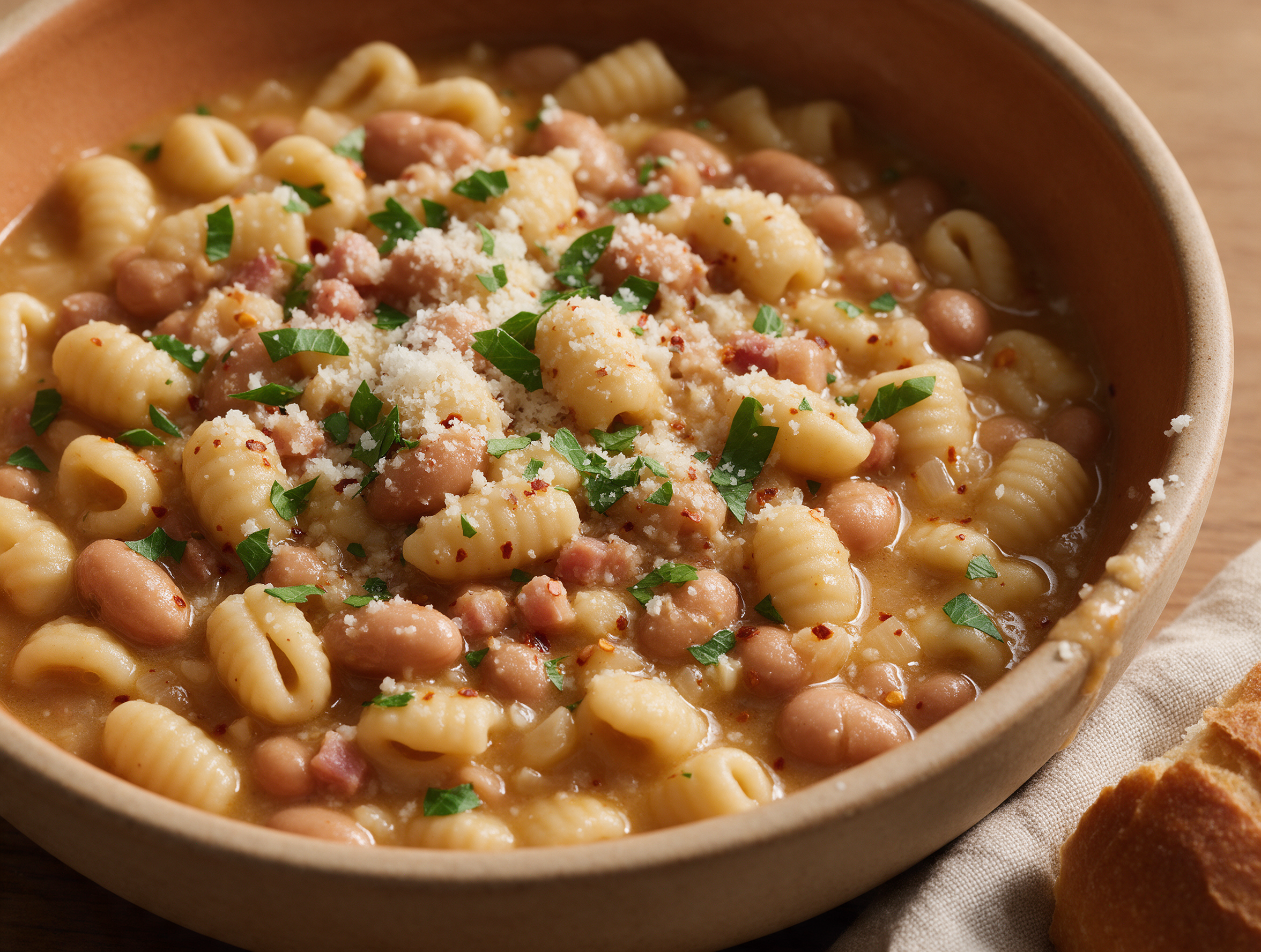
Slow-Simmered Cavatelli e Fagioli with Borlotti Beans
Ingredients
Method
- Soak 250 g dried borlotti beans in plenty of cold water for at least 8 hours or overnight. Drain and rinse.
- Put the beans in a 5-quart / 4.7 L Dutch oven with 1.8 L water, half the onion, the bay leaf, and 1 tbsp olive oil. Bring to a bare simmer and cook uncovered for 60 to 75 minutes, until a bean mashes easily against the side of the pot with a spoon.
- Stir in 1 tsp salt during the last 10 minutes of cooking. Remove the onion half and bay leaf. Scoop out 1 cup of beans, mash them with a fork, and stir back into the pot to thicken the broth.
- In a 10-inch / 26 cm skillet, heat 2 tbsp olive oil over medium. Add the diced pancetta and cook 4 to 5 minutes until the fat renders and the edges crisp.
- Add the remaining diced onion, celery, and carrot. Cook 6 to 8 minutes, stirring occasionally, until softened and pale gold.
- Stir in the garlic and rosemary and cook 30 seconds until fragrant. Add the tomato paste and cook 1 minute, stirring, until it darkens slightly.
- Scrape the soffritto into the pot of beans, along with the parmesan rind if using. Simmer together 10 minutes so the flavors combine.
- Add the 300 g dried cavatelli directly to the pot along with 500 ml stock. Bring to a gentle boil.
- Cook 10 to 12 minutes, stirring often to prevent sticking, until the cavatelli is al dente and the stew has thickened to a thick, spoonable consistency.
- Remove the rosemary sprig and parmesan rind. Taste and adjust salt and black pepper.
- Ladle into bowls and finish with a drizzle of olive oil, grated parmesan, and chopped parsley. Serve right away.
Notes
- Soak dried beans at least 8 hours before cooking; this time isn't included in the prep time above.
- Mash beans directly in the pot with a fork or potato masher, no blender needed.
- Don't skip stirring once the pasta goes in, it sticks fast once the broth thickens.
- Parmesan rind is optional but adds real depth to the broth if you have one saved.
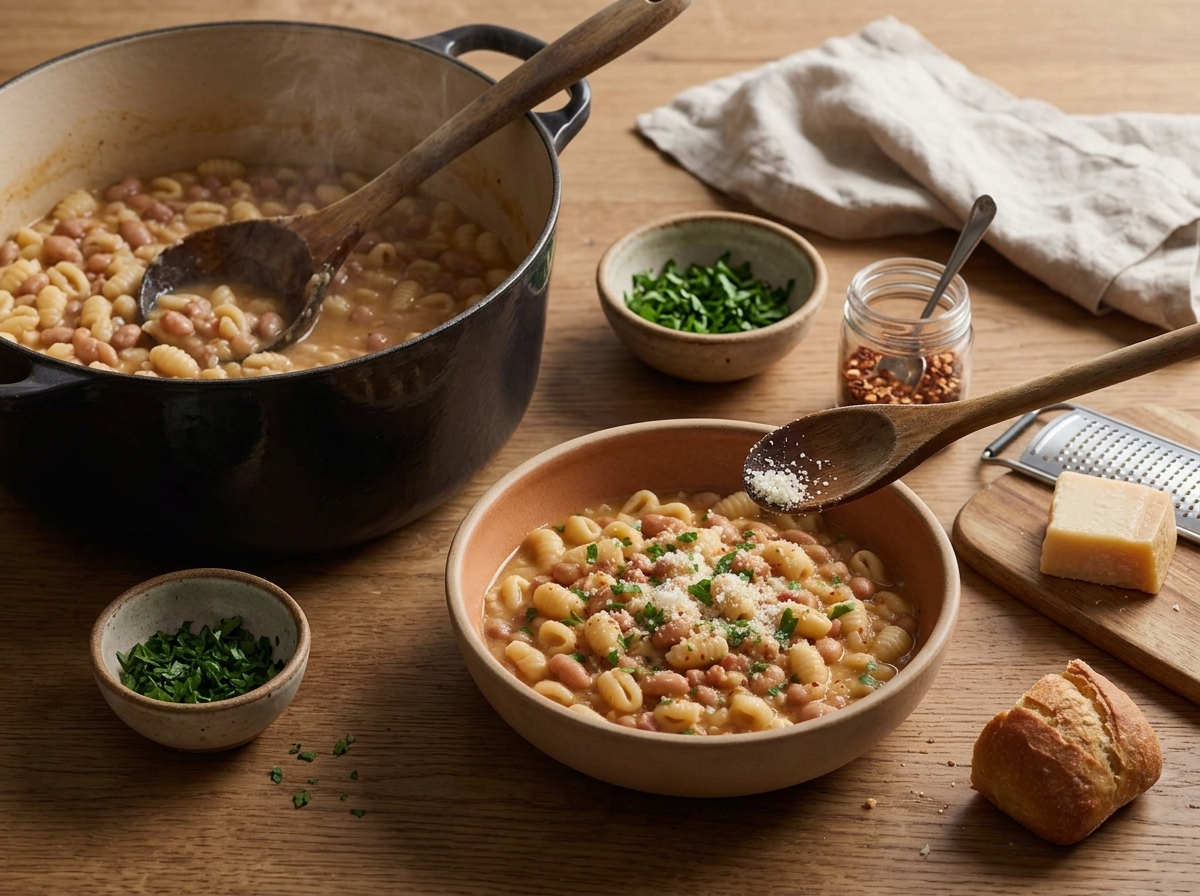
Tips for Success
- Salt the bean water only in the last 10 minutes of cooking; early salt toughens the skins and slows softening.
- Reserve a cup of bean cooking broth before draining, in case the stew tightens up more than you’d like.
- Stir the cavatelli often once it’s in the pot; the starch it releases can catch on the bottom of the pot.
- Mash about a quarter of the cooked beans before adding the soffritto; this gives the broth body without cream.
- Thin leftovers with a splash of hot water or broth before reheating, since the pasta keeps absorbing liquid in the fridge.
Variations
- Swap cavatelli for orecchiette or ditalini if that’s what’s in the pantry; adjust the simmer time to the pasta’s package directions.
- Add a rind of pecorino instead of parmesan for a sharper, saltier broth that leans more Southern Italian.
- Stir in a handful of chopped kale or escarole in the last 5 minutes for a green vegetable without changing the base recipe.
Storage and Reheating
Cavatelli e fagioli keeps in the fridge for 3 to 4 days in an airtight container. The pasta keeps drinking up the broth as it sits, so it thickens a lot overnight.
Reheat gently on the stovetop over medium-low heat, stirring in a splash of water or broth every couple of minutes until it loosens back to a spoonable consistency, about 5 to 7 minutes total. The microwave works too, in 1-minute bursts, stirring between each.
Freeze in portions for up to 3 months. The beans hold up well; expect the cavatelli to soften a bit more once thawed and reheated, which isn’t a problem in a dish this rustic.
Serving Suggestions
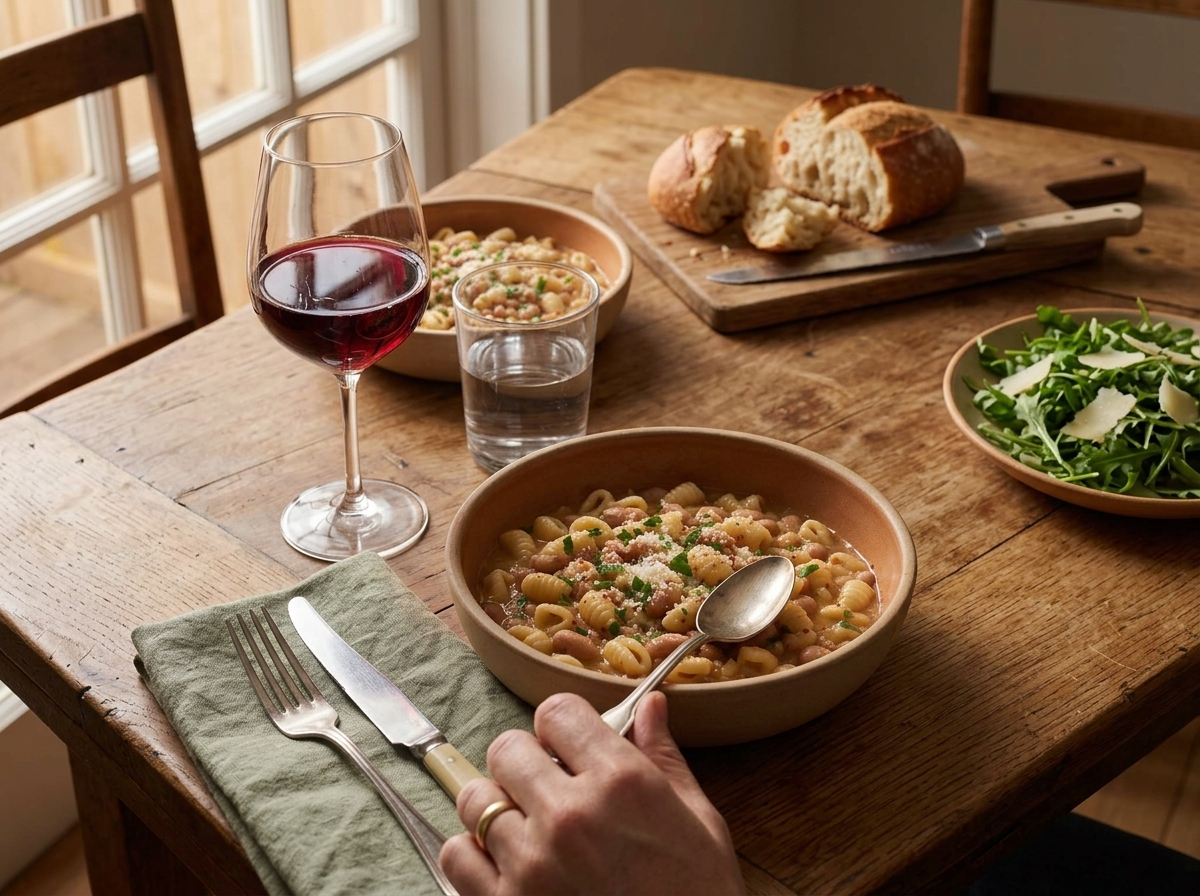
Cavatelli e fagioli is a full meal in a bowl. I serve it with a thick slice of grilled or toasted country bread for scraping the pot.
A simple green salad with a sharp vinaigrette cuts through the richness of the pancetta and parmesan. A glass of Chianti or another light Italian red works well alongside.
For a lighter starter route, spoon smaller portions as a primo before a simple roast chicken or grilled fish.
FAQ
Why is my cavatelli e fagioli too thin and watery?
It usually means the beans weren’t mashed enough or the pasta didn’t cook long enough in the broth to release its starch. Mash about a quarter of the cooked beans back into the pot before adding the pasta, and let the cavatelli simmer the full 10 to 12 minutes uncovered so it thickens properly.
Can I use canned borlotti beans instead of dried for this pasta e fagioli?
Yes, swap in 3 cans (about 400 g / 14 oz each) drained and rinsed, and skip the 60 to 75 minute simmer entirely. Add them straight to the soffritto with 750 ml broth, simmer 15 minutes, then add the cavatelli as directed. It’s a faster route that still tastes like home.
How do I store leftover cavatelli e fagioli without the pasta turning mushy?
Store it in an airtight container in the fridge for 3 to 4 days, and expect the pasta to keep absorbing broth as it sits. When reheating, add a splash of water or stock over low heat to loosen it back to a spoonable stew rather than a paste.
What goes well with cavatelli e fagioli besides bread?
A green salad with a sharp vinaigrette is my go-to, since it cuts through the pancetta and parmesan. A light Italian red like Chianti works at the table too, and grilled vegetables make a good side if you want more green on the plate.
Is cavatelli e fagioli gluten-free?
Not as written, since regular cavatelli is made from wheat semolina. Swap in a gluten-free short pasta shape and cook it separately, checking it a few minutes before the package time since it can turn mushy faster in broth than in plain water.
What’s the difference between cavatelli e fagioli and regular pasta e fagioli?
The pasta shape and texture, mainly. Classic pasta e fagioli usually uses small shapes like ditalini or broken spaghetti, while cavatelli’s ridged, chewy shell holds up longer in the broth and gives a heartier bite than a soupier version made with small pasta.