Jump to Recipe
Minestra di castagne e fagioli is a thick Tuscan-style soup that pairs sweet, starchy chestnuts with creamy borlotti beans in a rosemary-scented broth. It thickens on its own as the chestnuts break down, no flour or cream involved.
This is old Apennine cooking, the kind built for cold months when chestnuts and dried beans were what the cellar had. Pancetta and a simple soffritto of onion, celery, and carrot round out the base.
The technique that matters here is restraint with the blender. Puree only half the soup and leave the rest whole, or the starch from the chestnuts turns it gluey instead of silky.
I use canned borlotti beans and vacuum-packed cooked chestnuts to keep this a weeknight soup rather than a weekend project. Both are common in Italian grocery aisles and cut the cooking time by hours.
Why You’ll Love This Recipe
- Thickens naturally from chestnuts, no flour or cream needed
- Canned beans and pre-cooked chestnuts keep it weeknight-fast
- Tastes better the next day, ideal for make-ahead dinners
- One pot, minimal cleanup, freezer-friendly for later
Ingredient Notes
- Cooked chestnuts: Vacuum-packed or jarred cooked, peeled chestnuts work well and save hours. Dried chestnuts can be used if soaked overnight and simmered until tender first.
- Borlotti beans: Canned beans are fine and speed things up. If using dried, soak 250 g overnight and simmer until soft before adding, about 200 g dried gives roughly the same yield.
- Pancetta: Adds a salty backbone to the soffritto. Swap in diced guanciale for a stronger flavor, or leave it out and use an extra tablespoon of olive oil for a meatless version.
- Parmesan rind: Simmered in the broth, it adds savory depth without extra cheese. Skip it if you don’t have one on hand, the soup still works.
- Rosemary: Use a whole sprig rather than chopped leaves so you can fish it out before serving. Chopped rosemary left in the soup turns bitter if it simmers too long.
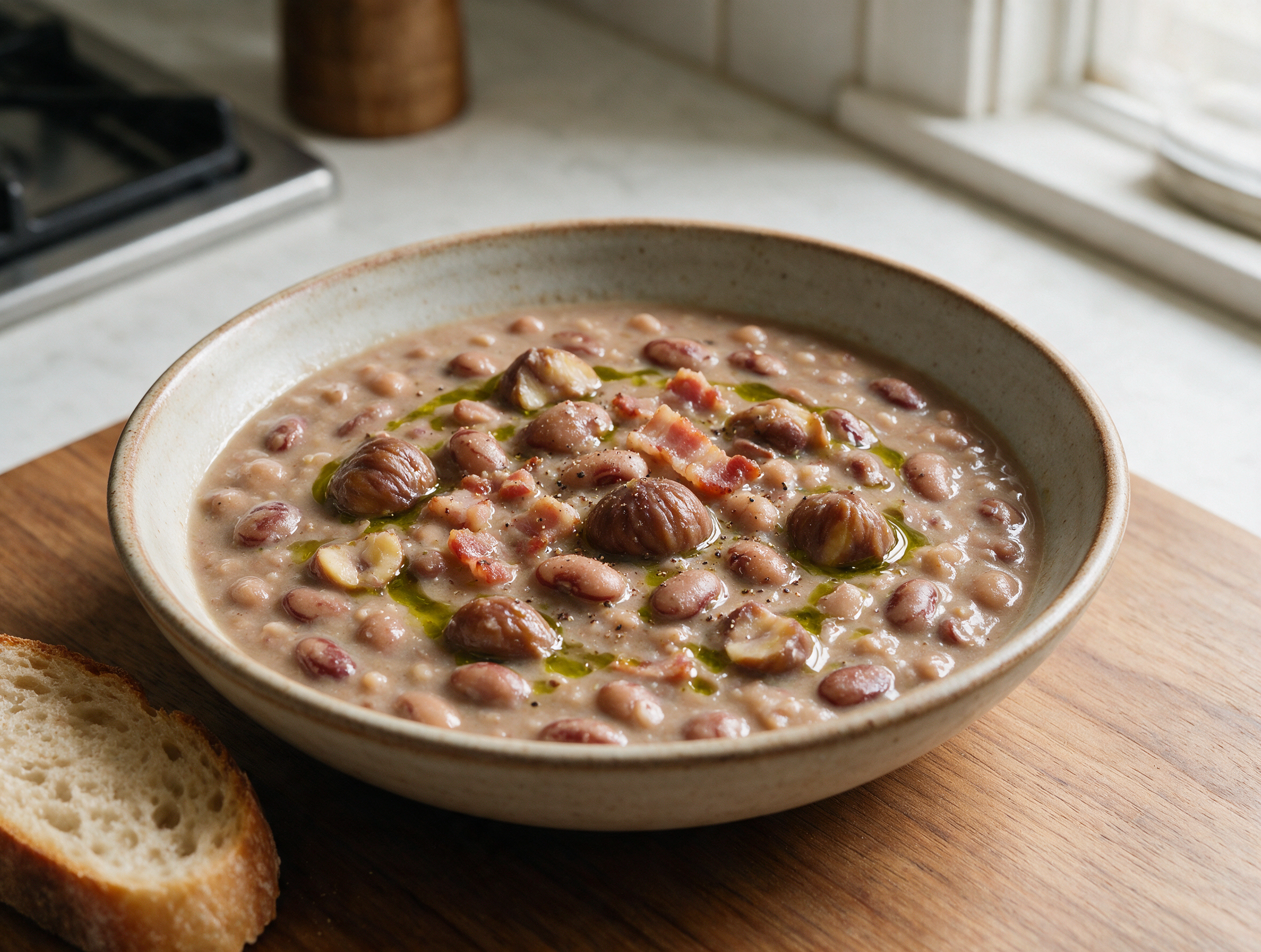
Chestnut and Borlotti Bean Minestra with Pancetta
Ingredients
Method
- Heat the olive oil in a 4-quart / 3.8 L Dutch oven over medium heat. Add the pancetta and cook for 4 to 5 minutes, stirring often, until the fat renders and the edges turn golden.
- Add the onion, celery, and carrot. Cook for 7 to 8 minutes, stirring occasionally, until the vegetables soften and the onion turns translucent.
- Add the garlic, rosemary sprig, and bay leaf. Cook for 1 minute until fragrant.
- Add the chopped chestnuts, half of the borlotti beans, the Parmesan rind, and the stock. Bring to a gentle simmer.
- Simmer uncovered for 25 minutes, stirring occasionally, until the chestnuts start to break down and the broth looks slightly cloudy.
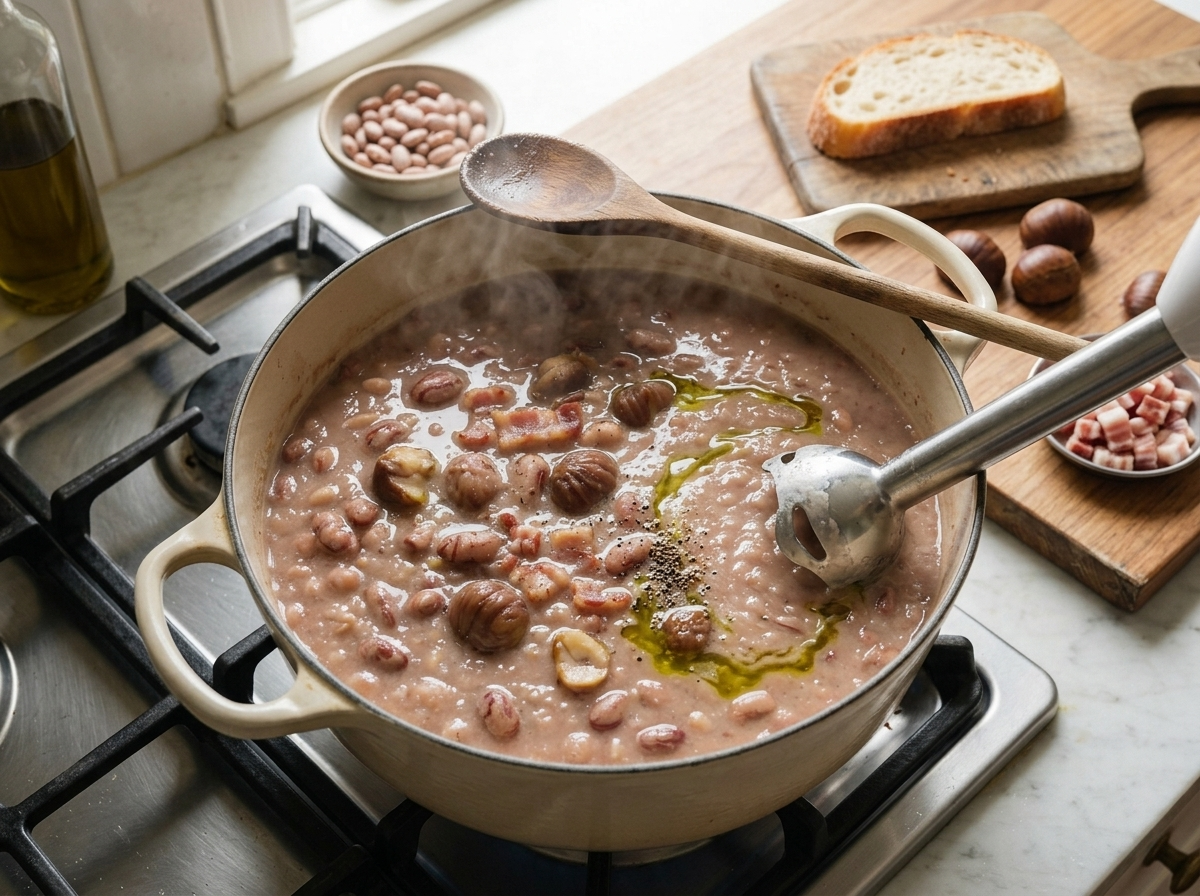
- Remove the rosemary sprig, bay leaf, and Parmesan rind. Using an immersion blender, puree about half the soup directly in the pot, leaving the rest chunky. Don't blend it all or the starch turns the soup pasty instead of silky.
- Stir in the remaining whole borlotti beans and simmer for another 8 to 10 minutes, until the soup coats the back of a spoon.
- Season with salt and black pepper to taste. Thin with a splash of stock or water if the soup looks too thick.
- Ladle into bowls, drizzle with extra virgin olive oil, and finish with a crack of black pepper. Serve with crusty bread.
Notes
- Blend only half the soup, not all of it, to avoid a pasty texture.
- Simmer the rosemary sprig whole so you can remove it before serving.
- Soup thickens as it cools, thin with stock when reheating.
- Dried chestnuts need overnight soaking plus 40-50 minutes simmering before use.
Tips for Success
- Blend only half the soup with an immersion blender to keep some beans and chestnuts whole for texture.
- Cook the pancetta slowly first so the fat renders before you add the vegetables.
- Remove the rosemary sprig and bay leaf before blending so you don’t shred them into the soup.
- Simmer uncovered for the last 10 minutes if the soup looks thin, it thickens fast once the chestnuts break down.
- Make it a day ahead. The starches settle overnight and the soup tastes rounder the next day.
Variations
- Swap pancetta for smoked bacon for a deeper, smokier broth without changing the technique.
- Add a diced potato with the chestnuts for an even thicker, starchier soup.
- Skip the pancetta and finish with extra virgin olive oil for a fully meatless version.
Storage and Reheating
Minestra di castagne e fagioli keeps well in the fridge for 4 days in a sealed container. The soup thickens further as it sits, so thin it with a splash of stock or water when reheating.
Reheat gently on the stovetop over medium-low heat, stirring often, for 6 to 8 minutes until hot through. A microwave works too, in 90-second bursts, stirring between each.
Freeze in individual portions for up to 3 months. Thaw overnight in the fridge before reheating, since the beans and chestnuts can turn slightly grainy if reheated straight from frozen.
Serving Suggestions
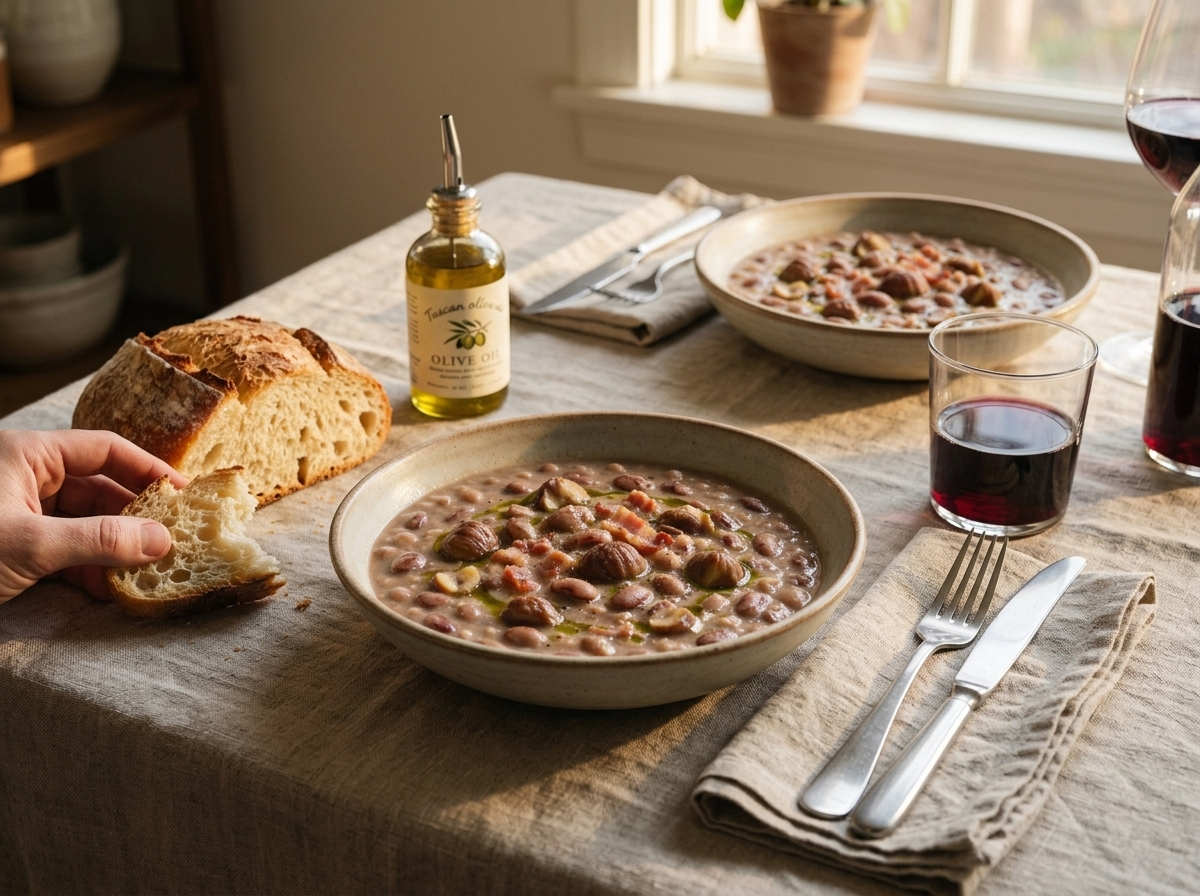
Serve minestra di castagne e fagioli in shallow bowls with a drizzle of good olive oil and a crack of black pepper on top. Crusty bread or grilled country bread rubbed with garlic is the natural side.
It works as a primo before a simple secondo like braised Alpine pork and cabbage or grilled sausage. On its own with bread, it’s a full weeknight dinner.
A glass of a light Tuscan red, like a young Sangiovese, sits well next to the sweetness of the chestnuts.
FAQ
Why is my minestra di castagne e fagioli too thin?
It usually means not enough of the soup got blended, or it hasn’t simmered long enough for the chestnuts to break down. Puree another cup with an immersion blender and simmer uncovered for 5 to 10 more minutes. It thickens fast once the starch releases.
Can I use dried chestnuts instead of vacuum-packed ones?
Yes, but soak them in water overnight first, then simmer in fresh water for 40 to 50 minutes until soft before adding to the soup. Vacuum-packed cooked chestnuts skip that step entirely and taste close to fresh-roasted.
Can I freeze minestra di castagne e fagioli?
Yes, it freezes well for up to 3 months in sealed containers. Thaw it overnight in the fridge before reheating on the stovetop, since the beans can turn grainy if you microwave it straight from frozen.
What goes with chestnut and bean minestra besides bread?
Grilled sausage or roast pork works well as a second course after a bowl of this soup. A young Sangiovese or other light Tuscan red also pairs nicely with the sweetness of the chestnuts.
Is minestra di castagne e fagioli gluten-free?
It can be, as long as your stock and any added cheese rind don’t contain hidden gluten. Check the label on your stock cube or carton and serve with gluten-free bread instead of the traditional crusty loaf.
What’s the difference between minestra di castagne e fagioli and pasta e fagioli?
Pasta e fagioli uses small pasta shapes to thicken the broth, while minestra di castagne e fagioli relies on chestnuts for that same body and adds a natural sweetness pasta doesn’t give. Both start from a similar bean and soffritto base, much like Pasta e Ceci alla Romana.