
Jump to Recipe
Roccocò napoletani are small, ring-shaped Christmas cookies from Naples, made from toasted almonds, candied citrus peel, honey and warm spices, then baked until deliberately hard. They’re not meant to be soft. The point is a firm, almost stony bite that softens only when you dunk it in a glass of sweet wine or coffee.
I make a batch every December because they keep for weeks in a tin and actually taste better after a few days, once the spices settle into the dough.
The dough itself is dense and a little stiff to work with. Ammonium bicarbonate, the traditional Neapolitan leavener bakers call ammonia per dolci, gives the rings their characteristic crunch without any egg or butter in the mix.
If you’ve only had soft Italian Christmas cookies before, roccocò will surprise you. That resistance is the whole idea.
Why You’ll Love This Recipe
- Keeps fresh in an airtight tin for weeks
- No butter or dairy in the dough
- Gets better with a few days of rest
- Classic Neapolitan flavor from citrus peel and spice
Ingredient Notes
- Whole almonds: Skin-on almonds give the traditional rustic look and enough natural fat to bind the dense dough. Blanched almonds work too but change the color slightly.
- All-purpose flour: Keeps the dough workable and holds the rings’ shape through baking. A 1:1 gluten-free blend works in a pinch, though the dough turns more crumbly.
- Granulated sugar: Balances the bitterness of the candied peel and helps the dough hold together. Don’t cut it back much or the rings won’t shape cleanly.
- Honey: Adds moisture and a faint floral note. Use a mild variety, since a strong dark honey can overpower the cinnamon and cloves.
- Candied orange peel: The backbone flavor of roccocò. Chop it small so it distributes evenly and doesn’t tear the dough when you shape the rings.
- Candied citron: Adds the sharper, more traditional Neapolitan bitterness. Swap in more orange peel if citron isn’t available where you shop.
- Ammonium bicarbonate: Sold as baker’s ammonia or ammonia per dolci, this gives roccocò their signature crunch. Baking soda works as a substitute but bakes slightly softer.
- Egg: Brushed on before baking, it gives the rings their shine and deep gold color. Skip it for a paler, matte finish.

Hard Almond Roccocò Rings: Neapolitan Christmas Cookies
Ingredients
Method
- Heat the oven to 180C/350F. Spread all 300 g almonds on a 33 x 46 cm / 13 x 18-inch sheet pan and toast for 8 to 10 minutes, until fragrant and lightly colored. Let cool completely.
- Roughly chop 250 g of the cooled almonds and set the remaining 50 g whole almonds aside for topping.
- In a large mixing bowl, whisk the flour, sugar, cinnamon, cloves, and pepper. Stir in the orange zest, chopped almonds, candied orange peel, and candied citron.
- Warm the honey and water in a small 16 cm / 6-inch saucepan over low heat for about 2 minutes, just until the honey loosens. Remove from the heat and stir in the ammonium bicarbonate until fully dissolved.
- Pour the warm honey mixture into the dry ingredients. Mix with a wooden spoon, then knead by hand in the bowl for 3 to 4 minutes, until you have a dense, slightly sticky dough that holds together.
- Reduce the oven to 170C/340F. Line the sheet pan with parchment. Divide the dough into 22 pieces of about 45 g each.
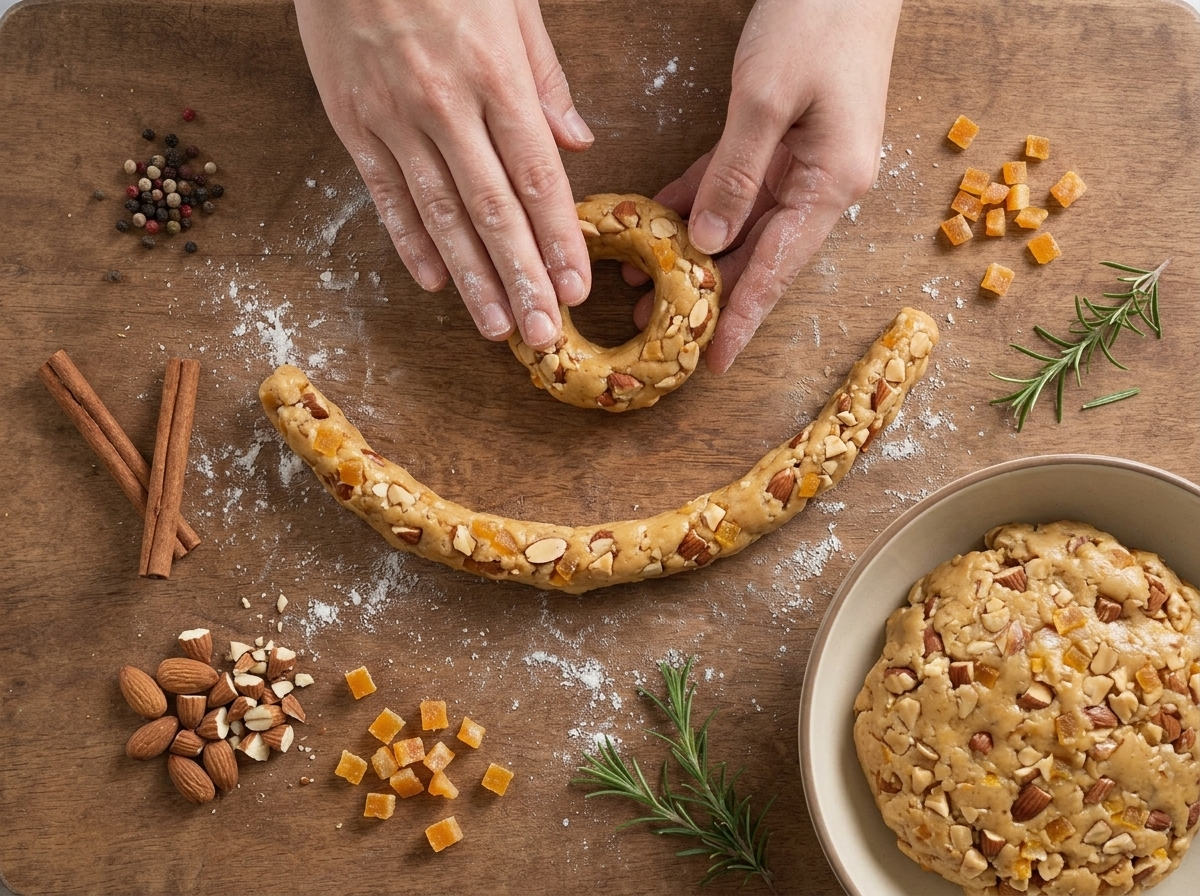
- Roll each piece into a rope about 15 cm / 6 inches long and join the ends to form a ring, pressing firmly to seal the seam.
- Arrange the rings on the pan, spaced 2.5 cm / 1 inch apart. Press 2 to 3 of the reserved whole almonds onto the top of each ring, then brush each one with the beaten egg.
- Bake for 22 to 25 minutes, until pale gold and firm when pressed. The centers will still feel slightly soft straight out of the oven, don't chase extra hardness with more time or the bottoms will scorch before the middle sets.
- Cool the rings completely on a wire rack, about 30 minutes. They firm up fully as they cool, then transfer to an airtight tin.
Notes
- Toast almonds until fragrant, about 8 to 10 minutes, before chopping.
- Dissolve ammonium bicarbonate fully in warm liquid to avoid bitter spots.
- Shape rings evenly at 45 g each for consistent baking.
- Cool fully before storing, they harden as they sit.
Tips for Success
- Toast the almonds until fragrant and lightly colored, about 8 to 10 minutes, so their flavor carries through the dense dough.
- Dissolve the ammonium bicarbonate fully in the warm honey and water before mixing, or you’ll get bitter pockets in the baked rings.
- Chop the candied peel small so it distributes evenly and doesn’t tear the dough when you shape the rings.
- Press a few whole almonds into the surface of each ring before baking for the traditional studded look.
- Let the rings cool completely on the rack before storing, since they firm up further as they cool.
Variations
- Swap half the candied orange peel for candied citron if you want the sharper, more bitter Neapolitan flavor.
- Use baking soda in place of ammonium bicarbonate if you can’t find it, though the crunch will be slightly softer.
- Glaze the cooled rings with a simple sugar and water icing instead of egg wash for a shinier, sweeter finish.
Storage and Reheating
Roccocò keep well at room temperature in an airtight tin for 3 to 4 weeks, and many Neapolitan bakers say they taste better after the first week, once the spices mellow into the dough.
There’s no need to reheat them. They’re meant to be eaten hard, dunked into wine, coffee, or hot milk to soften just the bite you’re eating.
To freeze, stack the cooled rings between sheets of parchment in an airtight container and freeze for up to 2 months. Thaw at room temperature for about an hour before serving.
Serving Suggestions
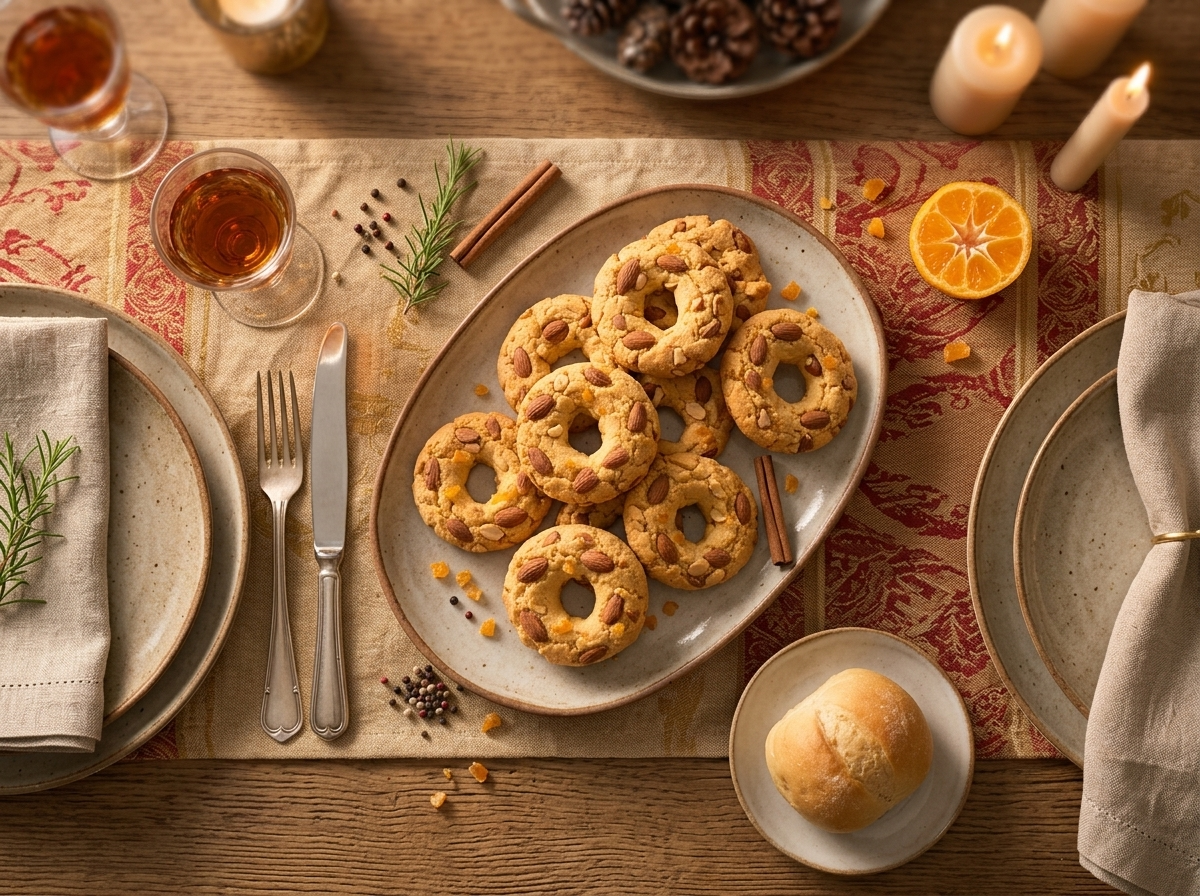
Roccocò are a dunking cookie, not a stand-alone snack. Serve them with a small glass of sweet Marsala, vin santo, or moscato at the end of a Christmas meal, alongside other Neapolitan sweets like struffoli or mostaccioli.
For a simpler pairing, set them out with strong coffee or hot milk after lunch. The hard almond bite softens the moment it hits liquid.
They also travel well wrapped in cellophane and ribbon, so I make extra to give as small edible gifts during the holidays.
FAQ
Why didn’t my roccocò turn out hard?
Roccocò usually come out too soft when the ammonium bicarbonate isn’t fully dissolved in the warm honey mixture, or when they’re pulled from the oven before 22 minutes. The rings should look pale gold and feel firm when you press the top, and they harden more as they cool on the rack. Check you didn’t add extra water to the dough either.
Can I use baking soda instead of ammonium bicarbonate for roccocò?
Yes, swap in an equal amount of baking soda if you can’t find ammonium bicarbonate, sold as baker’s ammonia or ammonia per dolci in Italian shops. The rings will be slightly less crisp and a touch denser, but they still bake into a firm, dunk-worthy cookie. Ammonium bicarbonate gives the cleanest crunch with no soapy aftertaste.
How long do roccocò napoletani keep, and can I freeze them?
Roccocò keep for 3 to 4 weeks in an airtight tin at room temperature, and the flavor improves after the first week as the spices settle. You can freeze the baked rings for up to 2 months, layered between parchment in an airtight container. Thaw at room temperature for about an hour before serving.
What do you drink with roccocò napoletani?
Roccocò are made for dunking, so a small glass of sweet Marsala, vin santo, or moscato works well after a Christmas meal. Strong coffee or hot milk softens the hard almond bite just as effectively for an afternoon snack. Pair them alongside other Neapolitan sweets like struffoli or mostaccioli.
Are roccocò napoletani gluten free?
No, traditional roccocò use all-purpose flour, so they aren’t gluten free as written. You can try a 1:1 gluten-free flour blend, though the dough may need extra water since the almonds and candied peel already add moisture. The texture ends up a bit more crumbly than the traditional version.
What’s the difference between roccocò and mostaccioli?
Roccocò are hard, ring-shaped almond cookies meant for dunking, while mostaccioli are soft, diamond-shaped spice cookies glazed in chocolate. Both are classic Neapolitan Christmas sweets built on honey and warm spices, but roccocò skip the chocolate glaze and lean on candied peel and almonds for texture and crunch instead.