
Jump to Recipe
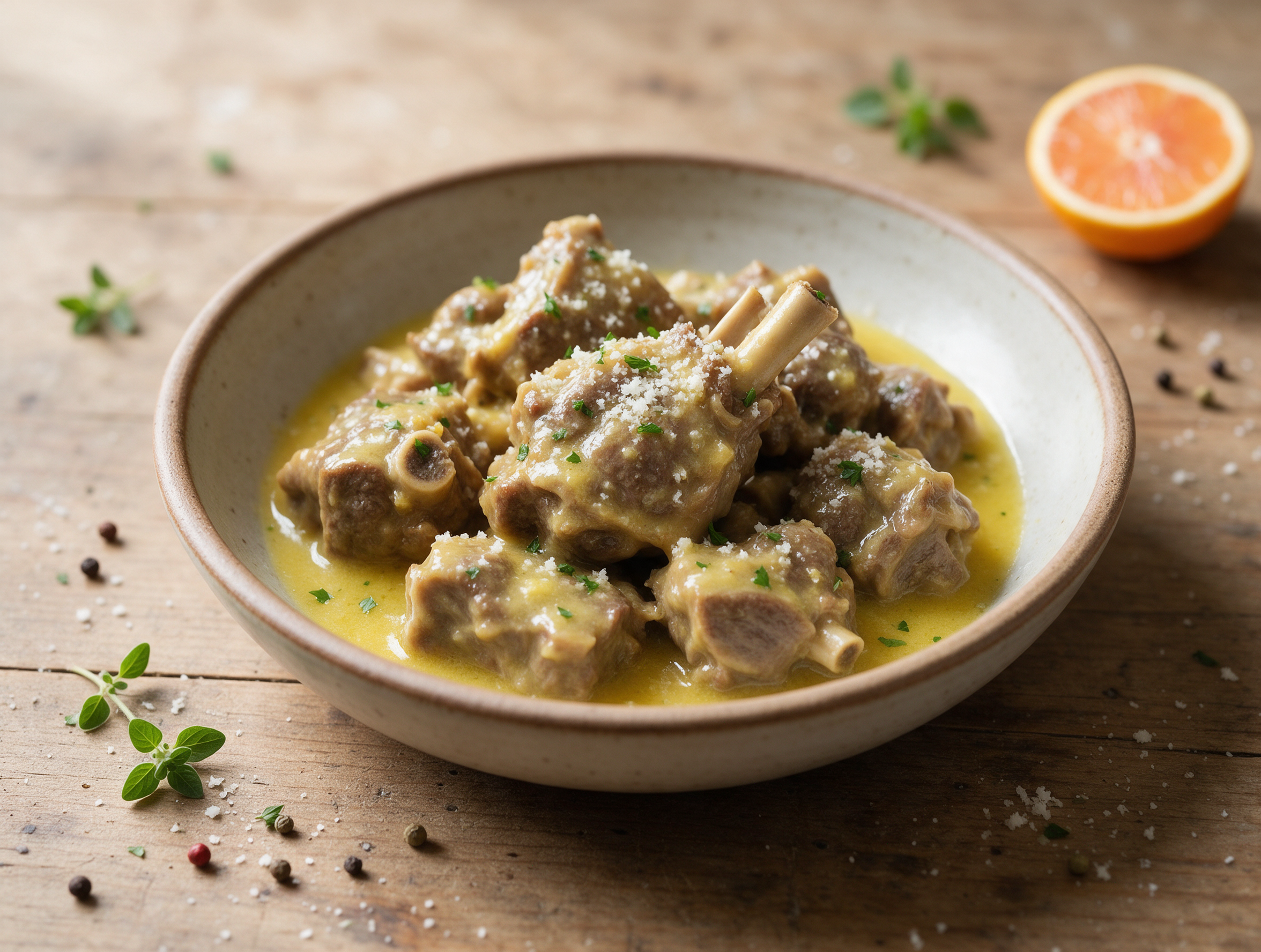
Agnello brodettato is a Roman lamb stew braised until the meat falls from the bone, then finished with a whisked egg and lemon liaison that turns the pan juices into a silky sauce clinging to every piece of meat.
The name comes from brodetto, little broth, though what lands in your bowl is closer to a thick sauce than a soup. Roman and Abruzzese kitchens have cooked lamb this way for Easter for generations, using eggs and lemon the same way you’d use them in a Greek avgolemono, just tied to braised meat instead of broth.
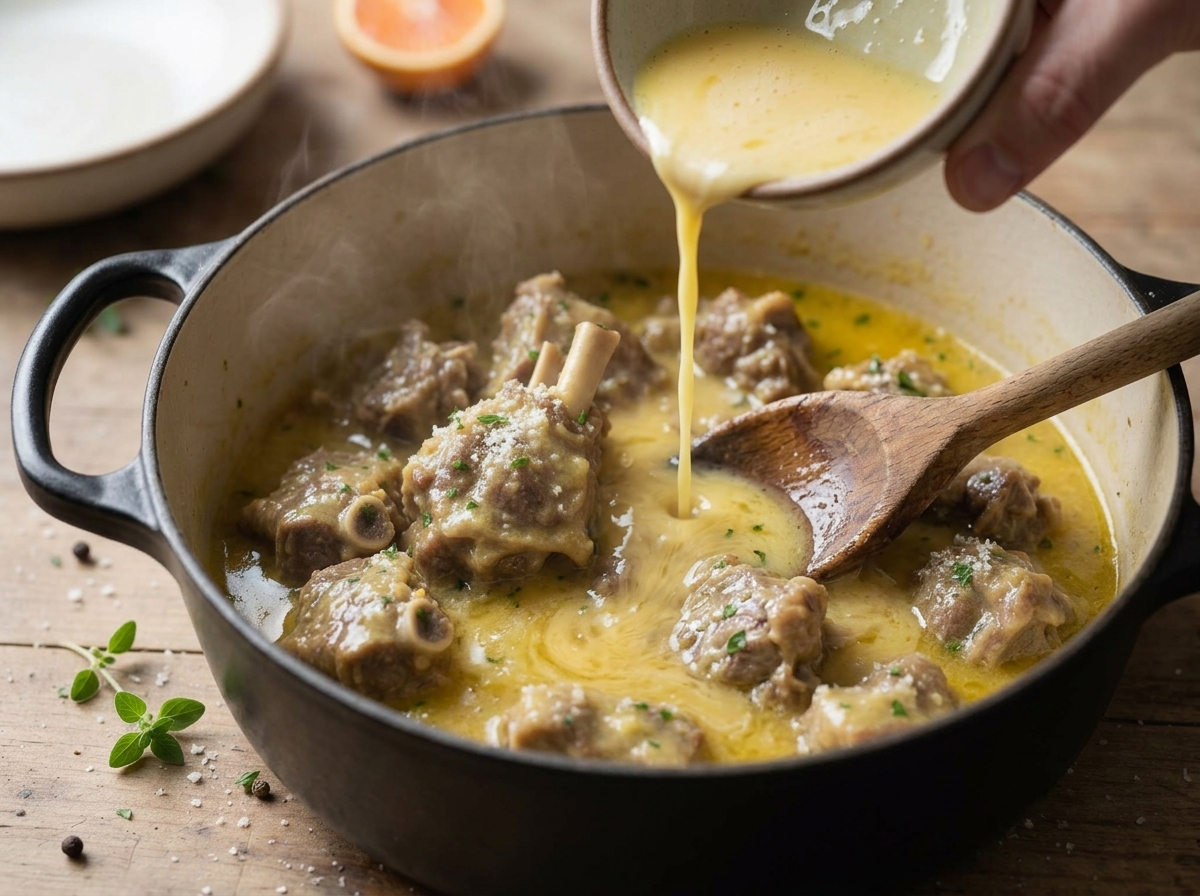
The one place this dish goes wrong is the egg step. Add the eggs straight into a simmering pot and you’ll get scrambled bits floating in fat instead of a sauce. Temper them first with a ladle of hot liquid, then stir everything back in off the heat.
Braise the lamb a day ahead if you want less to do at the table. The egg-lemon sauce comes together in the last five minutes, right before you serve.
Why You’ll Love This Recipe
- Braises mostly hands-off while you do other things
- Egg-lemon sauce needs no cream or roux to thicken
- Lamb braise can be made a day ahead
- Ties together soffritto, wine, and citrus in one pot
Ingredient Notes
- lamb shoulder: Bone-in shoulder gives the richest braise. Boneless leg works too, just trim excess fat and check for tenderness a bit earlier.
- pancetta: Adds a savory backbone to the soffritto. Skip it for a lighter version, the dish still works without it.
- dry white wine: Use something you’d drink, like a Frascati or Verdicchio. A dry vermouth works in a pinch.
- eggs: Room temperature eggs temper more evenly and are less likely to scramble when stirred back into the pot.
- pecorino romano: Its salt and tang define the sauce. Parmigiano Reggiano is a milder substitute if pecorino tastes too sharp for you.
- lemon juice: Use fresh juice, not bottled. Fresh acidity cuts through the fat and keeps the sauce tasting clean, not flat.
Agnello Brodettato: Roman Braised Lamb Egg-Lemon Sauce
Ingredients
Method
- Pat the lamb chunks dry with paper towels and season with salt and pepper. Dust lightly with the flour, shaking off the excess.
- Heat the olive oil in a 5-quart / 4.7 L Dutch oven over medium-high heat. Brown the lamb in two batches, about 4 minutes per side, so the pieces sear instead of steam. Transfer to a plate.
- Lower the heat to medium and add the onion, garlic, and pancetta to the same pot. Cook for 5 to 6 minutes, stirring often, until the onion turns soft and pale gold.
- Pour in the white wine, scraping up the browned bits from the bottom of the pot. Simmer for 2 to 3 minutes until the wine reduces by half.
- Return the lamb to the pot with any juices. Add the stock, bay leaf, and rosemary sprig. Bring to a gentle simmer, cover, and cook on low heat for about 1 hour 30 minutes, until the lamb is fork-tender, about 90 C / 195 F, and pulls easily from the bone.
- Remove the bay leaf and rosemary sprig and discard. Skim off excess fat from the surface if needed.
- In a mixing bowl, whisk the eggs, lemon juice, and pecorino romano until smooth.
- Ladle about 1 cup / 240 ml of the hot braising liquid into the egg mixture in a thin stream, whisking constantly, to temper the eggs.
- Take the pot off the heat and slowly stir the tempered egg mixture back into the lamb. Return the pot to low heat for 2 to 3 minutes, stirring, until the sauce coats the back of a spoon and stays below 80 C / 175 F. Do not let it boil or the eggs will scramble into curds.
- Taste and adjust salt and pepper. Stir in the parsley and serve right away.
Notes
- Brown lamb in batches, don't crowd the Dutch oven.
- Sauce must stay below 80 C / 175 F or eggs will curdle.
- Braise ahead up to 2 days, finish egg-lemon sauce fresh.
- Discard bay leaf and rosemary before adding the egg mixture.
Tips for Success
- Brown the lamb in two batches so the pieces sear instead of steam, this builds the fond that seasons the whole braise.
- Temper the eggs with a ladle of hot broth before adding them back, this stops the sauce from scrambling into curds.
- Keep the pot off direct heat once the eggs go in, low heat finishes the sauce without breaking it.
- Use fresh lemon juice, not bottled, the acidity balances the pecorino and keeps the sauce tasting clean.
- Trim excess fat from the lamb shoulder before browning if you prefer a leaner, less rich finished sauce.
Variations
- Swap lamb shoulder for bone-in chicken thighs and cut the braise time to 40 to 45 minutes for a lighter brodettato.
- Stir in a handful of fresh peas during the last 10 minutes of braising for a traditional Roman spring addition.
- Replace pecorino with Parmigiano Reggiano for a milder, less salty sauce that still holds its silkiness.
Storage and Reheating
Refrigerate cooled agnello brodettato in an airtight container for 3 to 4 days. Reheat gently in a saucepan over low heat, stirring often, for 5 to 8 minutes until warmed through, and keep it below a simmer so the egg sauce doesn’t separate.
A short burst in the microwave at 50 percent power works too, stirring every 20 seconds, if you’re reheating a single portion.
Freezing isn’t recommended once the egg-lemon sauce is in, it turns grainy after thawing. Freeze the braised lamb on its own instead, then whisk up the egg-lemon sauce fresh when you reheat it.
Serving Suggestions
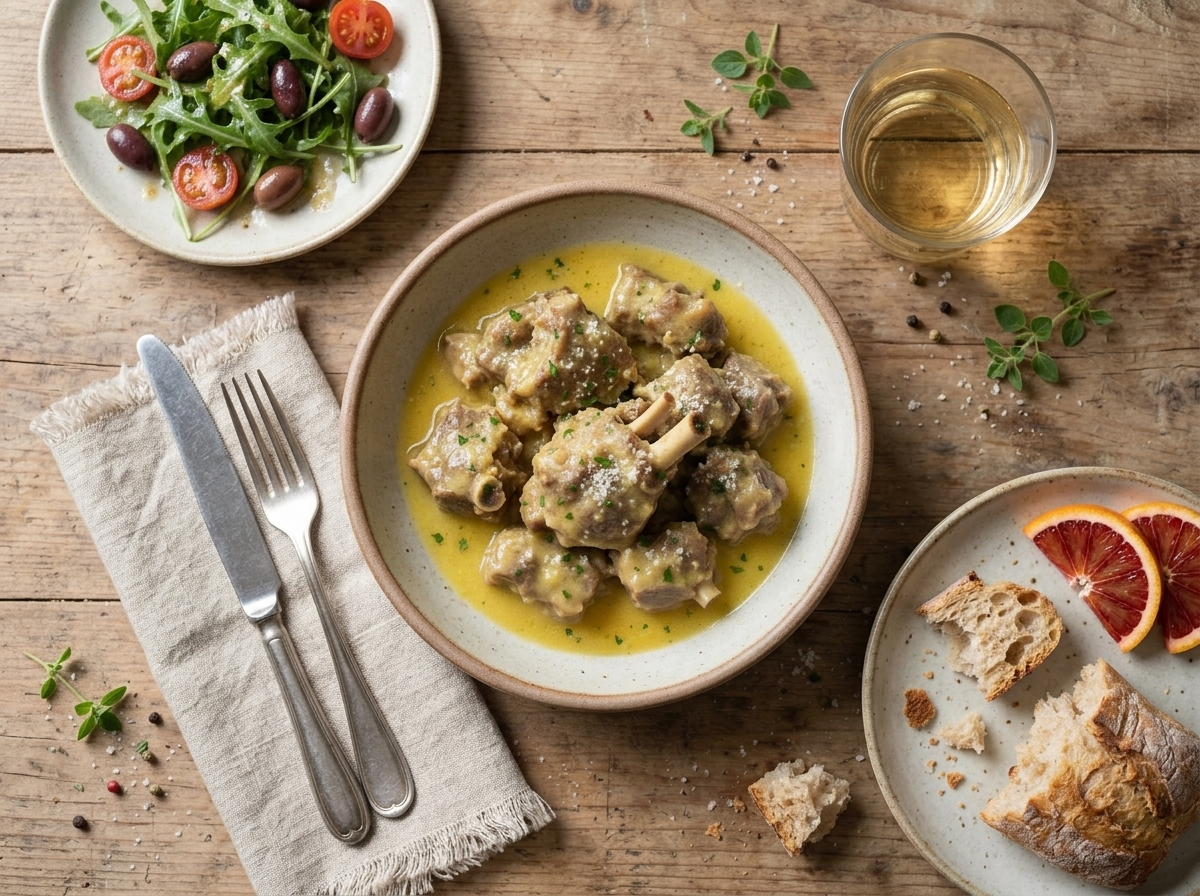
Serve agnello brodettato with crusty bread for mopping up the sauce, or spoon it over soft mashed potatoes. Roasted potatoes wedges also hold up well against the richness.
A simple escarole or chicory salad with a sharp lemon vinaigrette cuts through the fat and echoes the citrus in the sauce.
Pour a chilled Frascati or Verdicchio alongside, their acidity matches the lemon without competing with it.
FAQ
Why did my agnello brodettato sauce turn grainy instead of silky?
Grainy sauce means the eggs scrambled from too much heat. This happens if you add cold eggs straight into a simmering pot or let the finished sauce boil. Temper the eggs with a ladle of hot braising liquid first, then stir everything back in over low heat, staying below 80 C / 175 F.
Can I use chicken thighs instead of lamb shoulder for brodettato?
Yes, bone-in chicken thighs work well and give you a lighter version of the same dish. Brown them the same way, but cut the braise time down to 40 to 45 minutes since chicken cooks faster than lamb shoulder. Finish with the same egg-lemon liaison.
Can I braise the lamb a day ahead before adding the egg and lemon?
Yes, this is actually the easiest way to plan the dish. Braise the lamb through step 5, cool, and refrigerate in its liquid for up to 2 days. Reheat gently on the stove, then whisk and stir in the egg-lemon sauce fresh right before serving.
What goes well with agnello brodettato?
Crusty bread or mashed potatoes work best for soaking up the egg-lemon sauce. A bitter green salad, like escarole with lemon vinaigrette, balances the richness of the lamb. A glass of Frascati or Verdicchio pairs well with the citrus notes in the sauce.
Is agnello brodettato gluten free?
Not as written, since the lamb gets a light dusting of flour before browning. Swap the flour for cornstarch or a gluten-free flour blend and the rest of the dish, lamb, eggs, lemon, and pecorino, is naturally gluten free without any other changes needed.
What is the difference between agnello brodettato and Greek avgolemono?
Both use the same whisked egg and lemon technique, but they land differently. Avgolemono thickens a broth into a soup, while brodettato ties that same liaison to braised lamb, turning pan juices into a thick sauce that clings to the meat rather than pooling around it.