
Jump to Recipe
Fregnacce abruzzesi are torn, diamond-shaped egg pasta pieces from the Abruzzo region, tossed here with a pancetta and tomato sauce that clings to every ragged edge.
The name comes from the dialect word for a rag or scrap, and the shape is intentional. You roll a sheet of fresh pasta thin, then tear or cut it into rough pieces instead of fussing over uniform strips. The irregular surface grabs sauce better than smooth ribbons do.
I use pancetta here because it’s what most grocery stores stock, but guanciale is the more traditional cut in Abruzzo kitchens. Either way, you want the fat rendered slowly so it seasons the whole pan before the tomato goes in.
This isn’t a quick weeknight dish. The dough needs a 30-minute rest, but the hands-on work stays simple, and most of the total time is passive.
Why You’ll Love This Recipe
- Ragged pasta shapes grab the pancetta sauce completely
- One skillet sauce, from soffritto to finished dish
- Dough freezes well for weekend meal prep ahead
- Uses pantry staples: flour, eggs, pancetta, tomato passata
Ingredient Notes
- 00 flour: Standard fine Italian flour gives the dough its stretch. Swap up to half with semolina for a firmer bite.
- eggs: Use room-temperature eggs, they blend into the flour more evenly and the dough comes together faster.
- pancetta: Diced pancetta is easiest to find. Guanciale is the more traditional cut in Abruzzo and renders more fat.
- tomato passata: Smooth strained tomato gives a clean-tasting sauce. Crushed canned tomatoes work if you blend them first.
- pecorino romano: Sharp and salty, it stands up to the pancetta. Parmesan is a milder substitute if that’s what you have.
- dry white wine: Any dry white you’d drink works. The alcohol cooks off and just leaves acidity behind.
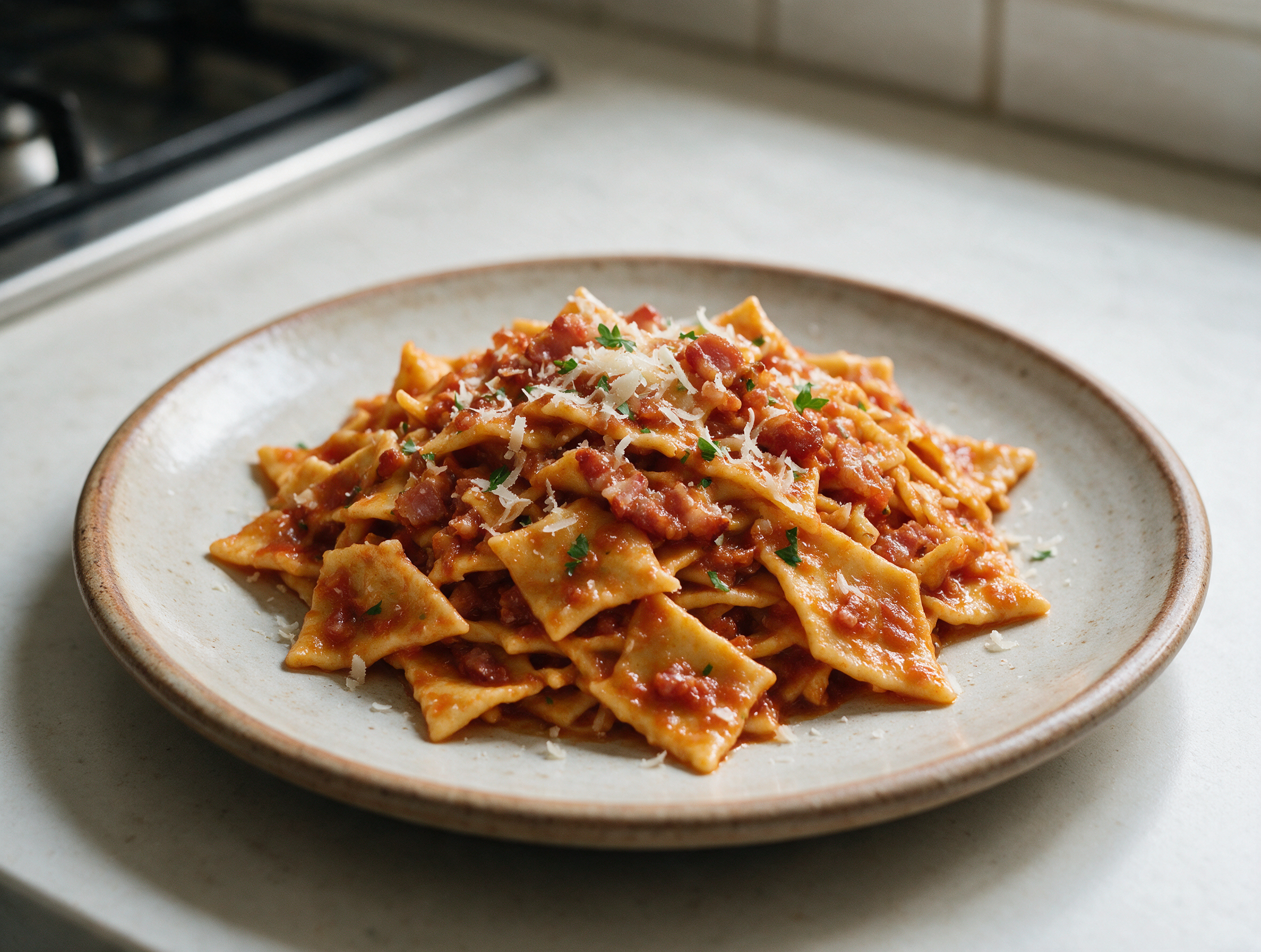
Fregnacce Abruzzesi: Torn Pasta with Pancetta Sauce
Ingredients
Method
- Mound the 00 flour and semolina on a clean work surface or in a large bowl and make a well in the center. Crack in the eggs, add the salt and olive oil, and beat with a fork, gradually pulling in flour from the edges.
- Knead the dough by hand for 8 to 10 minutes until it turns smooth and springs back when poked. Wrap tightly in plastic and let it rest at room temperature for 30 minutes.
- Divide the rested dough into 4 pieces. Roll each piece through a pasta machine, or by hand with a rolling pin, down to about 2 mm thick.
- Cut the sheets into rough diamond or rectangle shapes roughly 5 cm across, the ragged edges are the point, not a flaw. Dust with semolina and spread on a floured tray while you make the sauce.
- Heat the olive oil in a 12-inch / 30 cm skillet over medium heat. Add the pancetta and cook for 5 to 6 minutes, stirring occasionally, until the edges turn golden and the fat has rendered.
- Add the onion and garlic to the same skillet. Cook for 4 to 5 minutes, stirring often, until the onion turns soft and translucent.
- Pour in the white wine and let it bubble for 1 to 2 minutes until the sharp smell cooks off.
- Stir in the tomato passata and chili flakes. Simmer uncovered for 15 to 18 minutes, stirring now and then, until the sauce thickens enough to coat the back of a spoon.
- Bring a 6-quart / 5.7 L pot of well-salted water to a rolling boil. Drop in the fregnacce and cook for 2 to 3 minutes, just until they float to the surface and taste tender with a slight bite.
- Scoop out about 120 ml / 1/2 cup of the pasta water, then drain the fregnacce in a colander.
- Tip the pasta straight into the skillet with the sauce. Toss over low heat for 1 to 2 minutes, adding a splash of the reserved pasta water if the sauce looks tight, until every piece is coated.
- Remove from the heat and stir in half the pecorino. Plate immediately, finishing with more pecorino and a scatter of parsley.
Notes
- Rest the dough for the full 30 minutes, skipping this makes rolling thin nearly impossible
- Reserve pasta water before draining, you'll need it to loosen the sauce
- Guanciale is the more traditional choice than pancetta in Abruzzo kitchens
- Cut pieces don't need to match, ragged uneven shapes are traditional
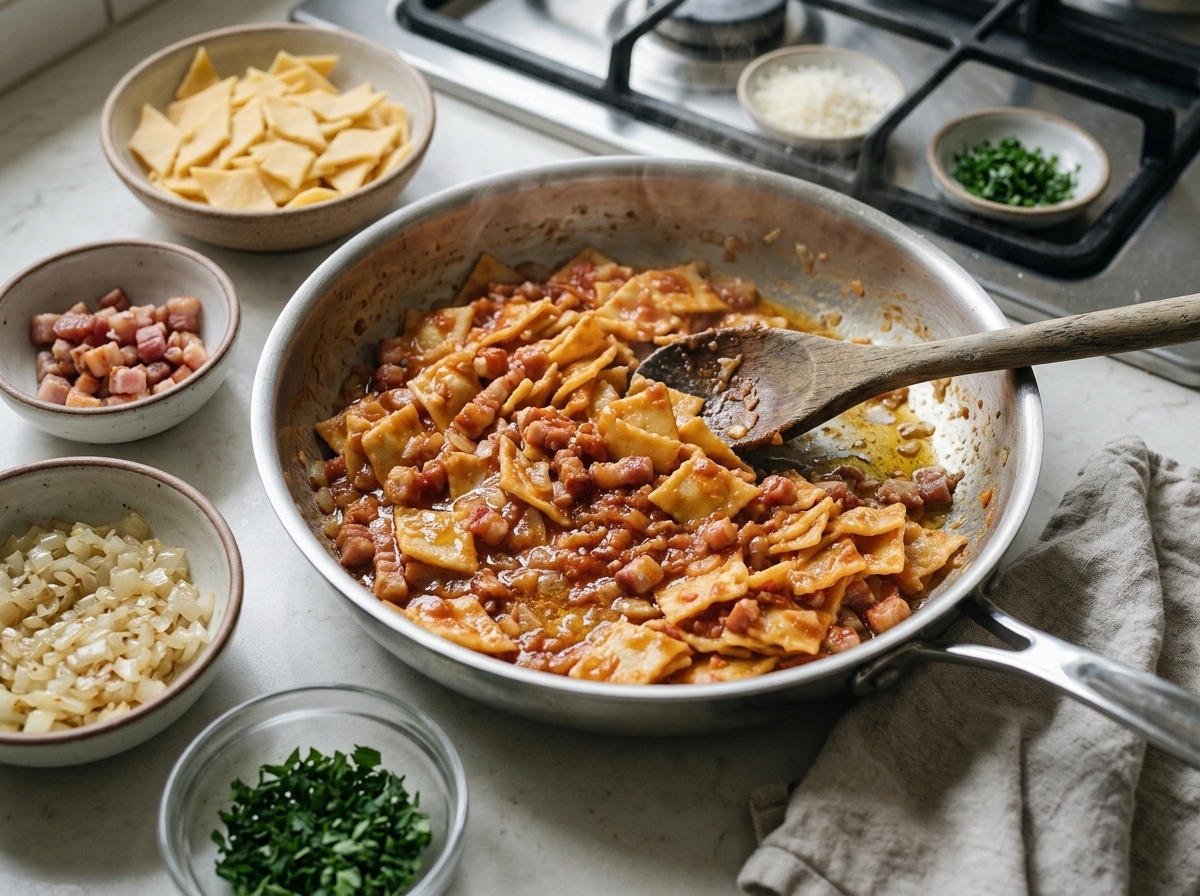
Tips for Success
- Rest the dough for the full 30 minutes so it relaxes enough to roll thin without springing back.
- Tear some pieces by hand and cut others with a knife, the mixed shapes are traditional and catch sauce differently.
- Render the pancetta slowly over medium heat so the fat melts out instead of the meat scorching.
- Save at least 120 ml of pasta water before draining, it loosens the sauce back to a silky consistency.
- Toss the pasta in the skillet, not the pot, so every ragged edge gets coated before it hits the plate.
Variations
- Swap pancetta for guanciale and skip the olive oil, the cured jowl renders enough fat on its own.
- Stir a spoonful of tomato paste into the soffritto for a deeper, more concentrated sauce color and flavor.
- Finish with a handful of wilted escarole or chard for a more substantial, vegetable-forward version of the dish.
Storage and Reheating
Fregnacce abruzzesi keeps in an airtight container in the fridge for 2 to 3 days. The sauce actually tastes better on day two once the pancetta fat has had time to settle into the tomato.
Reheat gently in a skillet over low heat with a splash of water or stock, stirring until warmed through, about 4 to 5 minutes. Avoid the microwave if you can, it toughens the pasta edges.
Uncooked fregnacce freeze well. Spread the cut pieces on a floured tray, freeze until solid, then bag them up and cook straight from frozen, adding about 1 minute to the boiling time.
Serving Suggestions
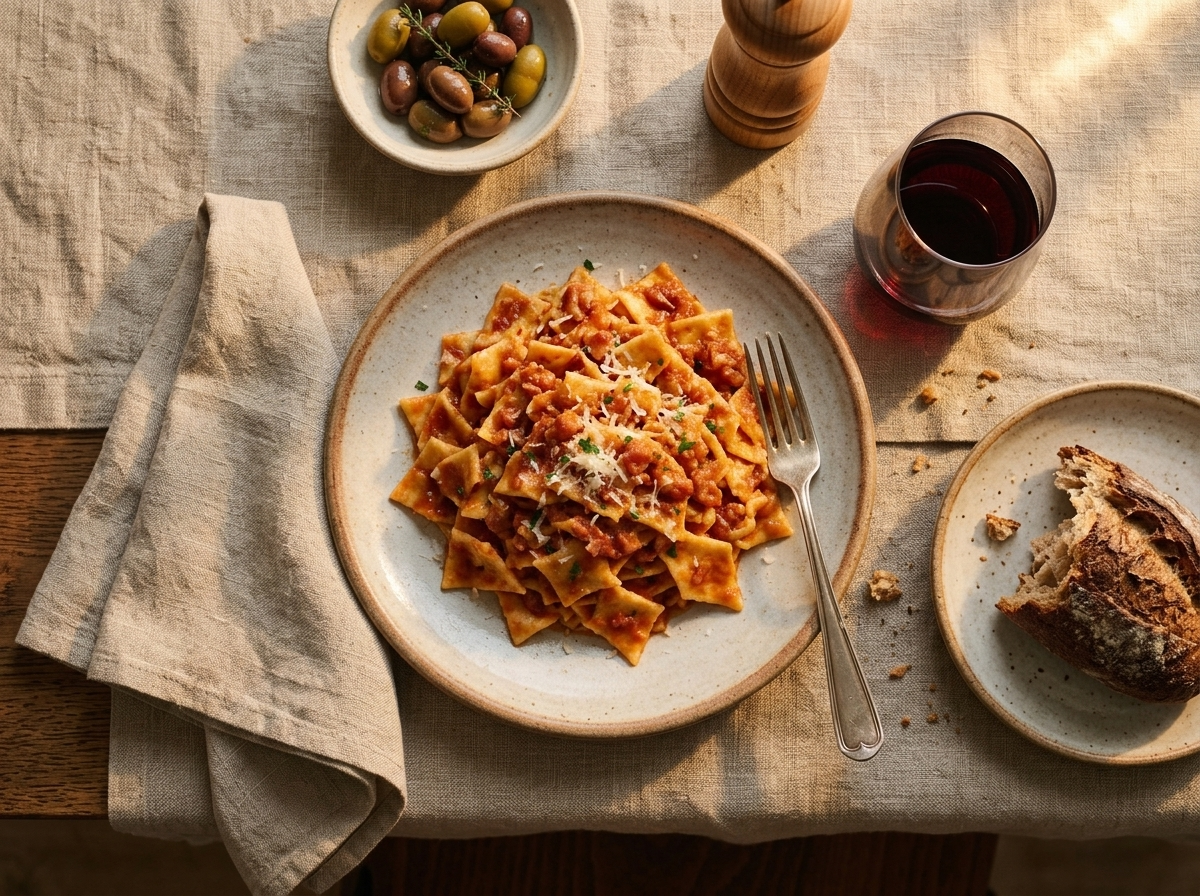
Fregnacce abruzzesi doesn’t need much beside it. A simple green salad with a sharp vinaigrette cuts through the richness of the pancetta.
Pour a glass of Montepulciano d’Abruzzo or another medium-bodied red, the wine’s acidity matches the tomato sauce. Crusty bread on the side is good for the last of the sauce in the bowl.
For a fuller Abruzzese spread, start with a plate of cured meats and pecorino before the pasta, and keep dessert light, like a bowl of cherries or a slice of plain pound cake.
FAQ
Why did my fregnacce turn gummy instead of tender?
Gummy fregnacce usually means the dough was rolled too thick or wasn’t rested long enough before cutting. Roll the sheets to about 2 mm and give the dough its full 30-minute rest so the gluten relaxes. Also pull the pasta the moment it floats, 2 to 3 minutes in boiling water, since extra seconds turns fresh pasta soft and pasty.
Can I use guanciale instead of pancetta in fregnacce abruzzesi?
Yes, guanciale is the more traditional choice in Abruzzo and works the same way in this sauce. It has a stronger, more peppery flavor and renders more fat, so you can skip the added olive oil. Dice it small and cook it a minute or two less since guanciale crisps faster than pancetta.
Can I cut the fregnacce pasta rags ahead of time and freeze them?
Yes, cut fregnacce freeze well before cooking. Spread the pieces on a semolina-dusted tray, freeze until solid for about 2 hours, then transfer to a bag for up to 2 months. Cook straight from frozen in boiling water, adding roughly 1 extra minute until they float and taste tender.
What wine pairs well with fregnacce abruzzesi and pancetta sauce?
Montepulciano d’Abruzzo is the regional match and its soft tannins and dark fruit hold up to the pancetta fat. A Chianti or other medium-bodied Sangiovese works too if that’s what you have open. Stick with a red that has enough acidity to cut through the rendered pork fat in the sauce.
Is fregnacce abruzzesi gluten-free?
No, this recipe isn’t gluten-free since the pasta is made from wheat flour and semolina. You could try a 1:1 gluten-free pasta flour blend, but the dough turns more fragile and harder to roll thin without tearing. A dedicated gluten-free pasta recipe gives better results here.
What’s the difference between fregnacce and maltagliati or lagane?
Fregnacce are torn into rough diamond or rectangle shapes and come specifically from the Abruzzo region, usually paired with tomato and pork-based sauces. Maltagliati means badly cut and is a broader northern Italian term for scrap pasta trimmings. Lagane are wider, ribbon-cut strips from Basilicata and Campania, closer to rustic tagliatelle.