
Jump to Recipe
Schlutzkrapfen are half-moon pasta pockets from South Tyrol, filled with mashed potato, spinach, and quark, then boiled and finished with melted sage butter. Think of them as the Alpine cousin of ravioli, closer to Austrian Kasnudeln than anything from further south in Italy.
The dough is a simple flour-egg-water mix, rolled thin and cut into rounds. The filling leans on mashed potato and wilted spinach, and a soft cheese like quark or ricotta, seasoned with nutmeg and chives.
I learned to seal these tight after losing a batch to a rolling boil that split the seams. Keep the water at a gentle simmer, not a hard boil, and they hold.
Serve them straight from the pot, tossed in butter that’s gone golden with sage leaves, and finished with grated parmesan or a mountain cheese if you have one.
Why You’ll Love This Recipe
- Filling reuses leftover mashed potato and wilted greens
- Freezes well before cooking for a make-ahead dinner
- Sage brown butter comes together in under 5 minutes
- Vegetarian primo with real Alpine roots
Ingredient Notes
- all-purpose flour: Standard flour works fine. Swap half for rye flour if you want a darker, more rustic wrapper like some South Tyrolean cooks use.
- egg: Binds the dough and gives it enough elasticity to roll thin without tearing.
- potatoes: Use a starchy variety like Yukon Gold. They mash drier and hold the filling shape better than waxy potatoes.
- spinach: Fresh spinach wilted and squeezed dry works best. Frozen spinach works too, but squeeze out as much water as you can or the filling turns loose.
- quark or ricotta: Quark is traditional and tangier. Ricotta is easier to find and slightly sweeter, drain it first if it looks watery.
- chives: Adds a mild onion note without overpowering the potato. Parsley works in a pinch but changes the flavor.
- butter: Used both to soften the onion for the filling and to make the sage butter for serving. A good European-style butter browns more evenly.
- sage: Fresh leaves are essential here, dried sage won’t crisp the same way in hot butter.
- parmesan: A hard mountain cheese from the region works too if you can find one, but parmesan is a reliable stand-in.
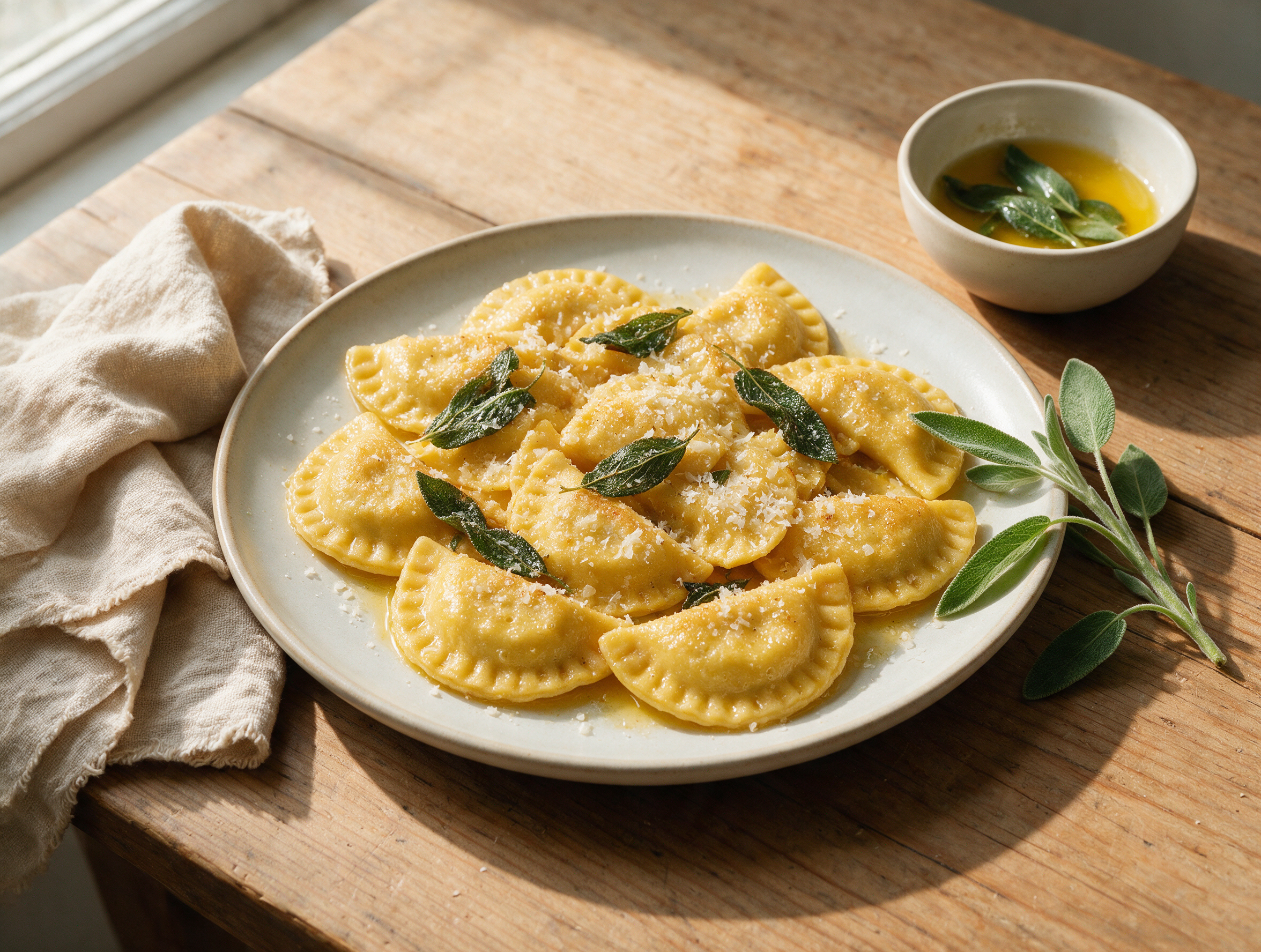
Schlutzkrapfen with Potato-Spinach Filling and Sage Butter
Ingredients
Method
- Mound the flour in a bowl or on the counter and make a well in the center. Crack in the egg, then add the water, olive oil, and salt.
- Mix with a fork until shaggy, then knead by hand for 8 to 10 minutes until the dough is smooth and elastic. Wrap in plastic and rest at room temperature for 30 minutes.
- Boil the potatoes in salted water until fork-tender, 15 to 18 minutes. Drain and mash while still hot, then set aside to cool slightly.
- Melt 1 tbsp butter in the 20 cm / 8-inch skillet over medium heat. Cook the onion until soft, 4 to 5 minutes, then add the spinach and cook until wilted, 2 to 3 minutes. Let cool, then chop finely if using fresh leaves.
- Combine the mashed potato, spinach-onion mixture, quark or ricotta, chives, nutmeg, salt, and pepper. Mix until smooth and firm enough to hold a spoon shape.
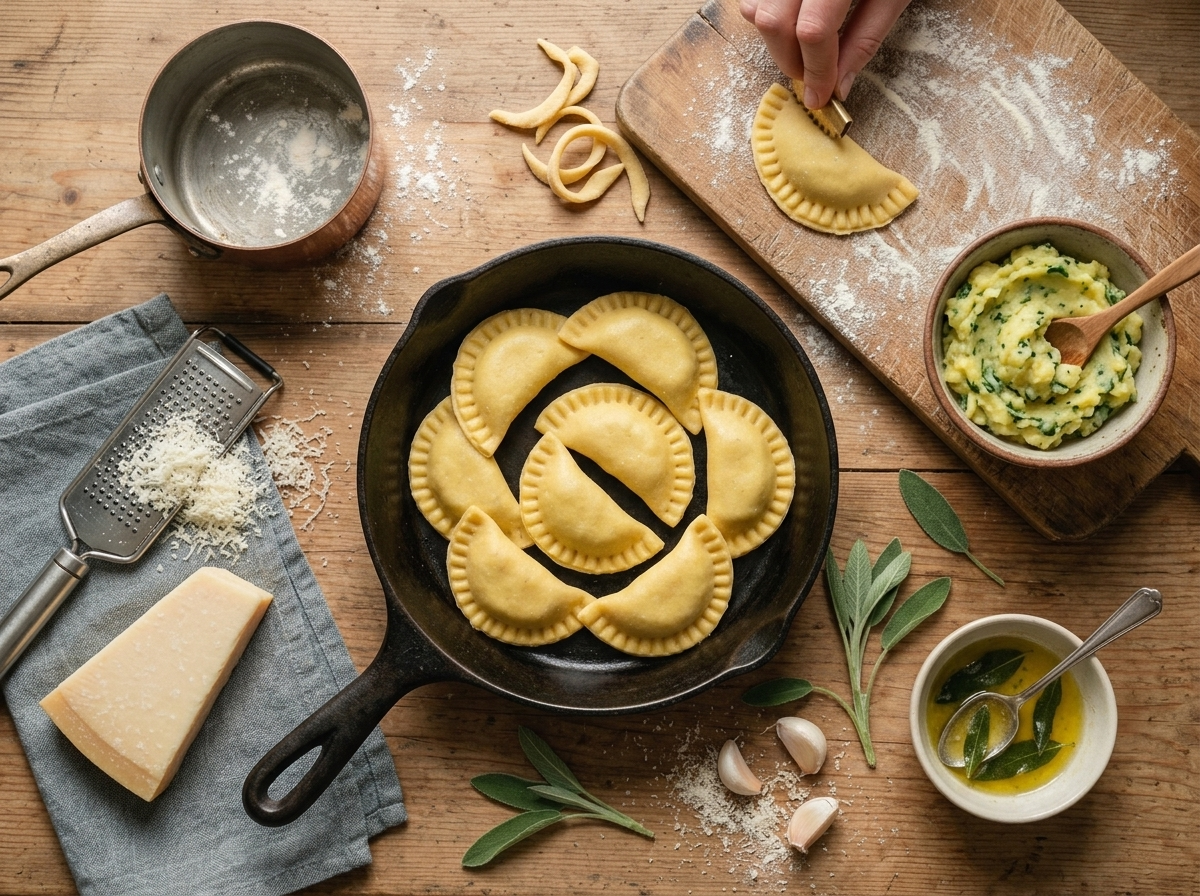
- Roll the dough on a floured surface to about 2 mm thickness. Cut into rounds with the 8 cm cutter, keeping scraps covered under a damp towel.
- Place 1 tsp of filling in the center of each round. Fold into a half-moon, press the edges to seal, dabbing with a little water if the dough feels dry, then crimp with a fork.
- Bring the stockpot of salted water to a gentle simmer, not a rolling boil, since a hard boil can split the seams. Cook the schlutzkrapfen in batches so they aren't crowded, 4 to 5 minutes, until they float and are tender.
- Meanwhile, melt the 60 g butter in the skillet over medium heat with the sage leaves. Cook until the butter turns golden and the sage crisps, 2 to 3 minutes.
- Lift the cooked schlutzkrapfen straight from the pot with a slotted spoon into the skillet, tossing gently to coat in the sage butter.
- Plate immediately, spoon over any extra butter from the pan, and finish with grated parmesan.
Notes
- Keep unused dough covered with a damp towel so it doesn't dry out while shaping.
- Simmer gently, don't boil hard, or the seams split.
- Rest the dough a full 30 minutes before rolling.
- Filling should hold a spoon shape, not run loose.
Tips for Success
- Rest the dough for at least 30 minutes so it rolls thin without snapping back.
- Squeeze excess water from cooked spinach before mixing or the filling turns watery.
- Seal edges firmly with a fork, a loose seam is the main reason schlutzkrapfen split apart in the pot.
- Simmer the water gently, not a rolling boil, to keep the pasta intact.
- Reserve a splash of the cooking water, the same trick used for silky spaghetti cacio e pepe, to loosen the sage butter if it seizes in the pan.
Variations
- Swap the potato-spinach filling for a beet and ricotta version for a magenta-colored pasta.
- Add crumbled speck to the filling for a smokier, meatier version common in South Tyrol.
- Use whole wheat or half rye flour in the dough for a nuttier, more rustic wrapper.
Storage and Reheating
Cooked schlutzkrapfen keep in the fridge for 2 days in an airtight container. Reheat gently in a skillet with a small knob of butter over medium-low heat, turning once, until warmed through, about 4 minutes.
Uncooked schlutzkrapfen freeze well. Lay them on a floured tray until solid, about 2 hours, then transfer to a freezer bag and keep for up to 2 months.
Boil frozen schlutzkrapfen straight from the freezer in gently simmering water, adding 1 to 2 extra minutes to the cook time. Don’t thaw them first, the dough gets sticky and tears.
Serving Suggestions
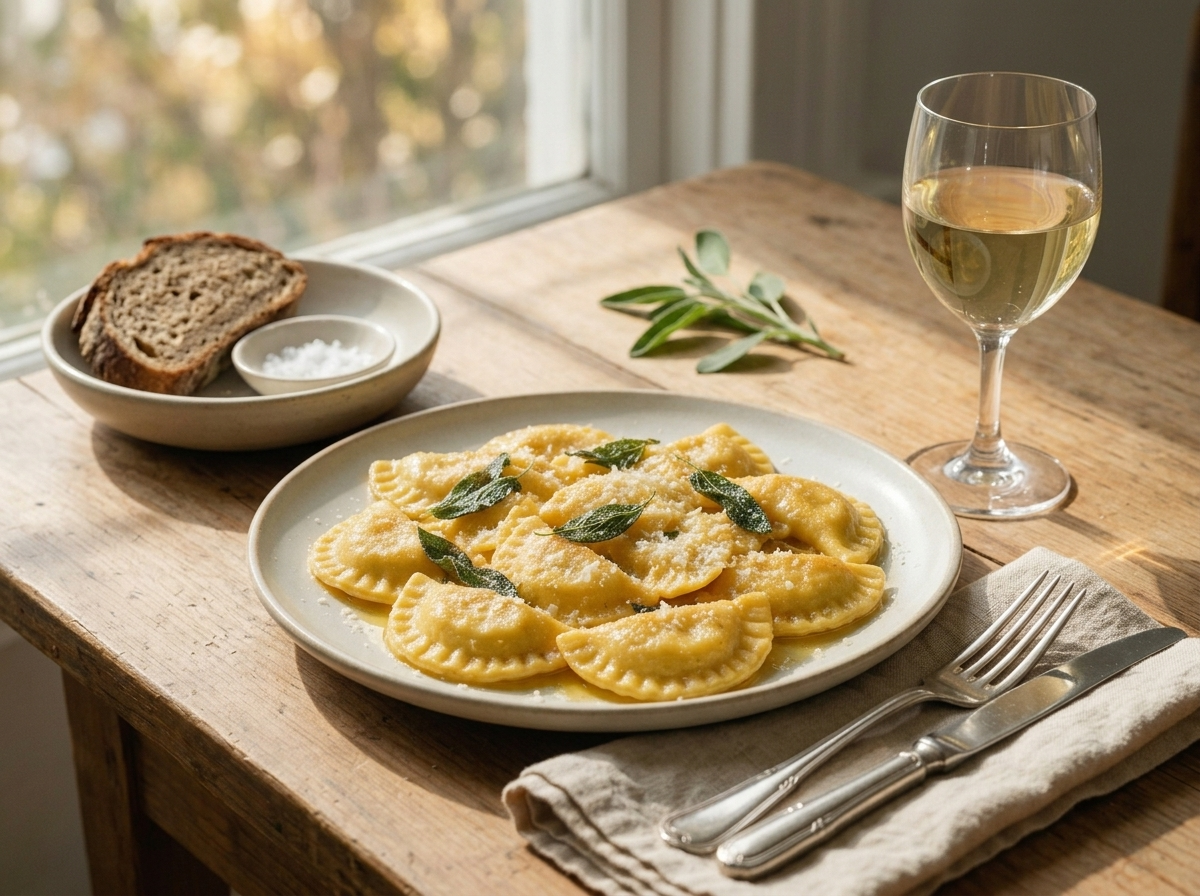
Serve schlutzkrapfen straight from the skillet while the sage butter is still sizzling, with extra parmesan grated over the top at the table for a butter and parmigiano finish.
A simple green salad with a sharp vinaigrette cuts through the butter and cheese. Alongside, a glass of Alto Adige Kerner or Sauvignon Blanc is the regional pour.
For a heartier Tyrolean plate, add a few slices of speck or a small scoop of sauerkraut on the side.
FAQ
Why did my Schlutzkrapfen split open while boiling?
Most splits come from a rolling boil or a loose seam. Keep the water at a gentle simmer, not a hard boil, since the agitation pulls at the fold. Press the edges firmly with a fork and check for gaps before they go in the pot, especially near the corners of each half-moon.
Can I use ricotta instead of quark in the Schlutzkrapfen filling?
Yes, ricotta works well and is easier to find than quark outside German-speaking regions. Drain it in a fine-mesh sieve for 15 minutes first, since ricotta holds more moisture than quark and can make the filling loose. The flavor will be slightly milder and sweeter.
Can I freeze Schlutzkrapfen before cooking them?
Yes, freeze them uncooked on a floured tray until solid, about 2 hours, then transfer to a freezer bag for up to 2 months. Boil straight from frozen in gently simmering water, adding 1 to 2 extra minutes to the cook time. Don’t thaw first or the dough gets sticky.
What goes well with Schlutzkrapfen besides sage butter?
A simple green salad with a sharp vinaigrette cuts through the butter and cheese. A glass of Alto Adige Kerner or Sauvignon Blanc is the regional pour. For a heartier plate, add a few slices of speck or a scoop of sauerkraut on the side.
Are Schlutzkrapfen vegetarian?
Yes, the classic potato-spinach-quark filling in this recipe has no meat, making it a vegetarian primo. Some South Tyrolean versions add diced speck to the filling, so check before serving vegetarians. This version, as written, contains dairy, egg, and gluten but no meat.
What’s the difference between Schlutzkrapfen and Kärntner Kasnudeln?
Schlutzkrapfen come from South Tyrol and use an egg pasta dough closer to Italian ravioli, usually filled with potato and spinach. Kärntner Kasnudeln, from Austria’s Carinthia region, often lean toward a sweeter, mint-flecked potato and quark filling. Both are boiled and finished with butter.