
Jump to Recipe
Pressknödel Altoatesini are South Tyrolean bread dumplings built from stale rolls, diced speck, and egg, poached in broth, then finished in a hot skillet with butter until the crust turns golden and the inside stays soft.
I make these with bread that’s at least two days old. Fresh bread turns the mixture gummy and the dumplings fall apart in the pot, which is the one mistake that ruins a whole batch.
The dough comes together fast, maybe 15 minutes, and the broth does the actual cooking. Pan-frying afterward is optional but it’s the step that gives Pressknödel their signature crust and separates them from a plain Knödel served straight from the pot.
Serve them in the poaching broth for a light meal, or alongside braised meat and sauerkraut for something heartier. Either way, keep a few extra speck cubes for the top.
Why You’ll Love This Recipe
- Uses up stale bread instead of tossing it out
- Pan-fried crust adds texture without extra effort
- Freezes well for a fast weeknight side dish
- One dough works for broth or sauerkraut serving styles
Ingredient Notes
- Stale bread: Use rolls or a rustic loaf at least two days old, cubed to 1 cm. Fresh bread makes the dough too wet and the dumplings fall apart.
- Speck: Alto Adige speck brings a smoky, cured flavor. Pancetta or thick-cut bacon works if you can’t find it, though the taste will be milder.
- Milk: Warms and softens the bread cubes evenly. Whole milk gives the best texture, low-fat works but the dumplings turn slightly denser.
- Eggs: Bind the whole mixture together. Don’t skip them, the dumplings will break apart in the broth without enough egg.
- Flour: Adjusts texture if the dough feels loose. Add it a tablespoon at a time rather than all at once so you don’t overdo it.
- Broth: Beef or vegetable broth both work here. Use one you’d be happy to drink since it becomes part of the finished dish.
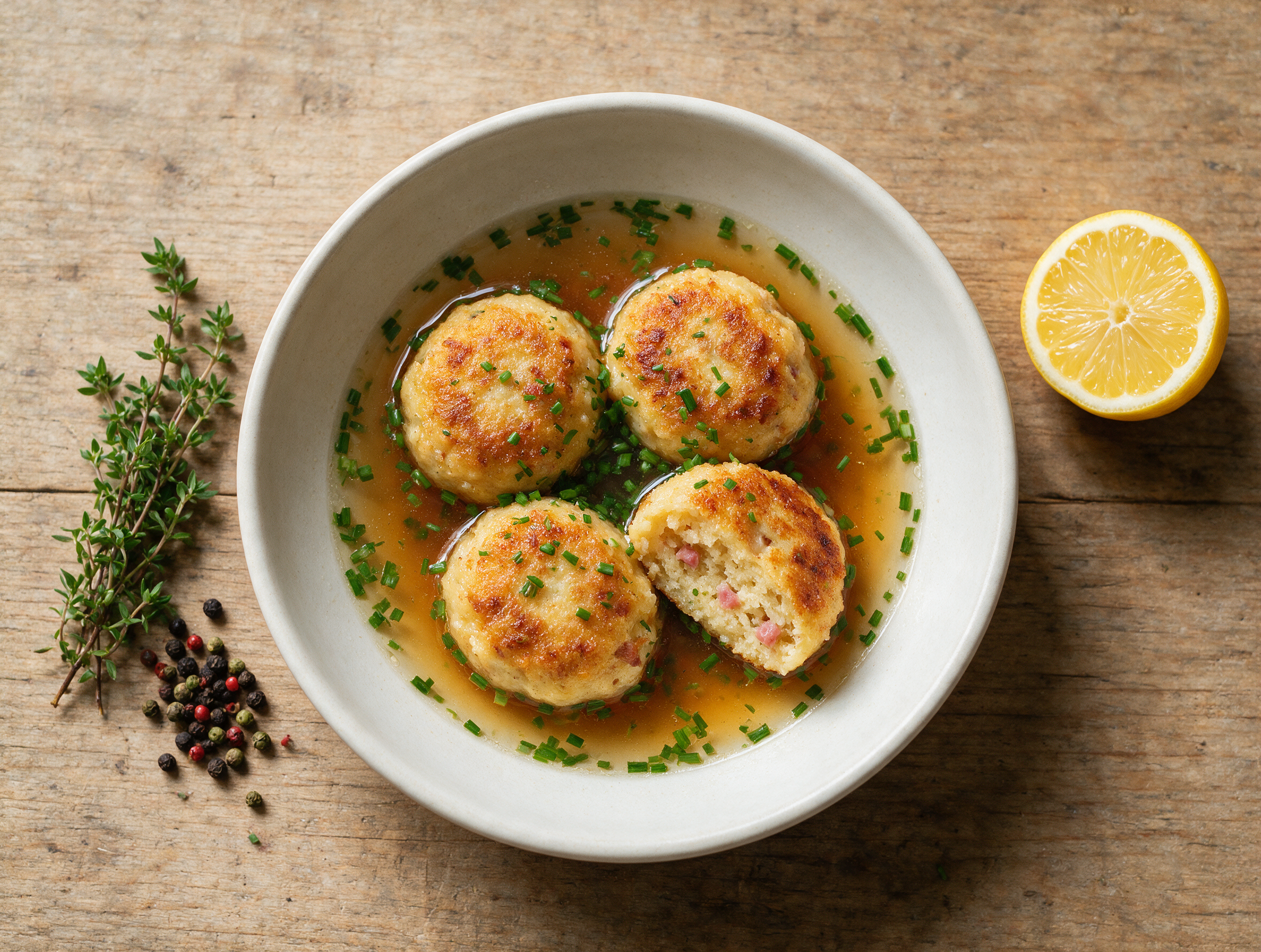
Pan-Fried Pressknödel Altoatesini (Bread Dumplings)
Ingredients
Method
- Cut the bread into 1 cm cubes and place in a large mixing bowl. Warm the milk until just steaming, pour over the bread, toss, and let sit 10 minutes until softened.
- Melt 28 g / 2 tbsp butter in a 26 cm / 10-inch skillet over medium heat. Add the onion and cook 3 minutes until soft. Add the speck and cook 4 to 5 minutes more until the fat renders and the edges turn golden.
- Scrape the speck and onion mixture into the bowl with the soaked bread. Add the eggs, flour, chives, parsley, salt, pepper, and nutmeg.
- Mix with your hands until the mixture holds together when pressed. It should feel tacky, not wet. Add another tablespoon of flour if it won't hold its shape.
- Let the mixture rest 10 minutes. Wet your hands and shape into 8 to 10 oval dumplings, about 70 g each.
- Bring the broth to a gentle simmer in a 24 cm / 9-inch soup pot, not a rolling boil. Lower the dumplings in with a slotted spoon.
- Poach 15 to 18 minutes until the dumplings float and feel firm when pressed. Lift out with the slotted spoon and drain on a plate.
- Wipe out the skillet and melt the remaining 30 g butter over medium-high heat. Pat the dumplings dry, then fry 3 to 4 minutes per side until a golden crust forms.
- Serve warm in a shallow bowl with a ladle of the poaching broth, or alongside sauerkraut. Scatter extra chives on top.
Notes
- Use bread at least two days old so it doesn't turn gummy
- Test-poach one dumpling before committing the whole batch
- Keep broth at a gentle simmer, never a rolling boil
- Don't skip the pan-fry step for the classic crisp edge
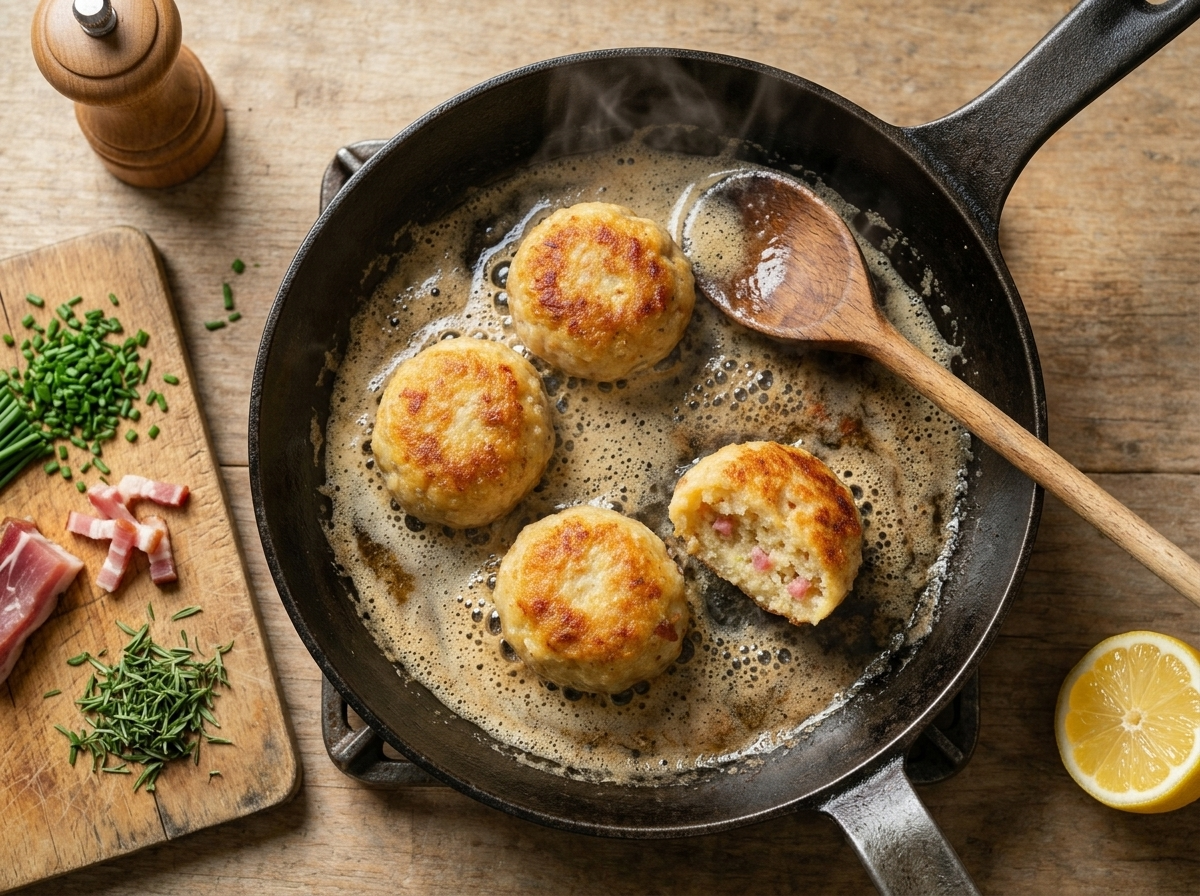
Tips for Success
- Squeeze excess milk from the bread if it pools at the bottom of the bowl before adding eggs.
- Test one dumpling by poaching it alone first, then adjust flour if it falls apart.
- Wet your hands before shaping so the mixture doesn’t stick to your palms.
- Keep the broth at a gentle simmer, not a rolling boil, or the dumplings can break apart.
- Pat dumplings dry before they hit the hot butter so they crisp instead of steam.
Variations
- Swap speck for diced pancetta or smoked ham if speck isn’t sold near you.
- Add 50 g grated Graukäse or fontina to the dough for a stronger, funkier flavor.
- Skip the pan-fry step and serve dumplings straight from the broth for a lighter version.
Storage and Reheating
Cooked Pressknödel keep in the fridge for 3 to 4 days in an airtight container, whether they’re poached only or already pan-fried.
To reheat, warm a 26 cm / 10-inch skillet with a small knob of butter over medium heat and fry the dumplings 3 to 4 minutes per side until the crust re-crisps and the center is hot. A microwave works in a pinch but leaves them soft instead of crisp.
Pressknödel also freeze well after poaching, before pan-frying. Freeze on a tray until solid, then bag them for up to 2 months, thaw overnight in the fridge, and pan-fry straight from thawed.
Serving Suggestions
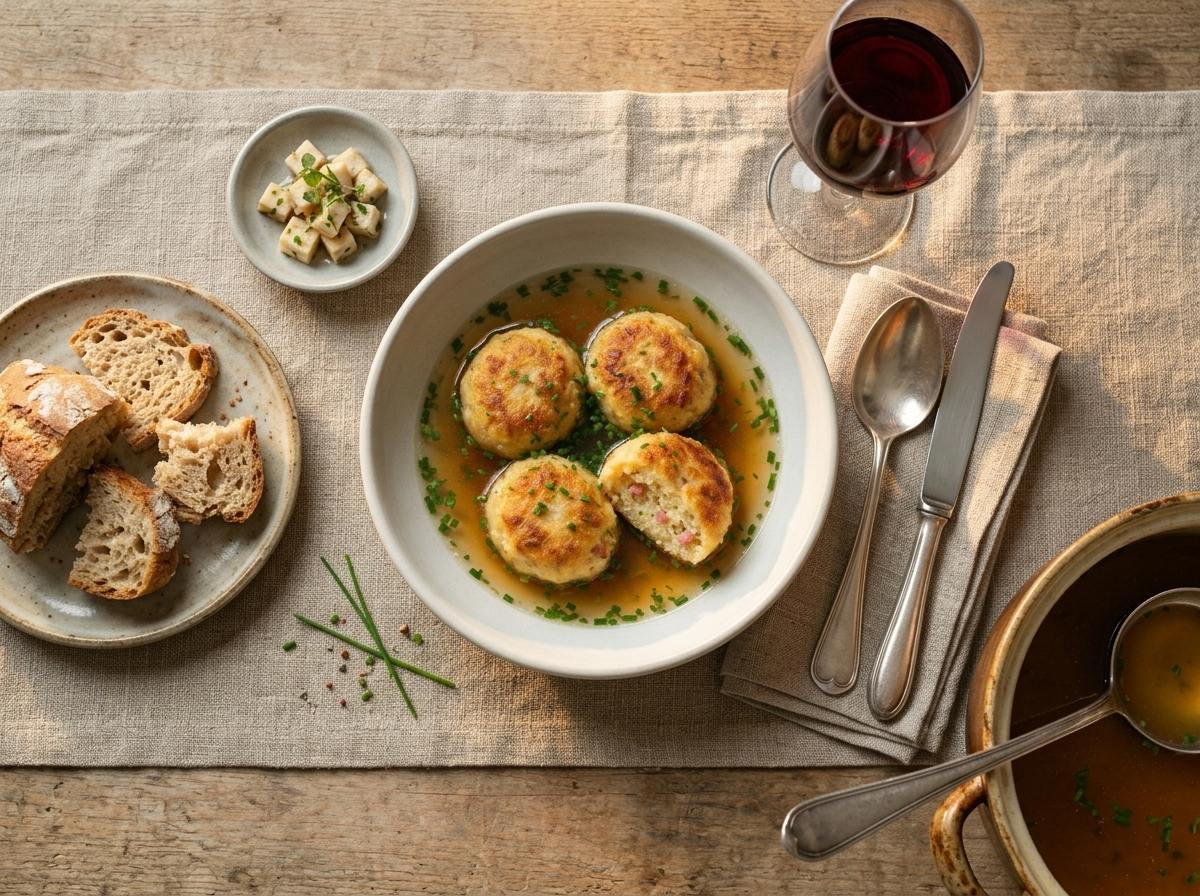
Pressknödel Altoatesini work as a light meal on their own, ladled into shallow bowls with a cup of the poaching broth and a scatter of chives.
For something heartier, serve them next to braised beef, goulash, or warm sauerkraut, the classic Alto Adige pairing.
A simple green salad with a sharp vinaigrette cuts through the butter and speck if you want a lighter plate alongside.
FAQ
Why did my Pressknödel Altoatesini fall apart in the broth?
The dough is usually too wet or the broth boiled too hard. Fresh bread holds extra moisture, so use rolls at least two days old and squeeze out excess milk before mixing. Keep the broth at a gentle simmer, not a rolling boil, and test-poach one dumpling first to check the texture.
Can I use bacon instead of speck in Pressknödel Altoatesini?
Yes, thick-cut bacon or pancetta works as a substitute for speck. Speck brings a smokier, more cured flavor since it’s air-dried and lightly smoked, so bacon will taste milder and slightly fattier. Dice it small and render it the same way, cooking until the edges turn golden before adding it to the bread.
Can I freeze Pressknödel Altoatesini before pan-frying?
Yes, poach the dumplings first, then freeze them on a tray until solid before bagging them for up to 2 months. Thaw overnight in the fridge and pan-fry straight from thawed in a hot buttered skillet. Freezing after the pan-fry step works too, but the crust softens once reheated.
What goes well with Pressknödel Altoatesini besides broth?
Sauerkraut and braised beef or goulash are the classic pairings in Alto Adige. The tang of sauerkraut cuts through the butter and speck, while a rich braise turns the dumplings into a full meal instead of a starter. A simple green salad with a sharp vinaigrette also works for something lighter.
Are Pressknödel Altoatesini gluten-free?
No, the traditional version isn’t gluten-free since it’s built on stale wheat bread and a spoonful of flour. You can swap in a good gluten-free bread and a gluten-free flour blend for the binder, though the texture turns slightly denser. Check that your broth is gluten-free too if that matters for you.
What’s the difference between Pressknödel and Canederli?
Canederli is the broader Italian term for South Tyrolean bread dumplings, while Pressknödel refers specifically to the flattened, pressed shape that’s often pan-fried after poaching. Round canederli are usually served straight from the broth without frying. Both use the same base of stale bread, speck, egg, and milk.