
Jump to Recipe
Schlutzkrapfen altoatesini are half-moon pasta pockets from Alto Adige, South Tyrol, filled with spinach and ricotta and rolled from a wheat-rye dough that gives them a faint gray-brown color. Boil them briefly, then toss in browned butter with chives, and you get a plate that tastes like the Dolomites in November.
The name comes from the German dialect word for a slippery little dumpling. In some valleys the filling shifts to mashed potato and cheese instead of spinach, but the spinach and ricotta filling is what shows up on most mountain-hut menus.
I use a mix of 00 flour and rye flour for the dough. Straight 00 flour works fine too, but the rye adds a slightly darker color and a rounder flavor closer to what you’d get in Bolzano.
One failure mode worth knowing: if the filling is too wet, the dough seams pop open in the boiling water. Squeeze the spinach hard, and don’t skip draining the ricotta for at least 20 minutes.
Why You’ll Love This Recipe
- Freezes well raw, so you can stock a batch for busy nights
- Rye dough adds flavor without any special equipment
- Browned butter sauce needs only three ingredients
- Filling comes together with pantry cheese and one bunch of spinach
Ingredient Notes
- 00 flour: Standard fine Italian flour gives a smooth, elastic dough. All-purpose flour works as a substitute with a very similar result.
- rye flour: Adds the faint gray-brown color and rounder flavor typical of Alto Adige dough. Use all 00 flour if you don’t have rye, the texture stays fine.
- ricotta: Drain it in a fine-mesh sieve for 20 to 30 minutes before mixing, or the filling turns watery and the seams split in the water.
- spinach: Fresh spinach wilted and squeezed dry gives the best color. Frozen spinach, thawed and squeezed hard, works too and saves a step.
- grana padano: Adds salt and depth to the filling. Parmigiano Reggiano is a fine substitute if that’s what’s in the fridge.
- egg yolk: Binds the filling so it holds together once boiled. Don’t skip it or the mixture can crumble when you bite in.
- butter: Browned until it smells nutty, this is the whole sauce. Watch it closely near the end, since it jumps from golden to burnt fast.
- chives: Fresh chives add a sharp, mild onion note. Flat-leaf parsley works if chives aren’t available, though the flavor shifts slightly.
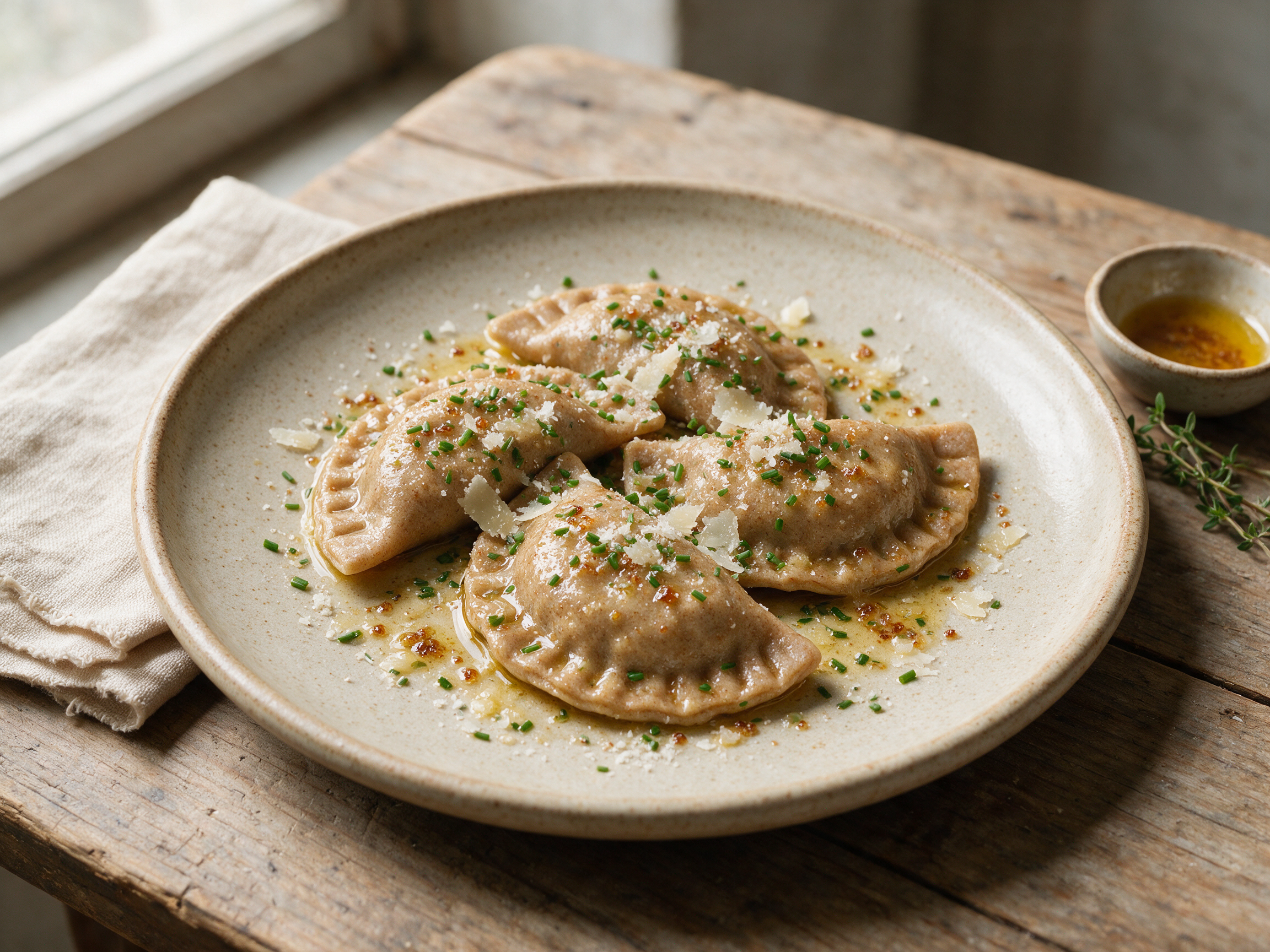
Schlutzkrapfen Altoatesini with Spinach and Ricotta
Ingredients
Method
- Mound the 00 flour, rye flour, and salt on a work surface or in a large bowl. Make a well in the center and add the eggs and olive oil.
- Mix with a fork, gradually pulling in flour from the edges, then knead by hand for 8 to 10 minutes until the dough is smooth and elastic. Add water a teaspoon at a time if it feels dry.
- Wrap the dough in plastic and let it rest at room temperature for 30 minutes.
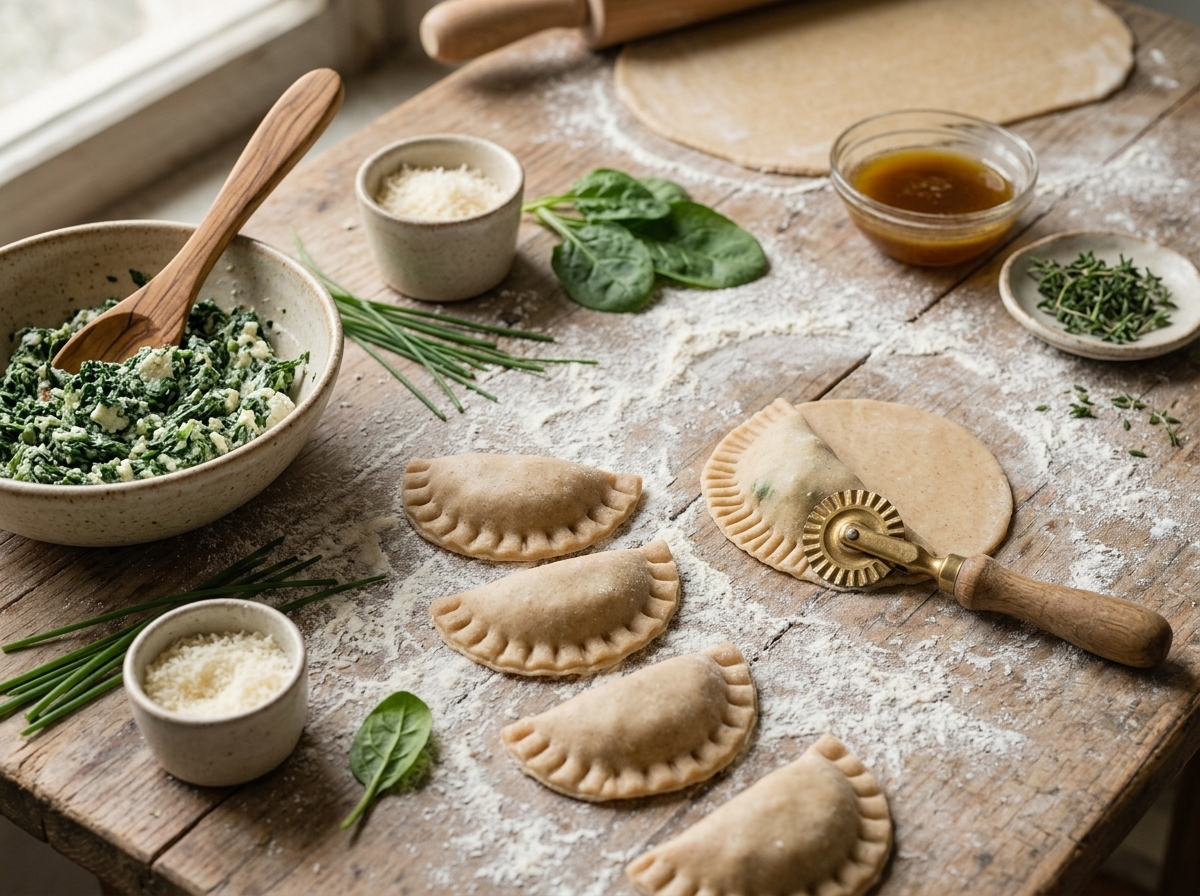
- Wilt the spinach in a dry 24 cm / 9.5-inch skillet over medium heat for 2 to 3 minutes until fully collapsed. Cool, then squeeze it hard in a kitchen towel to remove as much water as possible, and chop fine.
- Stir the chopped spinach into the drained ricotta with the egg yolk, 40 g grana padano, nutmeg, salt, and pepper until evenly combined.
- Roll the dough on a lightly floured surface, or through a pasta machine, to about 2 mm thick. Cut into rounds with an 8 cm / 3-inch cutter.
- Spoon about 1 tsp of filling onto the center of each round. Fold in half to form a half-moon, pressing out any air before sealing the edge firmly with your fingertip or a fork. You should get about 24 to 28 pieces.
- Bring a 6-quart / 5.7 L stockpot of well-salted water to a boil. Cook the schlutzkrapfen in two batches so they have room to float freely, 3 to 4 minutes per batch, until they rise to the surface and the dough is tender at the edges.
- While the pasta cooks, melt the butter in a clean 24 cm / 9.5-inch skillet over medium heat, swirling often, until it turns amber and smells nutty, about 3 to 4 minutes.
- Lift the cooked schlutzkrapfen straight into the browned butter with a slotted spoon and toss gently to coat.
- Plate immediately, spooning extra butter over the top. Scatter with chives and the remaining grana padano, and serve right away.
Notes
- Drain ricotta at least 20 minutes before mixing the filling.
- Rest the dough a full 30 minutes, it rolls out much easier.
- Cook in two batches so the pasta has room to float freely.
- Watch the butter closely once it starts foaming, it browns fast.
- Extra filling keeps in the fridge for 2 days if dough runs short.
Tips for Success
- Drain the ricotta in a sieve for 20 to 30 minutes, the same step used when prepping cannelloni alla sorrentina, so the filling doesn’t turn watery.
- Squeeze wilted spinach completely dry in a kitchen towel, or the filling will leak.
- Roll the dough to about 2 mm thin, too thick and the centers stay chewy after boiling.
- Seal edges firmly with a fork or fingertip, air pockets cause tears in the water.
- Brown the butter just until it smells nutty and turns amber, watch closely near the end.
Variations
- Swap spinach for finely mashed potato and extra cheese for the classic potato version found in some Alto Adige valleys.
- Use goat cheese in place of half the ricotta for a tangier filling that pairs well with sage butter.
- Finish with crumbled speck instead of chives for a smokier, more savory plate.
Storage and Reheating
Store cooked schlutzkrapfen in an airtight container in the fridge for up to 2 days. Uncooked, filled ones keep raw in the fridge for a day, but freezing is the better option for longer storage.
To freeze, arrange uncooked schlutzkrapfen in a single layer on a floured tray, freeze until solid for about 2 hours, then transfer to a freezer bag. They keep for up to 2 months, and you can boil them straight from frozen with 1 to 2 extra minutes added to the cook time.
To reheat cooked schlutzkrapfen, warm a knob of butter in a 24 cm / 9.5-inch skillet over medium-low heat and toss the pasta for 2 to 3 minutes until heated through. A quick 30-second dip in simmering water works too if you’d rather skip the butter step.
Serving Suggestions
Serve schlutzkrapfen altoatesini straight from the pan with the browned butter spooned over, a scatter of chives, and a shower of grated grana padano.
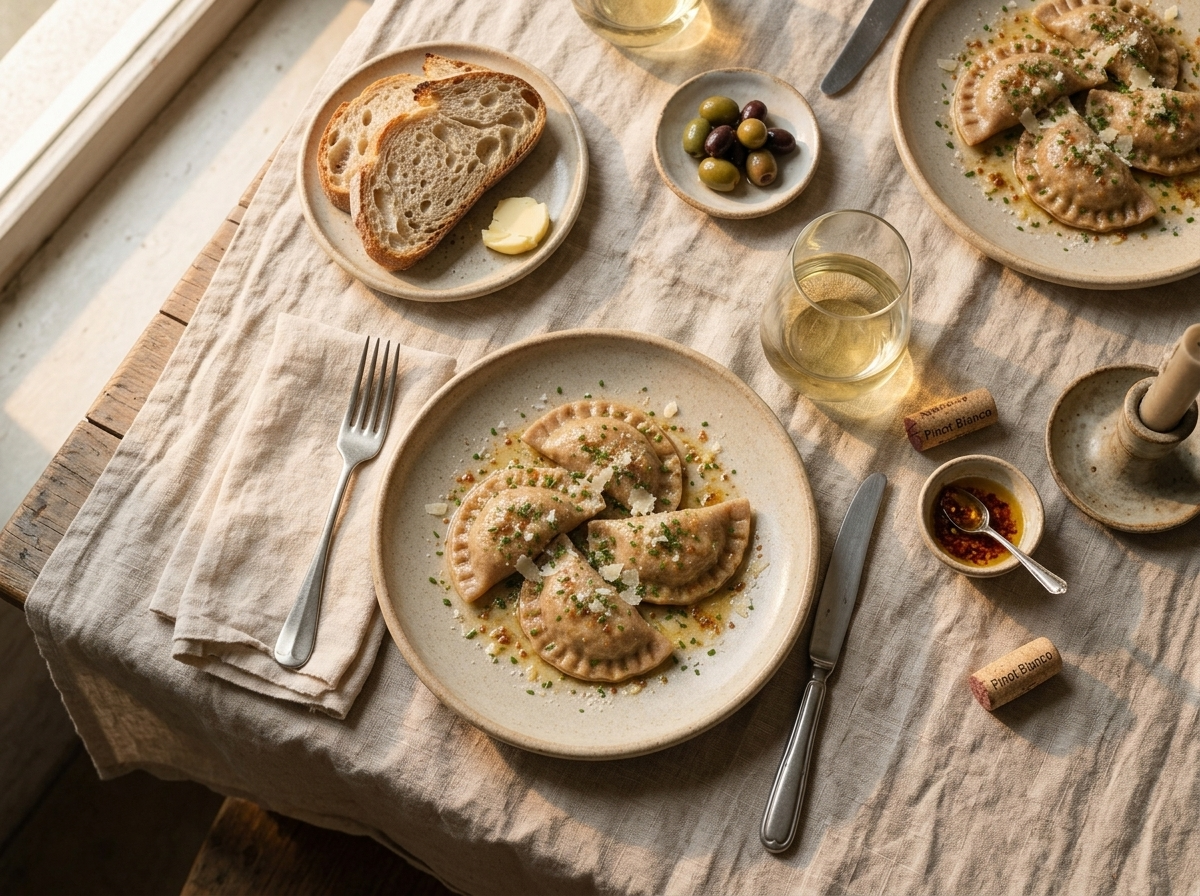
A simple bitter greens salad with a sharp vinaigrette cuts through the richness of the butter and cheese. Speck and a glass of Alto Adige Pinot Bianco round out the plate for a South Tyrolean dinner.
For a heartier meal, ladle a small bowl of clear beef or vegetable broth alongside, the way many mountain huts plate it as a starter before a second course.
FAQ
Why did my schlutzkrapfen fall apart while boiling?
Usually the filling was too wet or the seal wasn’t pressed tight enough. Squeeze wilted spinach completely dry and drain the ricotta for at least 20 minutes before mixing. Press out any air pocket around the edge with your fingertip, then crimp with a fork so no gaps remain before they hit the water.
Can I use frozen spinach instead of fresh for schlutzkrapfen filling?
Yes, frozen spinach works well and saves the wilting step. Thaw about 150 g, then squeeze it hard in a kitchen towel until no more water comes out, since frozen spinach holds more moisture than fresh. Chop it fine before folding it into the ricotta.
Can I freeze schlutzkrapfen altoatesini before cooking them?
Yes, uncooked schlutzkrapfen freeze well for up to 2 months. Arrange them in a single layer on a floured tray, freeze until solid for about 2 hours, then transfer to a freezer bag. Boil straight from frozen, adding 1 to 2 extra minutes to the cook time.
What goes well with schlutzkrapfen altoatesini besides browned butter?
A bitter green salad with a sharp vinaigrette cuts the richness nicely, and a few slices of speck add a smoky contrast. Alto Adige Pinot Bianco or another light white wine works at the table. For a starter-sized portion, serve a handful in a bowl of clear broth, the way mountain huts often plate it.
Is schlutzkrapfen altoatesini vegetarian?
Yes, this recipe is vegetarian since the filling relies on spinach, ricotta, and grated cheese with no meat. It isn’t vegan or dairy free though, since it uses ricotta, grana padano, egg, and butter. It also isn’t gluten free, because the dough is built from wheat and rye flour.
What’s the difference between schlutzkrapfen and regular Italian ravioli?
Schlutzkrapfen use a wheat-rye dough and a half-moon shape, while most Italian ravioli use all-purpose or 00 flour dough cut into squares or circles. The filling style also leans Alpine, spinach and ricotta or potato and cheese, finished simply with browned butter rather than tomato or cream sauces typical further south.