
Jump to Recipe
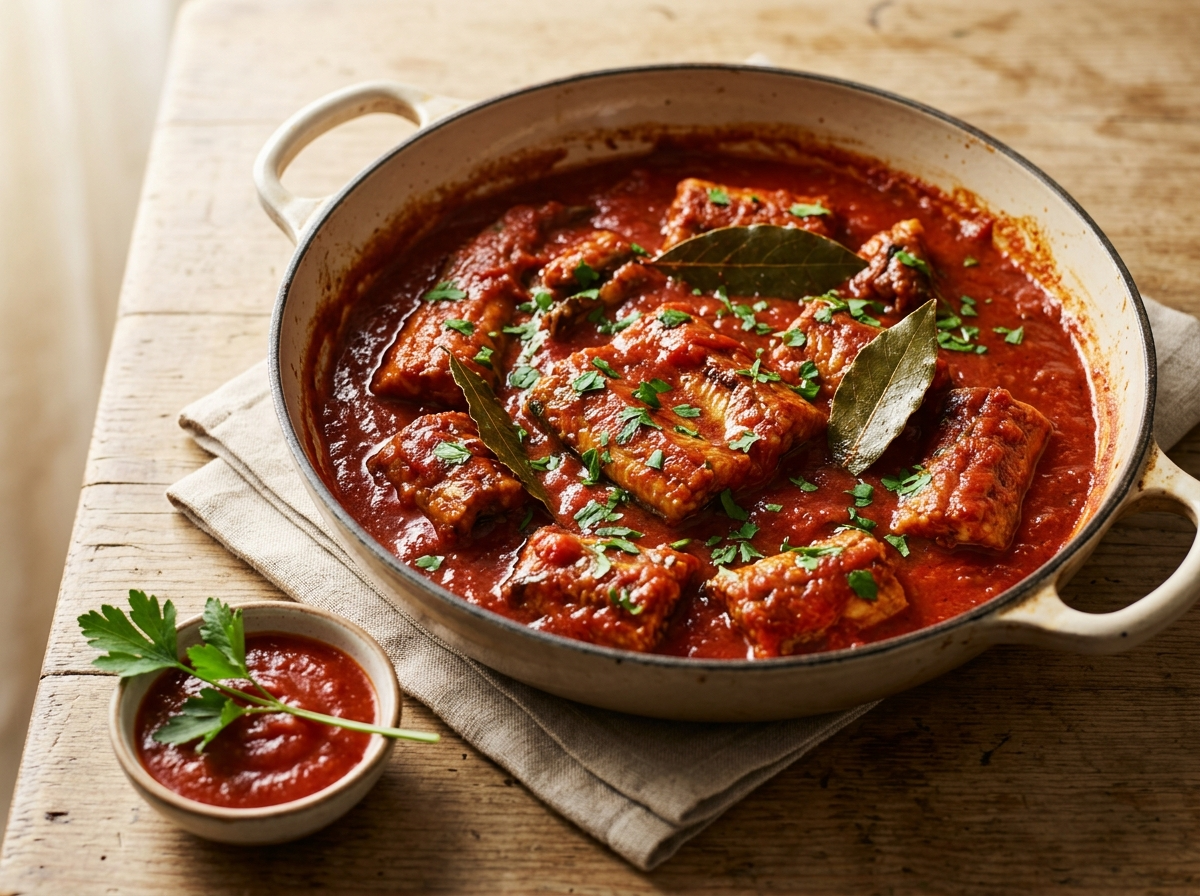
Anguilla in umido is one of those recipes that divides people before they even taste it. Eel has a reputation for being difficult or unfamiliar, but this braise is straightforward once you have the fish cleaned and cut.
The dish comes from Italy’s river and lagoon cooking traditions – places like the Po Delta in Emilia-Romagna and the Lazio coast, where eel has been fished and eaten for centuries. It shows up on Christmas Eve tables as part of the Feast of the Seven Fishes, but it’s genuinely a year-round preparation wherever eel is sold.
The technique is a simple umido: a slow wet braise in tomato, white wine, garlic, and a handful of herbs. The eel’s fat melts into the sauce as it cooks, giving you something deeply savory and full-bodied without any cream or butter.
You can ask your fishmonger to clean and skin the eel. That step alone removes most of the intimidation.
Why You’ll Love This Recipe
- Rich, savory tomato sauce built from the eel’s own fat
- Authentic Italian Christmas Eve dish with everyday technique
- One pan from stovetop start to table
- Pairs naturally with polenta, bread, or plain boiled potatoes
Ingredient Notes
- Eel (anguilla): Ask your fishmonger to skin and gut the eel – it saves significant effort at home. Fresh is best, but thawed frozen eel from an Asian grocery works reliably; pat it very dry before browning.
- Canned whole peeled tomatoes: Crush them by hand before adding. San Marzano-style are good here but any good-quality whole peeled tomato works. Fresh peeled tomatoes can substitute in late summer.
- Dry white wine: A neutral Italian white like Verdicchio or Pinot Grigio deglazes the pan cleanly without adding sweetness. Dry vermouth works at a 1:1 swap.
- Bay leaves: Use fresh bay if you have it – the flavor is noticeably more resinous. Dried bay is fine but use two leaves where you’d use one fresh.
- Flat-leaf parsley: Added at the end, not during the braise. It keeps its color and a clean herbal note that cuts the richness of the sauce.
- Extra-virgin olive oil: Don’t skimp here – the oil carries the garlic and onion flavor into the base. A medium-fruity oil works better than a very grassy one for this dish.
Anguilla in Umido: Italian Braised Eel in Tomato Sauce
Ingredients
Method
- Pat the eel pieces thoroughly dry with paper towels. Season all sides with salt and black pepper.
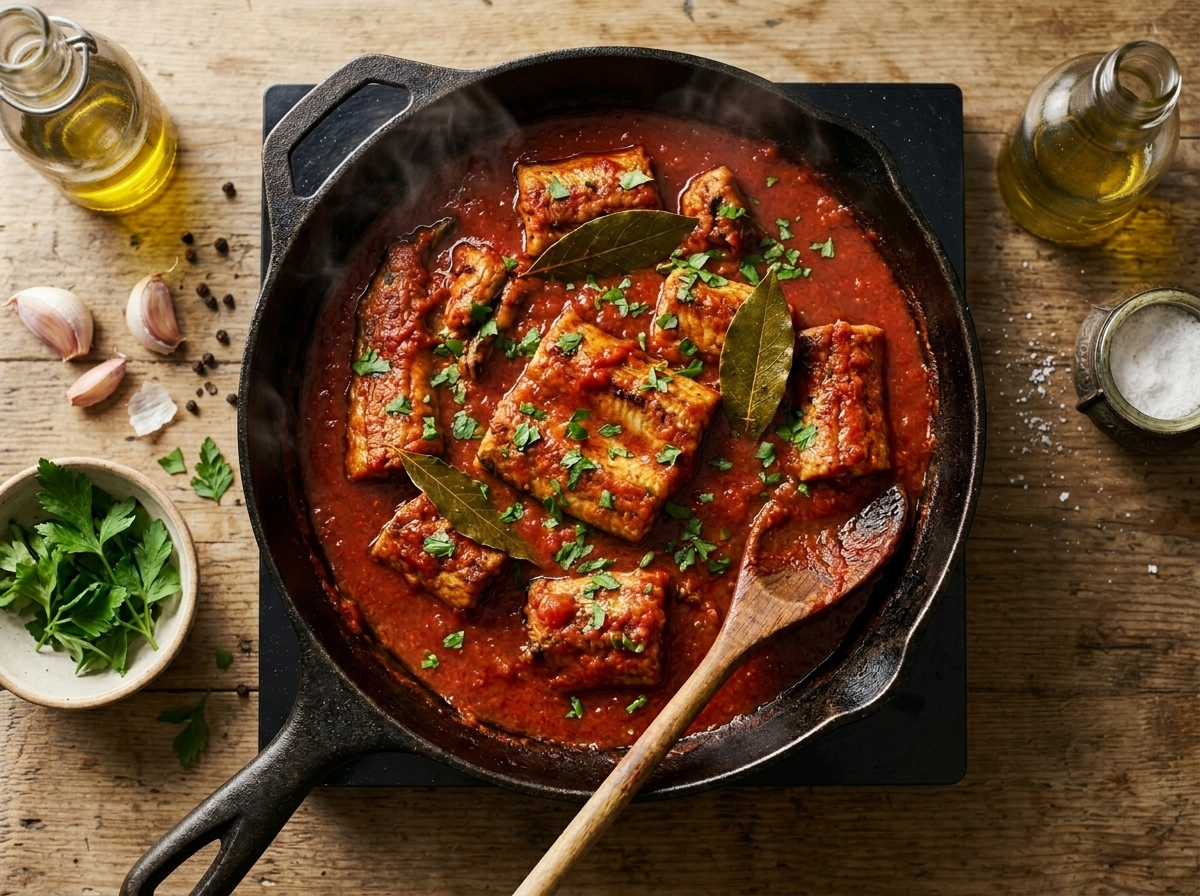
- Heat 2 tbsp of the olive oil in a 28 cm heavy-based skillet or braiser over medium-high heat until shimmering.
- Add the eel pieces in a single layer without crowding. Brown for 2 to 3 minutes per side until the surface is golden. Work in two batches if needed, then transfer the browned eel to a plate.
- Reduce the heat to medium. Add the remaining 2 tbsp olive oil, then the diced onion. Cook, stirring occasionally, for 6 to 7 minutes until the onion is soft and pale gold.
- Add the sliced garlic and cook for 1 minute until fragrant, stirring constantly so it doesn't color.
- Pour in the white wine. Scrape up any browned bits from the bottom of the pan and let the wine bubble for 2 minutes until the sharp alcohol smell fades.
- Add the crushed tomatoes, bay leaves, and thyme sprigs. Stir to combine, then taste and adjust the salt.
- Return the browned eel pieces to the pan in a single layer. Spoon some sauce over the top.
- Cover the pan, reduce the heat to low, and braise for 20 minutes.
- Remove the lid. Increase the heat slightly and simmer uncovered for 10 minutes until the sauce reduces and clings to the eel rather than pooling.
- Discard the bay leaves and thyme sprigs. Taste and adjust salt.
- Stir in the chopped parsley and a squeeze of lemon juice if using. Serve immediately over soft polenta or with grilled bread.
Notes
Tips for Success
- Cut eel into pieces of equal length, around 6 cm each, so they all reach the same doneness at the same time.
- Pat eel pieces completely dry before adding to the pan – surface moisture causes steaming instead of browning.
- Brown the eel in batches if your pan is smaller than 28 cm to avoid crowding and losing color.
- Simmer uncovered for the final 10 minutes to reduce the sauce until it coats the eel pieces rather than pooling around them.
- Taste the sauce for salt only after the wine has fully cooked off – wine adds perceived saltiness that disappears as it reduces.
Variations
- Add 1 tsp of chili flakes with the garlic for a Calabrian-style version with heat.
- Stir in 2 tbsp of capers and 10 pitted green olives in the last 10 minutes for a puttanesca-inflected finish.
- Replace half the tomato with fish stock and skip the tomatoes entirely for a pale, broth-based umido more common in the Veneto.
Storage and Reheating
Store leftover eel and sauce together in an airtight container in the refrigerator for up to 2 days. The flavor deepens overnight, so this is one of those dishes that genuinely improves the next day.
Reheat gently in a covered pan over low heat with a splash of water to loosen the sauce, about 5 minutes. Avoid high heat – the eel flesh dries out fast once it’s already cooked.
Freezing is possible but not ideal. The texture of the eel becomes slightly grainy after freezing and thawing. If you do freeze it, portion into flat containers and use within 6 weeks.
Serving Suggestions
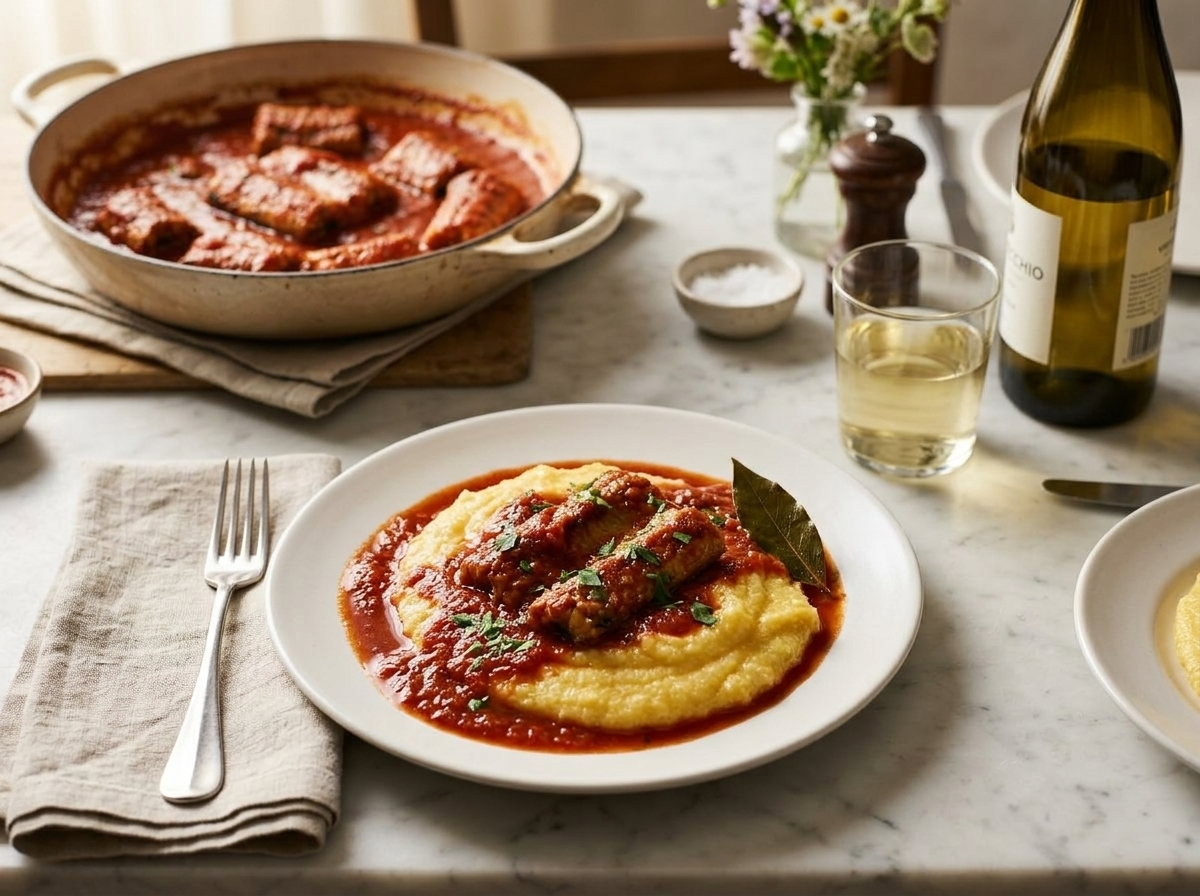
Anguilla in umido is traditionally served with soft polenta – the coarse-ground kind that you cook for at least 40 minutes. The polenta absorbs the tomato sauce in a way that pasta doesn’t quite replicate.
Thick slices of grilled country bread are the faster weeknight option. Toast them in a dry pan until charred at the edges, then lay two or three pieces of eel over the top and spoon the sauce generously over everything.
For a full Christmas Eve meal, serve it after a light pasta dish and before fruit or a simple dessert, following the kind of Italian Christmas dinner wine structure that carries each course from antipasti to dolci. A glass of chilled Verdicchio or a dry Frascati alongside keeps the tone consistent with the dish’s central Italian roots, and wine pairing for Italian seafood follows the same logic throughout the meal.
FAQ
Why does my anguilla in umido sauce look oily and separated?
Eel is a naturally fatty fish, and if the heat is too high the fat renders out faster than it can emulsify back into the tomato. Keep the braise at a gentle simmer and stir occasionally – the sauce should look glossy, not split. If it has already separated, stir in a tablespoon of water and reduce the heat.
Can I use conger eel instead of freshwater anguilla for this recipe?
Conger is a sea eel with leaner, firmer flesh, so it behaves differently in a long braise – it can dry out where anguilla stays moist. If you use conger, reduce the braising time by about 10 minutes and check the texture early.
Can I braise the eel the day before and reheat it for a Christmas Eve dinner?
Yes, and it’s actually a practical choice for a multi-course Feast of the Seven Fishes meal. Cook it fully, cool it in the sauce, refrigerate overnight, and reheat covered on low the next day. The sauce tightens up nicely after resting.
What does braised eel taste like compared to grilled eel?
Grilled eel has a smokier, slightly charred flavor with a firmer bite. Braised eel in umido is softer and richer, with the tomato and wine soaking into the flesh during cooking. The texture is closer to braised short rib than to a flaky white fish.
Is anguilla in umido gluten-free?
The recipe as written contains no wheat or gluten-containing ingredients. Just confirm that your wine and any canned tomatoes don’t carry gluten cross-contamination warnings if you’re cooking for someone with celiac disease.
What is the difference between anguilla in umido and anguilla alla romana?
Anguilla alla romana is a Roman style that typically uses white wine, peas, and sometimes anchovy without tomato – it’s a lighter, more spring-leaning preparation. Anguilla in umido uses tomato as the braising base, giving a deeper and more robust sauce.