Have you ever wondered why a simple bowl can taste like an old kitchen in Italy?
This recipe starts in the oven and finishes on the stove. I roast tomatoes, onion, and garlic at 375°F for about 40–45 minutes until they get light char and caramelization. Then I cook the paste in olive oil, add broth, blend until silky, and simmer with a Parmigiano Reggiano rind for savory depth.
The result is a thick, smooth tomato soup that leans on roasted-sweet notes and mellow garlic rather than heavy cream. Plan about an hour from start to finish and basic gear: a sheet pan, a pot, and a blender or immersion tool. It feeds four, keeps four days in the fridge, and freezes well for up to three months.
This method works best with peak-season tomatoes, but good canned fruit adapts cleanly when fresh ones aren’t at their best. Read on for clear steps you can trust on a weeknight.
Oven roast then stovetop finish creates deep, caramelized flavor.
Hands-on time is about 1 hour; serves roughly four people.
Texture comes from blended tomatoes and garlic; cream stays optional.
Use a sheet pan, pot, and blender or immersion blender.
Stores 4 days refrigerated and freezes up to 3 months.
What makes zuppa di pomodoro different from basic tomato soup
A simple shift—one trip through the oven—changes everything about a classic soup. Roasting concentrates fruit and vegetables by driving off water and browning the edges. That browning, called caramelization, lifts sweetness and tames sharp acidity. The result tastes deeper and less one-note than a quick simmered version.
Why roasting changes sweetness and acidity
When you roast, sugars in the tomatoes and onion brown and become more intense. The garlic softens and loses edge. Slow heat and a little charring round out acids without adding sugar. This is why the soup feels balanced, not flat or cloying.
The Italian essentials
Focus on three core ingredients: tomatoes, garlic, and extra virgin olive oil. Add fresh basil near the end to keep its bright, herbal quality. Get those basics right and you don’t need a long list of add-ons.
Creamy without heavy cream
Once the pieces break down, blending emulsifies oil and cooked flesh into a silky texture. Puréeing gives a naturally creamy mouthfeel. If you prefer, a splash of cream can round the taste, but it should be a finishing touch—not the whole point.
Choosing tomatoes for deep, authentic flavor (fresh or San Marzano)
Good soup starts at the market: pick tomatoes that smell like summertime. When they are fragrant and slightly soft, you know they will roast down into rich flavor. I favor mixing types so the pot gets both sweetness and body.
Roma: meaty, low moisture—great for body and a thick mouthfeel.
Cherry & Campari: small fruit that caramelize quickly and add bright sweetness.
Heirloom: complex aromatics that add depth when used sparingly.
Beefsteak: classic tomato punch; slice larger pieces for roast time balance.
In winter, whole peeled San Marzano tomatoes or San Marzano–style cans often beat pale, watery fresh ones. Drain some packing liquid to avoid thinning the pot, then add back only if the texture needs it.
Skins, seeds, and texture options
Keep skins and seeds for a rustic bowl. Strain through a fine mesh and press for a smoother finish. For the silkiest result, run the cooked fruit through a food mill—this removes skins and seeds without wasting flesh.
If you plan to blend, a high-powered blender will make skins less noticeable. An immersion blender leaves a bit more texture, which I often prefer for character. Match your tomato choices and prep to the final soup you want: bright and fresh, or deep and velvety.
Ingredients that make this roasted tomato basil soup taste restaurant-level
A few deliberate pantry choices give this soup professional depth and balance. Below I explain the trade-offs and timing that matter so you get consistent results.
Whole head vs individual garlic cloves
Roasting a whole head of garlic wrapped in foil at 375°F for 40–45 minutes yields a sweet, buttery profile that melts into the soup without bite. Individual cloves roast in about 25–30 minutes and keep a bit more assertive roasted garlic character.
Parmesan rind and vegetarian swaps
Simmer a Parmigiano Reggiano rind in the pot for added umami and creamy richness, then remove it before serving. For a vegetarian path, use a high-quality vegetable broth and skip the rind—or try a vegetarian hard-cheese rind if available.
Broth and seasoning that matter
Chicken broth adds round savory depth; vegetable broth keeps the herbs and basil forward. Cook a spoonful of tomato paste briefly in olive oil to deepen flavor and lose raw acidity.
Season with salt and black pepper; taste and adjust before serving.
Use Italian seasoning sparingly so it supports, not dominates.
Quick tasting checkpoint: if the soup tastes flat, add 1/4 cup broth or a pinch of salt, then re-taste.
zuppa di pomodoro roasted tomato method: roast, simmer, blend, finish
The method pairs oven time with a short simmer to build reliable depth for this soup. Preheat to 375°F and use a rimmed sheet pan so juices stay put.
Oven setup and how you know it’s done
Cut like-sized tomatoes and onions so everything cooks evenly. Roast about 40–45 minutes until pieces collapse, the bottoms caramelize, and a few edges are lightly charred. Those bits add sweet-bitter complexity without tasting burnt.
Roasting garlic in foil
Trim about 1/4 off the head, drizzle with olive oil, seal tightly in foil, and roast with the pan. When cool, squeeze the softened cloves into the pot for a mellow, buttery note.
Stove, blending, and finish
Warm olive oil, cook a spoonful of paste 1–3 minutes until it darkens, then add the roasted vegetables and every drop of pan juice. Pour in about 2 cups of broth, then blend. Use an immersion blender for easy cleanup, or cool in batches in a blender or food processor—vent lids and cover with a towel.
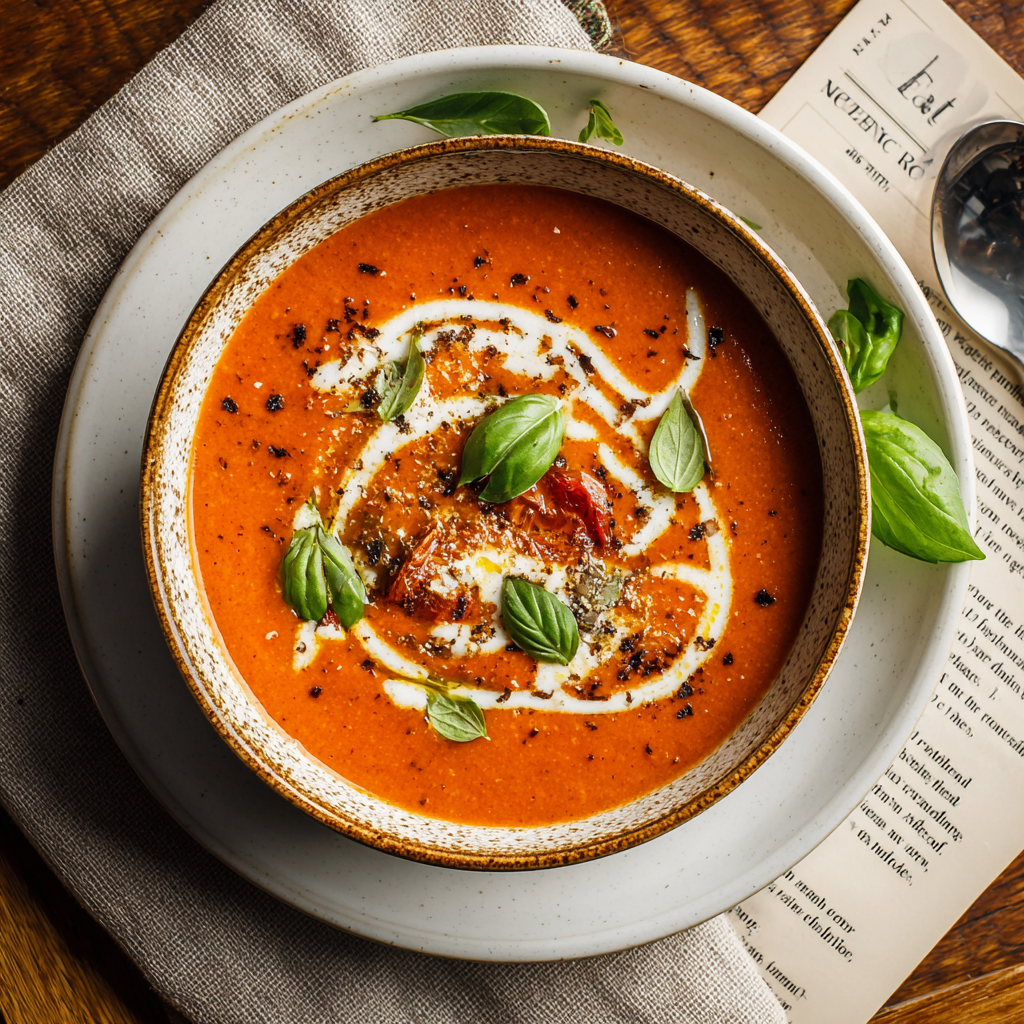
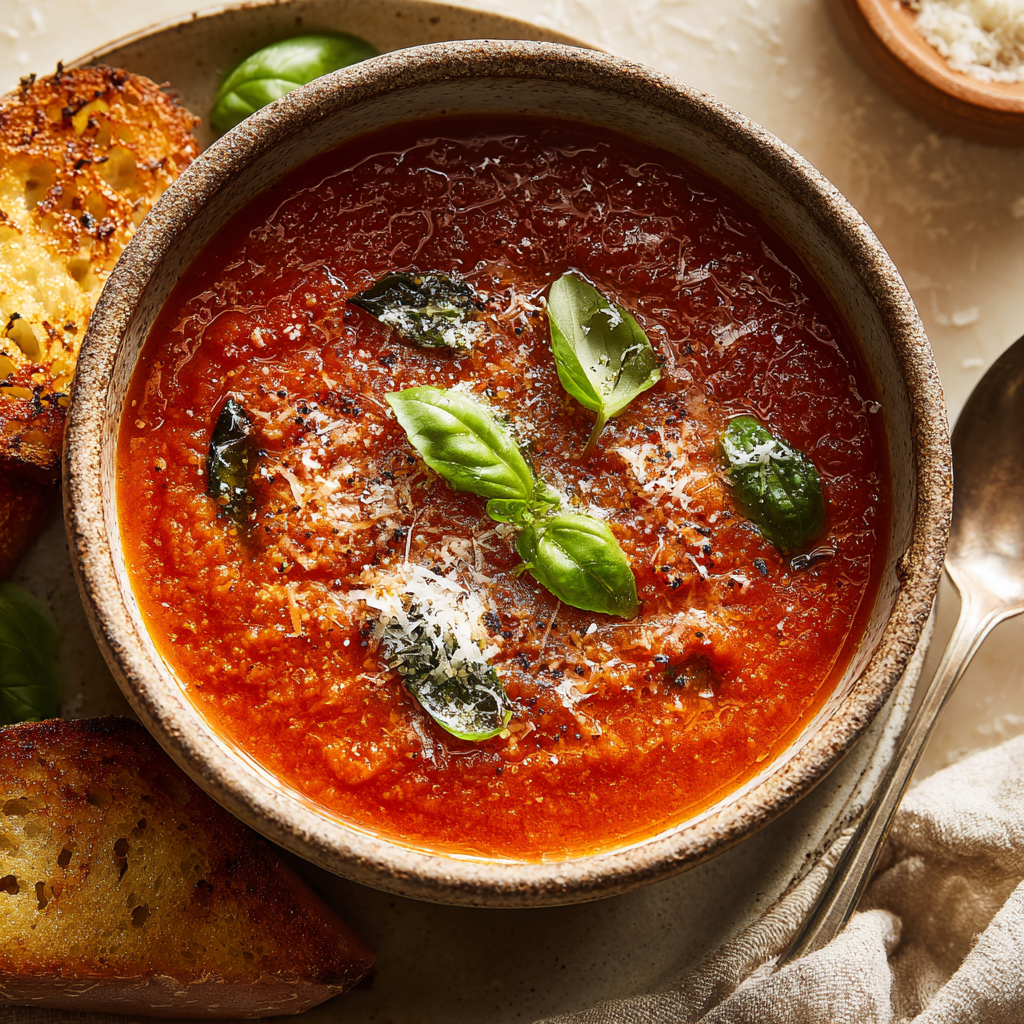
Add a Parmigiano Reggiano rind, simmer 10–15 minutes, then remove it. Finish with torn basil leaves and grated Parmesan if you like. For a related rustic bread-based soup, see pappa al pomodoro.
Ways to customize the soup for your pantry, diet, and mood
Small swaps let you tune this soup to the pantry and the season. Keep the base classic, then choose one clear change so the core flavor stays intact.
Creamy bowl, American way
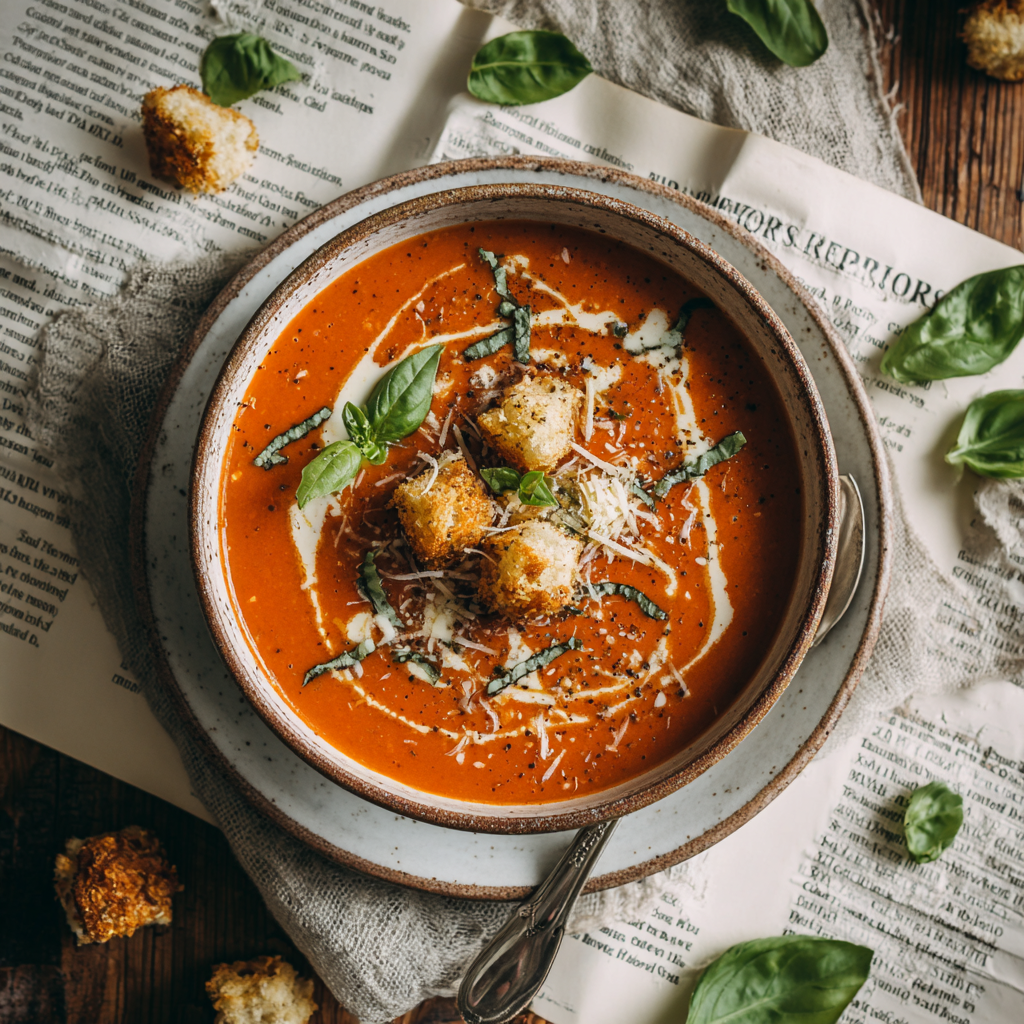
Stir in 1/4 to 1/2 cup cream or half-and-half per quart just before serving for a richer finish. Start small and taste; cream smooths acidity and thickens without hiding basil or the fruit character.
Smokier notes
Use fire-roasted canned tomatoes or add a charred red pepper for sweet smoke. Fire-roasted fruit gives a direct smoky edge that differs from oven browning. Red pepper adds sweetness and body with less acidity.
Bold finishes: balsamic or pesto
Finish bowls with a light drizzle of aged balsamic or a small pesto swirl. Apply sparingly so these strong flavors complement, not overwhelm, the dish.
Acidity fix: a pinch of sugar or a small knob of butter tames sharpness.
Cheese and herbs: grate a little Parmesan or add torn fresh basil per bowl.
Family-friendly: keep one plain pot and let each person add cream, pesto, or extra cheese.
Serving, storing, and reheating so it tastes just as good later
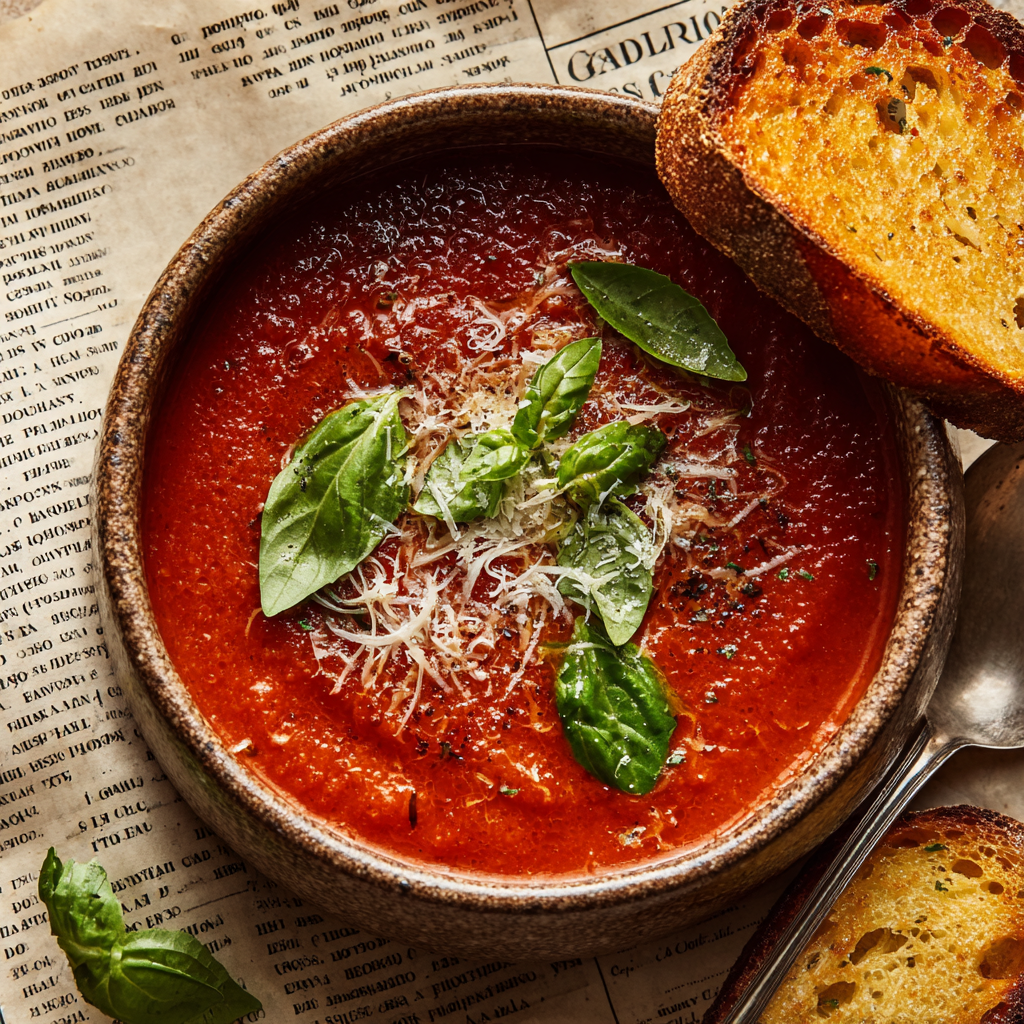
Proper storage and gentle reheating keep the flavors honest and the texture silky. Serve a bowl with rustic bread or focaccia and a drizzle of good olive oil. For comfort, pair with a grilled cheese or shave a hard cheese like Asiago, Montasio, or Fontina.
Cool the pot promptly, transfer to an airtight container, and refrigerate. Keep for up to 4 days. To freeze, leave a little headspace in the container and store for up to 3 months.
Thaw frozen soup overnight in the fridge. Reheat on the stovetop over low heat, stirring so nothing scorches. In the microwave, cover and heat in 1–2 minute bursts, stirring halfway through until steaming hot.
If you plan to freeze, hold cream or extra cheese until after thawing and reheating. One more tip: flavor often deepens after a night in the fridge as the garlic, basil leaves, and tomatoes settle. Enjoy—this recipe keeps well and feeds a family with little fuss.
Zuppa di Pomodoro (Roasted Tomato Basil Soup)
This roasted tomato basil soup combines sweet, caramelized tomatoes with mellow garlic and fresh basil. It’s naturally creamy without the need for heavy cream, perfect for a cozy, flavorful bowl that's both rich and balanced.
6-8medium ripe tomatoesRoma, Campari, or heirloom preferred
1medium onioncut into quarters
1head of garlicor individual cloves if preferred
3tbspextra virgin olive oil
2cupschicken brothor vegetable broth for a vegetarian option
1tbsptomato paste
1-2cupswaterif needed
Parmigiano Reggiano rindoptional, for added depth
Fresh basil leavesfor garnish
Salt and black pepper to taste
1/4cupcreamoptional for a creamier texture
Method
Preheat oven to 375°F (190°C).
Prepare the vegetables: Cut the tomatoes and onion into similar-sized pieces. Trim the top of the garlic head, drizzle with olive oil, wrap in foil, and place alongside the tomatoes and onion on a sheet pan.
Roast the vegetables: Roast in the preheated oven for 40-45 minutes until tomatoes and onions are soft and slightly caramelized, and the garlic is tender.
Prepare the soup base: In a large pot, warm 3 tablespoons of olive oil over medium heat. Add 1 tablespoon of tomato paste and cook for 1-3 minutes, stirring occasionally until the paste darkens.
Add the roasted vegetables: Once the vegetables are done, transfer them to the pot along with all the juices from the sheet pan. Add the chicken or vegetable broth.
Blend the soup: Use an immersion blender or transfer the mixture to a blender. Blend until smooth and silky.
Simmer for depth: Add the Parmigiano Reggiano rind (if using), and simmer for 10-15 minutes. Remove the rind before serving.
Finish the soup: Taste and adjust seasoning with salt and pepper. Optionally, stir in cream for extra richness.
Serve: Ladle the soup into bowls and garnish with fresh basil leaves and grated Parmesan if desired.
Notes
You can substitute Parmigiano Reggiano rind with a vegetarian hard cheese rind for a meat-free version.
Use fire-roasted canned tomatoes if fresh tomatoes aren't available.
If the soup tastes too acidic, add a pinch of sugar or a small knob of butter to balance the flavors.
FAQ
What is the difference between classic zuppa di pomodoro and basic tomato soup?
Classic zuppa di pomodoro relies on a balance of sweet, bright tomatoes and simple Italian ingredients—garlic, fresh basil, extra virgin olive oil—and often a bit of tomato paste or broth for depth. The texture tends toward silky rather than chunky, and the technique (roasting or simmering slowly) brings out a more layered, slightly caramelized flavor than a plain, quick tomato soup made from canned tomatoes and butter alone.
Why does roasting tomatoes change their flavor, sweetness, and acidity?
Roasting concentrates juices and sugars, encouraging caramelization and gentle charring at the edges. That reduces sharp acidity and adds savory, almost smoky notes that make the soup taste richer without extra salt or sugar. The result is a fuller, more complex flavor profile that blends well with garlic, basil, and olive oil.
Which tomatoes should I choose for the best, most authentic flavor?
For depth, San Marzano whole peeled tomatoes are a reliable canned option. Fresh choices for roasting include Roma, Campari, cherry, heirloom, and beefsteak, each bringing different sweetness and texture. Use fresher, sweeter types for quick roasting; choose canned San Marzano when you want consistent acidity and an intense, classic base.
When are canned tomatoes better than fresh ones?
Canned whole peeled San Marzano tomatoes are preferable when fresh tomatoes are out of season, underripe, or watery. They provide steady flavor, a firm structure for long simmering, and less peeling prep. Drain or crush them as needed and add their juices to preserve flavor.
Should I remove skins and seeds or keep them when making this soup?
It depends on texture. Leaving skins and seeds keeps maximum flavor and fiber, then straining or food-milling yields a smooth finish. For a no-strain approach, use a high-speed blender or food processor and accept a bit more texture. Straining with a fine-mesh sieve makes the result restaurant-smooth.
How do whole roasted garlic and roasted cloves differ in the finished soup?
Roasting a whole head of garlic in foil produces mellow, buttery, spreadable cloves with soft sweetness and low bite. Roasted individual cloves caramelize faster and develop a more concentrated, sweeter note. Use whole-head roasting when you want gentle background support; add extra roasted cloves for a sweeter, more pronounced garlic flavor.
Can I use a Parmesan rind in the soup, and how do I keep it vegetarian?
A Parmesan rind adds savory umami and mouthfeel when simmered and then removed before blending. To keep the soup vegetarian, substitute a vegetable-based umami boost such as dried mushrooms, a splash of soy sauce or tamari, or a piece of kombu during simmering.
Which broth should I use—chicken or vegetable?
Use chicken broth for a richer, rounder base and vegetable broth for a lighter or vegetarian version. Both add body and help balance acidity. Choose low-sodium broths so you can season the soup accurately with salt and black pepper at the end.
What seasonings really matter for an Italian-style roasted tomato basil soup?
Salt and freshly ground black pepper are essential. A touch of tomato paste adds concentrated flavor and color. Italian dried herbs in small amounts can enhance complexity, but fresh basil leaves added at the finish make the greatest aromatic difference.
What oven setup and temperature are best for roasting tomatoes?
Roast tomatoes on a rimmed sheet pan at about 375°F until they are tender, slightly caramelized, and lightly charred at the edges. Toss with olive oil, salt, and whole garlic heads or cloves. This temperature concentrates flavor without burning the skins too quickly.
How do I roast a whole head of garlic for a mellow, buttery flavor?
Trim the top to expose cloves, drizzle with olive oil, wrap in foil, and roast alongside the tomatoes at 375°F for 30–40 minutes until very soft. Squeeze the softened cloves from the skins and stir into the soup for a gentle garlic presence.
How do I build depth on the stove with olive oil and tomato paste?
Start by gently sweating onions in extra virgin olive oil until translucent, then add tomato paste and cook briefly until it darkens slightly. This step caramelizes the paste and creates savory layers that amplify the roasted tomato flavor when the tomatoes and broth are added.
How do I add roasted tomatoes, onions, and pan juices so I don’t lose flavor?
Transfer roasted tomatoes, any caramelized onions, and all pan juices into the pot. Deglaze the roasting pan with a splash of broth or wine and add those browned bits back to the pot. Simmer briefly to marry flavors before blending.
Which blending option is safest and gives the best texture—immersion blender, counter blender, or food processor?
An immersion blender is safest and simplest for hot soups, producing a smooth result with minimal transfer. A countertop blender yields silkier texture but requires careful venting and small batches to avoid steam buildup. A food processor works if the soup is cooled slightly; it gives more texture control than a blender.
Should I simmer with a Parmigiano Reggiano rind, and when do I remove it?
Simmering with a Parmigiano Reggiano rind adds savory depth; remove it before blending. Let it steep for 15–30 minutes during the simmer to impart flavor, then take it out so the rind doesn’t break down into the soup.
How and when should I finish the soup with basil and cheese?
Add fresh basil leaves at the end of cooking or right after blending for the brightest aroma. If you want grated Parmesan or Pecorino, stir it in off the heat so it melts smoothly without overcooking. A small drizzle of extra virgin olive oil at the finish lifts the flavor.
How can I make a creamier version without changing the soup’s character?
For a richer American-style finish, stir in a splash of heavy cream or half-and-half off the heat. Alternatively, blend in a small amount of mascarpone or ricotta for creaminess with an Italian touch while keeping the tomato flavor front and center.
How do I add a smokier or more savory note—fire-roasted tomatoes, roasted pepper, or something else?
Use fire-roasted canned tomatoes or toss in roasted red pepper for smoke and sweetness. A light amount of smoked paprika or a few drops of liquid smoke will also add a smoky edge; use sparingly so the tomatoes remain the star.
When should I add a balsamic drizzle or pesto swirl for a bold finish?
Add a small balsamic reduction or a spoonful of pesto just before serving. These bold accents work best as a finishing touch on individual bowls, so diners can adjust intensity to taste.
How do I balance acidity if the soup tastes too bright?
Tame acidity with a pinch of sugar, a pat of butter, or a grating of aged cheese. A small addition of baking soda can neutralize acid but use it very sparingly. Taste as you go and adjust, aiming for balance rather than masking the tomato character.
What are practical ways to customize the recipe for diet or pantry limits?
Swap chicken broth for vegetable broth to keep it vegetarian. Use canned San Marzano when fresh tomatoes aren’t available. Skip dairy by using blended white beans or cashews for creaminess. Add protein—roasted chicken or white beans—for a heartier meal.
How should I serve, store, and reheat so the soup tastes like fresh?
Serve with toasted bread or a garlic crostini and a sprinkle of grated cheese. Cool soup quickly and store in airtight containers in the refrigerator for up to 4 days or freeze for 2–3 months. Reheat gently on the stove over low heat; add a splash of broth or water if the soup thickens and refresh with fresh basil before serving.