
Jump to Recipe
There’s a particular comfort in the ritual of Italian cooking. The rich aroma of freshly brewed espresso filling the kitchen, the gentle dusting of cocoa over a creamy surface—these small moments create a dessert that feels like a warm embrace.
This version of the beloved treat offers a subtle twist. The name “tiramisu” comes from an Italian phrase meaning “pick me up,” which perfectly captures its spirit. It’s a make-ahead delight that actually improves with a little rest in the refrigerator.
What makes this preparation special is how the addition of white chocolate complements the robust coffee flavor. It adds a delicate sweetness without overwhelming the classic balance. The structure remains traditional, with layers of coffee-soaked ladyfingers and lush mascarpone cream.
I find this to be a wonderfully forgiving dish for home cooks. It requires no baking, just careful assembly and patience. The result is consistently impressive, with layers of flavor that feel both familiar and delightfully new.
Key Takeaways
- This is a make-ahead dessert that improves in flavor when prepared a day in advance.
- The name “tiramisu” translates to “pick me up,” reflecting its comforting nature.
- White chocolate adds a subtle sweetness that enhances the traditional coffee profile.
- It maintains the classic structure of espresso-dipped ladyfingers and creamy mascarpone layers.
- The preparation is straightforward, requiring no baking and forgiving of small adjustments.
- The final texture features soft, cake-like layers contrasting with a rich, creamy filling.
- It’s an ideal choice for gatherings, as it can serve a crowd and lifts everyone’s spirits.
The Legacy and Inspiration Behind this Italian Classic
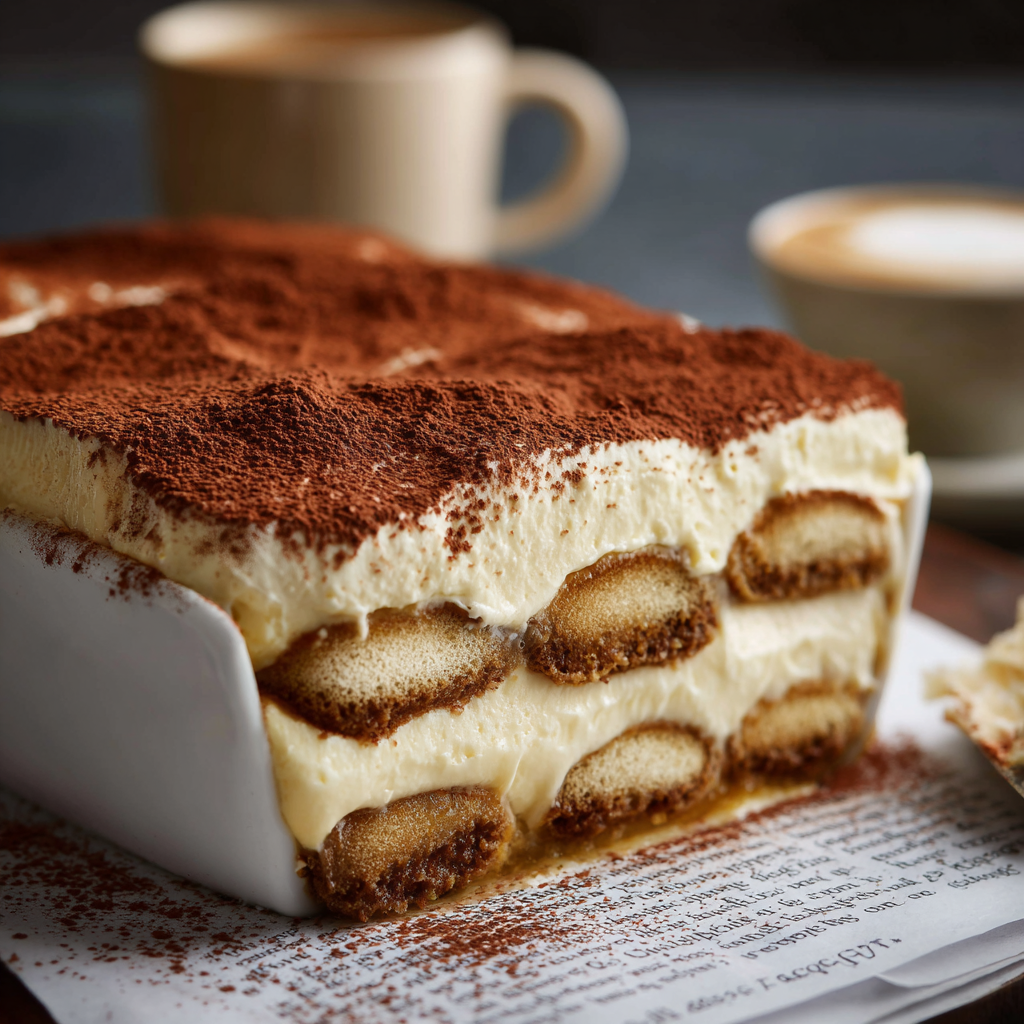
The story of this beloved dessert begins in the Veneto region of northern Italy. Local dialect gave us the name that literally means “pick me up.” This refers to the espresso and sugar that provide a gentle energy lift.
Food historians often debate the exact origins. Yet the classic version has graced Italian tables for decades. What I appreciate most is its practical nature.
Italian cooks developed this treat specifically to be made ahead. It actually improves with time. Making it a day or two before serving isn’t just convenient—it’s essential.
The longer it rests in the refrigerator, the more flavorful it becomes. Ingredients firm up and flavors fully develop. This forgiving nature means even first-time makers can achieve excellent results.
The traditional approach relies on simple, quality ingredients rather than elaborate techniques. This reflects the Italian philosophy of letting good components speak for themselves. Our variation honors this foundation while introducing thoughtful changes.
For those interested in another authentic interpretation, consider this amaretti tiramisu recipe that uses almond cookies instead of ladyfingers. The best versions respect the original concept while allowing for personal touches that maintain the dessert’s essential character.
Ingredients Spotlight and Essential Elements
Quality ingredients, when chosen with intention, create the foundation for an exceptional result. Each component plays a specific role in achieving the perfect balance of flavors and textures.
Creamy Mascarpone and Egg Yolks for a Rich Base
The heart of this dessert lies in the mascarpone mixture. Extra-large egg yolks provide the necessary volume for a light, airy cream. They whip up beautifully with caster sugar, which dissolves completely without grittiness.
Cold mascarpone cheese is essential. Room-temperature cheese can separate when beaten, creating a grainy texture. The high milkfat content of authentic Italian mascarpone gives richness without heaviness.
Decadent White Chocolate, Ladyfingers, and Coffee Infusion
Melted white chocolate should cool to room temperature before incorporating. Hot chocolate would cook the delicate egg yolks. A touch of cinnamon adds warmth that complements the sweet notes.
Quality ladyfingers (savoiardi) absorb liquid without disintegrating. Fresh espresso provides the traditional coffee flavor, while optional Marsala wine adds depth. Unsweetened cocoa powder balances the sweetness with a bitter contrast.
Techniques for the Ultimate White Chocolate Experience
Mastering the mixing process ensures the perfect balance of lightness and richness. The texture of your final creation depends entirely on how you handle each component.
Whipping, Folding, and Achieving a Smooth Texture
Begin by beating egg yolks with sugar until pale and voluminous. This usually takes 3-4 minutes with a stand mixer. The mixture should feel completely smooth when rubbed between your fingers.
Cold mascarpone is essential for proper texture. Room-temperature cheese can separate when beaten. Beat it for about 2 minutes until thick and creamy.
For extra lightness, some cooks fold in whipped cream. Add it gradually in several additions. Use a folding motion to preserve air in the mixture.
Mixing in the Melted White Chocolate and Cinnamon
Melt your white chocolate gently using short microwave bursts or a double boiler. Let it cool completely before adding to avoid cooking the eggs.
With the mixer running, incorporate the melted chocolate and cinnamon. Mix just until combined to maintain the airy texture you’ve created.
The finished mascarpone mixture should hold soft peaks. It needs to be spreadable but substantial enough to support layers. Working in a large bowl gives you room for proper folding.
Layering Up Flavor: From Coffee-Soaked Ladyfingers to Mascarpone Cream
Assembly is where this dessert truly comes together. The goal is to build stable, distinct layers that will meld beautifully after chilling.
I pour the espresso and optional liqueur into a shallow bowl. This wide dish lets me dip each ladyfinger fully and quickly.
Quick Dips and Even Layering for Ideal Consistency
The dipping motion is crucial. You want to submerge each finger for just a second per side. This gives the cookie enough coffee flavor without making it soggy.
Over-saturated ladyfingers can turn mushy and compromise the structure of your final dish.
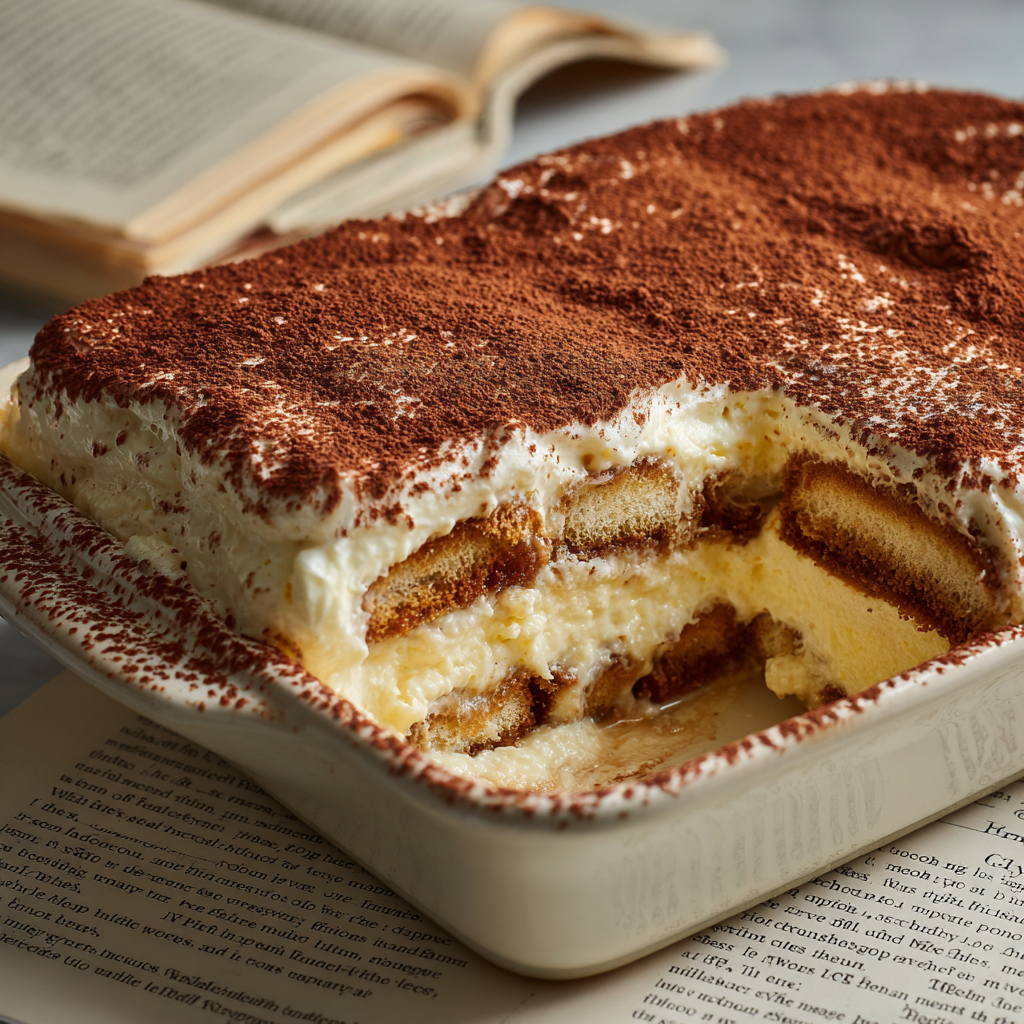
I arrange the first layer of dipped fingers in my 13×9-inch dish. They should fit snugly in a single layer. Next, I spread half of the prepared mascarpone cream evenly over them.
An offset spatula helps create a smooth, level surface. This ensures every bite has a perfect balance.
The process repeats for the second layer. I quickly dip more ladyfingers and place them over the cream. Then, I spread the remaining half of the mascarpone mixture on top.
Straight-sided dishes are best for neat layers. The result might seem soft now, but refrigeration firms everything up. For a different nutty variation, this pistachio tiramisu offers a delightful twist.
Don’t worry about perfection. The layers will settle, and a dusting of cocoa will create a beautiful finish.
white chocolate tiramisu recipe: Tips for Overnight Perfection
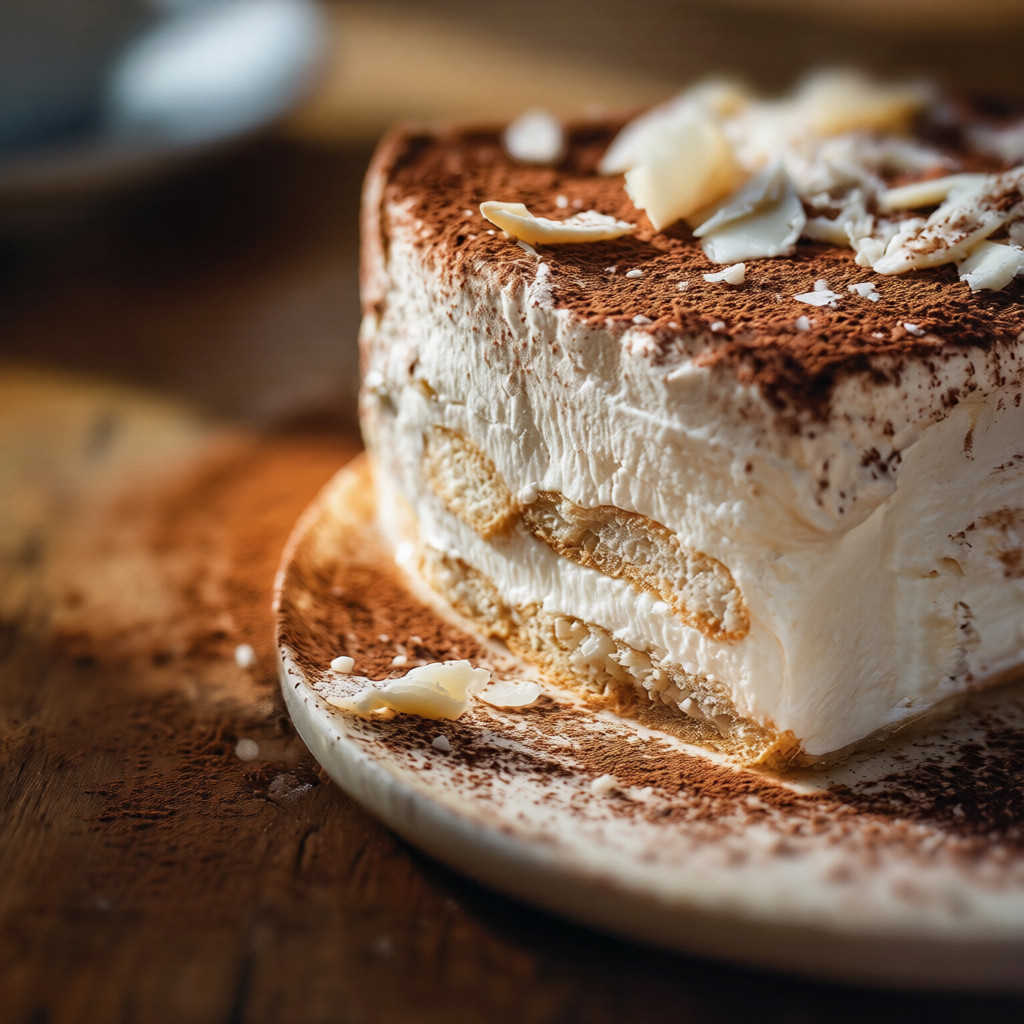
Proper chilling is not just a suggestion but the secret to achieving the perfect texture. This waiting period transforms separate layers into a harmonious, cohesive dessert.
Refrigeration Times and Flavor Development
After assembling your creation, dust the surface evenly with unsweetened cocoa powder. Use a fine-mesh sieve for the most consistent coverage.
Cover the dish tightly with plastic wrap, ensuring it doesn’t touch the cocoa-dusted top. Place it in the refrigerator for at least six hours. Overnight chilling yields noticeably better results.
During these hours in the fridge, the ladyfingers continue absorbing moisture. They transform into soft, cake-like layers while the mascarpone cream firms up. This makes slicing cleaner and serving easier.
I find that desserts made a full day ahead taste superior to those served after minimum chilling. Flavors have more opportunity to develop and meld beautifully. You can safely store covered tiramisu for up to three days.
Enhancing Presentation with Festive Garnishes
When ready to serve, remove the plastic wrap carefully to preserve the cocoa topping. This layer provides visual contrast and a slightly bitter note against the sweet cream.
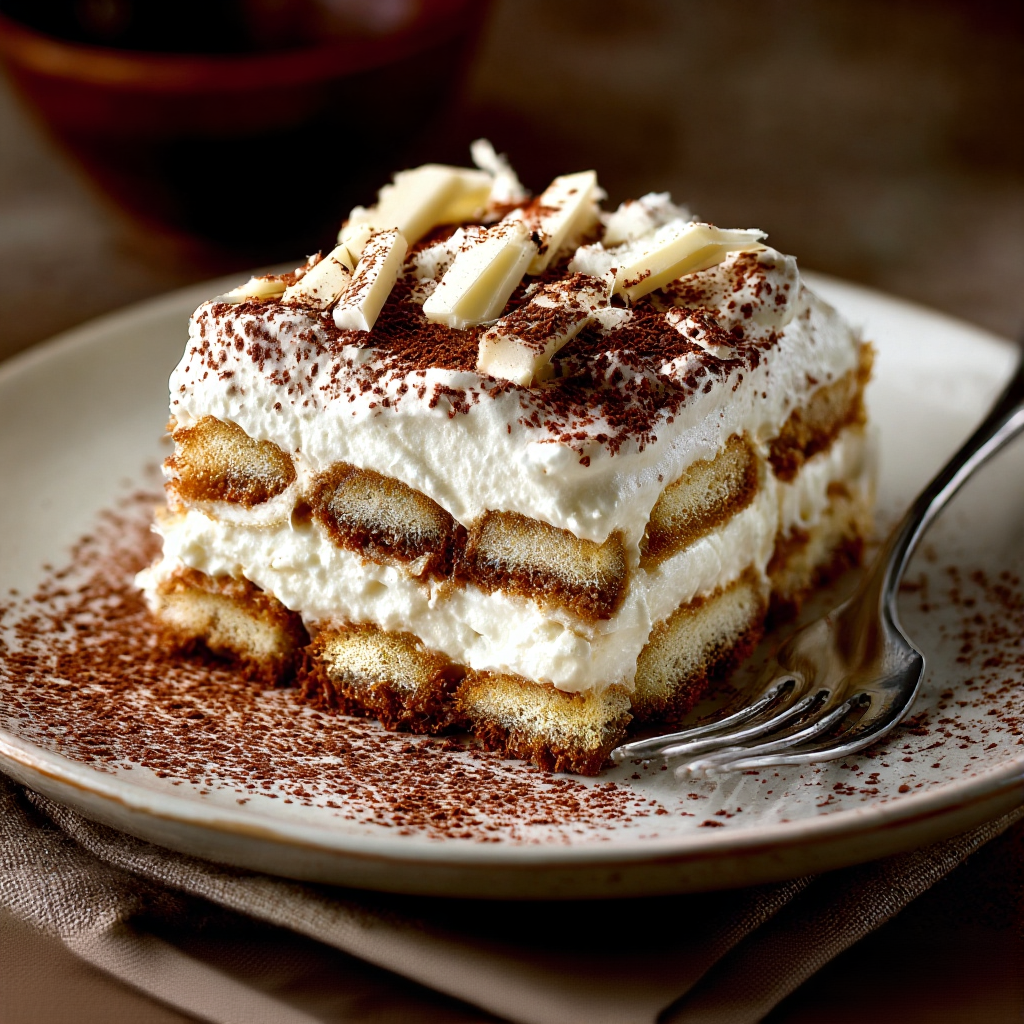
For special occasions, add delicate shavings across the surface just before serving. Create these by running a vegetable peeler along a bar of white chocolate.
Some cooks drizzle chocolate syrup or a touch of liqueur over individual portions. This adds both visual appeal and an extra layer of flavor complexity.
The extended fridge time also allows any alcohol in the coffee mixture to mellow. You’ll taste sophistication rather than raw spirits. For transport to gatherings, keep it chilled until the last moment.
Final Reflections: Savoring a Versatile Italian Treat with a Modern Twist
Over the years, I’ve discovered that the most successful desserts are those that offer both reliability and room for imagination. This preparation beautifully bridges Italian tradition with modern flexibility.
The basic technique of layering coffee-soaked ladyfingers with mascarpone cream opens countless possibilities. You might try semisweet chocolate instead of white chocolate, or add toasted almonds for crunch. The Marsala wine or other liqueur remains optional for family-friendly versions.
What I appreciate most is how this dessert removes stress from entertaining. Preparing it two days ahead actually improves the flavors and textures. The overnight rest transforms separate components into a cohesive, elegant final dish that consistently impresses guests.
Mastering this classic builds confidence for exploring other Italian desserts. The principle remains constant: quality ingredients and proper technique create memorable results without complexity.
White Chocolate Tiramisu
Ingredients
Method
- Beat egg yolks and caster sugar with an electric mixer until pale and voluminous, about 3-4 minutes.
- In a separate bowl, beat cold mascarpone cheese until thick and creamy, about 2 minutes.
- Slowly fold the mascarpone into the egg yolk mixture until smooth.
- Gently melt white chocolate using a double boiler or microwave in short bursts. Let cool to room temperature.
- Fold the melted white chocolate and cinnamon (optional) into the mascarpone mixture until just combined.
- Brew a cup of strong espresso and let it cool slightly. If using, add Marsala wine or liqueur.
- Pour the espresso into a shallow bowl for dipping the ladyfingers.
- Quickly dip each ladyfinger into the espresso mixture, ensuring each side gets moist but not soggy.
- In a 9x13-inch dish, arrange the first layer of dipped ladyfingers, fitting them snugly.
- Spread half of the mascarpone mixture evenly over the ladyfingers.
- Repeat the process with another layer of dipped ladyfingers and the remaining mascarpone mixture.
- Dust the top of the tiramisu with unsweetened cocoa powder.
- Cover tightly with plastic wrap and refrigerate for at least 6 hours, preferably overnight, for the best flavor.
- Just before serving, dust with more cocoa powder and add white chocolate shavings for garnish, if desired.
Notes
- Make sure to let the tiramisu rest in the fridge overnight to allow the flavors to meld together and create a firmer texture.
- For a more indulgent experience, you can drizzle extra chocolate syrup or add liqueur to the individual servings.
- This recipe can also be made using dark or milk chocolate for a different flavor profile