Jump to Recipe
Minestrone is not a fixed recipe. Every Italian region, and practically every Italian grandmother, has a version built around what’s growing or what’s left in the pantry. The word itself just means ‘big soup,’ and that looseness is exactly what makes it practical.
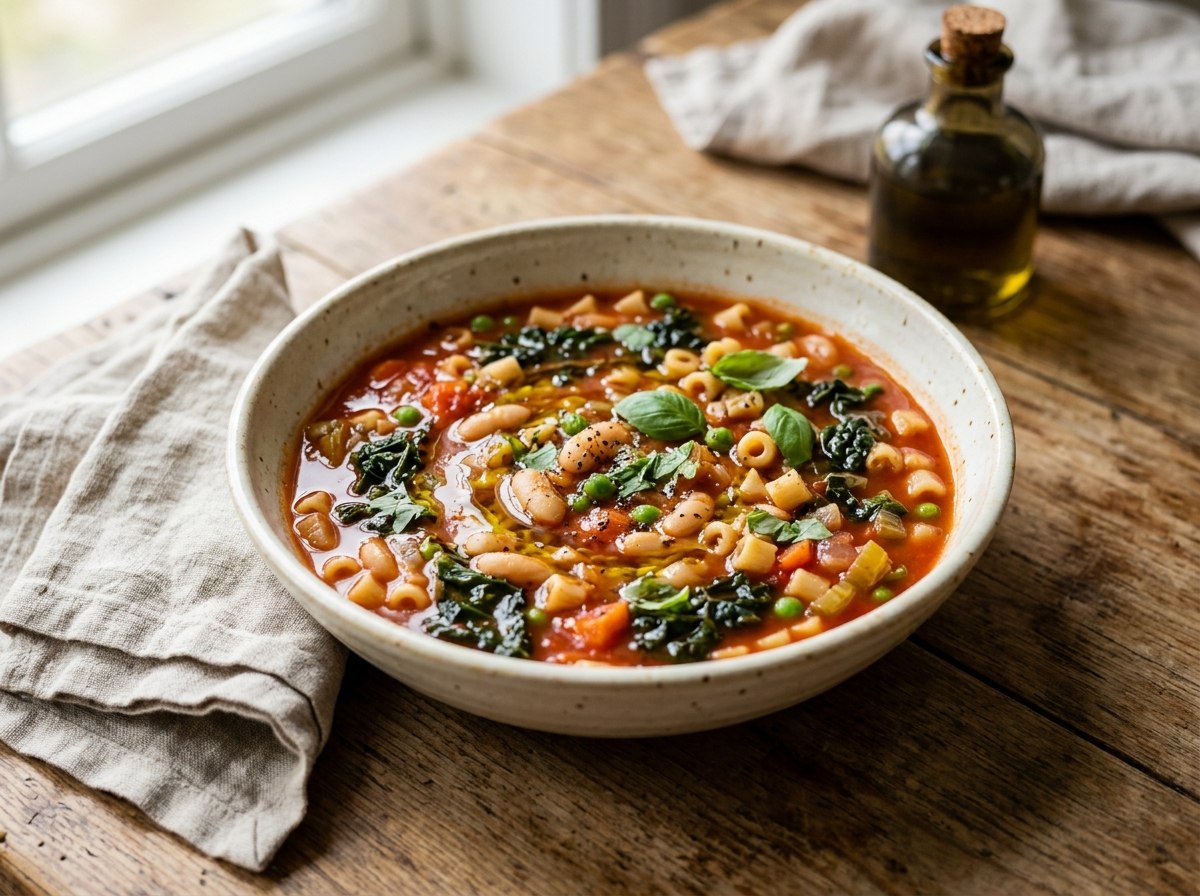
This version follows the Ligurian and Tuscan approach: a proper soffritto of onion, celery, and carrot, canned tomatoes for depth, cannellini beans for body, and short pasta cooked directly in the broth. No separate pot for the pasta, no skimming complicated stocks.
You can shift the vegetables with the season. Zucchini and green beans in summer, cavolo nero and squash in fall, savoy cabbage and leeks in winter. The method stays the same.
It keeps well, it scales easily, and it tastes better the next day.
Why You’ll Love This Recipe
- One pot, minimal cleanup, scales to any crowd
- Cannellini beans add plant protein without effort
- Vegetables stay distinct, not grey and overcooked
- Freezes in portions for fast weeknight meals
Ingredient Notes
- Cannellini beans: Canned work well here – drain and rinse them before adding. Borlotti or navy beans are good substitutes.
- Ditalini pasta: Small tubular pasta holds up in broth without going starchy. Elbow macaroni or small shells work just as well.
- Canned crushed tomatoes: Use good-quality Italian crushed tomatoes (passata or polpa). Fresh plum tomatoes work in summer – use about 300 g chopped.
- Vegetable stock: Homemade or a low-sodium carton both work. If your stock is salty, hold back on added salt until the end.
- Celery: Include the pale inner leaves if you have them – they add a clean herbal note. No substitute needed, but fennel stalks work in a pinch.
- Parmesan rind (optional): Traditional minestrone often simmers with a Parmesan rind for umami. Skip it to keep this fully vegan – a strip of kombu or a teaspoon of nutritional yeast gives a similar savory layer.
- Cavolo nero (Tuscan kale): Strip the leaves from the tough stalks and tear into pieces. Regular curly kale or savoy cabbage are fine substitutes.
- Olive oil: Use a decent extra-virgin for the soffritto – it’s the flavor base of the whole soup. A lighter olive oil won’t give the same result.
Vegan Minestrone Soup Italian Recipe
Ingredients
Method
- Heat 3 tbsp olive oil in a large heavy-bottomed pot over medium-low heat. Add the diced onion, celery, and carrot and cook, stirring occasionally, for 8-10 minutes until the onion is pale, soft, and sweet but not brown.
- Add the minced garlic and cook for 1 minute more, stirring, until fragrant.
- Add the diced potatoes and zucchini to the pot and stir to coat them in the oil for 2 minutes.
- Pour in the crushed tomatoes, stir to combine, and cook for 3 minutes until the tomato deepens slightly in color.
- Take half the cannellini beans and crush them roughly with a fork. Add both the crushed and whole beans to the pot.
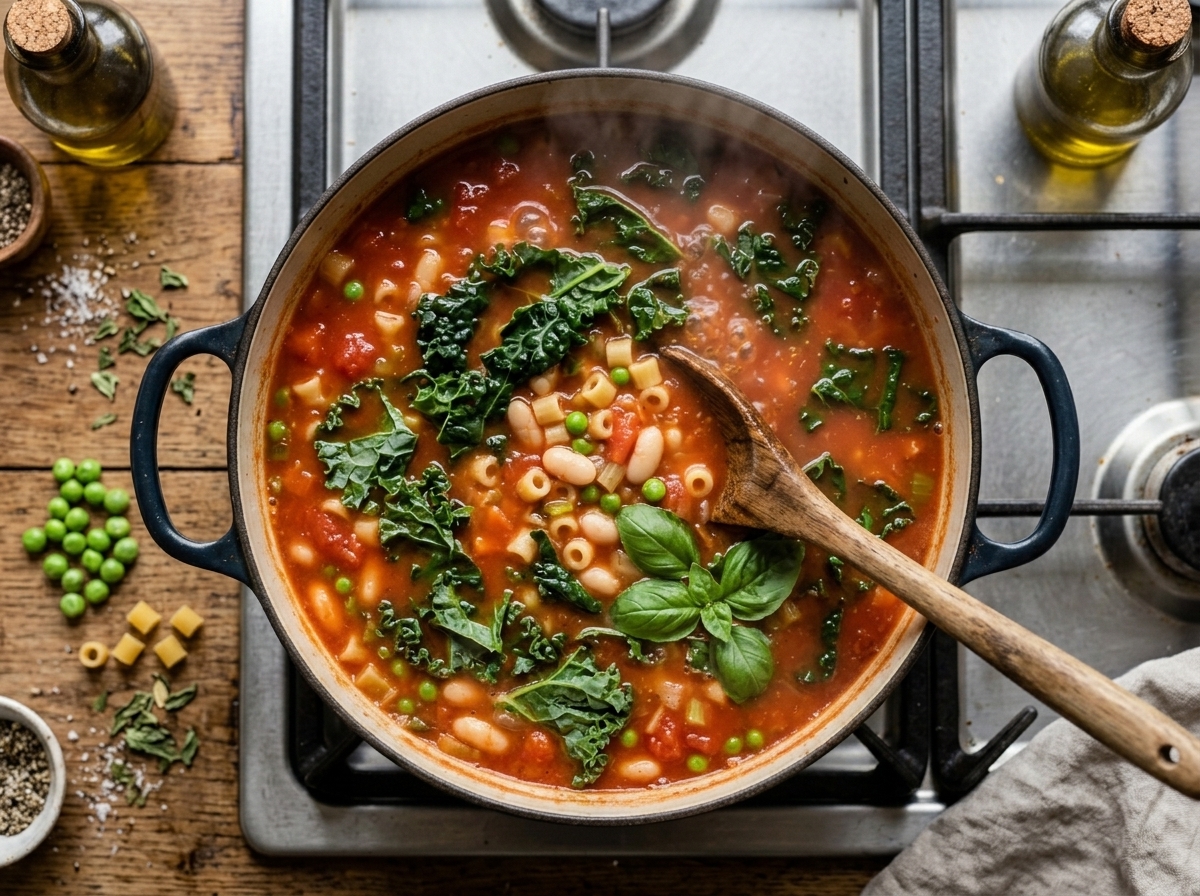
- Pour in the vegetable stock. Add the bay leaves and rosemary sprig. Bring to a gentle boil over medium-high heat, then reduce to a steady simmer.
- Simmer uncovered for 15 minutes until the potatoes are just tender when pierced with a knife.
- Add the torn cavolo nero and stir it in. Simmer for 3 more minutes until the leaves are wilted but still vivid green.
- Add the ditalini pasta directly to the pot. Cook for the time stated on the pasta package (usually 8-10 minutes), stirring occasionally, until the pasta is al dente.
- Stir in the frozen peas in the last 2 minutes of cooking. They need just enough time to heat through.
- Remove and discard the bay leaves and rosemary sprig. Taste the soup and adjust salt and pepper.
- Ladle into bowls and finish each serving with a drizzle of raw extra-virgin olive oil and a few fresh basil or parsley leaves.
Notes
Tips for Success
- Cook the soffritto low and slow for at least 8 minutes until the onion turns pale and sweet, not brown.
- Add the pasta in the last 10 minutes so it cooks through without turning starchy and absorbing all the broth.
- Crush half a can of beans with a fork before adding them – it thickens the broth without any blending.
- Taste for salt only after adding the stock and tomatoes, since both contribute sodium differently by brand.
- Finish each bowl with a drizzle of raw extra-virgin olive oil just before serving for a clean, peppery lift.
Variations
- Winter version: swap zucchini for diced butternut squash and use savoy cabbage instead of cavolo nero.
- Gluten-free: replace ditalini with certified gluten-free short rice pasta, added in the last 12 minutes.
- Higher protein: stir in 100 g of red lentils with the stock – they dissolve and thicken the broth naturally.
Storage and Reheating
Store cooled soup in an airtight container in the fridge for up to 4 days. The pasta continues to absorb broth overnight, so add a splash of water or stock when reheating.
For freezing, portion into 500 ml containers without the pasta if possible – cook fresh pasta separately when you reheat. If the pasta is already in, the soup still freezes fine for up to 3 months, though the texture will be softer.
Reheat on the stovetop over medium-low heat, stirring occasionally, until steaming through. Avoid boiling hard or the vegetables will break down.
Serving Suggestions
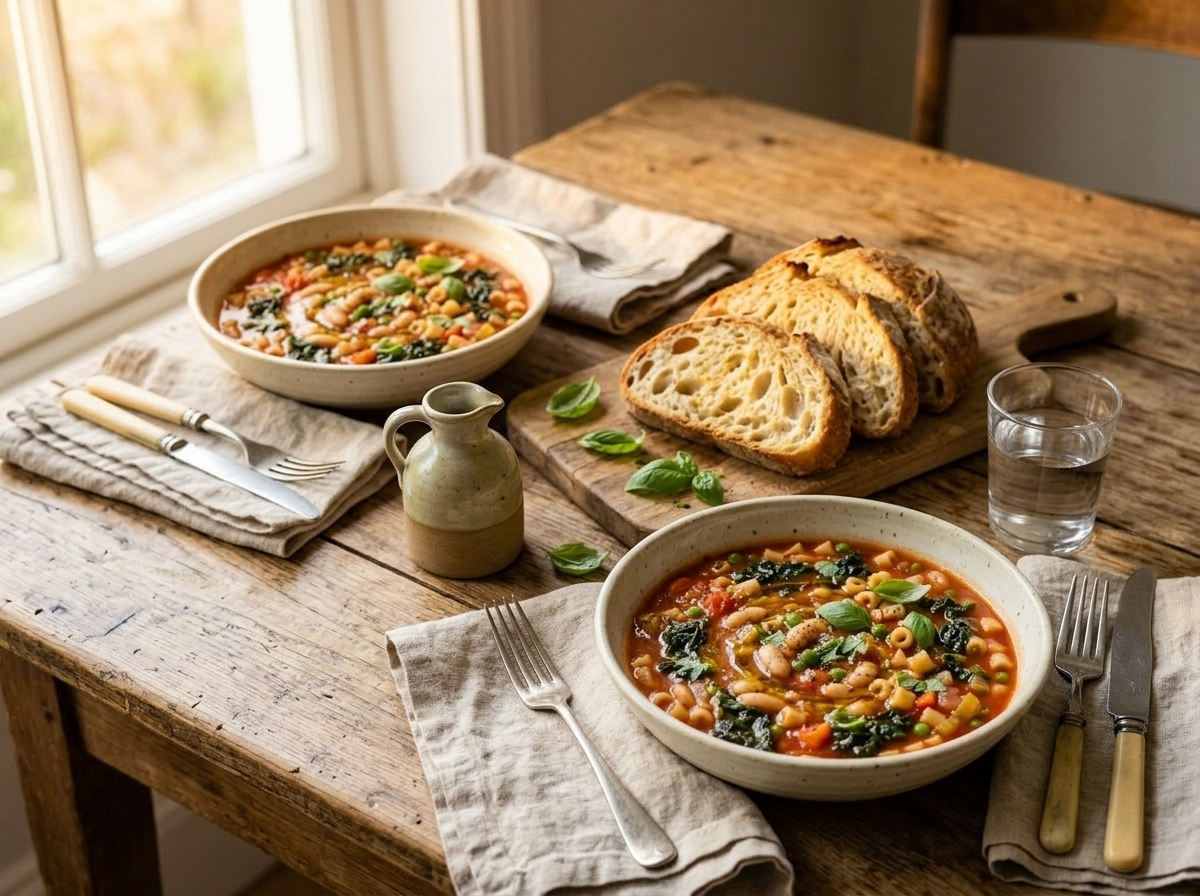
A thick slice of sourdough or a wedge of Tuscan pane sciocco alongside is all you need for a full meal. If you want something more substantial, a plate of bruschetta rubbed with garlic works well as a starter.
For a traditional finish, pass a small jug of good olive oil at the table so everyone can drizzle their own. A scattering of fresh basil or flat-leaf parsley over the top adds color and a clean herbal note.
This soup also works as a first course before a simple grain or legume dish – Italians would follow it with a plate of dressed lentils or farro in colder months.
FAQ
Why is my minestrone broth watery and thin?
The most common fix is to crush a portion of the cannellini beans directly into the pot before adding the stock – the starch thickens the broth naturally. Letting the soup simmer uncovered for the last 10 minutes also reduces and concentrates the liquid.
Can I use fresh tomatoes instead of canned in Italian minestrone?
Yes – use about 300 g of ripe plum tomatoes, peeled and roughly chopped, in place of the canned crushed tomatoes. Fresh tomatoes work best in summer when they’re actually ripe, otherwise canned give a more consistent result year-round.
Can I freeze vegan minestrone with the pasta already in it?
You can, but the pasta will be very soft after thawing. For better texture, freeze the soup base without the pasta and cook fresh ditalini when you reheat it.
What bread goes well with Italian minestrone soup?
Crusty sourdough or a plain ciabatta are the most practical choices – sturdy enough to dip without falling apart. In Tuscany, day-old unsalted bread is often torn straight into the bowl to make ribollita, the thicker cousin of minestrone.
Is this vegan minestrone gluten-free?
The soup base itself is naturally gluten-free – vegetables, beans, tomatoes, and stock contain no gluten. The only adjustment needed is to swap the ditalini pasta for a certified gluten-free short pasta, and serve it alongside a slice of gluten-free focaccia bread if you want to keep the whole meal compliant.
What is the difference between minestrone and ribollita?
Ribollita is essentially minestrone that has been reheated the next day with stale bread stirred in until it thickens to a porridge-like consistency – the name means ‘reboiled.’ Minestrone stays brothy with distinct pasta, while ribollita is dense and almost spoonable with a spoon rather than a ladle.