
Jump to Recipe
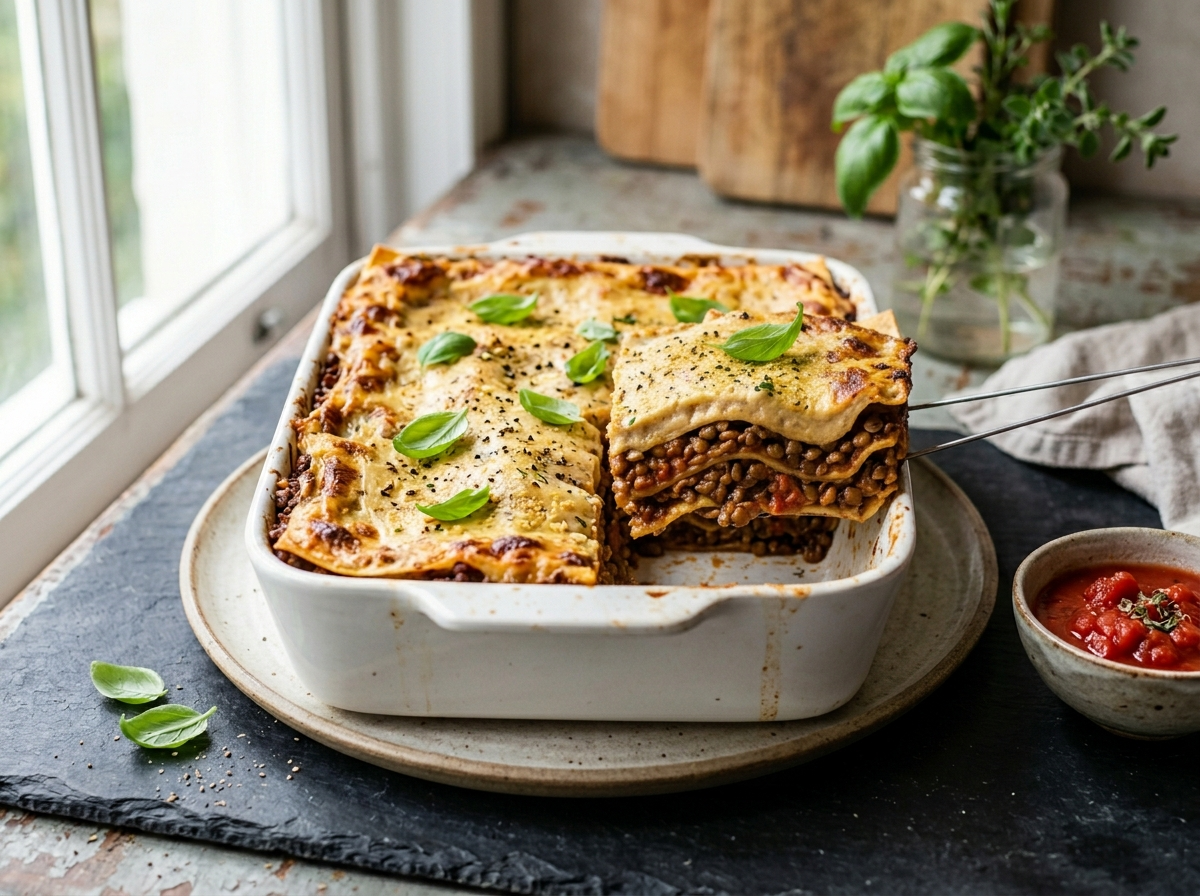
This is the lasagna I make when I want something that holds its shape on the plate and actually satisfies. The lentil ragù cooks down into a dense, savory base that takes well to tomatoes, red wine, and a long simmer.
The béchamel here uses olive oil and oat milk. It sets firmly between the layers, so every slice comes out clean rather than soupy. Texture is what makes or breaks a vegan lasagna, and this one gets it right.
You can build the whole dish the night before and refrigerate it unbaked. It actually slices better after resting, which makes it a solid option for feeding a group.
Why You’ll Love This Recipe
- Lentil ragù gives each layer real protein and bite
- Dairy-free béchamel sets firmly for clean, neat slices
- Builds the night before and bakes straight from the fridge
- One pan feeds six people without much active effort
Ingredient Notes
- green or brown lentils: Both hold their shape after a long simmer and give the ragù a meaty texture. Red lentils will break down to mush, so skip them here.
- canned crushed tomatoes: Use a good-quality brand with no added sugar. San Marzano-style tomatoes are worth it if you can find them.
- dry red wine: Adds depth to the ragù base. Sub with an equal amount of vegetable stock plus a teaspoon of balsamic vinegar if you prefer.
- oat milk: The neutral flavor makes a clean-tasting béchamel. Unsweetened soy milk also works well. Avoid almond milk, which can turn thin and slightly bitter when heated.
- olive oil: Used in both the soffritto and the béchamel. A good-tasting oil matters more here than in most recipes since it carries flavor through both components.
- oven-ready lasagna sheets: These absorb liquid from the ragù and béchamel during baking, so no pre-boiling needed. If using standard dried sheets, parboil them for 4 minutes first.
- nutritional yeast: Stirred into the béchamel for a savory, slightly cheesy note. Start with 2 tablespoons and add more to taste.
Vegan Lasagna with Lentils
Ingredients
Method
- Heat 3 tbsp olive oil in a large heavy pot over medium heat. Add the onion, celery, and carrot and cook for 8 to 10 minutes, stirring occasionally, until softened and pale gold.
- Add the garlic and tomato paste. Stir for 2 minutes until the paste darkens slightly and smells rich.
- Pour in the red wine and scrape the bottom of the pot. Let it bubble for 2 minutes until mostly absorbed.
- Add the rinsed lentils, crushed tomatoes, vegetable stock, oregano, thyme, bay leaves, salt, and pepper. Stir to combine.
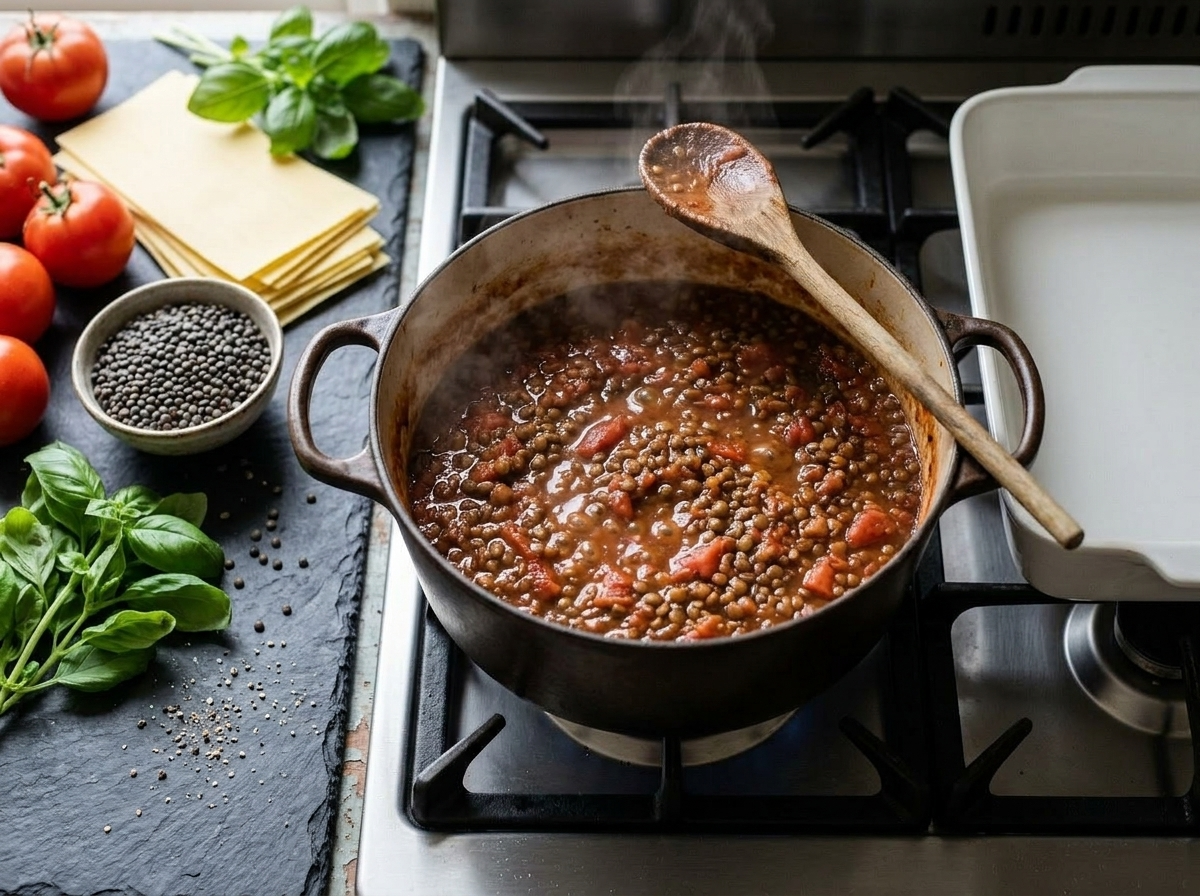
- Bring to a boil, then reduce heat to low. Simmer uncovered for 35 to 40 minutes, stirring every 10 minutes, until the lentils are tender and the mixture is thick with very little liquid remaining. Remove bay leaves. Taste and adjust salt.
- Heat 60 ml olive oil in a medium saucepan over medium heat. Add the flour and whisk constantly for 2 minutes until the mixture turns a pale straw color and smells faintly nutty.
- Add the warm oat milk in a slow, steady stream, whisking constantly to prevent lumps. Keep whisking over medium heat for 5 to 7 minutes until the sauce thickens enough to coat the back of a spoon.
- Remove from heat. Stir in the nutritional yeast, nutmeg, salt, and white pepper. The sauce should be thick but still pourable. Cover the surface with plastic wrap to prevent a skin from forming.
- Heat the oven to 190 C / 375 F.
- Spread a thin layer of béchamel across the bottom of a 9x13 inch (23x33 cm) baking dish.
- Lay a single layer of lasagna sheets over the béchamel. Break sheets to fit where needed.
- Spoon one third of the lentil ragù over the pasta in an even layer, then spread about one quarter of the remaining béchamel over it.
- Repeat the layers: pasta, ragù, béchamel. Do this twice more for three pasta layers total.
- Finish with a final layer of lasagna sheets and pour the remaining béchamel over the top, spreading it all the way to the edges so no pasta is exposed.
- Cover tightly with foil and bake for 35 minutes. Remove the foil and bake for a further 15 minutes until the top is golden and the edges are bubbling.
- Remove from the oven and rest for at least 15 minutes before slicing.
Notes
Tips for Success
- Simmer the lentil ragù until it looks almost dry before layering, or the lasagna will be watery.
- Warm the oat milk before adding it to the roux to prevent lumps in the béchamel.
- Spread béchamel on both the bottom and top layers to stop the pasta sheets from drying out.
- Cover tightly with foil for the first 35 minutes of baking, then uncover for the final 15 to get a golden top.
- Rest the lasagna for at least 15 minutes out of the oven before cutting, so the layers hold together when sliced.
Variations
- Add a layer of thinly sliced roasted zucchini or eggplant between the lentil layers for extra vegetables.
- Stir a teaspoon of smoked paprika and cumin into the ragù for a more robust, smoky flavor profile.
- Use gluten-free lasagna sheets and swap the all-purpose flour in the béchamel for a 1:1 gluten-free blend.
Storage and Reheating
Cool the lasagna completely before covering. Store in the baking dish or in an airtight container in the fridge for up to 4 days.
To reheat individual portions, microwave on medium power for 2 to 3 minutes, covered loosely. To reheat the full dish, cover with foil and bake at 180 C / 350 F for 20 to 25 minutes until hot through.
This lasagna freezes well. Cut into portions, wrap each tightly in plastic wrap, and freeze for up to 2 months. Thaw overnight in the fridge before reheating.
Serving Suggestions
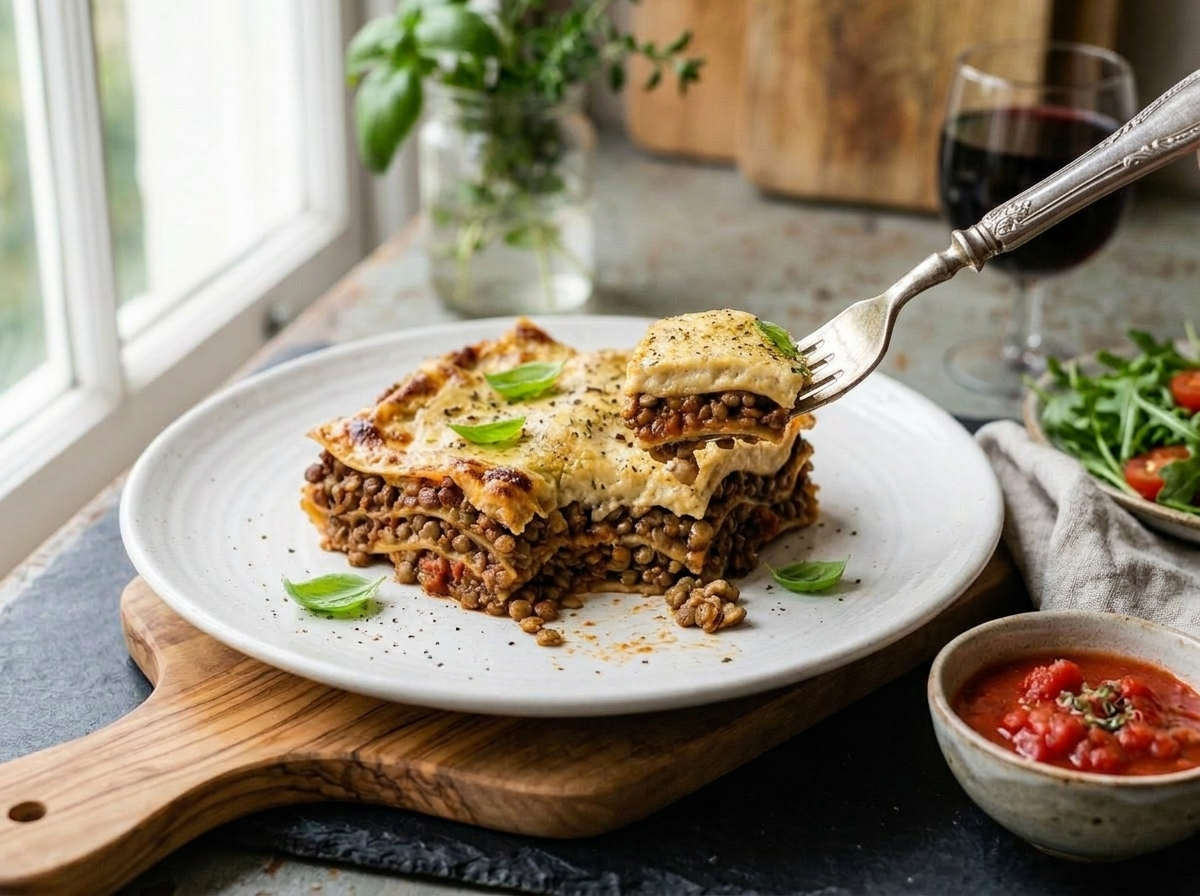
A simply dressed green salad is the natural companion here. Bitter leaves like radicchio or arugula cut through the richness of the béchamel better than soft lettuce does.
A wedge of good crusty bread on the side is worth it for scooping up the tomato sauce that pools around each slice. Ciabatta or a plain sourdough both work.
If you’re serving this for a dinner party, a glass of Barbera d’Asti or a lighter Sangiovese sits well alongside the lentil ragù without overpowering it, and a guide on pairing Italian wine with food can help you round out the table.
FAQ
Why is my vegan lasagna watery when I cut into it?
The most common cause is ragù that hasn’t reduced enough before layering. Cook the lentil and tomato mixture until most of the liquid has evaporated and it holds a spoon mark. Also make sure your béchamel is thick, not pourable, before it goes into the dish.
Can I use red lentils instead of green or brown lentils in this lasagna?
Red lentils break down completely when cooked, so the ragù loses all its texture and becomes more like a thick paste. Green or brown lentils hold their shape and give the filling the bite you need in a lasagna.
Can I assemble this lentil lasagna the night before and bake it the next day?
Yes, and it actually slices more cleanly after an overnight rest. Assemble fully, cover tightly with foil, and refrigerate for up to 24 hours. Add 5 to 10 extra minutes to the covered baking time since it’s going in cold.
What can I serve alongside this vegan lasagna for a complete dinner?
A bitter green salad dressed with lemon and olive oil balances the richness of the béchamel well, much like the bright, simple flavors in a classic Italian lentil and spinach dish cut through a heavy base. Crusty bread for the table and a light Italian red round it out without turning it into a heavy meal.
Is this lentil lasagna gluten free?
It isn’t as written because standard lasagna sheets and all-purpose flour contain gluten. You can swap in certified gluten-free lasagna sheets and use a 1:1 gluten-free flour blend in the béchamel without changing the method.
How is this vegan lentil lasagna different from a classic lasagna Bolognese?
Traditional lasagna Bolognese uses a slow-cooked meat ragù and a butter-and-milk béchamel, with Parmigiano Reggiano between layers, a contrast you can also see in an authentic Italian lasagna recipe that layers noodles with a rich béchamel. This version replaces the meat with lentils and uses an olive oil and oat milk sauce, which gives a lighter but still substantial result.