
Jump to Recipe
I still remember the warm stone steps of Spoleto and the first time Chef Mirella at Il Ristorante Panciolle showed me the semolina-forward, water-only dough that makes this dish sing.
We form a well in the flour, fold and knead until the dough feels silky, then rest it 30–60 minutes. I roll it to about 1/8 inch and cut 1/4 inch strips so the slightly rough texture grabs sauce the way home cooking should.
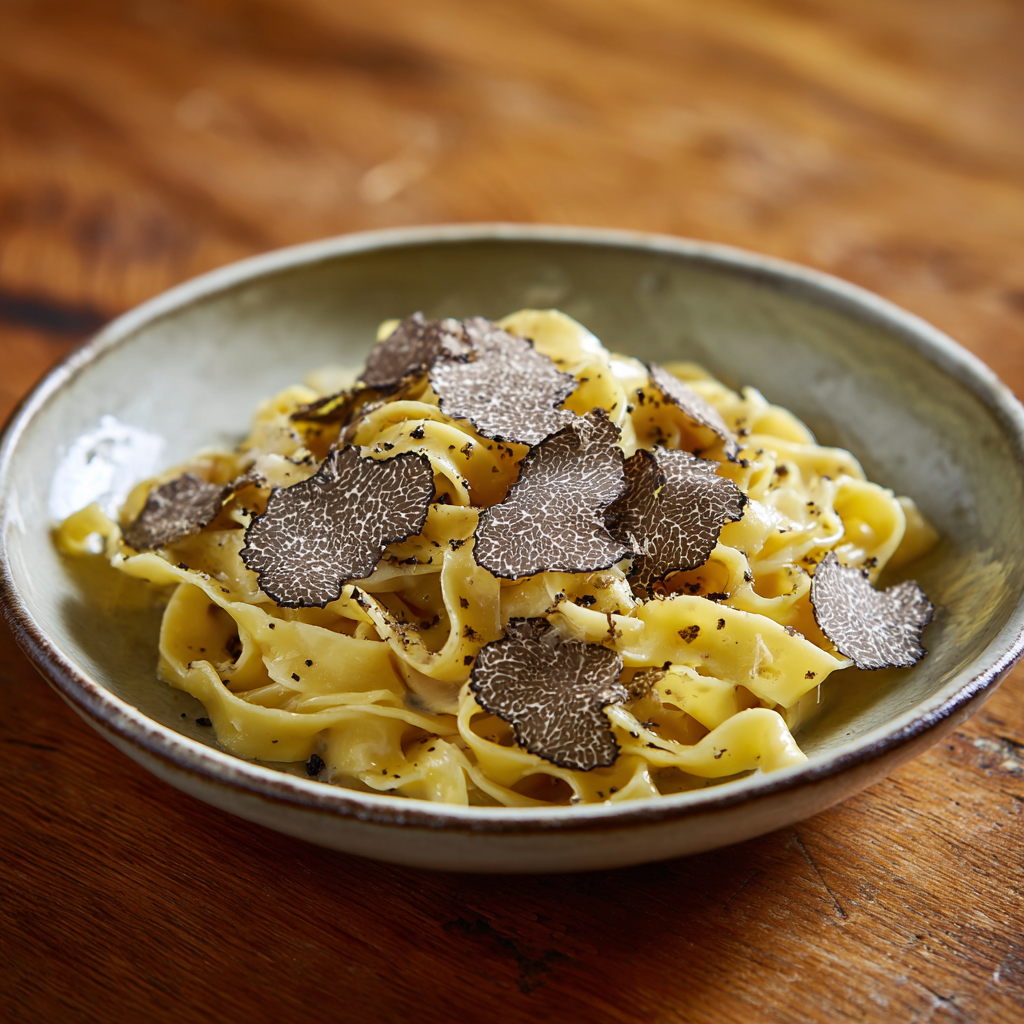
At our table the finish is always simple: a light extra-virgin olive oil infusion or a creamy béchamel, and grated truffle that perfumes the plate. I clean truffles under tepid water with a brush, remove dirt with a paring knife, and sometimes soak them an hour to coax out deeper aroma.
I’ll share tools that matter—long rolling pin, wide pan—and exact timing so you can make the recipe with confidence and bring a slice of hilltop cuisine to your kitchen.
Key Takeaways
- The semolina, water-only dough and resting time create the proper texture.
- Roll to 1/8″ and cut 1/4″ strips so sauce clings well.
- Finish simply: oil-based or béchamel sauces both work beautifully.
- Clean truffles gently; a brief soak can boost aroma.
From Spoleto with love: the story and soul behind our strangozzi
The kitchen at Il Ristorante Panciolle felt like an old friend—warm wood, sunlight, and Chef Mirella waiting at the board.
She taught the well-in-flour method: form a crater, add salted water, and bring the dough together with confident hands. We kneaded until it felt smooth and then let it rest for 30–60 minutes so the gluten could relax.
A hilltop kitchen, a wooden board, and lessons from Chef Mirella
She rolled the dough to about 1/8 inch, folded it, and cut 1/4 inch ribbons with the advice, “non troppo fitto, non troppo fino.” A dusting of semolina kept each strand springy and separate.
What makes strangozzi different from spaghetti
These strands are thicker and a bit rougher than spaghetti, so they catch sauce and oil beautifully. In Spoleto the shape is tied to local stories and parish tables; the name evokes simple strings pulled by hand.
- I left with a clearer sense of touch, patience, and time—how small choices make a recipe sing.
- And I learned why good black truffle and olive oil need only gentle heat to shine.
Umbria Strangozzi Truffle Pasta: Ingredients, tools, and sourcing notes
The ingredients are few, and each one matters. I lean into a semolina-forward dough and simple techniques so the flavors stay honest and clear.
The dough: semolina-forward, water-based, no eggs
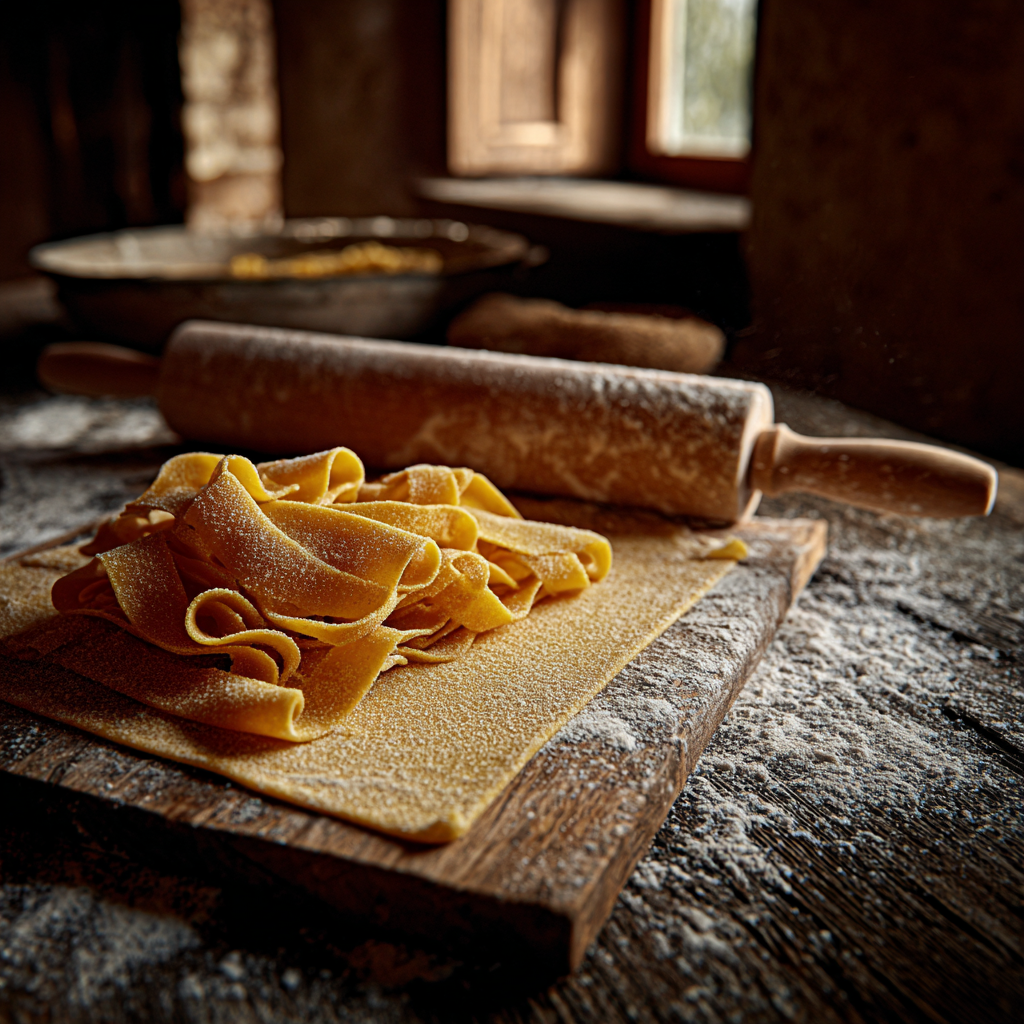
I use mostly semolina with a touch of “00” or all-purpose to balance bite and tenderness. Make a well, add a pinch of salt, and bring the mix together with cold water until the dough holds.
Knead until smooth, then rest covered for 30–60 minutes so the gluten relaxes. Roll to about 1/8 inch, fold, and cut 1/4 inch ribbons on a lightly floured surface so the strands keep their shape.
| Flour | Ratio | Notes |
|---|---|---|
| Semolina | 70% | Gives texture and bite |
| “00” / AP | 30% | Smooths the sheet for rolling |
| Salt & Water | To bind | Work into a supple dough |
Black truffle, truffle oil, and how to clean and prep them
For fresh black truffle prep I brush under tepid running water, free lodged dirt with a paring knife, brush again, and pat dry. Some vendors suggest a gentle one-hour soak in warm water to coax aroma; I only use that when the scent feels muted.
If fresh supply is limited, a few drops of truffle oil can supplement shaved truffles, used sparingly so the perfume stays natural. For an olive oil infusion, cover sliced truffle with extra-virgin olive oil up to two hours, then warm gently with garlic and optional anchovy.
Tools you’ll actually use: wooden board, long pin, wide pan
- Wooden board for kneading and folding.
- Long rolling pin for even sheets.
- Wide pan to toss the strands and finish with sauce.
Step-by-step recipe: hand-rolled strangozzi with authentic truffle sauce
We begin with the dough. Combine semolina and “00” or all-purpose with a pinch of salt. Make a well, add cool water gradually, and bring the mix together until it forms a rough mass.
Knead until the surface turns silky and springs back to a gentle press. Rest the dough covered for 30–60 minutes so the gluten relaxes and rolling is easy.
Mix, knead, and rest until supple
Roll the dough to roughly 1/8 inch. Fold the sheet and cut ribbons about 1/4 inch wide—remember “not too thick, not too thin.” Dust with semolina and lay strands on clean towels.
Roll thin, cut, and dust
Choose your sauce. For option A, melt butter, whisk in flour over low heat for a few minutes without color, then stream in hot milk. Simmer until it coats the spoon. Off heat, fold in grated black truffle or a touch of truffle oil.
Truffle sauce option A: buttery béchamel with grated truffle
For option B, cover sliced truffles with extra-virgin olive oil for up to two hours. Warm the oil gently with smashed garlic and a tiny anchovy until fragrant. Remove the garlic and add the truffle back off heat to keep aroma bright.
Truffle sauce option B: olive oil infused with truffle
Bring a large pot to a rolling boil, salt generously, and boil fresh strangozzi until al dente—just a few minutes. Reserve a cup of pasta water before draining.
Return strands to a wide pan with your chosen sauce. Toss quickly over low heat and add splashes of pasta water to emulsify into a glossy coating. Taste for salt and a whisper of pepper.
Boil, toss, and finish
| Step | Béchamel (Option A) | Oil Infusion (Option B) |
|---|---|---|
| Heat cue | Low heat; avoid browning | Very low; warm oil, do not fry |
| Key timing | Whisk until sauce coats spoon (minutes) | Infuse oil up to 2 hours, warm 1–2 minutes |
| Finish | Fold in grated black truffle off heat | Remove garlic; add truffle off heat |
| Best for | Silky, rich comfort sauce | Bright, aromatic, lighter finish |
Serve immediately and, if you like, shave a little truffle on top. For more measurements and the full thick-cut recipe, see this thick-cut recipe.
Pro tips, swaps, and timing: make it work in your American kitchen
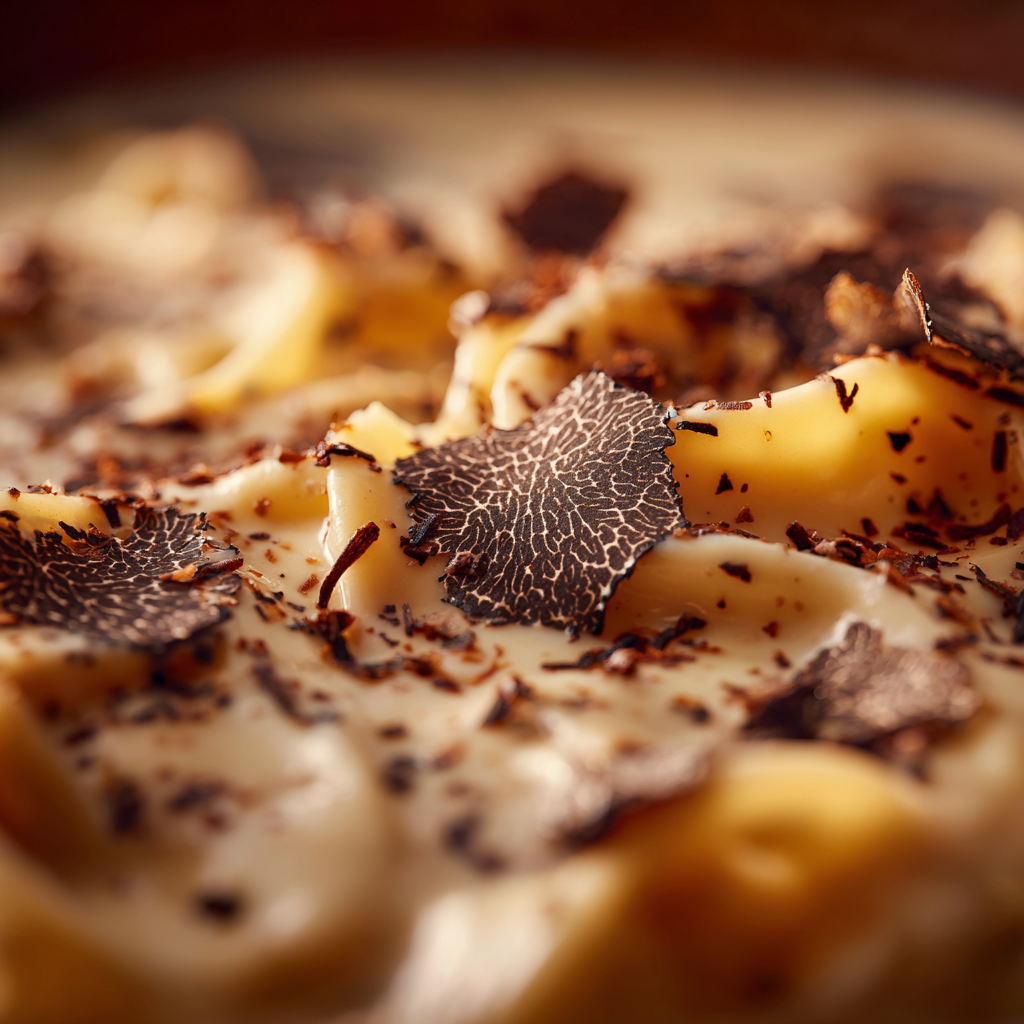
A few practical adjustments make this old-world recipe fit a modern home stove and schedule. I want you to keep texture and aroma even when ingredients or time are tight.
Quick swap: spaghetti or linguine
If you can’t find strangozzi, use spaghetti or linguine and shorten the cook time. Cook until al dente, stir within the first minute, and taste a minute earlier than the package suggests.
For spaghetti, aim for a firm bite so the strands hold up when tossed in sauce for a few extra minutes.
Seasoning, heat control, and cheese etiquette
Salt your water like the sea. Keep heat low when warming oil or béchamel so the sauce never smokes or browns. That preserves the delicate truffle aroma.
On seasoning, a small grind of pepper and modest salt are enough. Many cooks skip cheese with the olive oil method; a light sprinkle only if you truly want it.
- Use a long pin and a well-floured surface to roll and handle the dough without tearing.
- Want more depth? Melt a tiny anchovy into warm oil or add a pinch of red pepper, then finish with a splash of pasta water to bind.
- If the dough resists, rest it longer—feel matters more than the clock.
For related ideas on hand-held savory rolls and a different family recipe, see this easy stromboli recipe.
A plate that carries home with it
A quiet plate can carry an entire kitchen’s memory in a single breath.
Serve immediately after tossing so the truffle perfume lifts with the steam. A final splash of pasta water keeps the ribbons glossy and light.
Keep heat gentle and avoid boiling the sauce; volatile notes vanish with hard boil. A small twist of pepper and a careful hand with cheese, if any, let the aroma stay front and center.
I shave a bit of black truffle at the table so warmth reveals its perfume without cooking it off. Follow the instructions the first time, then trust your hands and senses—the dough and time will guide you.
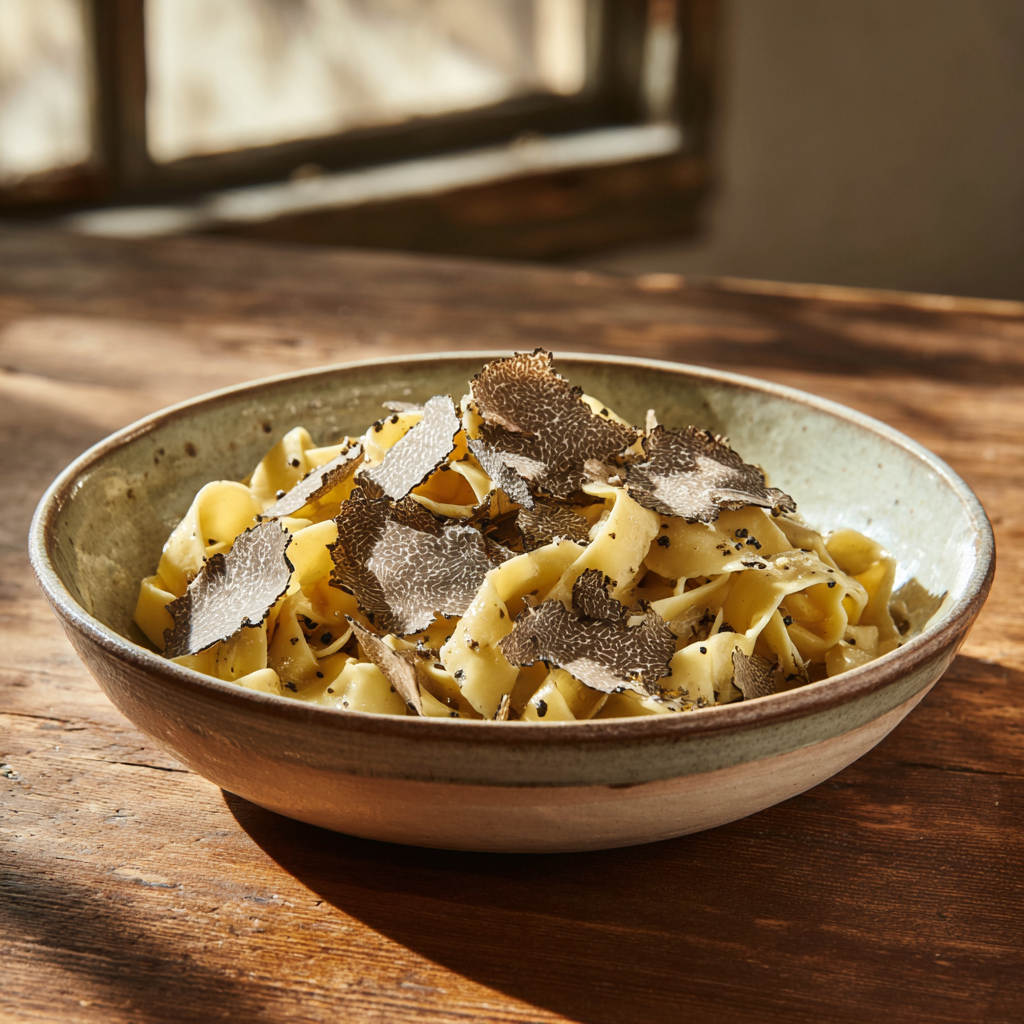
Umbrian Strangozzi with Black Truffle Sauce
Ingredients
Method
- Mix semolina and “00” flour with a pinch of salt.
- Form a well in the center and slowly add cool water.
- Bring the dough together with your hands until it forms a rough mass.
- Knead 8–10 minutes until the dough turns smooth and slightly elastic.
- Cover and rest the dough for 30–60 minutes so the gluten relaxes.
- Flour your board lightly.
- Roll the dough to about 1/8 inch thick using a long pin.
- Fold the sheet gently and cut 1/4 inch-wide ribbons.
- Dust with semolina so they stay separate and springy.
- Melt butter on low heat.
- Whisk in flour and cook a few minutes without browning.
- Pour in hot milk and whisk until the sauce coats the spoon.
- Take the pan off heat and fold in grated truffle or a small splash of truffle oil.
- Cover sliced truffles with extra-virgin olive oil and let them sit up to 2 hours.
- Warm the oil gently with smashed garlic and a tiny anchovy until fragrant.
- Remove garlic.
- Add the truffle slices back in off heat to keep the aroma bright.
- Bring a large pot of water to a rolling boil and salt it well.
- Boil the fresh strangozzi for just a few minutes until al dente.
- Reserve 1 cup of pasta water.
- Transfer cooked strangozzi to a wide pan with your chosen sauce.
- Toss over low heat, adding small splashes of pasta water to create a glossy coating.
- Adjust salt and pepper gently.
- Serve immediately and shave a little fresh truffle on top.
Notes
- Keep the heat low when warming either sauce so the truffle aroma doesn’t disappear.
- The dough should feel smooth and flexible. If it fights you, rest it longer.
- Fresh truffle gives the deepest aroma, but a light touch of truffle oil works when supply is limited.
- Tossing the pasta in a wide pan with a splash of pasta water is the key to restaurant-style gloss.
- Serve immediately — truffle aroma fades fast.