
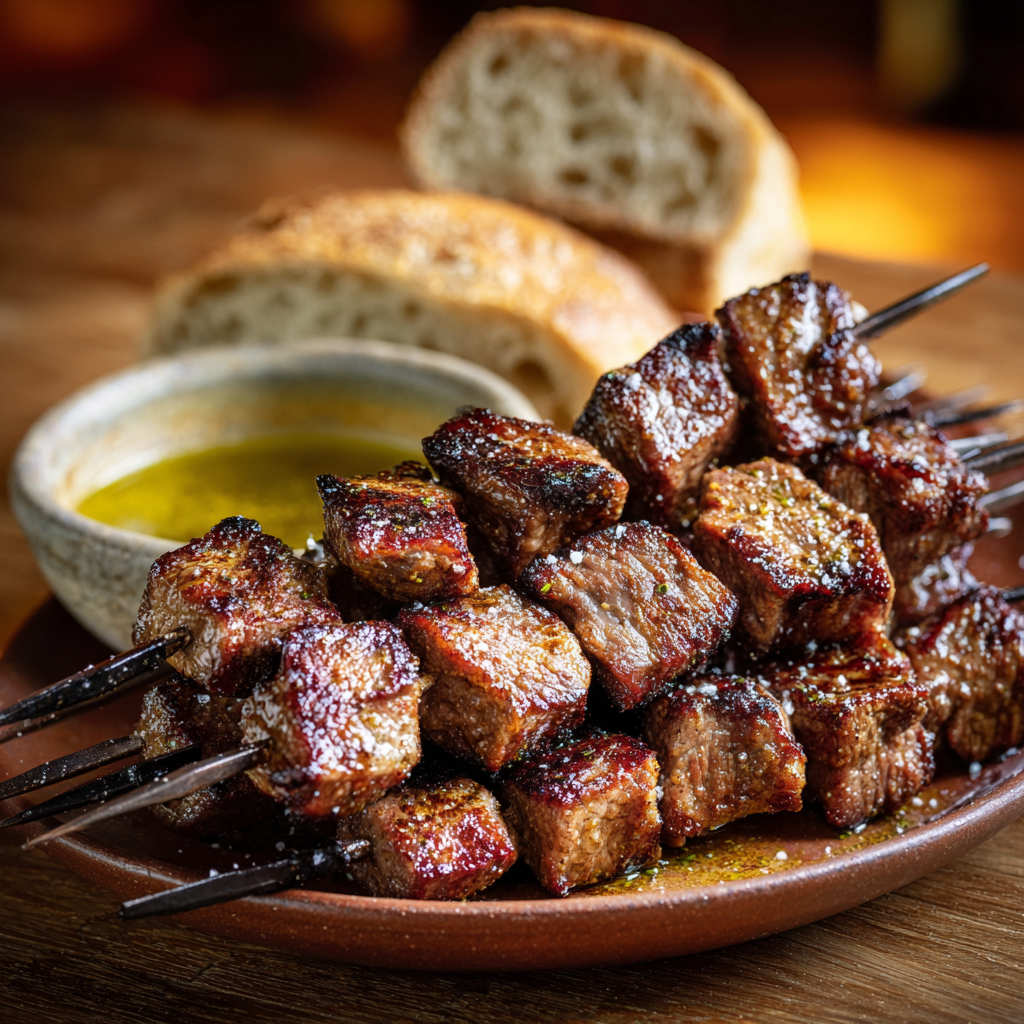
Jump to Recipe
I light up my charcoal and I can nearly smell the hills of the region—this abruzzo lamb skewers arrosticini line the grill like little promises of smoke and salt. It’s a simple pleasure: lean pieces threaded tight, a narrow heat channel below, and the bright sting of coarse salt at the end.
When I teach this recipe, I start with how I trim shoulder for a balance of fat and meat, and why saving a bit of fat to thread makes every bite juicier. On a home grill you mimic the canaline by keeping coals low, turning often, and letting fat drip away so the smoke can do its magic.
My way keeps things faithful and practical: minimal seasoning, close spacing, and a short rest so the fat calms and the meat breathes. Follow the cues I give for feel and color, and you’ll turn humble food into something that tastes like family.
Key Takeaways
- Use shoulder trimmed of silver skin for the best balance of tenderness and fat.
- Thread pieces close and reserve small fat strips to keep bites juicy.
- Light charcoal, let coals settle, keep heat low and turn often on the grill.
- Season only with coarse salt to honor the simple, smoky tradition.
- Rest skewers briefly off the heat so fat won’t be molten and juices settle.
- Small, even pieces and steady attention are the real secrets to success.
What makes arrosticini special in Abruzzo’s grilling culture
I think of these skewers as the purest expression of mountain shepherds—meat over charcoal, shared with friends. The cooking echoes the transumanza and the long tratturi that shaped how people ate on the move.
The canaline grill, or Lu Furnacell, is narrow by design so fat drops fall straight onto coals. That contact blooms aroma instead of heavy smoke. Charcoal gives a dry, radiant heat that lifts the flavor of older mutton or younger lamb alike.
These are recipes of restraint: just meat and coarse salt. I turn the skewers constantly to manage flare-ups and to crisp fat without charring the interior. Serving is immediate and communal—hot pieces passed around with bread and laughter.
| Grill Type | Heat Behavior | Best Use |
|---|---|---|
| Canaline / Lu Furnacell | Thin channel, fat drips to coals, fragrant smoke | Traditional mutton pieces; authentic flavor |
| Charcoal grate | Broader heat, needs careful turning | Home recipes when canalina not available |
| DIY brick channel | Controlled channel mimic, steady radiant heat | Backyard cooks who want classic results |
Choose the right meat, cut precise pieces, and set up the proper grill
Start at the butcher counter: a well-marbled shoulder makes every bite sing over charcoal. In the U.S., I use lamb shoulder as a practical stand-in for mutton. Look for a roast with a fat cap and trim away silver skin and sinew.
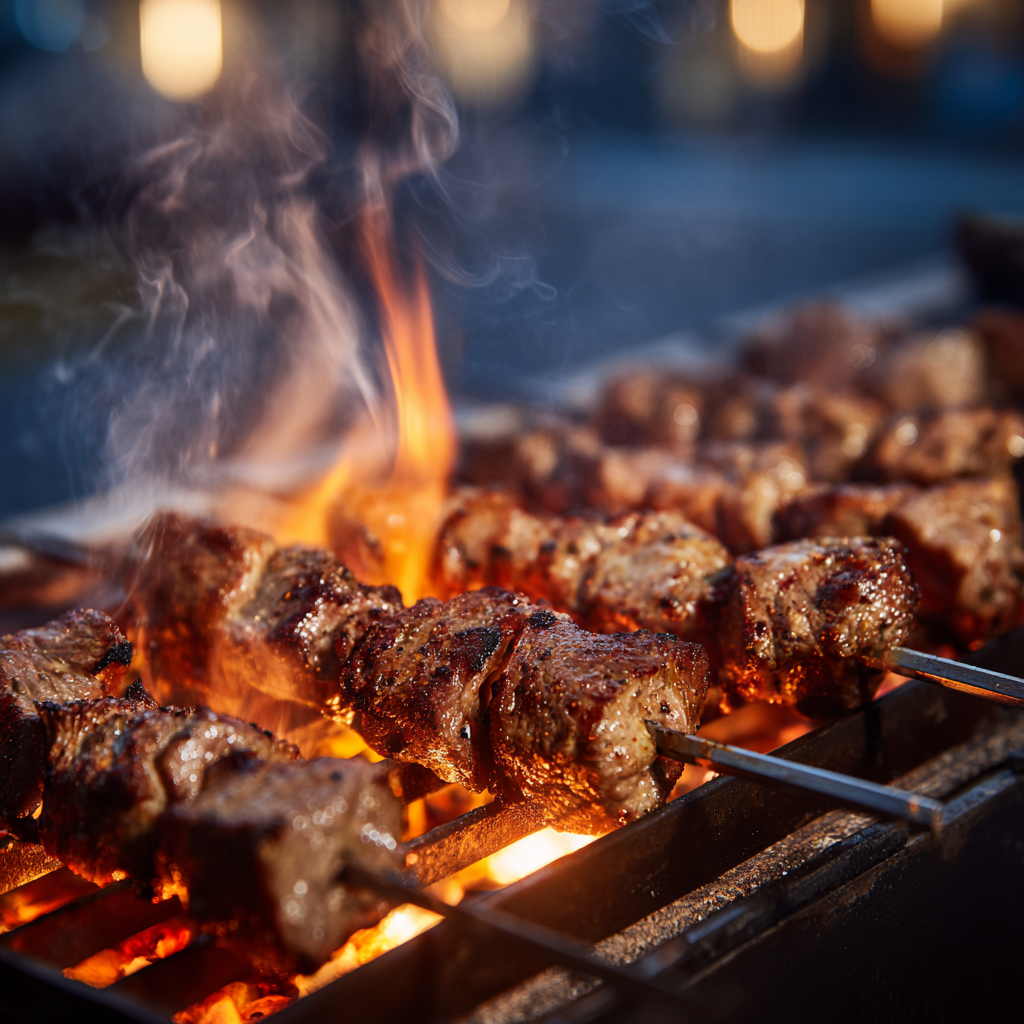
I cut uniform cubes about 2–3 cm so all pieces brown and finish together. Reserve small strips of fat to tuck between cubes; those pockets melt and baste each skewer from within.
- Soak bamboo sticks at least 20 minutes; flat metal skewers stop pieces spinning.
- Brush a whisper of olive oil on very lean meat to aid browning without excess grease.
- Keep cubes consistent—small differences matter on direct heat.
For grills, you can use a classic canaline, a charcoal grate, or a DIY brick channel. Line bricks with foil to form a narrow trough, spread coals until ashy and even, then perch the skewers so meat sits over the heat and handles stay cool.
These steps give reliable, repeatable results that honor tradition while fitting an American backyard setup. For more classic recipes and family notes, see this home-cooked Italian dish.
How to make abruzzo lamb skewers arrosticini on charcoal, step by step
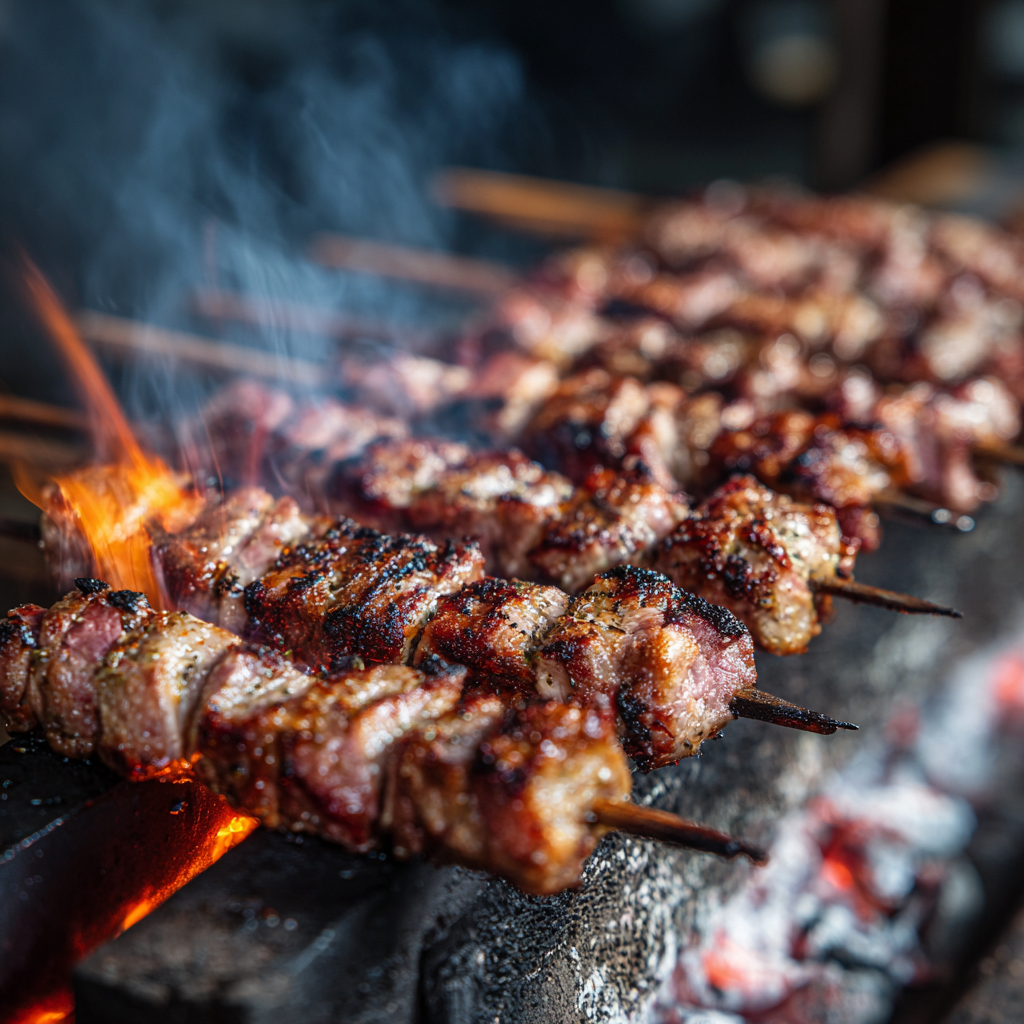
A clean board, a sharp knife, and a quiet charcoal fire make the difference between good and memorable bites.
Prep the meat
Trim silver skin and sinew from the shoulder. Cut uniform 2–3 cm pieces so all cook at the same pace.
Reserve small strips of fat. Those nuggets melt and baste the meat as it grills.
Threading technique
Thread with rhythm: two or three lean pieces, then a fat nugget. Keep pieces snug but not crushed.
Place meat onto skewers so heat meets the long face of each cube for even browning.
Seasoning that respects tradition
Salt just before the grill. Coarse salt is the classic choice; add a touch of black pepper only if you want a gentle lift.
Grilling cues
Light charcoal and wait about 15 minutes until coals glow and show ash. Spread coals for an even bed of heat.
Perch skewers over the channel, turn constantly, and manage brief flare-ups from dripping fat. Aim for a light char, not heavy blackening.
Doneness and rest
Cook for just a few minutes; the surface will sheen as fat renders. Pull when the fat crisps and centers are cooked through.
Rest one to two minutes so fat settles and won’t burn mouths when eaten. Taste one and adjust salt, then move the rest to the platter so everyone gets them hot — make sure they reach the table quickly.
- I trim cleanly so every piece finishes at the same moment.
- I alternate lean and fat for steady basting along the skewer.
- I cook close to the coals, turn often, and pull at the first sign of crisped fat.
| Step | Key Action | Timing / Cue |
|---|---|---|
| Prep | Trim silver skin, cube shoulder, reserve fat | 10–15 minutes for trimming and cutting |
| Thread | Alternate 2–3 pieces and small fat nuggets | Consistent spacing for even rendering |
| Grill | Even coals, constant turning, manage flare-ups | Coals ready at ~15 minutes; cook a few minutes |
| Finish | Pull when fat crisps; rest briefly | Rest 1–2 minutes before serving |
Serve like you’re in Abruzzo—then make it your signature at home
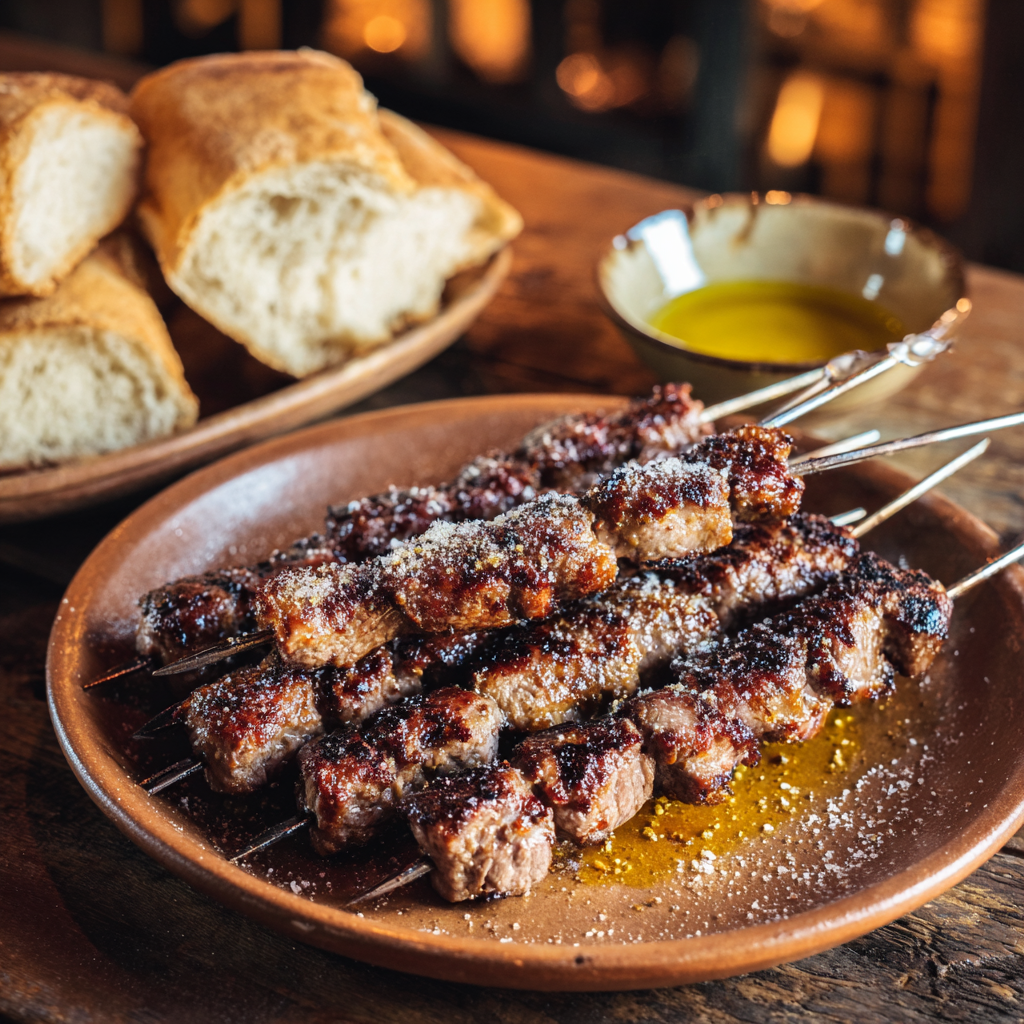
Bring the platter hot from the grill and let the room fill with that simple, smoky scent. I pass the tray straight to the table so guests can grab lamb skewers while they’re sizzling; immediacy is part of the charm.
Keep sides humble: crusty bread, a small dish of good olive oil, and pepperoncini if you like heat. A light pinch of salt after a one to two minutes rest keeps the fat from scalding mouths.
If you want a gentle twist, brush a whisper of oil or tuck a sprig of rosemary on the platter—still respectful of tradition. For deeper taste, try mutton when you can find it, or scale batches so the coals and the channel on your grill stay steady.
Host warmly, share stories, and let these simple pieces become your signature at home.
Abruzzo Lamb Skewers (Arrosticini)
Ingredients
Method
- Trim away silver skin and any tough sinew from the shoulder.
- Cut the meat into evenly sized cubes about 2–3 cm each.
- Save small strips of fat to tuck between the cubes.
- If using bamboo skewers, soak them for 20–30 minutes so they don’t burn.
- Thread skewers with a rhythm: 2–3 lean cubes, then one fat nugget.
- Keep pieces snug but not crushed so heat flows evenly.
- Light charcoal and let it burn about 15 minutes until fully ashy and glowing.
- Spread coals in a narrow channel if you have a canaline-style grill, or create a similar trough using a regular grill or DIY brick setup.
- Brush very lean skewers with a thin film of olive oil (optional).
- Sprinkle coarse salt right before grilling.
- Set skewers directly over the hot coals in a tight line.
- Turn them constantly to avoid scorching.
- Manage flare-ups by lifting them an inch or two away from the heat for a moment.
- Cook only a few minutes total—pull them when the fat crisps and the meat is browned but still juicy.
- Rest skewers 1–2 minutes so the fat settles and won’t burn mouths.
- Add a small pinch of salt if needed.
- Serve immediately with bread, olive oil, and simple sides.
Notes
- Keeping the cubes the same size is one of the biggest keys to getting every skewer cooked at the same moment.
- Don’t overthink seasoning. Arrosticini are meant to taste like pure grilled lamb with just enough salt to wake it up.
- Turning the skewers constantly isn’t optional—it’s what gives you crisp fat, browned meat, and no burnt edges.
- Serve them hot and fast; that immediacy is part of the Abruzzo tradition.