
Jump to Recipe
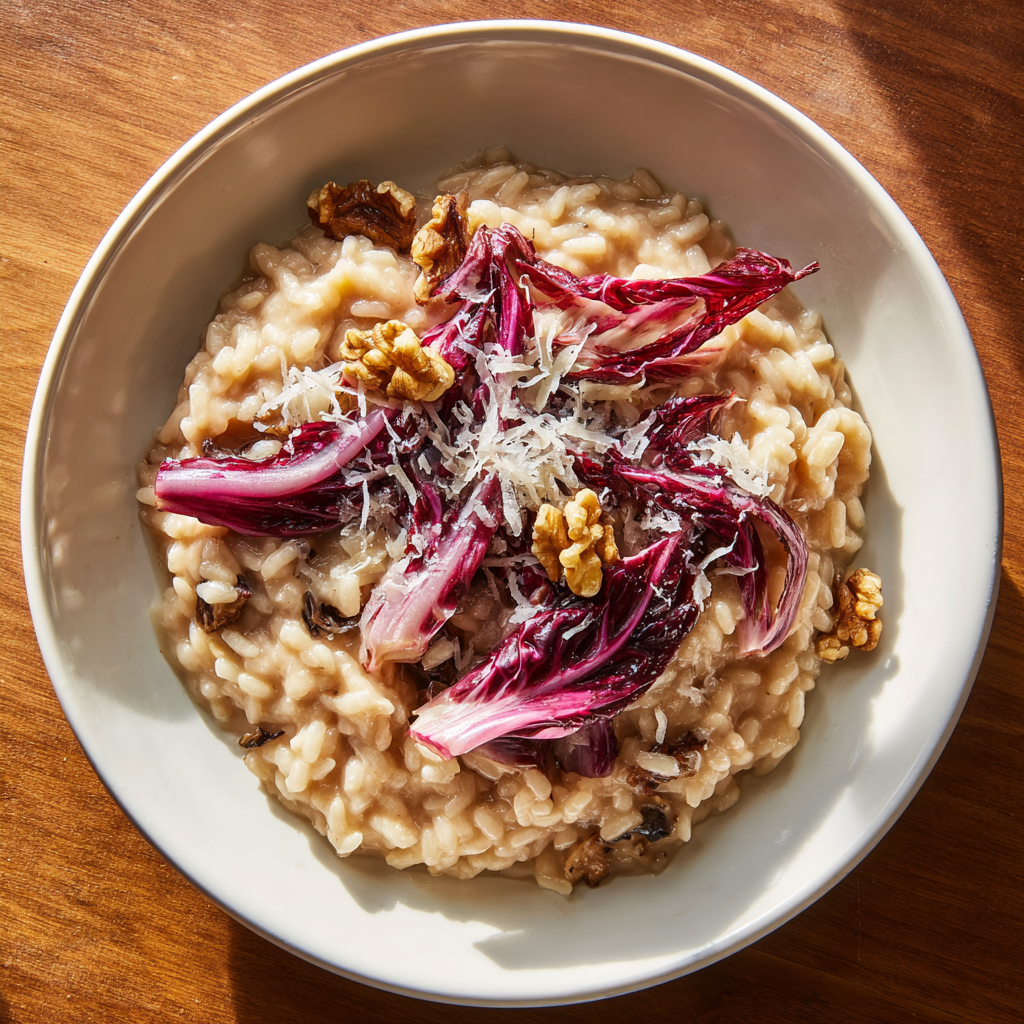
I invite you into my kitchen with a warm pan, a glass of Prosecco, and the smell of slightly bitter greens that define this veneto risotto al radicchio recipe.
I’ve cooked this dish in Treviso markets and at my own stove, using Vialone Nano and Ubriaco cheese to balance the radicchio’s bright bite. You’ll feel the texture of the rice as it swells and the aroma when wine hits the hot pan.
My aim is simple: share clear, practical steps so you can make a comforting, authentic plate tonight. I’ll point out where to choose chestnuts or walnuts, why rice variety matters, and how to stir for that glossy, all’onda finish.
Key Takeaways
- Use a short-grain rice like Vialone Nano for best texture.
- Start with Prosecco to build bright, layered flavor.
- Match bitter greens with a tangy cheese such as Ubriaco.
- Stir patiently for a creamy, smooth result without shortcuts.
- Substitute walnuts if chestnuts are unavailable and keep timing steady.
Why this Venetian classic belongs in your weeknight rotation
On busy weeknights I turn to this classic for a quick, reassuring dinner that still feels special.
The method asks for steady attention, not hours. Active cooking usually takes about 17–20 minutes of stirring and ladling broth. That chunk of time fits well between homework and a simple salad.
You learn reliable texture cues fast: glossy grains that hold a gentle bite mean you’re done. The technique repeats each time, so confidence grows after a couple of tries.
- Pan, short prep, pantry staples, one star vegetable—fewer moving parts.
- Frequent stirring builds natural creaminess, no heavy cream needed.
- A splash of wine brightens aromatics and lifts the final buttery gloss.
| Step | Active minutes | Result |
|---|---|---|
| Toast rice & deglaze with wine | 2–3 | Foundational aroma and flavor |
| Add broth, one ladle at a time | 15–18 | Silky, creamy texture |
| Finish with cheese and butter | 1–2 | Glossy, restaurant-style plate |
Ingredients that make it authentically Veneto
Start with honest ingredients: crisp leaves, starchy rice, bright wine, and a savory cheese. I speak plainly about what I buy in U.S. markets and what I try to keep true to the region.
Choosing radicchio: Treviso, Tardivo, and Chioggia explained
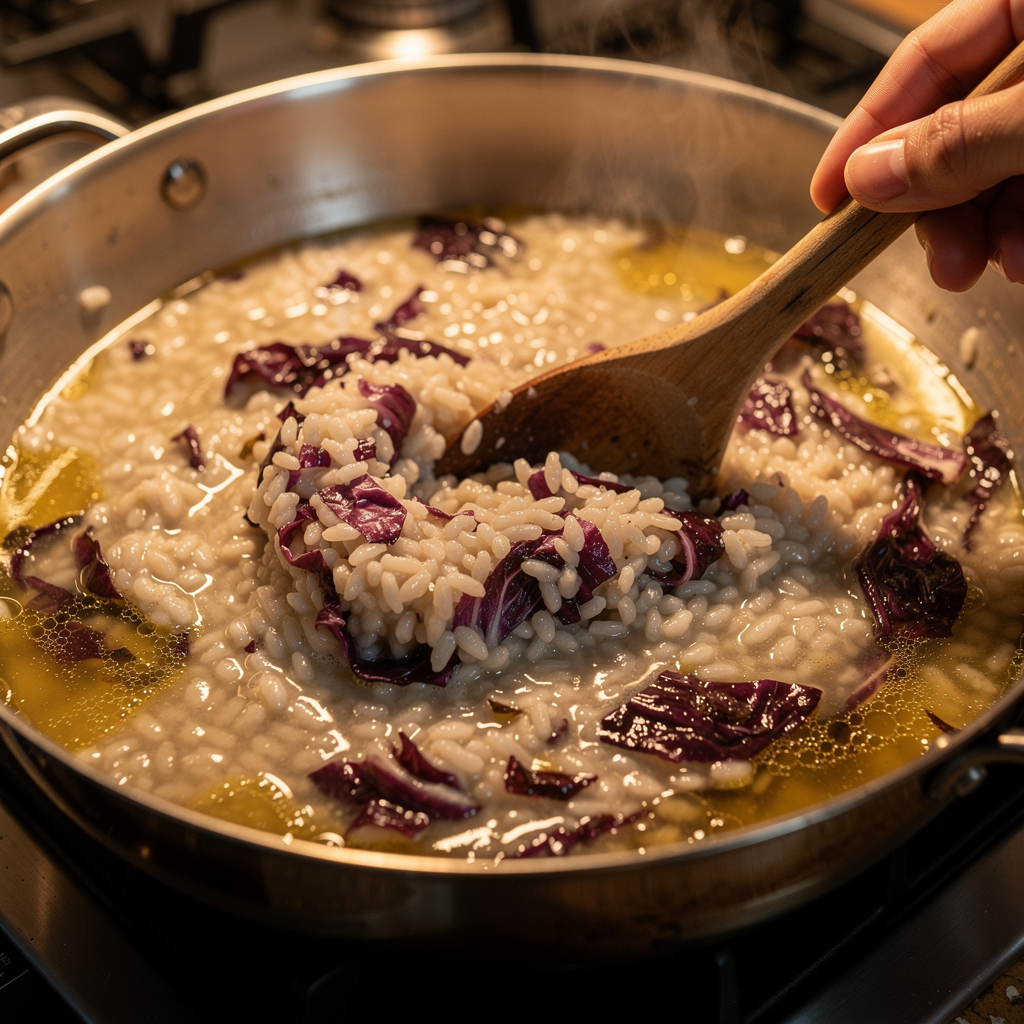
I reach for Treviso when I can find it—long leaves and a softer bite. Tardivo is a winter prize with frilly curls. Chioggia, the round head common in U.S. markets, works well for everyday cooking.
The right rice: Vialone Nano vs. Carnaroli vs. Arborio
Vialone Nano brings an IGP heritage and tender creaminess. Carnaroli is forgiving and great for texture. Arborio is easy to find and cooks reliably for beginners.
Wine, stock, and cheese: prosecco or white wine, vegetable broth, Ubriaco or Grana Padano
Use Prosecco or a dry white to lift the pan. Vegetable stock keeps flavors clean. Ubriaco adds a wine-washed tang; Grana Padano is an honest, savory stand-in.
- Thin strips of the greens melt into the pot; reserve a few strips for garnish.
- Chestnuts or walnuts add seasonality and texture.
| Ingredient | Typical trait | U.S. substitution |
|---|---|---|
| Treviso / Tardivo | Long, bitter, tender | Chioggia or radicchio heads |
| Vialone Nano | Short-grain, creamy, IGP | Carnaroli or Arborio |
| Ubriaco cheese | Wine-washed, tangy | Grana Padano or aged Parmesan |
veneto risotto al radicchio recipe: step-by-step you can trust
A calm pan, warm broth, and steady stirring turn simple ingredients into a comforting plate you can trust.
Prep smart
Bring a pot of broth to a light simmer so each ladle keeps steady heat. Chiffonade the radicchio and finely dice the onion for even cooking.
Toast and deglaze
Warm a wide pan, add a tbsp of extra virgin olive oil and a small knob of butter. Soften the onion until translucent, then add rice and stir until grains feel hot.
Pour in white wine or Prosecco and let the liquid mostly evaporate, scraping the bottom so those browned bits lift into the pan.
Build creaminess
- Begin adding stock a ladle at a time, stirring often and waiting for absorption before adding more.
- Fold in most of the radicchio after several minutes so it softens into the rice. Keep some strips for garnish.
- Taste at about 17–20 minutes; aim for al dente with a slight core.
Finish and serve
Off the heat, finish with grated Ubriaco or Grana Padano, a pat of butter for mantecatura, and a twist of pepper. Adjust texture with one more splash of hot broth for that signature all’onda ripple.
| Step | Key cue | Timing / tool |
|---|---|---|
| Simmer broth | Small bubbles, warm ladle | 5 minutes / pot |
| Toast & deglaze | Hot grains, wine evaporates | 2–3 minutes / pan |
| Adding stock | Absorbed between ladles | 17–20 minutes / ladle |
For a seafood variation, try this seafood risotto variation for a family night: shrimp risotto.
Chef-level technique for flawless risotto, every time
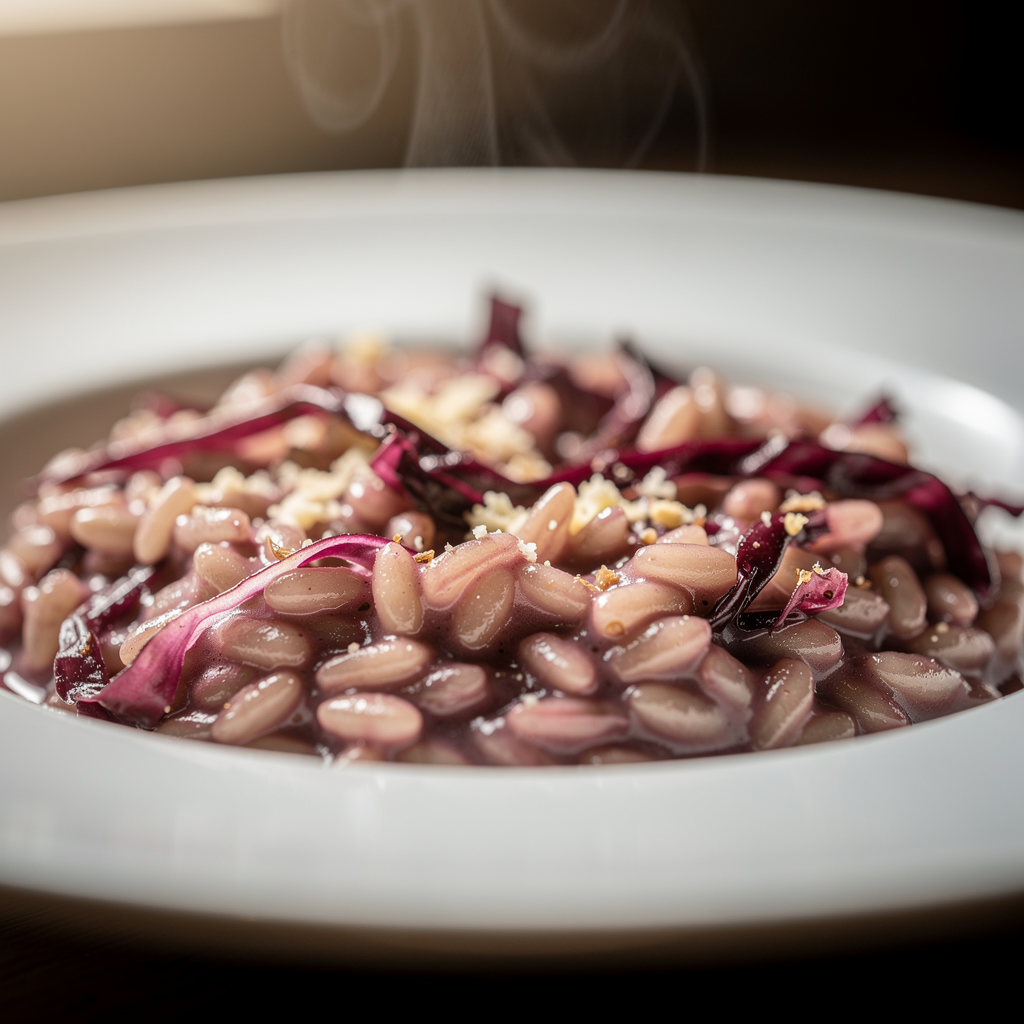
With steady hands and a warm ladle, you can coax a restaurant finish from a home stove. I’ll explain why each step matters and how to translate pro moves to your kitchen.
Mantecatura: the creamy finish that changes everything
Turn off the heat. Beat in cold butter and grated cheese with energy until the surface gleams. This quick whisking emulsifies starch and fat, giving you that silky, flowing texture we all love.
Scaling for a crowd: timing, pot size, and steady heat
Use a broad, heavy pot; rice swells at least threefold and needs room to move. Keep stock simmering and add it by ladle so the temperature stays steady and the grains release starch evenly.
Texture cues and timing: al dente bite in about 17-20 minutes
Dry-toast the rice low and slow first so the core warms evenly. Set active cooking time near 17 minutes, but taste for a slight resistance at the center. Remember carryover—pull it just shy and finish with mantecatura.
- Feed with one ladle at a time to control starch release.
- Fold in a spoon of caramelized onion mid-cook for subtle sweetness.
- Keep motions calm; steady heat and rhythm yield consistent results.
| Step | Key cue | Tool / timing |
|---|---|---|
| Dry-toast | Warm core, nutty aroma | Low heat / 2–3 minutes |
| Add stock by ladle | Absorbed between additions | Simmering stock / 15–17 minutes |
| Mantecatura | Shiny, flowing finish | Off heat / 1 minute |
Substitutions and regional twists that still taste Italian
When markets change, I adapt the pan with a few honest swaps that still sing of home. These choices are practical and rooted in local tradition, so your plate keeps the same heart and taste.
Cheese swaps
If you can’t find Ubriaco, grate Grana Padano or finish with a light shower of parmesan. For a creamier finish, fold in Gorgonzola Dolce at the end; it softens the greens without losing character. Keep cheese measured and taste before you add salt.
Radicchio partners and boosters
Toast a handful of walnuts or use seasonal chestnuts for texture. Cook the greens briefly with a whisper of balsamic or white wine vinegar to mellow bitterness and deepen the pan liquid. Finish with a drizzle of good virgin olive oil and a twist of pepper and torn basil or parsley.
- Season sparingly: cheese brings salt—adjust after mantecatura.
- Use white wine for deglazing if Prosecco isn’t on hand.
| Swap | What it adds | When to use |
|---|---|---|
| Grana Padano / parmesan | Clean melt, savory depth | When Ubriaco is unavailable |
| Gorgonzola Dolce | Sweet-creamy contrast | As a finishing fold-in |
| Walnuts / chestnuts | Crunch, seasonal warmth | Before serving for texture |
| Balsamic or white wine vinegar | Rounds bitterness, adds acidity | Cook briefly with greens into the liquid |
These swaps keep the risotto radicchio soul intact and let you cook with what’s available while preserving a distinctly Italian finish.
Serving, garnishing, and what to pour alongside
I like to finish the pan with a few bright strips and a last grate of cheese before calling everyone to the table. These small touches add color, texture, and warmth right at the top of service.
Plate like a Venetian
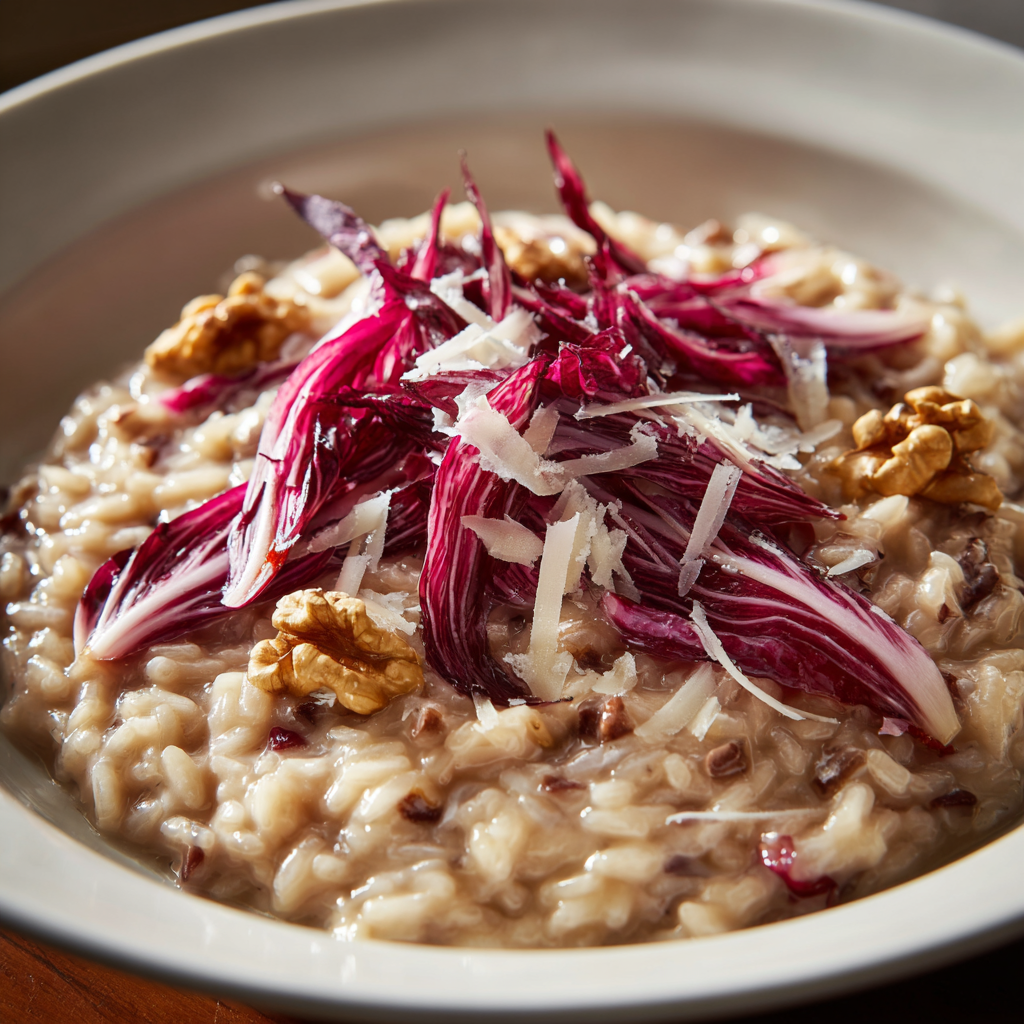
Spread the risotto in a gentle, even layer. Top with a handful of fresh strips so each spoonful gets a pop of color and a light crunch.
Snow a little grated parmesan or Grana Padano over the top and add a twist of pepper. Toasted walnuts or chopped chestnuts add crunch and seasonal warmth.
Storing and reheating without losing creaminess
Cool leftovers quickly in shallow cups and chill. When reheating, warm over low heat and loosen with a small cup of hot broth or water.
Stir often, add a splash more liquid if the dish tightens, and finish with a knob of butter or a sprinkle of cheese to restore gloss and flavor.
- Pour Prosecco or a crisp dry white alongside; the acidity refreshes the palate.
- Keep texture loose—risotto should flow softly when served after reheating.
- Adjust pepper at the end, since heat can dull seasoning.
| Action | Why it helps | Practical tip |
|---|---|---|
| Garnish with fresh strips | Adds color and crunch | Reserve a few raw strips before cooking |
| Reheat with hot broth | Restores creaminess | Use about one cup per two servings, add gradually |
| Finish with parmesan | Restores gloss and savory lift | Grate fresh just before serving |
| Serve with dry white | Balances gentle bitterness | Prosecco or a crisp Pinot Grigio works well |
Bring the flavors of Treviso to your kitchen tonight
A short list of ingredients and about twenty focused minutes will make something memorable. Gather good rice—Vialone Nano, Carnaroli, or Arborio—fresh radicchio, simmering stock, a piece of aged cheese, and a splash of wine.
Warm the pan, soften onion in extra virgin olive oil, then add rice and toast until fragrant. Keep the stock near a simmer and add by ladle, stirring for roughly 17–20 minutes to build creaminess.
Pull the pan off the heat and beat in butter and grated parmesan for a glossy mantecatura. Taste and adjust salt, then top with a few raw strips, toasted nuts, or herbs.
Tonight is the night to try this. Set the table, light the stove, and let rice, stock, and your hands create a simple, comforting dish in about the time minutes of stirring.
Veneto Risotto al Radicchio
Ingredients
Method
- Bring your broth to a light simmer.
- Slice radicchio into thin strips and set aside.
- Dice the onion.
- Warm a wide pan over medium heat.
- Add olive oil and a small knob of butter.
- Soften the onion until translucent, about 2–3 minutes.
- Add the rice and stir until the grains feel hot and lightly toasted.
- Pour in the Prosecco or white wine.
- Let it bubble until most of the liquid has evaporated.
- Add one ladle of hot broth at a time, stirring often.
- Wait for each ladle to be absorbed before adding the next.
- After a few minutes, fold in most of the radicchio (save a handful for garnish).
- Keep cooking and stirring for about 17–20 minutes, until the rice is al dente with a slight bite.
- Remove the pan from the heat.
- Add the grated cheese and a tablespoon of cold butter.
- Stir quickly until the risotto turns glossy and creamy.
- Adjust the texture with a splash of hot broth if needed.
- Plate the risotto in a wide, shallow layer.
- Top with the reserved radicchio strips, toasted nuts if using, and a twist of pepper.
- Serve right away.
Notes
- Add radicchio in the middle of cooking so it softens but doesn’t turn mushy.
- Keep the broth hot the whole time—cool broth tightens the rice and slows the cooking.
- Stir often but not frantically. Slow, steady motions help release starch and create natural creaminess.
- Ubriaco adds a mild wine-washed tang. If you can’t find it, Grana Padano or Parmesan works well.
- For extra balance, a tiny splash of balsamic or white wine vinegar can mellow bitterness.
- Risotto should always look loose and flowing, not stiff. Add a spoon of broth at the end if needed.