
Jump to Recipe
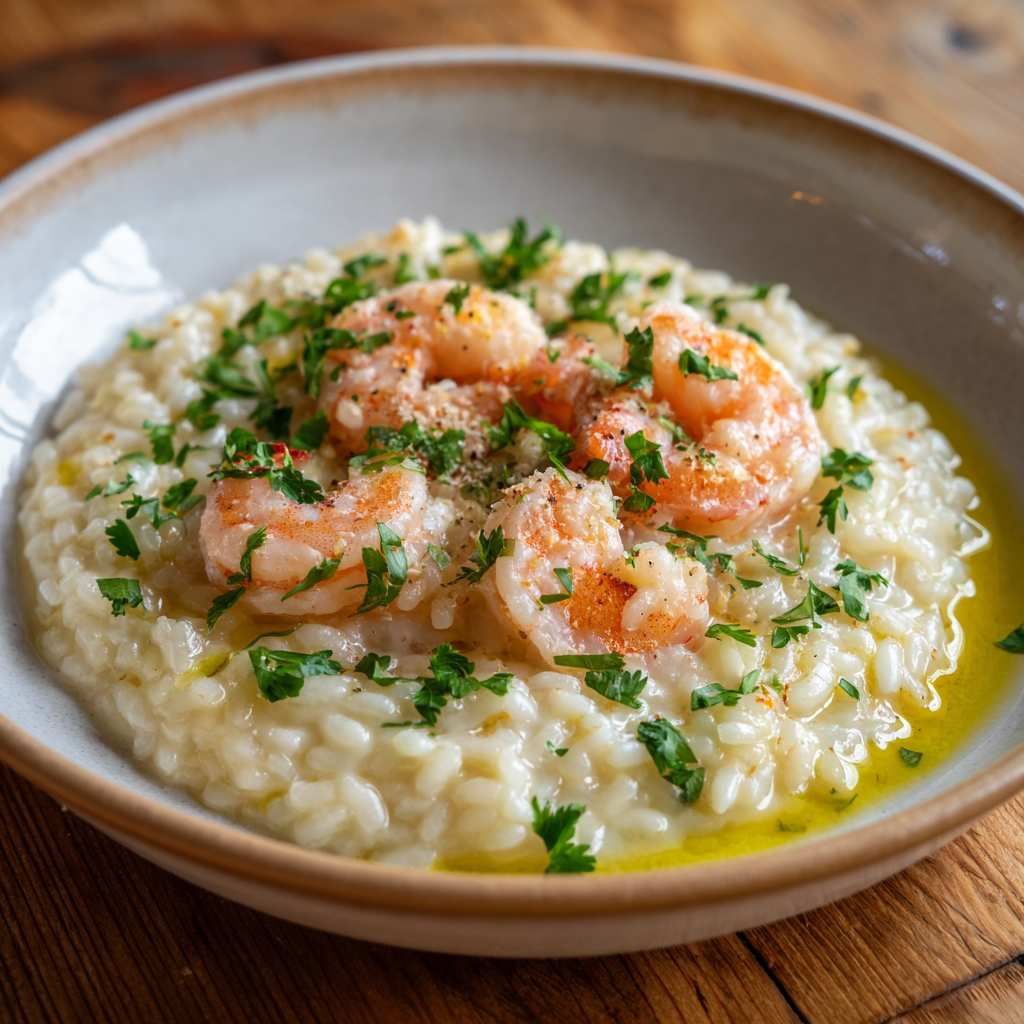
I invite you into my kitchen for a shrimp risotto italian style that tastes like Sunday at Nonna’s and fits a busy weeknight. The first spoonful should sing of sweet shellfish, warm butter, and bright lemon, so you feel comfort and lift in every bite.
We build deep seafood flavor quickly with a 10-minute stock made from shells and heads, then use the classic stir-and-ladle method to coax creamy, separate grains from the rice. I’ll show you when to add raw shrimp near the end so they stay tender and never rubbery.
This recipe is practical and precise: keep the pot slightly looser before plating, serve on warm plates, and watch the all’onda wave form as the dish settles. Along the way I share sensory cues—aromas, tiny pops, and glossy grains—so you cook with confidence and heart.
Key Takeaways
- Make a quick, robust shrimp stock in about 10 minutes for true depth of flavor.
- Use the stir-and-ladle technique for creamy yet distinct grains of rice.
- Add raw shrimp near the end to keep them tender and sweet.
- Keep the risotto loose in the pot and plate on warm dishes for perfect all’onda texture.
- Follow sensory cues—smell, sound, and sight—for gentle, reliable timing.
Why this shrimp risotto tastes like Italy at home
This recipe brings the sea to your table through a mix of family memory and exact technique. I combine simple ingredients with a paced process so each bite feels familiar and true.
Heritage meets technique in the way we treat rice: steady stirring, hot broth additions, and gentle heat keep grains distinct yet creamy. For me, making risotto is a ritual and a craft. The method preserves texture better than no-stir or pressure-cooker shortcuts.
Heritage meets technique: a family ritual with chef-approved methods
The key flavor move is quick stock from shells and heads. Extracting that taste in ten minutes gives intense shellfish notes without fuss. Keep the broth hot and feed the rice in steady ladles so the all’onda wave forms.
- I explain exact timing in minutes so you can pace additions and avoid guesswork.
- We use a splash of dry white wine early for aroma, and decide between chicken or seafood broth based on the final balance.
- Watch the quiet simmer and the nutty aroma—those cues tell you when to finish and add the seafood at the last possible moment.
Ingredient intel: rice, stock, shrimp, and the aromatics that matter
Before you light the stove, know which rice and stock choices set you up for success. Clear choices make the cooking calm and the flavors true.
The right rice for creaminess
Choose high-starch short-grain rice. Carnaroli gives extra forgiveness and silkier results. Arborio is reliable and easy to find.
| Grain | Texture | Best for |
|---|---|---|
| Carnaroli | Silky, forgiving | Extra creamy all’onda |
| Arborio | Firm but creamy | Easy pantry swap |
| Tip | Do not rinse the rice; the surface starch is your natural thickener. | |
Olive oil, garlic, and white wine choices
Use good extra-virgin olive oil to sauté the onion and garlic. Soften, don’t brown, to keep aromatics gentle. I prefer a dry white wine like Pinot Grigio to lift the flavors.
Stock vs broth: choosing liquid
Hot seafood stock is the most authentic match for shellfish, but a rich chicken broth or vegetable base will work. Keep the stock hot so the rice absorbs steadily.
- Buy IQF head-on shrimp when you can — great shells for stock and better texture.
- Measure with a cup during mise en place so you can cook by feel once the pot is hot.
- Season lightly; reduction concentrates salt as the dish finishes.
Building deep flavor fast: quick shrimp stock from shells and heads
Good stock is the quiet hero of any seafood dish, and a ten-minute version gives big reach with little fuss.
Why head-on shells deliver superior umami
Heads and shells are packed with glutamates and nucleotides. That chemistry brings a rich, savory backbone to the pot that water alone cannot match.
Ten-minute simmer technique that captures volatile aromas
Start by heating olive oil in a wide pan. Toast the shells and heads until they turn bright orange and the oil smells seasoned and rust-colored.
Add a small onion, garlic, and a spoon of tomato paste for Maillard depth. Deglaze, cover with water, and simmer gently for about ten minutes. The seafood aroma is volatile; longer simmering dulls the top notes.
- Strain through a fine-mesh strainer and press the solids to reclaim every drop.
- Keep the stock hot at low heat for immediate use with the rice.
Make-ahead timing and safe storage
Cool quickly if storing. Refrigerate the stock up to 3 days or freeze for one month. Thaw the shells and cook the shrimp close to serving; don’t re-freeze cooked shellfish.
This quick process locks in deep character so each ladle lifts the final recipe without overwhelming the dish. Reserve a few clean heads if you like a dramatic garnish.
The classic risotto method that keeps grains distinct and creamy
I’ll show you the step-by-step approach that keeps each grain separate yet lusciously creamy. This short guide explains why each move matters so you can cook risotto with confidence.
Toasting, deglazing, and feeding the rice
I toast the rice in fat until it smells nutty and the edges look ice-cube translucent. That light toast coats each grain and helps control how it releases starch.
Pour in wine and let it nearly vanish. That seasons the core before the building begins.
Controlled ladles, constant stirring, and reading doneness
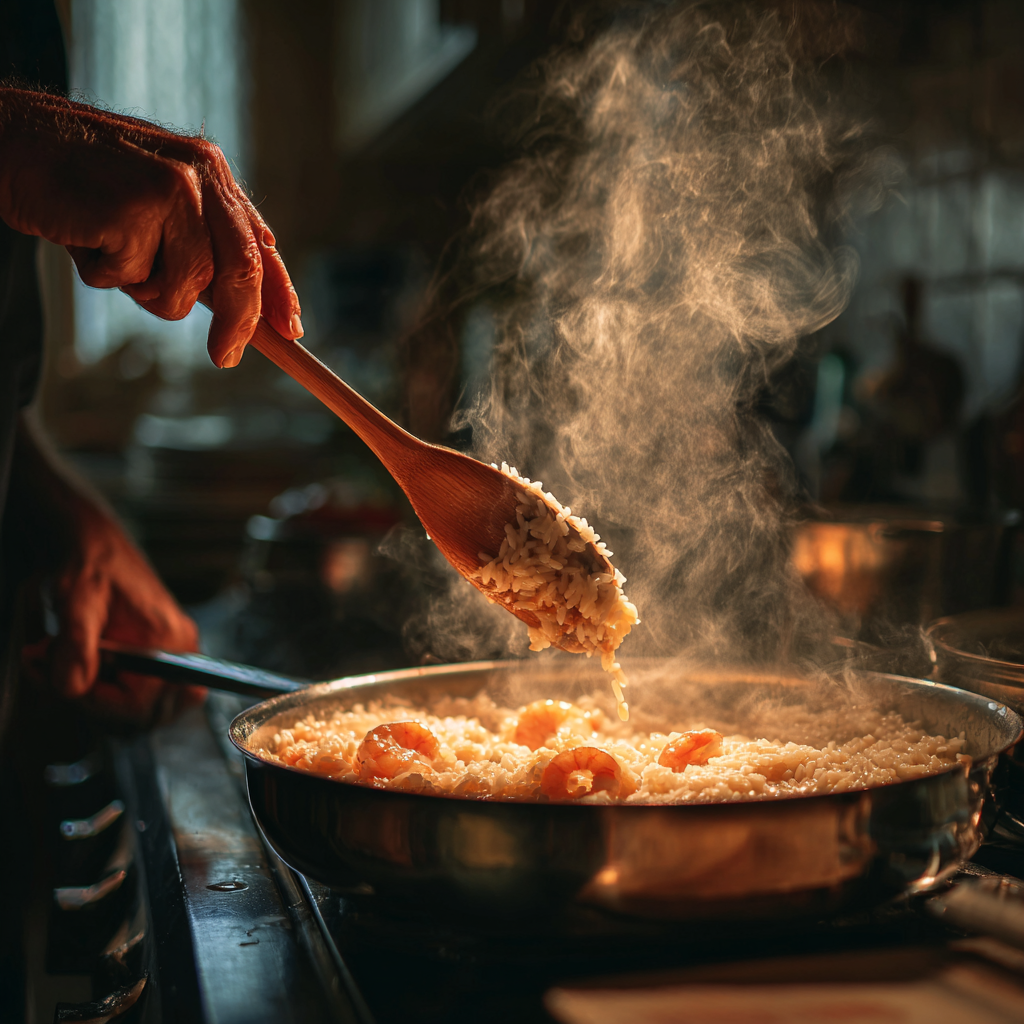
Add hot stock a ladle at a time and stir steadily. The motion creates a creamy emulsion while preserving distinct grains — the hallmark of the classic process.
Watch texture, not the clock, though most recipes show a time range. Taste for an al dente center, then perform the all’onda test: drag a spatula and the mixture should ripple and close smoothly, like a small wave.
- Keep heat moderate; a gentle simmer feeds the rice, not a boil that breaks it.
- Use hot seafood or chicken stock and keep it warm for predictable absorption.
Shrimp risotto italian style: the step-by-step cooking flow
Start by warming a wide pan and set a calm rhythm—this flow keeps timing simple and flavors true. Put a kettle of stock on low so it is hot when you need it.
Sweat onions, toast rice, deglaze with wine
Over medium heat, coat the pan with a glossy film of olive oil and sweat finely chopped onion until soft and translucent. No browning; you want sweetness, not color.
Stir in the rice and toast until the grains smell nutty and look like tiny ice cubes. Pour in a splash of white wine and let it nearly evaporate.
Feed the rice with hot stock in steady increments
Add hot stock a ladle at a time. Stir steadily to coax out starch and form a creamy emulsion. Keep the simmer gentle so the texture develops evenly.
Add shrimp at the final minutes to avoid overcooking
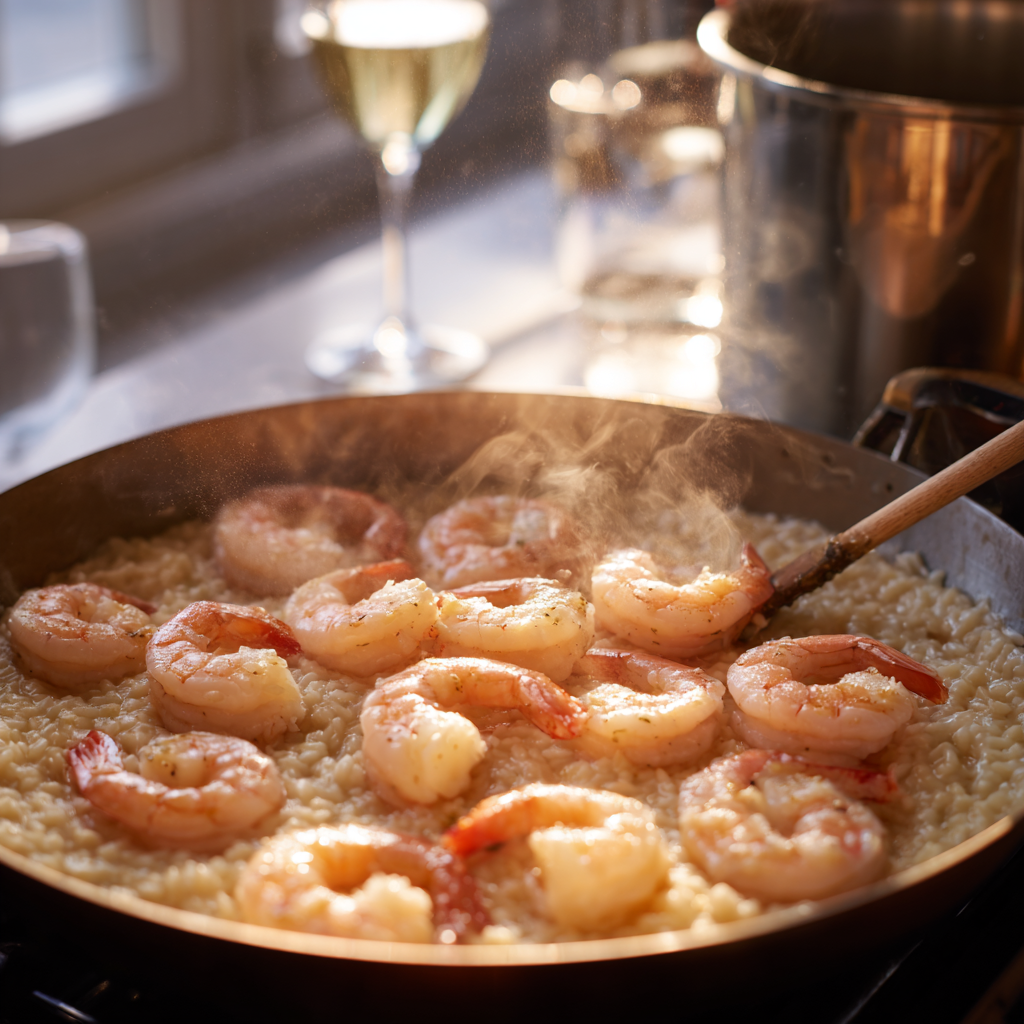
When the rice is tender at the edges but still has a firm core, add shrimp and a splash more stock. They will cook in a few minutes—watch for a change in color and a slight spring to the touch.
Finish with parsley and lemon juice for a bright lift
Fold in minced garlic at the end if you want a soft aromatic lift. Adjust salt late, then finish with chopped parsley and a squeeze of lemon juice. Keep the dish a touch looser in the pan so it settles perfectly on warm plates.
Heat management: medium heat, timing, and plating on warm plates
The trick is simple: consistent heat, small adjustments, and fast plating on warm dishes.
I keep the burner at a steady medium heat so the rice absorbs steadily and the emulsion stays glossy, not broken. That steady heat prevents the grains from seizing and lets the texture develop slowly.
Keep the pot a touch looser than you think is right. A risotto that looks slightly wet in the pan will tighten to perfect texture in a few minutes on a warmed plate.
If the mixture thickens while you wait, stir in a small ladle of hot stock to restore flow. Work with minutes in mind: finish the shrimp, taste, and plate quickly so the center stays al dente.
Taste one last time before serving. The final check for seasoning and doneness ensures the shrimp are just cooked and the dish carries over to the table with a glossy wave.
| Action | Why it matters | How to do it |
|---|---|---|
| Medium heat | Keeps emulsion glossy and even | Maintain low-medium flame; avoid rapid boil |
| Looser in pan | Settles to ideal texture on warm plates | Leave one ladle more than you expect |
| Restore flow | Prevents over-thickening before plating | Add hot stock, stir gently, then plate |
| Final taste & plate | Preserves al dente center and warm presentation | Finish shrimp, adjust seasoning, plate on warmed dishes |
Flavor options: in bianco, tomato-kissed, or buttery-cheesy
Choose a finishing track that matches your mood—light and bright, tomato-warmed, or rich and cheesy. Each path respects the sea notes and the stock you made, so pick one and taste as you go.
Tomato passata and red pepper flakes for a subtle kick
For a tomato-kissed version, stir in a measured cup of passata early so it reduces with the rice. Add a pinch of red pepper flakes to lift the sweet-savory passata without overwhelming the broth.
Going in bianco to let shellfish notes shine
In bianco means no tomato. I lean on white wine and hot stock to highlight briny sweetness and clean aromatics. This route keeps the seafood center stage and the finish airy.
Butter and parmesan cheese without muting seafood flavor
Finish with a small knob of butter and a light grate of parmesan cheese for silk and depth. Use dairy sparingly so you enrich texture but don’t mask delicate flavors.
- Balance: taste as you add tomato, dairy, or heat so they harmonize with the shrimp and the stock.
- Oil note: if your olive oil has sun-dried tomato notes, use it sparingly to echo passata.
- Season late: keep salt modest until the end; reduction and cheese concentrate seasoning.
- Seasonal tip: choose tomato warmth in cool months, and in bianco for a lighter, maritime profile.
Smart swaps and add-ins for seasonal cooking
Small, thoughtful additions let the seafood notes sing while keeping texture steady. I pick one bright accent and add it late so the creamy risotto keeps its all’onda without turning mushy.
Greens and mushrooms that keep texture
I fold in tender spinach or blanched asparagus in the last two minutes. The heat wilts greens but keeps their color and bite.
Sautéed mushrooms add an earthy counterpoint. Cook them first until browned, then fold them in so they keep shape and flavor.
Flavor lifts: vermouth, saffron, and lemon
Dry vermouth can replace white wine for a pantry-friendly acid lift. A pinch of saffron blooms in hot stock and perfumes the pot without crowding the seafood.
Lemon zest brightens without extra liquid. Finish with a small squeeze at the table to wake the dish.
- I add sun-dried tomatoes sparingly; they bring sweet-tart depth but can weigh down the base.
- If guests vary, finish the pan simply and pass add-ins at the table for choice.
- Pairings: a mineral white wine or a light chicken broth for a gentler finish.
| Add-in | When to add | Effect |
|---|---|---|
| Spinach | Last 1–2 minutes | Bright color; tender bite |
| Asparagus | Blanched, fold at end | Fresh snap; seasonal lift |
| Mushrooms | Sauté, add before finish | Earthy depth; holds texture |
| Saffron / Lemon zest | Bloom in stock / finish | Fragrance and bright lift |
Kitchen setup: pans, tools, and prep that make you faster
Set up your station before heat hits the pan so the cooking feels calm and confident. A quick, orderly prep keeps the rhythm steady when you need to ladle and stir.
I use a wide saucier with sloped sides for even evaporation and easy stirring. A Dutch oven is fine if that’s what you have. Place a fine-mesh strainer over a bowl before you start the stock so you can move fast from simmer to pot.
- Measure a couple tablespoons olive ahead and have olive oil, butter, and garlic within reach.
- Keep hot broth or stock on a low burner so it is ready for constant additions.
- Thaw IQF shrimp close to cooking time, pat dry, and set nearby.
- Use a sturdy wooden spoon or heatproof spatula for comfortable, constant stirring.
- Maintain medium heat so the simmer stays predictable and you can watch texture, not flames.
| Tool | Purpose | Quick tip |
|---|---|---|
| Wide saucier | Even evaporation; easy stirring | Sloped sides help the all’onda motion |
| Fine-mesh strainer | Strain stock fast | Set over a bowl before you boil |
| Wooden spoon | Comfortable, steady stirring | One hand motion for long stirring |
| Small ladle | Controlled stock additions | Keep it near the pot for a smooth flow |
Serving and wine pairings that flatter the dish
The right white wine and a few simple garnishes turn a weeknight meal into a celebration. I reach for bottles that echo the pan—bright acid, light body, and a clean finish so the sea notes stay lively.
Keep dairy light. A small grate of parmesan cheese can add silk, but I sprinkle it sparingly so the shellfish sweetness remains clear.
Dry whites I serve most often
- I reach for crisp whites like Pinot Grigio or Sauvignon Blanc to mirror the wine used in the pot and keep the finish bright.
- Vinho Verde is joyful—dry, lightly effervescent, and refreshing next to a rich, creamy risotto.
- For a rounder profile, a restrained Chardonnay without heavy oak supports texture without overwhelming the seafood.
Season at the very end with just enough salt and a fresh crack of pepper. Plate on warmed dishes to preserve the all’onda movement and the silken sheen you built with careful heat and oil.
Garnish ideas
- Chopped parsley for color and herb lift.
- Lemon wedges so guests can add brightness at the table.
- Reserved shrimp heads for a traditional, dramatic touch if you like that richer bite.
| Wine | Profile | Why it works | Serve (°F) |
|---|---|---|---|
| Pinot Grigio | Crisp, light | Mirrors the wine in the pan; keeps dish bright | 45–50 |
| Sauvignon Blanc | Herbaceous, zippy | Fresh acid cuts through creaminess; lifts flavors | 48–52 |
| Vinho Verde | Dry, slightly fizzy | Refreshes the palate between bites | 42–46 |
| Chardonnay (unoaked) | Round, soft | Supports texture without heavy oak notes | 50–54 |
Leftovers, reheating, and what to realistically expect
Leftovers tell the honest story of a dish — here’s how to handle them so texture stays as close as possible to the first plate. Be frank: this recipe is best the moment it’s made. Still, life happens and you can keep and revive a portion with a few careful moves.
Short fridge window and how to loosen with hot stock
Cool quickly in a shallow container and refrigerate up to two days. The stock you made can sit in the fridge up to three days or be frozen for a month; use hot broth or stock when reheating to bring life back.
- The stovetop method: warm over low heat, add a little hot stock or broth a ladle at a time, and stir until the mixture loosens. Watch the shrimp closely — they only need minutes to warm through.
- Microwave: add a splash of liquid and heat in 30‑second bursts, stirring between rounds to restore flow.
- If it firms too fast, one more spoonful of hot liquid and a minute of stirring will help return some of the creamy risotto mouthfeel.
| Method | How long | Result |
|---|---|---|
| Stovetop, low heat | 3–5 minutes | Best texture restoration with gentle stirring |
| Microwave, short bursts | 30–90 seconds total | Quick and convenient; check often |
| Transform | Next day | Make arancini to celebrate set texture |
Expect a firmer bite after chilling — that’s normal with rice emulsions. If you want the peak experience, plan to serve the main portion right away and save leftovers for a tasty reheat or a new dish the next day.
Bringing it to the table now
Take a breath, warm the plates, and let the final minutes turn the dish into dinner.
Taste the rice one last time and adjust salt and pepper. Keep the pan a touch loose, then add shrimp and fold gently for a minute or two until just cooked.
Finish with lemon juice, chopped parsley, and a light spoon of parmesan cheese for gloss. For a richer finish, whisk in a tablespoon or two of butter off the heat.
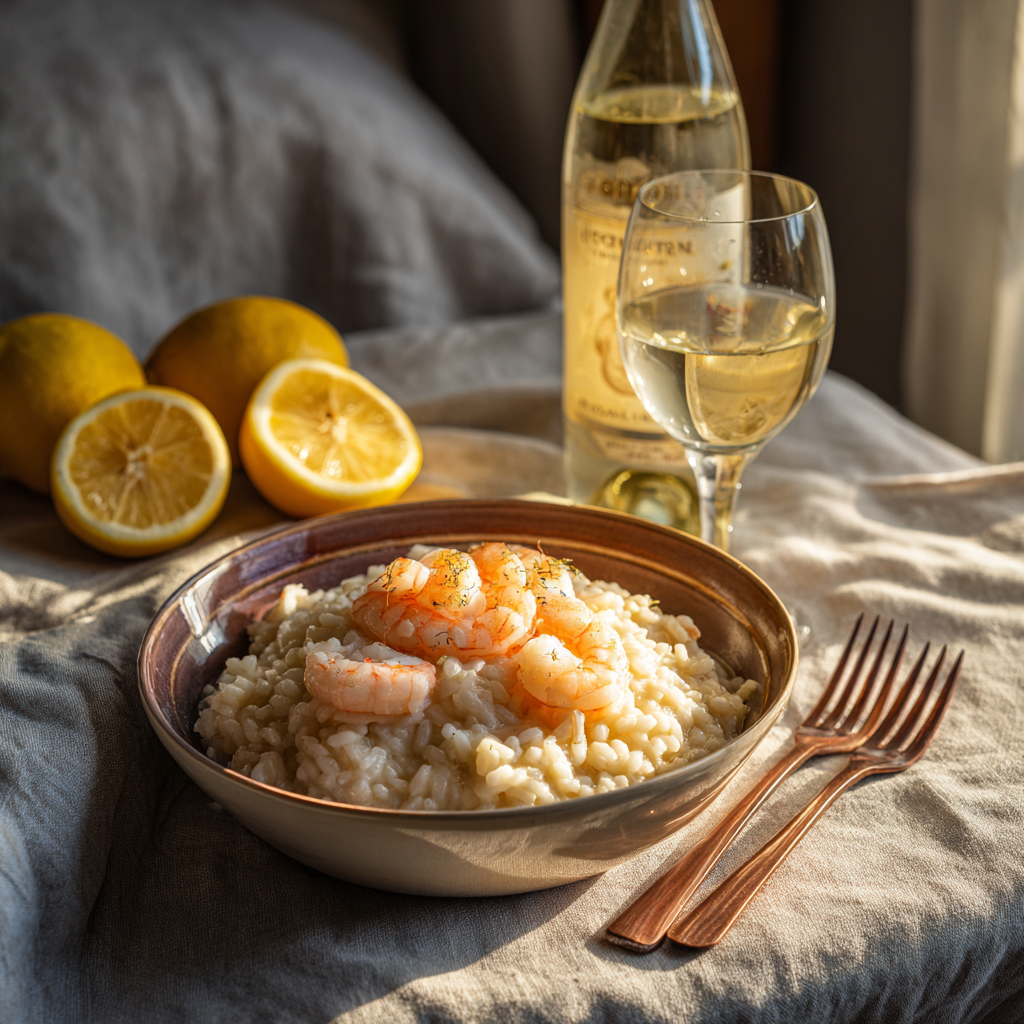
Pour a little wine to match the pot and bring the risotto recipe straight to the table while it still flows. I often pass extra lemon and a small cup of hot stock. If seafood stock isn’t handy, swap in good chicken stock and use the same method.
Measure a few tablespoons olive and have garlic cloves ready. Now go make risotto — minutes from now you’ll be sharing a warm, confident recipe with the people you love.
Shrimp Risotto Italian Style (Risotto ai Gamberi)
Ingredients
Method
- Heat olive oil in a wide pan.
- Add shrimp shells and heads. Toast until bright orange and fragrant.
- Add onion, garlic, and tomato paste. Stir for a minute.
- Pour in water, bring to a gentle simmer, and cook for 10 minutes.
- Strain through a fine-mesh sieve, pressing the solids to extract flavor.
- Keep the stock hot on low heat.
- In a large saucier or deep skillet, warm 2 tbsp olive oil over medium heat.
- Add chopped onion and cook gently until translucent — don’t brown.
- Add the rice and toast for 2–3 minutes until it smells nutty and turns slightly translucent around the edges.
- Pour in white wine. Stir until it’s mostly absorbed.
- Begin adding the hot stock, one ladle at a time, stirring gently and constantly.
- Wait until each ladle is absorbed before adding the next. Maintain a gentle simmer.
- After about 16–18 minutes, taste the rice — it should be al dente with a creamy sauce.
- Add the shrimp and a small splash of stock. Stir gently for 2–3 minutes, just until the shrimp turn pink and tender.
- Turn off the heat. Add butter, Parmesan (if using), minced garlic (optional), and chopped parsley.
- Season lightly with salt and pepper. Add lemon juice to brighten the flavor.
- Keep the risotto slightly loose (“all’onda” texture — it should ripple like a wave when stirred).
- Plate on warm dishes to maintain the silkiness.
- Garnish with extra parsley, a drizzle of olive oil, and lemon wedges if desired.
Notes
- Use Carnaroli rice for the creamiest, most forgiving texture.
- Keep the stock hot while cooking — cold stock slows absorption and breaks the emulsion.
- Always finish the risotto a little looser than you think; it thickens as it rests.
- Don’t overcook shrimp — add them at the end for 2–3 minutes only.
- For extra richness, stir in a knob of butter off the heat before serving.
- Pair with a crisp white wine like Pinot Grigio or Vinho Verde.