
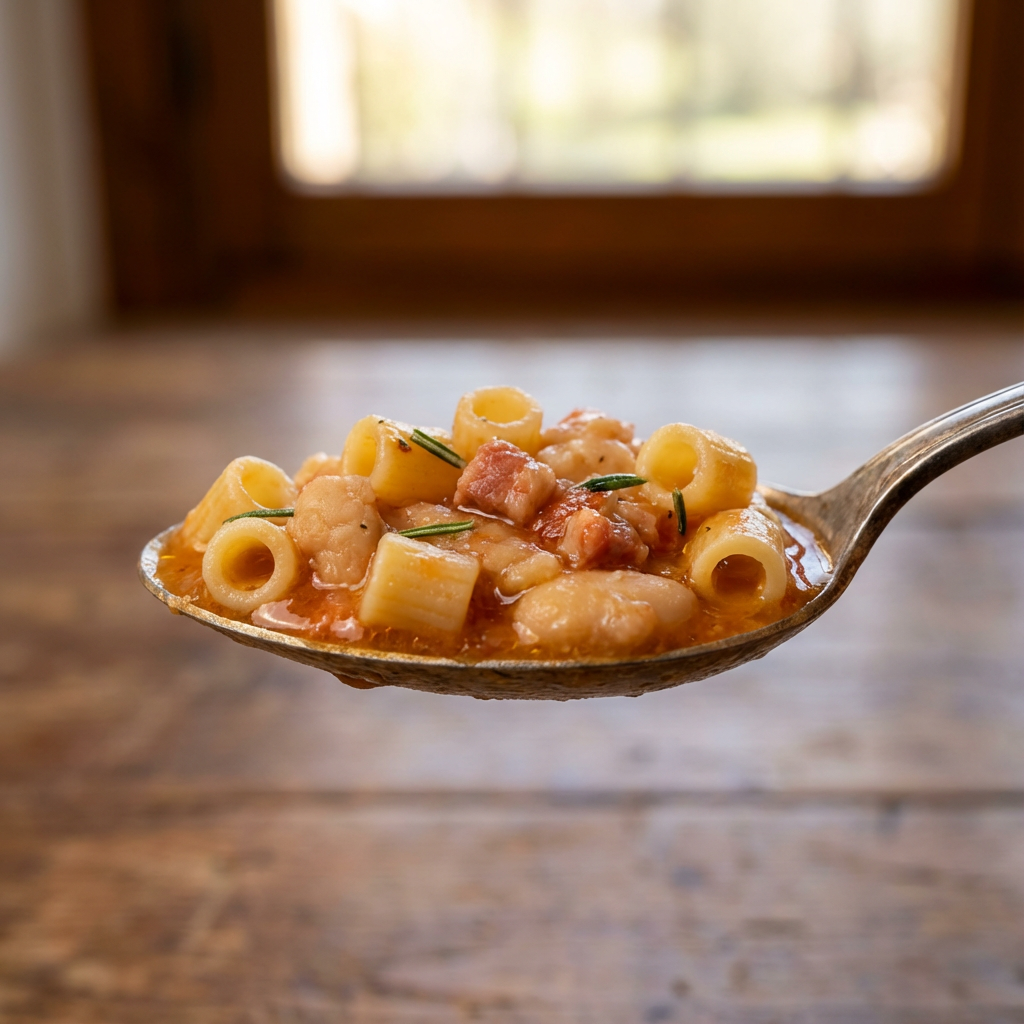
Jump to Recipe
I want to hand you a campania pasta e fagioli recipe that tastes like a warm kitchen at dusk—thick, fragrant, and honest. The aroma of rendered pancetta, garlic, and rosemary blooming in olive oil is the first promise; hand-crushed tomatoes and a little bean mash make the texture comforting and substantial.
This is the pasta fagioli you cook when you want a meal that feels like a hug. I keep the body closer to a stew than minestrone by mashing some beans and cooking the tomatoes until the oil shows. Parboil the pasta separately so it stays toothsome and doesn’t clump, and salt the beans later so they soften properly.
Expect clear steps, smart swaps, and small techniques—finish with pecorino and an extra drizzle of oil—so the flavors sing without fuss. This is a dish you can print, cook tonight, and share with people you love.
Key Takeaways
- Start with rendered pancetta, garlic, and rosemary for depth.
- Keep the texture thick by mashing some beans and reducing tomatoes.
- Parboil pasta separately to protect texture and prevent sticking.
- Salt beans later to ensure they tenderize well.
- Finish with pecorino and a drizzle of good olive oil for balance.
What makes this Campania pasta e fagioli unique—and why it’s worth making at home
Think of this dish as a hearty stew that happens to hold tiny pasta, not a delicate broth. Our pasta fagioli leans rustic and thick, a soup you can almost stand a spoon in when the night cools.
We build real depth by rendering pork like pancetta in olive oil first, then softening onion, garlic, and rosemary so they perfume without stealing the show. Cook the tomatoes until the oil separates; that tells you the raw edge is gone and the flavor is rounded.
Before adding any liquid, we stir the cannellini beans into the base to insaporire. This lets the pasta beans taste seasoned inside, not just dressed on top. Parboil the pasta separately so the pot never scorches and the texture stays firm to the last bite.
- Thick, not brothy—more comfort than minestrone.
- Layered savory base from pork, garlic, and rosemary.
- Smart steps—tomatoes reduced, beans seasoned, pasta parboiled—yield consistent flavor every time.
| Step | Why it matters | Result |
|---|---|---|
| Render cured meat | Adds savory fat without greasiness | Deeper flavor |
| Reduce tomatoes | Removes raw acidity | Richer body |
| Parboil pasta | Prevents gumming | Even texture |
Ingredients that build real Italian flavor
Ingredients shape how this soup remembers home: creamy beans, bright tomato, and a little rendered fat. I pick each item for its role so the final bowl feels balanced and honest.
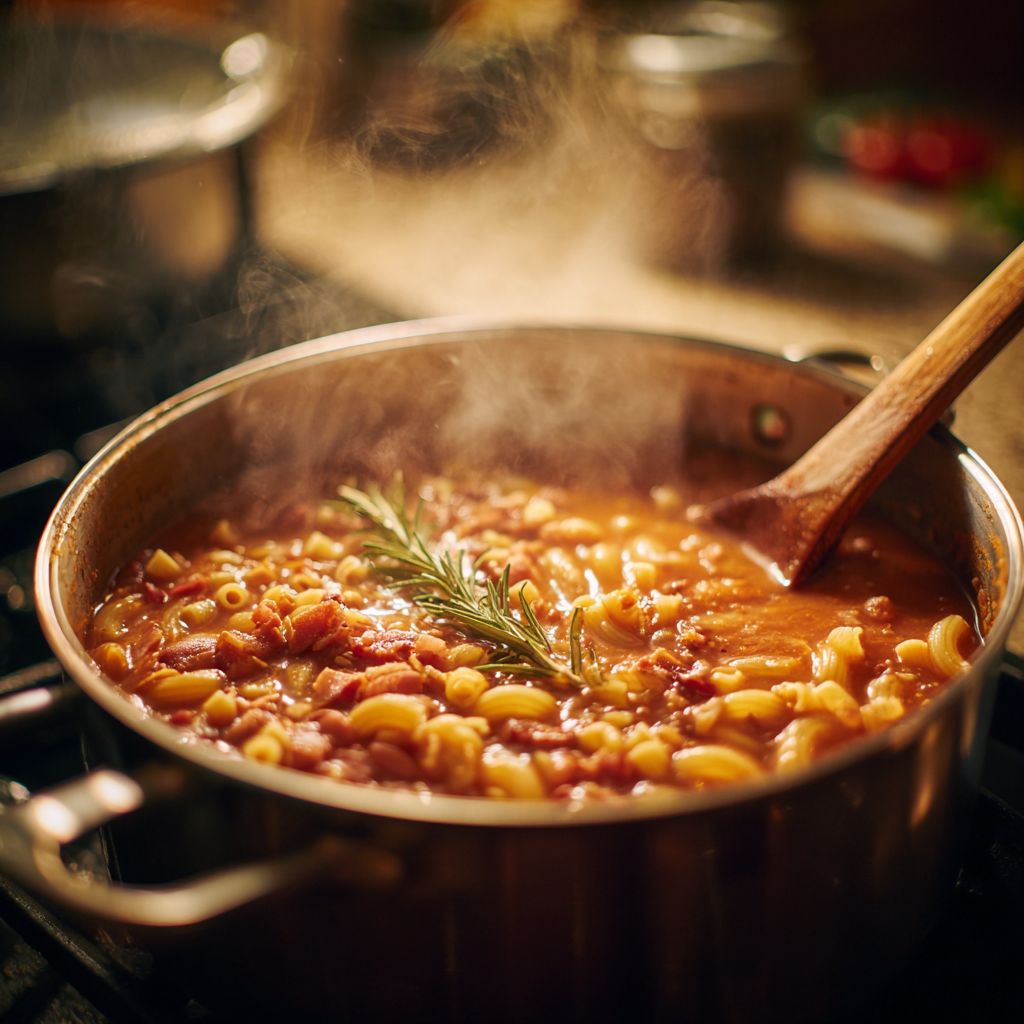
Beans that matter: cannellini vs. borlotti
I reach for cannellini beans when I want a silky interior and a mild sweetness; borlotti give a nuttier bite that stands up to tomato and rosemary. If you use dried beans, soak overnight and salt near the end. For canned, always drain and rinse to avoid off flavors.
The pasta choice: ditalini, elbows, or pasta mista
Ditalini hug the beans and vanish into every spoonful. Elbows are familiar and forgiving. Pasta mista adds visual charm and a rustic texture.
Aromatics, herbs, and fat
Render pancetta or guanciale in a splash of olive oil, then add garlic cloves and rosemary for warmth. Or build a soffritto with onion, carrot, and celery for a sweeter base. If you go vegetarian, use extra olive oil and a Parmesan rind or hard vegetarian cheese for depth.
| Ingredient | Why | Prep |
|---|---|---|
| Cannellini | Creamy, mild | Soak dried; drain canned |
| Borlotti | Nutter, stands up to tomato | Same prep; holds shape |
| Ditalini / Elbows | Small shapes, even bite | Parboil separately |
| Tomato / Broth | Color and body | Use a little tomato; water or bean liquid preferred |
Measure liquids in cups, season with a teaspoon of salt and a grind of pepper, and aim for a thick, spoonable soup where the pasta and beans feel like family.
Campania pasta e fagioli recipe: step-by-step, the traditional way
Begin over medium heat with a thin film of olive oil and a quiet pot; this is where the savory base starts. Move with calm—small timing cues keep the texture honest and the flavor clean.
Start by rendering pancetta
Warm the oil, add pancetta, and let it render gently until edges just brown. This takes a few minutes and builds the dish’s backbone.
Bloom garlic and rosemary
Add garlic cloves and rosemary; let them perfume the oil for about a minute. For heat, sprinkle a pinch of red pepper flakes to infuse the fat.
Crush tomatoes and simmer
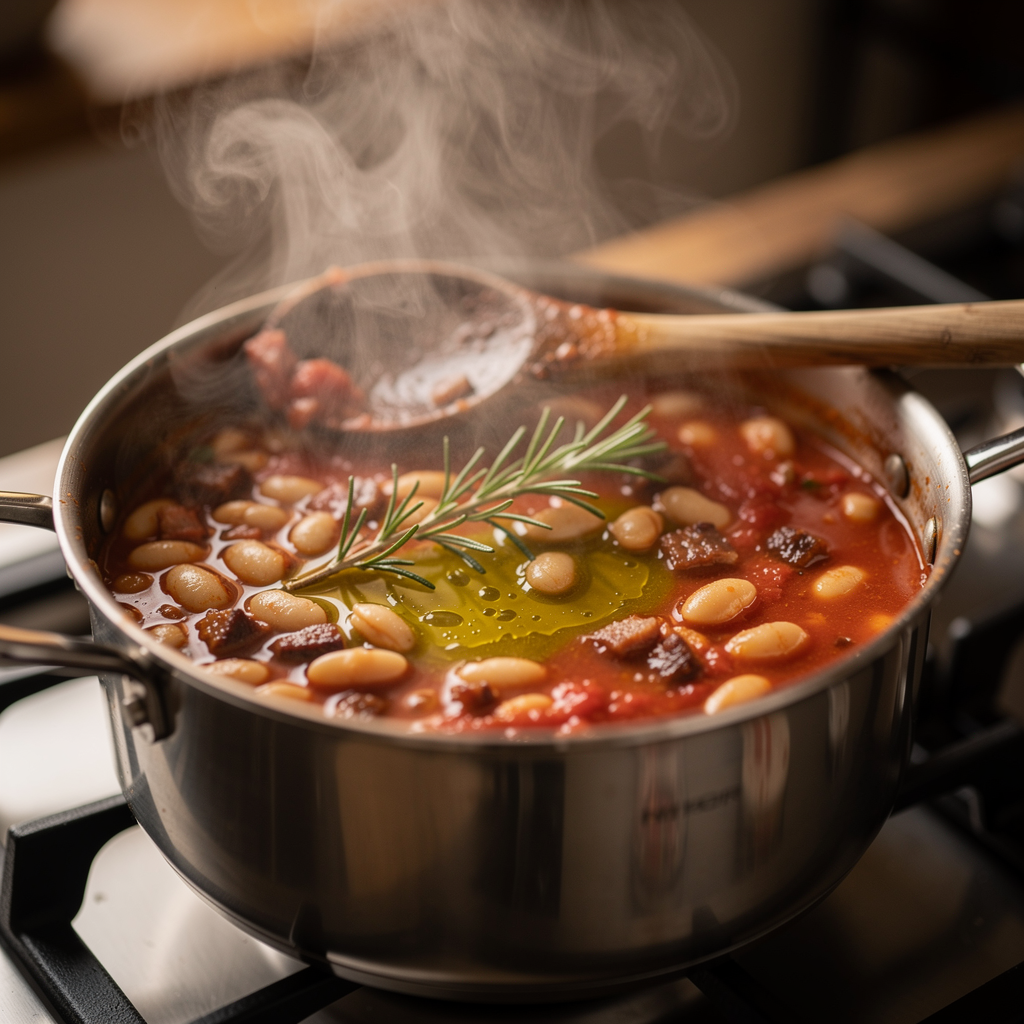
Hand-crush the tomatoes into the pot and simmer until the oil separates—usually a few minutes—so raw tomato flavor mellows.
- Stir in the beans and let them insaporire for a couple of minutes before adding broth.
- Parboil ditalini or small pasta separately until just shy of al dente; this prevents sticking and a scorched pot.
- Add a ladle of broth, combine with pasta, then mash some beans against the pot to thicken the soup.
- Taste and add a teaspoon of salt once beans are soft. Finish with black pepper, grated pecorino, and a drizzle of oil.
From Naples to Veneto: regional notes, swaps, and how Campania does it
Traveling north in Italy, the same pot shifts its voice—beans and broth stay, but aromatics and pork choices change the tune.
In Naples I keep the focus tight: ditalini for that perfect bite, cannellini for creaminess, rosemary for warmth, and pecorino to finish. The result is a thick, spoonable bowl where the pasta beans and beans feel joined.
Veneto and Tuscany variations
Head to Veneto and you meet borlotti, guanciale or pork rind, and a gentle soffritto of onion and celery that leans sweet. Some Venetian versions puree a few cups for silk without cream.
Tuscany often returns to cannellini with a similar soffritto. The swaps are subtle. They change texture and tone more than the dish’s heart.
- Tomato choices: south uses tomato in moderation; bianco versions skip tomatoes and depend on bean liquid and rosemary.
- Meat swaps: use guanciale or pork rind for a richer note; go vegetarian with savory broth and a good cheese alternative.
- Pasta notes: small shapes (ditalini, pasta mista) keep the pasta and beans balanced in every spoonful.
A light hand with salt and a slow simmer lets regional flavors sing. Taste as you go, and let the pot stay thick and comforting—that’s the common thread across these soups.
Serve it like an Italian: finishing, sides, and easy tweaks
Before the bowls reach the table, a few small finishes lift the whole dish into something bright and homey. These last moments shape aroma and texture so every spoonful feels intentional.
Un filo d’olio, grated cheese, and a crack of pepper
Right before serving, drizzle a little olive oil and add a shower of grated cheese. I crack fresh pepper over each bowl so the scent greets people as plates land.
Crusty bread, garlic bread, or focaccia for sopping
Warm crusty bread is nonnegotiable. Garlic bread or a slab of focaccia turns every last bit of soup into a clean-plate moment. Tear and pass; it keeps things family-style and slow at the table.
Easy swaps: from vegetarian to meatier, and how to handle heat
- For a gentle kick, sprinkle a pinch of red pepper flakes; to deepen heat, add red pepper flakes to the oil at the start so it blooms.
- Make it vegetarian by skipping pancetta and leaning on savory vegetable broth and rosemary with good olive oil for richness.
- Prefer it meatier? Use guanciale or a touch more cured pork, and finish with pecorino for extra depth.
- Stir in a cup of blanched greens like kale or chard for color and a pleasant bitterness that contrasts tomatoes and beans.
- Keep small pasta al dente; if the soup thickens, add a splash of broth to renew the texture.
If you want a full printable version or notes for reheating and storage, see this pasta e fagioli soup guide for more tips.
Make-ahead, storage, and freezing tips for weeknights—then print and cook
Make-ahead saves weeknights: cook the soup base, cool it, and the pot will taste like it simmered all day.
Store the base in the fridge for up to two days. Cook pasta separately and add it when you serve so the bite stays perfect.
For the freezer, cool completely and freeze without pasta for up to three months. Reheat gently over medium heat, thin with a few cups of broth or water, and season once it’s hot.
Keep a note card with parboil times—cook pasta a couple of minutes shy, then finish in the hot soup. Batch-cook beans in their liquid and label containers so weeknight planning is easy to print and follow.
Add a pinch of red pepper flakes or fresh rosemary after reheating for bright, last-minute lift.
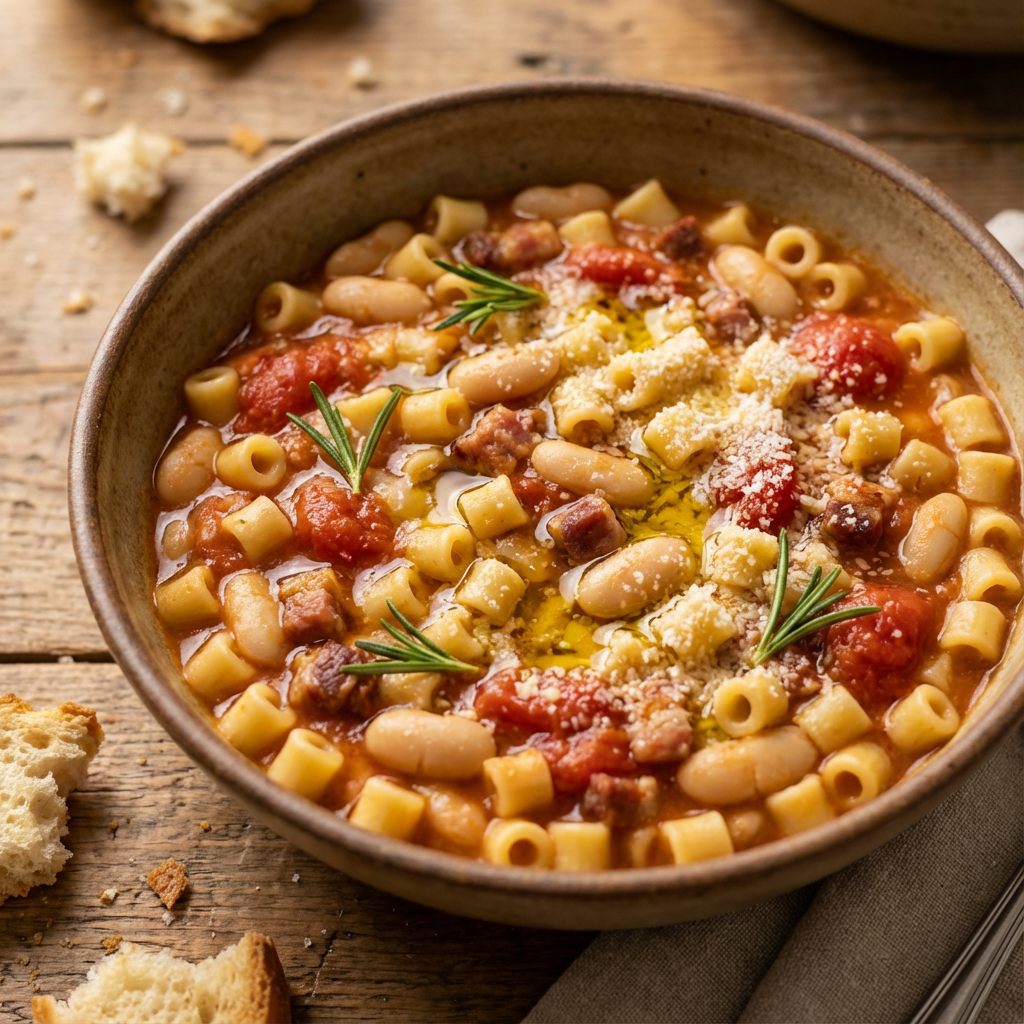
Campania Pasta e Fagioli (Campanian Pasta & Beans)
Ingredients
Method
- Warm a thin film of olive oil in a pot over medium heat. Add pancetta and cook until the edges turn lightly brown and the fat renders.
- Add the garlic cloves and rosemary sprig. Let them warm gently in the fat for about a minute. Add a pinch of red pepper flakes if you want heat.
- Crush the tomatoes by hand and stir them into the pot. Simmer until the oil starts to separate from the tomatoes. This removes the raw taste and deepens the flavor.
- Add the cannellini beans and let them “insaporire” (take in the base flavors) for 1–2 minutes before adding any liquid.
- Pour in 3–4 cups of broth or water. Bring to a gentle simmer and let everything bubble until the flavors round out.
- With the back of a spoon, mash a small handful of beans against the side of the pot to naturally thicken the soup.
- In a separate pot, boil the pasta until just shy of al dente. Drain.
- Add the parboiled pasta to the pot with the beans and tomatoes. Stir and let it finish cooking for a minute or two so it absorbs flavor without getting mushy.
- Taste and add salt only once the beans are soft. Finish with black pepper, a drizzle of olive oil, and a good shower of pecorino.
Notes
- Keep the soup thick and stew-like; add broth only if it tightens too much as it sits.
- Salt the beans later in the cooking process so they stay tender.
- If reheating leftovers, add a splash of broth to refresh the texture.
- For a vegetarian version, skip pancetta and add a Parmesan rind or extra olive oil for depth.