
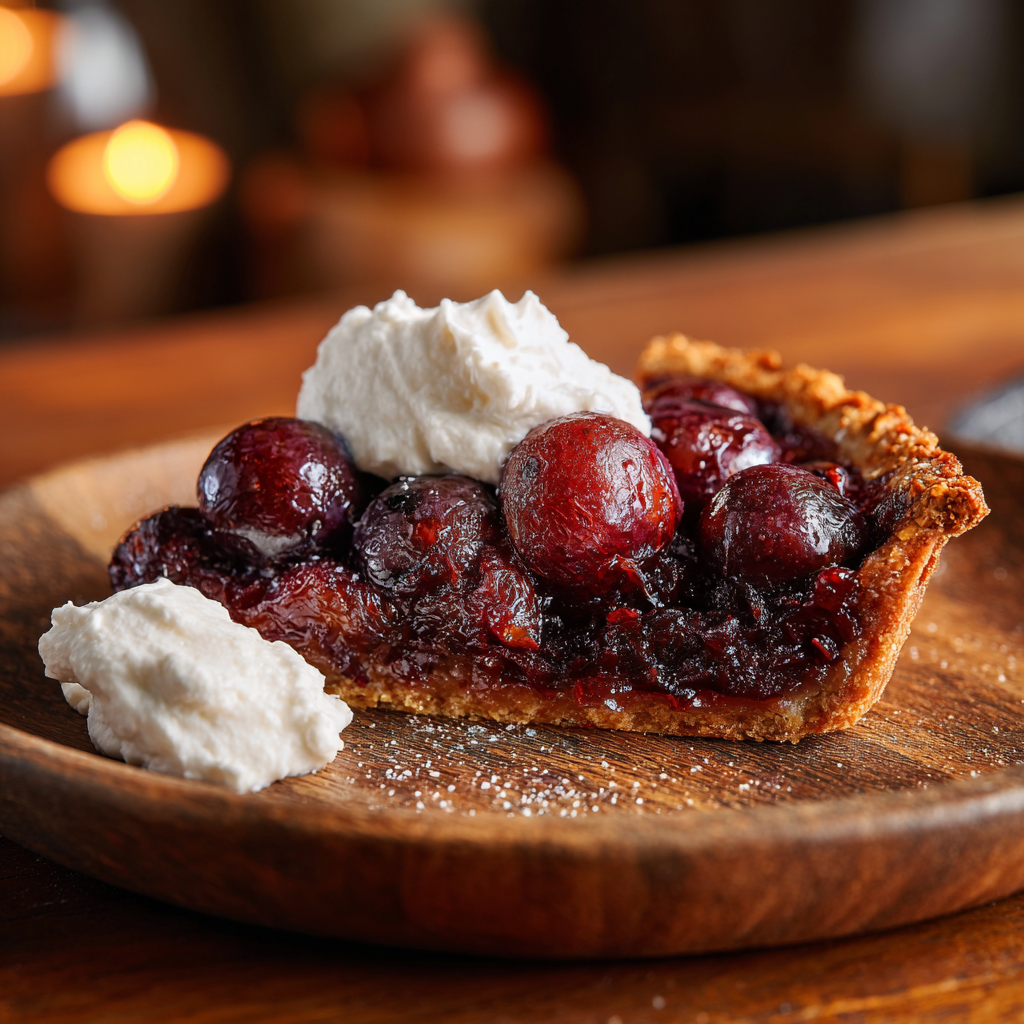
Jump to Recipe
I invite you into my cucina with a warm, plain welcome — the kind that comes from making the same simple things until they feel right. I love the small, honest pleasures: the scent of butter and flour, a knob of cheese softened with lemon, and fruit that browns at the edges and whispers of caramel.
This is a rustic tart, more free-form pie than fussy pastry, and it forgives imperfect edges. I use cold butter and just enough water, chill the dough for an hour, then roll between floured paper so it slides onto a parchment-lined sheet without tears.
A sprinkling of cornmeal and a touch of rosemary add crunch and scent to the crust. I spread lightly sweetened mascarpone with lemon and vanilla, pile on sweet grapes, and bake hot so the juices bubble and the crust goes deep golden. Watch for bubbling juices and a crackly edge as your cue; tent with foil if the rim darkens too fast.
Key Takeaways
- Cold butter and a short chill give a flakier crust.
- Rolling between floured paper makes transfer easy and clean.
- Cornmeal and rosemary add texture and savory aroma to the pastry.
- Mascarpone with lemon and vanilla creates a creamy base for fruit.
- Bake hot and watch for bubbling juices and a deep golden edge as your doneness cue.
Why this roasted grape tart works: rustic Italian ease, jammy fruit, and a flaky, buttery crust
This kind of free-form pie feels forgiving—perfect for home bakers who want big flavor without fuss. I’ll walk you through the simple mechanics that make the pastry sing and the fruit concentrate into sugar-kissed jewels.
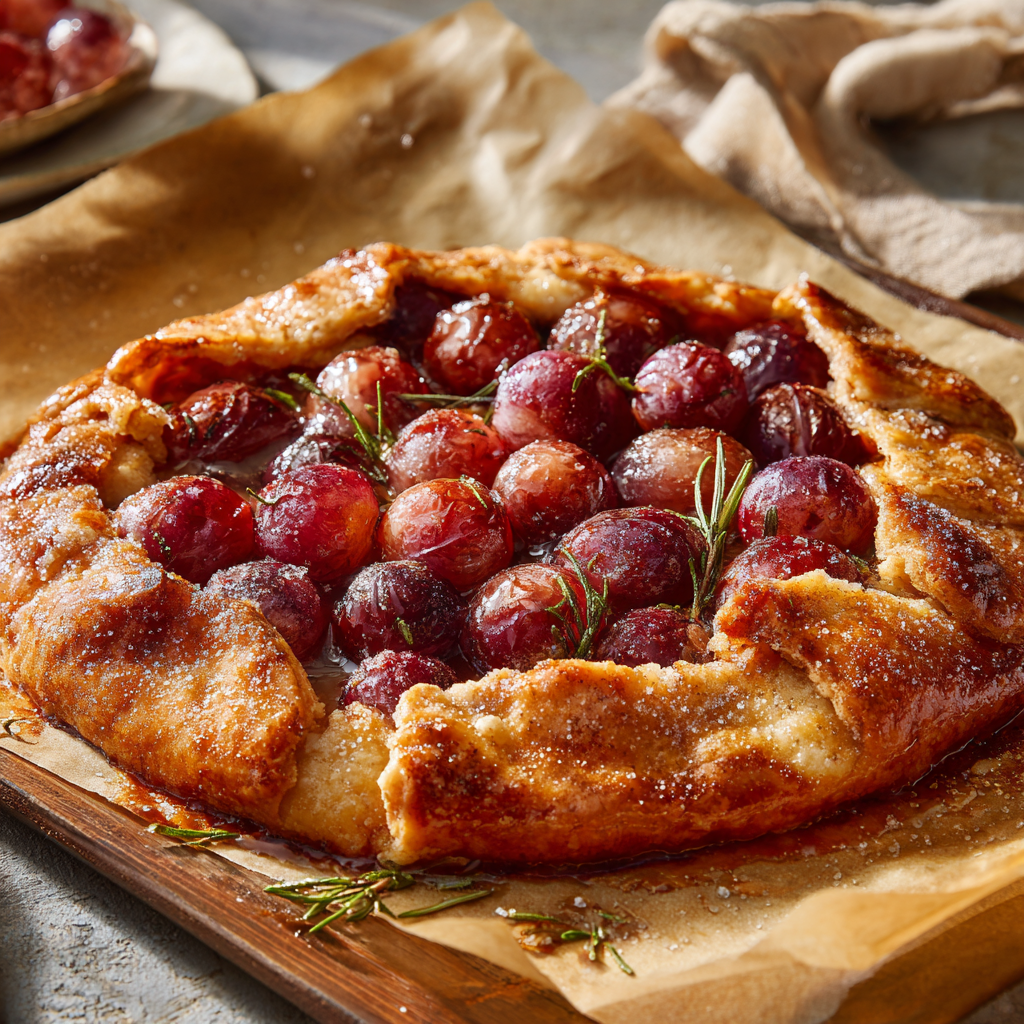
Crostata versus galette
Crostata is simply the Italian cousin of the French galette. Both are free-form pastry, so you skip a fussier double crust and still get rustic, beautiful results.
Flavor snapshot
When the fruit roasts it deepens into jammy pockets. I like mascarpone with lemon, vanilla, and a splash of cream for richness. Ricotta with a touch of honey works too. A light scatter of rosemary and a dusting of turbinado sugar on the edges adds a crackly finish.
Baker’s confidence boosters
- Cold butter and very cold water keep fat distinct for flaky layers.
- Mix just until pea-size bits of butter remain; overworking makes the dough tough.
- Chill the dough for an hour—gluten relaxes and rolling gets easy.
- Fold the pastry over the filling—imperfection looks artisanal and hides many sins.
Ingredients, swaps, and tools you’ll need before the oven preheats
Before the oven whistles, let’s gather the handful of pantry ingredients and tools that make this crostata sing.
Core ingredients
For the crust: all-purpose flour, a bit of fine cornmeal, sugar, lemon zest, salt, chopped rosemary, cold unsalted butter, and ice water. Mix to pea-size butter pieces, shape into a disc, wrap in plastic, and chill.
Choose your filling
Option one: mascarpone whisked with sugar, lemon, vanilla, an egg yolk, and a splash of heavy cream until silky. Option two: ricotta sweetened with honey and a pinch of salt for a lighter layer. Toss the fruit with a teaspoon of cornstarch and a touch of brown sugar if very juicy.
Smart additions and tools
- Core shopping list: seedless dark grapes, flour, cold butter, sugar, salt, vanilla, one egg, and heavy cream.
- Shortcuts: good prepackaged pie dough works when time is short.
- Tools: food processor or pastry cutter, mixing bowl, rolling pin, parchment-lined baking sheet, and a clean sheet of paper to roll between.
Need more technique or a related variation? See my take on the fig crostata method for ideas: fig crostata method.
Roasted grape crostata Italian recipe: step-by-step with pro tips for flaky success
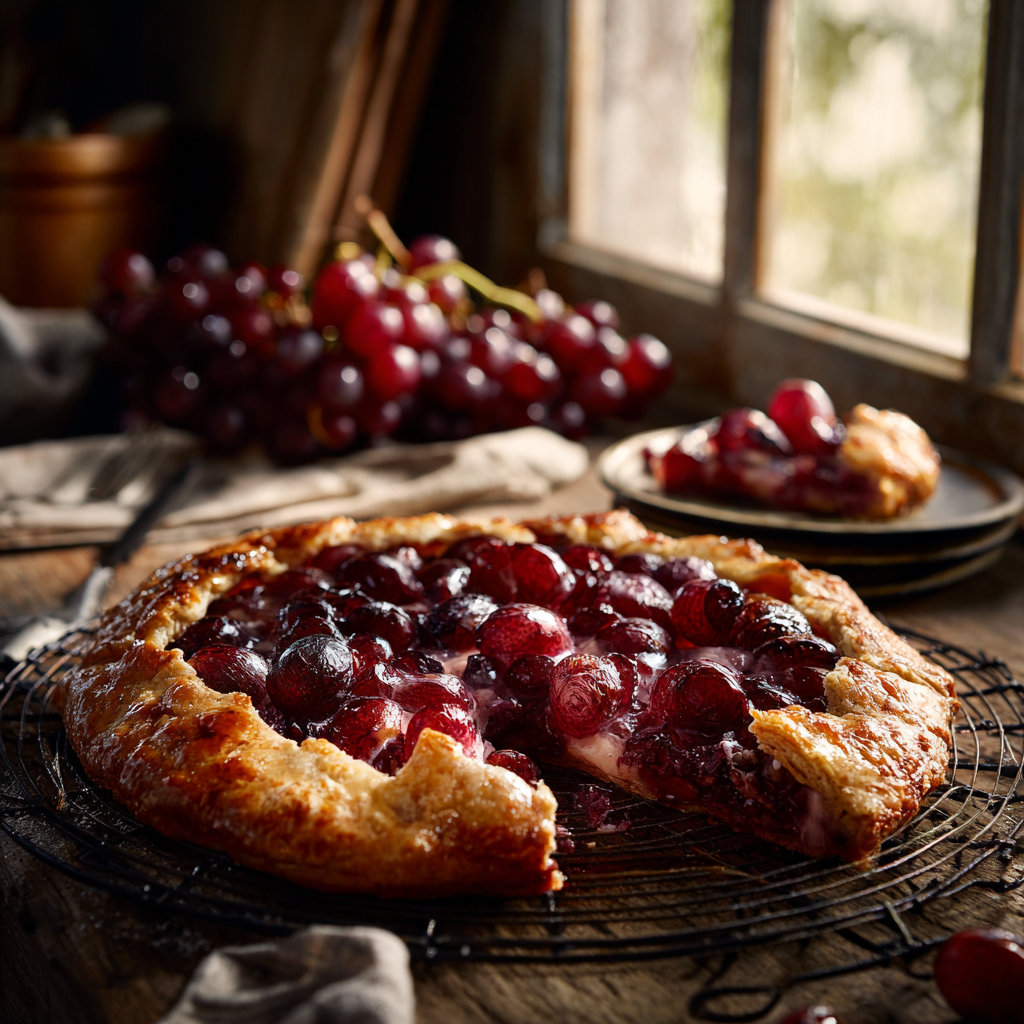
Let’s walk through the method step by step so your pastry comes out flaky and confident every time. I keep directions short and sensory so you can watch for cues instead of guessing.
Make and chill the dough
Pulse cold butter into flour until pea-size bits remain. Add ice water a tablespoon at a time until the dough barely clumps. Flatten into a 1-inch disc, wrap, and chill for about an hour so rolling is easy and the pastry stays tender.
Roll, fill, and fold
Lightly flour two sheets of paper and roll the dough between them to a 13–16-inch round. Drape the round over a rolling pin to lift it onto a parchment-lined baking sheet.
Whisk mascarpone with sugar, lemon, vanilla, yolk, and a splash of cream, or stir ricotta with honey and salt. Spread the filling in the center, leaving a 2½–3-inch border. Mound the grapes (toss first with cornstarch and a little sugar if very juicy). Fold and pleat the border over the fruit. Brush the edges with cream or an egg wash and sprinkle turbinado sugar.
Bake and watch the cues
Preheat the oven to 400–425°F. Slide the sheet into the hot oven and bake 30–50 minutes, depending on temperature and oven. Watch for golden edges, bubbling juices, and grapes that split. Tent with foil if the border darkens too fast. If a few grapes remain whole, a quick broil at the end will coax them to burst. Let the tart rest about 15 minutes on the pan, then transfer to a rack so the bottom stays crisp.
| Step | Key cue | Minutes |
|---|---|---|
| Chill dough | Firm, cold disc | 60 |
| Bake | Golden edges, bubbling center | 30–50 |
| Rest | Juices set slightly | 15 |
Serve it warm, store it right, and make it your own
A short pause after baking makes all the difference: the juices tame and the pastry stays flaky. I like serving the tart slightly warm or at room temperature so the cream settles and the crust keeps its snap.
It’s best the day it’s baked. To revive leftovers, rewarm slices in a moderate oven for a few minutes—avoid the microwave to keep edges and center crisp. Whipped cream or vanilla ice cream make for an easy, classic dessert finish.
Plan ahead by keeping a disc of dough wrapped in plastic in the fridge for an hour or overnight. Measure ingredients into a bowl and line paper and pan so assembly takes minutes when guests arrive.
Add lemon zest to the flour for brightness, sprinkle rosemary or turbinado sugar for texture, or mix green and red grapes for color. Save this crostata in your favorite recipes collection and enjoy the simple joy of fresh fruit and buttery crust.
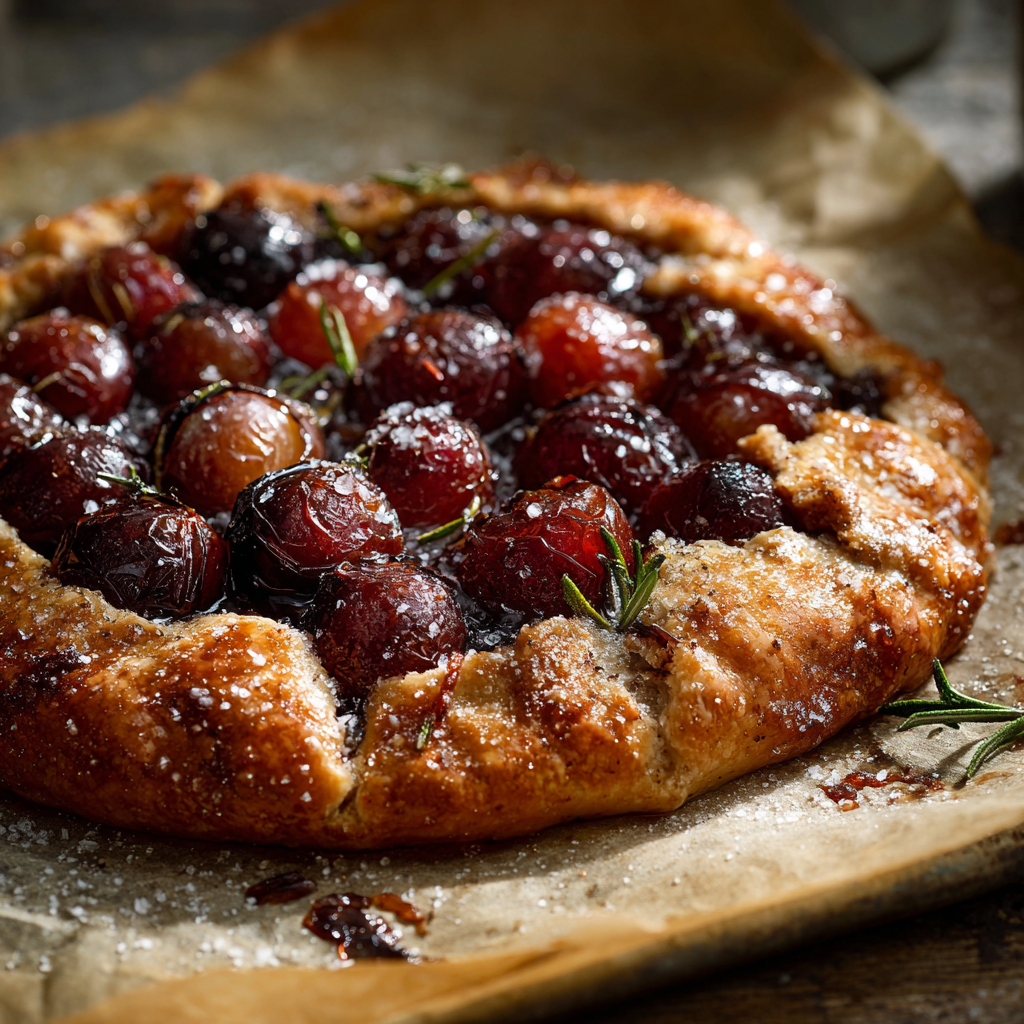
Roasted Grape Crostata
Ingredients
Method
- Pulse cold butter into the flour until the butter is in pea-sized pieces.
- Add ice water a tablespoon at a time until the dough begins to form. Shape the dough into a 1-inch disc, wrap in plastic, and chill in the fridge for 1 hour.
- Lightly flour two sheets of paper. Roll the dough between them into a 13–16-inch round. Place the dough onto a parchment-lined baking sheet.
- Whisk mascarpone cheese with sugar, lemon juice, vanilla extract, egg yolk, and heavy cream until smooth and creamy. Alternatively, you can use ricotta mixed with honey for a lighter filling.
- Spread the mascarpone filling in the center of the dough, leaving a 2.5–3-inch border around the edges.
- Toss the grapes with cornstarch and brown sugar (if using), then mound them on top of the mascarpone filling.
- Fold and pleat the edges of the dough over the fruit to form a rustic border. Brush the edges with heavy cream or egg wash, and sprinkle with turbinado sugar for a crunchy finish.
- Preheat the oven to 400–425°F (200–220°C). Bake the crostata for 30–50 minutes, or until the crust is golden and the juices are bubbling. If the edges brown too quickly, tent with foil.
- Let the crostata cool for 15 minutes on the pan. Transfer to a wire rack to cool completely and keep the bottom crisp.
Notes
- For an alternative filling, ricotta cheese mixed with honey can provide a lighter, sweeter taste.
- If you prefer a less sweet crust, you can reduce the sugar in the dough or omit it entirely.
- You can make the dough ahead of time and freeze it for up to one month.
- For a unique twist, try using a combination of different fruits like figs or plums.