
Jump to Recipe
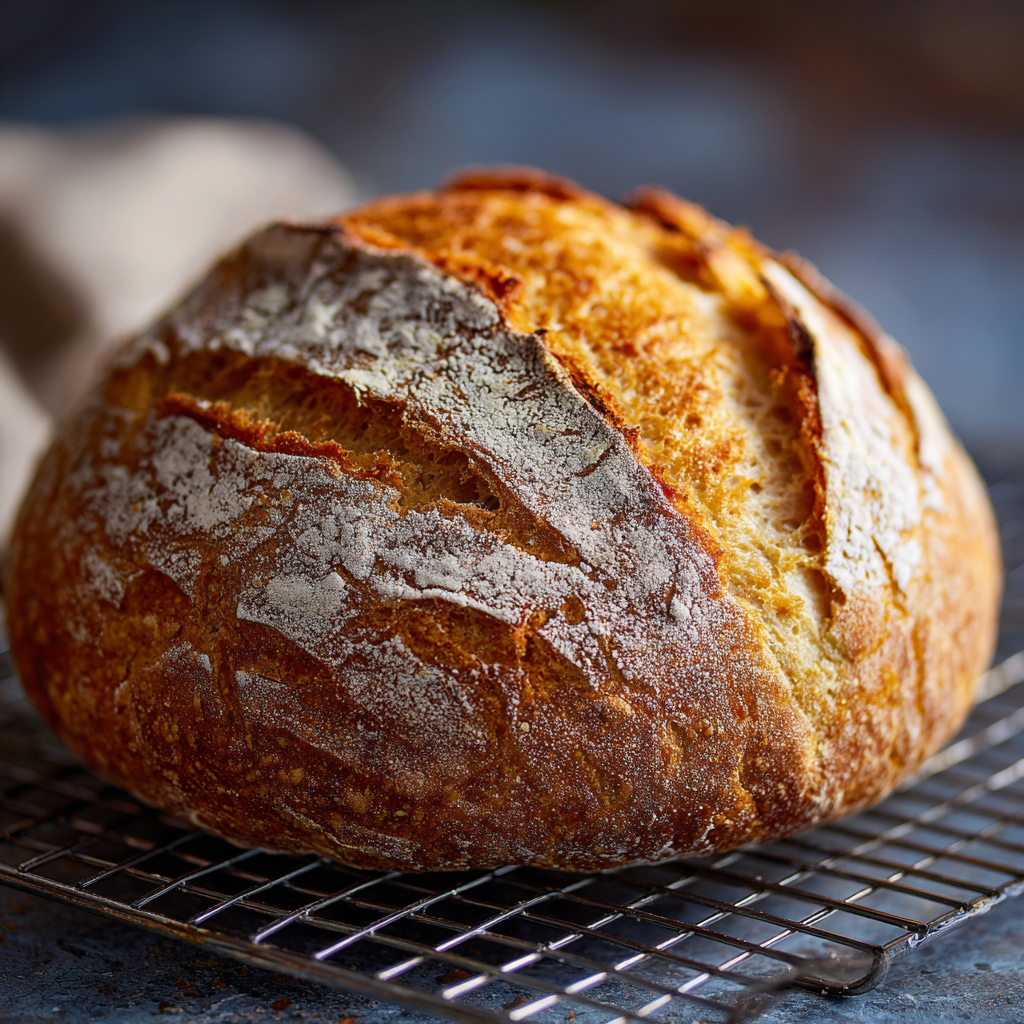
The kitchen fills with nostalgia when flour, water, and time dance together. My grandmother’s hands transformed simple ingredients into something magical. She created rustic bread that speaks volumes about tradition, patience, and Italian cooking.
Our pane pugliese rustic bread recipe connects you to generations of bakers. These artisans understood that true flavor comes from respecting ingredients. They embraced slow, intentional preparation.
Key Takeaways
- Authentic homemade rustic bread requires minimal ingredients but maximum patience
- Traditional pugliese loaf reflects the culinary heritage of Southern Italy
- High hydration dough creates distinctive open crumb texture
- Bread making is more about technique than complex skills
- Each loaf tells a story of cultural culinary tradition
What Makes Pane Pugliese Different from Other Italian Breads
Pane Pugliese stands as a unique treasure in Italian bread making. This remarkable bread from Puglia captures southern Italian baking traditions. It represents a pinnacle of Italian bread techniques.
The magic of Pane Pugliese lies in two critical elements. Its high hydration dough creates exceptional texture. Distinctive wheat composition sets it apart from other Italian breads.
The High Hydration Dough That Creates an Open Crumb
Creating an open crumb texture requires mastering high hydration bread making. Pane Pugliese typically uses hydration levels between 70-80%. This means the dough contains significantly more water than traditional recipes.
This wet dough might seem challenging to handle. However, it’s the secret behind those beautiful, irregular air pockets.
- Water content exceeds 70% of flour weight
- Creates exceptionally light, airy bread structure
- Develops complex flavor profiles during fermentation
Understanding the Role of Durum Wheat Flour
Durum wheat bread plays a crucial role in Pane Pugliese’s unique character. Unlike standard bread flour, durum wheat brings golden color and nutty flavor. This elevates the entire bread experience.
Bakers often blend durum wheat with bread flour. This achieves the perfect balance of texture and taste.
- Provides a rich, golden crumb color
- Contributes subtle nutty undertones
- Increases bread’s nutritional complexity
These distinctive characteristics transform Pane Pugliese into a culinary masterpiece. It connects generations through its authentic preparation and remarkable flavor.
Pane Pugliese Rustic Bread Recipe
Making authentic Pane Pugliese takes passion and precision in artisan bread baking. This Italian bread technique turns simple ingredients into an amazing loaf. You’ll get a crispy outside and tender, airy inside that brings Puglia to your kitchen.
Ingredients for Your Pugliese Bread
- 500g bread flour
- 500g durum wheat flour
- 750ml water
- 15g sea salt
- 5g active dry yeast
- Optional: 100g mashed potatoes
Essential Equipment
| Tool | Purpose |
|---|---|
| Kitchen scale | Precise ingredient measurement |
| Large mixing bowl | Dough preparation |
| Dutch oven | Creating steam for crispy crust |
The magic of Italian bread techniques starts with understanding hydration. A high-hydration dough around 75-80% creates beautiful, irregular air pockets. These pockets are what make authentic Pugliese bread special.
This method requires gentle handling and patience.
Step-by-Step Bread Making Process
- Prepare biga starter 12-18 hours before baking
- Mix flours, water, and yeast
- Perform stretch-and-fold technique every 30 minutes
- Allow extended bulk fermentation
- Shape dough gently into round loaf
- Proof for 60-90 minutes
- Bake at 475°F with steam for 45-55 minutes
Artisan bread baking is an art form that rewards patience and practice. Each loaf tells a story of tradition and technique. It also shows your pure love for cooking.
Mastering the Biga Starter for Authentic Flavor
The heart of any traditional pugliese loaf lies in its biga. This pre-fermented dough transforms southern Italian bread from ordinary to extraordinary. This magical starter is the secret weapon of Italian bakers.
Understanding the biga is like unlocking a culinary treasure. It’s more than just flour, water, and yeast mixed together. This technique connects us to generations of Italian bread-making traditions.
How to Prepare Your Pre-Fermented Dough
Creating the perfect biga requires attention to detail and patience. Follow this step-by-step guide to prepare your pre-fermented dough.
- Gather high-quality flour (preferably tipo 00 or bread flour)
- Use minimal yeast—just a pinch (about 1/4 teaspoon)
- Mix ingredients to create a firm, shaggy dough
- Allow the mixture to rest and develop flavor
Timing Your Biga for Maximum Flavor Development
The magic of the biga happens during fermentation. Different fermentation times produce unique flavor profiles for your traditional pugliese loaf.
| Fermentation Time | Flavor Profile | Texture Impact |
|---|---|---|
| 6-8 hours | Mild, subtle wheat notes | Lighter crumb |
| 12-16 hours | Complex, slightly tangy | More developed structure |
| 18-24 hours | Deep, nutty undertones | Rich, dense crumb |
Patience transforms your southern Italian bread from good to unforgettable. The biga develops its character slowly over time. It releases deep wheat flavors that speak to centuries of Italian baking tradition.
Shaping and Baking Your Artisan Pugliese Loaf
Artisan bread baking transforms simple dough into a magical culinary experience. Handling high-hydration dough might seem challenging at first. With the right techniques, you’ll create stunning crispy crust bread that looks professional.
A bench scraper becomes your best friend with sticky dough. It helps you shape and move the delicate mixture with confidence.
The shaping process requires a gentle touch. Flour your work surface generously and use your hands to fold the dough. Create surface tension without destroying those precious air bubbles.
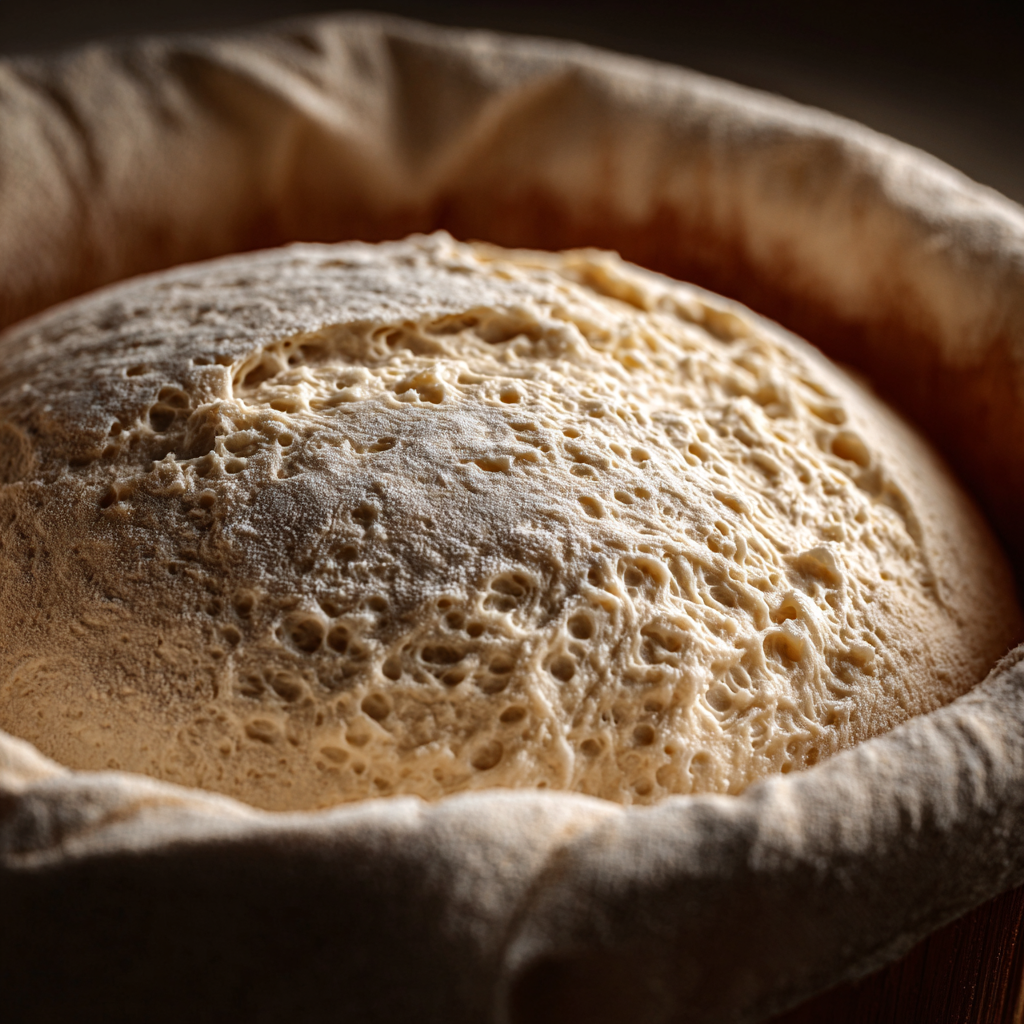
Your goal is to create beautiful round loaves. They will develop an incredible open crumb during baking. Place the shaped dough seam-side up in a floured banneton or bowl.
Allow it to proof for 60-90 minutes. The dough should expand to about 1.5 times its original size.
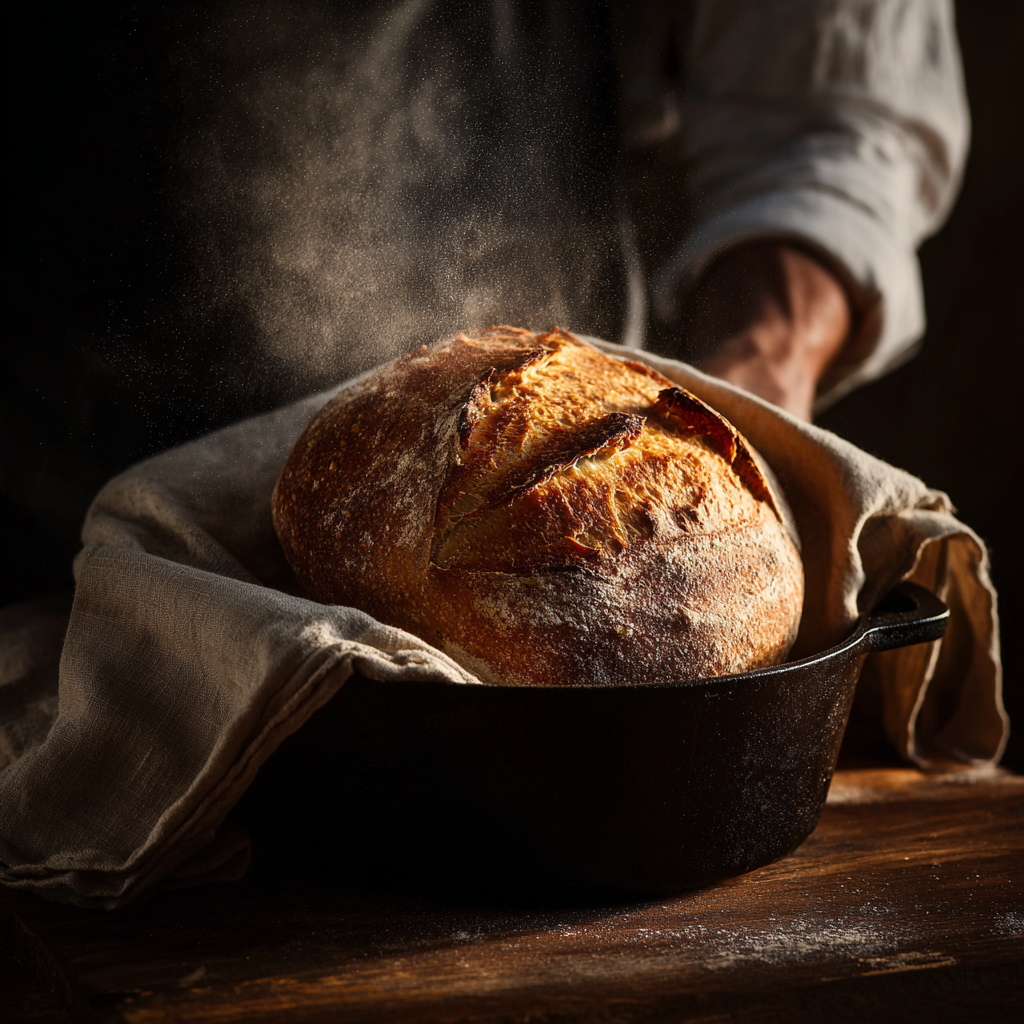
High heat is crucial for achieving that signature crispy crust. Preheat your oven to 450-500°F. Use a Dutch oven or create steam with a pan of water.
Score the loaf with confident slashes just before baking. This allows the bread to expand beautifully. Bake for 40-60 minutes until the crust turns deep golden brown.
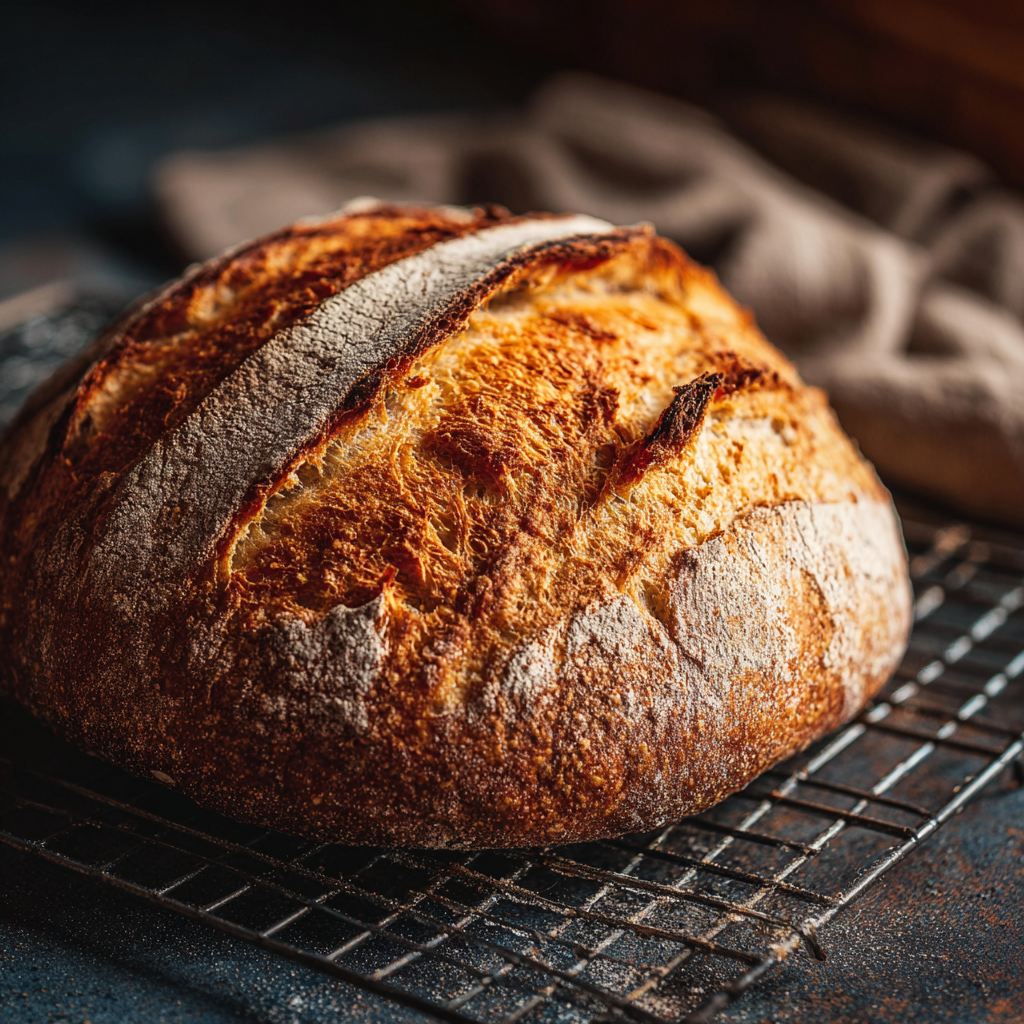
The most challenging part of artisan bread baking? Waiting to slice your masterpiece. Let the bread cool on a rack for at least 40 minutes.
Listen to the crust crackle as it releases heat. This patience rewards you with perfect texture. It allows the flavors to fully develop.
Pane Pugliese (Rustic Italian Bread)
Ingredients
Method
- Mix 250g flour, 150ml water, and 1/4 tsp yeast.
- Stir until a shaggy, firm dough forms.
- Cover and let it ferment at room temperature for 12–18 hours. It should smell slightly sweet and yeasty.
- In a large bowl, mix bread flour, durum flour, yeast, and water.
- Tear the biga into pieces and mix it in.
- Add the salt last.
- The dough will be wet and sticky — that’s normal.
- Every 30 minutes, perform a set of gentle stretch-and-folds.
- Do this 3–4 times total.
- This strengthens the dough without kneading.
- Let the dough rise until puffy and slightly domed.
- This may take 2–3 hours depending on temperature.
- Flour your work surface generously.
- Use a bench scraper to lift the dough — it will be sticky.
- Gently fold it into a round shape, trying not to pop the air bubbles.
- Place seam-side up in a floured banneton or bowl.
- Proof 60–90 minutes.
- The dough should look airy and about 1.5 times its original size.
- Preheat oven to 475°F (245°C) with a Dutch oven inside.
- Turn dough out onto parchment, score the top, and place it into the hot Dutch oven.
- Bake 25 minutes covered, then 20–30 minutes uncovered until deep golden brown.
- Let cool at least 40 minutes before slicing.
Notes
- This dough is supposed to be sticky — avoid adding more flour or you’ll lose the open crumb.
- A Dutch oven gives the best crust, but you can bake on a sheet pan with a tray of hot water for steam.
- Letting the dough rest in the fridge overnight deepens its flavor even more.
- Don’t rush the cooling step; the inside finishes setting as it cools.