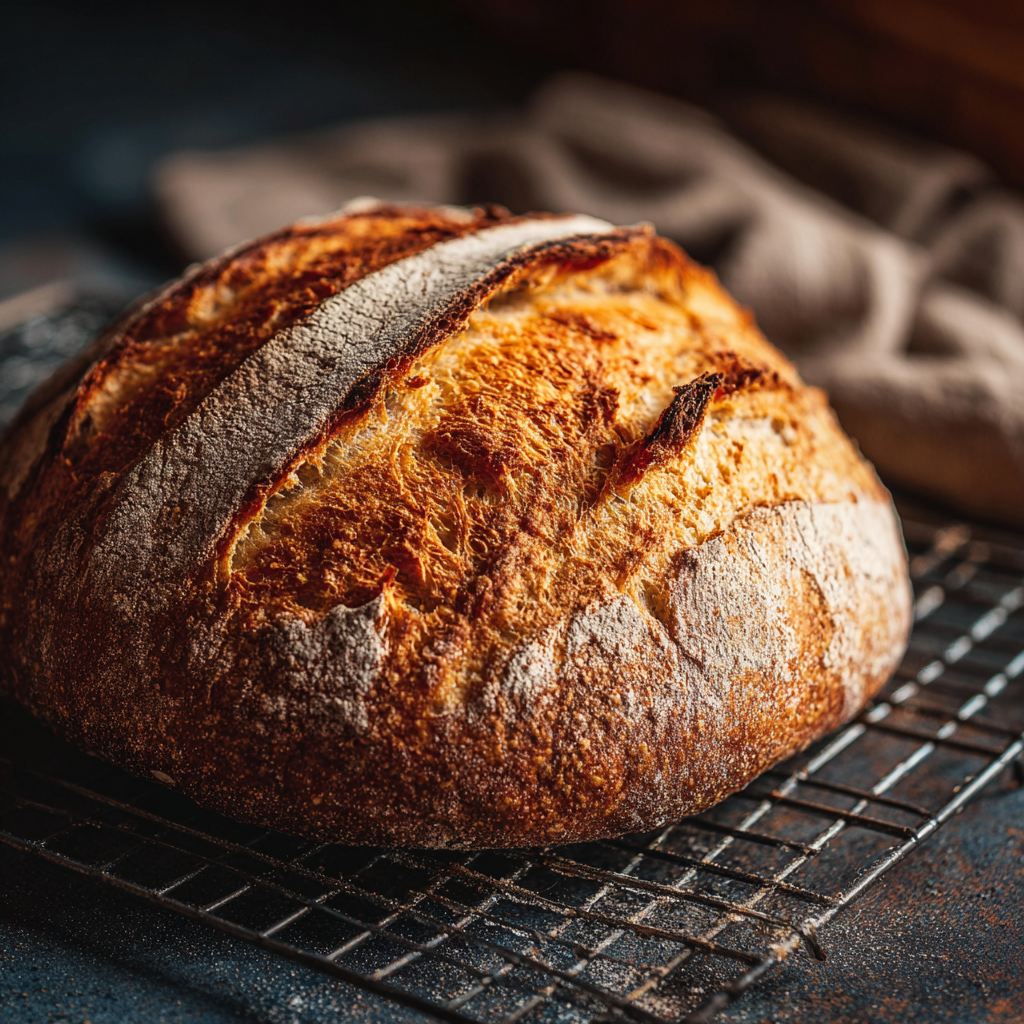
Ingredients
Method
Prepare the Biga (12–18 hours before baking)
- Mix 250g flour, 150ml water, and 1/4 tsp yeast.
- Stir until a shaggy, firm dough forms.
- Cover and let it ferment at room temperature for 12–18 hours. It should smell slightly sweet and yeasty.
Make the Dough
- In a large bowl, mix bread flour, durum flour, yeast, and water.
- Tear the biga into pieces and mix it in.
- Add the salt last.
- The dough will be wet and sticky — that’s normal.
Stretch and Fold
- Every 30 minutes, perform a set of gentle stretch-and-folds.
- Do this 3–4 times total.
- This strengthens the dough without kneading.
Bulk Fermentation
- Let the dough rise until puffy and slightly domed.
- This may take 2–3 hours depending on temperature.
Shape the Loaf
- Flour your work surface generously.
- Use a bench scraper to lift the dough — it will be sticky.
- Gently fold it into a round shape, trying not to pop the air bubbles.
- Place seam-side up in a floured banneton or bowl.
Final Proof
- Proof 60–90 minutes.
- The dough should look airy and about 1.5 times its original size.
Baking
- Preheat oven to 475°F (245°C) with a Dutch oven inside.
- Turn dough out onto parchment, score the top, and place it into the hot Dutch oven.
- Bake 25 minutes covered, then 20–30 minutes uncovered until deep golden brown.
- Let cool at least 40 minutes before slicing.
Notes
- This dough is supposed to be sticky — avoid adding more flour or you’ll lose the open crumb.
- A Dutch oven gives the best crust, but you can bake on a sheet pan with a tray of hot water for steam.
- Letting the dough rest in the fridge overnight deepens its flavor even more.
- Don’t rush the cooling step; the inside finishes setting as it cools.