
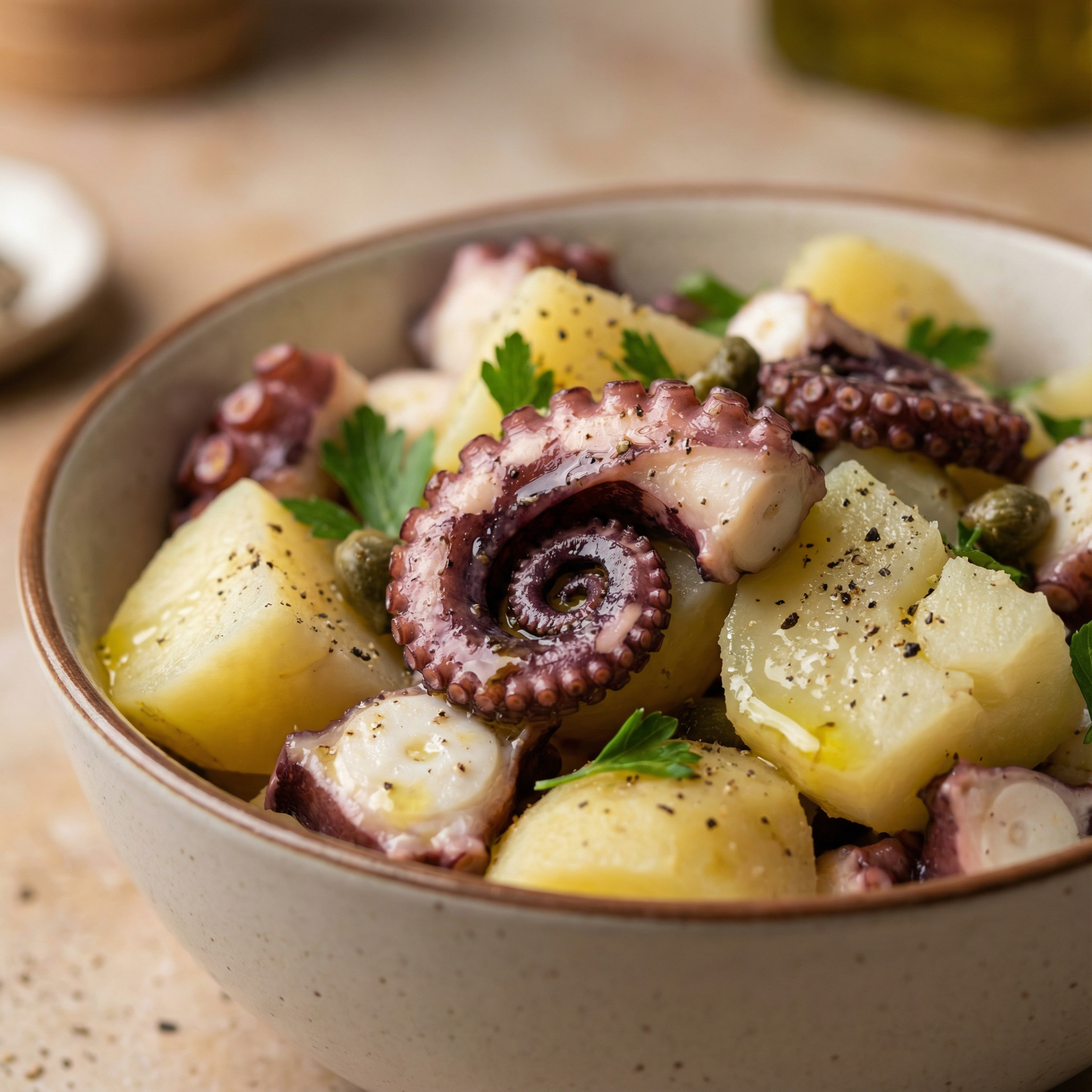
Jump to Recipe
I pull a pot to the stove, add water and a sprig of bay, and let the gentle steam fill the kitchen. The smell of sea and citrus is quiet and honest, like a Sunday gone slow, and I can already hear guests laughing at the table.
My hands trim and test, aiming for tender seafood and potatoes that hold their shape. I keep the dressing simple—extra-virgin olive oil, lemon, parsley, garlic, salt, and pepper—so each ingredient sings..
Bring a friend’s confidence to your cooking: simmer the main protein 30–40 minutes, boil the tubers about 20, then let the dish rest an hour or overnight for the best bloom of flavor. For a full, tested method try my insalata di polpo.
Key Takeaways
- Balance: equal weights of protein and potatoes create a steady base.
- Timing: simmer the main protein 30–40 minutes; potatoes about 20 minutes.
- Dressing: ½ cup olive oil to ~3 tbsp lemon keeps the mix bright, not greasy.
- Texture: aim for tender protein and firm cubes that hold up when tossed.
- Make-ahead: rest the assembled dish at least one hour or overnight for deeper flavor.
What makes this Italian octopus and potatoes salad so special
What makes this dish linger on menus is its careful balance of texture and flavor. I rely on gentle heat and simple ingredients so the seafood stays tender and the cubes keep their shape.
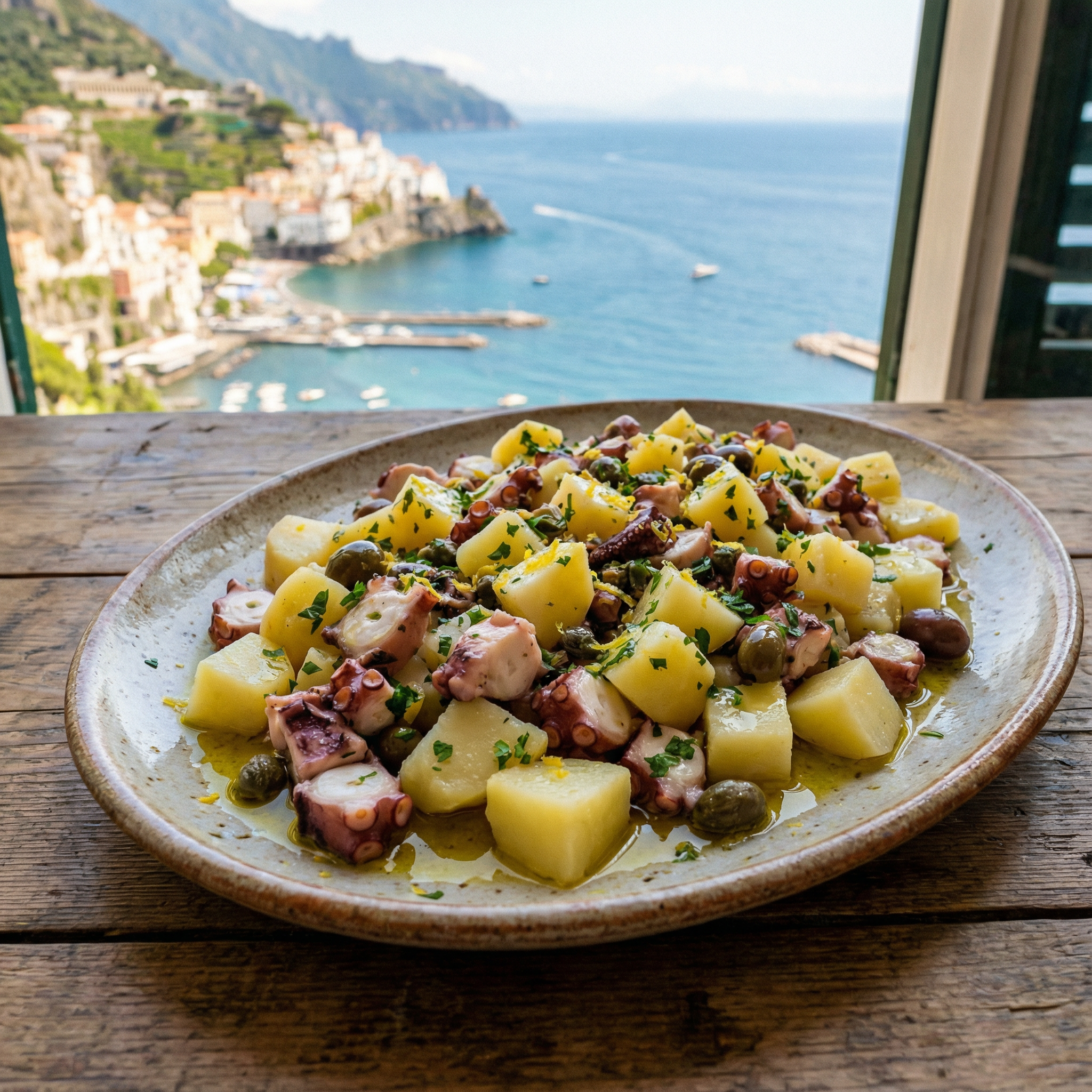
The core ingredients are straightforward: tender octopus, boiled potato cubes, extra-virgin olive oil, lemon juice, parsley, garlic, salt, and black pepper. Each element plays a clear role—lemon brightens, oil carries flavor, and parsley lifts the mix.
Technique matters: low simmering prevents toughness, and a short boil keeps the tubers firm. After assembling, rest the bowl for at least one hour or overnight; that pause lets dressing penetrate and the personality of the salad deepen.
- Balance: sweet, savory, bright, and herbal in every bite.
- Versatility: serve as an appetizer, a picnic offering, or a main for seafood nights.
- Finish: a good olive, a pinch of peperoncino, or a grind of pepper adds interest without stealing the show.
| Element | Role | Tip |
|---|---|---|
| Seafood | Savory depth | Simmer low until tender |
| Potato | Texture & carry | Boil until just tender, cool |
| Dressing | Binder & flavor | Use high-quality olive and fresh lemon |
Ingredients you’ll need for an authentic result
I shop by weight: equal parts protein and tuber give the dish steady balance and predictable seasoning. Below are exact amounts, sensible swaps, and why each choice matters so you can shop and prep with confidence.
Seafood: fresh vs frozen, size, and how much to buy
Plan about 1 kg of octopus for six servings. I often buy frozen or freeze fresh for 2–3 days first—freezing breaks down fibers and helps ensure tender meat. Choose a 2–2.5 lb specimen if you want neat, meaty bites; larger pieces need more time and a fork test near the head.
Tubers: waxy vs starchy and why it matters
Use about 1 kg of potatoes. Pick waxy or all-purpose types (Yukon Gold, white) so cubes hold shape after a ~20-minute boil and cool resting. Very starchy kinds can fall apart when tossed.
Dressing and aromatics
For the dressing I use ½ cup extra-virgin olive oil, 3 tbsp lemon juice, 1 tbsp chopped parsley, 1 garlic clove, salt, and freshly ground black pepper. Taste as you go, add olives sparingly, and keep a measuring cup handy for consistency.
| Ingredient | Amount (for 6) | Why it matters |
|---|---|---|
| Octopus | 1 kg | Tender, meaty bites when frozen then cooked low |
| Potatoes | 1 kg | Waxy holds shape after boiling ~20 min |
| Extra-virgin olive oil | ½ cup (125 g) | Fruitiness and body to carry flavor |
| Lemon juice & aromatics | 3 tbsp lemon, 1 tbsp chopped parsley, 1 garlic clove | Brightens, lifts, and perfumes—use garlic gently |
Tools and quick prep to set you up for success
Good setup is half the success: the right pot, steady heat, and tidy tools change everything. I gather what I need before the stove goes on. That small effort keeps the process calm and precise.
Pot size, lid position, and simmer control
Use a large pot so the octopus can move freely in water. Crowding creates uneven cooking and tougher meat.
Keep the lid half-closed during the boil-to-simmer stage. This cuts down on foam and controls evaporation while the heat stays steady.
Knives, shears, and a sturdy bowl for gentle tossing
- A sharp chef’s knife or kitchen shears makes clean cuts through tentacles and head for tidy, bite-size pieces.
- Choose a roomy, sturdy bowl to toss the salad gently so cubes hold their shape and the dressing coats evenly.
- Set a colander, a sheet pan lined with towels, tongs, and a timer nearby to keep transfers clean and cooling controlled.
| Tool | Why | Quick tip |
|---|---|---|
| Pot | Room to cook evenly | Pick one that holds the creature submerged |
| Lid | Controls foam and evaporation | Leave it half-closed during simmer |
| Bowl | Gentle tossing | Use a deep, sturdy vessel |
Octopus with potatoes Italian salad recipe: step-by-step
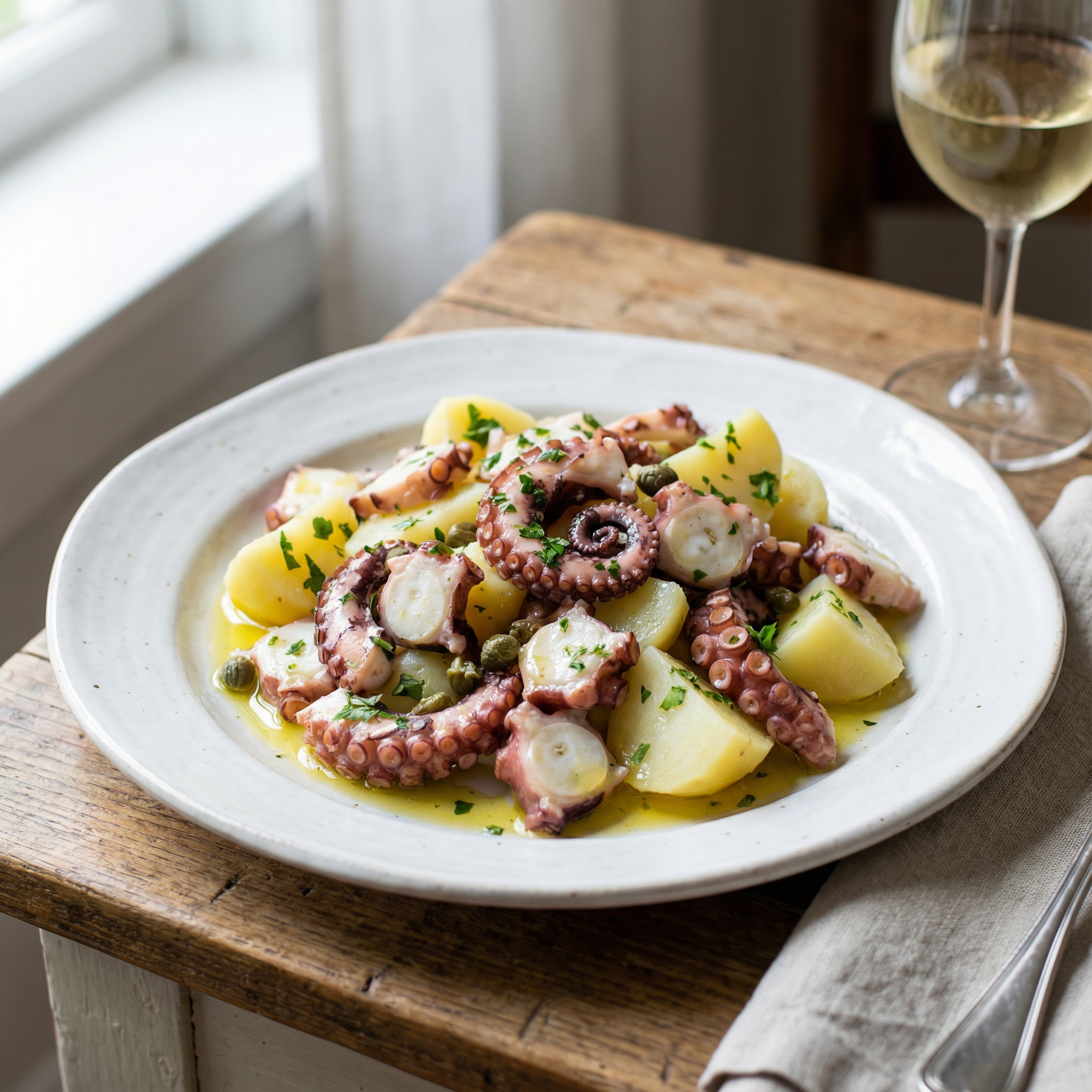
Begin at the stove by choosing a method—cold immersion for even tenderness, or the dip-and-simmer trick for neat curls.
Cook the seafood gently
For the cold-water method, place the cleaned octopus into a pot of cold water. Bring boil, then cover and lower the heat to simmer about 30 minutes (40 minutes for larger pieces). Test by inserting a fork near the head; it should slide in easily.
For the dip route, bring water to boil with parsley stems, wine, and peppercorns. Dip the creature 3–4 times, then simmer on low with the lid half-closed until tender—about 45–50 minutes for ~2 lb. Let it cool on a plate or in the liquid depending on the method.
Boil the tubers
Boil the potatoes in lightly salted water about 20 minutes, until just tender. Drain and let cool, then cut into cubes that keep their shape in the bowl.
Whisk the dressing
Whisk ½ cup extra-virgin oil with 3 tbsp lemon juice or white wine vinegar, 1 tbsp chopped parsley, a pinch of salt and pepper. Add a smashed garlic clove to infuse, then remove.
Assemble, season, and rest
Cut the octopus into bite-size pieces. Combine octopus and potatoes in a bowl, spoon over the dressing, and toss gently. Taste and adjust seasoning. Let the salad rest 30–60 minutes or up to overnight so flavors marry.
| Method | Approx. time (minutes) | Cooling |
|---|---|---|
| Cold-water start | 30–40 | Let cool in cooking liquid ~60 min |
| Dip & simmer | 45–50 | Let cool on a plate before cutting |
| Potatoes | ~20 | Drain and let cool before cubing |
- Check doneness with a fork near the head.
- Toss gently so cubes keep their shape.
- Rest the assembled bowl so the dressing can penetrate.
How to cook octopus so it stays tender, not chewy
If you want gentle texture, keep the heat low and trust the fork more than the clock. Slow, steady cooking prevents proteins from seizing and gives a reliably soft result.
Check doneness by inserting a fork near the head; the tines should slide in with little resistance. I prefer to judge by feel rather than strict minutes—size matters more than a timer when you cook octopus.
- Keep a low simmer and avoid rolling boils; gentle heat protects muscle fibers.
- A 2 lb specimen often needs about 45–50 minutes, but the fork test near the head is the real guide.
- Season the cooking water with parsley stems, peppercorns, and a splash of white wine to add subtle perfume.
Cooling method affects texture. Cooling in its cooking water for roughly an hour relaxes fibers and yields very tender results. Cooling on a plate preserves shape and gives a firmer bite—handy if you want defined tentacles in your salad.
Leave most skin intact for color and mild briny chew. Remove only excess around the head and between tentacles if you prefer a neater presentation. Whatever you choose, let the piece cool until you can handle it, then slice—this helps pieces hold their shape.
| Method | Outcome | When to use |
|---|---|---|
| Cool in water | Silkier, very tender cooked texture | When you want ultra-tender octopus for softer plates |
| Cool on plate | Cleaner exterior, slightly firmer bite | When presentation and defined tentacles matter |
| Skin partial removal | Best color, slight chew retained | Balance of look and flavor for salads and shared plates |
Regional twists and tasty variations
Regional pantries nudge this classic in small, lovely directions—each coast adds its thumbprint. I like to keep the base dressing simple so additions shine without hiding the main flavors.
Ligurian notes
Fold in Taggiasca olives and toasted pine nuts for a soft, aromatic finish. A few basil leaves or a whisper of pesto lifts the bowl toward the Ligurian sea.
Neapolitan accents
Use Gaeta olives, lemon, chopped parsley, garlic, and a pinch of chili for bright, bold bites. The brine and acid play against tender protein and firm potatoes beautifully.
Warm presentation and pantry-friendly options
For a restaurant-style plate, serve the seafood over a silky potato cream instead of cubes. It feels refined and comforting, ideal for immediate service.
- Pantry-friendly: capers, celery, red onion, oregano, and sun-dried tomatoes add salinity, crunch, and depth.
- Tie variations together with chopped parsley at the end for freshness.
- Adjust oil and lemon when adding salty ingredients; taste and season in layers.
| Region | Key add-ins | When to use |
|---|---|---|
| Liguria | Taggiasca olives, pine nuts, basil | Light, herbal plates |
| Naples | Gaeta olives, lemon, garlic, chili | Bright, bold flavors |
| Pantry | Capers, celery, red onion, sun-dried tomatoes | Quick, stocked-at-home version |
Think texture: olives and pine nuts add chew and crunch against tender flesh and creamy potatoes. If you add basil or pesto, stir them in last to keep aroma and color bright. Explore modestly—each variation protects the dish’s identity while opening a door to local flavor.
Serving ideas, pairings, and when to plate it
I like to serve this plate at room temperature so each flavor can breathe. Resting matters: give it 30–60 minutes so the dressing soaks in and textures balance.
Best temperature to serve and why resting matters
Room temperature lets lemon and olive oil mellow and the herbs speak. If chilled, remove the bowl about 30 minutes before service so it can let cool on the counter.
That short time makes a big difference in aroma and mouthfeel. Taste once more before you plate; a thin ribbon of oil or a sprinkle of parsley can revive any dry spots.
Breads and sides that love this salad
For an easy, crowd-pleasing spread pair the bowl with good bread and a green side. I favor focaccia or ciabatta to sop up juices, plus a peppery arugula salad and lemon wedges.
- Serve as an appetizer or a light main; it plays well both ways.
- Offer olives on the side for a briny counterpoint.
- For family-style service, heap the mix on a shallow platter so every guest gets a mix of octopus, potatoes, and herbs.
| Bread | Why it works | Serving tip |
|---|---|---|
| Focaccia (Genovese) | Olive oil-friendly crumb | Warm, torn pieces |
| Ciabatta | Open crumb soaks dressing | Slice and toast lightly |
| Rustic roll | Hearty bite for sharing | Serve halved for sopping |
Make-ahead, storage, and food-safety tips
A little planning the day before saves stress and keeps textures lively when you plate for guests. I favor a safety-first approach: cook core elements ahead, chill them properly, and assemble close to service so the bowl tastes bright.
What to prep the day before and how to store
Cook the octopus and the tubers the day before. Keep the cooked protein in a covered container with a thin film of its cooking water; this prevents drying and keeps texture even. Slice the protein just before you toss the bowl.
- Boil the potatoes, cool them, and refrigerate separately in a sealed container so they hold shape.
- Keep dressing in a jar on the side and dress the salad near serving time for best texture.
- If you need to chill fast, spread potatoes on a sheet pan or use an ice bath for the pot—cold water speeds the process.
How long leftovers last and when to freeze
Leftovers keep well for up to 2 days in an airtight container in the fridge; taste before serving and season lightly at first, since salt from olives can intensify over time. Let the assembled salad rest about an hour at room temperature before guests arrive for optimum flavor.
Freeze only cooked octopus—never freeze potatoes, they break down. Thaw frozen protein overnight in the fridge, pat dry, and fold into freshly boiled potatoes with a new batch of dressing.
| Action | Storage | Time window |
|---|---|---|
| Cooked protein in cooking water | Covered container, refrigerated | Up to 2 days |
| Boiled tubers, cooled | Separate sealed container, refrigerated | Up to 2 days |
| Frozen cooked protein | Freeze single ingredient only | Thaw overnight in fridge |
Small practical tips: label each container with date and contents, refrigerate within two hours of cooking, and season gently at first. These simple steps keep food safe and tasty every time.
Nutrition and dietary notes at a glance
This dish stays satisfying, even when you pare back oil and carbs, because lean seafood carries flavor well.
Light, protein-rich seafood and heart-healthy oil
I rely on the lean protein of octopus and a modest amount of olive oil to keep the plate nourishing. A bright squeeze of lemon and a handful of chopped parsley lift flavor without added calories.
Smart swaps for lighter versions without losing flavor
- Reduce the fat by measuring oil rather than pouring; a spoon or two less makes a big difference.
- Replace half the potatoes with steamed green beans or zucchini for fewer carbs and more crunch.
- Add celery or fennel for aroma and texture while keeping overall calories low.
- If dressing seems thin, a splash of cooking water helps emulsify and coat ingredients.
- Rest the bowl a few minutes; seasoning evens out fast even when you cut the oil.
| Swap | Why | Effect |
|---|---|---|
| Half potatoes → green beans | Lower carbs | Fresher texture, lower calories |
| Less oil measured | Control fat amount | Cleaner mouthfeel, same flavor |
| More lemon & parsley | Brightness without fat | Vivid taste, lighter finish |
For other seafood ideas, try my take on zuppa di pesce to explore similar, balanced plates.
Bring it to the table: a simple Italian seafood dish, done right
Watch how the tentacles curl in a quick dip; that tiny bloom signals tender, tasty bites ahead. I love that moment—it tells me the cooking and the shape are coming together.
With this recipe you have what matters: a calm simmer, the fork test near the head, measured dressing, and thoughtful seasoning. Serve the bowl at room temperature so the flavors open.
Whether you lean toward a Ligurian or Neapolitan twist, this italian octopus plate feels classic and homey. I plate family-style, let it rest, then give a last flick of oil so it gleams.
Bring the pot to a gentle bring boil when needed, mind the water, taste at the end, and pass the lemon. It’s simple, social, and a true celebration—buon appetito.
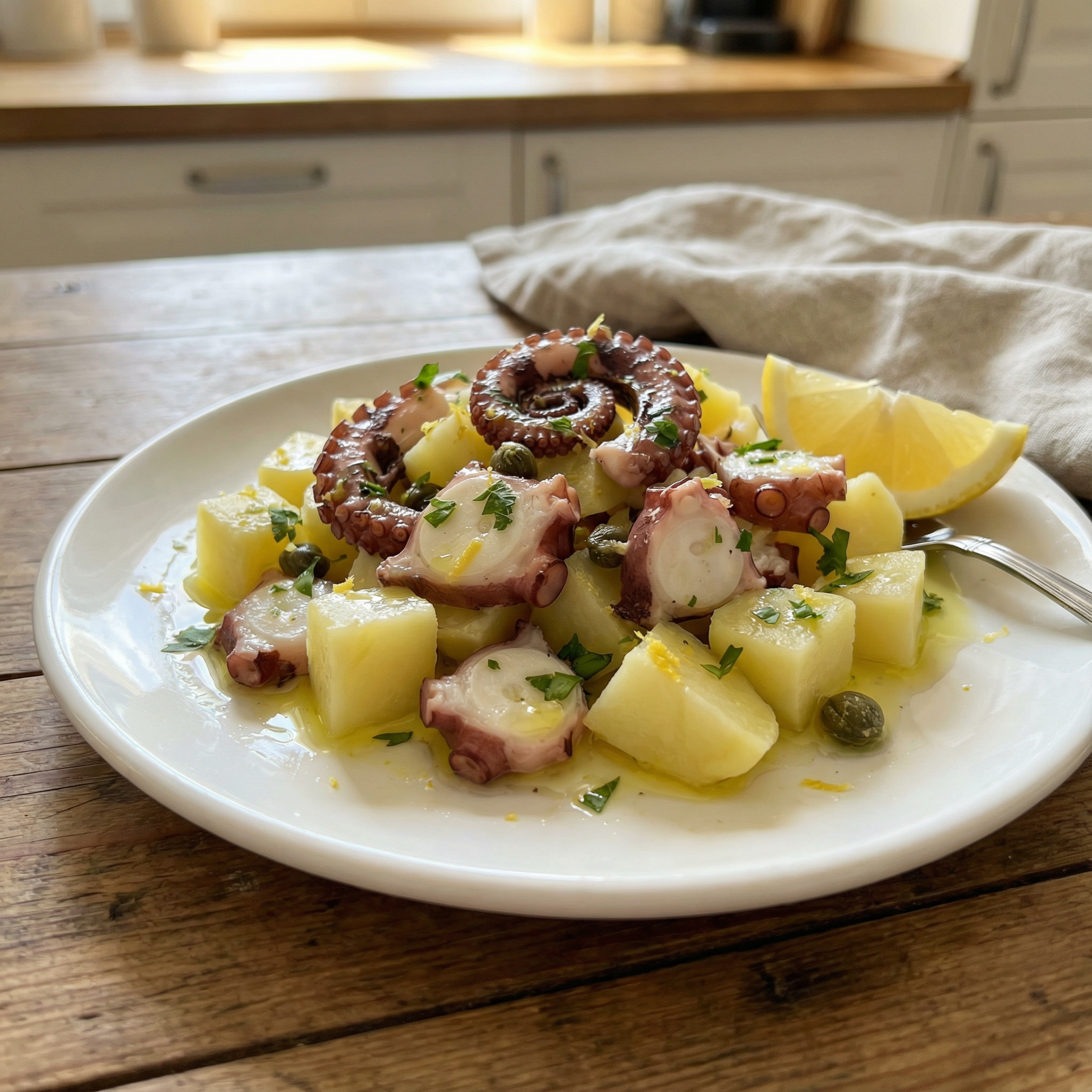
Italian Octopus and Potato Salad
Ingredients
Method
- Place the cleaned octopus in a large pot with cold water. Add parsley stems and peppercorns if using. Bring to a boil, cover, then lower to a gentle simmer. Cook 30–40 minutes, up to 50 minutes for larger pieces.
- Insert a fork near the head. It should slide in easily. When tender, turn off heat.
- Let the octopus cool in its cooking water for about 60 minutes for softer texture. Remove and place on a plate once cool enough to handle.
- Boil potatoes in lightly salted water for about 20 minutes until just tender. Drain and let cool. Cut into firm cubes.
- Whisk olive oil, lemon juice, salt, and black pepper. Add the smashed garlic to infuse, then remove it.
- Slice tentacles and head into bite-size pieces.
- Combine octopus and potatoes in a large bowl. Spoon over dressing. Toss gently so the potatoes stay intact.
- Let the salad rest 30–60 minutes at room temperature or refrigerate overnight. Taste and adjust seasoning before serving.
Notes
- Frozen octopus works well and often turns out more tender.
- Use waxy potatoes so they hold shape after mixing.
- Serve at room temperature, not cold.
- Resting time improves flavor more than extra seasoning.
- Measure oil instead of pouring to keep the salad light.