Jump to Recipe
I grew up watching this molise cavatelli and broccoli recipe pull the family together, steaming plates of simple pasta that tasted like home.
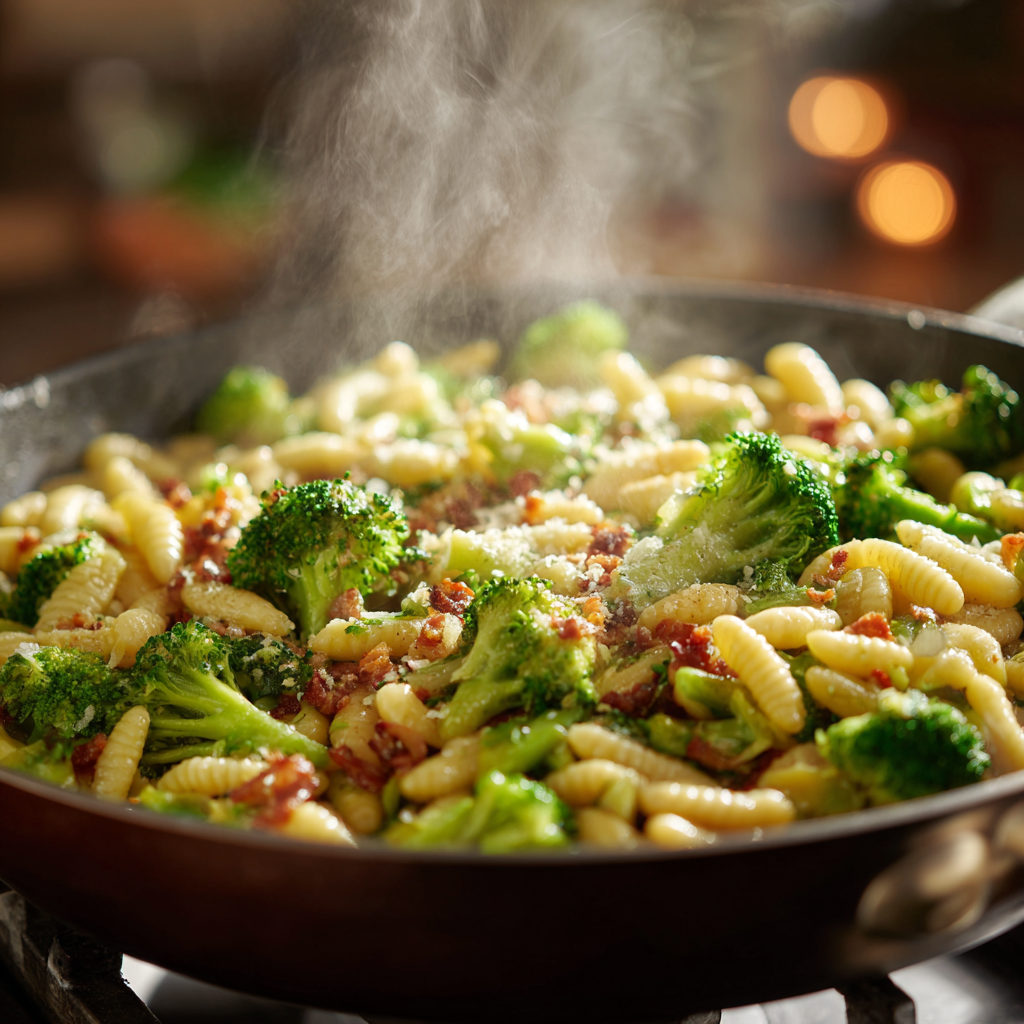
We keep the ingredients short on purpose: pasta, bright green broccoli, garlic, a splash of olive oil, and a little cheese to finish. I’ll walk you through timing so the whole dinner is ready in about 30 minutes and explain why a spoonful of reserved pasta water turns crumbs and oil into a silky sauce that hugs each curve of the cavatelli pasta.
Choose deep-green florets so the vegetable keeps color and vitamin value while it softens into the sauce. If you like, a few pancetta lardons add savory depth; they also change kcal and fat totals, so I note portion guidance for family meals.
Want a quick note on technique? Read a classic sauté method here for a useful side lesson.
Key Takeaways
- This pasta dish cooks in about 30 minutes—fast and comforting.
- Keep ingredients minimal so each flavor can shine.
- Saving pasta water creates a glossy, clingy sauce.
- Pick deep-green broccoli for color, texture, and vitamins.
- Optional pancetta adds richness; adjust portions for kcal and fat.
Why this cozy Molise classic belongs in your weeknight rotation
When time is short, I reach for pasta and greens to make a meal that comforts without fuss. The beauty is in turning a few pantry items into a layered, satisfying plate that comes together in about thirty minutes.
Simple ingredients, big Southern Italian flavor
We rely on everyday produce, a clove or two of garlic, good olive oil, and the right shape of pasta to build real depth. Rendering pancetta or bacon first gives savory backbone before the garlic ever touches the pan.
Experience meets technique: how water and extra virgin olive build a silky sauce
A ladle of starchy water emulsifies with oil and grated cheese to create a clingy, glossy sauce—no cream needed. Keep the heat low so garlic only kisses the oil, and you’ll avoid bitterness while coaxing sweet, nutty notes from the aromatics.
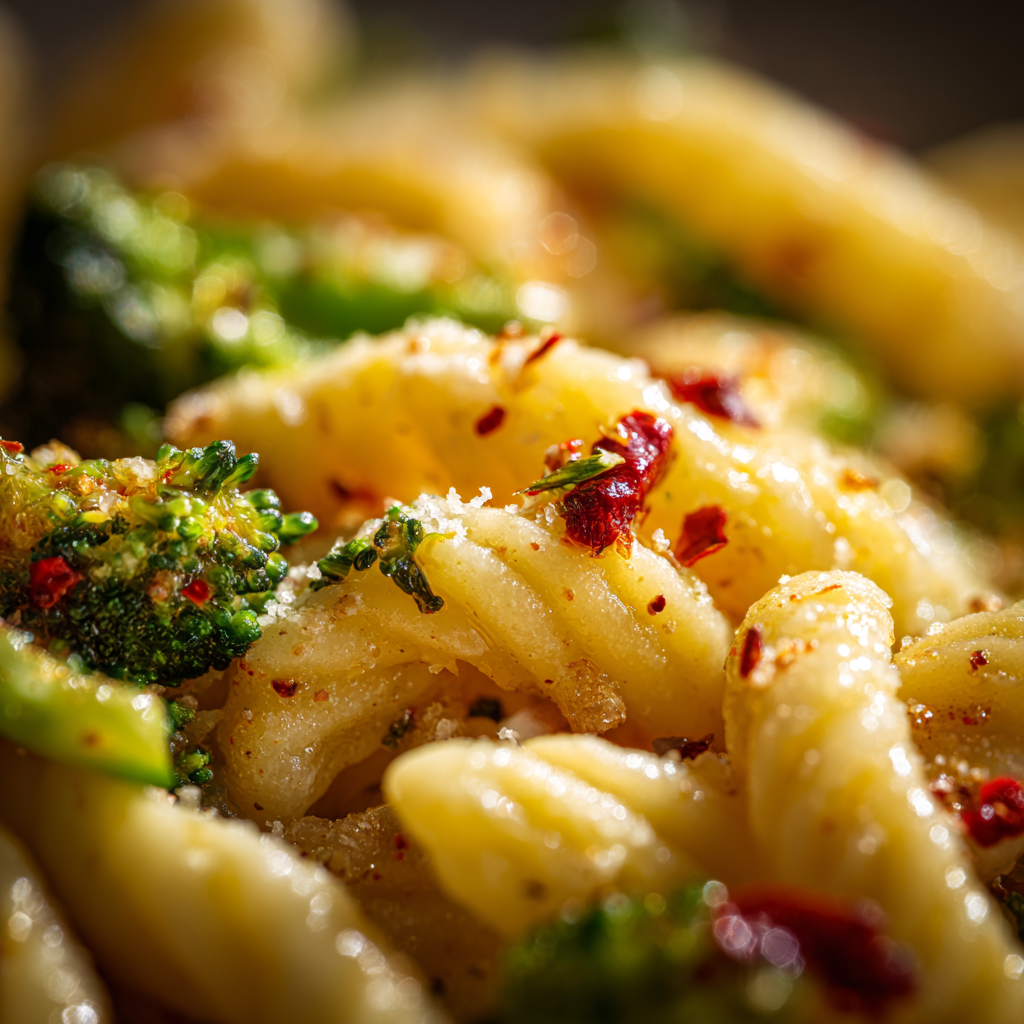
- The curves of cavatelli broccoli trap sauce so each bite tastes balanced.
- Control the heat; a gentle sizzle is key.
- Add reserved pasta water little by little to reach a silky finish.
- Finish with a drizzle of extra virgin olive and a shower of cheese for depth.
molise cavatelli and broccoli recipe
Start by bringing a large pot of salted water to a lively boil; this sets the pace so the pasta cooks evenly and stays well seasoned.
I cook florets until tender, lift them out, then use the same pot salted water to cook the pasta. While the water boil builds momentum, I render pancetta in a skillet until the fat is fragrant and lightly crisp. I add sliced garlic and a pinch of red pepper flakes at the end so the garlic blooms without burning.
- Bring large pot to a rolling boil, salt generously.
- Trim and cook florets; remove when just tender, then boil cavatelli in that pot.
- Render pancetta, add garlic late, reserve ½ cup cooking liquid.
- Toss pasta, broccoli, and aromatics, adding splashes of reserved liquid to emulsify the sauce.
- Finish with extra virgin olive oil and a generous handful of grated cheese; taste for seasoning.
| Step | Action | Minutes |
|---|---|---|
| 1 | Bring large pot salted water to a boil | 5–7 |
| 2 | Cook florets until tender, reserve | 3–4 |
| 3 | Boil pasta in same pot, reserve liquid | 7–10 |
| 4 | Render pancetta, add garlic late, toss with pasta | 3–5 |
Expect the whole process to take minutes, not hours. This clear, kitchen-tested blueprint helps you finish fast with confident results; later sections give shopping tips and timing variations to make it your own.
Ingredients that make it sing, plus how to shop smart
Good ingredients make a simple pasta dish sing. I shop with purpose so flavor and waste are both kept in check. A few careful choices at the market will reward you at the stove.
Cavatelli pasta 101: store-bought, ricotta, or homemade
Use quality dried or fresh cavatelli pasta when you can. If you have time, try homemade cavatelli for a tender bite; the texture truly shows in the finished plate.
Broccoli matters: picking deep-green heads and prepping stalks
Pick firm heads with tight, deep-green florets and no yellowing. The stalks are edible—peel them and slice thin so they turn sweet and tender when cooked.
Olive oil and aromatics: extra virgin, garlic cloves, and red pepper flakes
A fruity virgin olive oil lifts the aromatics. Thinly slice garlic cloves so they perfume the oil without burning. A pinch of red pepper flakes adds warm lift; let diners add more if they like heat.
Savory boosts and finishers
Rendered pancetta or bacon lardons give savory fat that clings to pasta. Anchovies in olive oil melt into the pan for umami without fishiness.
- Finish with freshly grated Parmesan or Pecorino Romano.
- Taste before salting—good cheese is already salty.
- Reserve a little pasta water to loosen the sauce into a glossy coat.
| Item | Shop tip | Why it matters |
|---|---|---|
| Fresh/dried pasta | Buy quality brand or make small batch at home | Texture and cooking time differ |
| Broccoli | Choose heavy heads, no yellowing | Better color, higher vitamin content, tastier stalks |
| Pancetta/anchovies | Small amount goes far | Adds depth without overpowering |
Step-by-step: from large pot to table in minutes
A few timed moves make this dish come together fast and with confidence. Follow clear cues for texture and finish so every bite feels balanced and bright.
Bring a large pot of salted water to a rolling boil
Bring large pot salted with plenty of sea salt. If you need to speed things up, start with kettle-hot water to reduce waiting time for the water boil.
Sauté aromatics on gentle heat
Start the skillet cold with pancetta or bacon so fat renders slowly. When the fat looks glossy and edges crisp, add garlic and a pinch of red pepper flakes. Keep the heat low so nothing scorches.
Boil pasta and add broccoli at the right time
Drop florets first and cook until just tender, then lift them so the pot keeps a good boil for the pasta. Add cavatelli and cook to al dente—fresh takes only minutes; dried needs slightly longer.
Emulsify with reserved pasta water
Reserve about ½ cup of pasta water before draining. Slide pasta and broccoli into the skillet, add a ladle of that liquid, and toss until the sauce turns glossy and light.
Toss, taste, and finish
- Slide pasta and florets into the pan and toss with rendered fat.
- If the pan is lively, turn heat down to a gentle simmer to keep the emulsion stable.
- Finish with a ribbon of extra virgin olive oil and a generous shave of cheese. Taste and adjust salt or pepper.
| Action | Cue | Minutes |
|---|---|---|
| Bring to boil | Rolling, rapid bubbles | 5–7 |
| Cook florets | Just tender, bright color | 3–4 |
| Cook pasta | Al dente, bite with slight give | 7–10 |
Pro tips to nail texture, timing, and flavor every time
Nailing texture comes down to three things: salt, timing, and gentle heat. Use simple sensory cues—color, bite, and a light sheen—to know when the plate is ready.
Salt and timing: al dente pasta and tender, bright-green broccoli
Salt the pot generously so the pasta seasons from within. Cook florets until they are bright and fork-tender; the stalk should give but not go mushy.
Aim for al dente pasta that holds a little chew. It should stand up to tossing without falling apart.
Control the heat: avoid burnt garlic, keep flavors sweet and nutty
Start garlic late so it becomes golden and fragrant, not bitter. If the pan roars, lower the heat; a gentle simmer preserves sweet aromatics and prevents scorch.
Add flakes with the garlic for warm lift, keeping the flame low so heat coaxed flavors stay rounded.
Pasta water magic: how much to add and when to add it
Reserve a small cup of water before draining. Start with one ladle and toss until the sauce turns glossy. Add more only if the emulsion looks tight or dry.
Rendered pancetta or bacon lends savory fat that carries garlic and pepper warmth; use it to help the sauce cling. If the sauce tightens after plating, a teaspoon of hot water loosens it back to silky.
- Salt the water generously so seasoning is built-in.
- Cook florets just to tender and keep their color.
- Aim for al dente pasta; it should have a pleasant chew.
- Keep heat low when adding garlic and flakes; golden is the cue.
- Start with a small ladle of reserved water to emulsify the sauce.
| Cue | Test | Action |
|---|---|---|
| Floret color | Bright green | Remove from pot |
| Pasta bite | Slight give | Drain and toss |
| Pan heat | Low simmer | Add garlic and water sparingly |
Variations and swaps to match your mood
Small swaps can shift the mood of the pan: make it vegetarian, smoky, or umami-rich in minutes. I stay close to the same method so the pasta cooks the same and the sauce still clings, but the final plate can feel new.
Vegetarian and crunchy
Skip pancetta and bloom garlic in olive oil. Stir in chopped black olives or toss toasted pangrattato for crunch. Finish with a scatter of freshly grated hard cheese or a vegan alternative.
Smoky and savory
Render pancetta or bacon lardons slowly so their fat flavors every bite. Add fewer flakes if you want mild heat; leave more at the table for guests who like spice.
Umami boost and swaps
Melt anchovies in the pan with garlic for deep savory notes. Swap half the florets for cauliflower to add a firmer texture that contrasts with softer broccoli.
- Gluten-free: use certified GF short pasta; cook to al dente.
- Dairy-free: choose a vegan Parmesan-style topper and rely on extra virgin for shine.
- Extra protein: fold in chickpeas or flaked tuna in olive oil just before serving.
| Variation | Swap | Flavor outcome |
|---|---|---|
| Vegetarian | Olives or pangrattato | Briny crunch, bright finish |
| Smoky | Pancetta or bacon | Deep, savory backbone |
| Umami | Anchovies + Pecorino | Rich, Southern Italian character |
Keep the sauce light—just enough to coat—so every variation still reads as the classic cavatelli broccoli dish. A final ribbon of virgin olive oil and a tiny shower of freshly grated cheese make each version feel complete.
Make homemade cavatelli like a pro
Making cavatelli at home is one of those small acts that turns a weeknight into something worth savoring. The method is simple: flour, a pinch of fine salt, and hot water form a firm, workable dough that gives a signature bite.
The dough: flour, salt, and hot water for that signature bite
Measure all-purpose flour into a bowl, add fine salt, then stir in hot water until the mix comes together. Knead about 8 minutes in a stand mixer, then 1–2 minutes by hand until smooth.
Let the dough rest 30 minutes covered. Resting prevents spring-back so it rolls into ropes easily.
Shaping options: gnocchi board, fork, or fingers for classic grooves
Roll the dough into pencil-thin ropes and cut into 2 cm pieces. Shape each piece over a gnocchi board, the back of a fork, or drag with your thumb to create little caves.
Those grooves trap oil and sauce, so each bite tastes complete when you toss with garlic and olive oil.
Freeze for later: sheet-pan method and cooking from frozen
Dust a sheet pan with flour, spread pieces in a single layer, and freeze until firm. Transfer to a bag and store up to 2 months.
Cook from frozen: bring a large pot of salted water to a boil, drop frozen pasta, then a few minutes later add broccoli so both finish in the same minutes. Add a touch more cooking time than fresh, taste for doneness, and finish with pasta water and oil.
- Make a simple dough with flour, salt, and hot water; knead until smooth and rest.
- Roll into ropes, cut, and shape with a board, fork, or fingers to form grooves.
- Freeze on a floured sheet pan; cook straight from frozen, adding a couple extra minutes.
| Step | Action | Why it matters |
|---|---|---|
| Mix & knead | 8 min mixer + 1–2 min by hand | Develops gluten for a firm, chewy bite |
| Rest | 30 minutes covered | Prevents elasticity so ropes roll smoothly |
| Freeze | Single layer on floured sheet pan | Keeps shapes separate for easy storage and cooking |
Nutrition, portions, and smart add-ins
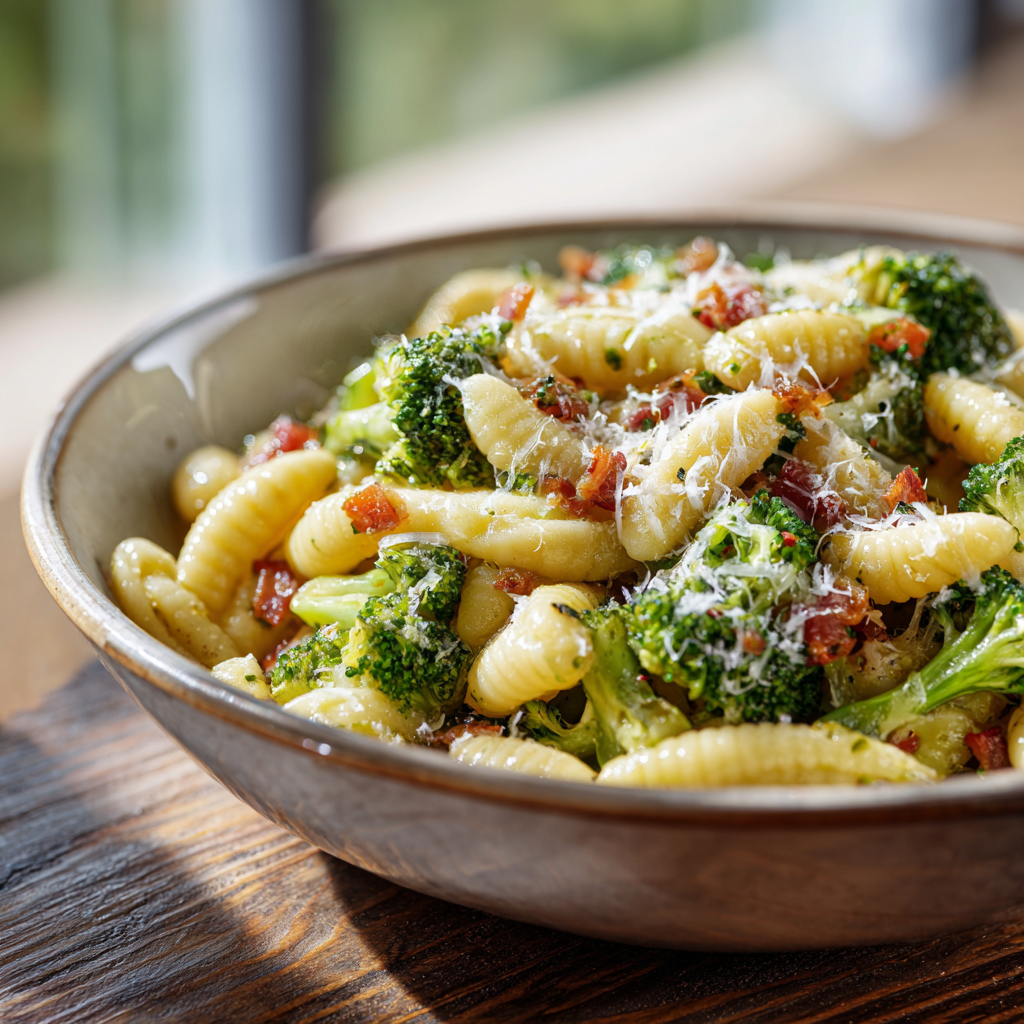
A single bowl can give you steady energy, a dose of green vitamins, and a pleasing, savory finish. Below I’ll share honest nutrition context and simple swaps that keep the plate balanced without extra fuss.
What’s in a bowl: energy, fiber, vitamins A and C, and calcium
A hearty serving delivers roughly 566–763 kcal depending on portions and any extras you add. The florets supply fiber plus vitamins A and C, while pasta and cheese add slow-burning carbs and calcium for fullness.
Protein boosts: sausage, chickpeas, or tuna in olive oil
If you want more protein, fold in sliced Italian sausage, a tin of chickpeas (rinsed), or tuna packed in olive oil. Each option changes kcal and fat, so choose by appetite and goals.
- Portion about 3–4 ounces dry pasta per person; scale up for larger appetites.
- Lean the sauce on reserved pasta water for body instead of adding extra fat.
- Balance the plate with a crisp citrus-dressed salad for bright contrast.
| Benefit | Typical source | Quick tip |
|---|---|---|
| Vitamins A & C | Green florets | Keep them bright by removing at just-tender |
| Protein | Sausage, chickpeas, tuna | Add after tossing so heat warms but does not overcook |
| Energy (kcal) | Pasta and cheese | Adjust portion size and cheese amount to control kcal |
Keep salt mindful—Pecorino and cured meat are salty—so taste before finishing. Leftovers revive with a splash of water and a quick toss; they make a great next-day lunch that still feels fresh.
Serve, store, and reheat without losing that just-made shine
Treat the final moments at the stove like the last brushstrokes on a painting—small moves matter. A light finish keeps texture vivid and aroma bright.
Plating tips: a final drizzle of extra virgin olive and a shower of cheese
Plate in warm bowls so the sauce stays glossy. Finish each serving with a ribbon of extra virgin olive oil and a light snowfall of freshly grated cheese.
If diners want heat, pass red pepper flakes at the table rather than adding them to the pan. It keeps the balance for everyone.
Leftovers and next-day reheating with a splash of pasta water
Store in a shallow container so the pasta cools fast and reheats evenly. Refrigerate within two hours to keep flavors and safety intact.
- Reheat gently over low flame; add a spoon or two of pasta water to re-emulsify the sauce.
- If the pan gets too hot, turn heat down to avoid splitting the emulsion.
- Steam a bit more broccoli if you add extra greens, then fold them in at the end.
- Keep raw garlic cloves out of the reheating pan to prevent bitterness; save them for fresh cooking.
| Action | Cue | Timing |
|---|---|---|
| Warm bowls | Maintain gloss | 1–2 minutes |
| Reheat | Low heat + pasta water | 2–4 minutes |
| Speed up next cook | Start with kettle-hot water | Bring large pot to boil fast |
Bring a taste of Molise to your table tonight
A humble pan, a ladle of pasta water, and good oil can turn pantry staples into something memorable.
Pull out a large pot, bring water to a lively boil, and give this cavatelli broccoli recipe about thirty minutes of your time. Season the water, mind the heat, and finish with pasta water for a silky sauce. Choose pancetta, anchovies, or keep it vegetarian—the soul of the dish stays the same.
Keep a batch of cavatelli pasta frozen for quick weeknight meals. A final ribbon of extra virgin and a light dusting of Pecorino or cheese make the bowl gleam. If you make homemade cavatelli, you’ll feel the craft in every bite. Buon appetito—may tonight’s pasta dish warm your home.
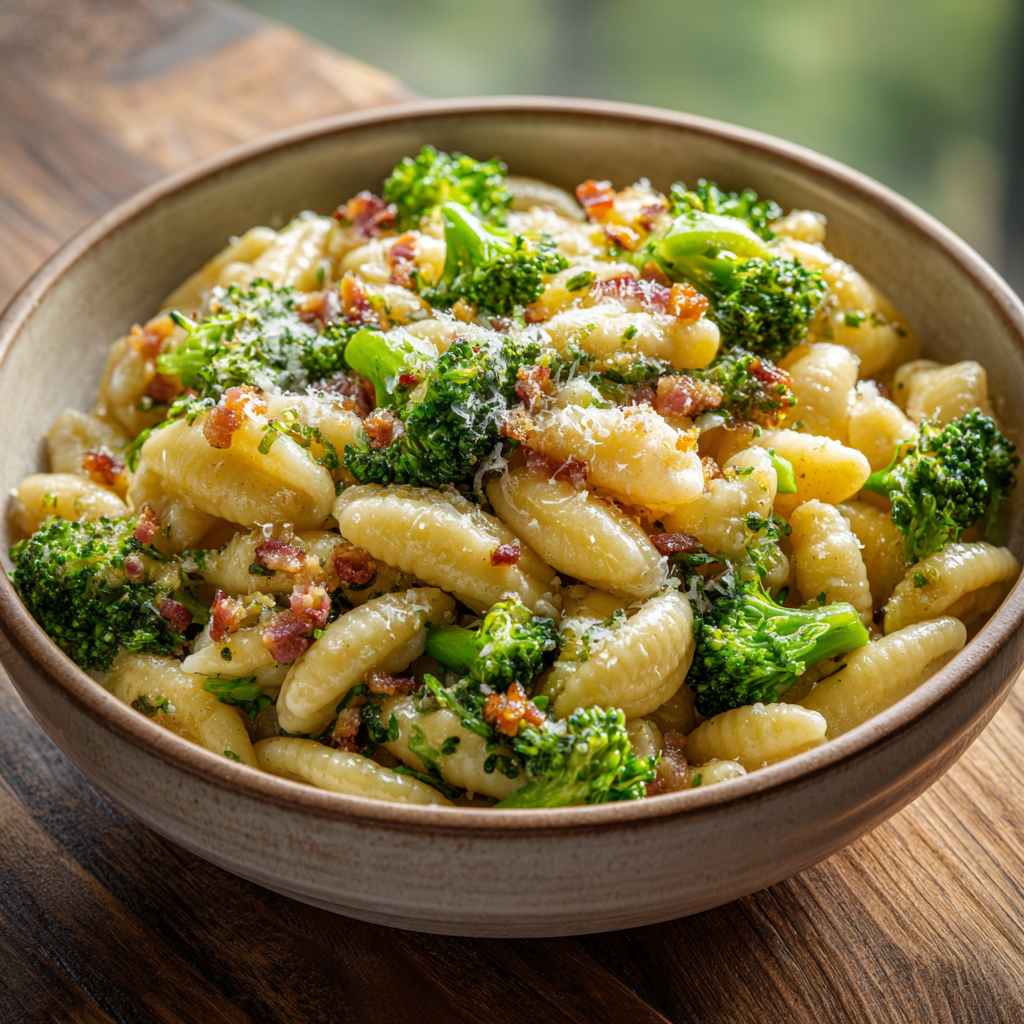
Molise Cavatelli and Broccoli
Ingredients
Method
- Fill a large pot with water, salt it well, and bring it to a rolling boil.
- Add florets to the boiling water and cook 3–4 minutes until bright green and tender. Lift them out and set aside. Keep the water boiling.
- Add the pasta to the same pot and cook until al dente (fresh: 2–4 minutes; dried: 7–10 minutes). Reserve 1 cup of pasta water.
- In a large skillet, start pancetta in a cold pan over low heat. Cook until the fat is released and lightly crisp.
- Add sliced garlic and red pepper flakes to the warm fat or olive oil. Keep the heat low so the garlic turns golden, not burnt.
- Transfer cooked pasta and broccoli to the skillet. Add a small splash of reserved pasta water and toss well.
- Add more pasta water as needed until the sauce turns glossy and lightly coats everything.
- Drizzle extra virgin olive oil on top, add grated cheese, season to taste, and serve warm.
Notes
- Salt the pasta water more than you think—this seasons both pasta and broccoli.
- Keep the heat gentle when adding garlic so it turns sweet and golden, not bitter.
- The sauce should be light and silky, not heavy. Add pasta water slowly until it clings to the pasta.
- Leftovers reheat well with a splash of pasta water or plain hot water.