
Jump to Recipe
I keep the counter clear, a wooden spoon in one hand and a bowl that smells faintly of citrus in the other. The house fills with a soft, familiar aroma as butter and sugar turn light and airy, and the batter folds in a few gentle motions.
Here I share a loaf that feels like a Sunday afternoon: tender crumb, a clean rise, and a gentle tang that pairs well with coffee. I use whole-milk ricotta cheese for richness and fresh citrus zest for brightness, creaming the butter, sugar, and ricotta together until fluffy—about two to three minutes—to build structure and moisture.
Key tools matter: a 9×5-inch pan lined with a parchment sling and a 2-inch overhang, baked at 350°F. Add eggs one at a time, fold the dry mix just until combined, and tap the pan twice before it goes into the oven. Bake 45–55 minutes; when a tester comes out clean and the loaf pulls slightly from the sides, cool 10–15 minutes in the pan, then unmold to finish cooling.
Key Takeaways
- Cream butter, sugar, and ricotta until light to create a tender crumb.
- Use a 9×5 pan with a parchment sling and do not overfill it beyond 2/3–3/4.
- Bake at 350°F for 45–55 minutes; a clean tester means done.
- Cool briefly in pan, then unmold to finish cooling for best texture.
- Store airtight at room temperature up to 3 days or freeze slices up to 3 months.
Why this lemon ricotta cake belongs in your rotation
A simple loaf like this becomes my go-to when I want bright flavor with little fuss. It combines a tender, creamy crumb with a clean citrus lift that keeps every slice interesting.
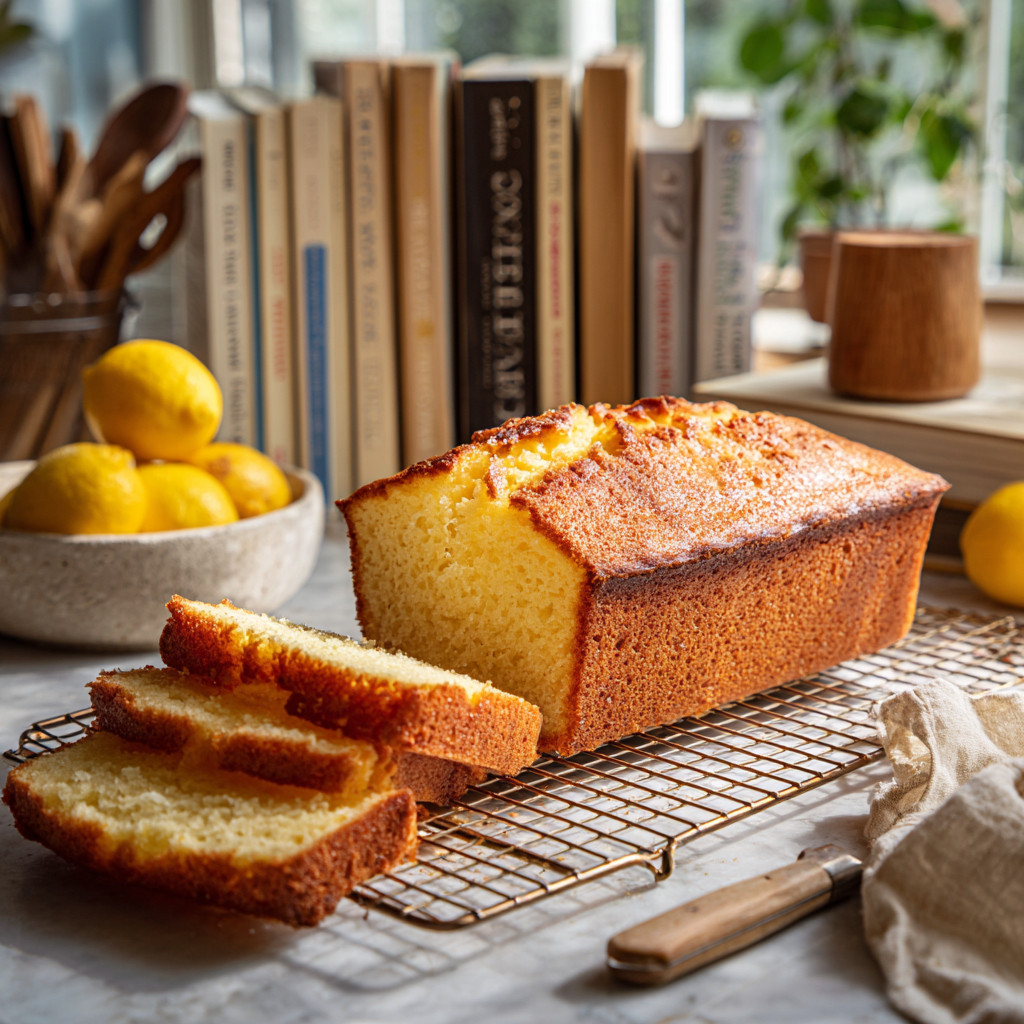
Whole milk ricotta gives lasting moisture and a velvety texture you won’t get from yogurt. The balance of zest and fresh juice perfumes the batter and sharpens flavor so it stays lively, never cloying.
- This loaf stays moist for days thanks to whole milk ricotta, perfect for grab-and-go breakfasts.
- It bakes at 350°F for about 45–55 minutes, so timing is predictable and foolproof.
- Structure is sturdy like a classic pound-style loaf yet tender enough to slice cleanly for brunch or gifting.
- Room temperature ingredients blend faster and yield a finer crumb and reliable rise.
I also love how versatile it is: mini pans for gifts, a single loaf for family, or a light glaze and berries for company. For a related twist, see my ricotta cheesecake variation at this link.
Ingredients that make it sing
Bright pantry staples and a few fresh ingredients make every loaf sing in my kitchen. I list the essentials and why each matters, with measures that match the loaf I bake most often.
Pantry and fridge staples
I use about 10 tablespoons unsalted butter and 1¼ cups granulated sugar. These cream together to build structure and an even crumb.
Whole milk ricotta is central — I list 1¼ cups milk ricotta cheese for richness and lasting moisture. Use 3 room-temperature eggs for better emulsion and stability.
Zest and juice
For true citrus lift, zest about 2 teaspoons before you cut the fruit. Add 3 tablespoons fresh lemon juice; it brightens without overpowering.
Smart swaps and measures
All-purpose flour at 1½ cups gives reliable structure. For extra tenderness, try cake flour or a 1:1 gluten-free blend if needed.
- Baking powder 1½ tsp and kosher salt ½ tsp balance rise and flavor.
- Vanilla 1 tsp rounds the finish; it smooths the tart edges and complements dairy notes.
| Ingredient | Measure | Notes / Alternatives |
|---|---|---|
| Unsalted butter | 10 Tbsp | Controls salt; creams best at room temp |
| Whole milk ricotta cheese | 1¼ cups | Prefer whole milk; part-skim is drier |
| Flour | 1½ cups | AP flour standard; cake flour for tender crumb; 1:1 GF works |
| Lemon zest & juice | 2 tsp zest, 3 Tbsp juice | Zest first for oils; always use fresh juice |
Prep like a pro: pan, tools, and temperature
Before I bake, I set my workspace so nothing interrupts the rhythm of mixing and folding. A little staging prevents sticky corners, overflow, and the dreaded tunnels.
Pan and parchment setup
Use a 9×5-inch loaf pan and line it with a full parchment sling that gives a 2-inch overhang. Grease the pan, then grease the parchment top and bottom so the edges never stick.
Room temperature and tools
Bring butter, ricotta, and eggs to room temperature; this helps everything emulsify and keeps the crumb fine. Preheat the oven to 350°F so the leavening works on schedule.
- Don’t fill the pan past two-thirds to three-quarters—this batter rises and can overflow.
- A stand mixer or hand mixer makes creaming easier; stop at about 2–3 minutes for a light texture.
- Use a flexible spatula to scrape and fold gently to avoid overworking the batter.
- Tap the pan twice on the counter to release large air pockets before baking.
- Cool 10–15 minutes in the pan, then lift the loaf out using the parchment sling to finish cooling on a rack.
For a smaller twist on timing and scale, see my related muffin post for ideas on pans and bake times.
lemon ricotta pound cake italian recipe: step-by-step
Before I start, I stage my station: bowls, scales, and citrus at arm’s reach. A short intro keeps the work steady and the bake predictable. Below are clear steps and timing so you can follow with confidence.
Mise en place
Whisk together the flour, baking powder, and salt in one bowl. Zest the fruit first to capture the aromatic oils, then squeeze 3 tablespoons of fresh juice into a small cup.
Cream and add eggs
Cream butter, sugar, and ricotta in a mixer on medium for 2–3 minutes until light and fluffy. With the mixer running on low, add eggs one at a time, scraping the bowl so the emulsion stays silky and stable.
Whisk and fold
Stir the zest, juice, and vanilla into the wet mix until just combined. Fold the dry ingredients in two additions, stopping when the batter is prepared and no dry streaks remain.
Bake and cool
- Scrape batter into a 9×5 pan lined with parchment and smooth the top; tap twice to release large bubbles.
- Bake at 350°F for 45–55 minutes. Look for the edges to pull away and a toothpick that comes out clean when the cake comes clean in the center.
- Cool 10–15 minutes in the pan, then lift by the sling and cool completely on a rack before slicing.
Pro tips for a light, moist crumb every time
Small habits at the prep table make the difference between a dense loaf and one that feels feather-light. I focus on temperature and gentle handling so the texture stays tender and even.
Work with room temperature butter, ricotta, and eggs. When dairy and eggs sit at room temperature they emulsify quickly with the butter. That creates a stable mix that bakes into a light fluffy crumb instead of a greasy, heavy one.
Limit creaming to about 2–3 minutes. Too long and excess air can form, then collapse during baking and ruin rise. Keep the mixer on low when adding eggs and dry ingredients to avoid over-aerating or developing gluten.
- Stop mixing as soon as the flour disappears—overmixing toughens the crumb.
- Watch doneness: the loaf should pull from the pan sides and the top springs back when tapped.
- Use a toothpick near the center; when it’s nearly clean with a few moist crumbs, the cake comes clean by carryover heat.
- Cool 10–15 minutes in the pan before unmolding to set structure and avoid collapse.
- If your kitchen runs warm, chill the lined pan briefly so the buttered parchment holds its shape.
| Issue | Likely cause | Fix |
|---|---|---|
| Dense crumb | Overmixing or cold ingredients | Bring ingredients to room temperature; fold gently and stop when flour is gone |
| Collapsed center | Too much creaming or underbaked | Limit creaming to 2–3 minutes; test with a toothpick and watch carryover time |
| Soggy bottom crust | Unmolded too soon | Cool 10–15 minutes in the pan, then lift to a rack |
Serve it your way: classic, glazed, or with berries
A simple dusting or a bright glaze can turn a weekday loaf into something to celebrate. I like finishes that are quick, seasonal, and forgiving so anyone can make them at home.
Simple finish
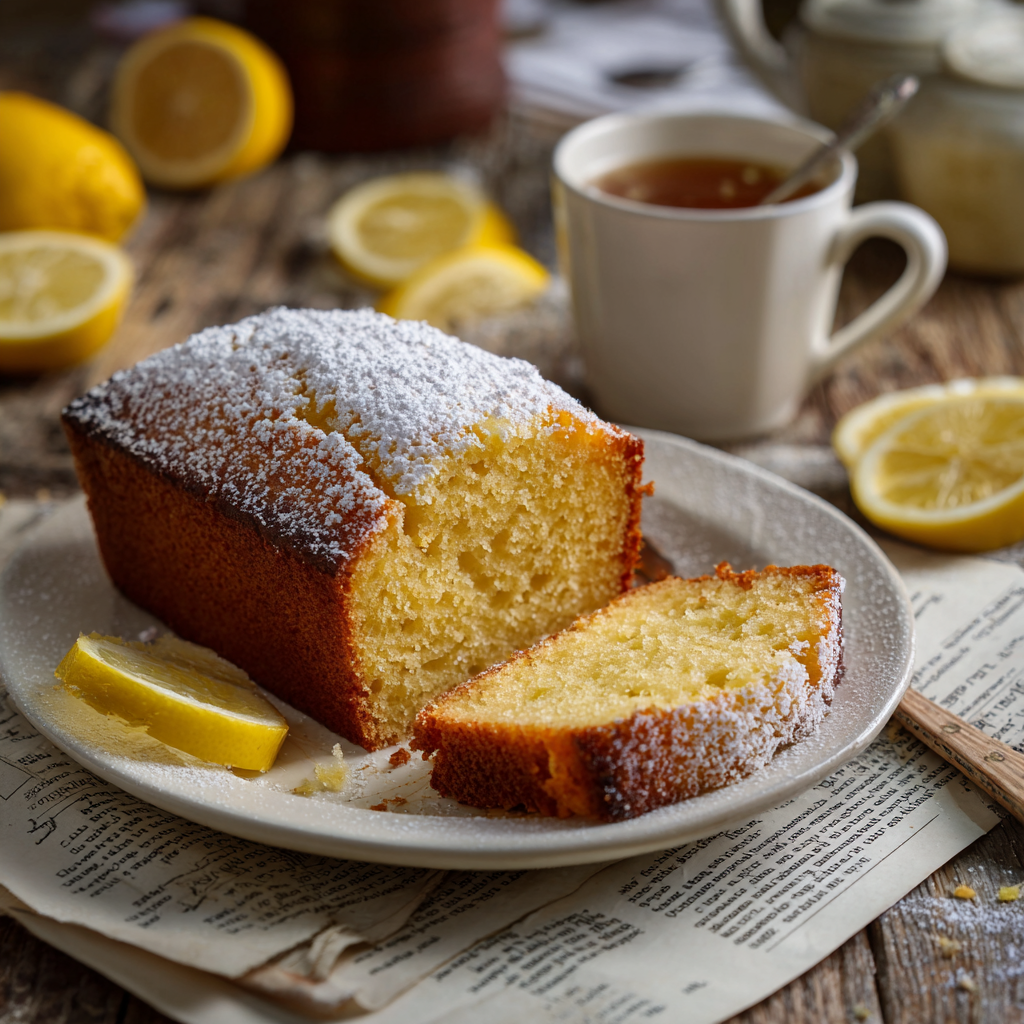
Sift confectioners’ sugar over the top for a delicate, bakery-style look that highlights citrus without masking it. This is my go-to when time is short.
Fresh accents
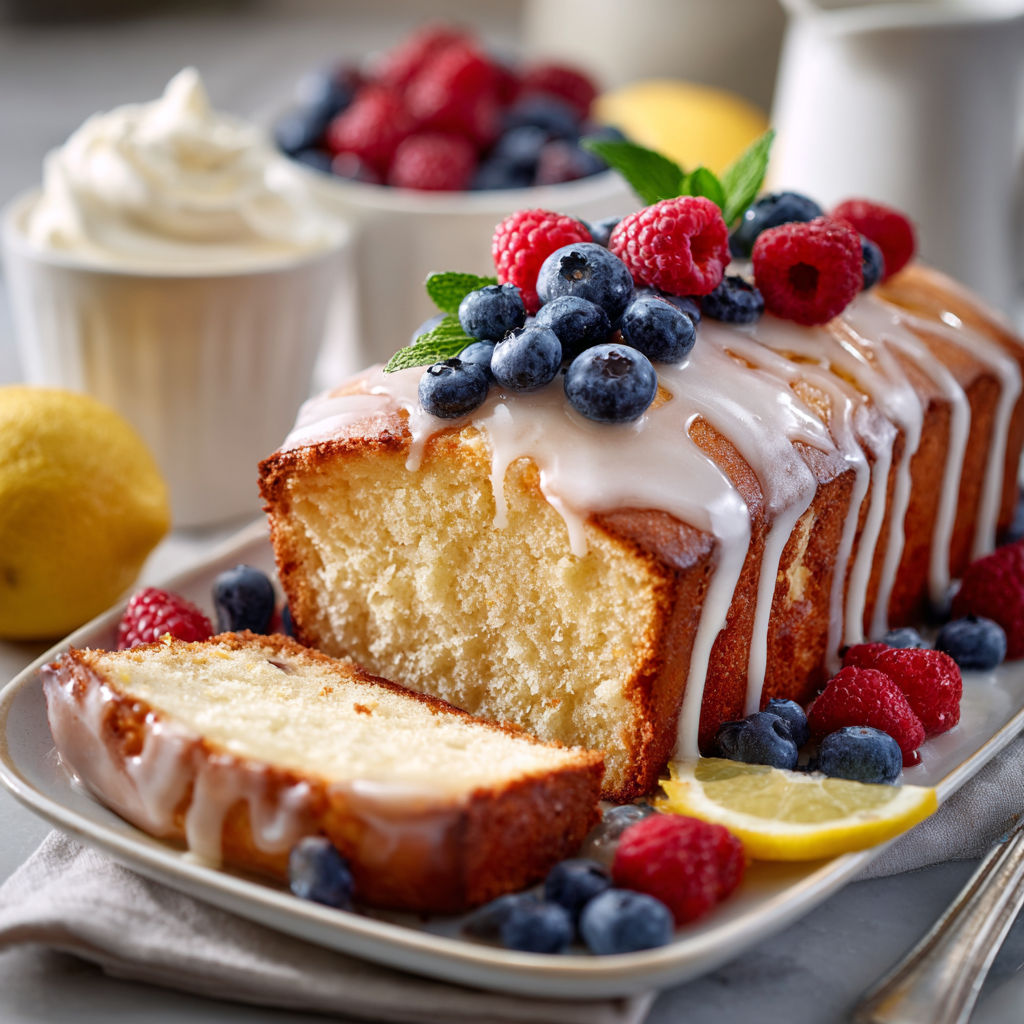
Spoon softly whipped cream beside each slice and scatter fresh berries—strawberries, blueberries, or raspberries—so the fruit echoes the loaf’s bright notes. A light sprinkle of zest on the top wakes the aroma at the table.
Variations to try
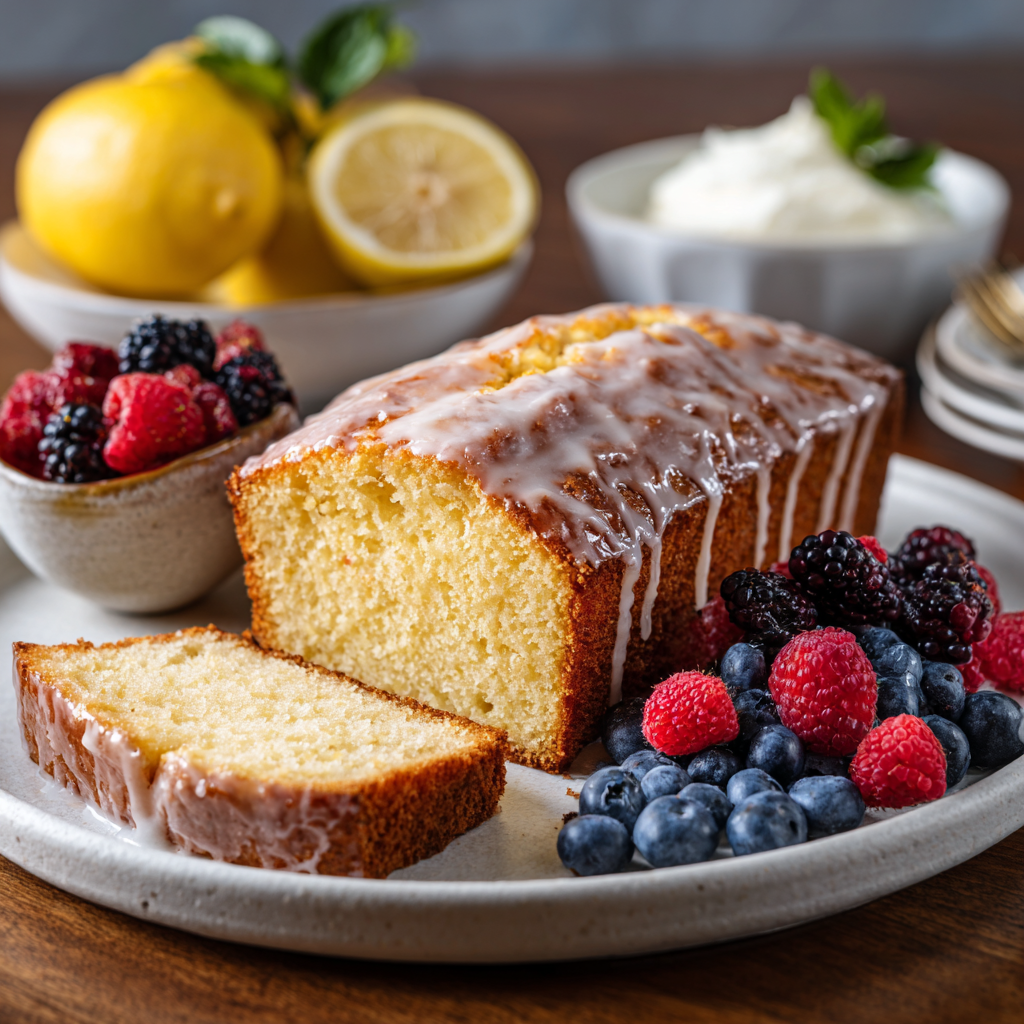
- Easy lemon glaze: whisk 1 cup powdered sugar with 1–1½ Tbsp fresh lemon juice and 1 Tbsp heavy cream until silky; drizzle over a cooled loaf so it sets.
- Olive oil swap: replace some butter with ¼ cup fruity extra-virgin olive oil for a tender crumb and Mediterranean lift.
- Blueberry twist: fold in 1 cup fresh berries tossed with a little flour to prevent sinking and streaking.
| Finish | What to expect | Quick tip |
|---|---|---|
| Confectioners’ sugar | Light, classic look; subtle sweetness | Sift just before serving to avoid settling |
| Lemon glaze | Glossy, slightly tart veil that cracks gently | Drizzle on cooled loaf; allow 10–15 minutes to set |
| Berries & cream | Fresh, bright contrast and pretty plating | Serve immediately so berries stay vibrant |
| Olive oil variation | Earthy, moist crumb with fruity notes | Use extra-virgin olive oil for best flavor |
Make-ahead, storage, and freezing that preserves freshness
A few smart steps at cooling time keep each slice tender and true for days. I wrap and label loaves so I know when to eat or freeze them. These small habits protect texture and flavor, whether the loaf lives on the counter, in the fridge, or in the freezer.
Counter storage
Cool completely, then store airtight at room temperature for up to 3 days. Keep the loaf in a cake saver or a sealed container to guard against drying and kitchen odors. Bring chilled slices back to room temperature before serving for best flavor.
Refrigeration
If you refrigerate, wrap tightly in plastic and a second layer of foil to prevent drying. The fridge keeps it safe longer, but always let slices sit at room temperature a few minutes so the crumb loosens and milk flavors bloom.
Freezer-friendly
Slice and wrap individual pieces in plastic, then slide them into a freezer-safe bag. Frozen slices keep quality for up to 3 months. Thaw overnight in the fridge, then let them rest a few minutes at room temperature before serving.
- Bake up to a day ahead; once cool, wrap the entire loaf tightly so moisture stays in.
- Refresh a plain top with a dusting of confectioners’ sugar just before plating.
- When gifting, include thawing minutes and storage notes so recipients enjoy peak texture.
| Storage method | Duration | How to pack | Serve tip |
|---|---|---|---|
| Counter (airtight) | Up to 3 days | Sealed container or wrapped in plastic | Bring to room temperature before serving |
| Refrigerator | 4–7 days | Plastic wrap + foil or airtight container | Unwrap, rest at room temperature a few minutes |
| Freezer (individual slices) | Up to 3 months | Plastic-wrapped slices in freezer bag | Thaw overnight in fridge; rest minutes at room temp |
Bake it today and enjoy for days to come
There’s a quiet joy in slicing a loaf that holds both creaminess and a clean citrus note. Use a 9×5 pan and bake at 350°F for about 45–55 minutes; cool 10–15 minutes, then let it rest before slicing so the texture sets. This italian lemon ricotta loaf comes together with simple ingredients like sugar and butter and bakes in under an hour of active time.
It stores well at room temperature for three days and frozen slices keep quality for up to three months. Dust with powdered sugar, serve with whipped cream or berries, and enjoy—breakfast, dessert, or an espresso pausa. I can’t wait for you to taste it; ti aspetto in cucina—mix, bake, and savor every warm slice.
Lemon Ricotta Pound Cake
Ingredients
Method
Notes
- Be sure to bring your butter, ricotta, and eggs to room temperature for the best texture and to ensure everything blends well.
- If you prefer a more delicate crumb, you can use cake flour instead of all-purpose flour.
- The loaf stays fresh for 3 days at room temperature when stored in an airtight container.
- You can also freeze slices for up to 3 months if you prefer to enjoy them later.