
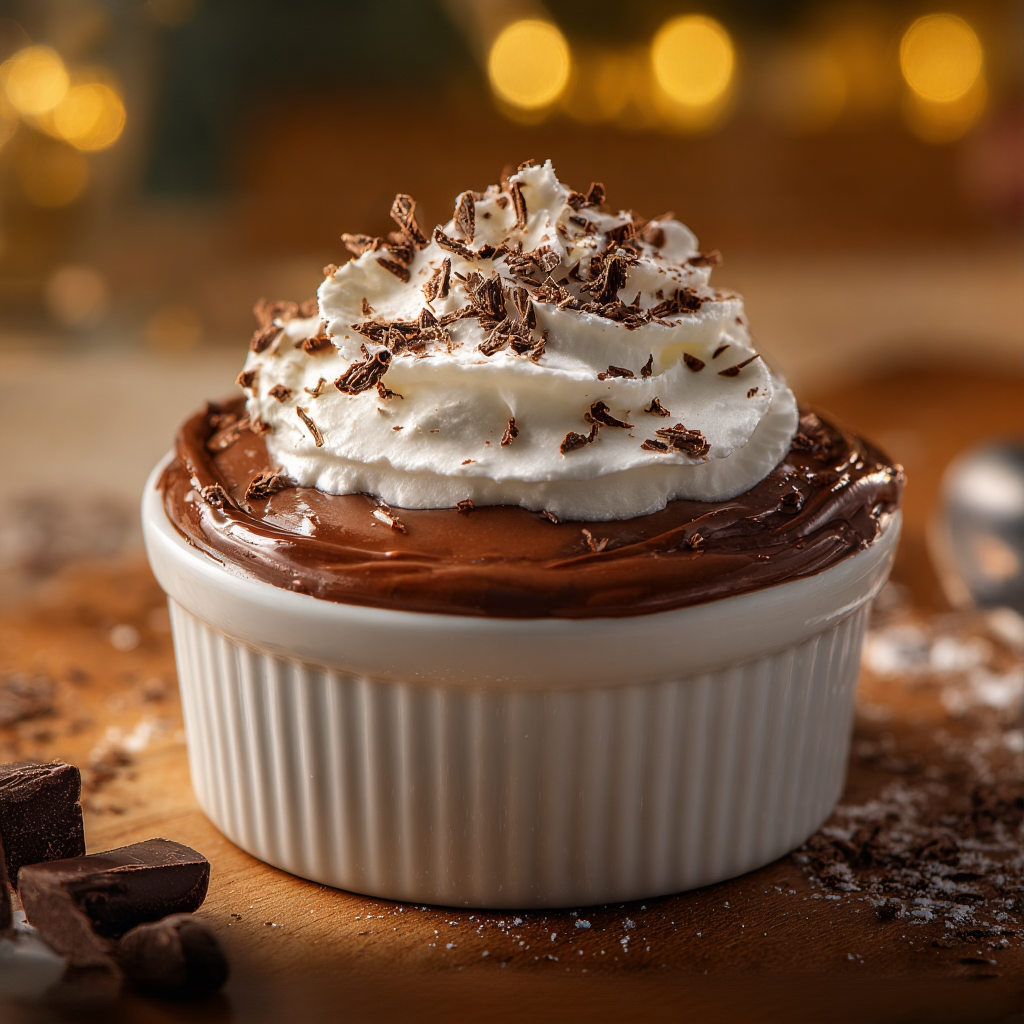
Jump to Recipe
I keep a small pot of warm cream on the stove when guests arrive, the kitchen smelling faintly of toasted sugar and deep chocolate, and I like how that smell invites conversation before the first spoon. I learned to read the custard by touch and sight—the slight wobble at the center tells me more than a timer—so I cook with patience and a few reliable cues.
At home I follow two paths: a gentle bain-marie, baked at 325°F/165°C for about 35–40 minutes with boiling water halfway up the ramekins, or a quick stovetop custard where egg yolks meet warm milk and cream, then melt into chopped dark chocolate. Both give a satiny texture when you stop at the right moment.
I’ll also show how to choose italian chocolate in the 70–85% range for balanced flavor, plus small tips on lining the baking dish, reading the wobble, storage up to three days, and simple serving ideas like a dollop of lightly whipped cream or a scatter of toasted nuts.
Key Takeaways
- Two methods: bain-marie for silkiness, stovetop for speed.
- Bake at 325°F/165°C with water halfway up ramekins for 35–40 minutes.
- Use 70–85% italian chocolate for depth without bitterness.
- Stop when edges are set and center shows a gentle wobble.
- Store covered in the fridge up to 3 days; rewarm gently if serving warm.
For a related creamy dessert technique, see a panetta-style panna cotta walkthrough here.
What makes Italian budino special (and why this chocolate version stands out)
Good ingredients and patient stirring turn humble dairy and chocolate into a dessert that feels like a small celebration. In Italy, this classic sits between a custard and chocolate pudding: glossy, tender, and built from simple pantry items.
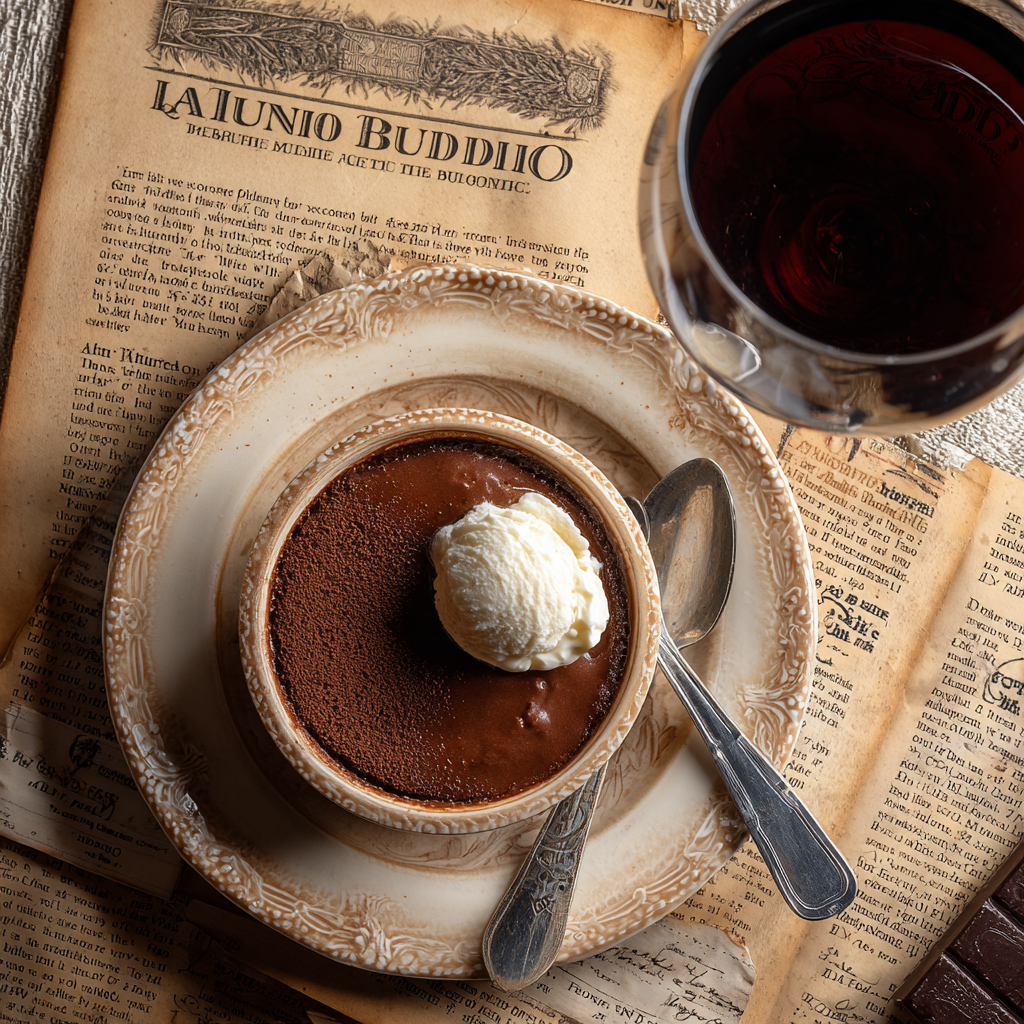
The core is plain and honest—milk and cream enriched with egg yolks, sugar, and a splash of vanilla. I stir gently over low heat so the egg structure thickens without seizing. Then I fold in quality dark chocolate so its flavor leads the dish.
What is budino? A silky Italian custard with deep chocolate flavor
Think melt-in-the-mouth texture, not dense or rubbery. You can serve it warm and pourable or chilled and spoonable. Both are authentic and showcase the same careful technique.
- Simple ingredients, big impact: cream, milk, eggs, sugar, vanilla, dark chocolate.
- Low, steady heat and gentle stirring prevent overcooking and grainy texture.
- High-quality chocolate and dairy make the flavor pop with minimal sugar.
| Serving Style | Temperature | Texture Cue |
|---|---|---|
| Warm | Served just off heat | Soft, slightly pourable center |
| Chilled | Refrigerated 2–4 hours | Set edges, gentle wobble |
| Make-ahead | Stored covered in fridge | Keep creamy; rewarm gently if desired |
| Quality tip | Use 70–85% dark chocolate | Rich cocoa depth without excess bitterness |
Budino al cioccolato pudding recipe: ingredients, tools, and smart swaps
Good technique begins with simple choices: milk, cream, eggs—and the right chocolate. Below I explain each ingredient’s purpose, the key equipment I use, and a few clever swaps that save time without losing flavor.
Core ingredients with purpose
I use whole milk and a cup heavy cream for balance; the cream adds fat that gives a glossy mouthfeel while milk keeps the texture light. Egg yolks and two eggs provide structure and silk—yolks emulsify fat and water, a touch of whole egg helps the custard set gently.
Sugar helps the custard thicken and stay smooth once dissolved. A pinch of salt sharpens the flavor; vanilla rounds it. Finish with a small knob of butter for a satin sheen.
Choose the right chocolate
For depth, I recommend italian chocolate in the 70–85% range. Semi-sweet works if you prefer milder sweetness. Use 6–8 ounces depending on the cup size and desired intensity.
Helpful equipment
- large saucepan to heat milk, cream, and chocolate evenly
- medium bowl to whisk eggs and sugar, then temper with warm dairy
- fine-mesh sieve and an extra bowl to strain the mixture before portioning
- ramekins or small cups and a baking dish for a water bath if baking
Simple substitutions and add-ins
Stir in a teaspoon of cocoa or a shot of espresso for extra backbone. Swap part of the dairy for half-and-half or use lactose-free milk, but keep enough cream so the fat balance holds. Always strain the mixture; that five-second step guarantees a silky finish.
| Option | Flavor | Use |
|---|---|---|
| Semi-sweet | Softer, sweeter | When you want milder chocolate |
| 70–85% dark | Deep, nuanced | For classic, balanced intensity |
| Cocoa powder add | Extra backbone | Stir in a teaspoon for richness |
Two authentic ways to make it: baked bain-marie or stovetop custard
You have two trustworthy paths to a silky chocolate custard: a gentle bain-marie in the oven or a quicker stovetop finish in a large saucepan. I favor the oven when I want even, ultra-smooth texture; the stovetop works when time is tight.
Baked, bain-marie style
Preheat the oven to 325°F (165°C). Line a pan with parchment or a folded kitchen towel, nestle ramekins inside, and pour boiling water until it reaches halfway up the sides. Bake 35–40 minutes until the edges are set and the center has a slight wobble. Remove ramekins from the water bath immediately so carryover heat stops the cook.
Stovetop method
Warm milk and cream in a large saucepan. In a bowl whisk together eggs and sugar, then temper the egg mixture with a ladle of hot dairy at a time to prevent scrambling. Return to the saucepan and stir constantly until the custard coats the back of a spoon (about 5 minutes).
Strain and finish
Take the pan off the heat and set aside for a moment. Pour the hot mixture over chopped dark chocolate, wait 5 minutes, then whisk together until glossy. Finish with butter, a pinch of salt, and vanilla. Strain before portioning to guarantee silk.
Doneness cues and troubleshooting
Doneness shows set edges and a gentle wobble at the center. If sugar isn’t fully dissolved you’ll feel slight grittiness—return to low heat and whisk until smooth. Grainy custard means excess heat; blend briefly and strain. Rubbery set often comes from boiling water in the pan—keep the water steaming, not boiling.
| Method | Key Steps | Signs it’s Ready |
|---|---|---|
| Baked bain-marie | 325°F, boiling water to halfway, 35–40 minutes | Set edges, slight wobble, remove from water bath |
| Stovetop | Warm cream & milk in large saucepan, temper eggs, cook ~5 minutes | Mixture coats spoon, glossy after whisking over chocolate |
| Finishing | Rest 5 minutes over chopped chocolate, whisk, add butter & salt | Silky, smooth texture after straining |
Serve it like an Italian: toppings, temperatures, and make-ahead guidance
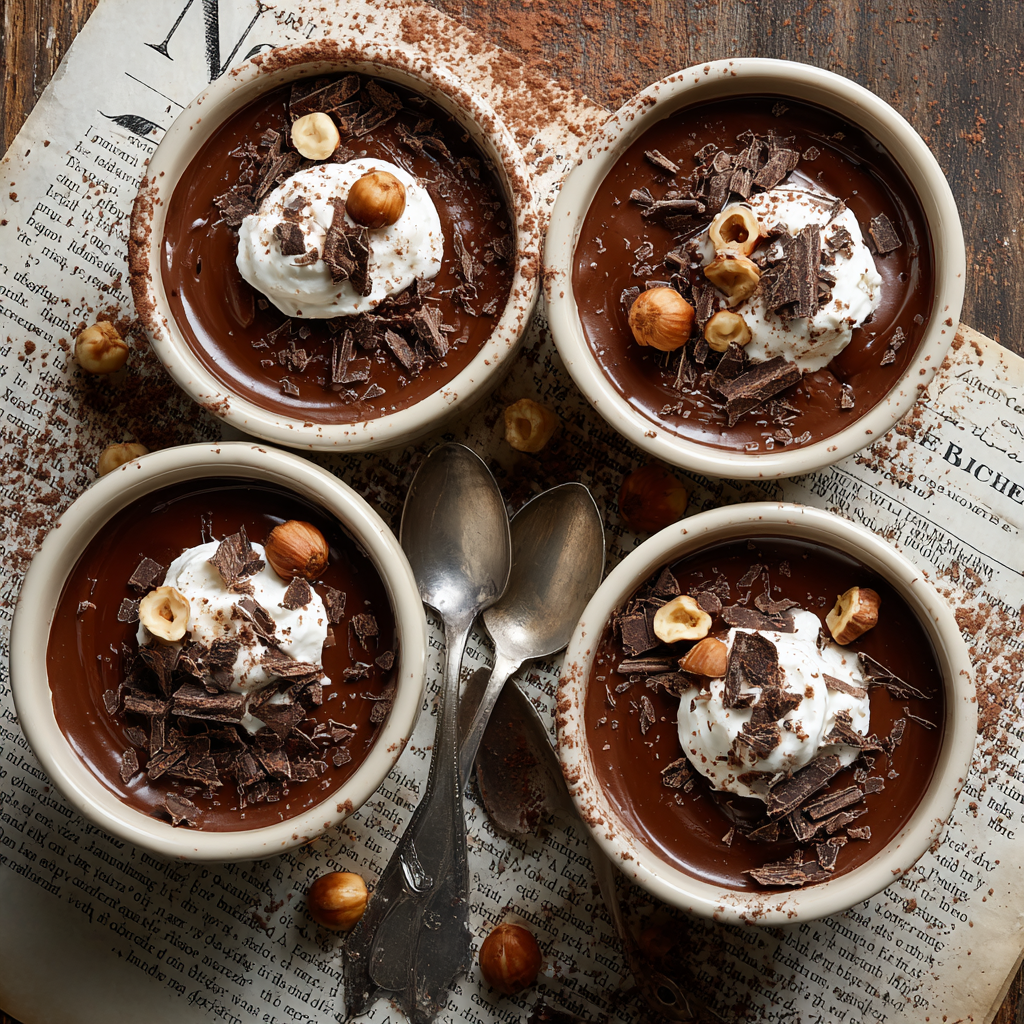
Serve this dessert with small, deliberate touches—each one lifts the flavor and the moment. I prefer toppings that add texture and a little brightness without hiding the chocolate center.
Finishing touches
I love to top cups with softly whipped cream and a shower of chocolate shavings for contrast. Toasted hazelnuts or walnuts bring crunch and echo the roasted notes in the base.
Warm versus chilled
Serve warm when you want a custardy, spoonable flow; serve chilled after at least one hour in the fridge for a gentler set. Both styles are authentic—choose the temperature that fits your menu and mood.
Make-ahead and storage
Press plastic wrap directly onto the surface to prevent a skin, then chill. Keep puddings refrigerated up to 3 days.
To rewarm one portion, use 10–20 second bursts in the microwave and watch closely so the top doesn’t overcook.
- Garnish just before serving so whipped cream holds and nuts stay crisp.
- Measure toppers in small amounts—an ounce or two of chocolate shavings goes a long way.
- For dinner parties, portion into small cups to keep the finish light and leave room for coffee or amaro.
| Action | Time / Temp | Why it matters |
|---|---|---|
| Chill | At least 1 hour | Prevents runny center; firms texture for spooning |
| Store | Refrigerate up to 3 days | Flavor holds; fresh toppings recommended |
| Rewarm | 10–20 sec bursts | Preserves creaminess without overcooking |
Nutritional information is an estimate and varies by chocolate brand, dairy fat, and portion size. Check ingredient labels if you need precise nutritional information for tracking calories, fat, or servings per cup.
Your moment to savor: pro tips, small portions, big flavor
A few careful steps turn simple ingredients into a memorable final bite.
Use the best dark chocolate and rich cream you can find; those ounces matter more than flair. I whisk together eggs and sugar in a medium bowl until light, then temper gently so the custard stays silky. Stop when the mixture coats the spoon and a clean line holds—that cue saves you minutes of guesswork.
For baked cups, set aside ramekins once edges are firm and the center still wobbles to avoid carryover cooking. Chill for at least one hour to serve cool, or enjoy warm right after finishing. Leftovers keep up to three days refrigerated.
Keep tools simple—a sturdy saucepan, rubber spatula, and fine sieve—and trust your senses. Small portions, big flavor: that’s how I share italian chocolate pudding at table.
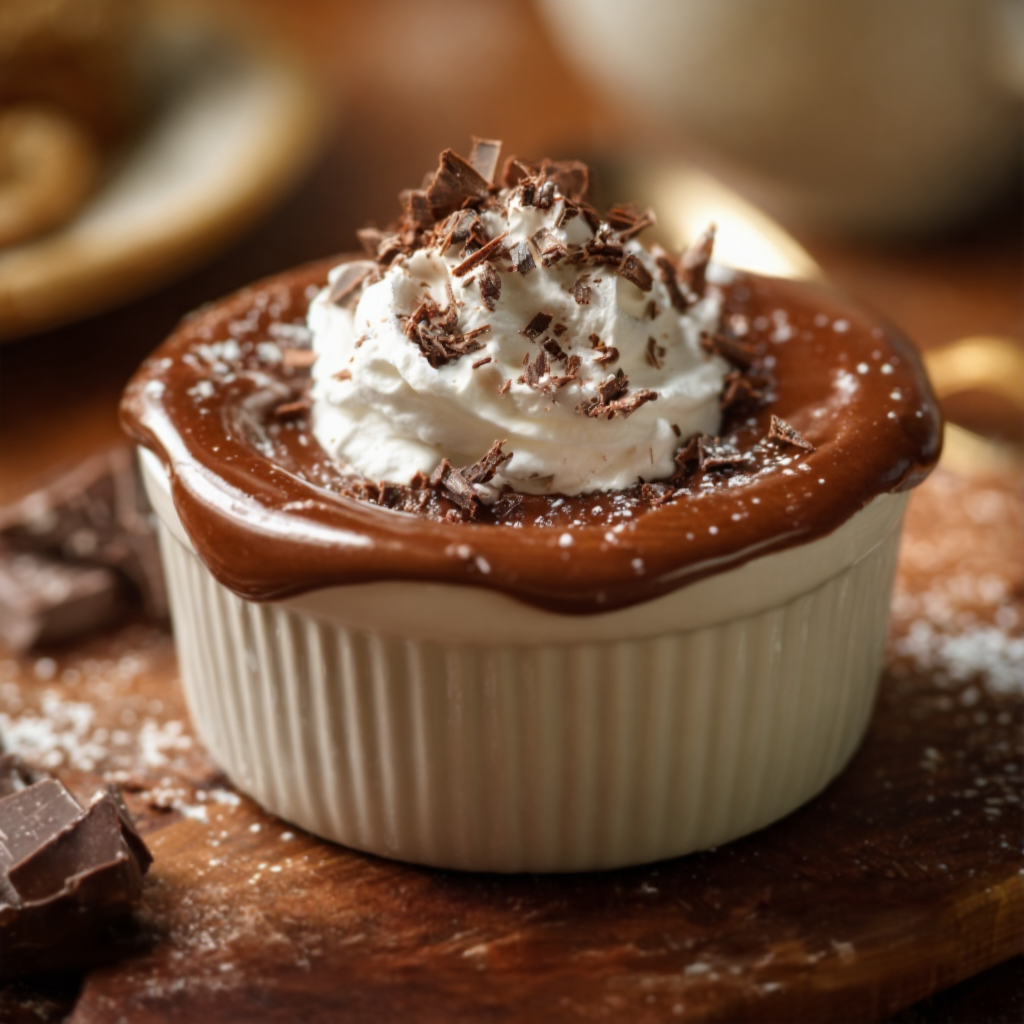
Chocolate Budino (Italian Chocolate Custard)
Ingredients
Method
- Chop dark chocolate into small pieces.
- Whisk egg yolks, eggs, and sugar in a medium bowl.
- In a saucepan, combine whole milk and heavy cream. Heat over low-medium heat until hot but not boiling.
- Gradually pour the hot milk mixture into the egg yolk mixture, whisking constantly to temper the eggs and prevent curdling.
- Return the mixture to the saucepan over low heat, stirring constantly with a wooden spoon. Continue until the custard thickens and coats the back of the spoon (about 5 minutes).
- Remove the custard from heat. Add chopped dark chocolate, stir until smooth and glossy.
- Stir in butter, salt, and vanilla extract. If desired, add a teaspoon of cocoa powder or a shot of espresso for extra depth.
- Strain the mixture through a fine-mesh sieve to ensure smoothness.
- Pour the custard into ramekins. You can serve it immediately for a warm dessert or chill in the fridge for 2-4 hours for a firmer, spoonable texture.
- Top with softly whipped cream, chocolate shavings, or toasted nuts like hazelnuts or walnuts before serving.
Notes
- Storage: You can store the custard covered in the fridge for up to 3 days. Reheat gently in the microwave if serving warm again.
- Serving: The texture can be either soft and pourable if served warm or chilled for a firmer, spoonable texture. Both are authentic.
- Customization: Feel free to add a shot of espresso or a tablespoon of cocoa powder for extra flavor depth.