
Jump to Recipe
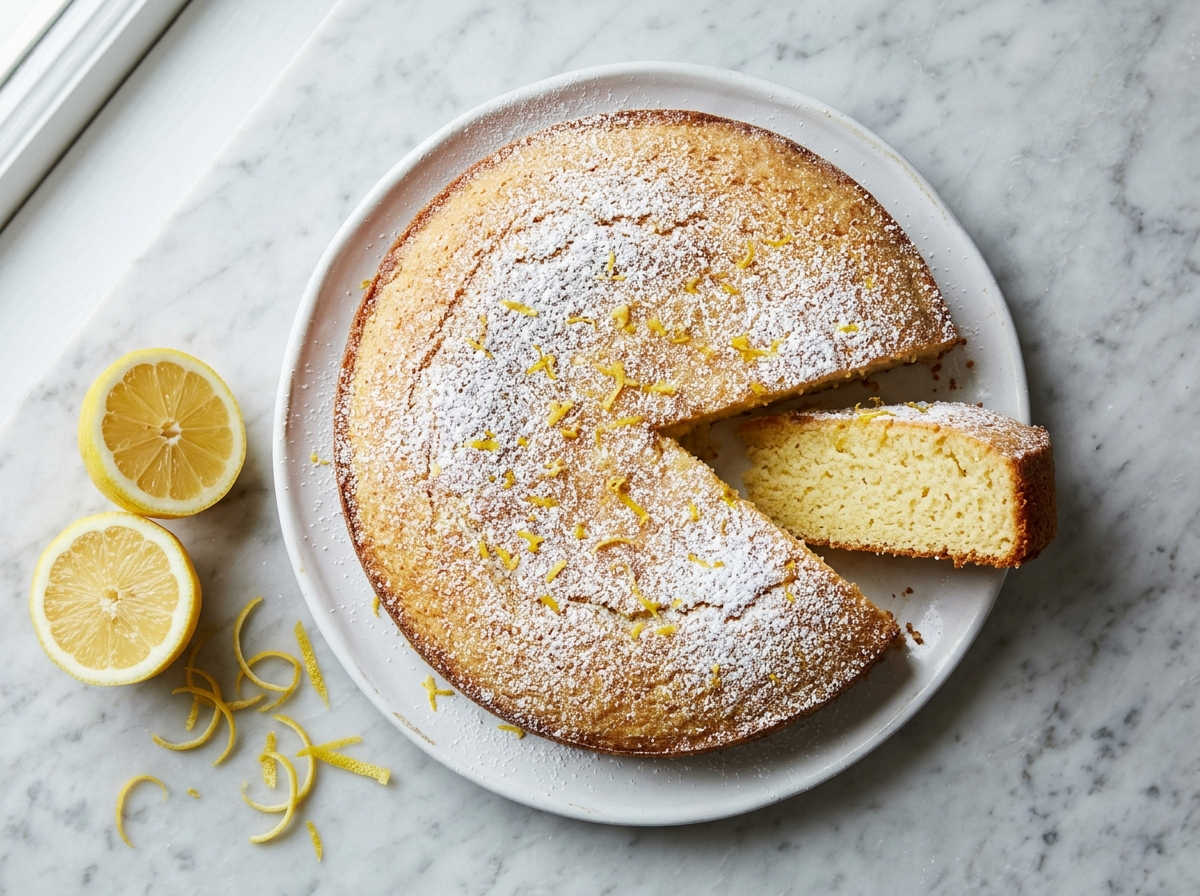
This cake works because of what it doesn’t have. No butter, no mixer, no fussy technique. Just olive oil, eggs, flour, and a lot of lemon.
The olive oil does two jobs at once: it tenderizes the crumb and adds a faint fruity note that makes the lemon taste more vivid by contrast. A mild or medium extra-virgin oil works well here. Save the peppery Sicilian stuff for dishes like whole wheat spaghetti with garlic and olive oil.
You mix everything in one bowl with a whisk. The batter comes together in about ten minutes, and the oven does the rest. This is the kind of cake you make on a weeknight and slice into for breakfast the next morning.
It keeps well at room temperature for three days, longer than most butter cakes, because olive oil doesn’t firm up the way cold butter does.
Why You’ll Love This Recipe
- One bowl, no mixer, ready in under an hour
- Stays moist for three days at room temperature
- Olive oil gives a clean crumb butter cakes can’t match
- Naturally dairy-free with pantry staples only
Ingredient Notes
- Extra-virgin olive oil: Use a mild or medium-fruity oil, not a very robust peppery one. A neutral vegetable oil works as a substitute but loses the subtle fruity note.
- Lemons: You need both zest and juice for full citrus flavor. Zest first, then juice. Bottled lemon juice gives a flat result.
- All-purpose flour: Standard plain flour works well. For a gluten-free version, a 1:1 gluten-free flour blend (with xanthan gum) substitutes cleanly.
- Whole milk: Whole milk gives the most tender crumb. Oat milk or almond milk work equally well to keep the cake dairy-free.
- Baking powder: Make sure it’s fresh – a flat cake usually comes from old baking powder, not technique.
- Granulated sugar: Plain white sugar lets the lemon flavor stay clean. Caster sugar dissolves slightly faster but both give the same result.
Lemon Olive Oil Cake Recipe
Ingredients
Method
- Heat the oven to 175 C / 350 F. Grease a 23 cm / 9-inch round cake pan with a little olive oil and line the base with parchment paper.
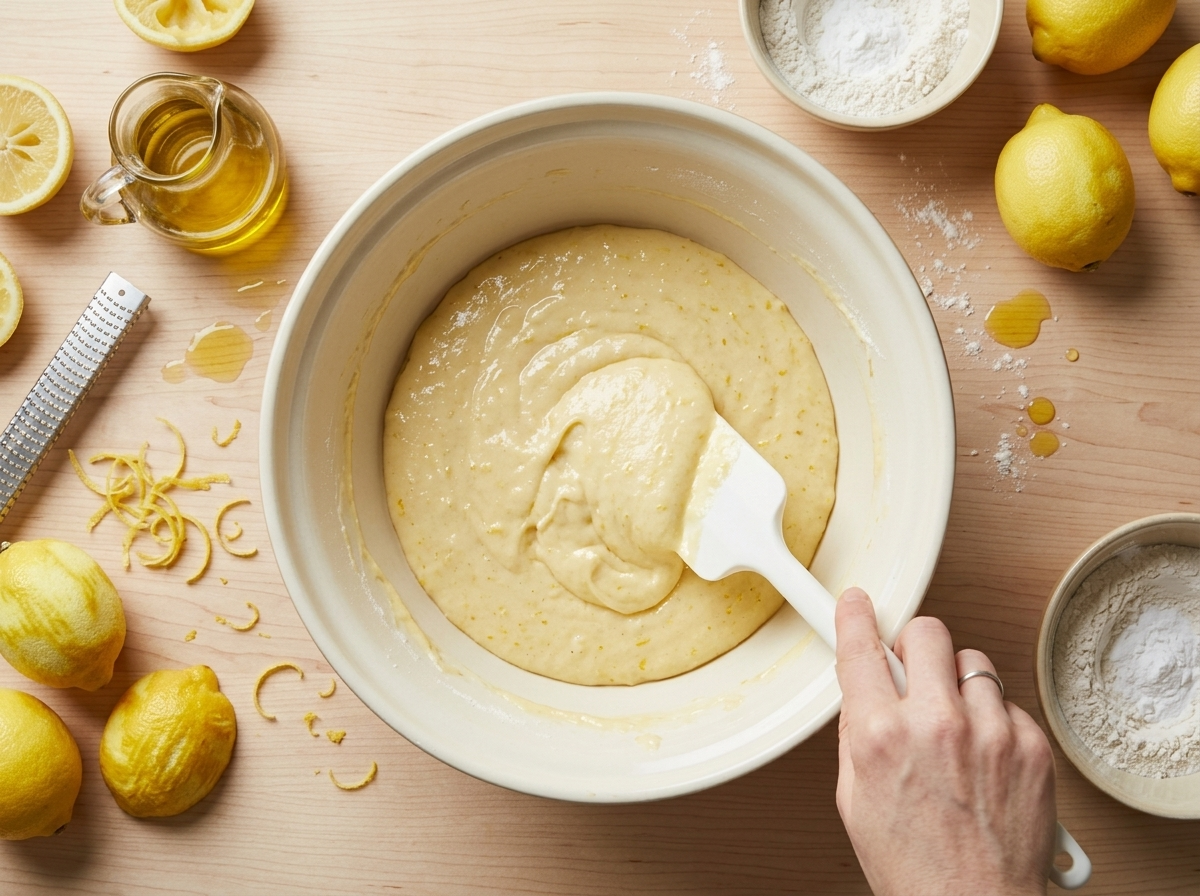
- Add the granulated sugar to a large mixing bowl. Zest both lemons directly over the sugar. Rub the zest into the sugar with your fingertips for about 30 seconds until fragrant and slightly damp.
- Add the eggs to the bowl and whisk vigorously for about 90 seconds until the mixture is pale, slightly thickened, and the sugar is mostly dissolved.
- Pour in the olive oil, whole milk, lemon juice, and vanilla extract. Whisk until the liquid mixture is smooth and uniform.
- Sift the flour, baking powder, and salt directly into the bowl. Switch to a rubber spatula and fold gently until just combined and no dry streaks remain. Do not overmix.
- Pour the batter into the prepared pan and smooth the top with the spatula.
- Bake for 38 to 42 minutes, until the top is golden and set, and a toothpick inserted in the center comes out with only a few moist crumbs.
- Cool the cake in the pan on a wire rack for 15 minutes, then run a palette knife around the edge and turn out. Peel off the parchment and leave to cool completely before slicing.
- Dust with powdered sugar just before serving if you like.
Notes
Tips for Success
- Zest lemons directly over the sugar and rub together with your fingers to release the citrus oils into the sugar before whisking.
- Whisk eggs and sugar until pale and slightly thickened, about 90 seconds, before adding oil for a more even crumb.
- Fold the flour in with a spatula rather than a whisk once you add it to avoid a tough cake from overworking the gluten.
- Check the cake at 38 minutes by pressing the center gently – it should spring back. A toothpick should come out with just a few moist crumbs.
- Cool the cake in the pan for 15 minutes before turning out to prevent it from cracking along the base.
Variations
- Add 1 tbsp poppy seeds to the batter for a lemon poppy seed version with extra texture.
- Stir 80 g of ground almonds into the flour for a denser, more moist almond-lemon olive oil cake.
- Finish with a simple lemon glaze: 80 g powdered sugar whisked with 2 tbsp fresh lemon juice, poured over the cooled cake.
Storage and Reheating
Store the cooled cake wrapped in plastic wrap or in an airtight container at room temperature for up to 3 days. The crumb stays moist because olive oil doesn’t solidify the way butter does.
For longer storage, refrigerate for up to 5 days. Bring slices to room temperature for 20 minutes before serving – cold olive oil cake can taste a little dense straight from the fridge.
This cake freezes well. Wrap individual slices tightly in plastic wrap, then foil, and freeze for up to 2 months. Thaw at room temperature for an hour.
Serving Suggestions
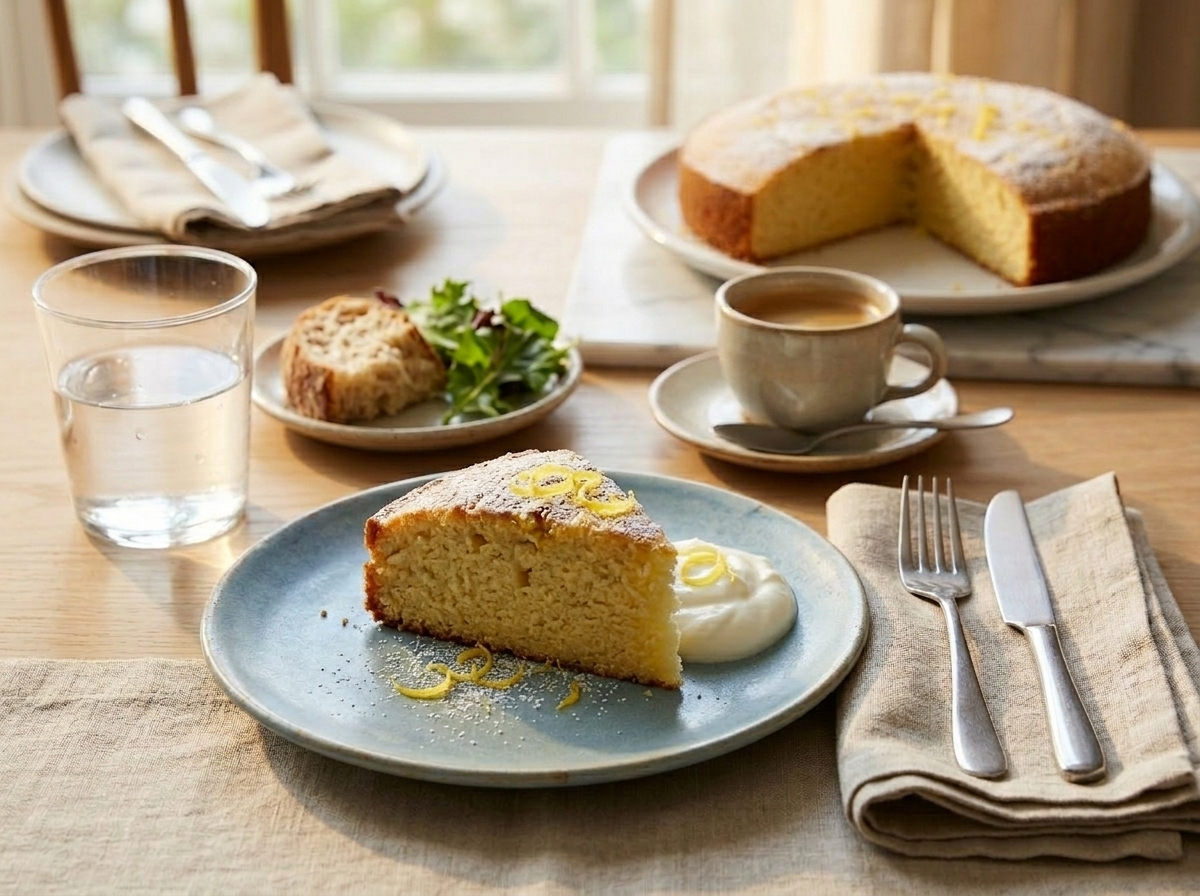
Serve plain slices with a dusting of powdered sugar and a few strips of candied lemon zest for a simple finish. A spoonful of crème fraiche or Greek yogurt on the side cuts through the sweetness cleanly.
For a more substantial dessert, serve warm slices with a scoop of vanilla gelato or alongside a light Italian ricotta cheesecake spread across the table. The faint bitterness of the olive oil pairs well with floral honeys like acacia or orange blossom.
At breakfast or brunch, this cake holds its own alongside strong espresso or a pot of Earl Grey. It’s not overly sweet, so it works at any point in the day.
FAQ
Why did my lemon olive oil cake turn out dense and gummy?
The most common reason is undermixing the eggs and sugar, or opening the oven door too early. Make sure the eggs and sugar are whisked pale before adding the oil, and don’t open the oven in the first 30 minutes.
Can I use light olive oil instead of extra-virgin in this cake?
Yes, light or pure olive oil works and gives a more neutral flavor if you prefer that. Extra-virgin adds a faint fruity note that most people enjoy, but it’s not essential to the texture.
Can I freeze lemon olive oil cake, and does the texture hold up?
It freezes very well. Wrap slices individually and freeze for up to 2 months. The olive oil crumb holds its texture better than a butter cake after freezing and thawing.
What pairs well with a slice of lemon olive oil cake for dessert?
Crème fraiche, Greek yogurt, or a silky vegan panna cotta all work well alongside a slice. A drizzle of acacia or orange blossom honey also complements the citrus and olive oil flavors.
Is lemon olive oil cake dairy-free?
This recipe uses whole milk, but swapping it for oat milk or almond milk makes it fully dairy-free without changing the texture noticeably. The olive oil already replaces butter, so one swap is all it takes.
How is lemon olive oil cake different from a regular lemon pound cake?
A pound cake is built on butter, which gives a richer, denser crumb that firms up when cold. Olive oil cake has a lighter, more open crumb that stays soft at room temperature for longer and has a cleaner citrus flavor.