Jump to Recipe
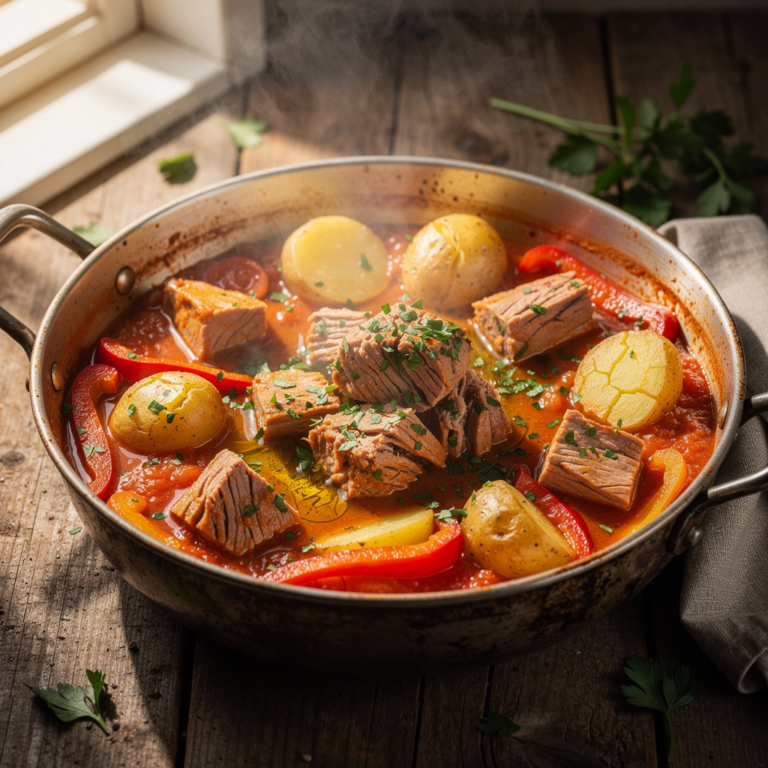
I keep a pot on low heat most evenings, sweating onion and peppers until they sigh and sweeten, then coaxing tomatoes and good olive oil into a bright, honest base. I like to think of this as cucina di casa—simple ingredients, patient technique, and a few small moves that make a dish feel like home.
There’s a nod to marmitako here: the idea of sea and spud meeting in one pan, the trick of “cracking” potatoes so they release starch and lightly thicken the broth. I’ll show how to finish the fish off the heat so it stays tender, and how timing and gentle seasoning save you time and fuss.
Key Takeaways
- Sweat aromatics slowly for depth and balance.
- Crack potatoes to naturally thicken the broth—no cream needed.
- Add the fish at the very end and rest off heat for tender results.
- Use quality olive oil and bright tomatoes for a clean, lively base.
- Simple techniques make this a weeknight-friendly, soulful stew.
What makes this rustic pot so satisfying
On windy nights I turn to a single pot that folds sea flavors and garden vegetables into something steady and bright. It’s a humble, clever dish that feels like a small act of generosity.
The story begins at sea: Basque fishermen cooked marmitako for long days on the Cantabrian Sea. They used bell peppers, onion, garlic, paprika, and a light stock to stretch a catch into filling meals. That smart economy still guides how I cook.
From boat-smarts to family table
Cracking potatoes—rather than slicing—adds gentle body to the broth without heaviness. A splash of wine and a careful hand with paprika give warmth and depth, while parsley and bright tomatoes make the flavors sing.
- Tender potatoes, silky fish, and a paprika-scented broth keep the pot lively, not cloying.
- Add the fish at the end and rest off heat for the best texture and flavor.
- A simple stock keeps each ingredient purposeful; time and restraint are the real seasonings.
| Technique | Effect | When to Use |
|---|---|---|
| Crack potatoes | Releases starch; thickens broth gently | Before simmering until tender |
| Bloom paprika briefly | Warms and perfumes without bitterness | After deglazing with wine |
| Add fish at end | Preserves moisture and tenderness | Off heat or very brief finish |
| Use clear stock | Keeps flavors distinct and bright | Throughout simmer for depth |
Italian tuna stew with potatoes recipe: ingredients, smart swaps, and chef notes
Start with good olive oil and a low flame; that slow beginning makes all the difference to flavor and texture. Below I list what I reach for, small swaps that save time, and a few pro notes on technique.
What you’ll need
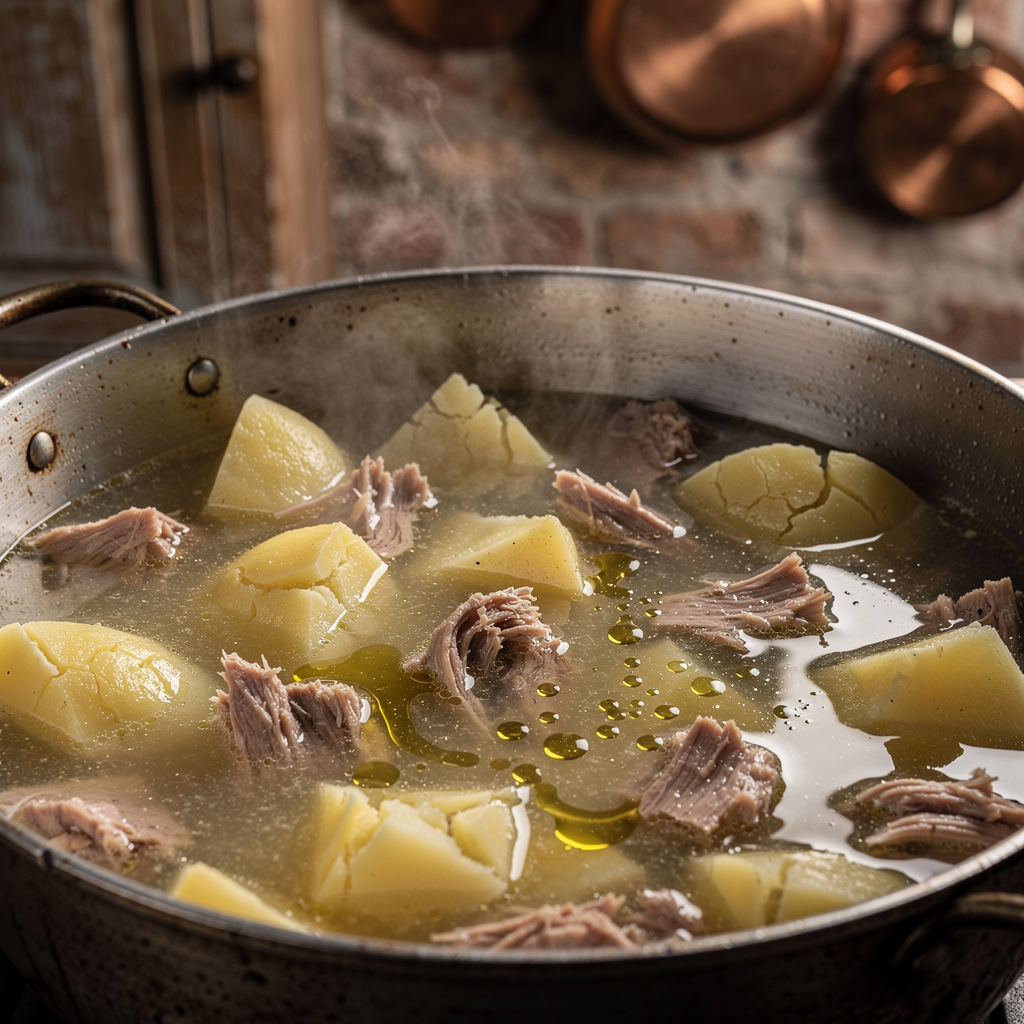
- Core ingredients: tuna cut into bite-size pieces, a waxy potato, bell peppers, onion, garlic, crushed tomatoes, and fresh parsley.
- Liquids and aromatics: a splash of white wine, light broth or stock, a little water or clam juice if you want brine.
- Seasoning: smoked paprika (or sweet if you prefer), a teaspoon or two total, and salt to taste.
- Plan: about a pound of fish and roughly a cup of broth per person; adjust to your pot and appetite.
Smart substitutions
Fresh tuna is traditional and gives a clean, meaty bite—choose firm, sushi-grade if you can. If budgets are tight, a high-quality pouch option works well; add the pouch product at the end so it stays moist.
For paprika, smoked paprika adds campfire warmth while sweet paprika keeps things gentle. I often blend the two to balance heat and depth.
| Liquid | Profile | When to use |
|---|---|---|
| Fish stock | Depth and body | When you want rich savory layers |
| Clam juice | Briny lift | To highlight sea notes |
| Water or vegetable stock | Clean canvas | When other ingredients should shine |
Pro technique
Crack each potato: start a shallow cut and twist to break the piece. The jagged edge releases starch and thickens the broth gently without cloudiness.
Add the fish off heat and let it rest 1–5 minutes depending on the size of the pieces. This keeps the flesh tender and avoids overcooking.
Step-by-step: building deep flavor in one pot
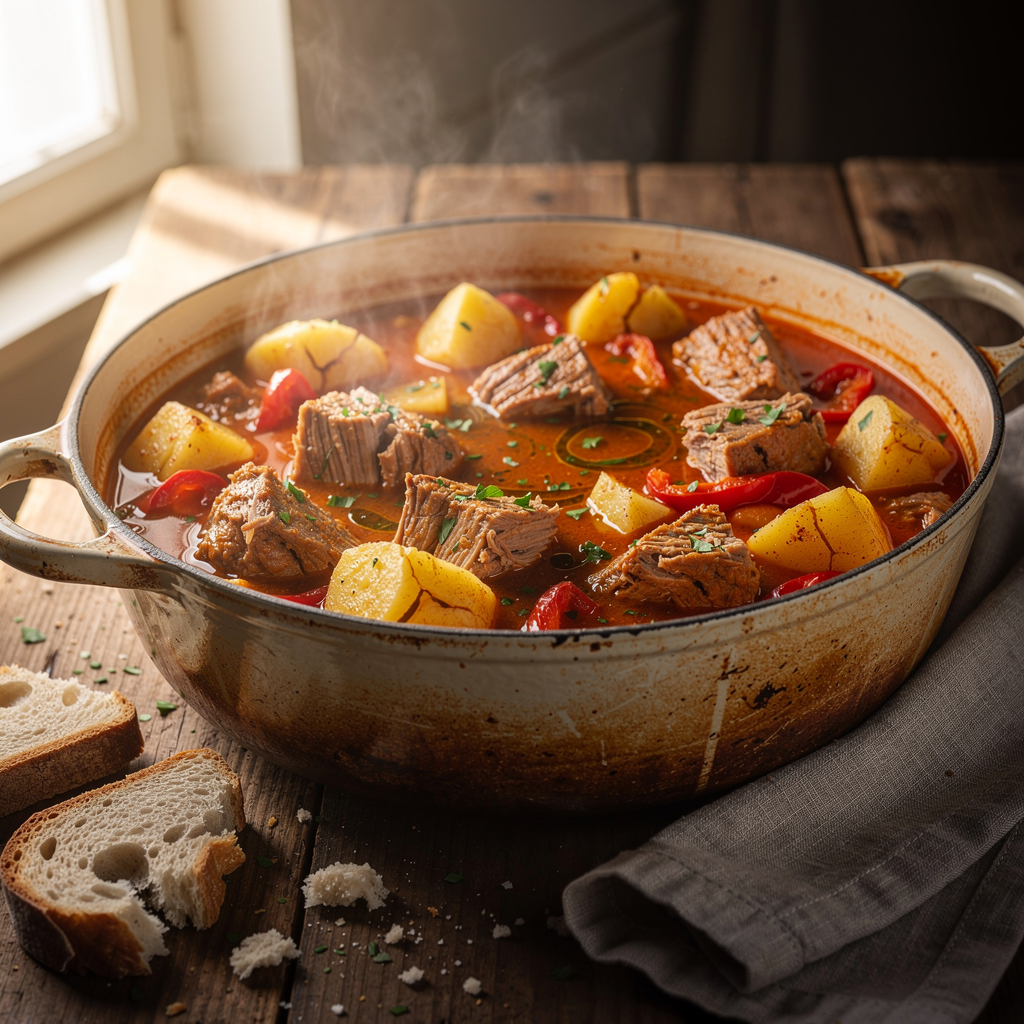
I like to guide you through each stage so the flavors deepen without fuss. These are hands-on cues and short cook minutes that keep the fish tender and the broth round.
Sweat the aromatics
Warm olive oil in a wide pot over medium heat. Add onions and bell peppers and sweat until glossy, about 6–8 minutes. Stir in garlic for the last minute so it perfumes but does not brown.
Deglaze and bloom spices
Pour a splash of white wine and let it reduce for 1–2 minutes, scraping the pan. Sprinkle paprika and stir 30–45 seconds to bloom the spice, then fold in crushed tomato to add acidity and color.
Simmer the cracked potatoes
Add cracked potatoes and cover with broth or stock plus a little water so liquid sits an inch above. Bring just to a boil, then lower heat and simmer 12–18 minutes until potatoes are potatoes tender.
Finish off heat
Off heat, fold in tuna pieces and cover the pot; rest 2–5 minutes depending on size. If the broth needs body, mash one potato against the pot to release starch, stir, and let settle.
- Warm oil, sweat 6–8 minutes; add garlic last minute.
- Reduce white wine 1–2 minutes; bloom paprika 30–45 seconds.
- Simmer 12–18 minutes until potatoes tender; rest fish 2–5 minutes.
| Action | Minutes | Effect |
|---|---|---|
| Sweat aromatics | 6–8 | Sweet, glossy base |
| Simmer potatoes | 12–18 | Broth thickens; potatoes tender |
| Rest fish | 2–5 | Moist, just-set pieces |
Bring it to the table beautifully
Carry the pot straight to the table so warm steam and bright aromas invite the crowd.
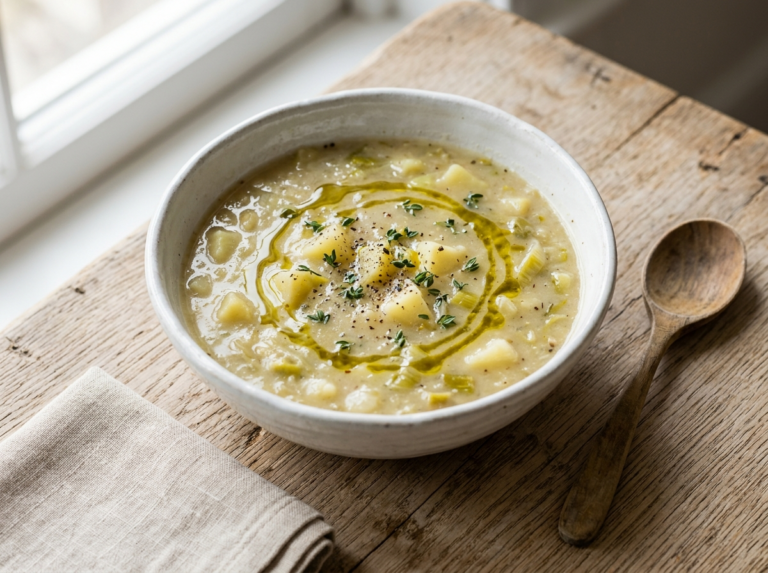
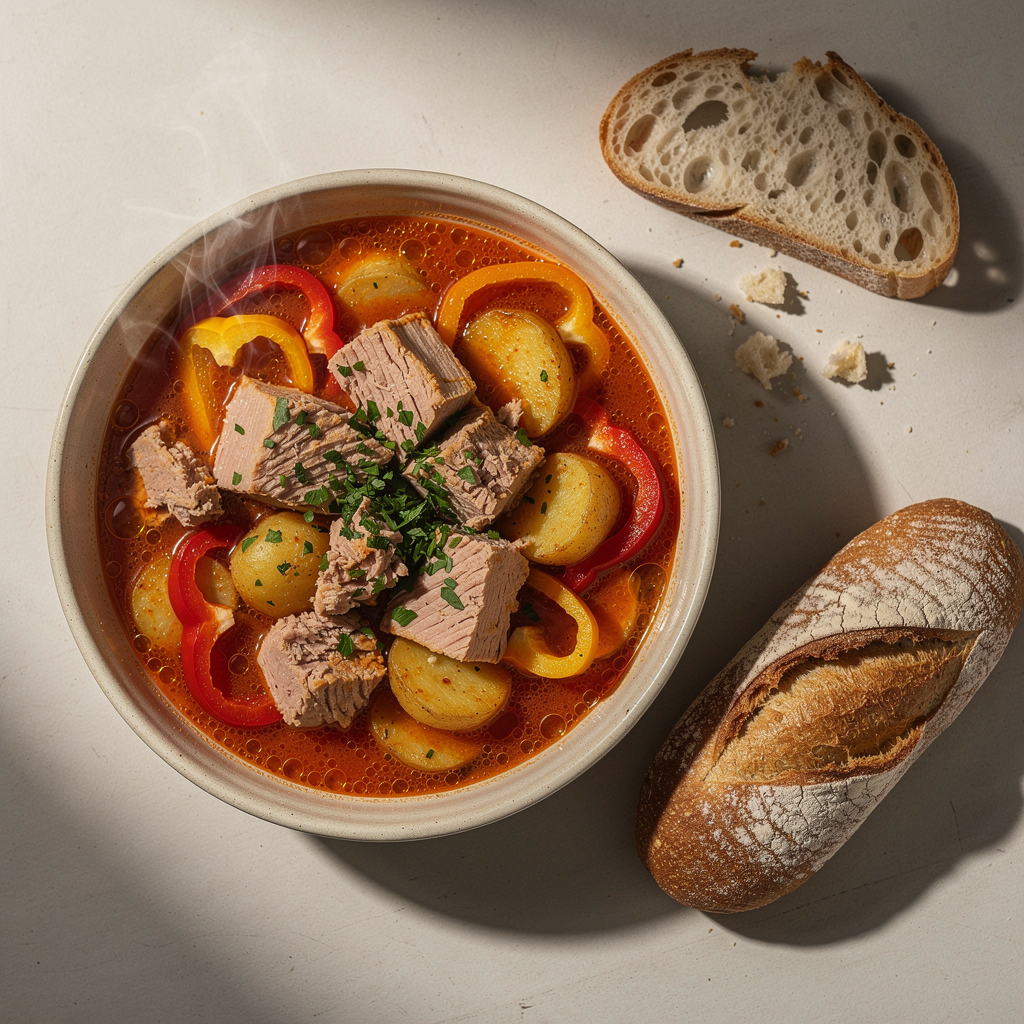
Shower the surface with chopped parsley, a pinch of pepper and salt, and a thread of good olive oil for shine. A small dusting of smoked paprika at the table is a lovely, optional finish.
Ladle family-style and offer crusty bread to catch the last of the tomatoes and broth. Let the fish finish by residual heat for 1–2 minutes so pieces stay tender.
For plating, nestle potatoes and bell peppers first, then spoon fish on top so it remains visible. If the broth thickened, loosen with a splash of water or broth and warm for one to two minutes—do not boil.
Leftovers keep a day; reheat gently over low heat, add a teaspoon of water if needed, and season lightly before serving. Buon appetito—share, savor, and enjoy the small comfort of sea and garden together.
Italian Tuna and Potato Stew
Ingredients
Method
- Set a wide pot over medium heat. Add olive oil. Add onion and bell peppers. Cook 6 to 8 minutes until soft and glossy. Stir often. Add garlic and cook 1 minute until fragrant.
- Pour in white wine. Scrape the pot. Let it reduce 1 to 2 minutes. Sprinkle in paprika. Stir 30 to 45 seconds so it blooms, not burns. Add crushed tomatoes and stir.
- Crack the potatoes into chunks by cutting halfway and twisting. Add to the pot. Pour in stock until liquid sits about one inch above the potatoes. Add salt lightly.
- Bring to a gentle boil. Lower heat. Simmer 12 to 18 minutes until potatoes turn tender. Keep the pot calm, not rolling.
- Turn off the heat. Fold in the tuna pieces. Cover the pot. Let rest 2 to 5 minutes so the fish sets gently.
- Mash one potato against the pot if the broth needs body. Stir once. Taste and adjust salt and pepper. Finish with parsley and a thin pour of olive oil.
Notes
Add fish off heat to keep it soft.
Smoked paprika adds warmth. Sweet paprika keeps it mild.
Serve with crusty bread to catch the broth.
Reheat leftovers over low heat with a splash of water.
FAQ
What cut of fish works best for this rustic pot?
I prefer firm, meaty cuts like fresh ahi or yellowfin when available; they hold texture during a brief finish off the heat. If fresh fish isn’t an option, high-quality pouch tuna packed in olive oil is a fine, convenient swap that still delivers savory flavor.
How do I keep the potatoes from falling apart while cooking?
Choose waxy potatoes or Yukon Golds and “crack” them—partially crush pieces so they release starch and thicken the broth while staying mostly intact. Simmer gently rather than at a rolling boil and test for tender rather than mushy; timing varies but usually 15–25 minutes depending on size.
Can I make this in advance and reheat without losing quality?
Yes. The stew develops deeper flavor after resting a few hours or overnight. Reheat gently over low heat, stirring to reincorporate any separated oil. Add a splash of broth or water if the mixture tightens up, and finish with fresh parsley just before serving.
Is white wine required, and what can I substitute?
Wine brightens the pan and lifts the tomatoes, but you can substitute a dry vermouth or a light vegetable or fish stock with a teaspoon of lemon juice for acidity. Avoid heavy red wines; they clash with the fish and paprika.
How long should I cook the fish once it’s added?
Add the fish off the direct heat and let residual warmth finish it gently for about 3–5 minutes, depending on thickness. This prevents overcooking and keeps the flesh tender. If using canned or pouch tuna, just warm through for a minute or two.
What kind of paprika should I use for best flavor?
I like smoked paprika for a subtle, campfire note that complements the tomatoes and peppers. If you prefer a sweeter, milder finish, use sweet (pimentón dulce). Start with a teaspoon and adjust to taste.
Can I add other vegetables to the pot?
Absolutely—bell peppers, diced fennel, or a cup of chopped tomatoes add lovely layers. Keep vegetable sizes consistent so everything cooks evenly, and add firmer veggies earlier with the potatoes while delicate ones go in later.
How do I adjust the stew if it’s too thin or too thick?
For a thinner broth, stir in a splash of stock, water, or a touch of white wine. To thicken, simmer uncovered until reduced, or mash a potato against the pot to release starch. A small slurry of cornstarch and water helps in a pinch but changes the mouthfeel slightly.
What should I serve with this dish to keep it authentic and simple?
Serve it with warm crusty bread—ciabatta or a country loaf—to soak up the broth, and a simple green salad dressed with lemon and olive oil. A light, mineral white wine like Vermentino or Pinot Grigio pairs nicely.
Any tips for seasoning to get a balanced, sea-forward flavor?
Season in layers: salt the vegetables as they sweat, taste after the potatoes soften, then finish with a final adjustment once the fish is rested in the pot. Freshly ground black pepper, a pinch of sea salt, and a bright shower of chopped parsley at the end bring everything together.